
A Notice of Cleared Default Status is an official document confirming that a borrower has successfully satisfied their outstanding debt obligations. This formal notification updates credit records and restores financial standing by verifying that a previous default is resolved. It is essential for rebuilding creditworthiness and securing future financing. To assist your process, below are some ready to use templates.
Image cover: Official Notice of Cleared Default: Letter Templates and Professional Samples
Letter Samples List
- Notice of Cleared Default Status Letter
- Account Paid in Full Confirmation Letter
- Resolution of Defaulted Debt Acknowledgment Letter
- Debt Satisfaction and Closure Notice Letter
- Cure of Default Status Official Letter
- Final Settlement and Account Clearance Letter
- Credit Bureau Update and Cleared Status Letter
- Release of Liability and Default Clearance Letter
- Zero Balance and Cleared Default Confirmation Letter
- Outstanding Debt Resolution and Clearance Letter
- Reinstatement of Good Standing Notice Letter
- Default Status Removal Acknowledgment Letter
- Debt Collection Account Resolution Letter
Notice of Cleared Default Status Letter
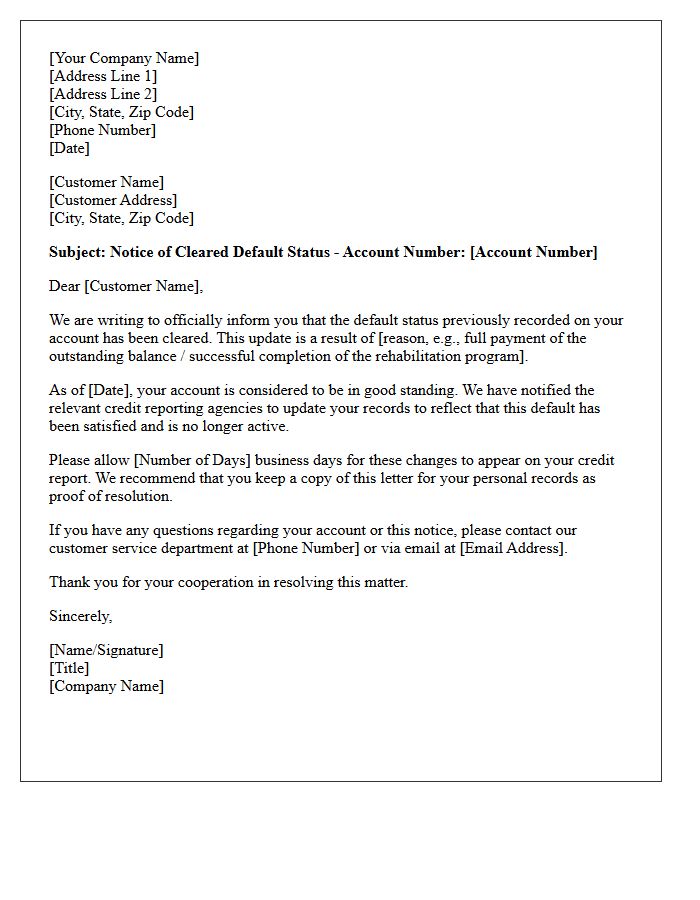
A Notice of Cleared Default Status Letter is a formal document confirming that a borrower has successfully resolved a past-due debt. This letter serves as official proof that you are no longer in default, which is crucial for restoring your financial standing. It typically indicates that you have paid the balance in full or completed a rehabilitation program. Retaining this document is essential for updating your credit report and regaining eligibility for future loans or government programs. Always verify that the information matches your records to ensure long-term financial recovery.
Account Paid in Full Confirmation Letter
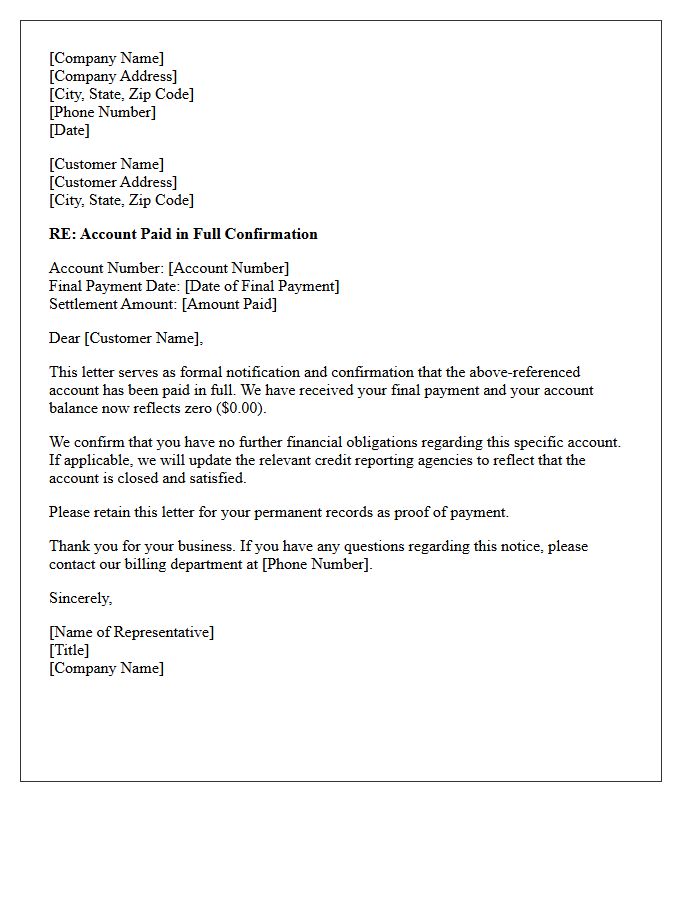
An Account Paid in Full Confirmation Letter is a vital legal document proving you have settled a debt completely. It serves as official verification that no further balance is owed, protecting you from future collection attempts or legal disputes. Always request this letter after your final payment to ensure your credit report is updated accurately. This written statement is your primary defense for maintaining financial credibility and confirming your debt-free status with creditors or lenders.
Resolution of Defaulted Debt Acknowledgment Letter
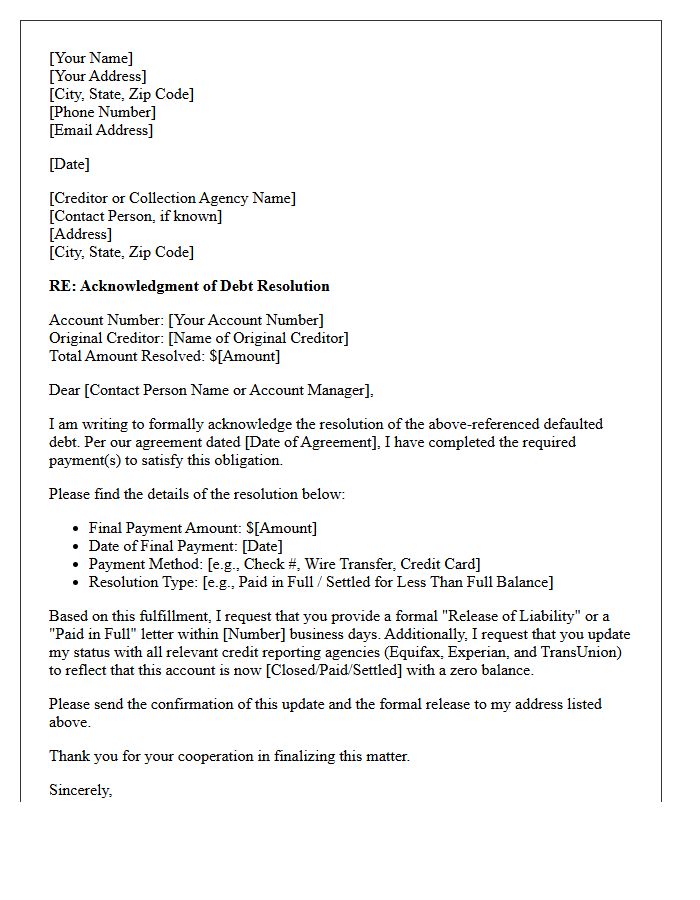
A Resolution of Defaulted Debt Acknowledgment Letter is a formal document confirming that a previously unpaid debt has been legally settled or paid in full. Its primary purpose is to provide legal proof that the borrower is no longer liable for the specific balance. Obtaining this letter is essential for credit repair, as it allows individuals to dispute inaccuracies on their credit reports and improve their financial standing. Always ensure the letter contains the settlement date, final amount paid, and a clear statement releasing the debtor from further obligations.
Debt Satisfaction and Closure Notice Letter
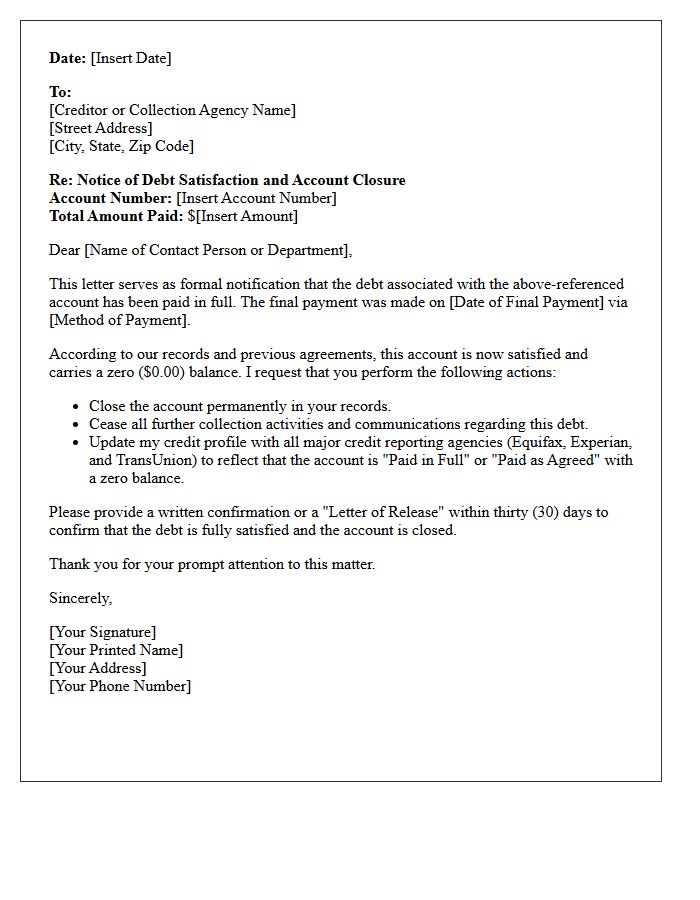
A Debt Satisfaction and Closure Notice Letter serves as formal legal evidence that a financial obligation is fully paid. This document confirms the account balance is zero and the creditor has released all claims against the debtor. It is essential for protecting your credit reputation, as it allows you to dispute any lingering negative marks with credit bureaus. Always retain a copy of this written confirmation to prevent future collection attempts and to ensure your financial records accurately reflect that the contract is officially terminated and legally closed.
Cure of Default Status Official Letter
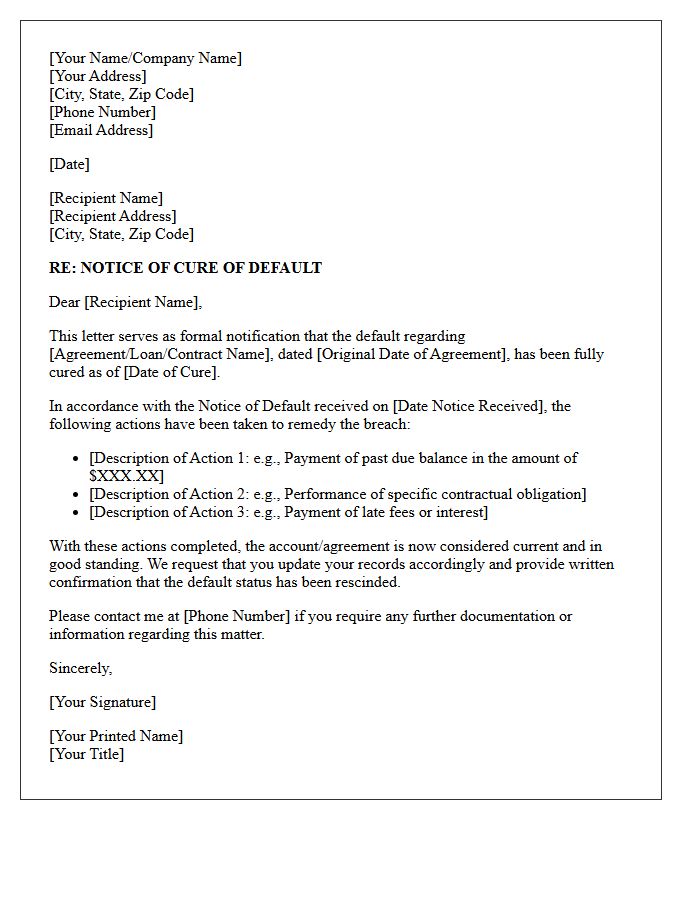
A Cure of Default Status Official Letter is a formal notice sent by a lender or creditor informing a borrower that they have successfully rectified a breach of contract. This document confirms that all outstanding payments or obligations have been fulfilled within the allowed timeframe. It serves as legal proof that the account is no longer in default, protecting the borrower's credit score and preventing further foreclosure or legal action. Always retain this letter for your records to ensure future financial stability and dispute resolution.
Final Settlement and Account Clearance Letter
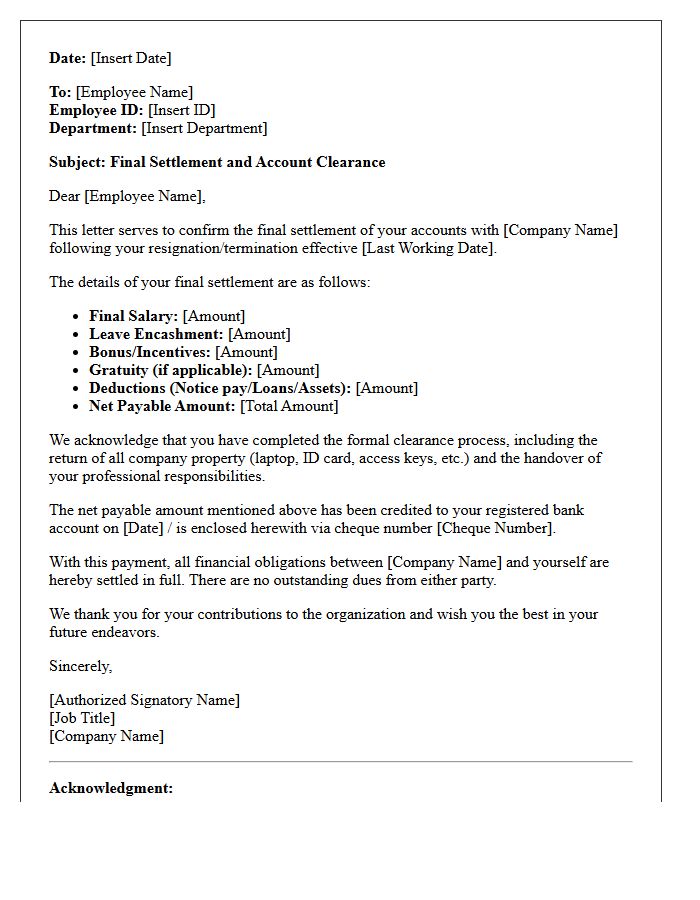
A Final Settlement is the conclusive financial statement issued when an employee leaves an organization. It details the net pay owed after calculating salary, bonuses, and leave encashment against outstanding loans or notice period deductions. The process culminates in an Account Clearance Letter, which confirms that all company property has been returned and no liabilities remain. Obtaining this document is crucial for professionals as it serves as formal proof of a clean exit, ensuring eligibility for future background checks and facilitating a smooth job transition without pending disputes.
Credit Bureau Update and Cleared Status Letter
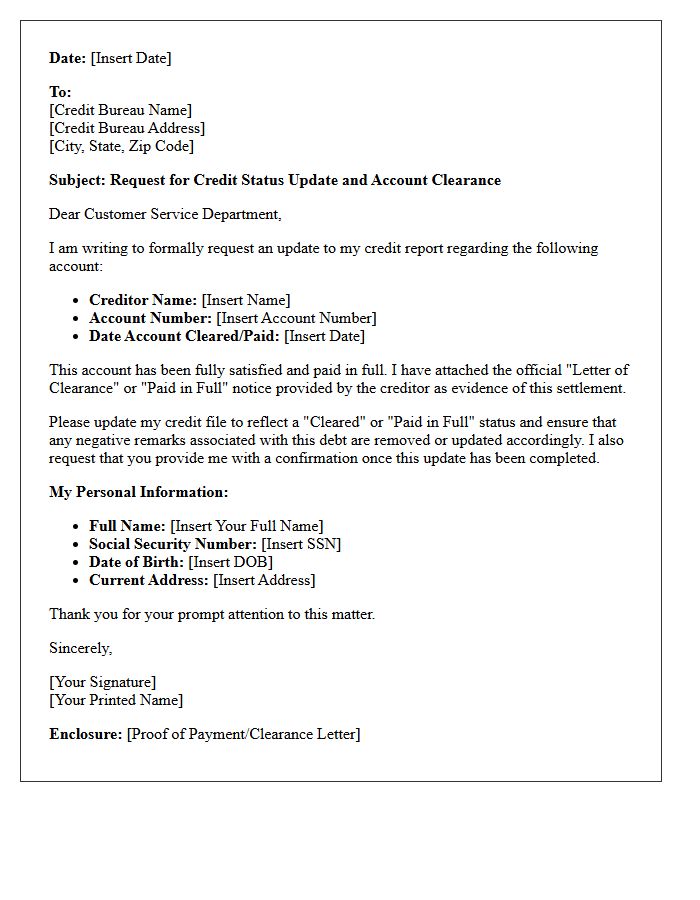
A credit bureau update ensures your credit report reflects accurate financial behavior. When a debt is settled or paid in full, requesting a Cleared Status Letter is essential. This document serves as official proof that an account is no longer outstanding. It allows the bureau to remove negative listings and update your status to "paid" or "closed." Regularly monitoring these updates is vital for improving your credit score and ensuring eligibility for future loans or financial services by correcting outdated or incorrect data.
Release of Liability and Default Clearance Letter
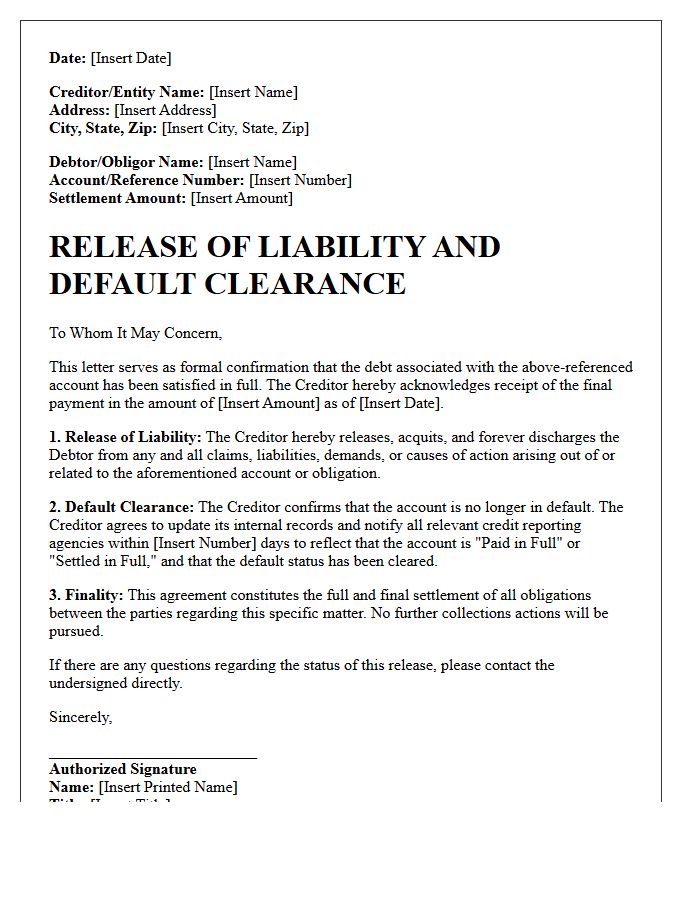
A Release of Liability is a legal document that protects a seller from future responsibilities, such as traffic violations or accidents, after a vehicle transfer. Equally vital is a Default Clearance Letter, which serves as formal proof that a previously outstanding debt or financial obligation has been fully satisfied. Obtaining these documents ensures your credit profile remains protected and shields you from legal disputes. Always retain copies to verify that you are no longer accountable for past liabilities or resolved defaults, ensuring total legal protection and peace of mind.
Zero Balance and Cleared Default Confirmation Letter
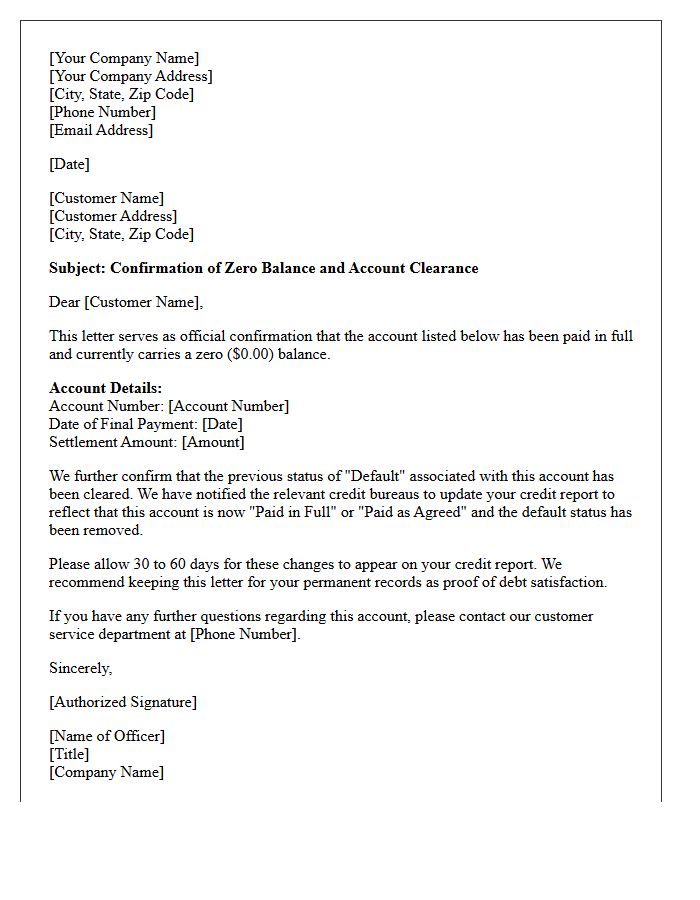
A Zero Balance and Cleared Default Confirmation Letter is an official document issued by creditors or financial institutions. It serves as legal proof that a previously defaulted debt has been fully repaid and the account balance is now zero. This letter is essential for credit restoration, as it allows you to dispute inaccuracies on your credit report and demonstrate financial responsibility to future lenders. Always ensure the letter contains your account details and a formal statement confirming the debt satisfaction to protect your financial standing.
Outstanding Debt Resolution and Clearance Letter
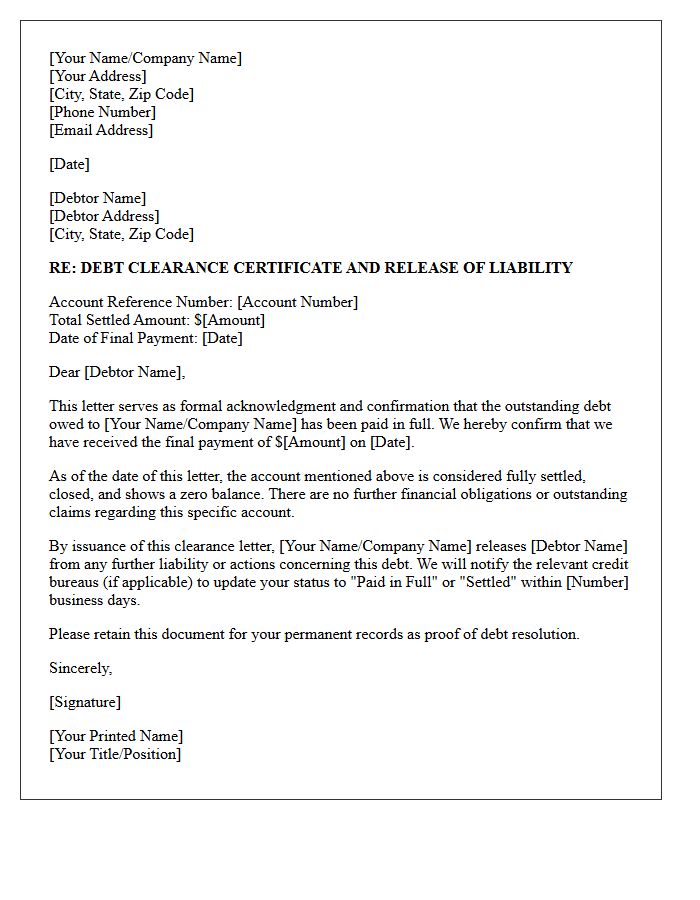
An Outstanding Debt Resolution occurs when a debtor settles their financial obligations through full payment or a negotiated compromise. Once finalized, the creditor issues a Clearance Letter, also known as a No Due Certificate. This legal document is vital because it serves as formal evidence that the account is closed and no further liability exists. It is essential for repairing credit scores, updating financial records, and ensuring eligibility for future loans. Always retain this document permanently to prevent legal disputes or errors in debt collection reporting.
Reinstatement of Good Standing Notice Letter
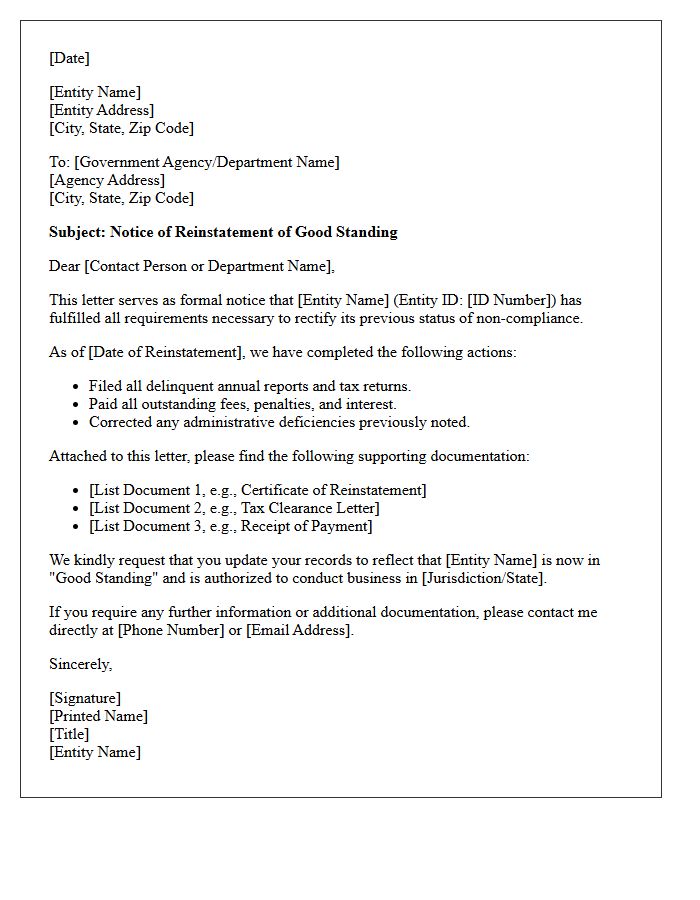
A Reinstatement of Good Standing Notice Letter is a formal document issued by a government authority, typically the Secretary of State, confirming that a business entity has successfully corrected prior compliance failures. This letter officially restores the company's legal status after being administratively dissolved or suspended. It is essential for maintaining limited liability protection, opening bank accounts, and executing legal contracts. To receive this notice, an entity must usually file delinquent reports and pay outstanding taxes or penalties to prove they are back in full compliance with state regulations.
Default Status Removal Acknowledgment Letter
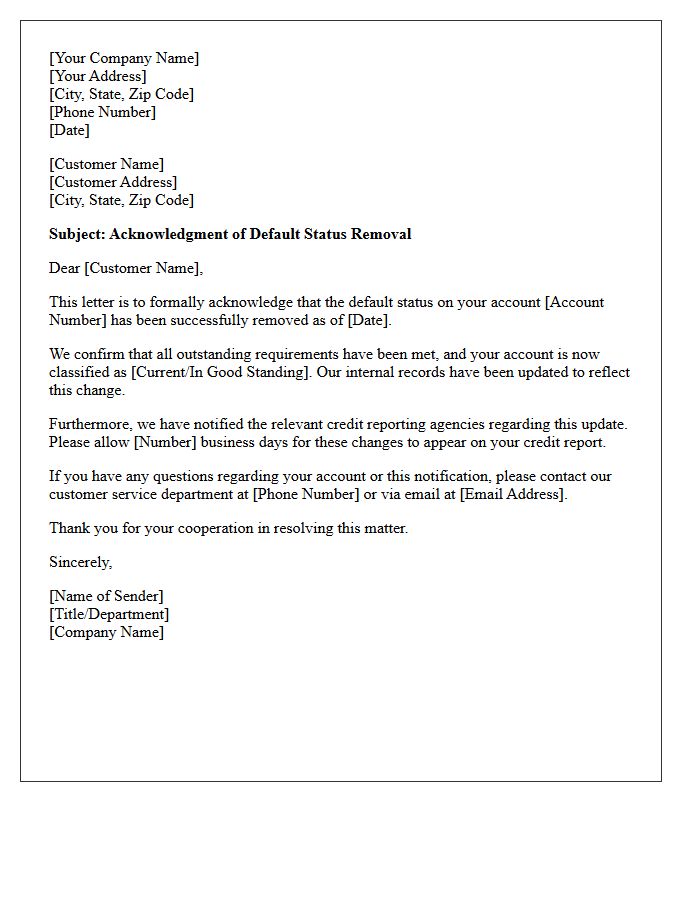
A Default Status Removal Acknowledgment Letter is a formal document confirming that a borrower has successfully resolved a past-due federal student loan. This letter serves as official proof that your account is back in good standing after completing a rehabilitation program or consolidation. It is crucial for regaining eligibility for Title IV federal financial aid and improving your credit score. Retain this notice to verify your updated financial status with lenders or educational institutions, ensuring future borrowing privileges are restored and negative history is corrected.
Debt Collection Account Resolution Letter
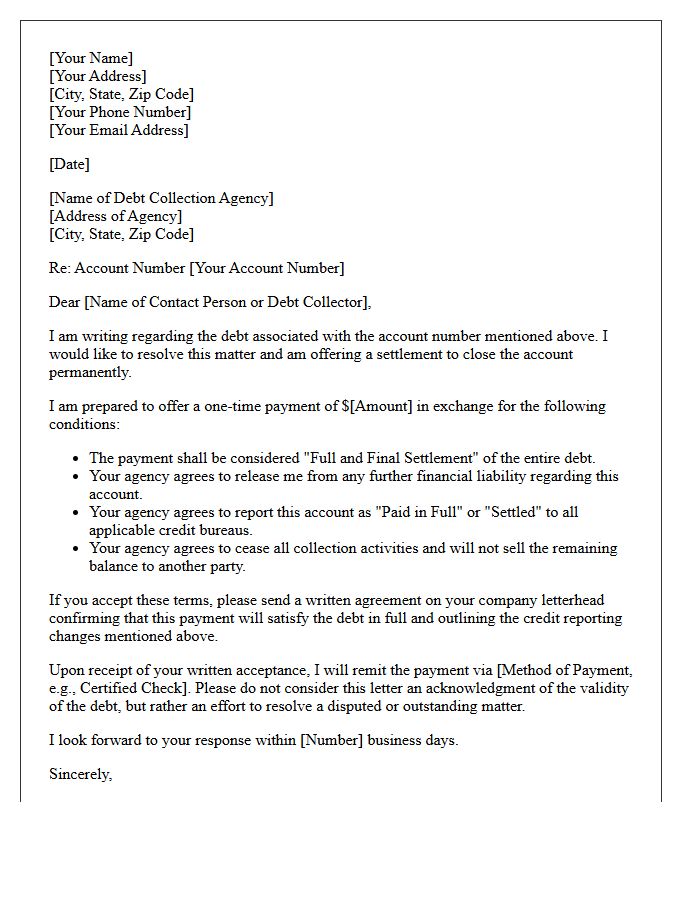
A Debt Collection Account Resolution Letter is a formal document used to settle outstanding balances for less than the total amount owed. This written agreement serves as legal proof that a creditor or agency accepts a specific payment to consider the debt fully satisfied. It is crucial to obtain this letter before making payments to ensure your credit report is updated accurately. Always request a "paid in full" or "settled" status to protect your financial future and prevent further collection actions or potential litigation regarding the resolved balance.
What is a Notice of Cleared Default Status?
A Notice of Cleared Default Status is an official document confirming that a borrower has successfully resolved a previous default on a financial obligation, such as a student loan or mortgage, restoring their account to good standing.
How do I obtain a Notice of Cleared Default Status?
You can obtain this notice by contacting your loan servicer or the agency holding your debt once you have completed the necessary requirements, such as loan rehabilitation, consolidation, or paying the defaulted balance in full.
Will a Notice of Cleared Default Status improve my credit score?
Yes, receiving this notice typically leads to the removal of the "default" notation on your credit report, which can significantly improve your credit score and restore your eligibility for new credit and federal financial aid.
How long does it take to receive a clearance letter after resolving a default?
Once the final payment or rehabilitation agreement is processed, it usually takes 30 to 45 days for the servicer to issue the formal notice and update your status with the major credit bureaus.
Does a cleared default status mean the late payment history is removed?
While the "default" status is cleared and the account is marked as current, the original late payments that led to the default may remain on your credit report for up to seven years from the date of the initial delinquency.

Comments