
A Post-Judgment Wage Garnishment Settlement Offer Letter is a formal proposal sent to creditors to resolve debt after a court order. Negotiating a lump-sum payment or structured plan can stop active paycheck deductions and save you money on interest and legal fees. Professional communication is essential for reaching a favorable agreement. To help you get started, below are some ready to use template.
Image cover: Settling Wage Garnishment: Formal Offer Templates and Negotiation Guide
Letter Samples List
- Post-Judgment Wage Garnishment Settlement Offer Letter
- Lump-Sum Settlement Offer to Stop Wage Garnishment Letter
- Voluntary Payment Plan Wage Garnishment Resolution Letter
- Hardship Exemption and Garnishment Settlement Offer Letter
- Post-Judgment Debt Settlement and Garnishment Release Letter
- Mutual Agreement to Suspend Wage Garnishment Letter
- Negotiated Settlement Offer to Satisfy Judgment Letter
- Offer in Compromise to Halt Post-Judgment Garnishment Letter
- Stipulated Agreement and Garnishment Settlement Letter
- Final Notice of Settlement Offer for Wage Garnishment Letter
- Reduced Balance Payoff and Garnishment Termination Letter
- Post-Judgment Garnishment Modification and Settlement Letter
- Debt Satisfaction and Wage Garnishment Cancellation Letter
Post-Judgment Wage Garnishment Settlement Offer Letter
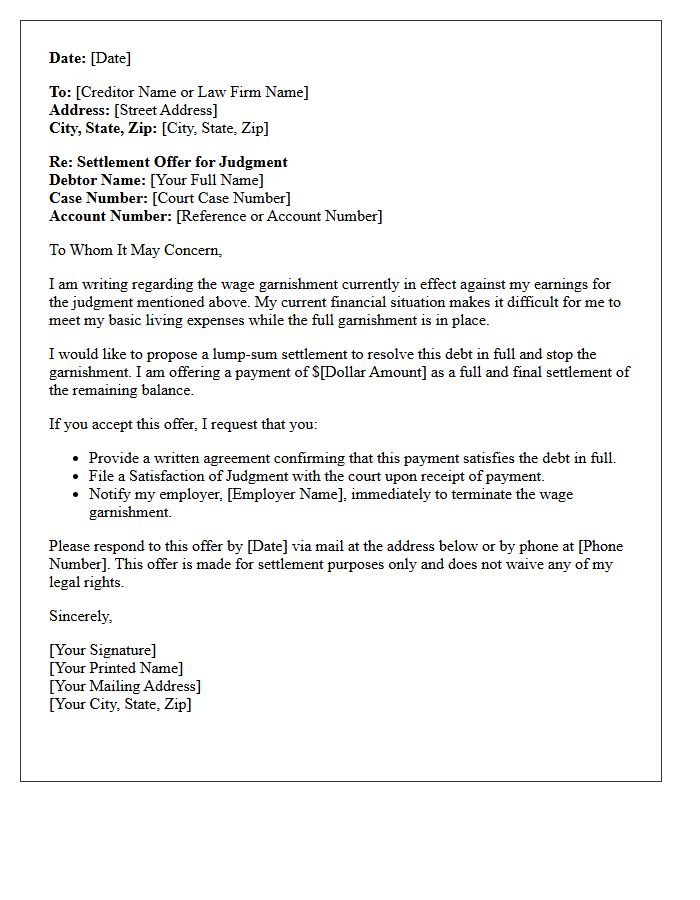
A post-judgment wage garnishment settlement offer letter is a formal legal proposal sent to a creditor to resolve a debt after a court judgment has been issued. This document aims to stop active collection efforts by offering a lump-sum payment or an alternative monthly arrangement. To be effective, the letter must include the specific case number, verify the total balance, and clearly state that the offer is contingent upon the immediate release of the garnishment. Always request a written agreement to ensure legal protection against future claims on the same debt.
Lump-Sum Settlement Offer to Stop Wage Garnishment Letter
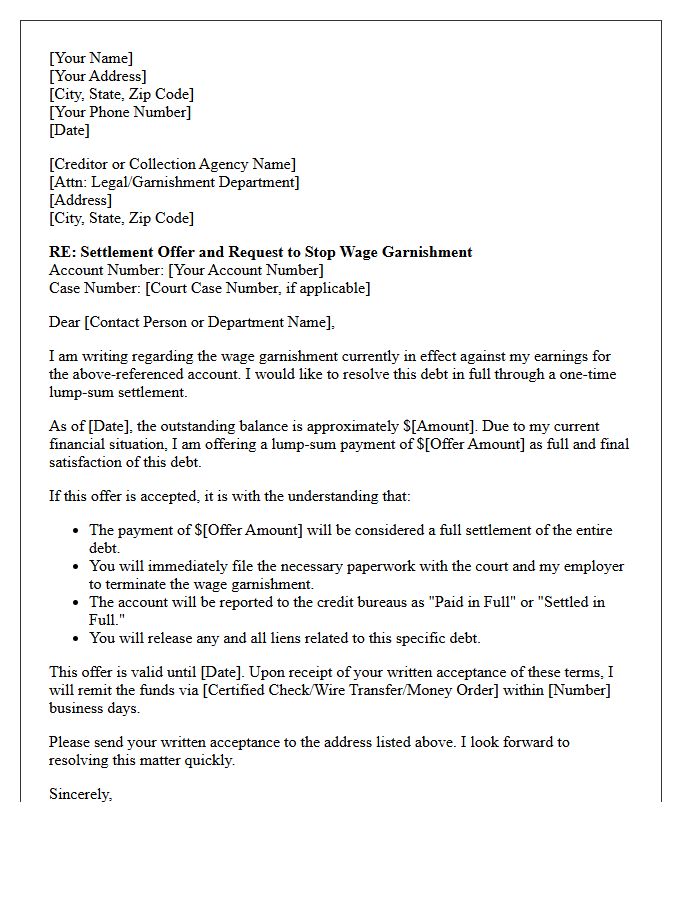
A lump-sum settlement offer is a strategic legal document used to stop wage garnishment by proposing a single, discounted payment to satisfy a debt. This letter must clearly state the specific amount offered, the payment deadline, and the requirement that the creditor releases the lien upon receipt. By negotiating a written agreement, you can regain control of your income and resolve the obligation for less than the total balance. Always ensure the creditor provides a formal release to prevent further collection actions against your earnings.
Voluntary Payment Plan Wage Garnishment Resolution Letter
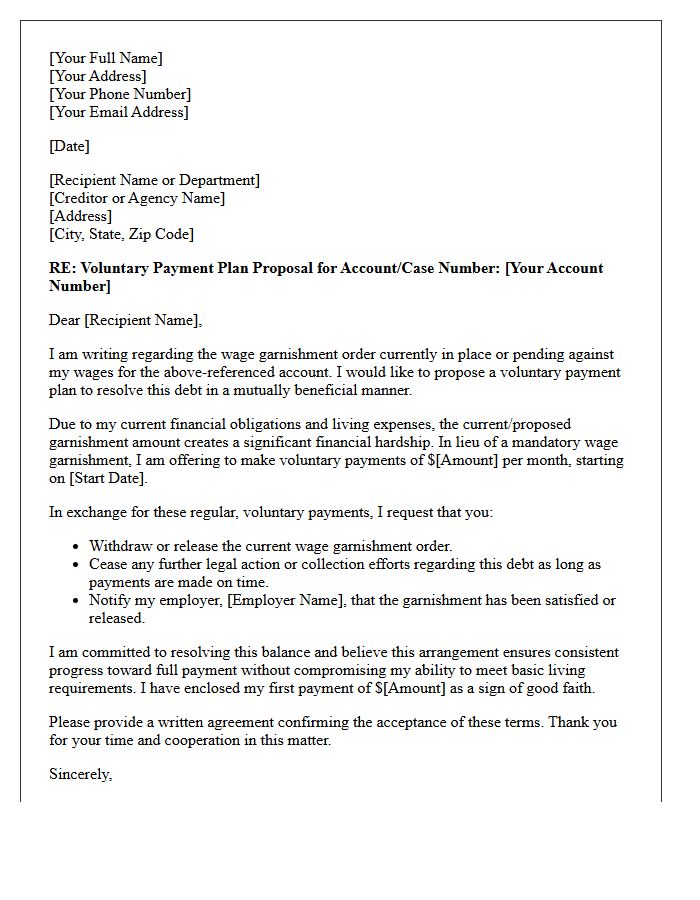
A Voluntary Payment Plan Wage Garnishment Resolution Letter is a formal proposal sent to creditors or agencies to stop or prevent wage garnishment. This document outlines a repayment agreement, demonstrating your commitment to settling the debt through manageable installments. By proactively offering a structured plan, you can protect your income and avoid the legal complexities of court-ordered deductions. It serves as a vital negotiation tool to regain financial control and resolve outstanding liabilities amicably without further litigation or employer involvement.
Hardship Exemption and Garnishment Settlement Offer Letter
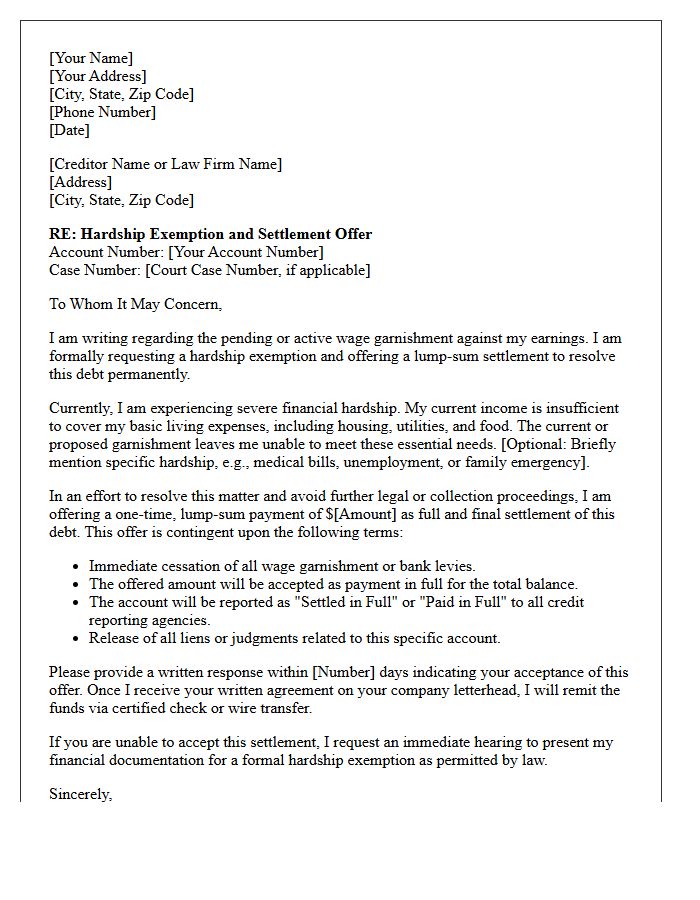
A Hardship Exemption protects low-income individuals from losing essential funds to wage garnishment or bank levies. To secure relief, you must submit a Garnishment Settlement Offer Letter to creditors, demonstrating that legal deductions would prevent you from meeting basic living expenses. This formal proposal aims to negotiate a reduced lump-sum payment or a manageable installment plan. Providing clear evidence of financial distress is vital to halt collections and reach a mutually beneficial agreement. Proactive communication is the most effective way to protect your assets and regain financial stability during a crisis.
Post-Judgment Debt Settlement and Garnishment Release Letter
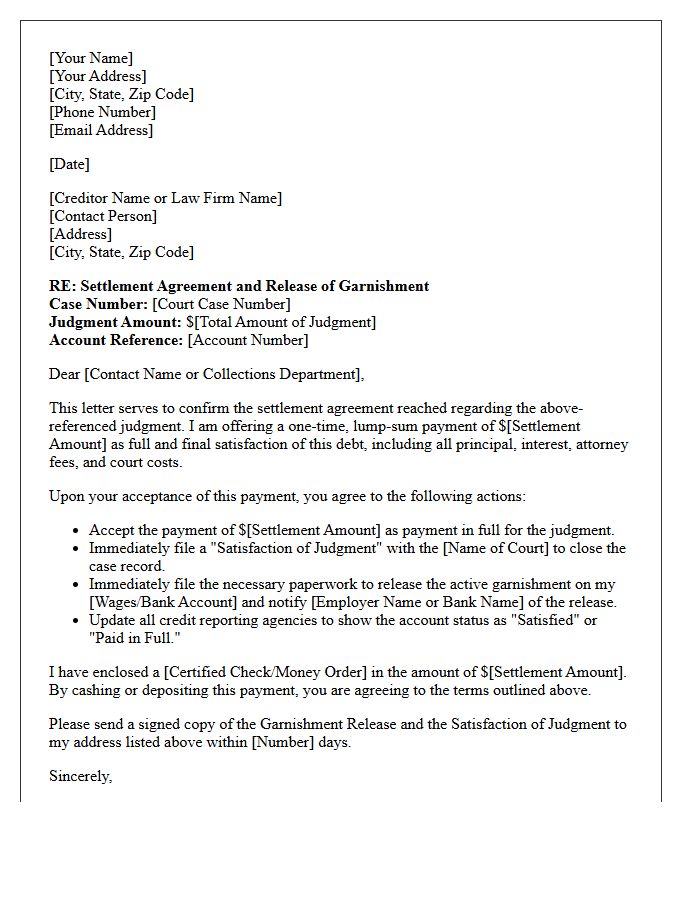
A Post-Judgment Debt Settlement is a formal agreement to resolve a debt after a court ruling. Once terms are met, obtaining a Garnishment Release Letter is essential. This legal document instructs employers or banks to stop withholding funds immediately. It serves as proof of satisfaction, ensuring your assets are no longer frozen and your credit profile can begin to recover. Always verify that the creditor filed the satisfaction of judgment with the court to prevent future collection attempts on the settled balance.
Mutual Agreement to Suspend Wage Garnishment Letter
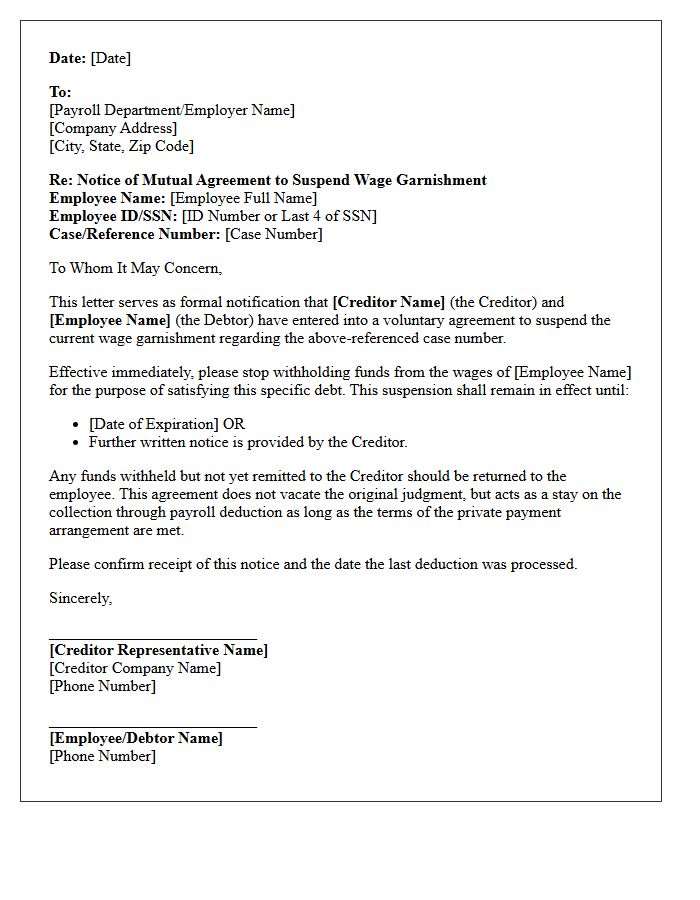
A Mutual Agreement to Suspend Wage Garnishment is a formal contract between a debtor and a creditor to stop court-ordered payroll deductions. This binding document outlines specific terms, typically requiring a voluntary payment plan in exchange for halting the legal garnishment process. It is essential to ensure both parties sign the letter and notify the employer and relevant court promptly. Using this agreement helps debtors regain control of their full disposable income while providing creditors with guaranteed, consistent payments without further litigation.
Negotiated Settlement Offer to Satisfy Judgment Letter
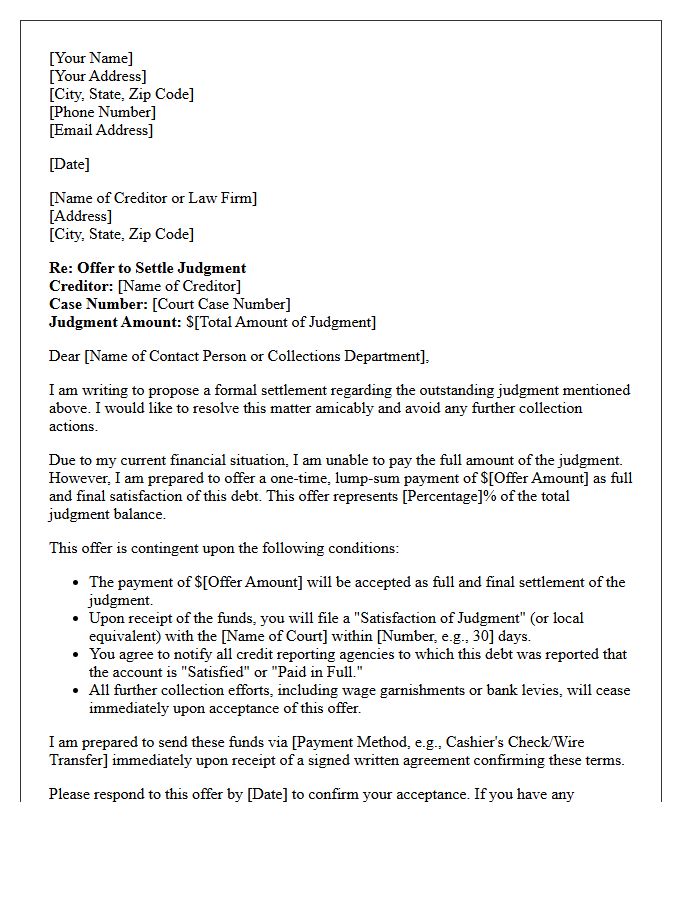
A Negotiated Settlement Offer to Satisfy Judgment is a formal proposal sent to a creditor to resolve an outstanding court-ordered debt for less than the full amount. This letter serves as a legal record of your intent to settle. Key elements must include the specific case number, the offered lump-sum payment, and a clear deadline. It is essential to stipulate that the payment is contingent upon the creditor filing a Satisfaction of Judgment with the court, which effectively clears your public record and prevents further collection actions or wage garnishments.
Offer in Compromise to Halt Post-Judgment Garnishment Letter
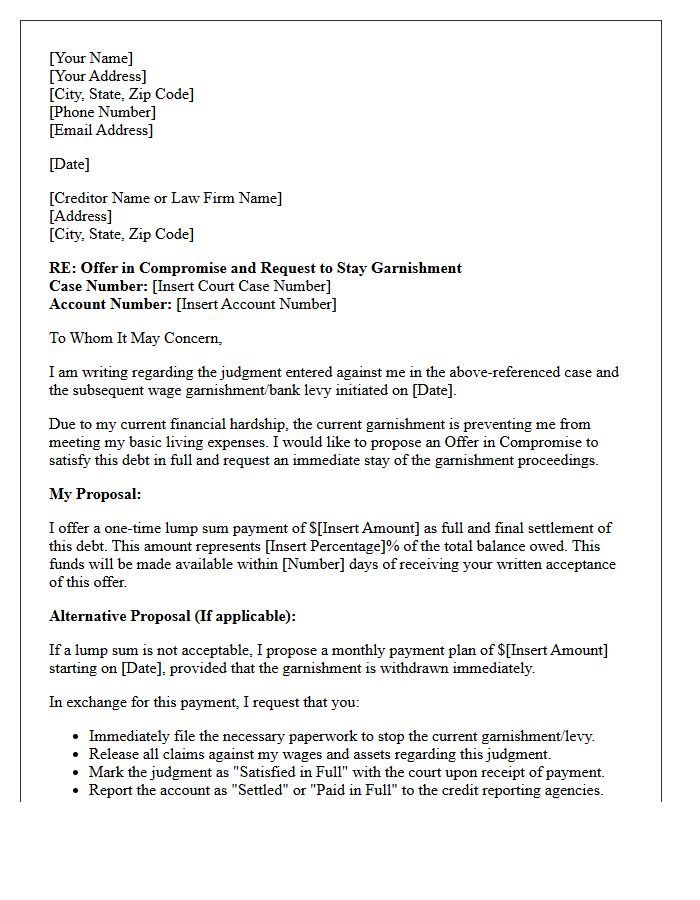
An Offer in Compromise (OIC) is a powerful tool to resolve tax debt by settling for less than the full amount owed. Submitting an OIC can effectively halt post-judgment garnishment because the IRS or state authorities typically suspend most collection activities while the application is under review. This legal reprieve prevents further wage seizures, providing financial relief during negotiations. However, you must prove "doubt as to collectibility" by demonstrating that paying the full balance creates significant economic hardship. Proper documentation is essential to ensure the settlement is accepted and the levy is permanently lifted.
Stipulated Agreement and Garnishment Settlement Letter
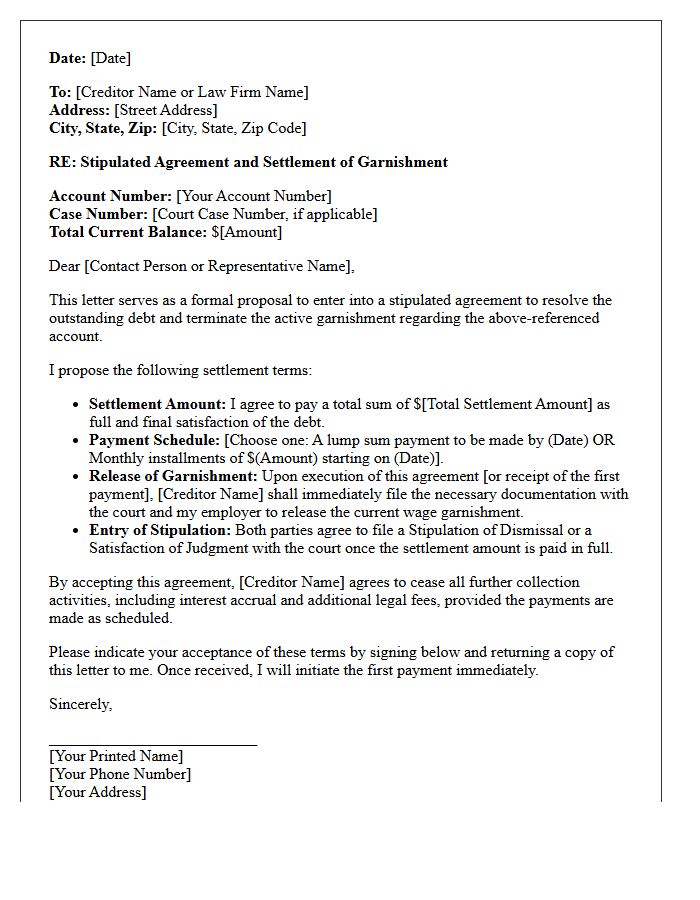
A Stipulated Agreement is a legally binding contract where a debtor and creditor agree on a specific repayment plan to avoid further litigation. It often includes a Garnishment Settlement Letter, which outlines terms to stop or prevent the seizure of wages. This formal arrangement provides a structured path to resolve debt while protecting your income. Understanding these documents is essential because failing to meet the agreed terms can result in an immediate judgment or renewed collection actions. Always ensure the settlement terms are clearly defined in writing before signing.
Final Notice of Settlement Offer for Wage Garnishment Letter
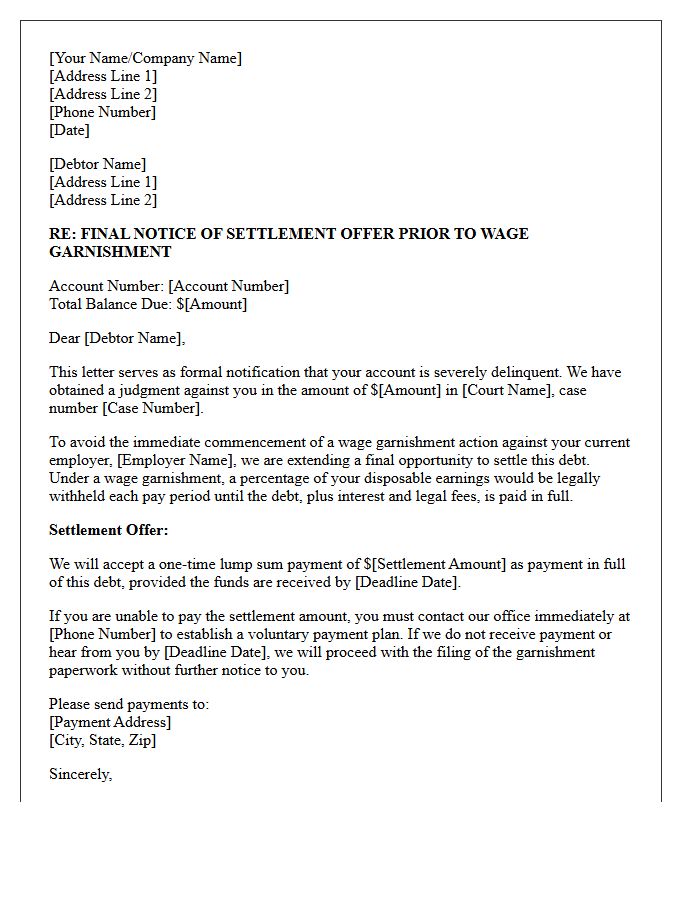
A Final Notice of Settlement Offer for Wage Garnishment is a critical legal document indicating that a creditor intends to seize a portion of your earnings to satisfy a debt. Receiving this means previous collection attempts failed, and legal action is imminent. To prevent immediate financial loss, you must respond before the stated deadline. You may negotiate a lower lump-sum payment or a structured plan to avoid a court-ordered garnishment. Proactive communication with the creditor or seeking legal advice is essential to protecting your income and maintaining financial stability.
Reduced Balance Payoff and Garnishment Termination Letter
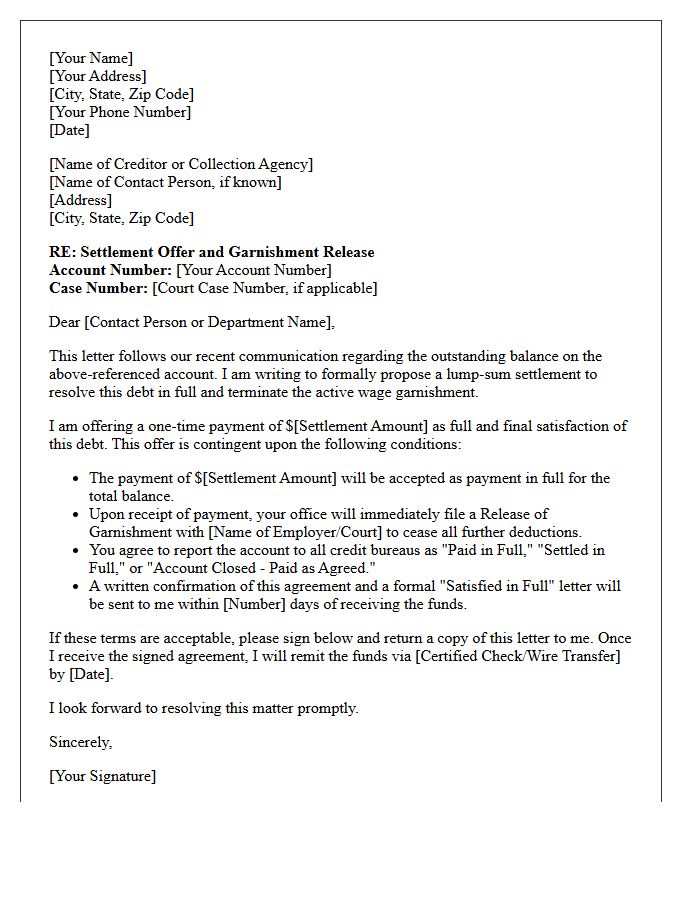
A Reduced Balance Payoff and Garnishment Termination Letter is a vital legal document confirming that a debt is settled for less than the original amount. This formal notice instructs employers or financial institutions to stop withholding wages immediately. It serves as permanent proof of debt satisfaction, preventing future collection attempts. To ensure full protection, debtors must verify that the letter explicitly references the court case number and states that the judgment is released. Always retain a copy to update credit reports and resolve any financial discrepancies regarding the closed account.
Post-Judgment Garnishment Modification and Settlement Letter
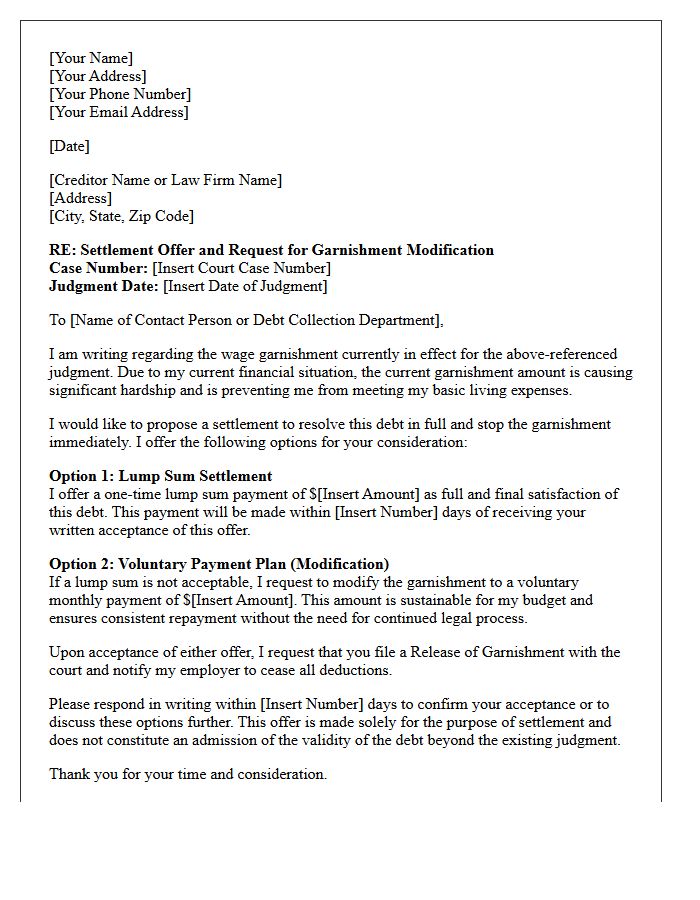
A post-judgment garnishment modification or settlement letter is a formal legal tool used to negotiate debt repayment after a court order. This document requests a reduction in wage withholding or offers a lump-sum payment to satisfy the judgment. To be effective, the letter must clearly outline financial hardship, propose a reasonable settlement amount, and request a written release of the garnishment. Sending this letter can prevent severe financial strain while providing creditors with a guaranteed recovery, often resulting in a mutually beneficial agreement that avoids further litigation or collection actions.
Debt Satisfaction and Wage Garnishment Cancellation Letter
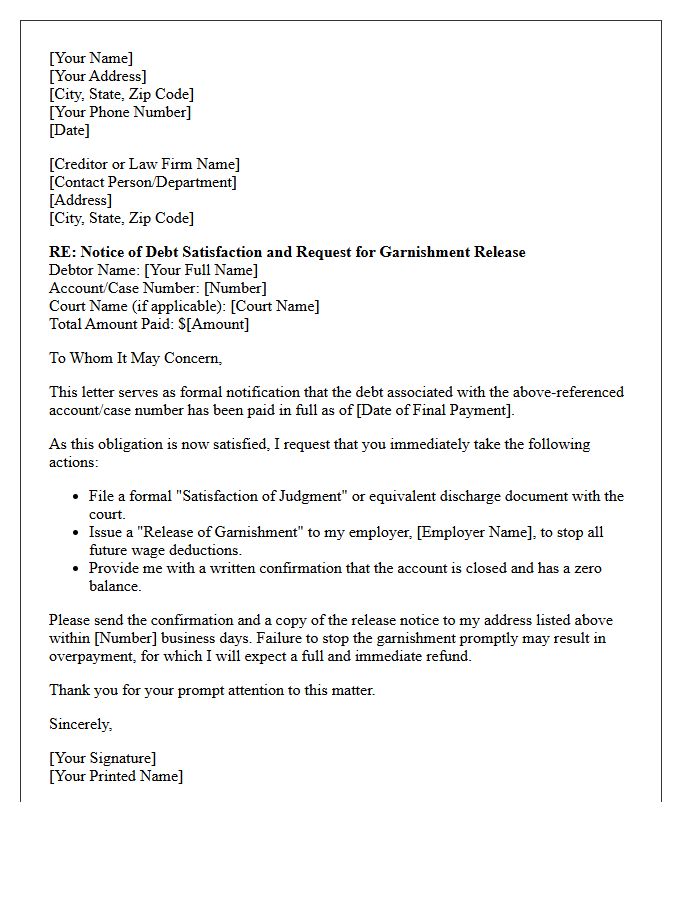
A Debt Satisfaction and Wage Garnishment Cancellation Letter is a formal legal document confirming that a judgment debt has been paid in full. Once the creditor issues this notice, it serves as mandatory proof to stop wage withholding immediately. Employers require this official release to cease administrative deductions from your paycheck. Obtaining this letter is essential for restoring your full income and ensuring your credit report accurately reflects the satisfied status of the debt, preventing further collection actions or legal complications regarding the resolved balance.
What should be included in a post-judgment wage garnishment settlement offer letter?
A settlement offer letter should include your case number, the total judgment amount, a specific lump-sum offer or payment plan proposal, a deadline for acceptance, and a request for the immediate release of the garnishment order upon payment.
Can I negotiate a settlement after a wage garnishment order has been issued?
Yes, you can negotiate a settlement at any point. Creditors often prefer a guaranteed lump-sum payment over the long-term process of collecting small increments through payroll deductions, making them open to settlement offers even after judgment.
How much should I offer to settle a post-judgment debt?
While every creditor is different, successful settlement offers typically range between 40% and 70% of the total judgment balance. The likelihood of acceptance increases if you can provide the funds in a single lump-sum payment.
Does settling a garnishment stop the interest from accruing?
Once a settlement agreement is signed and the agreed-upon amount is paid, the debt is considered satisfied in full, which stops all further interest accrual. Ensure the letter specifies that the "stipulated sum" represents a full and final satisfaction of the judgment.
What happens to the garnishment order once the creditor accepts my offer?
Upon receipt of the settlement funds, the creditor is legally required to file a "Satisfaction of Judgment" with the court and notify your employer to cease all future wage withholdings immediately.

Comments