
A Notice of Acceleration Due to Unauthorized Transfer is a formal legal demand issued when a property title is transferred without lender consent, violating the due-on-sale clause. This notice declares the entire loan balance due immediately to protect the lender's security interest. Understanding these contractual obligations is essential for homeowners and legal professionals. Below are some ready to use template.
Image cover: Official Notice of Acceleration: Unauthorized Property Transfer Templates
Letter Samples List
- Notice of Acceleration Due to Unauthorized Transfer Letter
- Mortgage Loan Acceleration and Unauthorized Transfer Letter
- Due on Sale Clause Violation Acceleration Letter
- Unauthorized Property Transfer Notice of Acceleration Letter
- Demand for Full Mortgage Payment Acceleration Letter
- Mortgage Default and Unauthorized Conveyance Letter
- Notice of Loan Acceleration Due to Title Transfer Letter
- Breach of Mortgage Contract Acceleration Letter
- Unauthorized Assumption and Loan Acceleration Letter
- Acceleration of Mortgage Debt Due to Transfer Letter
- Notice of Default and Immediate Acceleration Letter
- Unauthorized Change of Ownership Acceleration Letter
- Mortgage Lender Notice of Loan Acceleration Letter
- Violation of Transfer Restrictions Acceleration Letter
Notice of Acceleration Due to Unauthorized Transfer Letter
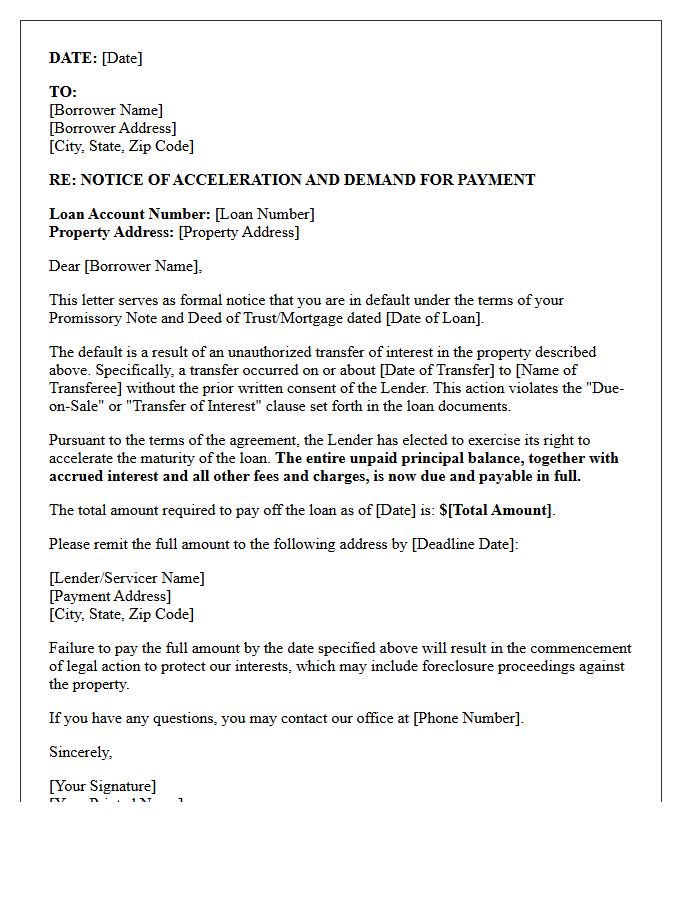
A Notice of Acceleration Due to Unauthorized Transfer is a formal legal warning issued by a lender when a property title changes hands without prior consent. This document invokes the due-on-sale clause, requiring the borrower to pay the entire remaining loan balance immediately. To avoid foreclosure, the homeowner must typically reverse the transfer or settle the debt in full. Understanding this notice is critical for anyone considering "subject-to" real estate deals or private deed transfers, as it effectively terminates the original installment payment agreement.
Mortgage Loan Acceleration and Unauthorized Transfer Letter
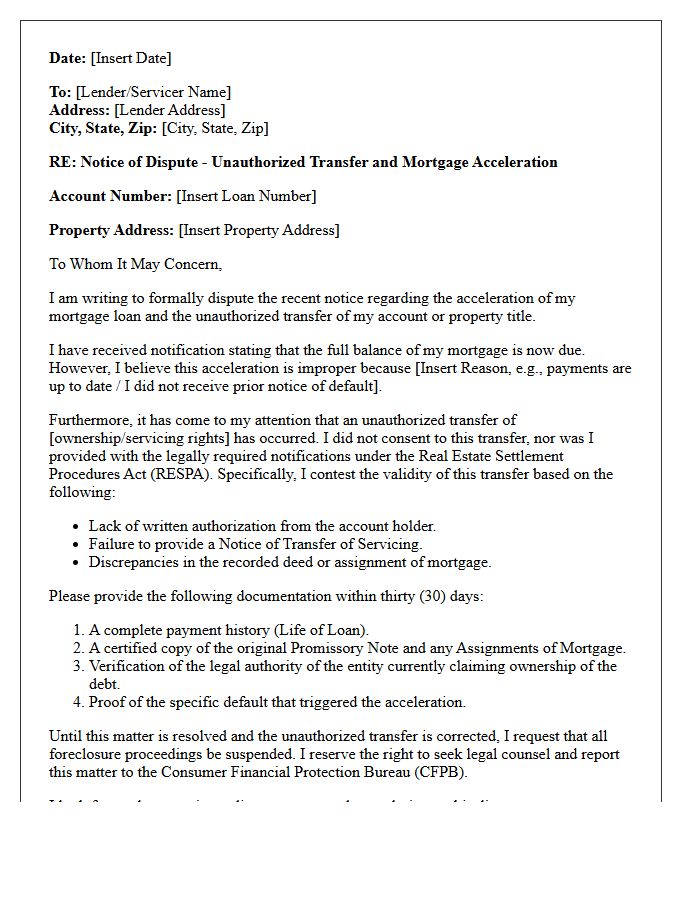
A mortgage loan acceleration occurs when a lender demands immediate full repayment, typically following a default or unauthorized transfer of ownership. This action is often triggered by the due-on-sale clause, which prevents property transfers without bank consent. If you receive an acceleration notice due to an unapproved title change, you must act quickly to resolve the breach or face foreclosure. Homeowners should always obtain written lender approval before transferring property interests to avoid triggering this legal acceleration of the debt balance.
Due on Sale Clause Violation Acceleration Letter
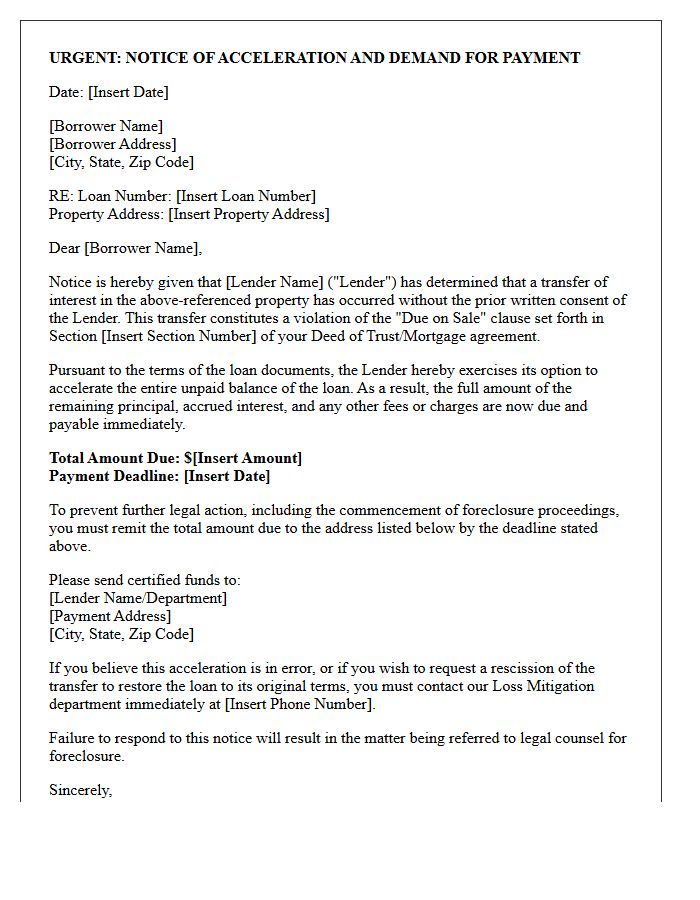
A Due on Sale Clause Violation Acceleration Letter is a formal notice sent by a lender when a property title transfers without authorization. This document informs the borrower that they have breached the mortgage contract, typically triggering the acceleration of the debt. Consequently, the entire remaining loan balance becomes due immediately. To avoid foreclosure, the owner must either pay the full amount or reverse the transfer. Understanding this risk is essential when considering creative financing methods like "subject-to" deals or unapproved deed transfers.
Unauthorized Property Transfer Notice of Acceleration Letter
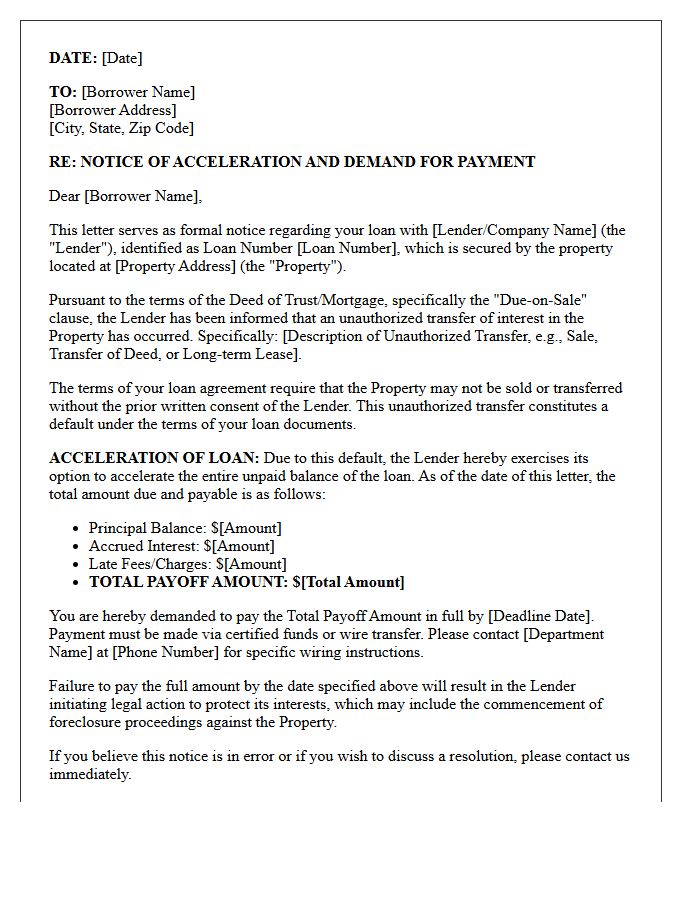
An Unauthorized Property Transfer Notice of Acceleration is a legal warning sent by lenders when a due-on-sale clause is violated. If you transfer ownership without prior bank consent, the lender can demand immediate repayment of the entire mortgage balance. Failing to resolve this acceleration typically leads to foreclosure proceedings. To protect your investment, always consult your lender before changing titles or transferring property into a trust or entity to ensure compliance with loan agreements and avoid loan default.
Demand for Full Mortgage Payment Acceleration Letter
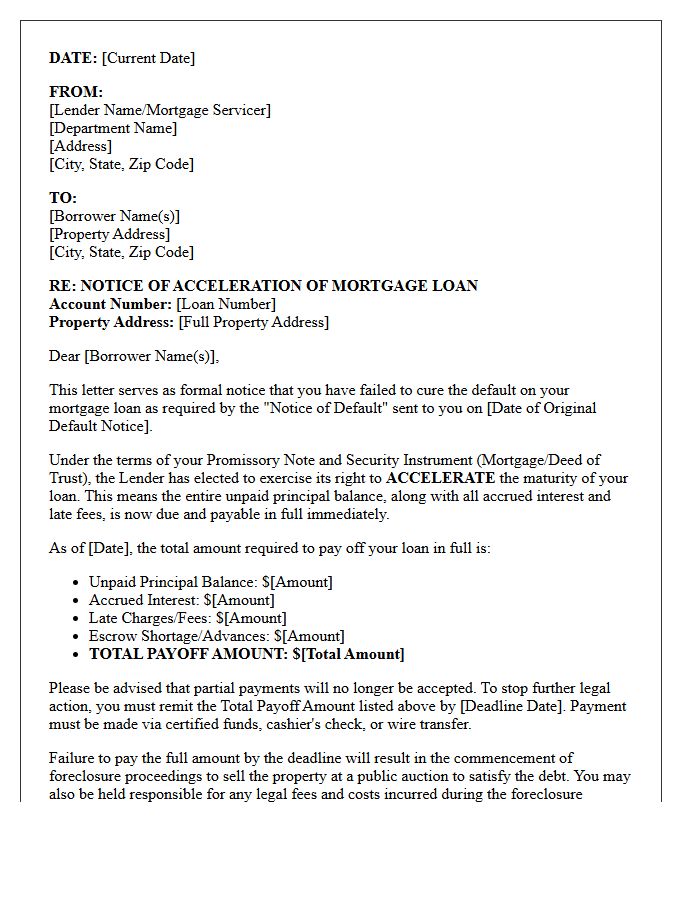
A demand for full mortgage payment acceleration letter is a formal notice sent by lenders when a borrower defaults. This document triggers the acceleration clause, demanding the entire remaining loan balance immediately rather than monthly installments. Receiving this letter is the final step before the foreclosure process begins. To avoid losing the property, borrowers must typically pay the full delinquent amount plus fees within a specific timeframe. Understanding this notice is critical for legal defense or negotiating a loan reinstatement to prevent permanent loss of the home.
Mortgage Default and Unauthorized Conveyance Letter
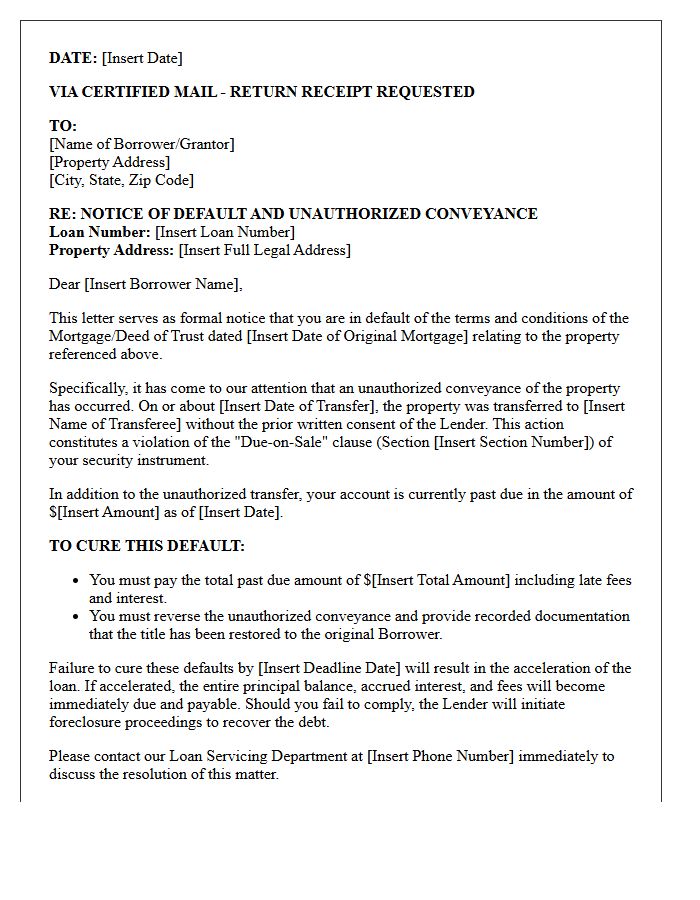
Receiving a Mortgage Default and Unauthorized Conveyance Letter indicates a critical legal issue where the property title was transferred without the lender's prior consent. This action typically triggers the due-on-sale clause, allowing the bank to accelerate the loan and demand full repayment immediately. Such letters serve as formal notice that the homeowner has breached the security instrument, potentially leading to foreclosure. To protect your interest, it is essential to resolve the unauthorized transfer or negotiate a reinstatement to prevent losing the property to a trustee sale.
Notice of Loan Acceleration Due to Title Transfer Letter
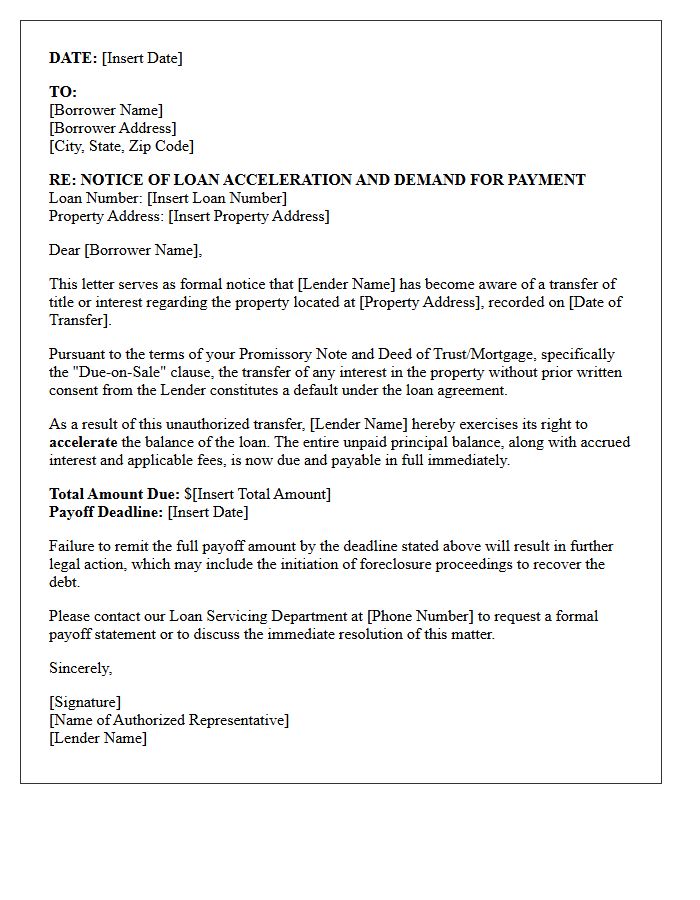
A Notice of Loan Acceleration Due to Title Transfer is a formal warning issued when a property deed changes hands without lender approval. Most mortgages contain a due-on-sale clause, allowing banks to demand immediate repayment of the entire balance if ownership is transferred. Receiving this letter means the lender is exercising its right to accelerate the debt, potentially leading to foreclosure if the loan is not paid in full. It is crucial to contact the lender immediately to discuss options like loan assumption or reversing the transfer to avoid default.
Breach of Mortgage Contract Acceleration Letter
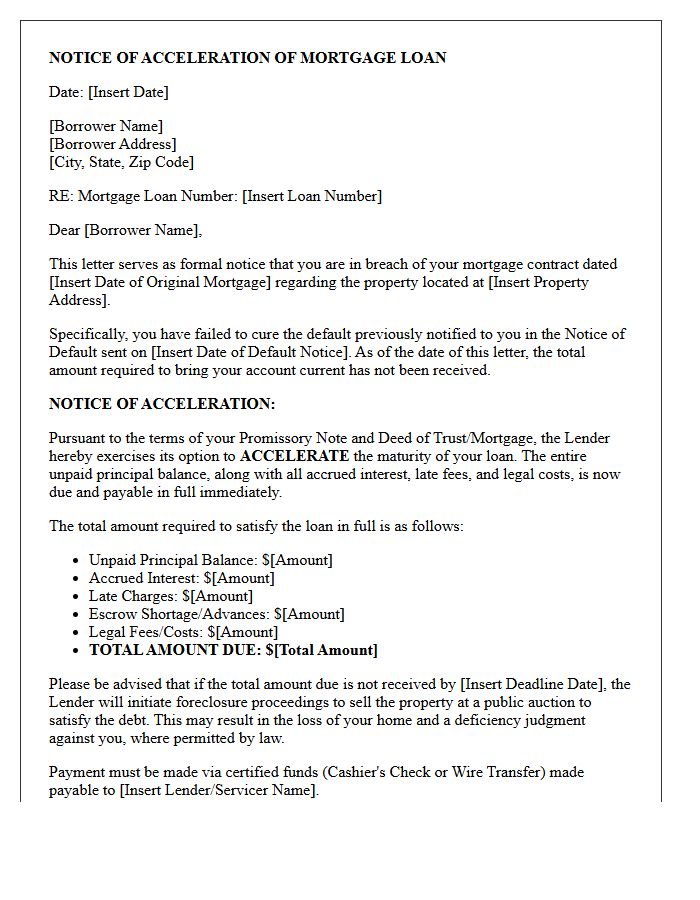
Receiving a Breach of Mortgage Contract Acceleration Letter is a critical warning that your lender is demanding the full balance of your home loan immediately. This formal notice typically occurs after consecutive missed payments, signaling the end of your installment agreement. To avoid foreclosure, you must pay the total outstanding amount or negotiate a reinstatement within the specified deadline. Ignoring this document allows the lender to initiate legal action to seize the property. It is essential to act quickly by contacting your servicer to discuss loss mitigation options or repayment plans.
Unauthorized Assumption and Loan Acceleration Letter
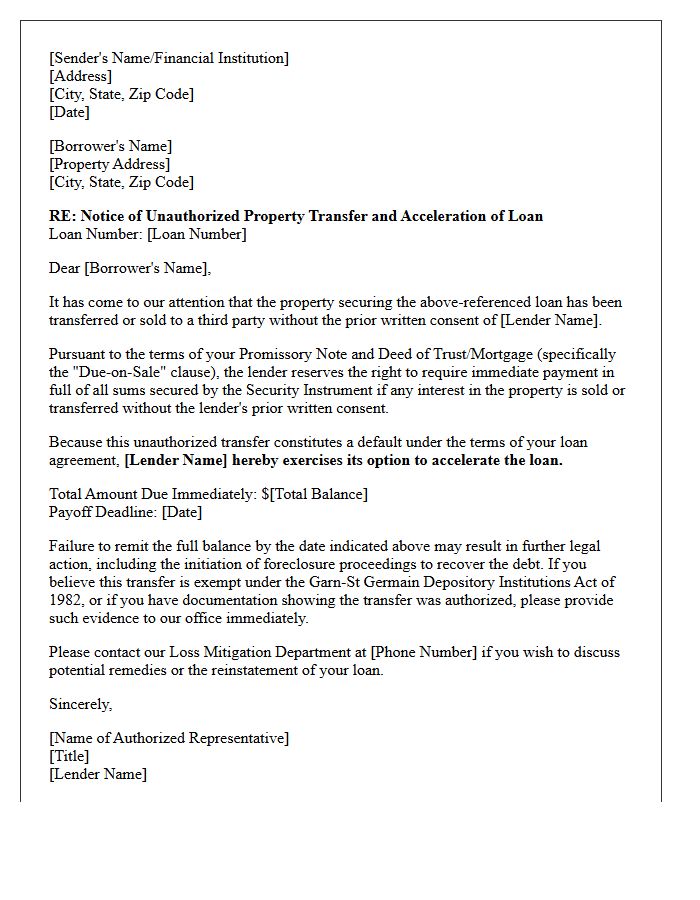
An Unauthorized Assumption and Loan Acceleration Letter is a legal notice sent by a lender when a property title transfers without their consent. This action typically violates the Due-on-Sale clause found in most mortgages. If the lender does not approve the new owner, they can demand immediate payment of the entire remaining balance. Failing to resolve this acceleration often leads to formal foreclosure proceedings. Homeowners should always seek lender permission before transferring property interests to avoid the risk of losing their home to foreclosure due to unapproved title changes.
Acceleration of Mortgage Debt Due to Transfer Letter
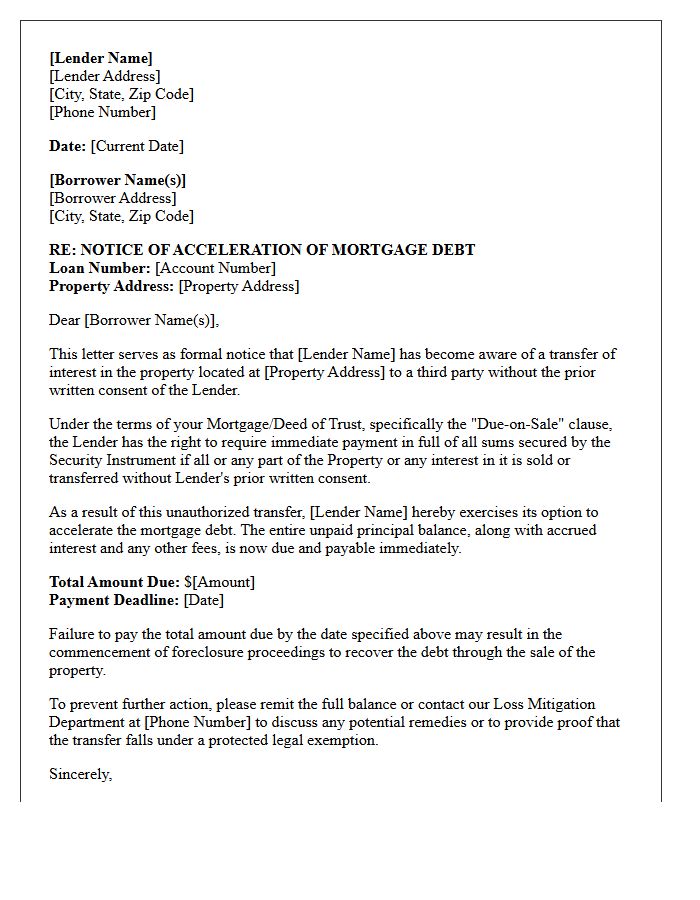
An Acceleration of Mortgage Debt Due to Transfer occurs when a lender invokes the Due-on-Sale Clause after a property title changes ownership without prior approval. This formal letter notifies the borrower that the entire remaining loan balance is now due immediately. Unauthorized transfers, such as unapproved deeds or certain trust assignments, trigger this contractual right to prevent interest rate loss. To avoid potential foreclosure, homeowners must obtain written lender consent or verify legal exemptions under the Garn-St. Germain Act before transferring any real estate interests.
Notice of Default and Immediate Acceleration Letter
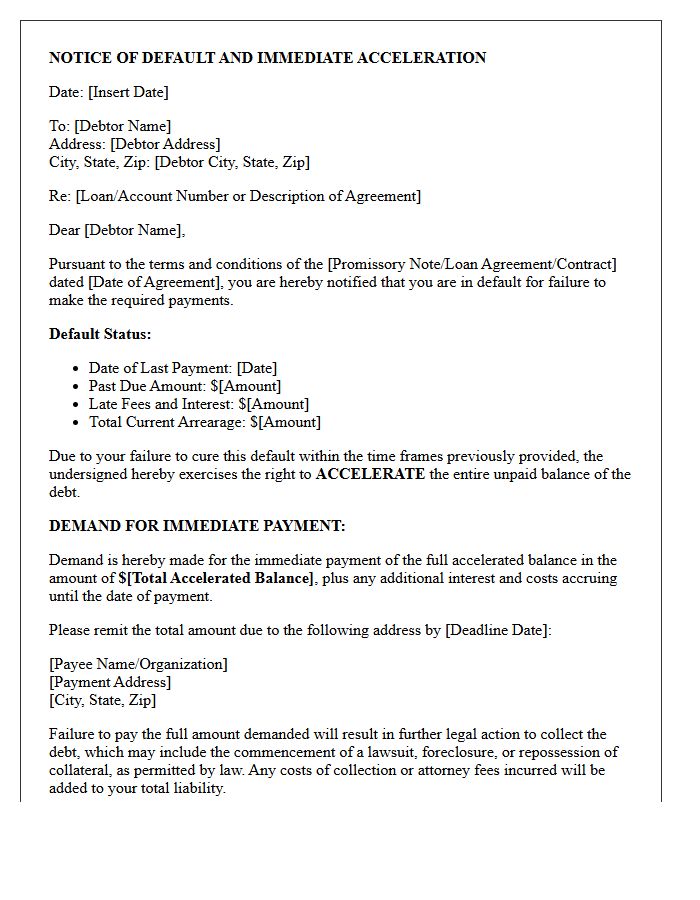
A Notice of Default and Immediate Acceleration Letter is a formal legal warning from a lender indicating a serious breach of contract. Receiving this notice means the foreclosure process has officially begun. The most critical aspect is the acceleration clause, which demands the entire remaining loan balance be paid immediately rather than in monthly installments. To prevent a total loss of property, borrowers must act quickly to negotiate a reinstatement or seek legal counsel before the deadline expires. Understanding these terms is essential for protecting your home and credit score.
Unauthorized Change of Ownership Acceleration Letter
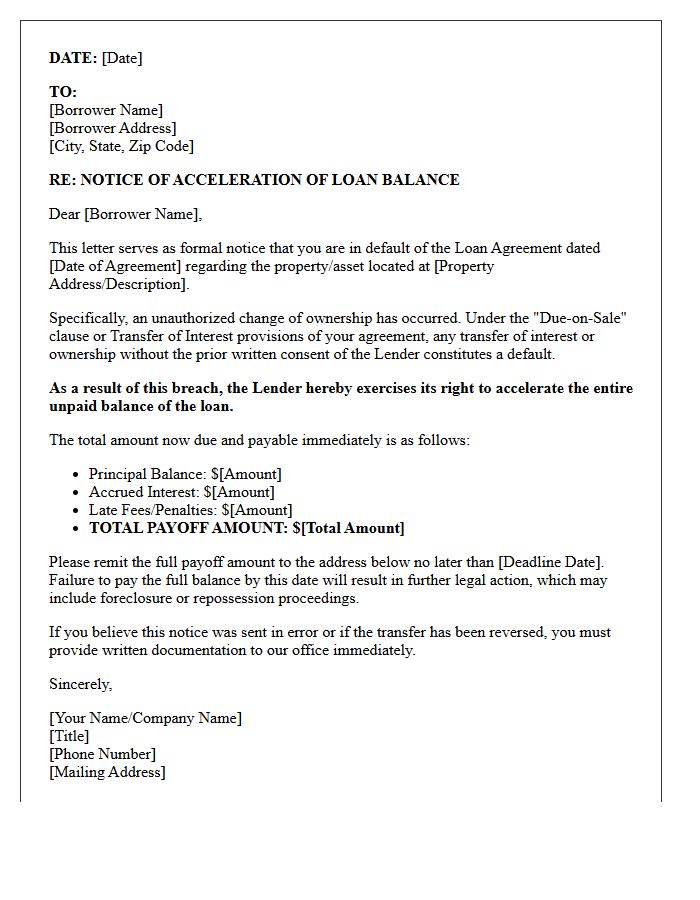
An Unauthorized Change of Ownership Acceleration Letter is a formal legal notice issued by a lender when a property title transfers without prior consent. This document triggers a due-on-sale clause, demanding immediate repayment of the entire remaining loan balance. Failure to settle the debt or reverse the transfer typically leads to foreclosure proceedings. Borrowers must understand that most conventional mortgages prohibit unapproved ownership shifts to protect the lender's security interest. Timely communication with the servicer is essential to avoid loan acceleration and legal action against the underlying real estate asset.
Mortgage Lender Notice of Loan Acceleration Letter
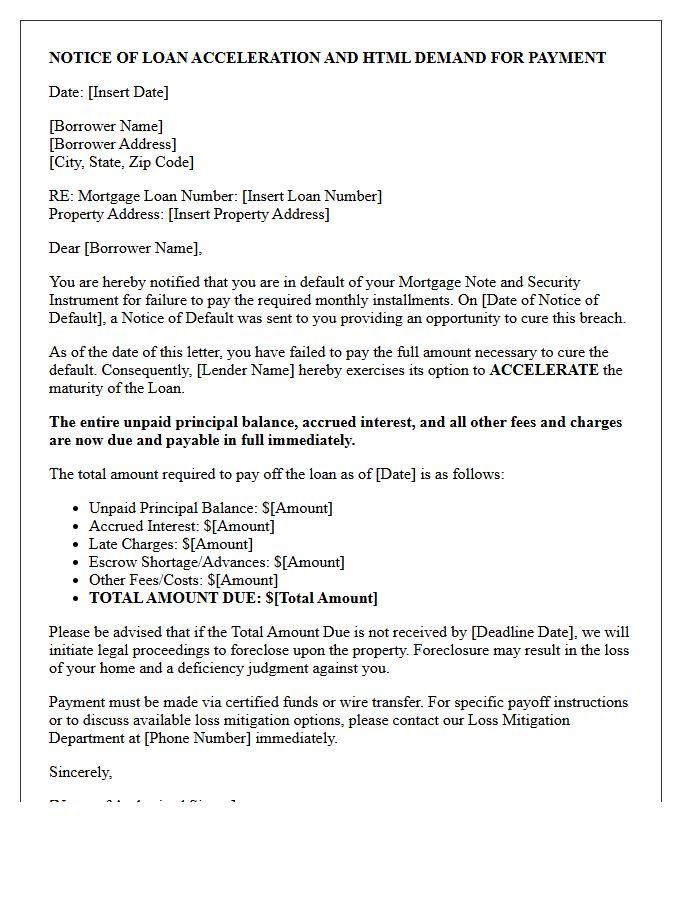
A mortgage lender notice of loan acceleration is a formal warning that your foreclosure process is imminent. It typically occurs after multiple missed payments, notifying the borrower that the entire loan balance is now due immediately. Once a loan is accelerated, you lose the right to make standard monthly installments. To prevent the loss of your home, you must pay the full amount or negotiate a reinstatement or loan modification. Ignoring this letter is critical, as it is the final step before the lender initiates legal action to seize the property.
Violation of Transfer Restrictions Acceleration Letter
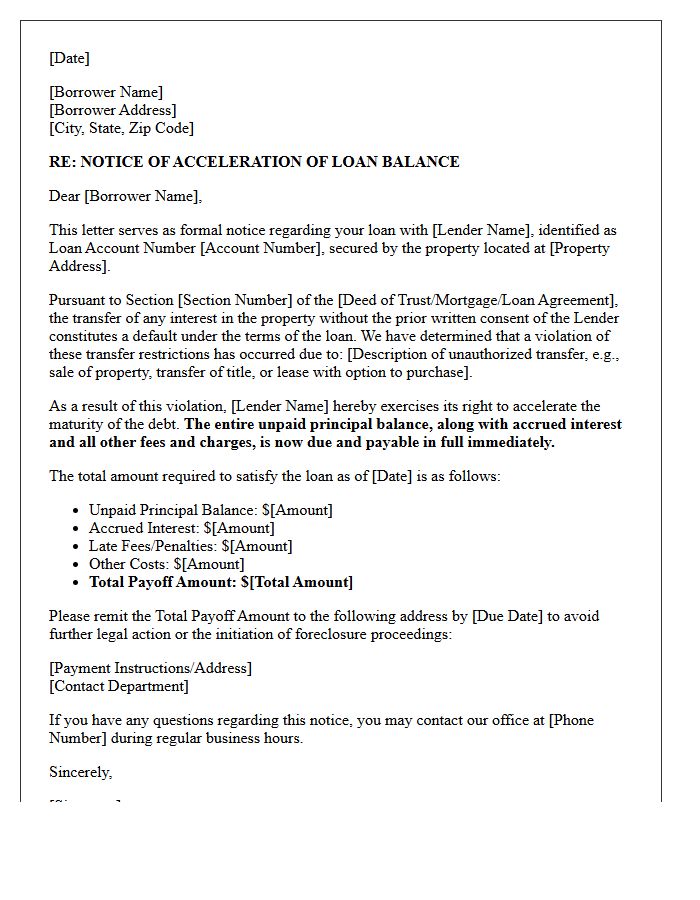
A Violation of Transfer Restrictions Acceleration Letter is a formal notice issued by a lender when a property owner transfers title or interest without prior consent. This action triggers the due-on-sale clause, allowing the mortgagee to demand immediate repayment of the entire outstanding loan balance. To avoid foreclosure, borrowers must rectify the unauthorized transfer or pay the debt in full. Understanding these contractual limitations is essential before engaging in estate planning, entity transfers, or private sales to ensure compliance with mortgage security instruments.
What is a Notice of Acceleration Due to Unauthorized Transfer?
A Notice of Acceleration is a formal legal notification from a lender stating that the full remaining balance of a mortgage loan is due immediately because the property title was transferred without the lender's prior written consent.
Why did I receive an acceleration notice after transferring my property?
Most mortgages contain a "Due-on-Sale" clause (Section 18 in many standard deeds of trust), which allows the lender to demand full payment if the property is sold or transferred to a third party without their approval.
Can a lender accelerate a loan for a transfer to a family trust?
Under the Garn-St Germain Depository Institutions Act of 1982, lenders are generally prohibited from enforcing the due-on-sale clause for transfers into an inter vivos (living) trust where the borrower remains a beneficiary and the transfer does not relate to occupancy rights.
How long do I have to pay the full balance after receiving the notice?
The notice typically provides a specific deadline, often 30 days, to pay the total outstanding principal, interest, and fees. Failure to pay or resolve the unauthorized transfer within this window may result in the commencement of foreclosure proceedings.
How can I resolve a Notice of Acceleration without paying the full balance?
You may be able to resolve the notice by "curing" the default, which involves transferring the property title back to the original borrower, obtaining retroactive consent from the lender, or refinancing the loan with a new financial institution.


Comments