
A Conditional Approval Subject to Flood Insurance letter informs borrowers that their loan is approved provided they secure adequate coverage for properties in high-risk zones. This document outlines mandatory federal requirements and specific policy limits needed before closing. Ensuring compliance protects both the lender and your investment. To simplify your documentation process, below are some ready to use template.
Image cover: Mastering Conditional Approval Letters: Flood Insurance Compliance Templates
Letter Samples List
- Conditional Approval Subject to Flood Insurance Coverage Letter
- Notice of Required Flood Insurance Commitment Letter
- Conditional Mortgage Approval Pending Flood Zone Verification Letter
- Flood Insurance Binder Request and Conditional Approval Letter
- Pre-Closing Flood Insurance Requirement Notification Letter
- Conditional Loan Approval Pending Hazard and Flood Insurance Letter
- Special Flood Hazard Area Conditional Approval Letter
- Mortgage Approval Subject to National Flood Insurance Program Participation Letter
- Outstanding Loan Conditions and Flood Insurance Verification Letter
- Final Conditional Approval Subject to Flood Policy Declaration Letter
- Elevation Certificate and Flood Insurance Conditional Commitment Letter
- Private Flood Insurance Policy Conditional Acceptance Letter
Conditional Approval Subject to Flood Insurance Coverage Letter
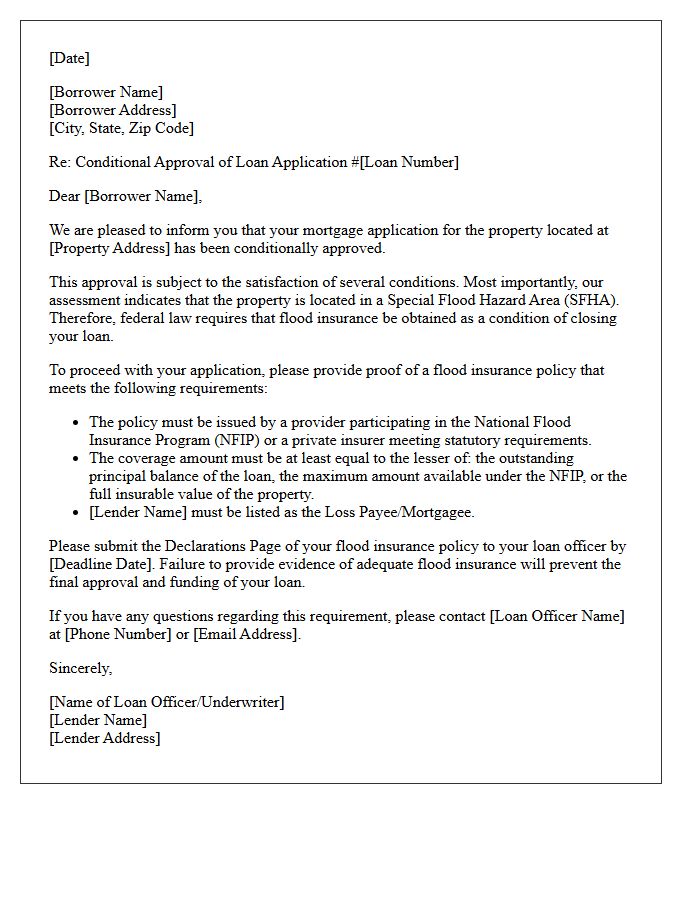
A Conditional Approval Subject to Flood Insurance Coverage Letter is a formal notice from a lender indicating your mortgage is approved provided you secure flood insurance. This requirement occurs when the property is located within a Special Flood Hazard Area as defined by FEMA. To finalize the loan, you must provide proof of a valid policy that meets specific coverage limits. It is crucial to obtain this compliance documentation promptly to avoid closing delays, as lenders cannot legally fund the loan without protecting the collateral against potential water damage risks.
Notice of Required Flood Insurance Commitment Letter
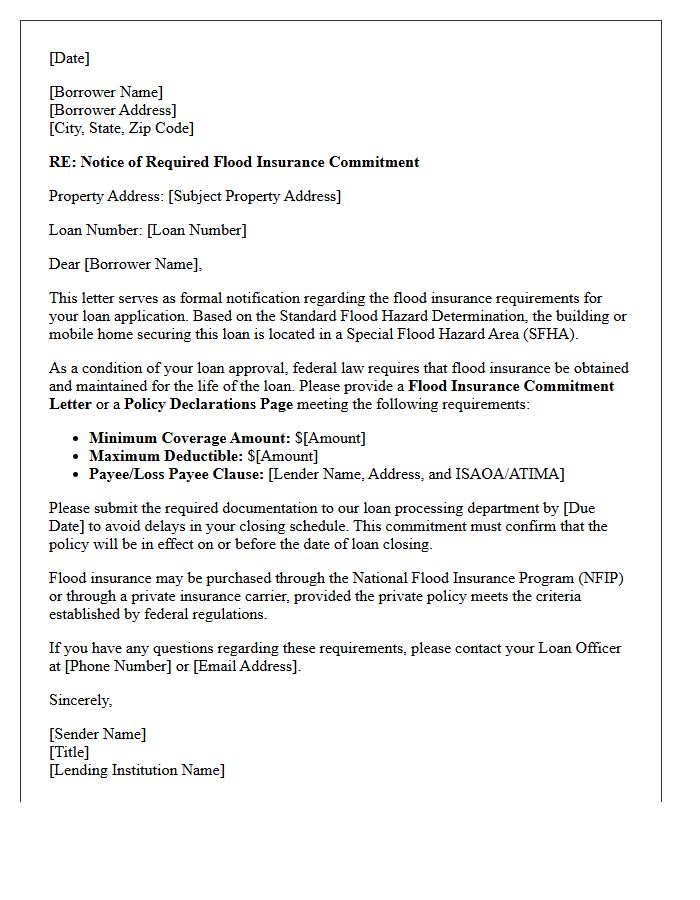
A Notice of Required Flood Insurance Commitment Letter is a critical document notifying borrowers that their property resides in a Special Flood Hazard Area. Federal law mandates that you obtain adequate flood insurance before a mortgage can be finalized. This letter serves as formal proof that coverage is secured, protecting the lender's investment and your assets against water damage. Ensuring this commitment is processed early prevents closing delays and confirms compliance with the National Flood Insurance Program requirements, making it a vital step in the home-buying journey.
Conditional Mortgage Approval Pending Flood Zone Verification Letter
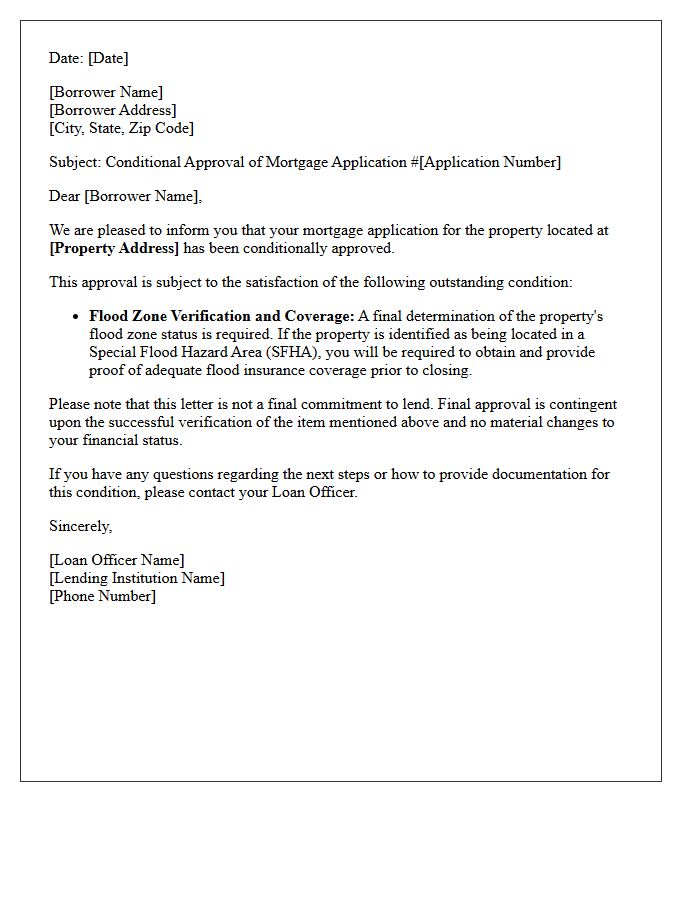
A conditional mortgage approval means the lender is ready to fund your loan, provided you secure a flood zone verification letter. This document confirms if the property resides in a high-risk area. If the home is located within a Special Flood Hazard Area, federal law requires you to obtain flood insurance before closing. This contingency is critical because it directly impacts your monthly debt-to-income ratio and total closing costs. Promptly providing this certification ensures your loan stays on track and protects your investment from potential environmental liabilities.
Flood Insurance Binder Request and Conditional Approval Letter
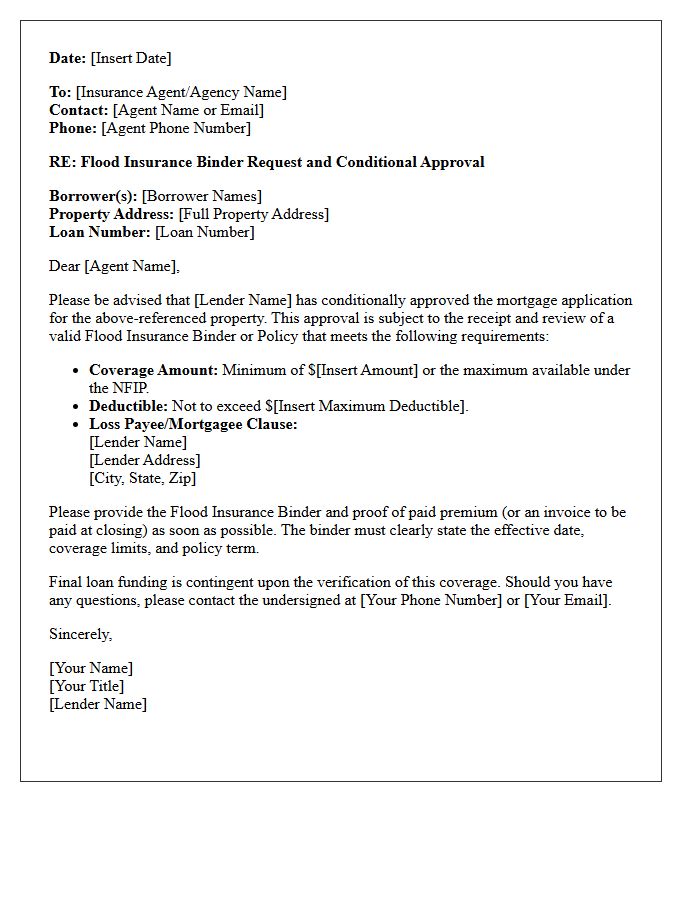
A Flood Insurance Binder Request is a formal notification sent to an agent to initiate coverage required for a mortgage closing. It often coincides with a Conditional Approval Letter, which outlines the specific underwriting requirements a borrower must meet before final loan funding. Lenders mandate these documents to ensure the property is protected against water damage before closing. Verifying accurate policy limits and effective dates is crucial to avoid processing delays. These records serve as temporary proof of coverage until the final policy is officially issued by the carrier.
Pre-Closing Flood Insurance Requirement Notification Letter
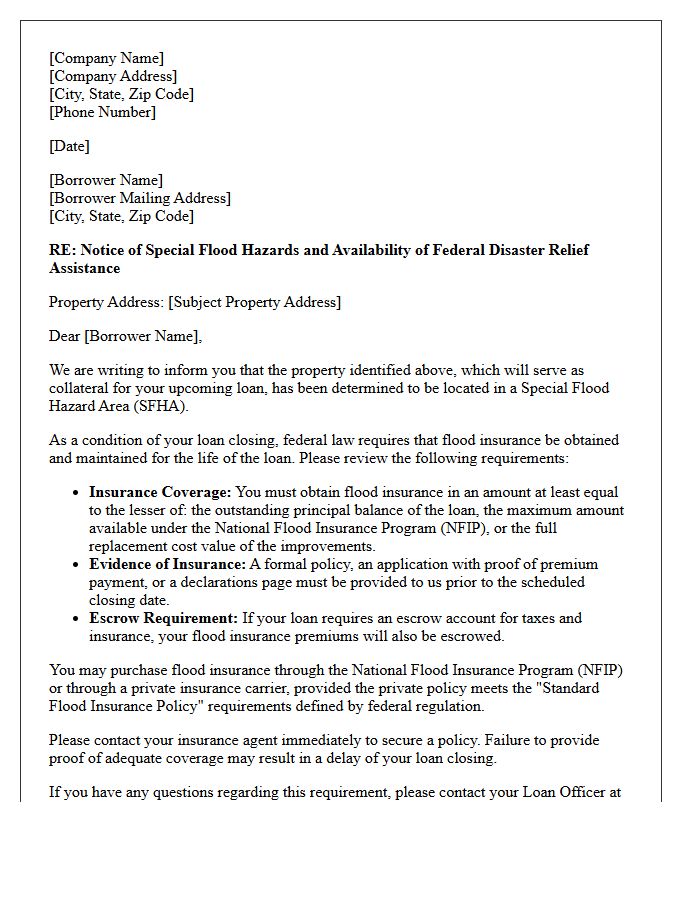
A Pre-Closing Flood Insurance Requirement Notification Letter is a critical document informing borrowers that their property resides in a Special Flood Hazard Area. Federal law mandates that lenders provide this notice to ensure compliance before loan origination. It outlines the necessity of obtaining adequate coverage to protect the collateral against water damage. Borrowers must secure a policy through the NFIP or a private insurer prior to settlement. Timely acknowledgement is essential to prevent closing delays and verify that the mandatory purchase requirement is met for the life of the loan.
Conditional Loan Approval Pending Hazard and Flood Insurance Letter
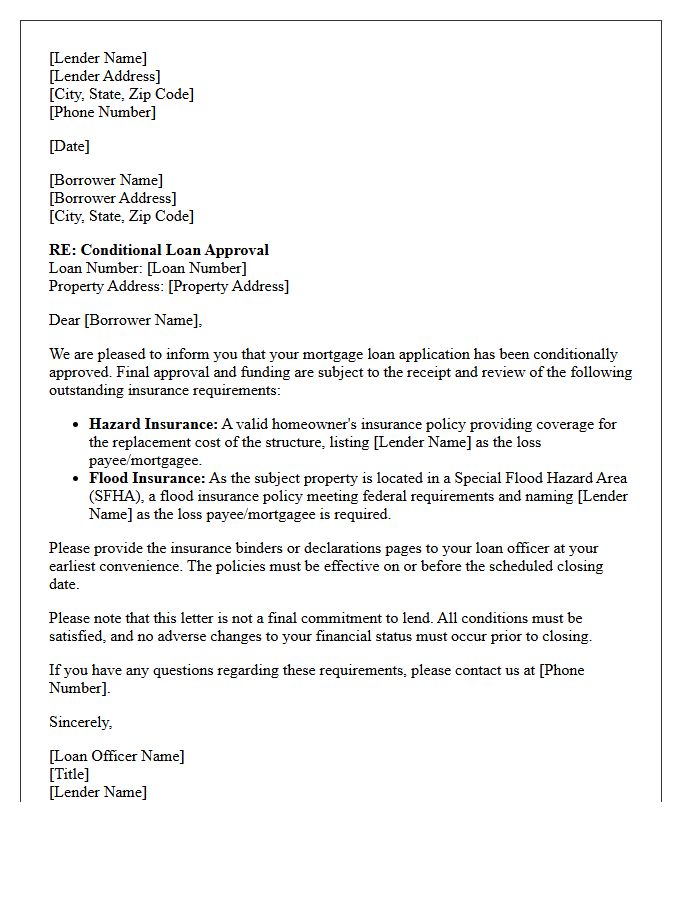
A Conditional Loan Approval Pending Hazard and Flood Insurance Letter confirms your mortgage is approved, provided you secure adequate coverage. Lenders require Hazard Insurance to protect the structure against fire or storms, while Flood Insurance is mandatory if the property sits in a high-risk flood zone. This letter is a critical milestone, ensuring the lender's collateral is protected before final funding. To satisfy these conditions, you must provide proof of coverage and a paid premium receipt to prevent closing delays and finalize your home purchase.
Special Flood Hazard Area Conditional Approval Letter
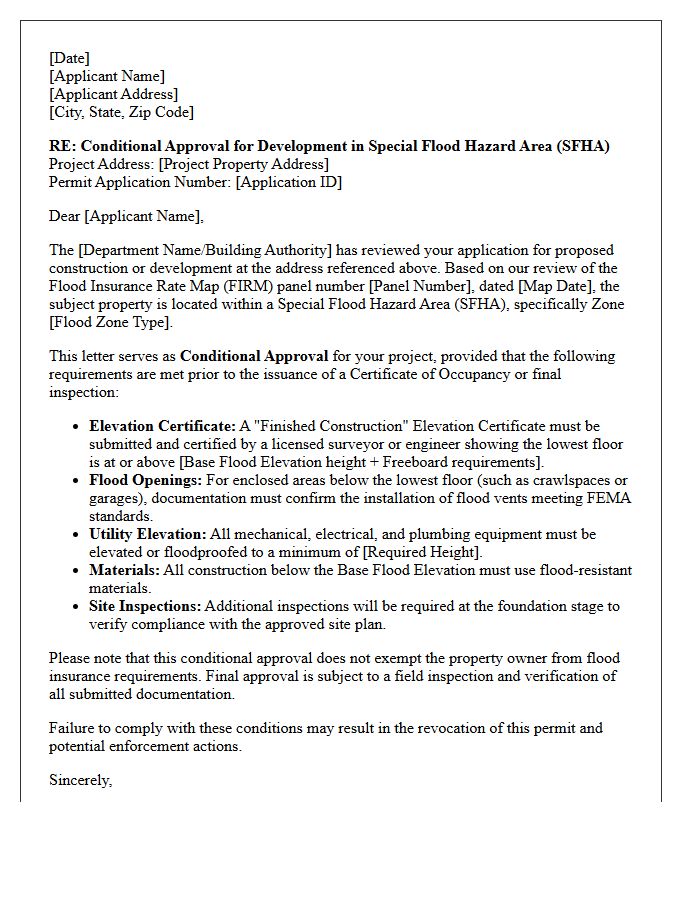
A Conditional Letter of Map Revision (CLOMR) is a formal document issued by FEMA providing conditional approval for proposed projects. It confirms that a planned development, such as a levee or fill, will meet NFPA standards and modify the Special Flood Hazard Area (SFHA) boundaries once completed. This letter is essential for securing construction permits and ensuring the final project successfully transitions to a permanent map revision, potentially reducing future flood insurance requirements. It serves as a regulatory safeguard, ensuring structural changes do not negatively impact regional flood risk levels.
Mortgage Approval Subject to National Flood Insurance Program Participation Letter
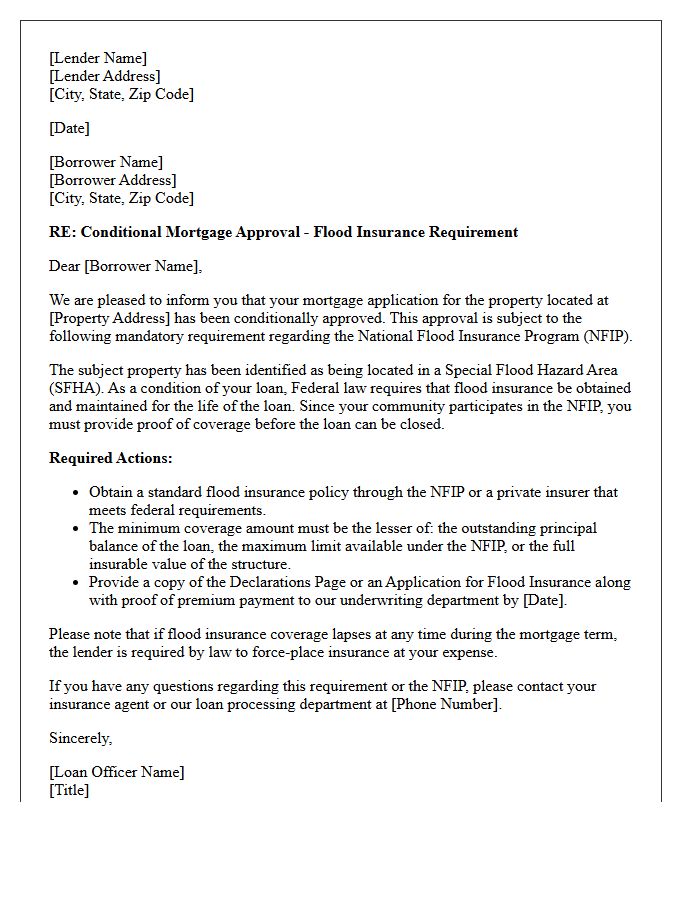
A mortgage approval subject to a National Flood Insurance Program (NFIP) Participation Letter confirms that financing is conditional upon the community's involvement in federal flood management. If a property is located in a Special Flood Hazard Area, the lender requires formal verification that the local government participates in the NFIP. This ensures the homeowner can purchase flood insurance, which is mandatory for securing the loan. Without this active participation, federal backing is restricted, potentially stalling the closing process until the community's eligibility is confirmed or updated.
Outstanding Loan Conditions and Flood Insurance Verification Letter
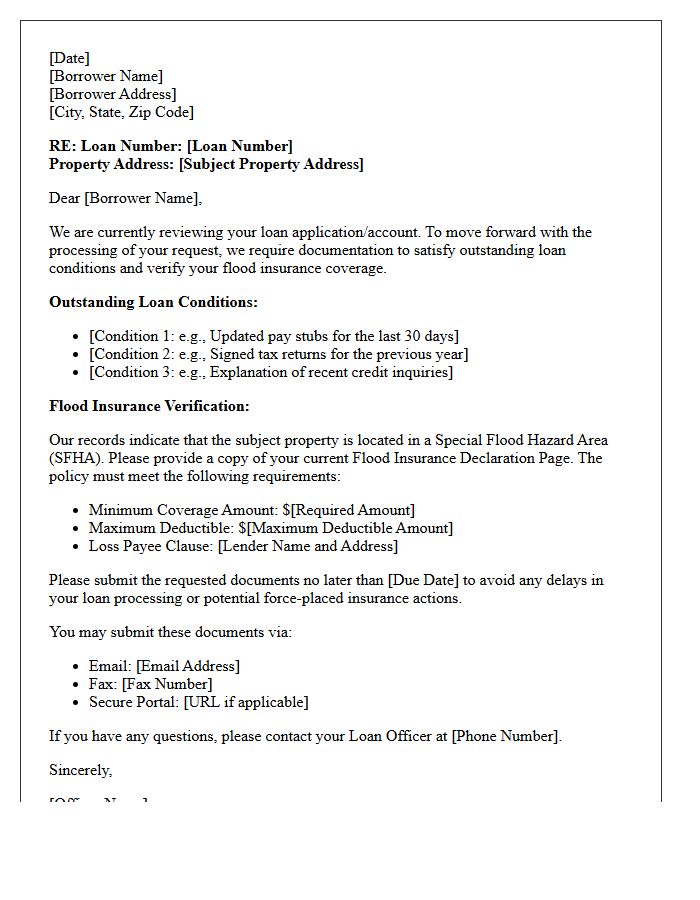
Lenders issue a Flood Insurance Verification Letter to confirm that a property is adequately protected against water damage. This document ensures compliance with Outstanding Loan Conditions, which require active coverage for homes located in high-risk zones. Borrowers must provide proof that their policy meets the minimum coverage requirements specified by federal law and the lender's mortgage agreement. Failing to maintain this mandatory protection can lead to forced-placed insurance, higher costs, and potential loan default, making timely verification essential for maintaining financial security and legal standing.
Final Conditional Approval Subject to Flood Policy Declaration Letter
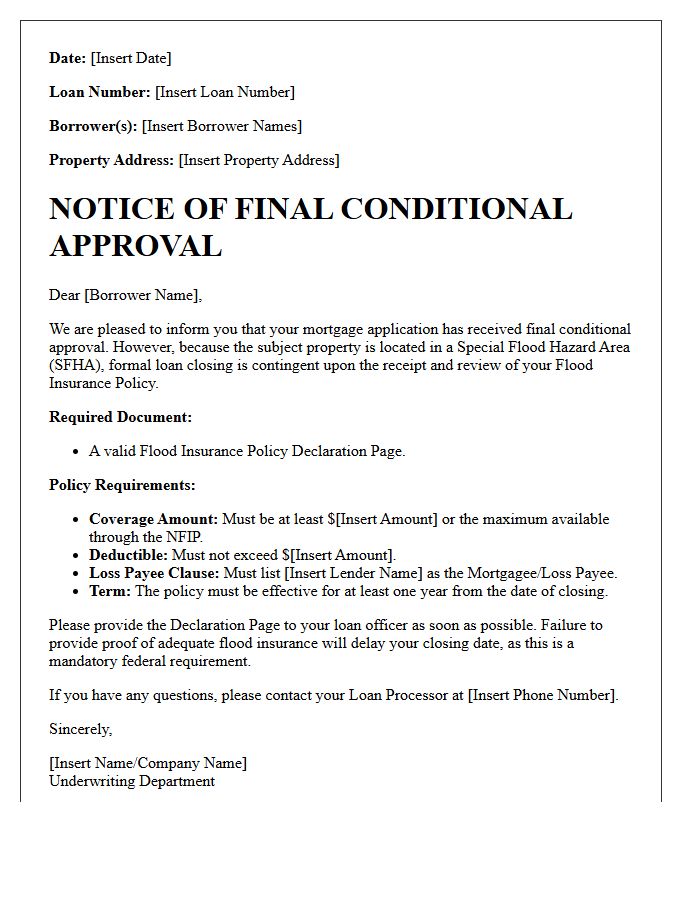
A Final Conditional Approval Subject to Flood Policy Declaration Letter indicates your mortgage is approved pending proof of flood insurance. If the property sits in a Special Flood Hazard Area, lenders require this document to protect the collateral against water damage. To satisfy this funding condition, you must provide a valid declaration page showing adequate coverage limits and the lender listed as the loss payee. Failure to secure this policy before closing will delay your loan signing and prevent the final release of mortgage funds.
Elevation Certificate and Flood Insurance Conditional Commitment Letter
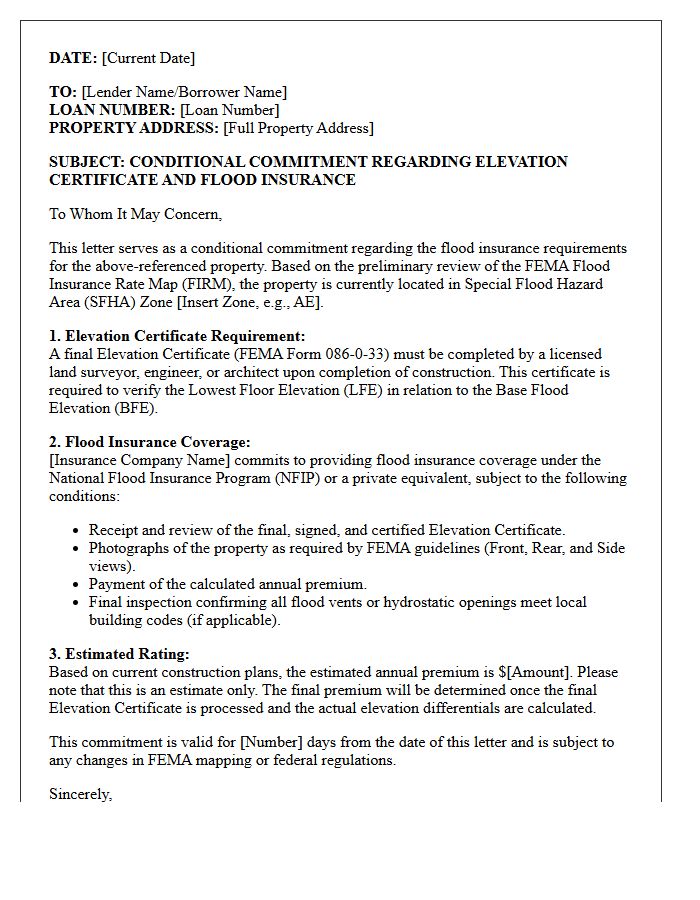
An Elevation Certificate is a vital document verifying a building's height relative to local flood levels, directly influencing flood insurance premiums. It ensures accurate risk assessment under FEMA guidelines. Complementing this, a Flood Insurance Conditional Commitment Letter outlines estimated coverage costs and requirements before a policy is finalized. Together, these documents provide financial transparency and essential data for property owners to mitigate risks, secure financing, and ensure compliance with mandatory insurance regulations in high-risk areas.
Private Flood Insurance Policy Conditional Acceptance Letter
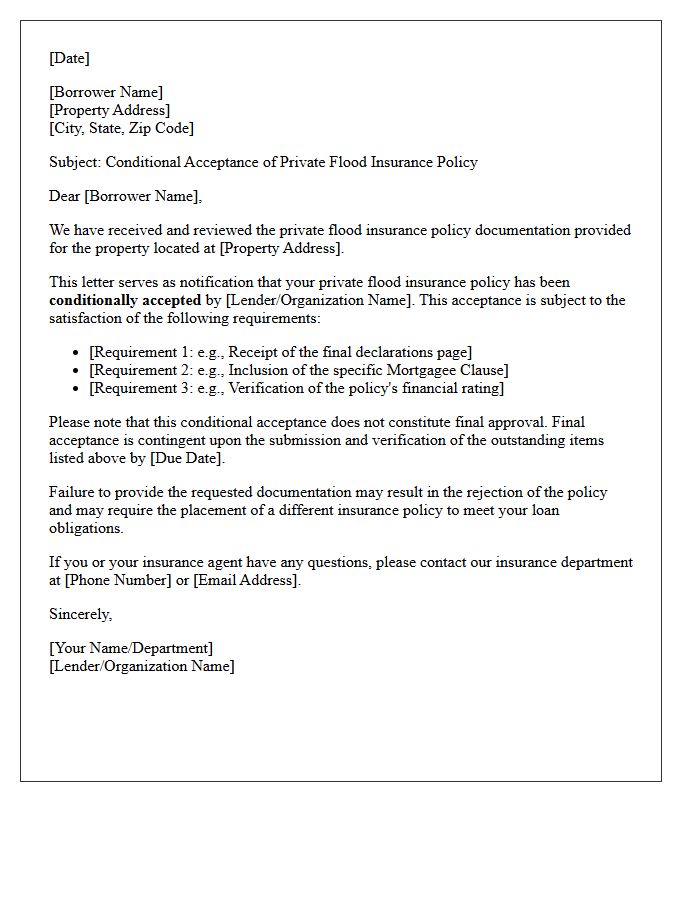
A Private Flood Insurance Policy Conditional Acceptance Letter is a document issued by mortgage lenders to signify preliminary approval of an external policy. It confirms that the private coverage meets federal mandatory purchase requirements under the Biggert-Waters Act. However, acceptance remains "conditional" until final underwriting verification and proof of premium payment are completed. Homeowners must ensure the policy includes the compliance guarantee language to satisfy escrow mandates and avoid forced-placed insurance. This letter serves as critical communication during the home-buying process to guarantee continuous asset protection against rising flood risks.
What is a Conditional Approval Subject to Flood Insurance letter?
A Conditional Approval Subject to Flood Insurance letter is a formal notice from a lender stating that your loan is approved, provided you obtain and submit proof of an adequate flood insurance policy for the property before closing.
Why am I required to obtain flood insurance for my loan approval?
This requirement is triggered when a Standard Flood Hazard Determination (SFHD) reveals that the property is located in a Special Flood Hazard Area (SFHA), where federal law mandates insurance coverage for properties secured by government-backed mortgages.
What are the minimum coverage requirements for the flood insurance policy?
Generally, you must carry coverage equal to the lesser of three amounts: the outstanding principal balance of the loan, the maximum amount available through the National Flood Insurance Program (NFIP), or the full insurable value (Replacement Cost Value) of the building.
Can I provide a private flood insurance policy instead of an NFIP policy?
Yes, lenders are typically required to accept private flood insurance policies as long as the coverage is at least as broad as a standard NFIP policy and meets specific criteria defined by federal lending regulations.
What documentation must I provide to satisfy this loan condition?
To satisfy the condition, you must submit a copy of the flood insurance Policy Declarations page or an Application for Flood Insurance along with proof of premium payment, ensuring the lender is listed as the loss payee/mortgagee.

Comments