
An Escrow Account Payment Adjustment Notice informs homeowners of changes to their monthly mortgage payment due to fluctuations in property taxes or insurance premiums. This essential document explains shortages, surpluses, and updated installment amounts to ensure financial transparency. Understanding these adjustments helps you manage your household budget effectively. To simplify your communication, below are some ready to use templates.
Image cover: Understanding Your Escrow Account Payment Adjustment: Notices and Templates
Letter Samples List
- Annual Escrow Account Review and Payment Adjustment Letter
- Escrow Account Shortage Payment Adjustment Notice Letter
- Escrow Account Surplus Refund and Payment Adjustment Letter
- Property Tax Increase Escrow Payment Adjustment Letter
- Homeowners Insurance Premium Escrow Payment Adjustment Letter
- Initial Escrow Account Setup and Payment Adjustment Letter
- Supplemental Tax Assessment Escrow Payment Adjustment Letter
- Escrow Account Deficiency Repayment and Adjustment Letter
- Mortgage Escrow Account Analysis and Payment Adjustment Letter
- Hazard Insurance Rate Change Escrow Payment Adjustment Letter
- Escrow Account Payment Adjustment Notice Letter for Adjustable Rate Mortgages
- Voluntary Escrow Account Contribution and Payment Adjustment Letter
Annual Escrow Account Review and Payment Adjustment Letter
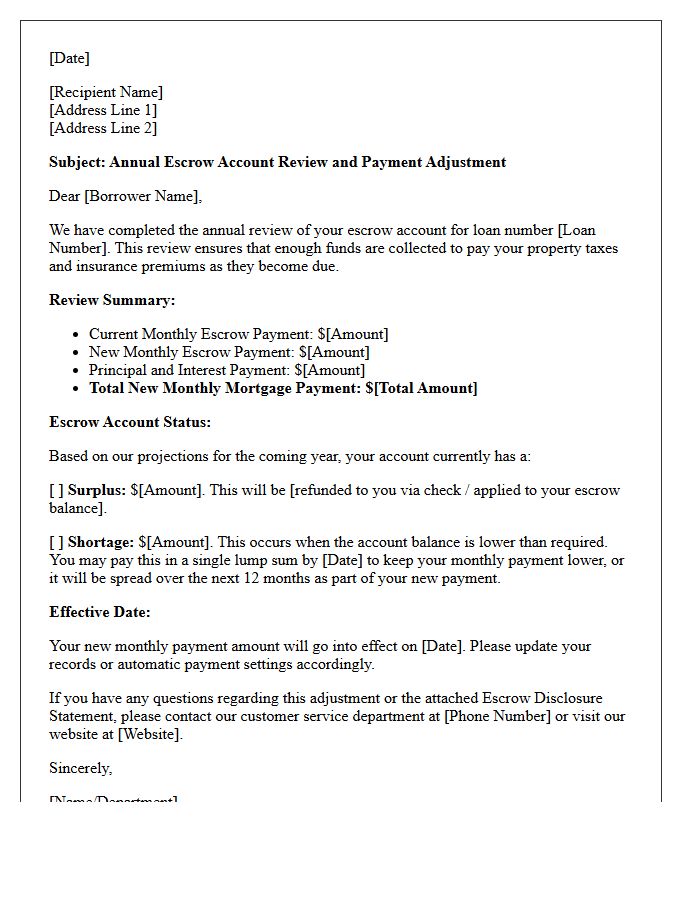
The Annual Escrow Account Review is a mandatory evaluation of your mortgage impound account to ensure sufficient funds for property taxes and insurance. This process results in a Payment Adjustment Letter, which outlines changes to your monthly mortgage obligation. If your escrow balance shows a shortage or surplus due to changing tax rates or premiums, your servicer will adjust your future payments accordingly. Reviewing this document is essential to understand your new monthly housing costs and avoid unexpected financial gaps in your escrow reserves.
Escrow Account Shortage Payment Adjustment Notice Letter
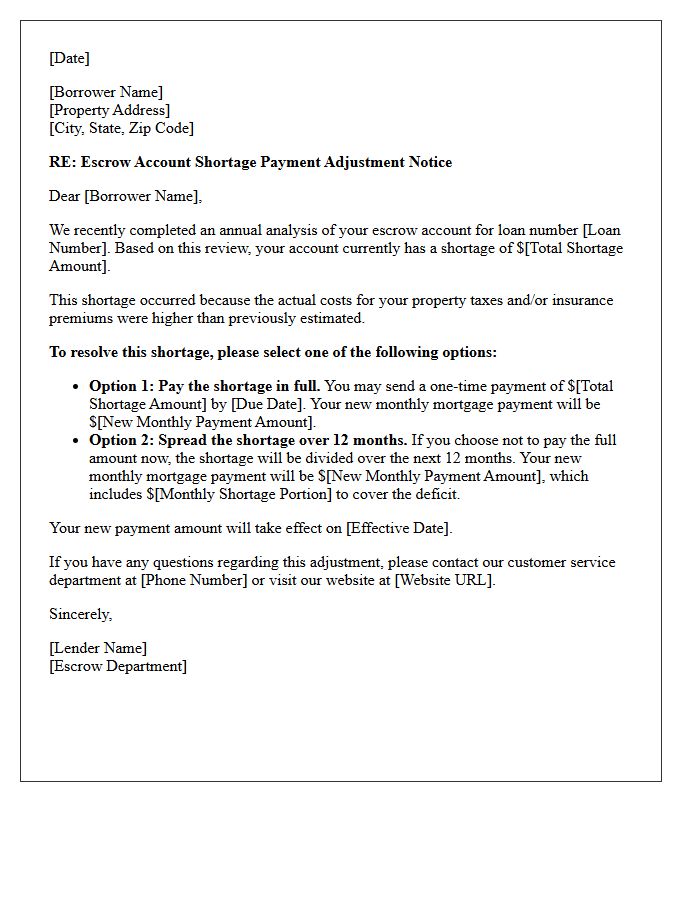
An Escrow Account Shortage Payment Adjustment Notice Letter informs homeowners that their escrow funds are insufficient to cover rising property taxes or insurance premiums. This shortage typically occurs after an annual escrow analysis. To resolve the deficit, lenders usually offer two options: making a one-time lump-sum payment to cover the gap or increasing the monthly mortgage payment to spread the cost over the coming year. Reviewing this notice promptly is essential to understand how your housing expenses will change and to ensure your impound account remains properly funded.
Escrow Account Surplus Refund and Payment Adjustment Letter
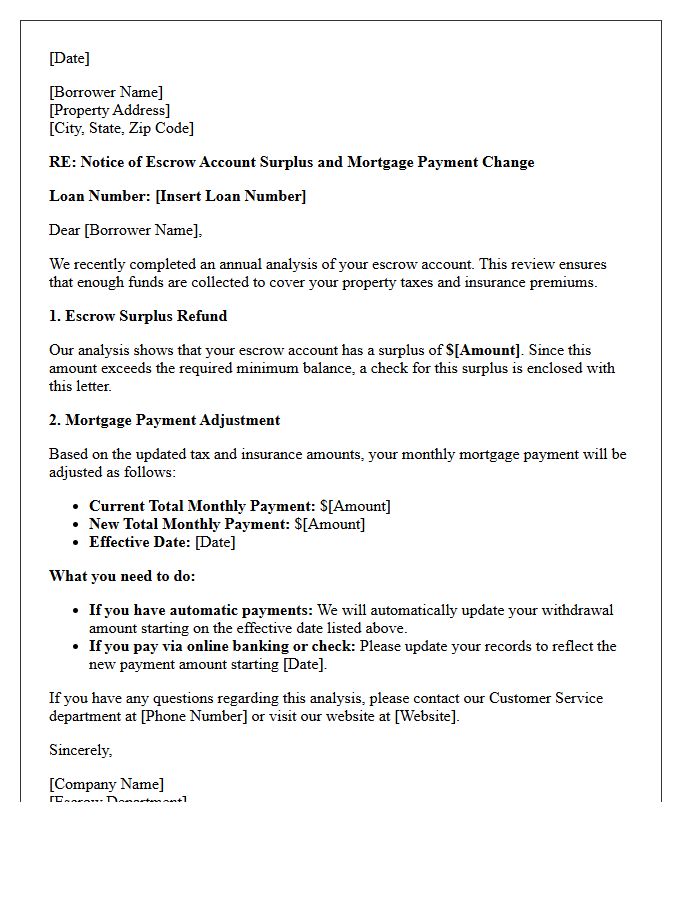
An Escrow Account Surplus Refund occurs when your annual analysis reveals excess funds due to lower-than-expected property taxes or insurance premiums. Conversely, a Payment Adjustment Letter notifies you of changes to your monthly mortgage bill. If a surplus exists, lenders typically issue a check for the overage. However, your future monthly installments may still increase if projected costs rise. Always review these statements to ensure your escrow balance accurately reflects current tax assessments and policy renewals to avoid future shortages or unexpected payment spikes.
Property Tax Increase Escrow Payment Adjustment Letter
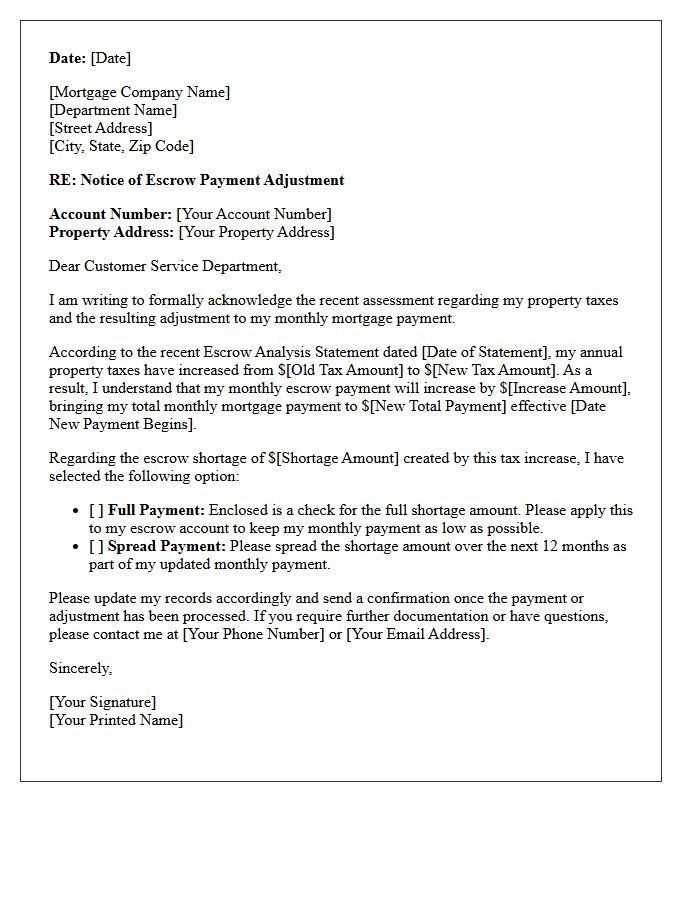
A Property Tax Increase Escrow Payment Adjustment Letter informs homeowners of a shortage in their mortgage account due to rising local levies. When property taxes climb, your lender must recalculate the escrow analysis to cover the higher annual cost. This adjustment typically results in a higher monthly mortgage payment to fund the future tax bill and may require a lump-sum payment to reconcile the current deficit. Reviewing this notice promptly ensures your mortgage servicer maintains a sufficient balance to pay property taxes on your behalf without penalty.
Homeowners Insurance Premium Escrow Payment Adjustment Letter
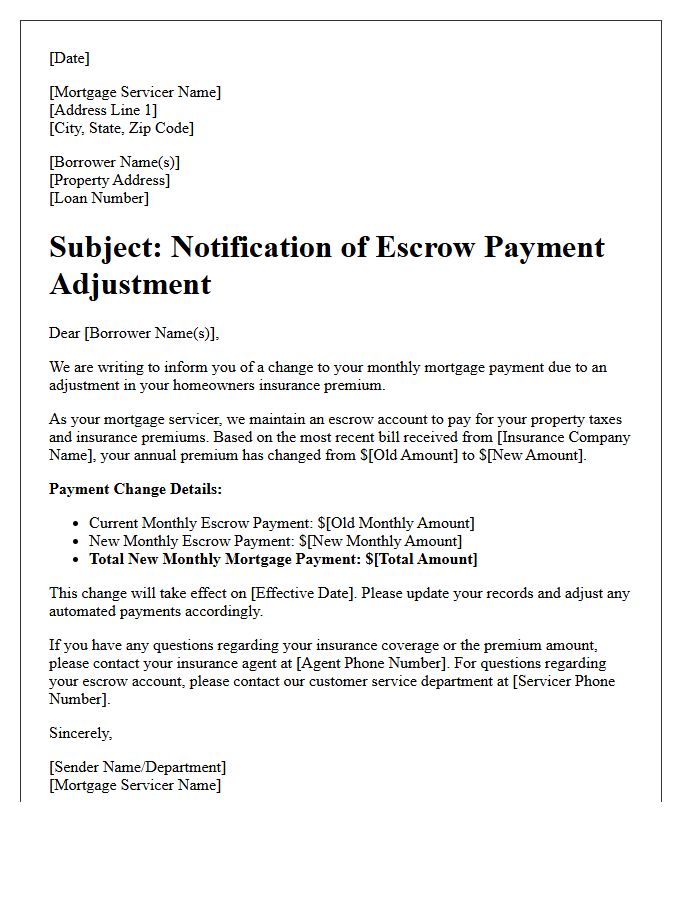
A Homeowners Insurance Premium Escrow Payment Adjustment Letter notifies you of changes to your monthly mortgage payment. This occurs when your insurance carrier updates its annual rates, causing an escrow shortage or surplus. Your lender adjusts the monthly collection to ensure sufficient funds are available to pay the new premium amount. Carefully review the escrow analysis statement to understand how your updated premium costs impact your total debt obligation and whether a one-time payment is required to balance your account.
Initial Escrow Account Setup and Payment Adjustment Letter
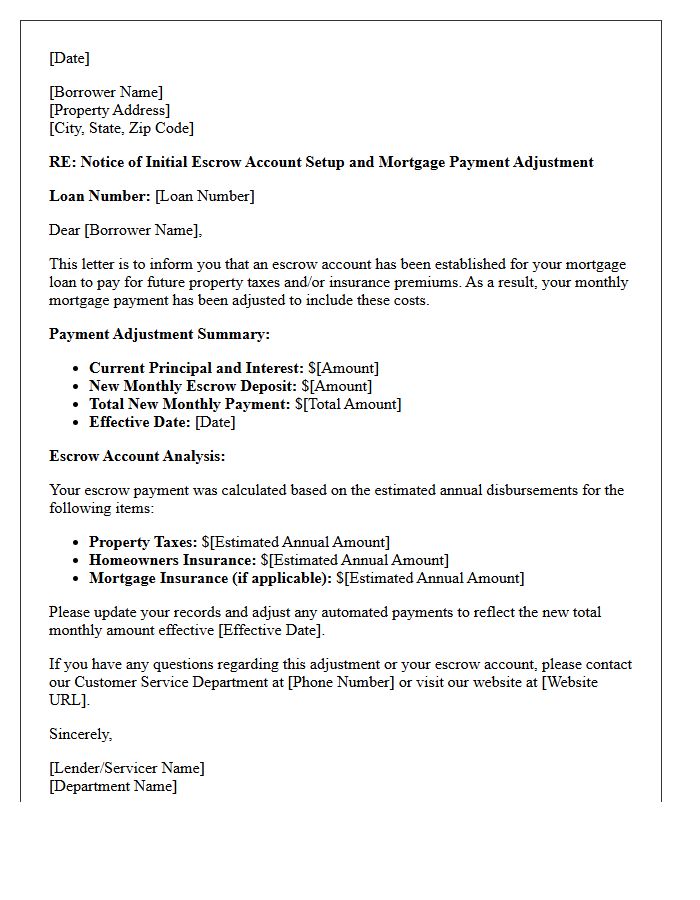
Upon closing a mortgage, lenders establish an Escrow Account to manage property taxes and insurance. The initial setup ensures sufficient funds are reserved for future disbursements. Annually, you will receive a Payment Adjustment Letter following an escrow analysis. This document details changes in your monthly obligation based on actual tax or premium fluctuations. Understanding this Escrow Analysis is crucial, as it explains potential payment increases or decreases and identifies any shortages or surpluses within your account, ensuring your loan remains current and fully funded.
Supplemental Tax Assessment Escrow Payment Adjustment Letter
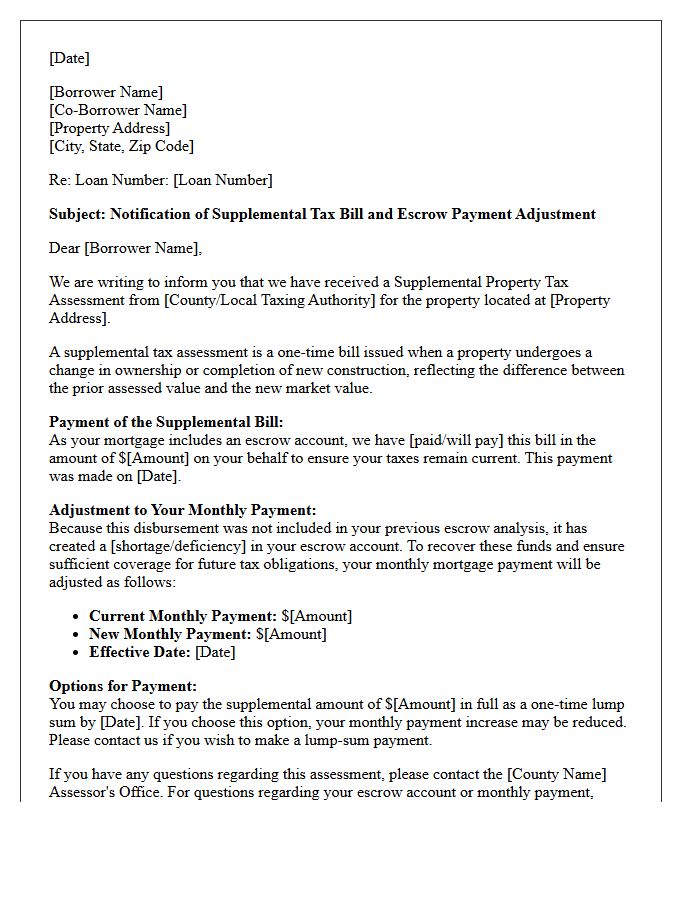
A Supplemental Tax Assessment Escrow Payment Adjustment Letter notifies homeowners of a property tax increase resulting from reassessments, typically following a home purchase or new construction. Unlike standard annual taxes, this one-time supplemental bill covers the difference between the prior assessed value and the new market value. Your mortgage servicer may adjust your monthly escrow payment or require a lump-sum deposit to cover the resulting escrow shortage. Reviewing this letter is essential to understand your updated payment obligations and ensure your impound account remains fully funded to avoid future financial penalties.
Escrow Account Deficiency Repayment and Adjustment Letter
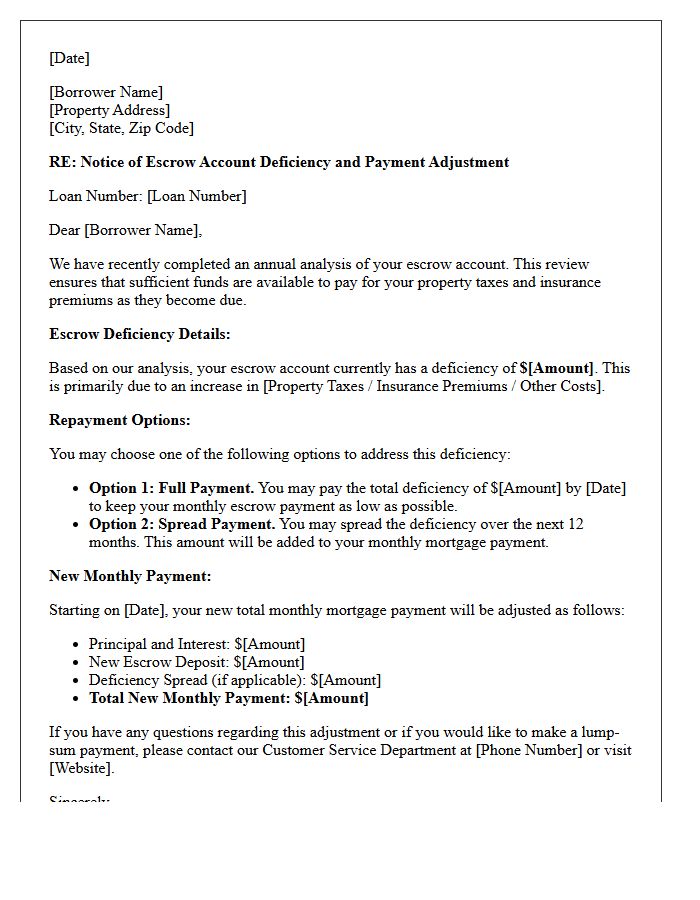
An Escrow Account Deficiency occurs when your account balance falls below the required minimum due to increased property taxes or insurance premiums. When you receive an adjustment letter, it outlines two primary options: a one-time payment to cover the shortage immediately or spreading the amount across your monthly mortgage payments. Choosing the monthly spread will increase your total bill. It is essential to review the statement to ensure all tax assessments are accurate and to prepare for a higher ongoing payment to maintain a fully funded escrow reserve.
Mortgage Escrow Account Analysis and Payment Adjustment Letter
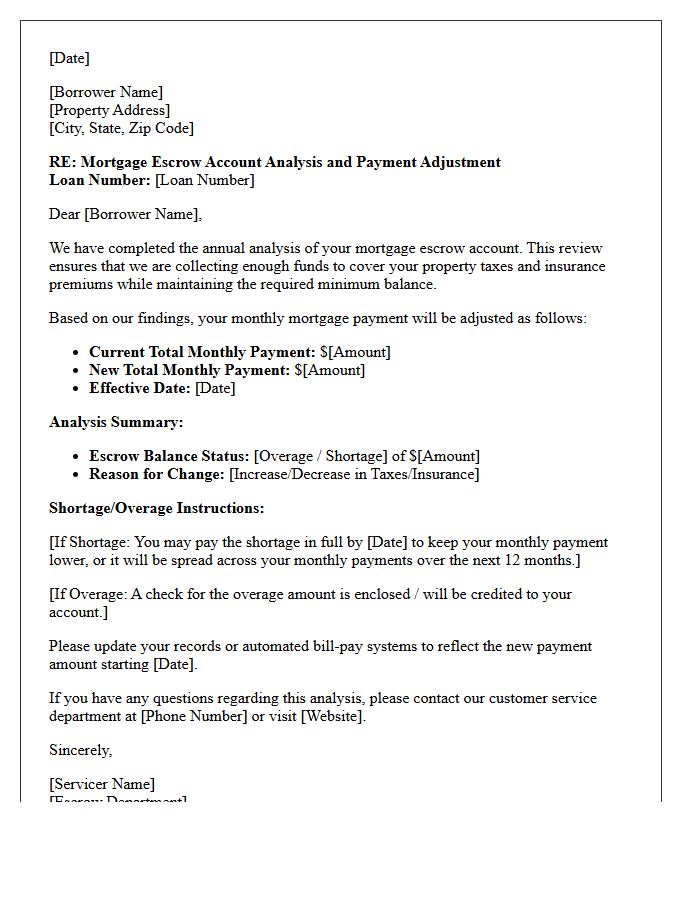
A mortgage escrow analysis is an annual review ensuring your account holds sufficient funds for property taxes and insurance. Your lender sends an adjustment letter detailing any escrow shortage or surplus based on updated premium costs. If tax rates or insurance premiums rise, your monthly mortgage payment will increase to cover the gap and maintain a required cushion. Conversely, a surplus may result in a lower payment or a refund check. Reviewing this statement is essential for understanding changes to your housing expenses and ensuring financial accuracy.
Hazard Insurance Rate Change Escrow Payment Adjustment Letter
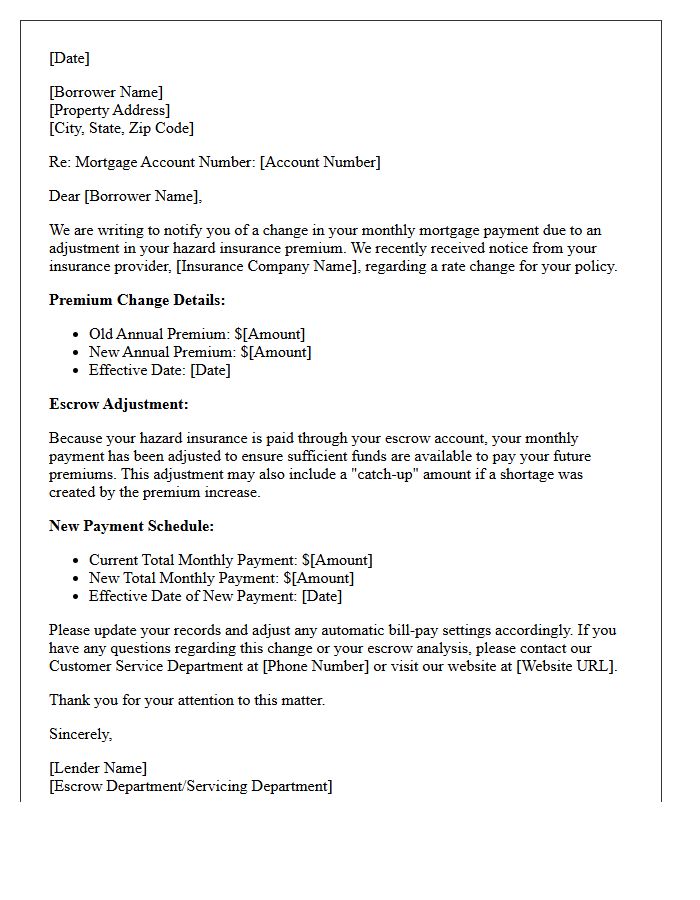
A Hazard Insurance Rate Change Escrow Payment Adjustment Letter notifies homeowners that their property insurance premiums have increased or decreased. This change directly impacts your monthly mortgage payment because the lender must adjust your escrow account to cover the new premium cost. If a shortage occurs, your monthly bill will rise to replenish the account. Carefully review this notice to understand how your housing expenses are changing and to ensure your policy coverage remains adequate for lender requirements and property protection.
Escrow Account Payment Adjustment Notice Letter for Adjustable Rate Mortgages
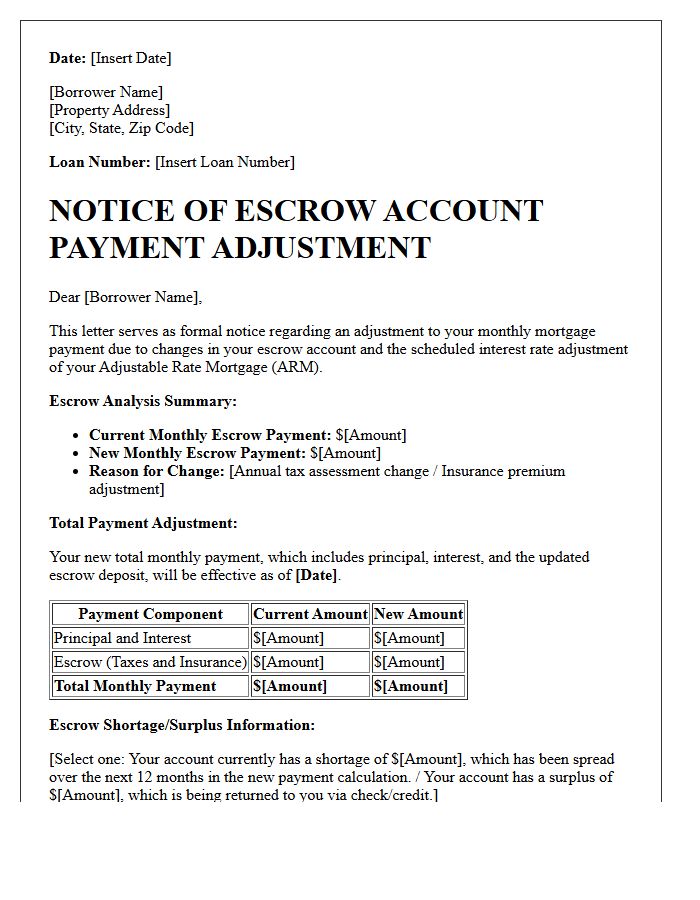
An Escrow Account Payment Adjustment Notice informs borrowers with adjustable-rate mortgages about changes in their monthly housing costs. This letter details fluctuations in property taxes and insurance premiums, which directly impact the escrow portion of your mortgage payment. Since your interest rate may also change, this notice ensures transparency regarding your new total monthly obligation and any potential shortages or surpluses in your account. Reviewing these updates is essential to maintain accurate budgeting and ensure your loan balance remains in good standing throughout the repayment period.
Voluntary Escrow Account Contribution and Payment Adjustment Letter
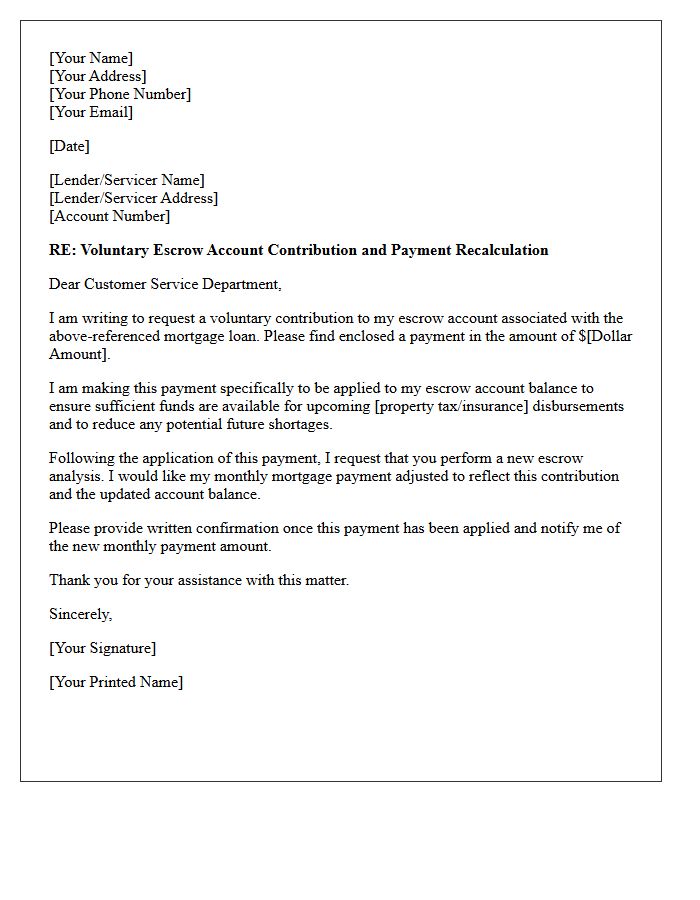
A Voluntary Escrow Account Contribution and Payment Adjustment Letter informs borrowers about changes to their mortgage payments due to fluctuations in taxes or insurance. It outlines an optional shortage payment to prevent significant monthly increases. By making a voluntary contribution, homeowners can stabilize their budget and maintain a balanced escrow account. Carefully reviewing this notice ensures you understand how disbursements affect your total loan obligation and helps avoid future financial surprises during annual escrow analysis cycles.
What is an Escrow Account Payment Adjustment Notice?
An Escrow Account Payment Adjustment Notice is a formal notification from your mortgage lender informing you of a change in your monthly mortgage payment. This adjustment occurs after an annual escrow analysis determines that the funds collected for property taxes and homeowners insurance need to be increased or decreased to cover actual costs.
Why did my monthly mortgage payment increase?
Your mortgage payment typically increases if your property taxes or insurance premiums rose over the past year. Additionally, if your escrow account fell below the minimum required balance (an escrow shortage), your lender will adjust your monthly payment to recover the deficit and ensure future bills are covered.
What is an escrow shortage versus an escrow surplus?
An escrow shortage occurs when the account balance is insufficient to cover projected tax and insurance bills, requiring a payment increase or a one-time catch-up payment. An escrow surplus occurs when the account has more funds than necessary, often resulting in a lower monthly payment or a refund check sent to the homeowner.
Can I prevent future escrow payment fluctuations?
While you cannot control government tax assessments, you can minimize fluctuations by shopping for lower homeowners insurance rates and monitoring your local property tax assessments. Some homeowners also choose to pay shortage amounts in a single lump sum to keep their monthly principal and interest payments more stable.
How often does my lender perform an escrow analysis?
Federal law (RESPA) requires mortgage servicers to perform an escrow account analysis at least once every 12 months. After this review, the lender must provide you with an Annual Escrow Account Statement detailing the previous year's activity and the projected payments for the upcoming year.

Comments