
Receiving a Notice of Default Due to Unauthorized Transfer of Title is a critical legal matter involving a violation of the "due-on-sale" clause. This occurs when a property interest is transferred without the lender's prior consent, potentially triggering immediate loan acceleration. Understanding your legal rights and response options is essential to protecting your ownership. Below are some ready to use templates.
Image cover: Unauthorized Title Transfer: Notice of Default Templates and Legal Guides
Letter Samples List
- Notice of Default and Unauthorized Title Transfer Letter
- Unauthorized Property Transfer Default Notice Letter
- Due-on-Sale Clause Violation Mortgage Default Letter
- Mortgage Acceleration Letter Due to Unauthorized Title Transfer
- Breach of Mortgage Contract Default Letter for Unapproved Title Transfer
- Notice of Mortgage Default Due to Unauthorized Transfer Letter
- Unauthorized Conveyance of Title Notice of Default Letter
- Demand Letter for Default Upon Unauthorized Property Transfer
- Notice of Default Letter Regarding Unapproved Deed Transfer
- Acceleration Warning Letter for Unauthorized Title Transfer
- Mortgage Default Declaration Letter for Unauthorized Ownership Transfer
- Unsanctioned Title Transfer Notice of Default Letter
- Letter of Default for Unauthorized Conveyance of Mortgaged Property
Notice of Default and Unauthorized Title Transfer Letter
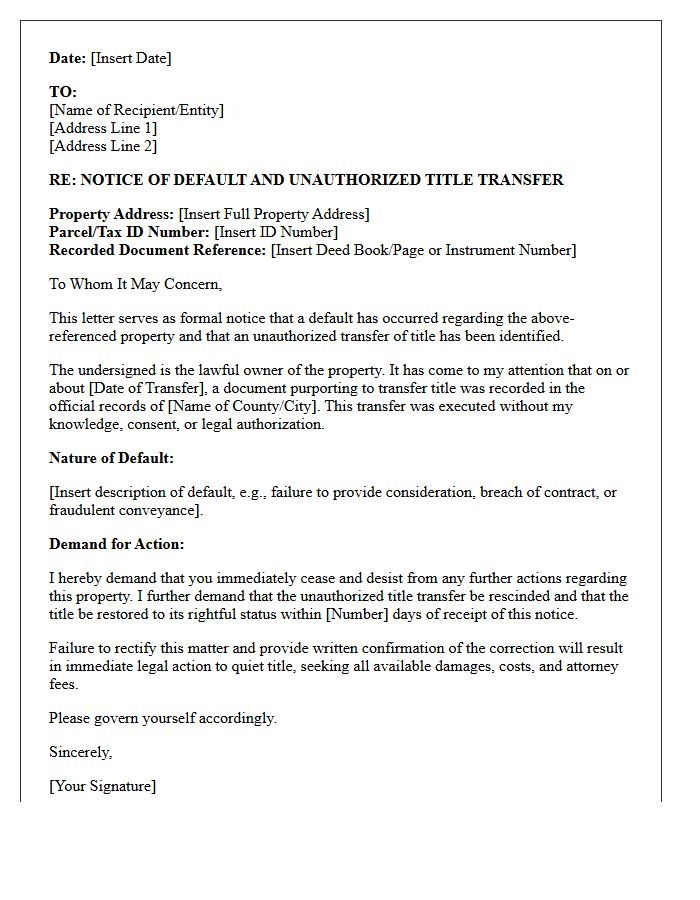
A Notice of Default is a formal legal notification issued when a borrower fails to meet mortgage obligations, signaling the start of the foreclosure process. If you receive an Unauthorized Title Transfer Letter, it indicates that your property's ownership may have been changed without your consent, often due to deed fraud. Homeowners must act immediately to verify their legal standing and protect their equity. Monitoring public records and responding to these alerts quickly is essential to preventing the loss of your home through identity theft or legal forfeiture.
Unauthorized Property Transfer Default Notice Letter
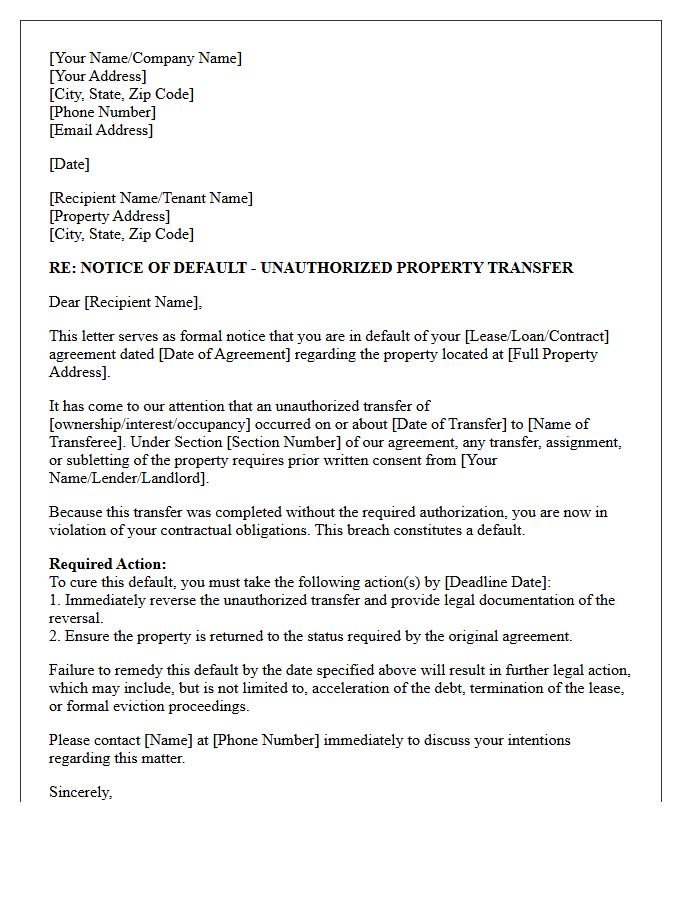
An Unauthorized Property Transfer Default Notice is a formal legal warning issued when a borrower transfers real estate ownership without the lender's prior consent. This action typically violates the Due-on-Sale clause found in most mortgage agreements. Receiving this letter indicates that the lender may exercise their right to accelerate the loan, demanding immediate repayment of the full balance. To avoid potential foreclosure, property owners must promptly address the breach by either reversing the transfer, obtaining retroactive approval, or securing alternative financing to satisfy the debt obligation.
Due-on-Sale Clause Violation Mortgage Default Letter
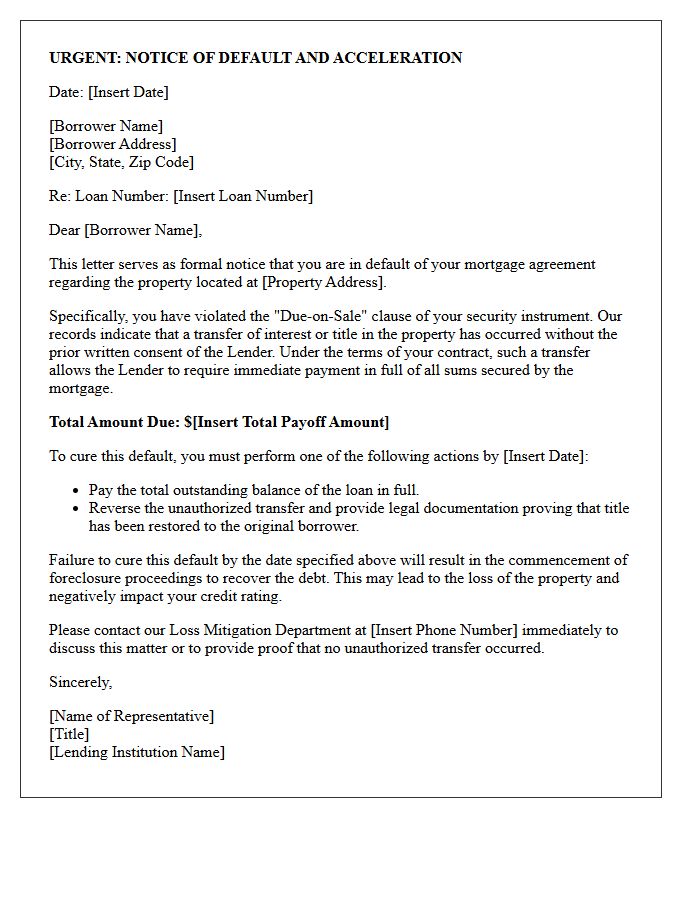
A due-on-sale clause violation mortgage default letter is a formal notice sent by a lender when a property title transfers without their prior consent. This document signifies a breach of contract, triggering the lender's right to demand full immediate repayment of the remaining loan balance. Typically, homeowners receive this after transferring deeds to an LLC or a third party. To avoid foreclosure, the recipient must either pay the balance in full, transfer the title back to the original borrower, or negotiate a formal assumption of the debt with the financial institution.
Mortgage Acceleration Letter Due to Unauthorized Title Transfer
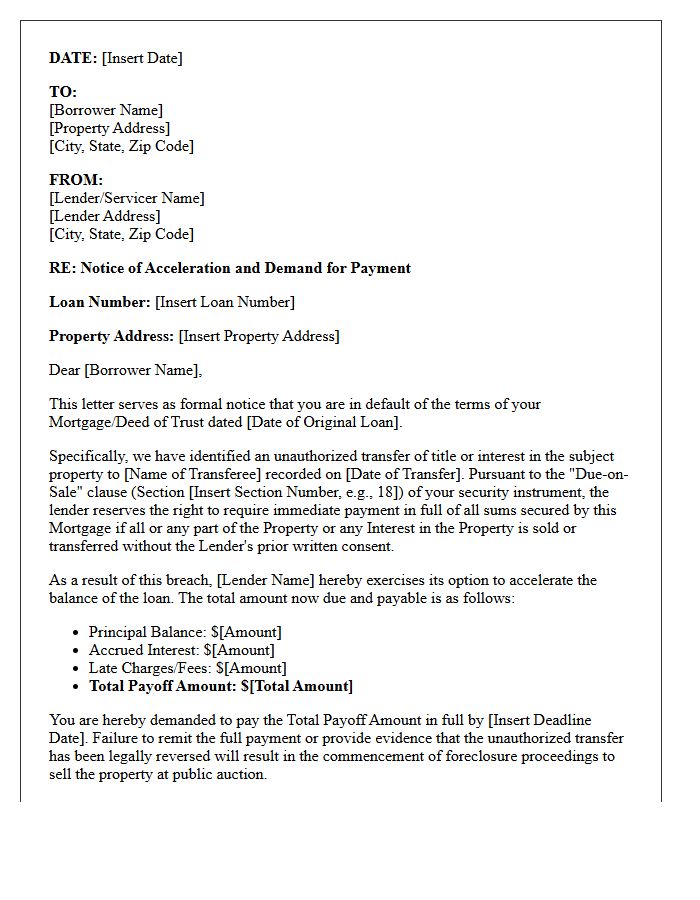
A mortgage acceleration letter signifies that the lender is demanding immediate full repayment of the loan balance. This often occurs due to a unauthorized title transfer, which triggers the due-on-sale clause found in most security instruments. When property ownership changes without bank consent, the lender views it as a risk and may accelerate the debt to protect their interest. Homeowners must understand that even non-sale transfers, such as adding someone to a deed, can violate loan terms. Resolving this typically requires reversing the transfer or refinancing the entire mortgage debt immediately.
Breach of Mortgage Contract Default Letter for Unapproved Title Transfer
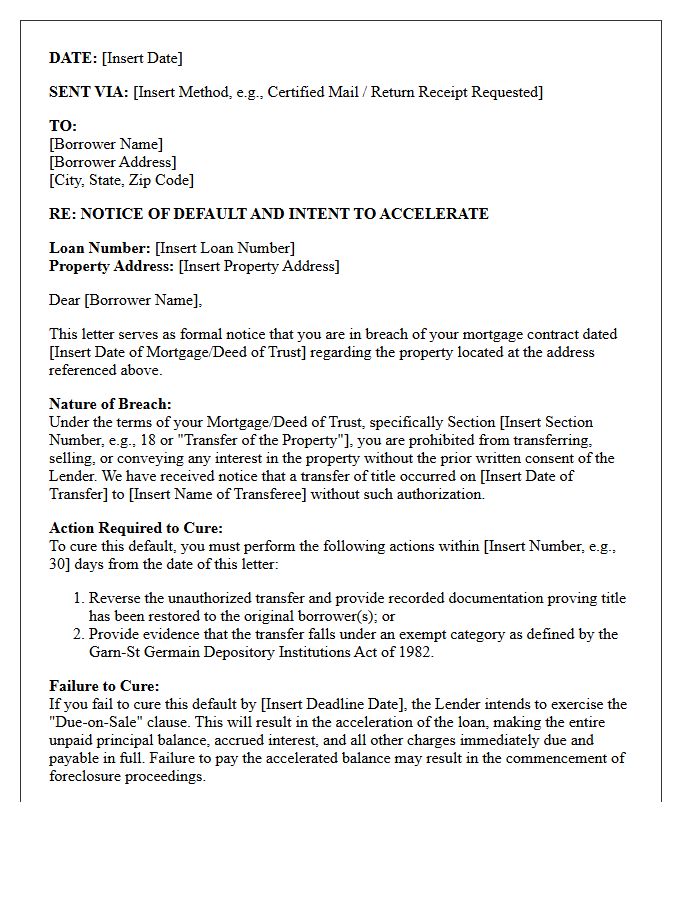
A breach of mortgage contract occurs when a homeowner performs an unapproved title transfer without the lender's consent, violating the Due-on-Sale clause. This triggers a formal default letter, notifying the borrower that the full loan balance may be accelerated. To resolve this, the borrower must typically reverse the transfer or pay the mortgage in full to avoid foreclosure. Lenders issue these notices to protect their security interest and ensure the original credit risk assessment remains valid under the current legal ownership of the property.
Notice of Mortgage Default Due to Unauthorized Transfer Letter
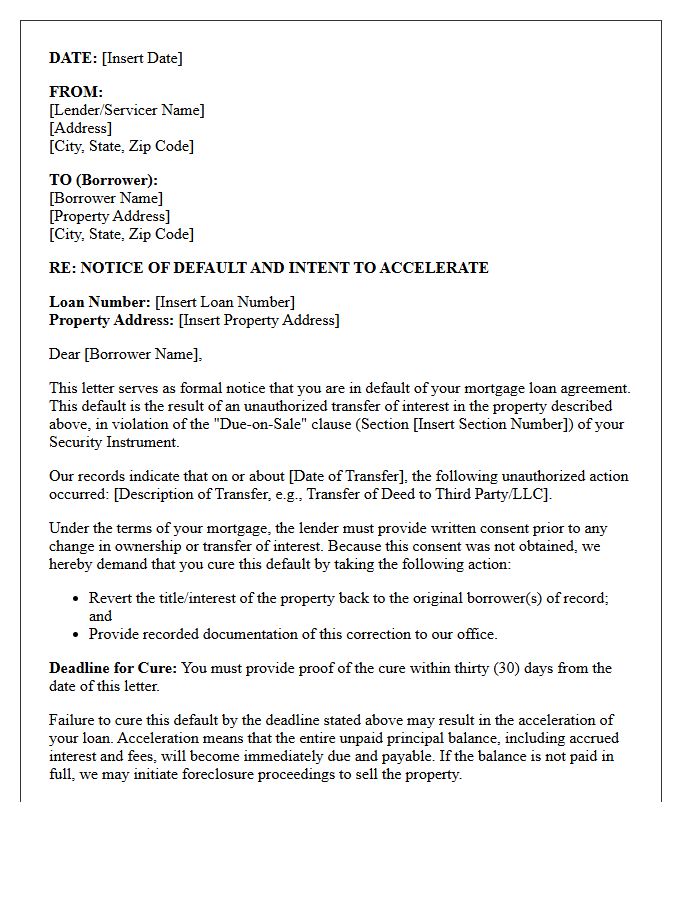
A Notice of Mortgage Default Due to Unauthorized Transfer is a legal warning issued when a property title changes hands without the lender's consent. This action typically violates the Due-on-Sale Clause found in most loan agreements. Lenders may demand immediate payment of the full balance, a process known as acceleration. To avoid foreclosure, homeowners must resolve the breach by either reversing the transfer or obtaining formal lender approval. Promptly addressing this notice is essential to protecting your equity and maintaining legal possession of the property.
Unauthorized Conveyance of Title Notice of Default Letter
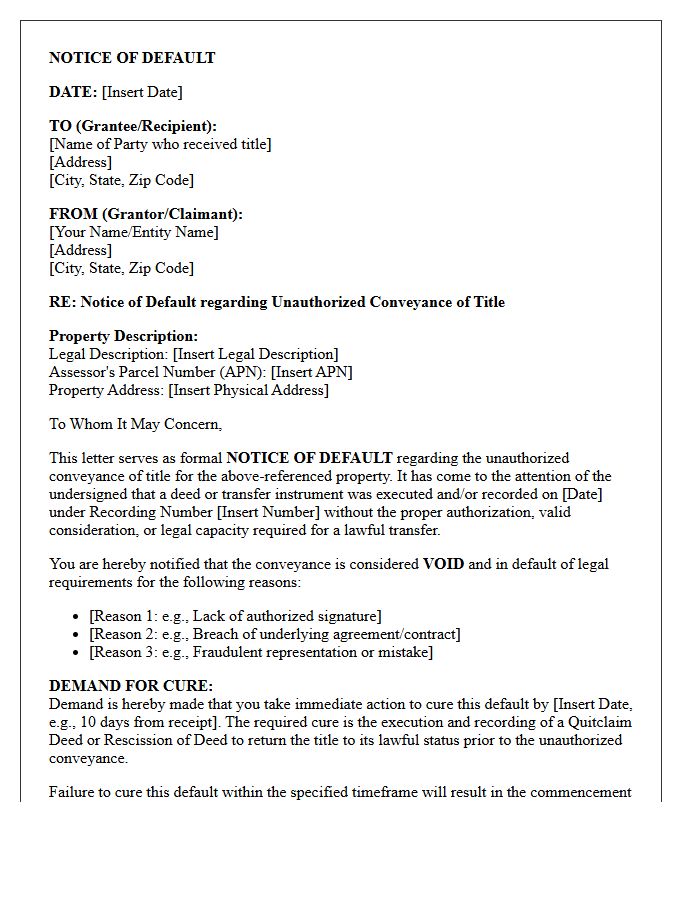
An Unauthorized Conveyance of Title occurs when property ownership is transferred without legal consent, often triggering a Notice of Default from lenders. This letter warns that the transfer violates "due-on-sale" clauses in mortgage contracts. If the original borrower fails to rectify the unauthorized transfer or pay the loan in full, the lender may initiate foreclosure proceedings. Homeowners must ensure all title changes are approved by lienholders to avoid legal complications and the potential loss of the property due to breach of contract terms.
Demand Letter for Default Upon Unauthorized Property Transfer
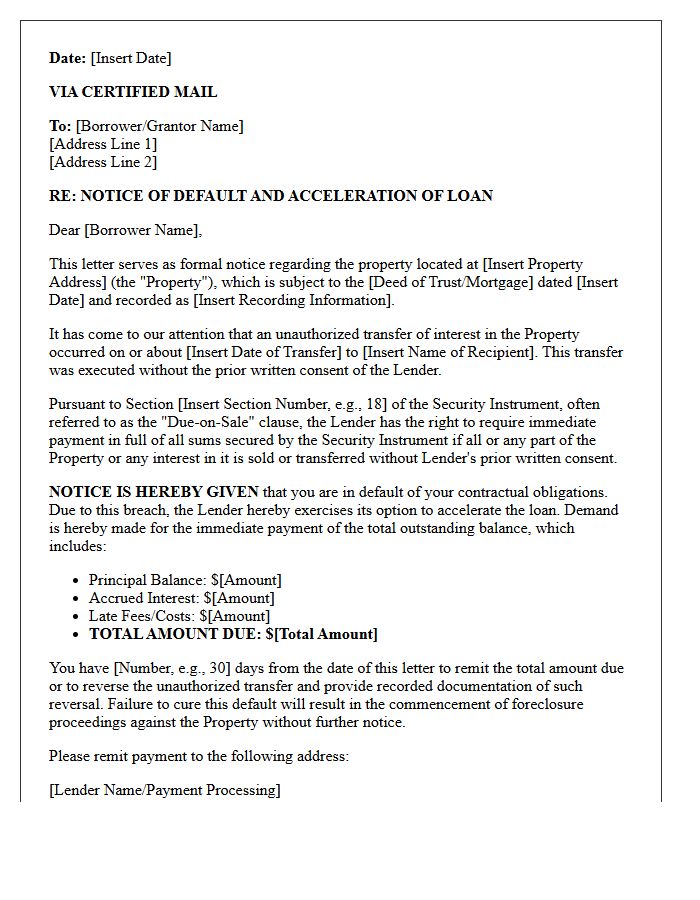
A demand letter for default upon unauthorized property transfer is a formal legal notice sent when a borrower transfers real estate ownership without lender consent, violating the due-on-sale clause. This document notifies the party of a contractual breach and demands immediate acceleration of the loan balance. It serves as a critical prerequisite to foreclosure proceedings, establishing a paper trail of the default. To resolve the issue, the borrower must typically reverse the transfer or pay the mortgage in full to avoid litigation and the loss of the property.
Notice of Default Letter Regarding Unapproved Deed Transfer
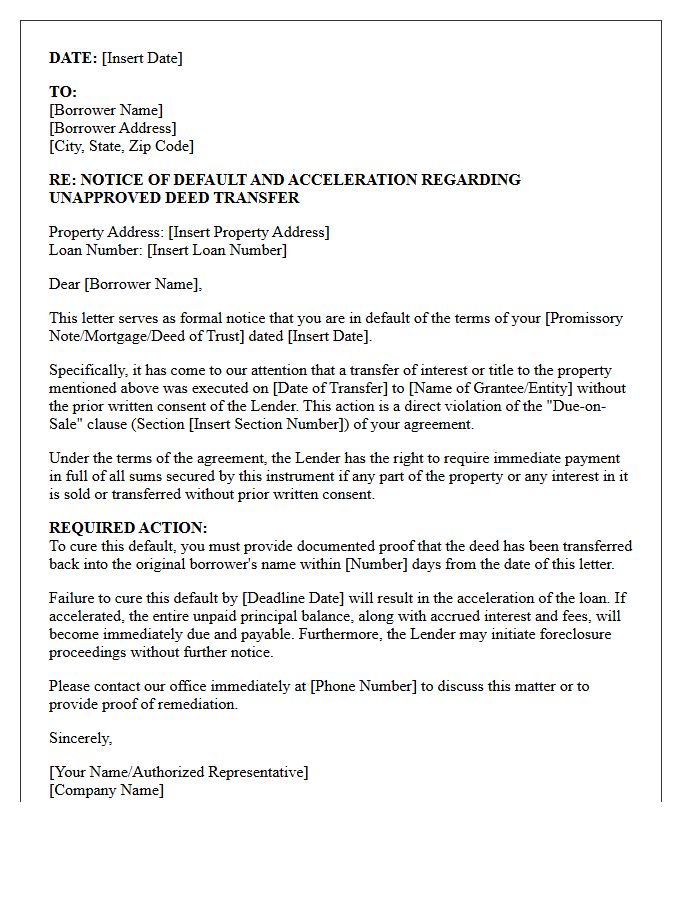
A Notice of Default regarding an unapproved deed transfer is a formal legal warning issued by a lender when a property title changes without consent. This typically triggers the due-on-sale clause, allowing the financial institution to accelerate the loan and demand immediate full payment. To avoid potential foreclosure, the homeowner must quickly address the violation by either reversing the transfer or obtaining retroactive approval. Timely communication with the servicer is essential to protect your equity and maintain ownership rights after an unauthorized title modification.
Acceleration Warning Letter for Unauthorized Title Transfer
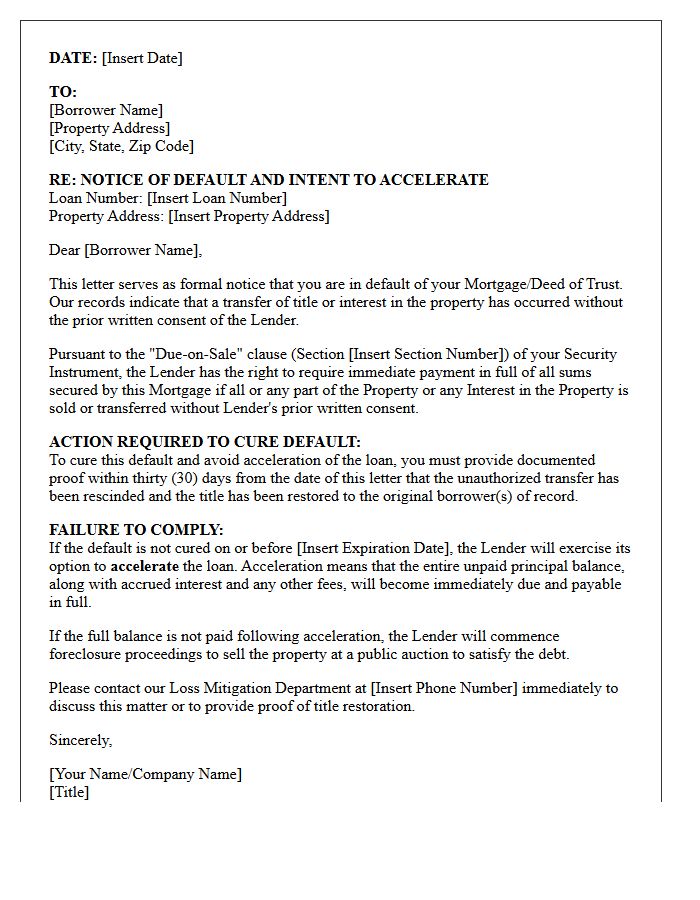
An Acceleration Warning Letter for unauthorized title transfer is a formal notice issued by lenders when a property deed is moved without permission. This action typically violates the due-on-sale clause found in most mortgage contracts. Receiving this document signifies that the bank intends to demand immediate repayment of the entire loan balance unless the title transfer is reversed. To prevent a foreclosure proceeding, homeowners must address the breach immediately by restoring the original ownership structure or obtaining written lender consent to maintain the existing financing terms.
Mortgage Default Declaration Letter for Unauthorized Ownership Transfer
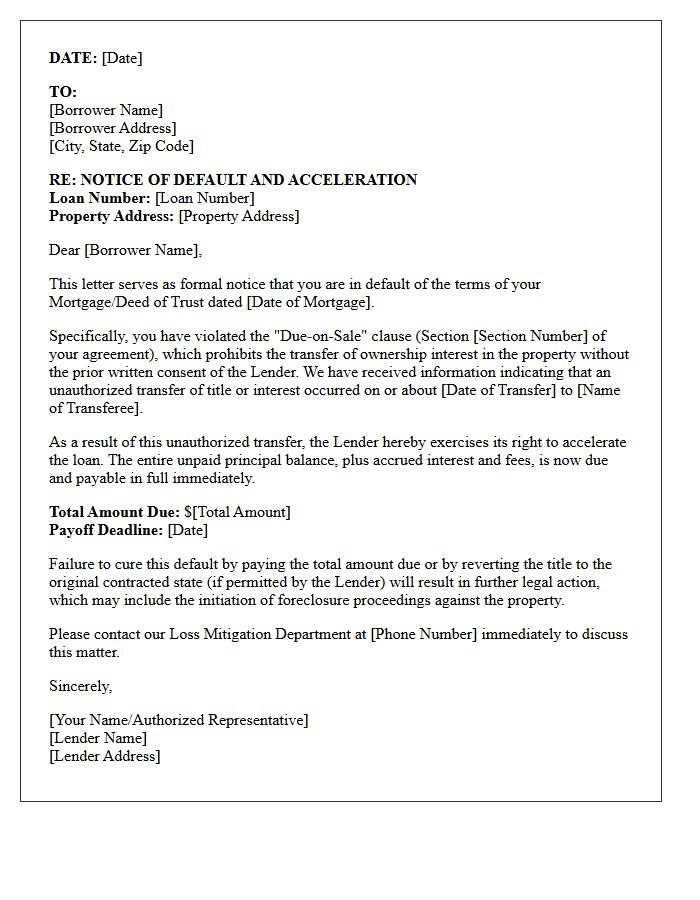
A mortgage default declaration letter for unauthorized ownership transfer is a legal notice issued by lenders when a property title changes hands without prior consent. This violation of the Due-on-Sale Clause triggers an immediate demand for the full loan balance. To avoid foreclosure, homeowners must understand that transferring deeds to family members or trusts can still constitute a technical default. Resolving this issue typically requires restoring the original title or obtaining written lender approval to prevent the acceleration of the debt and subsequent loss of the property.
Unsanctioned Title Transfer Notice of Default Letter
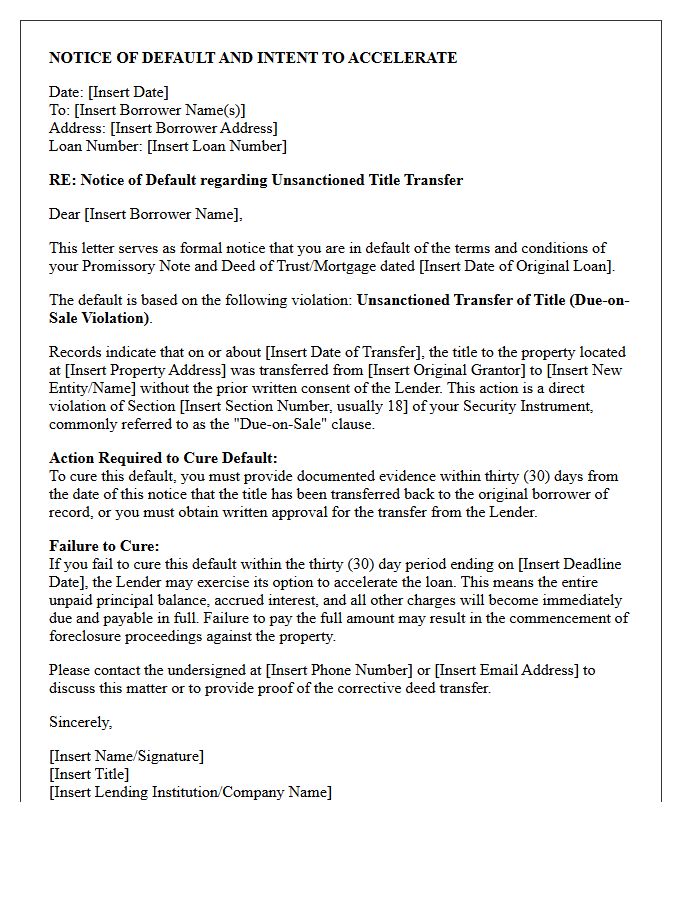
An Unsanctioned Title Transfer Notice of Default is a critical legal warning issued when a property deed is transferred without the lender's prior consent. This action typically triggers the due-on-sale clause found in most mortgage contracts. If the unauthorized transfer is not reversed or authorized immediately, the lender may accelerate the loan, demanding full repayment of the remaining balance. Receiving this letter indicates that the property is at high risk of foreclosure, making it essential to contact legal counsel or the loan servicer to resolve the breach of contract.
Letter of Default for Unauthorized Conveyance of Mortgaged Property
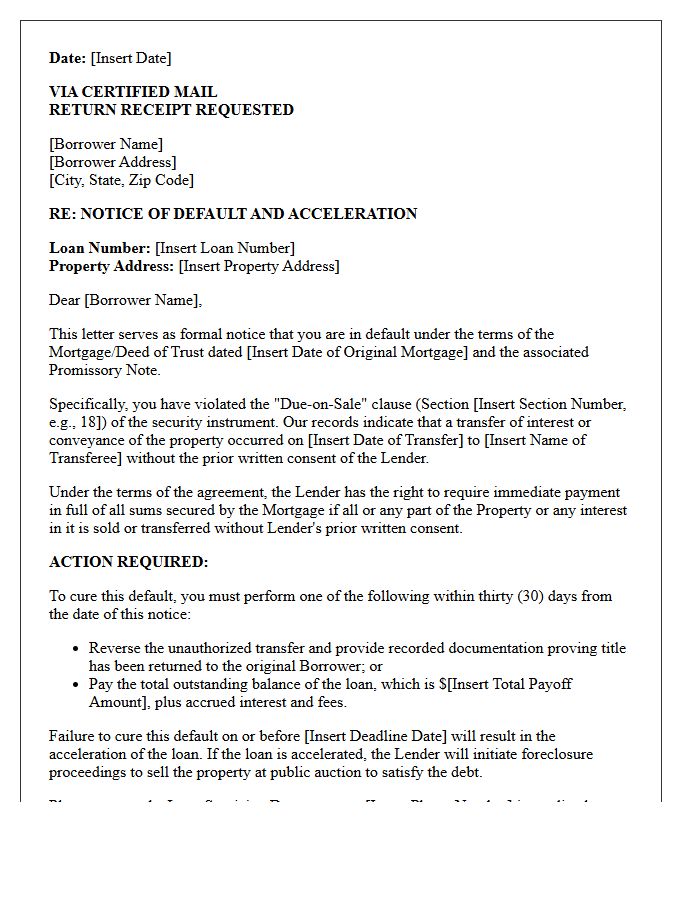
A Letter of Default for Unauthorized Conveyance is a formal notice issued by a lender when a borrower transfers property ownership without prior consent. This action typically violates the due-on-sale clause found in most mortgage contracts. The letter informs the borrower that the full loan balance is now accelerated and due immediately. Failure to rectify the unauthorized transfer or pay the remaining debt often leads to foreclosure proceedings, as the lender seeks to protect its security interest in the underlying collateral.
What is a Notice of Default due to an unauthorized transfer of title?
A Notice of Default due to an unauthorized transfer of title is a formal legal notification sent by a mortgage lender when a property's ownership has changed without the lender's prior written consent, triggering the "Due-on-Sale" clause in the deed of trust.
Can a lender foreclose if I transfer my property title without permission?
Yes, most mortgage contracts contain a "Due-on-Sale" clause that allows the lender to accelerate the loan and initiate foreclosure proceedings if the title is transferred to a third party without the lender's express approval.
Are there exceptions to the Due-on-Sale clause under federal law?
Yes, the Garn-St Germain Depository Institutions Act of 1982 provides specific protections where a lender cannot enforce the clause, such as transfers to a relative following the death of a borrower, transfers to a spouse or children, or transfers into an inter vivos trust where the borrower remains a beneficiary.
How can I resolve a Notice of Default triggered by an unauthorized transfer?
To resolve the default, you typically must either transfer the title back to the original borrower, obtain retroactive consent from the lender, pay off the loan balance in full, or qualify for a formal assumption of the mortgage by the new owner.
Will adding someone to my property deed trigger a Notice of Default?
Adding an individual to a property deed can potentially trigger a Notice of Default if the lender views the change as a transfer of interest. It is advisable to consult with your mortgage servicer or a real estate attorney before modifying the title to ensure compliance with loan terms.

Comments