
Securing a Verification of Homeowners Association Dues Letter is a critical step during real estate transactions to confirm assessment accuracy and outstanding balances. This document protects buyers and lenders by validating the property's financial standing within the community. Ensuring all HOA obligations are settled prevents future legal complications or unexpected liens. To simplify your request process, below are some ready to use template.
Image cover: Essential Guide to Homeowners Association Dues Verification Letters and Templates
Letter Samples List
- Request For Verification Of Homeowners Association Dues Letter
- Initial Homeowners Association Dues Status Letter
- Final Closing Verification Of Homeowners Association Dues Letter
- Homeowners Association Dues Paid In Full Clearance Letter
- Condominium Homeowners Association Dues Certification Letter
- Delinquent Homeowners Association Dues Notification Letter
- Annual Homeowners Association Dues Verification Letter
- Homeowners Association Dues Payment History Request Letter
- Notice Of Pending Homeowners Association Dues Assessment Letter
- Homeowners Association Dues Escrow Requirement Letter
- Subordination Of Homeowners Association Dues Agreement Letter
- Lender Request For Homeowners Association Dues Statement Letter
Request For Verification Of Homeowners Association Dues Letter
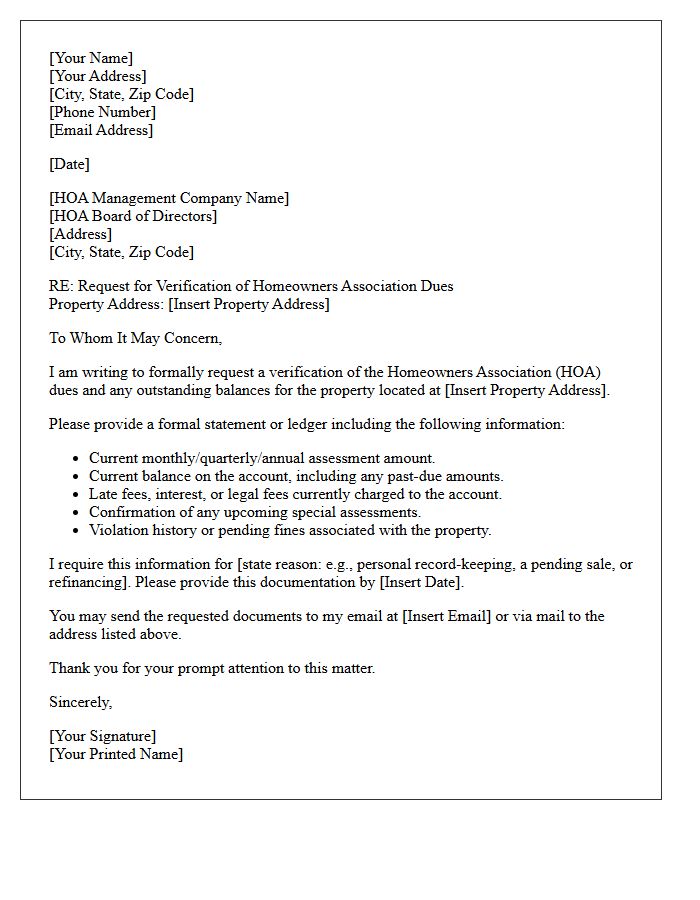
A Request For Verification of Homeowners Association Dues Letter is a formal document used to confirm a property's financial standing. It ensures there are no outstanding assessments or hidden liens during a real estate transaction. This estoppel letter protects buyers by legally verifying current fee structures and pending violations. Lenders require this verification to guarantee clear title transfer and accurate prorated adjustments at closing. Always request this document early to avoid closing delays and ensure total transparency regarding mandatory HOA obligations and community bylaws.
Initial Homeowners Association Dues Status Letter
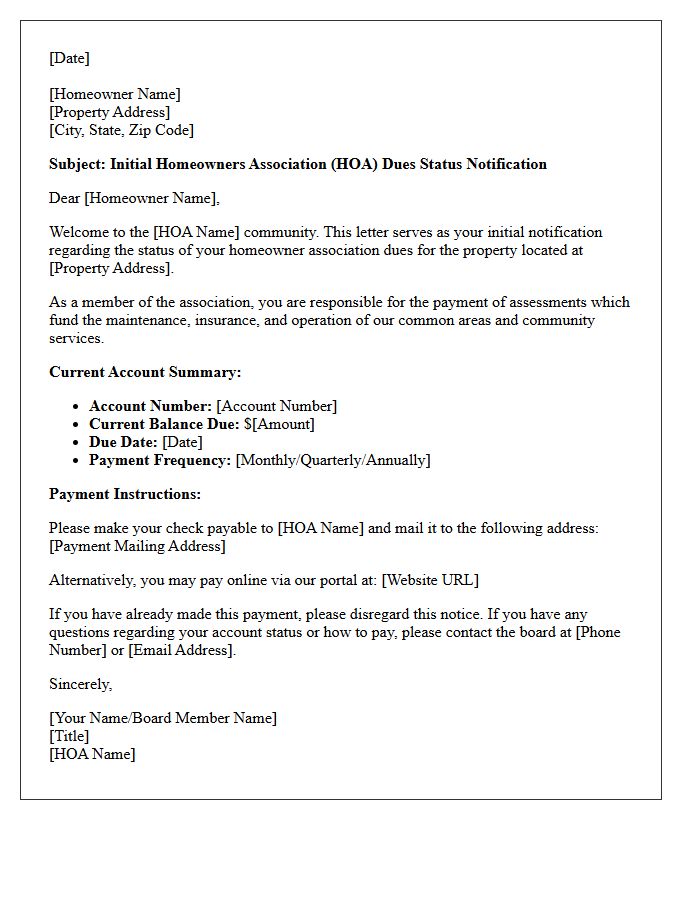
An Initial Homeowners Association Dues Status Letter is a critical document during real estate transactions that verifies the current financial standing of a property. It confirms whether the seller has any outstanding assessments, unpaid fines, or pending liens. This letter ensures the buyer is not inheriting undisclosed debt and clarifies the pro-rated dues required at closing. For lenders and title companies, it serves as legal proof of a clear title, protecting all parties from unexpected financial liabilities associated with the community association before the ownership transfer is finalized.
Final Closing Verification Of Homeowners Association Dues Letter
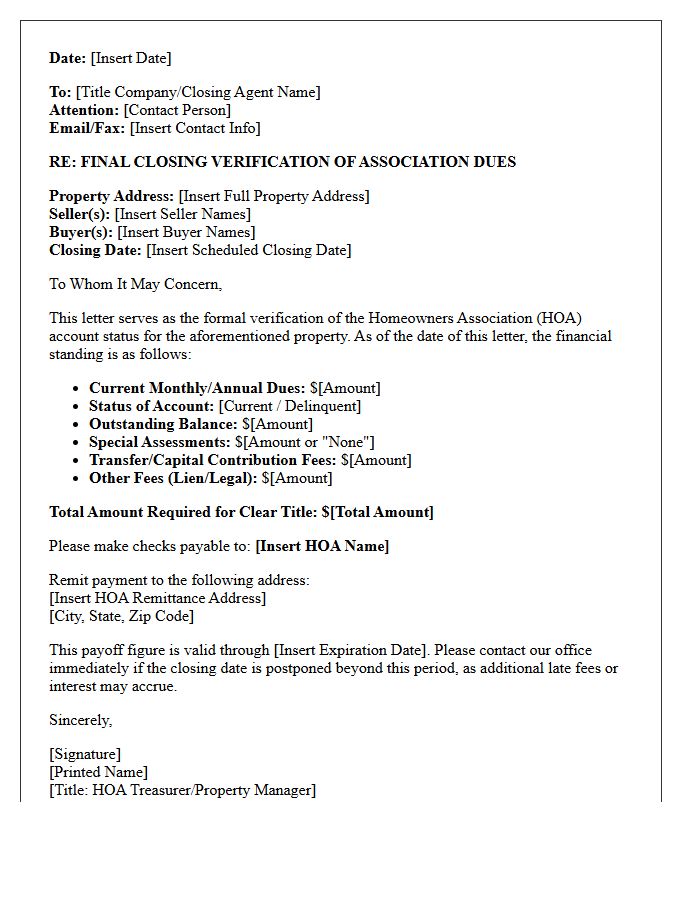
A Final Closing Verification of Homeowners Association Dues Letter is a legal document confirming a property's financial standing within a community. It verifies that the seller has paid all current assessments, outstanding debts, and pending fines. Title companies require this statement to ensure clear title transfer and to prorate costs accurately between parties. This letter protects the buyer from inheriting the previous owner's liabilities. It serves as the definitive proof that all HOA obligations are satisfied before the real estate transaction is finalized.
Homeowners Association Dues Paid In Full Clearance Letter
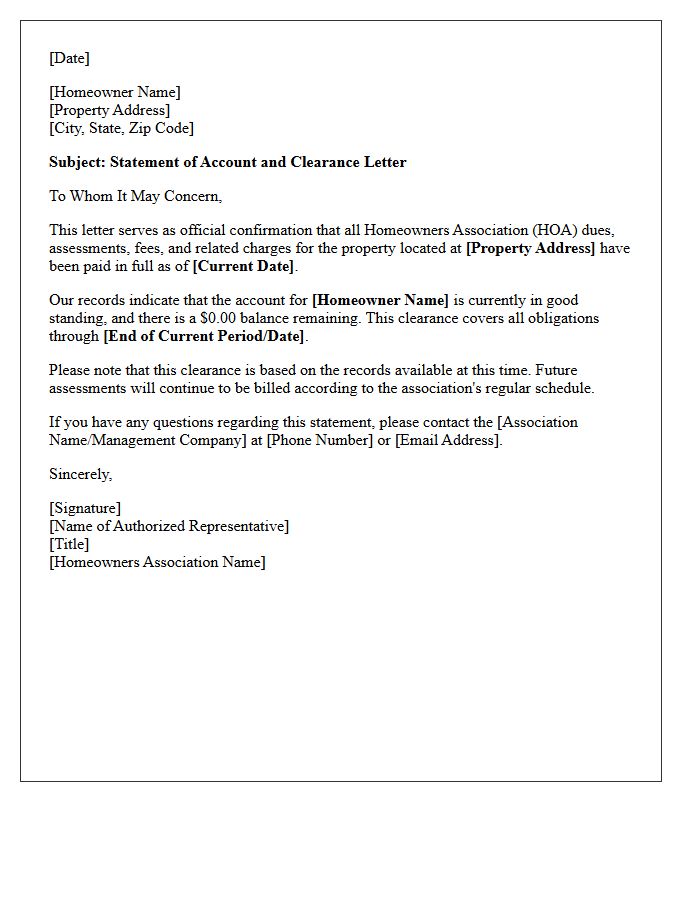
A Homeowners Association Paid In Full Clearance Letter is a formal document verifying that a property owner has settled all outstanding assessments, fines, and fees. This estoppel letter is crucial during real estate transactions to ensure the buyer is not inheriting the seller's financial liabilities. It provides legal protection for title companies and lenders by confirming a zero balance. Obtaining this clearance is a vital step in the closing process, ensuring a clear transfer of title and preventing future liens against the property for unpaid dues.
Condominium Homeowners Association Dues Certification Letter
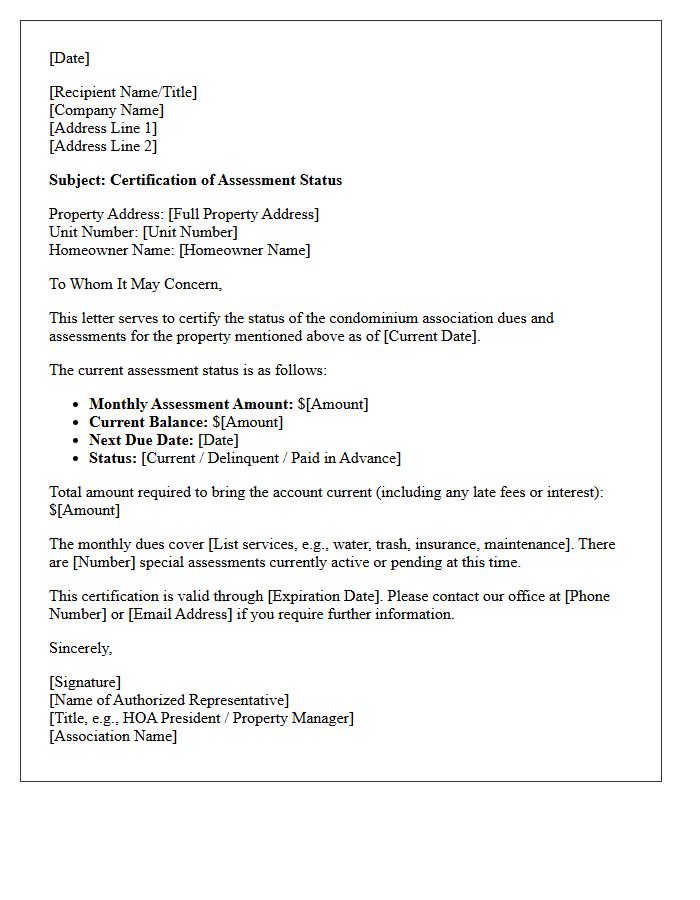
A Condominium Homeowners Association (HOA) Dues Certification Letter is a formal document verifying a unit owner's financial standing. It confirms whether assessment fees are paid in full or if outstanding balances exist. Lenders and buyers require this clearance during real estate transactions to ensure no unpaid liens transfer to the new owner. The letter typically details current monthly rates, special assessments, and pending legal actions. Obtaining this official statement protects all parties by providing transparent proof of financial compliance within the community association before closing a property sale.
Delinquent Homeowners Association Dues Notification Letter
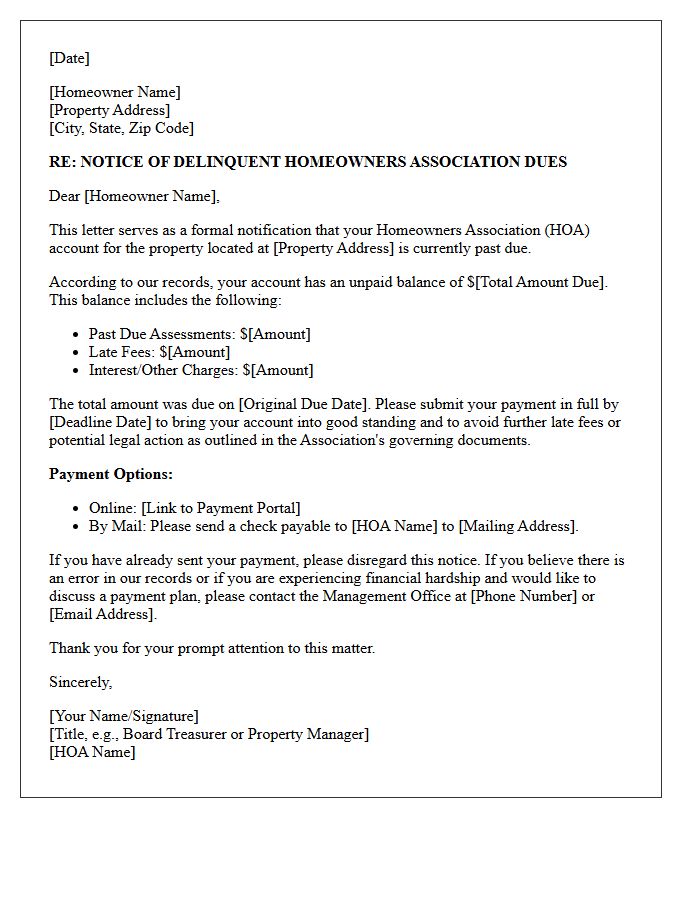
A Delinquent HOA Dues Notification Letter serves as a formal legal warning to owners regarding unpaid assessments. This document outlines the outstanding balance, including late fees, interest, and administrative charges. It is a critical step in the collection process, often required by state law before an association can pursue further actions like liens or foreclosure. Homeowners should respond promptly to discuss repayment plans or dispute errors to avoid escalating legal costs and the potential loss of property rights. Timely communication is essential to resolving financial delinquency effectively.
Annual Homeowners Association Dues Verification Letter
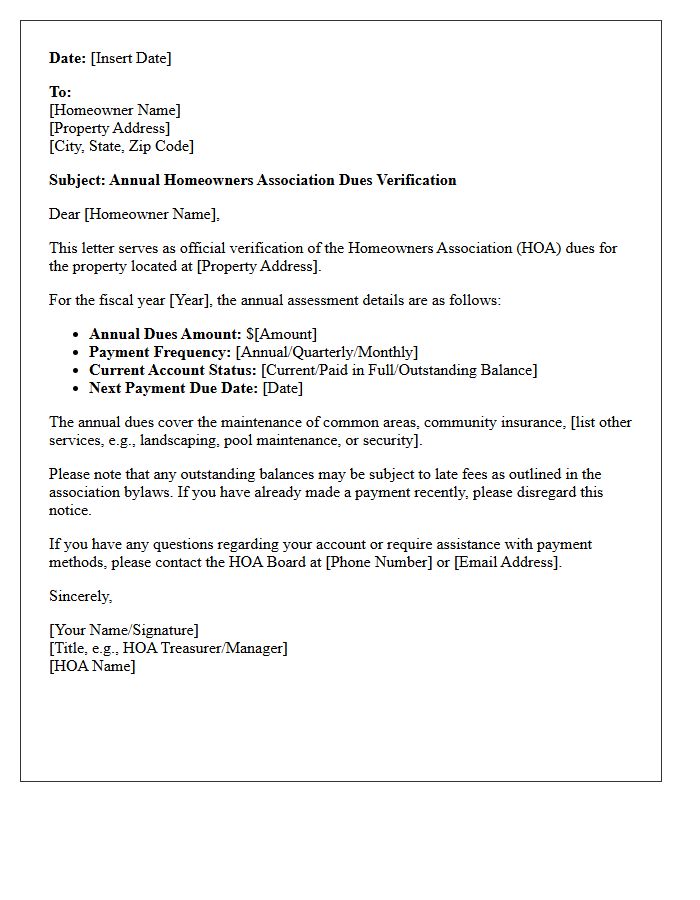
An Annual Homeowners Association (HOA) Dues Verification Letter is a formal document confirming a property owner's payment status. It validates that all assessments, fees, and outstanding balances are current. Lenders and title companies require this verification during real estate transactions to ensure no hidden liens exist. This letter protects buyers from inheriting the seller's unpaid debt and confirms the financial standing of the property within the community. Always request this statement early to prevent closing delays and ensure clear financial transparency between the association and the homeowner.
Homeowners Association Dues Payment History Request Letter
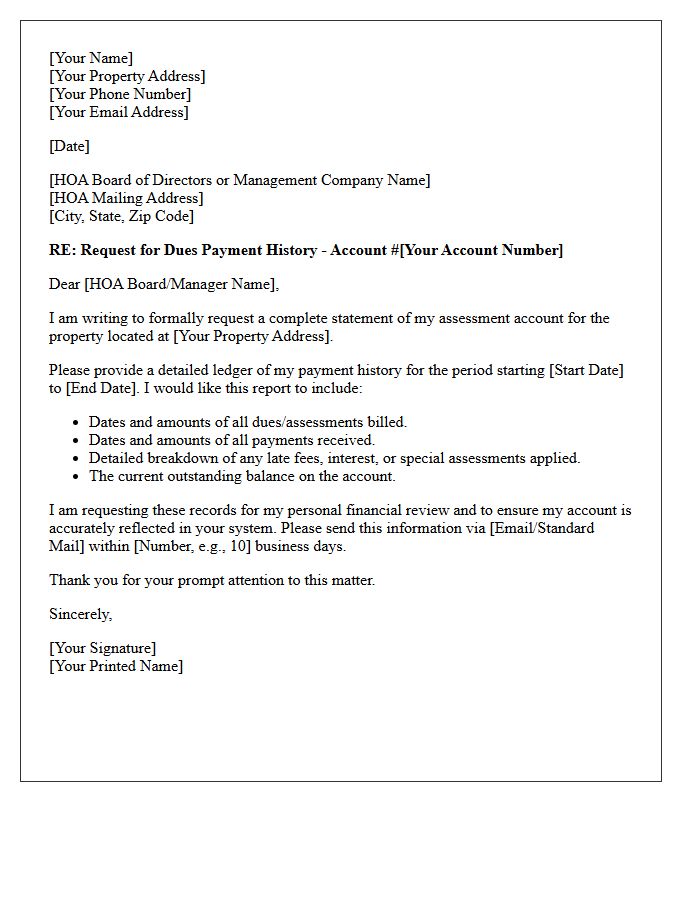
A Homeowners Association (HOA) Dues Payment History Request Letter is a formal document used by homeowners to obtain a detailed ledger of their financial contributions. This record is essential for verifying account accuracy, resolving billing discrepancies, or providing proof of compliance during a property sale or refinancing. When drafting this request, ensure you include your property address and specific date ranges. Maintaining an updated payment history protects your equity and ensures your standing within the community remains in good standing, preventing unnecessary late fees or legal complications.
Notice Of Pending Homeowners Association Dues Assessment Letter
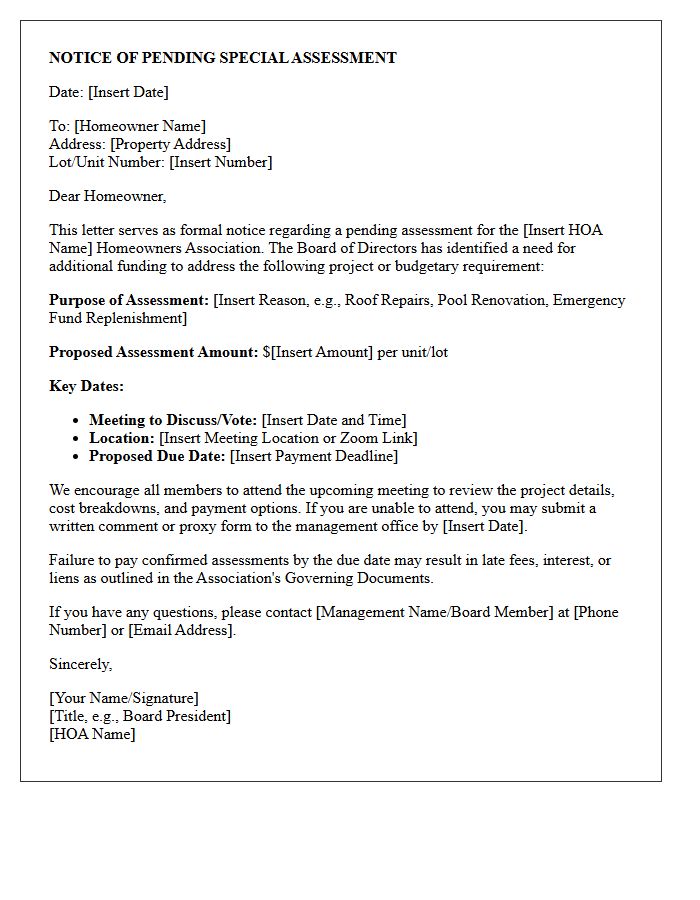
A Notice of Pending Homeowners Association Dues Assessment Letter is a formal notification informing property owners of upcoming financial obligations. This document outlines the specific amount due, the deadline for payment, and the purpose of the assessment, such as community maintenance or emergency repairs. Ignoring this notice can lead to late fees, interest charges, or even a property lien. It is crucial to review the letter immediately to ensure compliance with HOA bylaws and to maintain your membership standing within the community association.
Homeowners Association Dues Escrow Requirement Letter
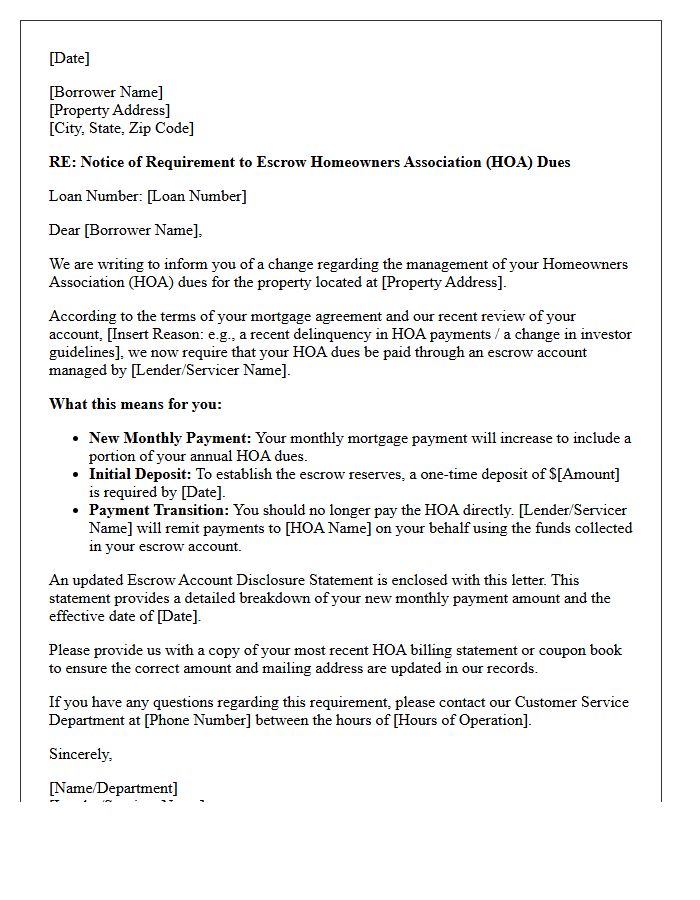
A Homeowners Association Dues Escrow Requirement Letter is a formal notice from a mortgage lender mandates the inclusion of HOA fees in your monthly escrow account. This ensures that mandatory assessments are paid directly by the financial institution to prevent lien filings against the property. Lenders utilize this requirement to protect their collateral interest, as unpaid dues can lead to foreclosure. Homeowners must provide current payment schedules and management contact details to facilitate accurate disbursements and maintain compliance with loan servicing agreements.
Subordination Of Homeowners Association Dues Agreement Letter
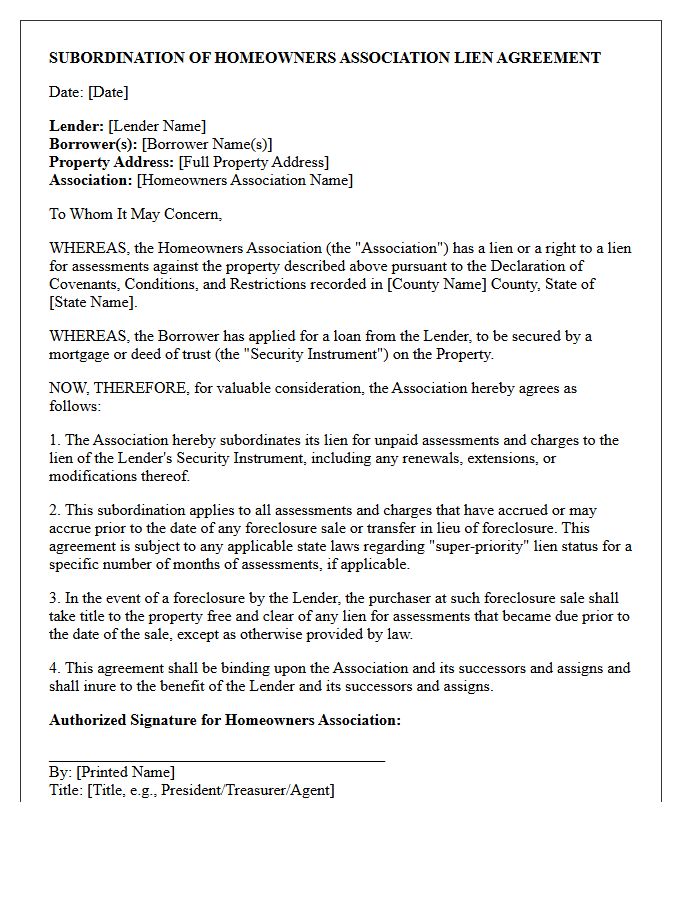
A Subordination of Homeowners Association Dues Agreement Letter is a legal document where an HOA agrees to prioritize a lender's mortgage lien over its own claim for unpaid assessments. This process is essential during refinancing or home sales, as lenders typically require a first-priority position to secure their investment. By signing this agreement, the association ensures the homeowner can obtain financing, while the lender gains protection against financial loss. It clarifies the priority of debts, ensuring clear title transfer and facilitating smoother real estate transactions for all parties involved.
Lender Request For Homeowners Association Dues Statement Letter
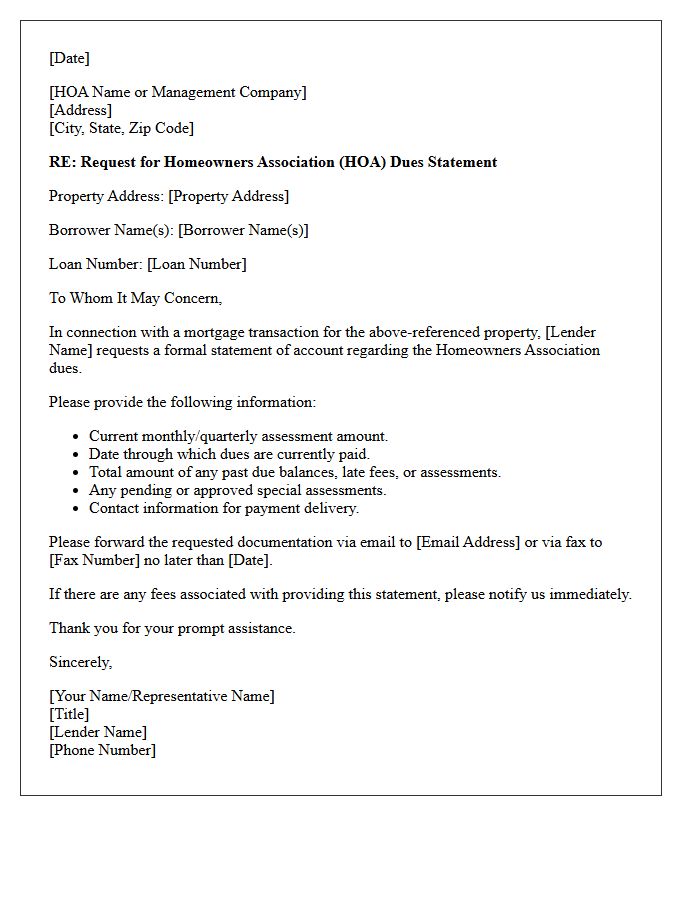
When securing a mortgage, the Lender Request for Homeowners Association Dues Statement Letter is a mandatory document used to verify a property's financial standing. This formal inquiry confirms the current assessment fees, any outstanding balances, and pending special assessments that could affect the loan-to-value ratio. Lenders require this estoppel certificate to ensure there are no superior liens on the title. Buyers must coordinate with the HOA management early to avoid closing delays, as these statements often carry an expiration date and a processing fee.
What is a Verification of Homeowners Association (HOA) Dues Letter?
A Verification of HOA Dues Letter, also known as an estoppel letter or payoff statement, is an official document provided by a homeowners association detailing the current financial standing of a specific property, including any outstanding balances, monthly fees, and upcoming assessments.
Why do lenders require an HOA dues verification letter during a home sale?
Lenders require this document to ensure there are no hidden liens or delinquent payments that could jeopardize the property title. It confirms the exact amount of monthly dues and verifies that the seller is current on all financial obligations to the association.
What information is typically included in an HOA dues verification statement?
The letter typically includes the current owner's name, property address, the regular assessment amount, payment frequency, any past-due balances, late fees, special assessments, and pending violations that may result in fines.
How long does it take to receive an HOA dues verification letter?
The turnaround time typically ranges from 5 to 10 business days, depending on the management company's policies and state regulations. Many associations offer expedited processing for an additional "rush fee" if the document is needed for a quick closing.
Does a Verification of HOA Dues Letter expire?
Yes, these letters are usually time-sensitive and typically remain valid for 30 to 60 days. Because dues are billed periodically and late fees can accrue monthly, title companies often request an updated statement if the closing date is delayed.

Comments