
A Verification of Identity Letter is a formal document used to confirm an individual's persona for legal, financial, or employment purposes. This essential credential ensures compliance with security standards and prevents fraudulent activities by validating official identification documents. It is often required by solicitors, banks, and government agencies. To assist your documentation process, below are some ready to use templates.
Image cover: Identity Verification Letter Samples and Professional Templates
Letter Samples List
- Primary Applicant Verification Of Identity Letter
- Joint Borrower Verification Of Identity Letter
- Guarantor Verification Of Identity Letter
- Non-Borrowing Spouse Verification Of Identity Letter
- Corporate Entity Verification Of Identity Letter
- Trust Representative Verification Of Identity Letter
- Foreign National Verification Of Identity Letter
- In-Person Verification Of Identity Letter
- Remote Online Verification Of Identity Letter
- Third-Party Witness Verification Of Identity Letter
- Mortgage Broker Verification Of Identity Letter
- Secondary Document Verification Of Identity Letter
Primary Applicant Verification Of Identity Letter
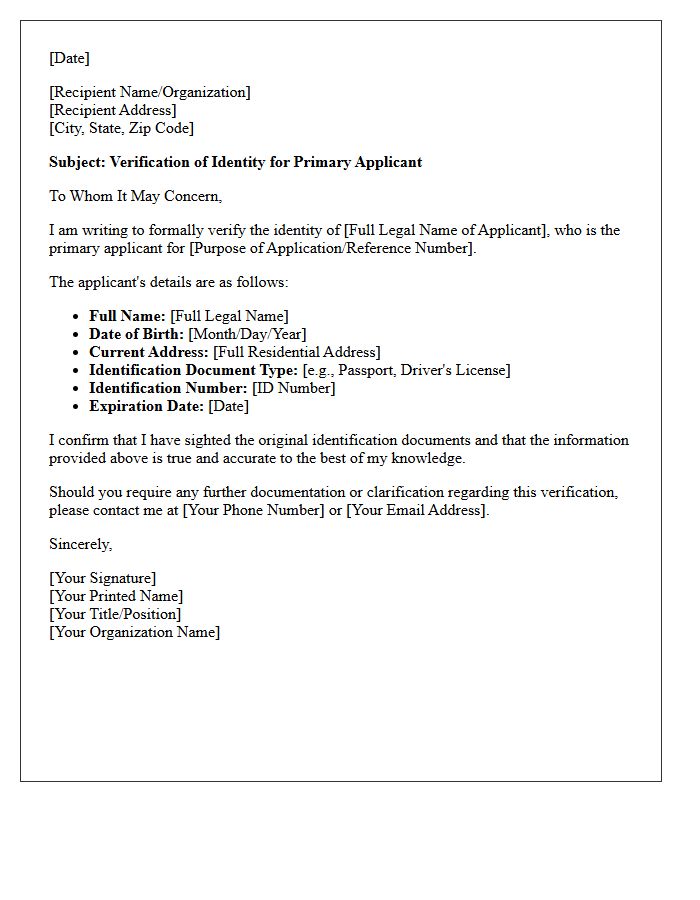
The Primary Applicant Verification of Identity Letter is a formal document used to confirm an individual's legal persona during official applications. It serves as an authentication record, typically required for mortgage processing, legal proceedings, or government filings. The letter ensures that the person submitting documents matches their verified credentials. To be valid, it usually must be issued or witnessed by an authorized professional, such as a solicitor or notary public. Providing this verified proof is essential to prevent identity fraud and ensure compliance with strict anti-money laundering regulations during high-stakes transactions.
Joint Borrower Verification Of Identity Letter
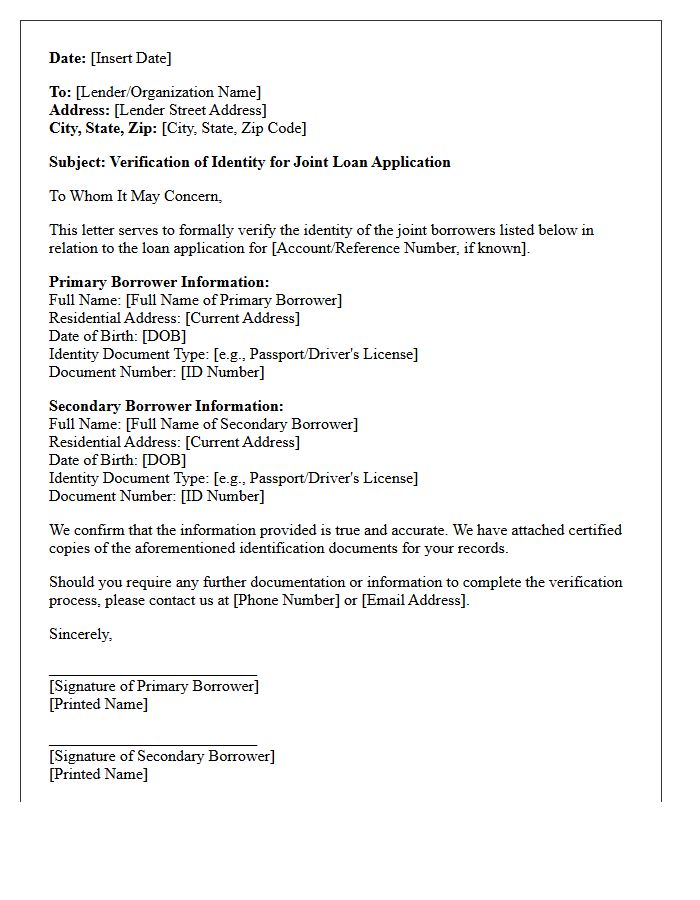
A Joint Borrower Verification of Identity Letter is a legal document used by mortgage lenders to confirm the authenticity of all parties involved in a loan application. This letter ensures compliance with Anti-Money Laundering (AML) regulations by providing certified proof of names, addresses, and government-issued identification. Typically completed by a solicitor or licensed conveyancer, it protects against identity fraud in multi-borrower agreements. Understanding this requirement is essential for a smooth mortgage approval process, as it validates that each individual has been legally identified before the loan is finalized.
Guarantor Verification Of Identity Letter
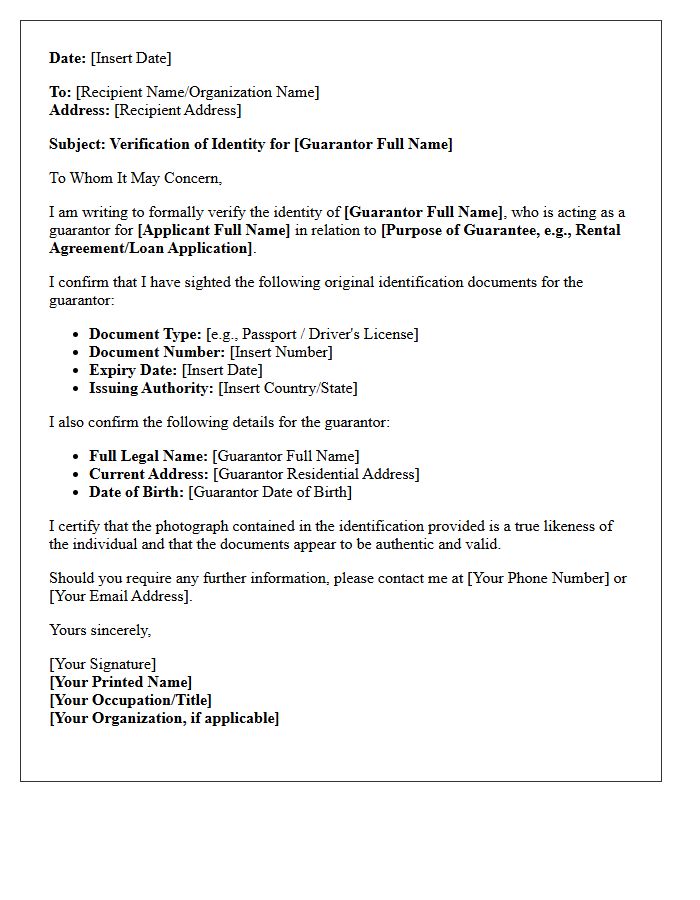
A Guarantor Verification of Identity Letter is a formal document used to confirm an individual's credentials. It ensures the guarantor meets specific criteria, such as being a professional in good standing or a person of established reputation. This letter validates that the applicant's identity documents are authentic and that they are who they claim to be. It is essential for high-security applications, such as passports or legal contracts, where official witnessing is required to prevent fraud and maintain the integrity of the verification process.
Non-Borrowing Spouse Verification Of Identity Letter
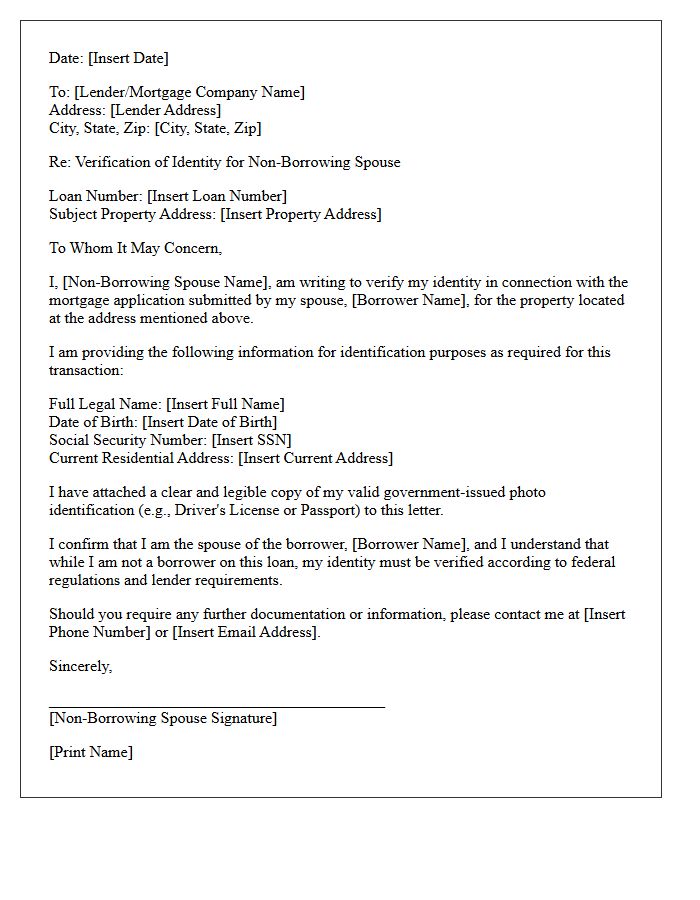
A Non-Borrowing Spouse Verification of Identity Letter is a critical document used in mortgage lending, particularly for FHA loans and government-backed financing in community property states. It formally confirms the legal identity and marital status of a spouse who is not a party to the loan. This ensures the lender complies with Anti-Money Laundering (AML) regulations and "Know Your Customer" protocols. Even if the spouse's income isn't used for qualification, their verified credentials are required to clear title contingencies and protect the lender's legal interest in the property.
Corporate Entity Verification Of Identity Letter
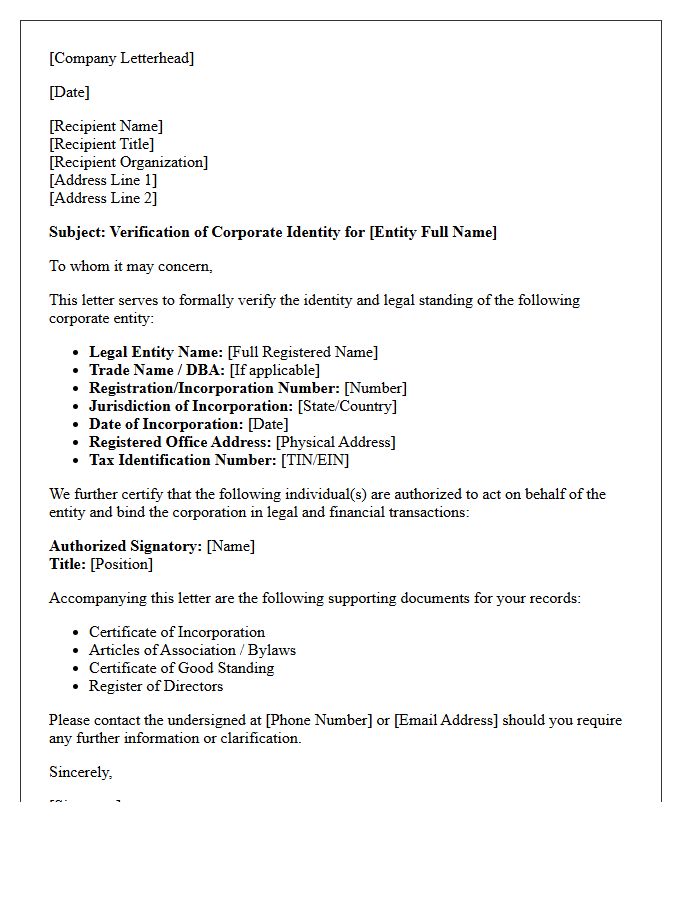
A Corporate Entity Verification of Identity Letter is a formal document used to confirm the legal existence and ownership structure of a business. Financial institutions and legal bodies require this to comply with Anti-Money Laundering (AML) and Know Your Customer (KYC) regulations. The letter typically verifies the entity's registration number, registered address, and the identities of beneficial owners or authorized signatories. Providing accurate documentation ensures corporate transparency, prevents financial fraud, and facilitates secure business transactions within global regulatory frameworks.
Trust Representative Verification Of Identity Letter
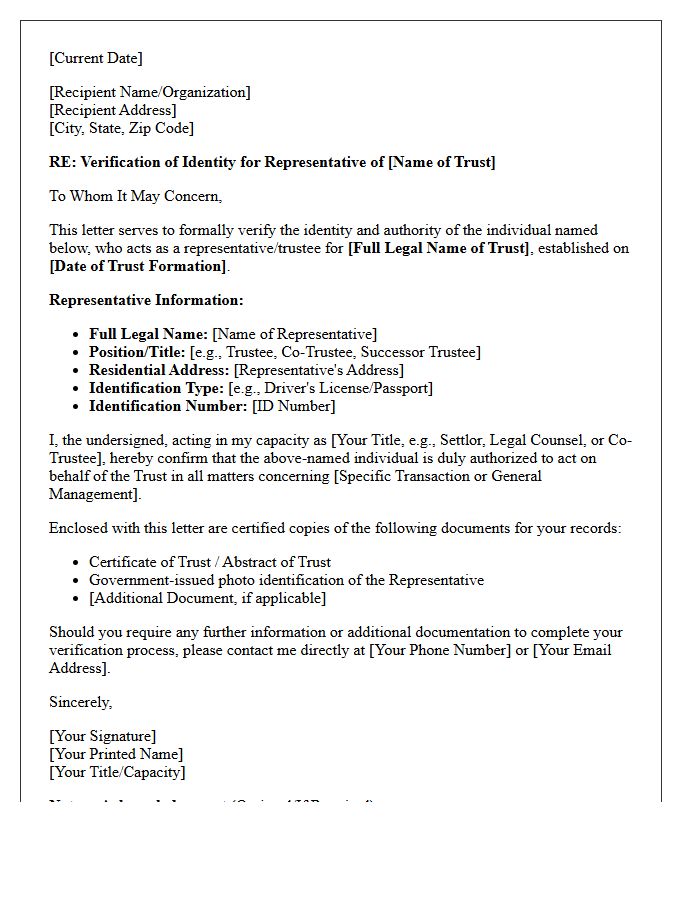
A Trust Representative Verification of Identity Letter is a formal document used to confirm the legal authority and identity of individuals acting on behalf of a trust. This compliance requirement ensures that trustees or representatives are verified under anti-money laundering regulations. It typically involves a professional, such as a solicitor or notary, certifying government-issued identification and proof of address. Providing this verified documentation is essential for opening bank accounts, executing property transfers, or managing financial assets to prevent fraud and ensure the trust's legitimate operation within legal frameworks.
Foreign National Verification Of Identity Letter
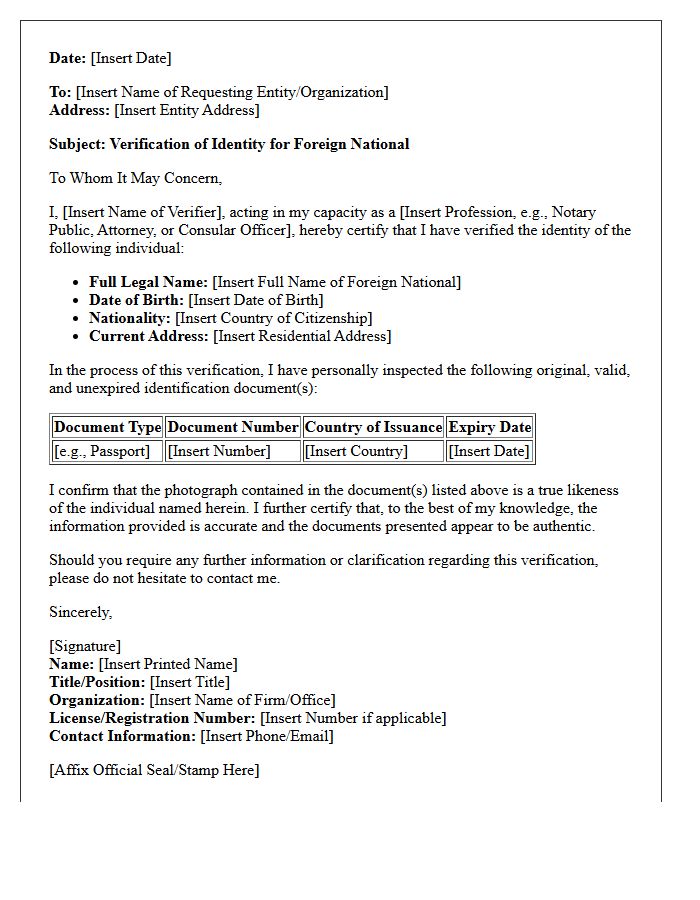
A Foreign National Verification of Identity Letter is a mandatory document used to confirm the legal persona of non-citizens during financial or real estate transactions. It ensures compliance with Anti-Money Laundering (AML) regulations by verifying passports and residency status. Typically, this letter must be certified by an authorized professional, such as a notary or solicitor, to guarantee identity authenticity. Providing this verified proof prevents fraud and facilitates cross-border legal processes, making it a critical requirement for foreign investors or residents engaging in high-value contractual agreements abroad.
In-Person Verification Of Identity Letter
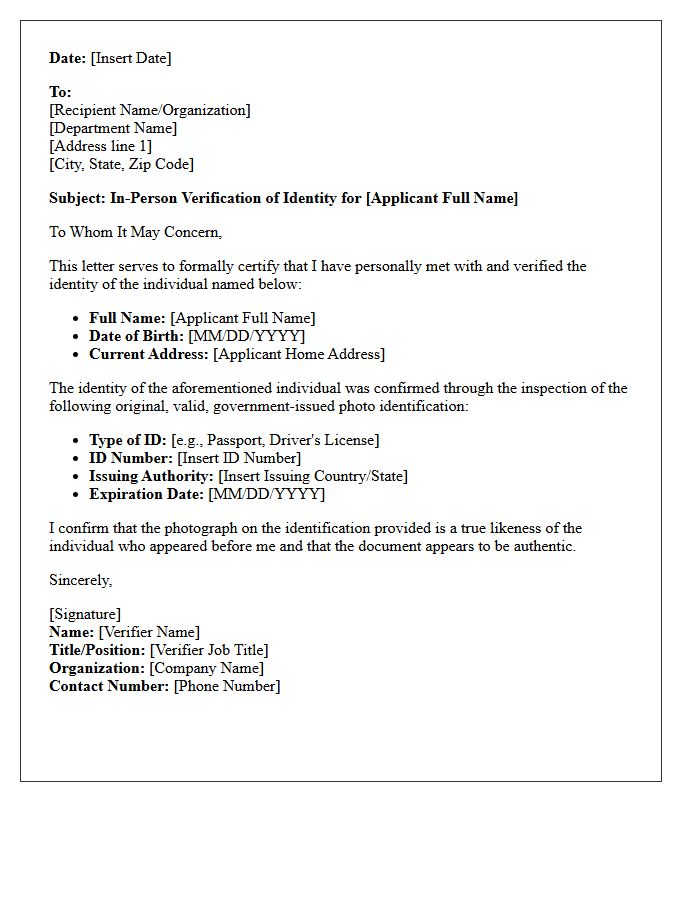
An In-Person Verification Of Identity Letter is a formal document used to confirm an individual's legal identity. You must present this letter at a designated location, such as a post office or government center, alongside original photo identification. This process ensures high-level security for sensitive transactions like visa applications or background checks. It is essential to attend the appointment within the specified validity period. Bringing the printed letter and required supporting documents is mandatory to complete the authentication process successfully and prevent service delays.
Remote Online Verification Of Identity Letter
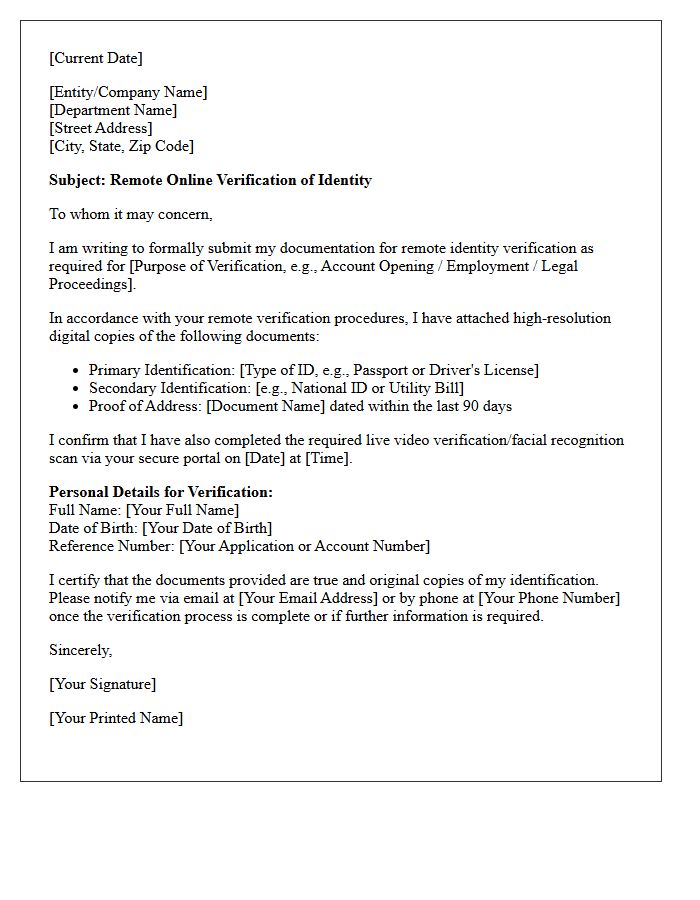
A Remote Online Verification Of Identity Letter is a certified document issued by a professional, such as a solicitor or notary, to confirm an individual's identity remotely. This process utilizes digital identity solutions and video technology to verify government-issued IDs without requiring a physical meeting. It is essential for high-value transactions, such as conveyancing or opening international bank accounts. By leveraging secure encryption and biometric checks, this letter provides a legally compliant audit trail that mitigates the risk of identity fraud while streamlining administrative procedures across global borders.
Third-Party Witness Verification Of Identity Letter
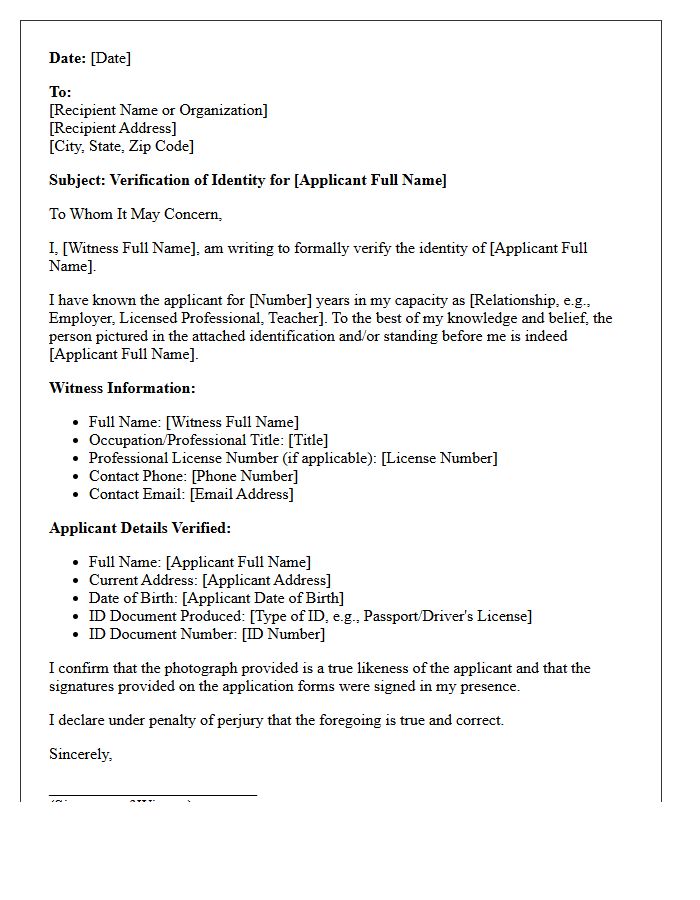
A Third-Party Witness Verification Of Identity Letter is a notarized document used to confirm an individual's legal identity when standard government IDs are unavailable or insufficient. This process requires a credible witness who personally knows the applicant and can swear to their authenticity under oath. It is a critical component in legal, financial, and real estate transactions to prevent identity fraud. The witness must be an impartial party, ensuring the verification process maintains high integrity and meets strict statutory compliance requirements for official documentation and record-keeping.
Mortgage Broker Verification Of Identity Letter
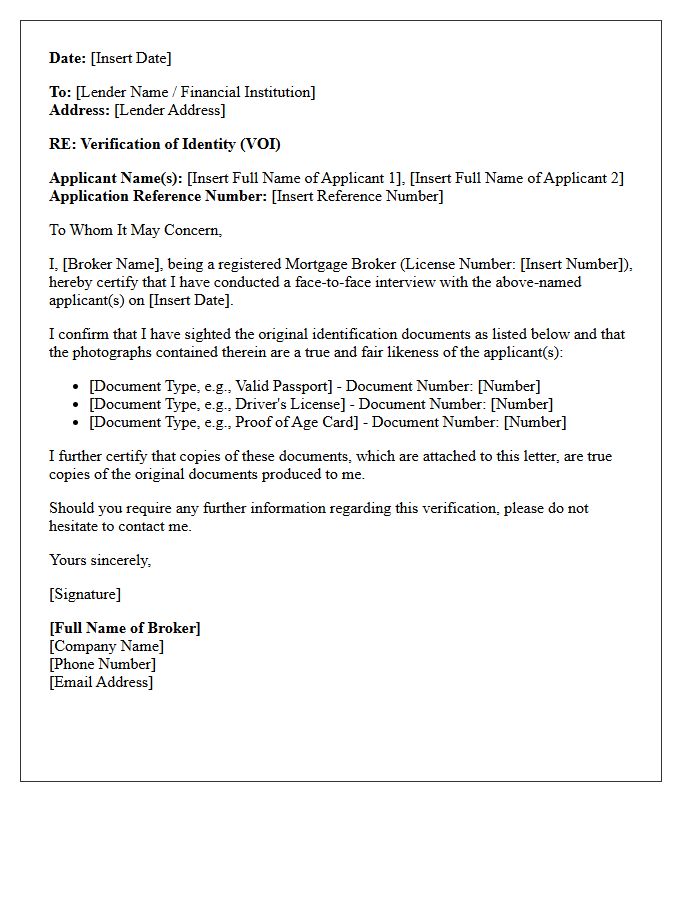
A Mortgage Broker Verification Of Identity (VOI) Letter is a formal document confirming that a broker has legally verified a client's identity. This process is essential to prevent fraud and money laundering during property transactions. The letter certifies that original identification documents, such as passports or licenses, were sighted in person or via approved digital methods. Lenders require this verification to meet strict compliance standards and "Know Your Customer" (KYC) regulations, ensuring the person applying for the loan is exactly who they claim to be before formal approval.
Secondary Document Verification Of Identity Letter
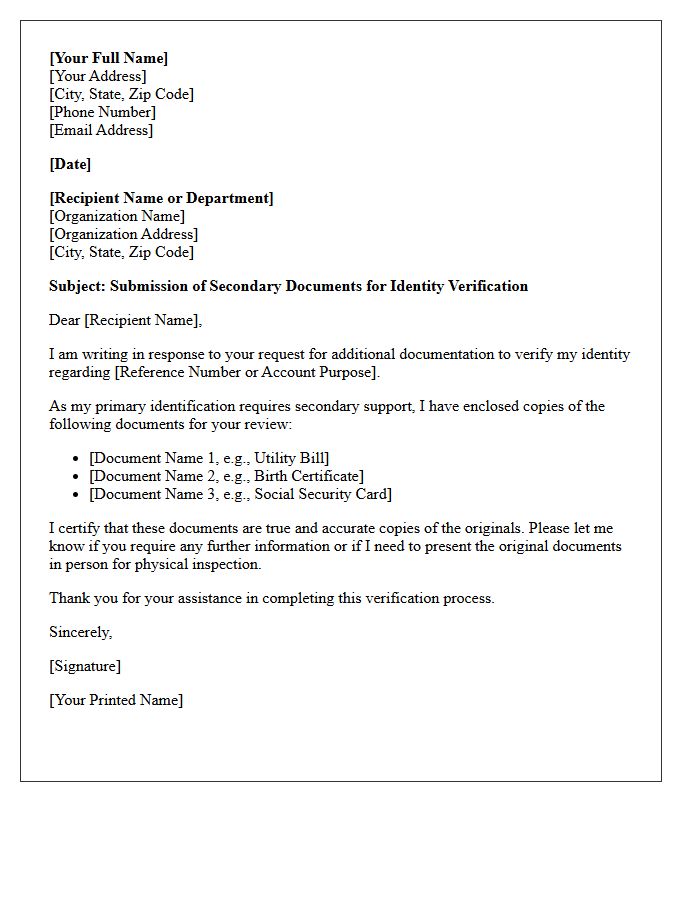
A Secondary Document Verification Of Identity Letter is a formal request issued when initial checks cannot fully confirm your persona. It requires you to provide supplemental documentation, such as utility bills or government notices, to establish your residency and legal name. This step is critical for preventing identity theft and ensuring compliance with federal security standards. To avoid processing delays, ensure all submitted copies are clear, valid, and match the specific details requested in your notification letter. Promptly responding to this verification secures your account and maintains the integrity of the registration process.
What is a Verification of Identity (VOI) letter?
A Verification of Identity letter is a formal document used to confirm that a person is who they claim to be. It is typically required during high-value transactions, such as real estate transfers or legal proceedings, to prevent identity fraud.
Who can certify a Verification of Identity letter?
A VOI letter must usually be certified by an authorized identity agent, such as a licensed conveyancer, a lawyer, a Notary Public, or an authorized employee at a post office, depending on the specific jurisdictional requirements.
What documents are required for a Verification of Identity check?
To complete a VOI check, you generally need to produce original "production documents," which may include a valid passport, a driver's license, a birth certificate, or a national identity card. Most frameworks require at least one photo ID and one secondary document.
How long is a Verification of Identity letter valid for?
In most legal and real estate frameworks, a Verification of Identity letter or report is valid for 24 months from the date of the face-to-face interview. After this period, a new identity verification process must be conducted.
Is a face-to-face meeting mandatory for a VOI letter?
Yes, standard VOI regulations typically require a face-to-face meeting between the identifier and the person being identified. This allows the agent to ensure the person in the photographs matches the person appearing before them.

Comments