
Confirming a lease extension starts with a formal Acknowledgment of Tenant Intent to Renew letter. This essential document verifies that the landlord has received the tenant's request and outlines the next steps for finalizing the agreement. It ensures clear communication and legal clarity for both parties. To help you get started, below are some ready to use templates.

Image cover: Securing Your Lease: Tenant Intent to Renew Acknowledgment Templates
Letter Samples List
- Standard Acknowledgment Of Tenant Intent To Renew Letter
- Commercial Tenant Intent To Renew Acknowledgment Letter
- Residential Tenant Intent To Renew Acknowledgment Letter
- Early Acknowledgment Of Tenant Intent To Renew Letter
- Acknowledgment Of Intent To Renew With New Lease Terms Letter
- Acknowledgment Of Intent To Renew With Rent Adjustment Letter
- Acknowledgment Of Intent To Renew Pending Property Inspection Letter
- Acknowledgment Of Intent To Renew Pending Account Review Letter
- Fixed Term Lease Renewal Intent Acknowledgment Letter
- Intent To Renew Month-To-Month Lease Acknowledgment Letter
- Formal Acknowledgment Of Tenant Lease Renewal Intent Letter
- Intent To Renew Acknowledgment And Contract Execution Letter
Standard Acknowledgment Of Tenant Intent To Renew Letter
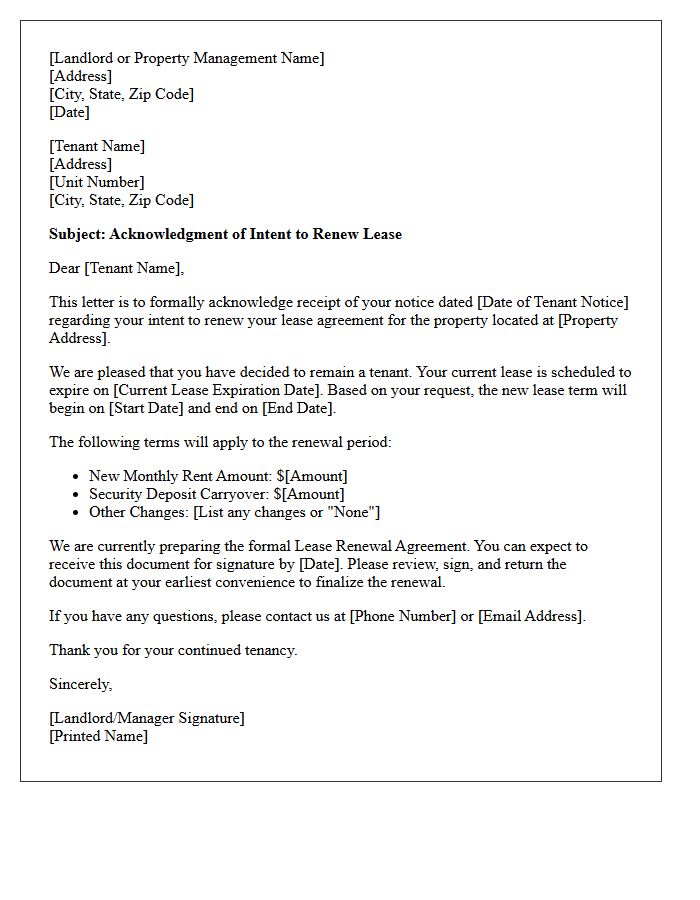
A Standard Acknowledgment of Tenant Intent to Renew Letter is a formal document sent by a landlord to confirm the lease extension requested by a renter. This letter officially recognizes the tenant's desire to stay, outlines any updated rental terms, and specifies the new expiration date. It serves as a vital written record to prevent future disputes and ensures both parties agree on revised conditions or rent adjustments. Promptly issuing this acknowledgment helps maintain a professional relationship and provides legal security for the upcoming tenancy period.
Commercial Tenant Intent To Renew Acknowledgment Letter
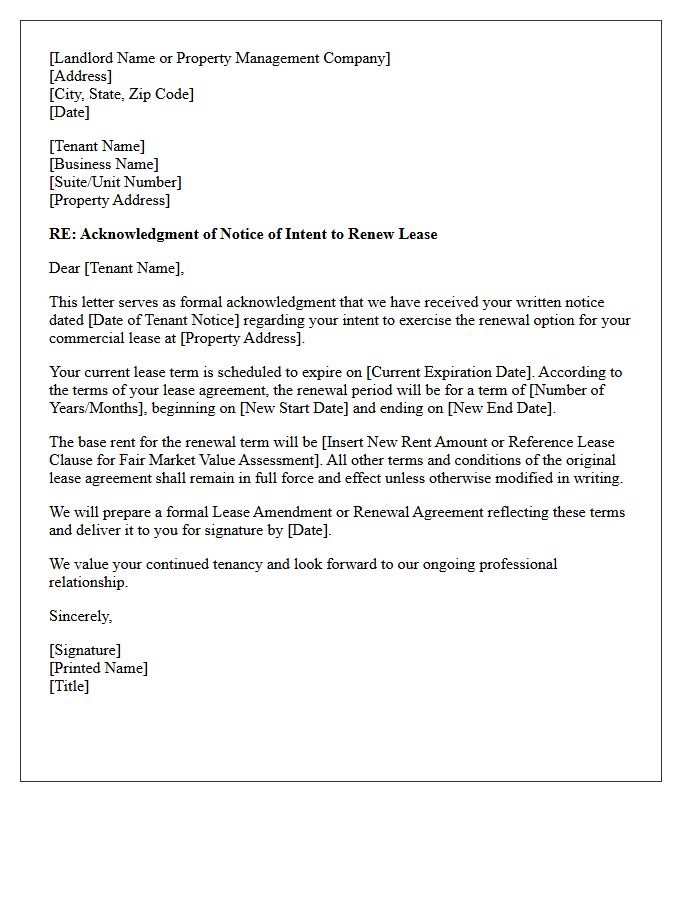
A Commercial Tenant Intent To Renew Acknowledgment Letter is a formal document sent by a landlord to confirm receipt of a tenant's notice to extend their lease. This letter is crucial for legal compliance as it verifies that the renewal option was exercised within the required timeframe. It serves as a preliminary agreement, outlining next steps such as negotiating new rental rates or preparing a formal lease amendment. Properly documenting this acknowledgment ensures both parties remain aligned on tenancy continuity and future contractual obligations, preventing potential disputes over occupancy rights.
Residential Tenant Intent To Renew Acknowledgment Letter
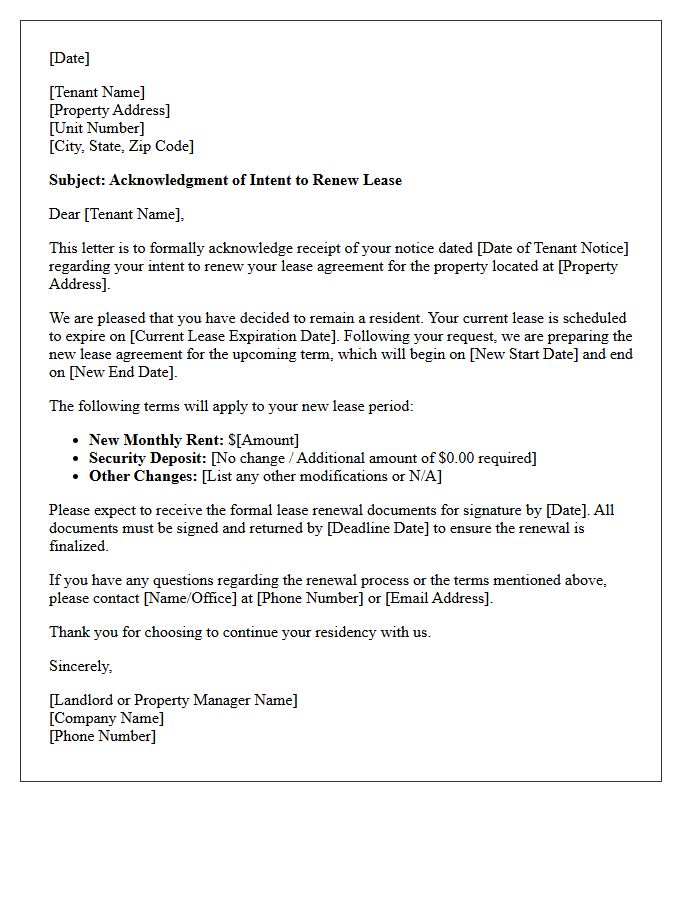
A Residential Tenant Intent To Renew Acknowledgment Letter is a formal document sent by a landlord to confirm receipt of a tenant's request to extend their lease. This legal acknowledgment ensures both parties are aligned on the upcoming lease extension process. It typically outlines the next steps, such as preparing a renewal addendum, verifying updated rental rates, or specifying any changes to the original terms. Clear communication through this letter helps maintain a positive landlord-tenant relationship and provides a written record of the agreement to continue the tenancy.
Early Acknowledgment Of Tenant Intent To Renew Letter
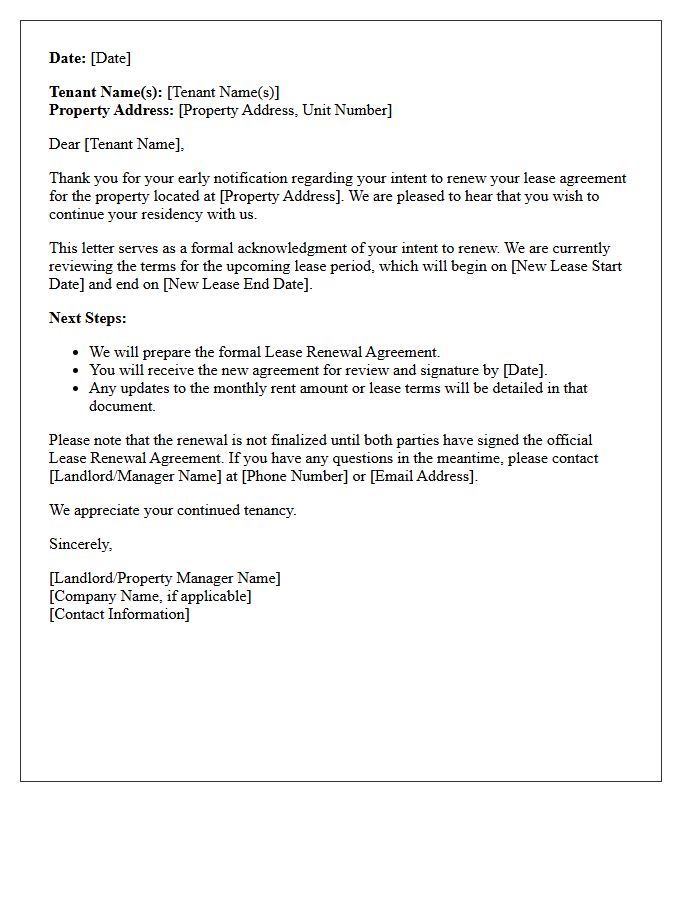
An Early Acknowledgment of Tenant Intent to Renew letter is a vital document used by landlords to formally confirm a tenant's decision to extend their lease. Sending this notice early ensures lease continuity and provides legal clarity for both parties. It serves as a written record that prevents future disputes regarding move-out dates or vacancy status. By securing this commitment well before the current term expires, property managers can effectively manage their rental portfolio, avoid costly turnover periods, and maintain steady cash flow through proactive communication.
Acknowledgment Of Intent To Renew With New Lease Terms Letter
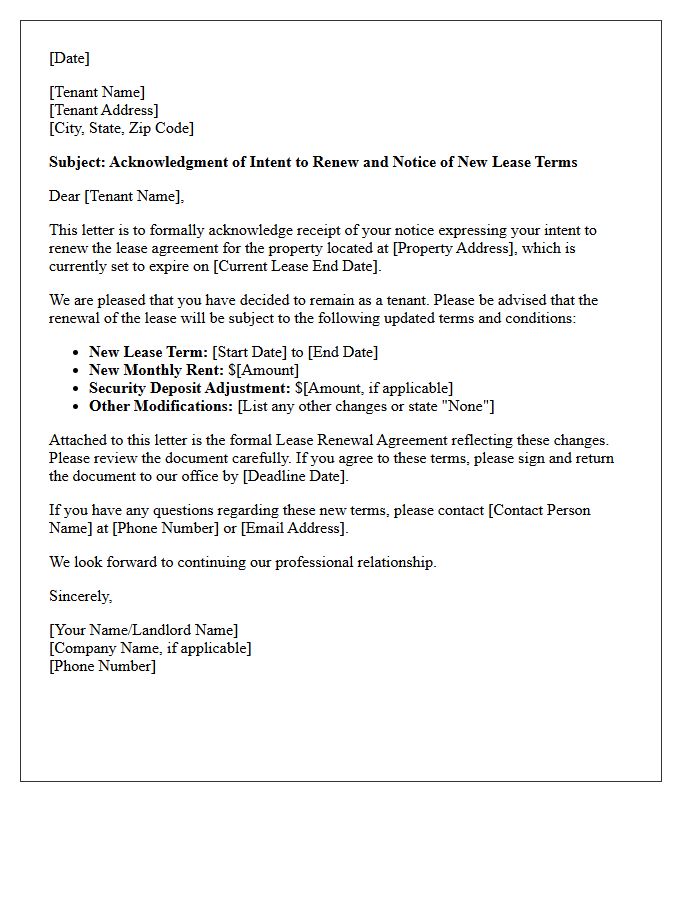
An Acknowledgment of Intent to Renew with New Lease Terms Letter is a formal document where a landlord confirms a tenant's desire to stay while outlining updated contractual conditions. This letter typically details changes to the monthly rent, security deposit adjustments, or revised lease duration. It serves as a preliminary agreement, ensuring both parties are aligned on new financial obligations before signing a final contract. Reviewing these terms promptly is essential to maintain legal protections and secure continued occupancy under mutually agreed-upon professional standards.
Acknowledgment Of Intent To Renew With Rent Adjustment Letter
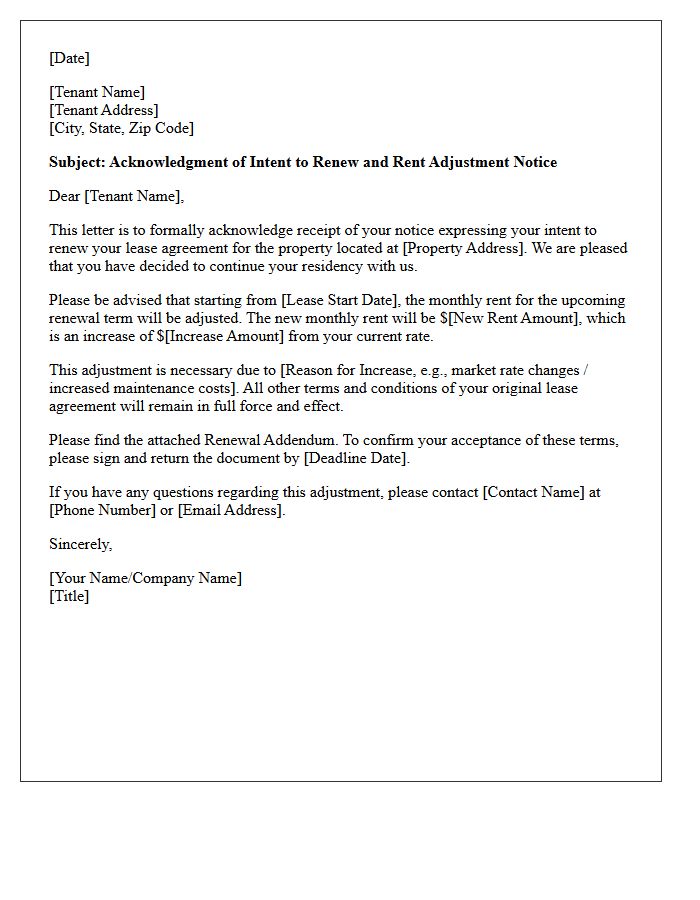
An Acknowledgment Of Intent To Renew With Rent Adjustment Letter confirms a tenant's desire to extend their lease while formalizing new financial terms. This legal document serves as a bridge between current and future rental periods, ensuring both parties agree to the updated rent amount before the existing contract expires. It provides written proof of lease continuity and protects landlords by documenting acceptance of price changes. Timely delivery of this notice is essential for maintaining tenancy stability and avoiding unexpected month-to-month transitions or avoidable vacancies.
Acknowledgment Of Intent To Renew Pending Property Inspection Letter
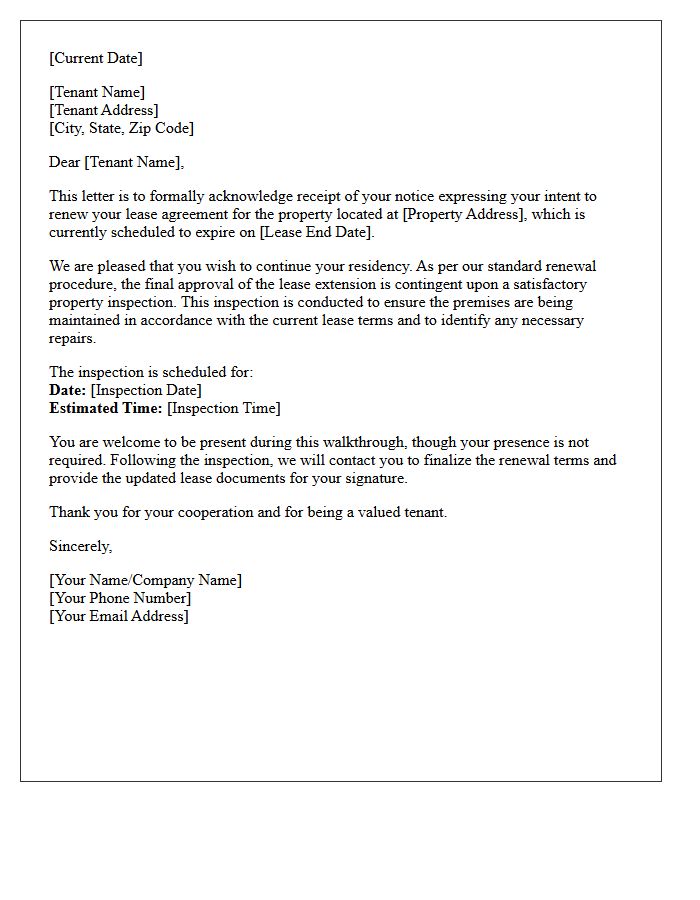
An Acknowledgment of Intent to Renew is a formal document confirming a tenant's desire to extend their lease, contingent upon a satisfactory property inspection. This letter ensures that the landlord verifies the building's condition before finalizing legal agreements. It protects both parties by documenting existing maintenance needs or damages. Clearly stating that the renewal is pending the results of this walkthrough prevents premature commitment to unfavorable terms. This professional communication serves as a vital bridge between the current lease expiration and the execution of a new, updated contract.
Acknowledgment Of Intent To Renew Pending Account Review Letter
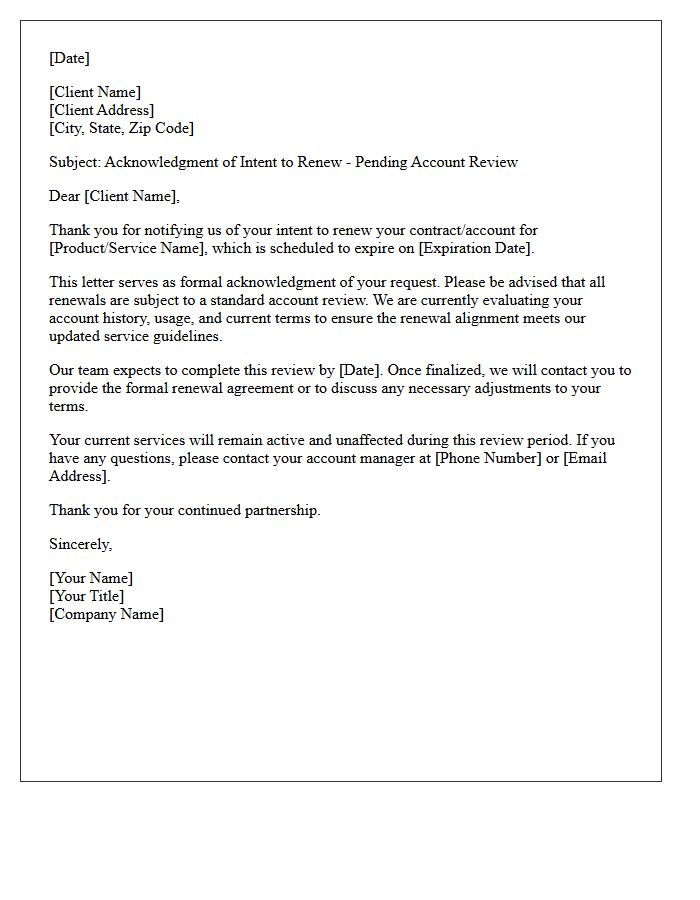
An Acknowledgment of Intent to Renew is a formal notification confirming that a provider or lender has received your request to continue a service. However, this document specifies that the final decision is pending account review, meaning they must first evaluate your payment history, creditworthiness, or compliance with updated terms. It is not a guaranteed approval but a preliminary step in the renewal process. Ensure all requested documentation is submitted promptly to avoid service interruptions or account closure during this evaluation period.
Fixed Term Lease Renewal Intent Acknowledgment Letter
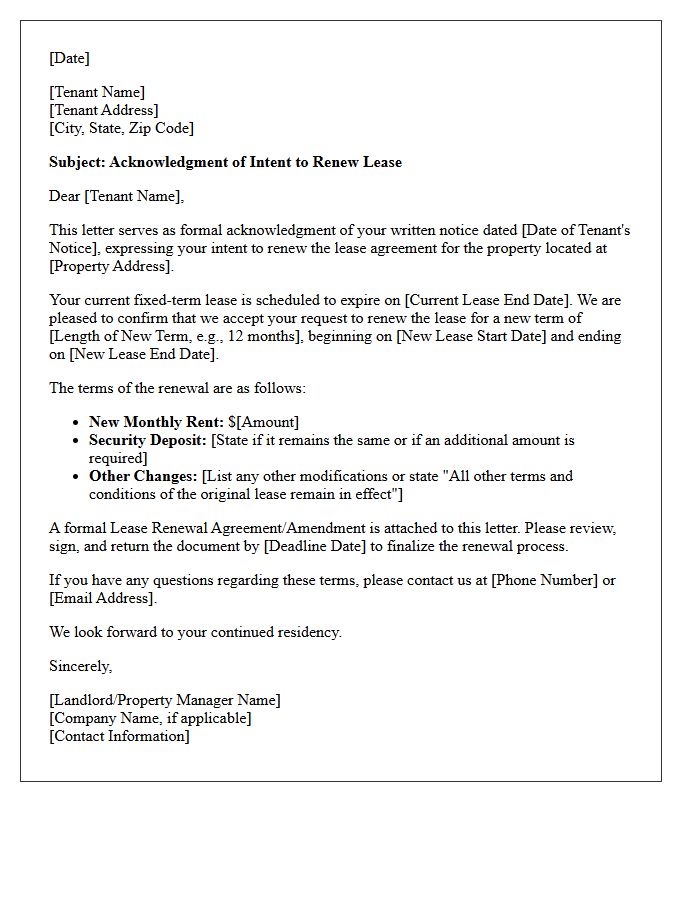
A Fixed Term Lease Renewal Intent Acknowledgment Letter is a formal document sent by a landlord to confirm receipt of a tenant's desire to extend their stay. This letter serves as a vital written record in property management, outlining the next steps for the lease extension process. It typically specifies whether the request is approved, any proposed changes to rental terms, and the deadline for signing the new agreement. Ensuring this acknowledgment is documented helps prevent legal disputes and maintains clear communication between both parties before the original contract expires.
Intent To Renew Month-To-Month Lease Acknowledgment Letter
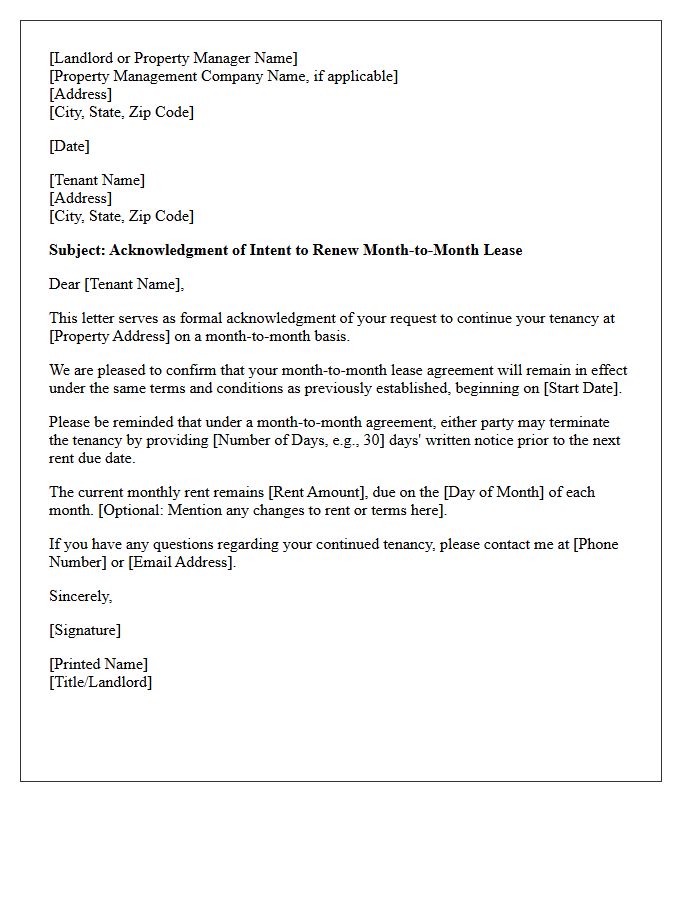
An Intent to Renew Month-to-Month Lease Acknowledgment Letter is a formal document where a landlord confirms a tenant's request to extend their periodic tenancy. This letter serves as written verification that the rental agreement will continue under existing or modified terms. It is essential for maintaining clear communication and ensuring legal compliance regarding notice periods. By acknowledging the renewal, both parties protect their rights and establish a clear timeline for the ongoing occupancy, preventing misunderstandings about the lease duration or potential termination requirements in the future.
Formal Acknowledgment Of Tenant Lease Renewal Intent Letter
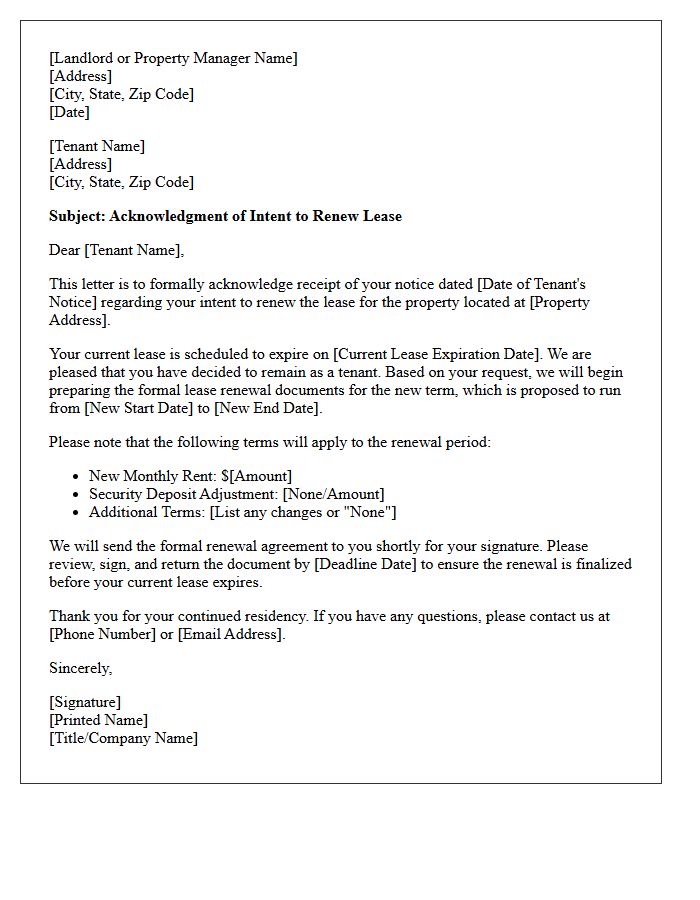
A formal acknowledgment of tenant lease renewal intent confirms that a landlord has received a tenant's request to extend their stay. This document serves as a legal record, ensuring both parties are aligned before drafting the new contract. It should clearly state the property address, the renewal period, and any proposed changes to rent or terms. Providing this written confirmation maintains professional communication and prevents future disputes regarding occupancy status. It is the essential first step in securing a continuous tenancy agreement and ensuring long-term rental stability.
Intent To Renew Acknowledgment And Contract Execution Letter
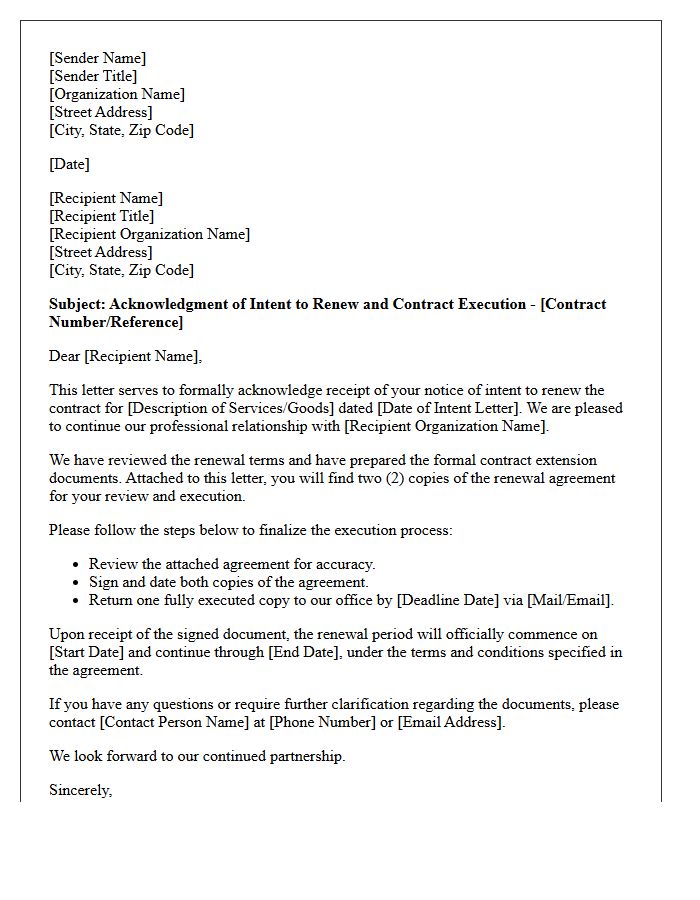
The Intent to Renew Acknowledgment and Contract Execution Letter serves as a formal confirmation that both parties agree to extend an existing legal agreement. This document validates the renewal terms and outlines any adjustments to the original contract. It acts as a critical bridge between the expiration of the old term and the activation of the new one, ensuring continuity of service. Executing this letter promptly is essential to maintain legal protections and prevent a lapse in contractual obligations while finalizing the binding agreement.
What is an Acknowledgment of Tenant Intent to Renew letter?
An Acknowledgment of Tenant Intent to Renew is a formal document sent by a landlord to a tenant confirming that the landlord has received and accepted the tenant's request to extend their lease agreement for a new term.
Is an Acknowledgment of Tenant Intent to Renew legally binding?
While the letter confirms mutual intent to continue the tenancy, it typically serves as a preliminary step. The renewal becomes legally binding once both parties sign a formal lease amendment or a new lease agreement outlining the updated terms and rent amount.
What details should be included in a lease renewal acknowledgment?
The letter should include the date of the notice, the names of the landlord and tenant, the property address, the specific expiration date of the current lease, the start and end dates of the new renewal period, and any changes to the monthly rent.
How soon should a landlord send an acknowledgment of intent to renew?
Landlords should ideally send the acknowledgment within 5 to 10 business days of receiving the tenant's renewal request. Prompt communication ensures that the formal lease extension paperwork can be drafted and signed well before the current lease expires.
Can a landlord deny a renewal after sending an acknowledgment?
Generally, once an acknowledgment is sent, it indicates an agreement in principle. However, if the acknowledgment was conditional upon certain factors (like a credit check or property inspection) that the tenant fails to meet, or if a formal contract is never signed, the landlord may still have the right to terminate the tenancy depending on local laws.


Comments