
A Notice of Lease Termination for Non-Payment of Rent is a formal legal document issued by landlords when tenants fail to pay rent on time. This critical notice initiates the eviction process by demanding payment or possession of the property within a specific timeframe. Understanding your state laws is essential for legal compliance. To simplify the process, below are some ready to use template.
Image cover: Official Notice of Lease Termination for Unpaid Rent: Templates and Essential Forms
Letter Samples List
- Three-Day Notice to Pay Rent or Quit Letter
- Notice of Lease Termination for Non-Payment Letter
- Final Eviction Notice for Unpaid Rent Letter
- Delinquent Rent Lease Termination Letter
- Notice to Vacate for Non-Payment of Rent Letter
- Commercial Lease Default and Termination Letter
- Residential Eviction Notice for Unpaid Rent Letter
- Past Due Rent Notice of Lease Cancellation Letter
- Fourteen-Day Notice to Pay or Vacate Letter
- Breach of Lease for Unpaid Rent Termination Letter
- Immediate Lease Termination for Rent Arrears Letter
- Pre-Eviction Notice of Lease Termination Letter
- Demand for Rent or Lease Termination Letter
Three-Day Notice to Pay Rent or Quit Letter
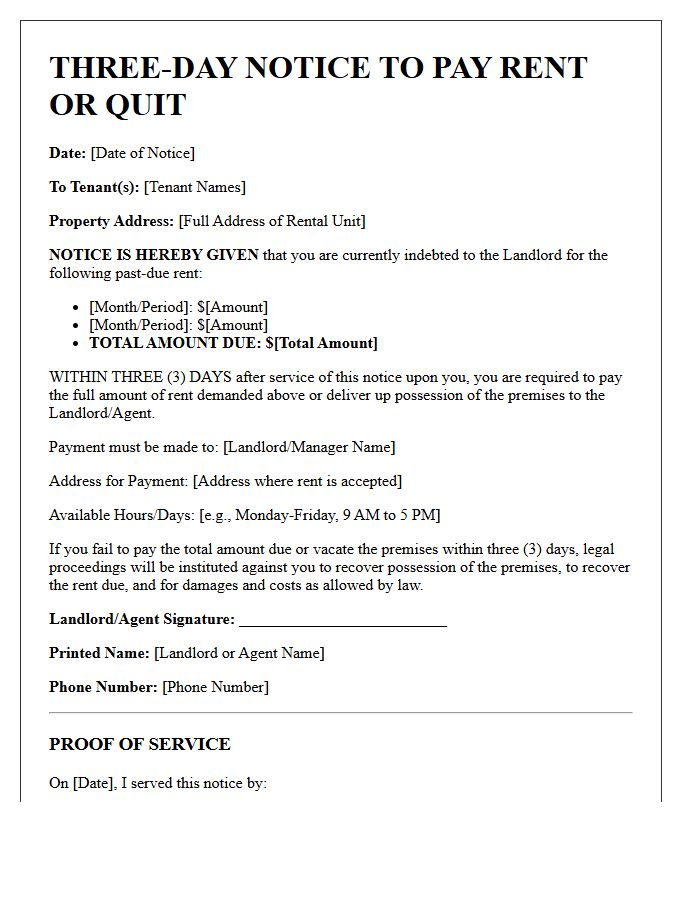
A Three-Day Notice to Pay Rent or Quit is a formal legal document served by landlords when a tenant fails to pay rent on time. This notice provides a three-day window to either pay the full balance owed or vacate the premises. It serves as the mandatory first step in the eviction process. Failure to comply allows the landlord to file an unlawful detainer lawsuit. Accuracy is vital; any errors in the rent amount or delivery method can lead to the legal case being dismissed by the court.
Notice of Lease Termination for Non-Payment Letter
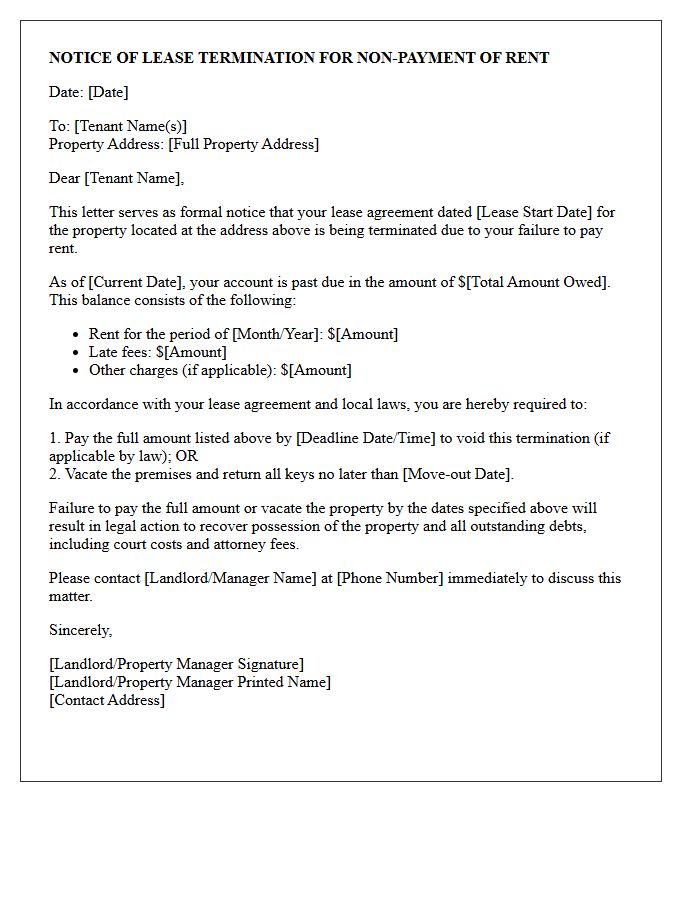
A Notice of Lease Termination for Non-Payment is a formal legal document used by landlords to notify tenants of an impending eviction due to overdue rent. The most critical element is the cure period, which specifies the exact number of days a tenant has to pay the full balance or vacate the property. To ensure legal validity, the letter must include the total amount owed, the deadline for payment, and specific delivery methods required by local housing laws. This notice serves as a mandatory prerequisite before a landlord can file a formal lawsuit in court.
Final Eviction Notice for Unpaid Rent Letter
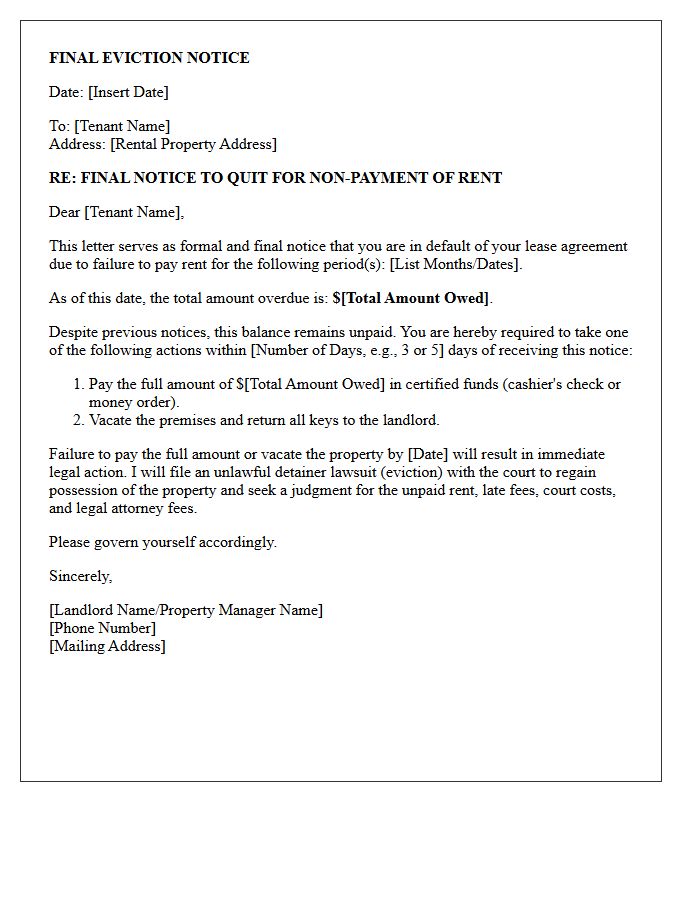
A Final Eviction Notice for unpaid rent is a formal legal document notifying a tenant that their lease will be terminated unless overdue balances are settled immediately. This letter serves as the last warning before a landlord initiates formal court proceedings. It must clearly state the total amount owed, the specific deadline for payment, and the date the tenant must vacate the premises. Accuracy is essential, as any errors in the notice period or delivery method can delay the legal process and affect the outcome of a summary possession claim.
Delinquent Rent Lease Termination Letter
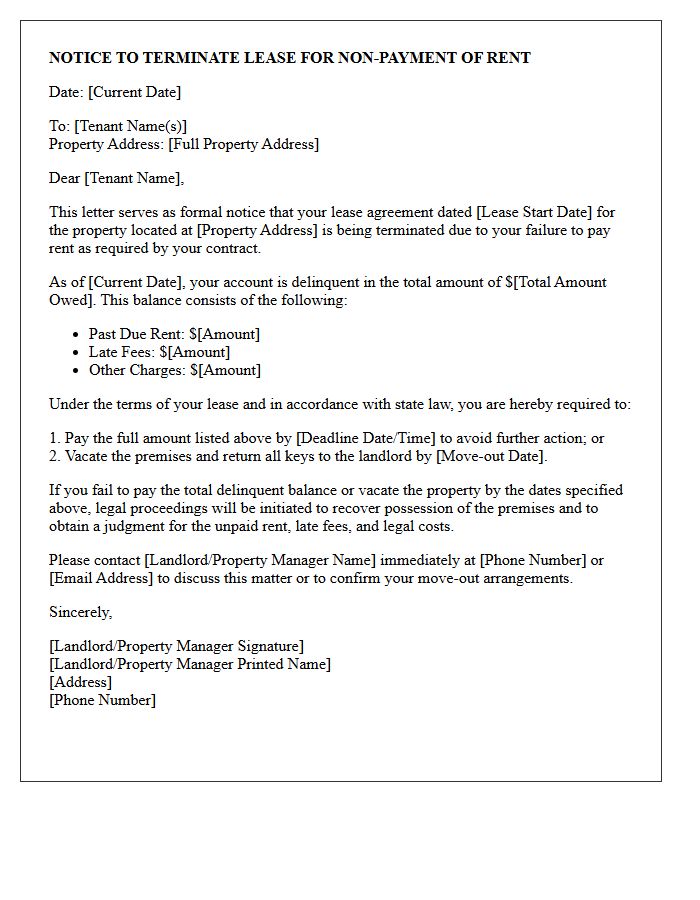
A Delinquent Rent Lease Termination Letter is a formal legal notice issued by a landlord when a tenant fails to pay rent on time. This document serves as an official demand for outstanding balances and initiates the eviction process if the debt remains unpaid. It typically specifies a grace period, required by state laws, for the tenant to either "cure" the default or vacate the premises. Providing this written notice is a mandatory procedural step to protect the landlord's rights and ensure legal compliance before filing a formal lawsuit in court.
Notice to Vacate for Non-Payment of Rent Letter
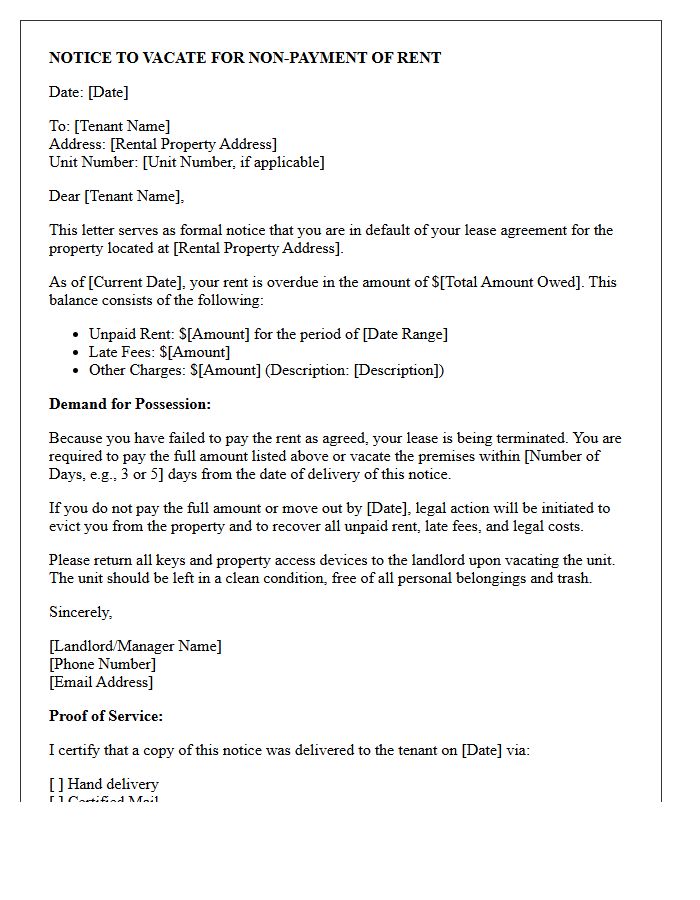
A Notice to Vacate for Non-Payment of Rent is a formal legal document issued by a landlord to initiate the eviction process. It officially informs the tenant of their lease violation due to overdue balances. This letter serves as a final demand for payment within a specific timeframe, typically required by state law before filing a court case. Accuracy is critical, as any errors in the notice period or debt amount can lead to legal delays. It establishes a clear paper trail for potential eviction proceedings.
Commercial Lease Default and Termination Letter
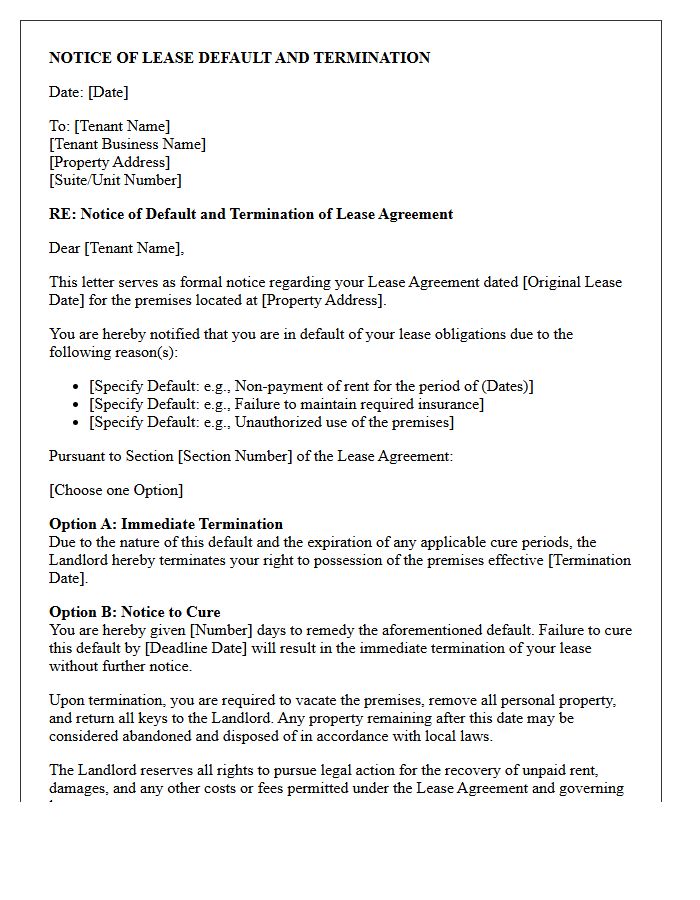
A Commercial Lease Default and Termination Letter is a critical legal notice issued when a tenant violates lease terms. It must clearly identify the specific default, such as unpaid rent or unauthorized alterations, and provide a formal notice to cure within a set timeframe. If the breach remains unresolved, this document serves as the formal basis for eviction or lease cancellation. Accurate documentation and strict adherence to state laws are essential to ensure the termination is legally enforceable and to protect the landlord's rights during potential litigation.
Residential Eviction Notice for Unpaid Rent Letter
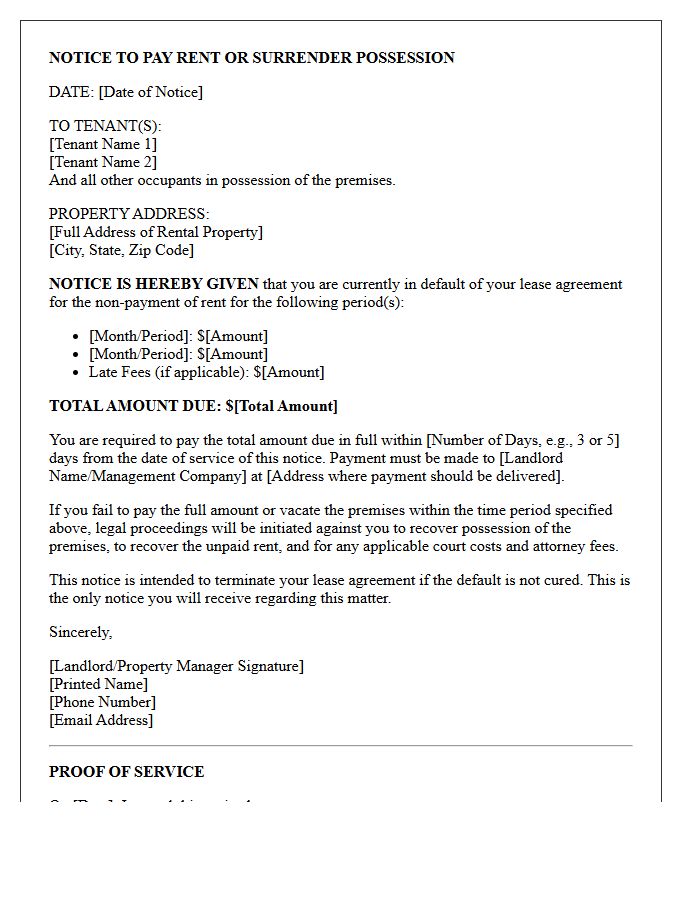
A residential eviction notice for unpaid rent is a formal legal document issued by a landlord to a tenant. It serves as a notice to pay or quit, demanding the immediate settlement of overdue balances within a specific timeframe. To ensure validity, it must include the exact amount owed, the deadline for payment, and clear instructions for compliance. Following local state laws is crucial, as any procedural error can invalidate the filing. This letter is the mandatory first step before a landlord can initiate a formal eviction lawsuit in court.
Past Due Rent Notice of Lease Cancellation Letter
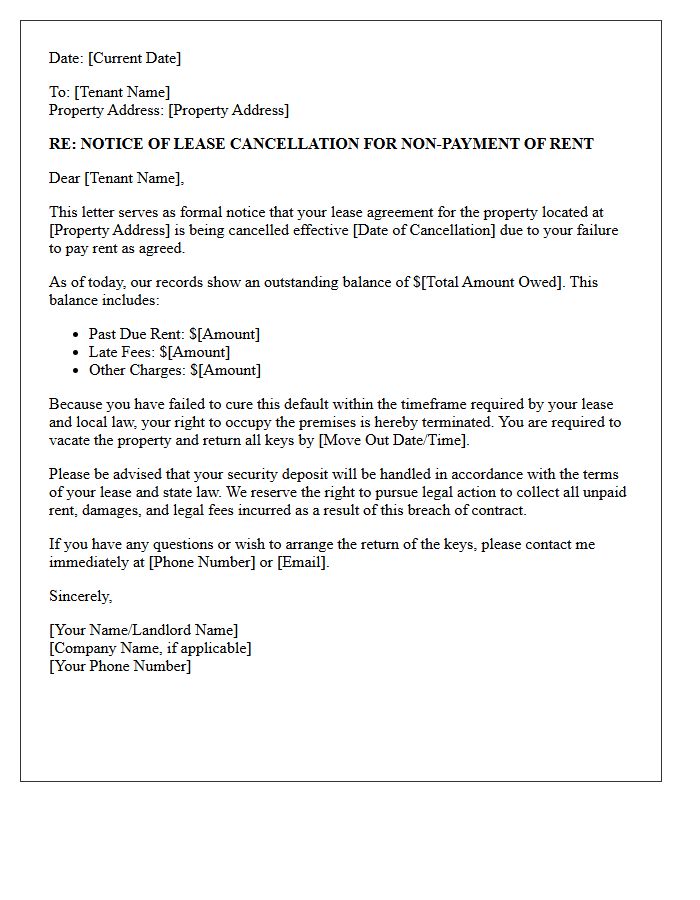
A Past Due Rent Notice of Lease Cancellation is a formal legal document issued by a landlord when a tenant fails to pay rent on time. It serves as a final demand for payment, explicitly stating the outstanding balance and a specific deadline to cure the debt. If the tenant does not comply, this letter initiates the termination of the rental agreement, often serving as a mandatory precursor to eviction proceedings. It provides essential evidence of notice required by local housing laws to protect the property owner's rights.
Fourteen-Day Notice to Pay or Vacate Letter
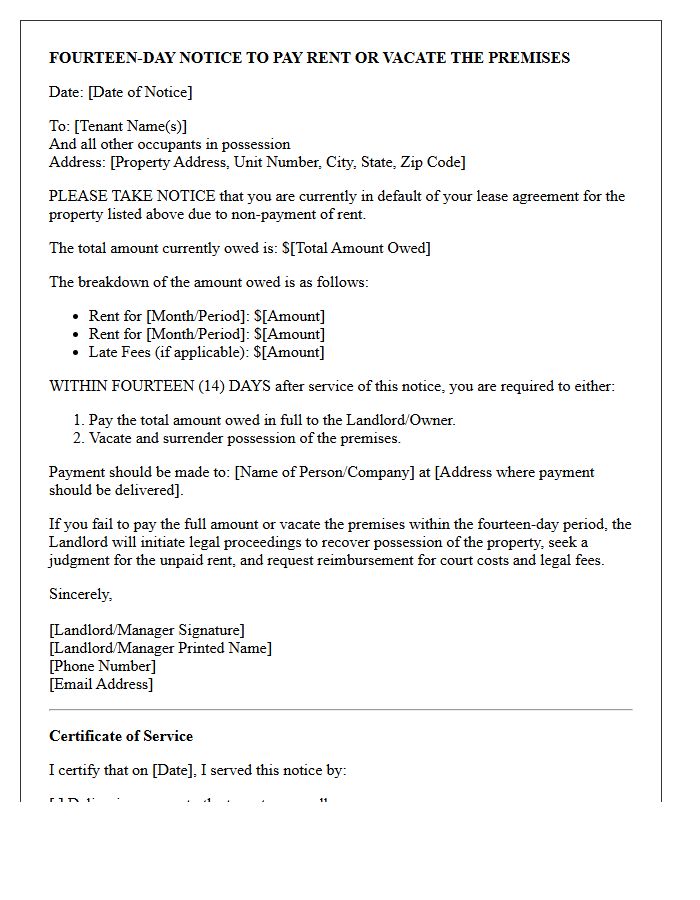
A Fourteen-Day Notice to Pay or Vacate is a formal legal demand issued by landlords when a tenant fails to pay rent. This document serves as a final warning, granting the tenant exactly fourteen days to either pay the total arrears or move out of the property. It is a mandatory pre-eviction step required by law before a landlord can file an unlawful detainer action in court. Timely compliance is critical, as failing to settle the debt within this window typically leads to formal eviction proceedings and potential legal costs.
Breach of Lease for Unpaid Rent Termination Letter
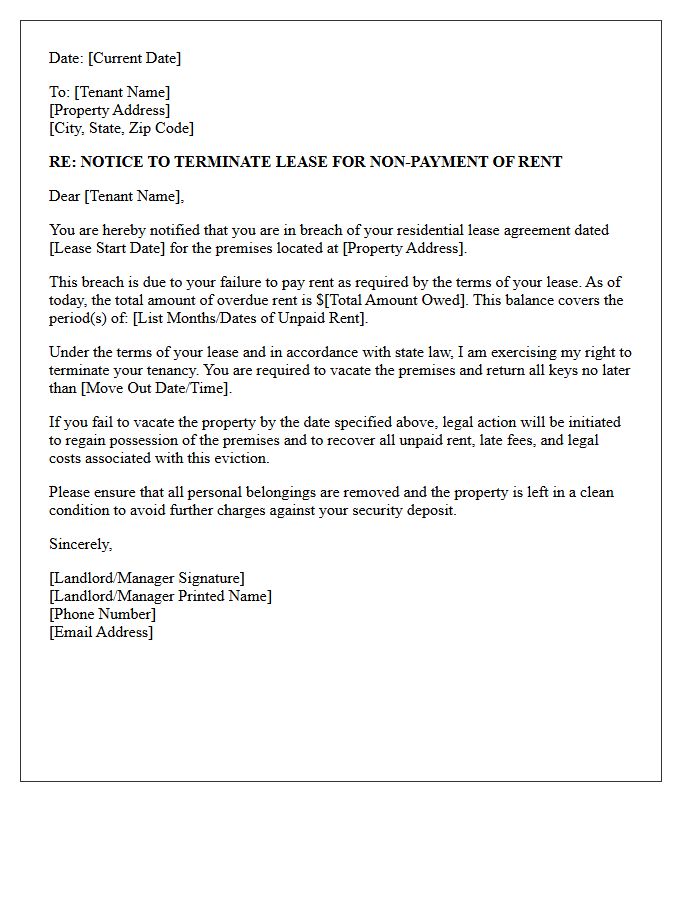
A Breach of Lease for Unpaid Rent Termination Letter is a formal legal notice issued by a landlord to a tenant. It serves as an official demand for overdue payments, specifying the exact amount owed and a deadline for settlement. If the tenant fails to comply, this document acts as the first step in the eviction process, documenting the lease violation. Accurate delivery is crucial to ensure legal validity in court, providing written evidence that the tenant was notified of their failure to meet contractual financial obligations.
Immediate Lease Termination for Rent Arrears Letter
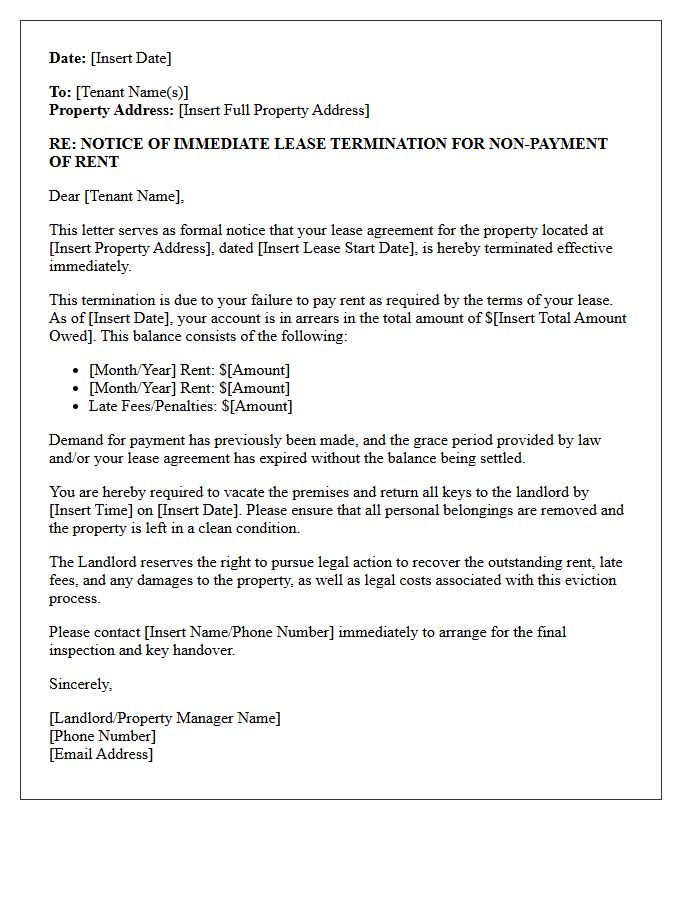
An Immediate Lease Termination for Rent Arrears Letter is a formal legal notice issued by a landlord when a tenant fails to pay rent by the contractual deadline. This document explicitly demands the vacation of the premises and payment of outstanding balances. To be legally enforceable, it must detail the specific breach, the total debt owed, and the termination date. Accuracy is vital; any procedural error regarding state-specific laws or notice periods can delay eviction proceedings and jeopardize the landlord's right to reclaim the property through legal action.
Pre-Eviction Notice of Lease Termination Letter
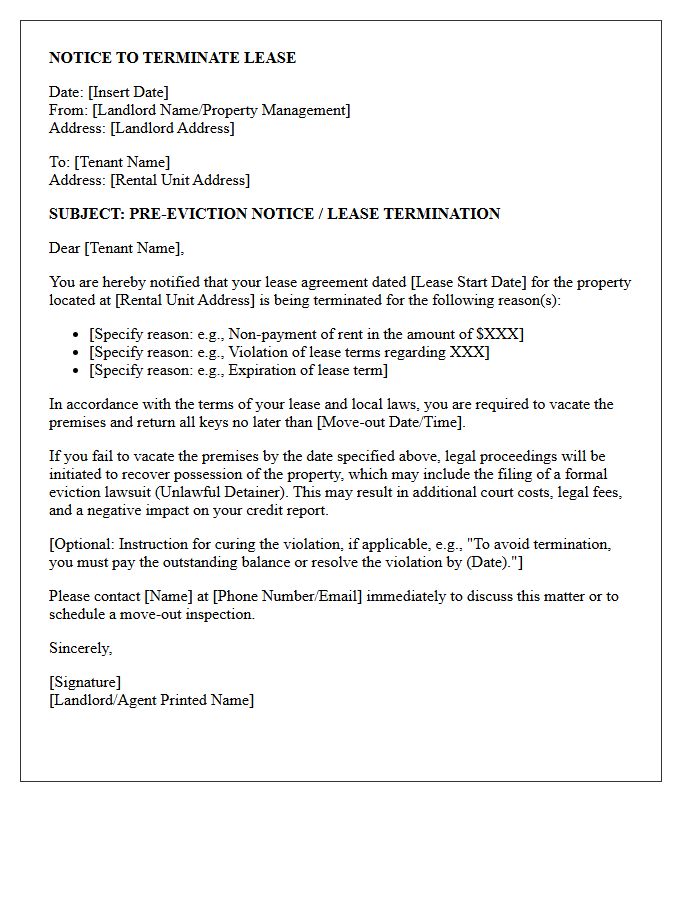
A Pre-Eviction Notice of Lease Termination is a formal legal document informing a tenant of specific lease violations. It serves as a mandatory warning, providing a notice period to either remedy the breach-such as paying overdue rent-or vacate the premises before formal court proceedings begin. This letter is crucial for landlords to maintain legal compliance, as failure to provide proper written notification can lead to the dismissal of an eviction lawsuit. Understanding local housing laws is essential to ensure the notice meets all statutory requirements and timeframes.
Demand for Rent or Lease Termination Letter
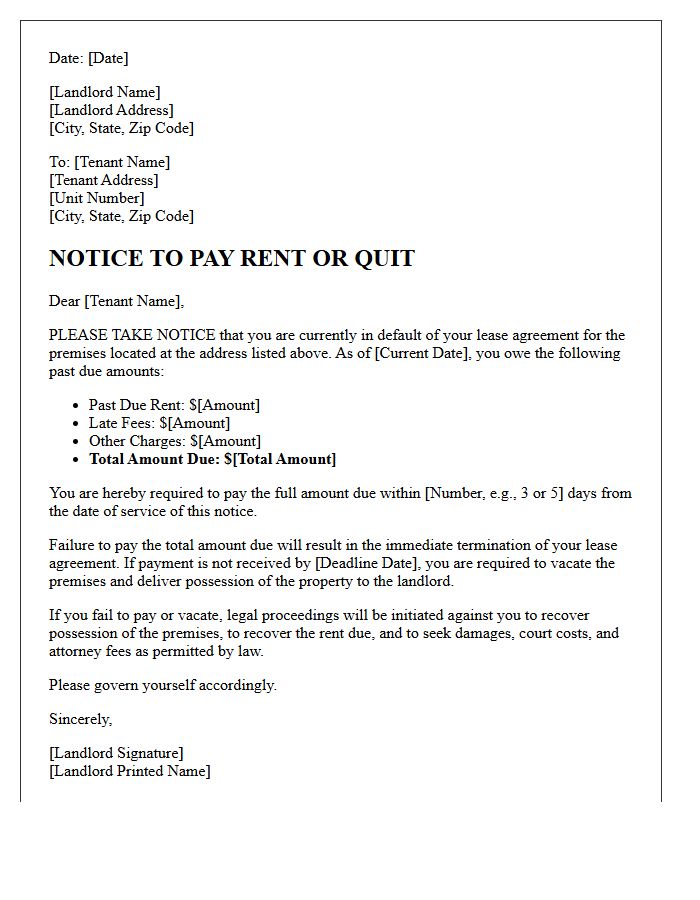
A Demand for Rent serves as a formal notice notifying tenants of overdue payments before legal action begins. Conversely, a Lease Termination Letter is used to officially end a rental agreement, specifying the move-out date and reasons for departure. Both documents are essential for maintaining a clear legal record, ensuring compliance with local housing laws, and protecting the rights of both landlords and tenants. Properly serving these notices is the required first step in the eviction process or a mutual lease dissolution.
What is a Notice of Lease Termination for Non-Payment of Rent?
A Notice of Lease Termination for Non-Payment of Rent is a formal legal document sent by a landlord to a tenant notifying them that their lease is being cancelled because they have failed to pay rent by the required due date.
How many days notice must be given before an eviction for non-payment?
The notice period varies by state and local law, typically ranging from 3 to 14 days. This period, often called a "Notice to Pay or Quit," gives the tenant a specific window to pay the overdue balance in full or vacate the property.
Can a tenant stop a lease termination by paying the overdue rent?
In most jurisdictions, if a tenant pays the total amount of rent owed, including any applicable late fees, within the notice period specified in the "Pay or Quit" notice, the lease termination is voided and the tenancy continues.
What information must be included in a termination notice for unpaid rent?
A valid notice must include the tenant's name, the property address, the total amount of past-due rent owed, the deadline to pay or move out, and a clear statement that the lease will be terminated if the demand is not met.
What happens if a tenant does not move out after the notice period expires?
If the tenant fails to pay or vacate after the notice period ends, the landlord can file a formal eviction lawsuit (Unlawful Detainer) in court. The landlord cannot forcibly remove the tenant or change the locks without a court order.

Comments