
Effective parking lot maintenance and sweeping is essential for preserving pavement longevity and ensuring visitor safety. Regular debris removal prevents asphalt deterioration and enhances your property's professional appeal. Proactive care reduces long-term repair costs while providing a clean environment for customers. To help you streamline your facility operations and communication, below are some ready to use template.
Image cover: Professional Parking Lot Maintenance: Communication Templates and Sweeping Advisories
Letter Samples List
- Parking Lot Sweeping Advisory Letter
- Scheduled Parking Lot Maintenance Letter
- Vehicle Relocation for Parking Lot Sweeping Letter
- Annual Parking Lot Sealcoating and Repair Letter
- Overnight Parking Lot Sweeping Notice Letter
- Parking Lot Pothole Repair and Maintenance Letter
- Mandatory Vehicle Removal for Parking Lot Sweeping Letter
- Monthly Parking Lot Sweeping Schedule Letter
- Parking Lot Line Striping Advisory Letter
- Emergency Parking Lot Maintenance Advisory Letter
- Temporary Parking Lot Closure for Sweeping Letter
- Commercial Parking Lot Power Washing and Sweeping Letter
Parking Lot Sweeping Advisory Letter
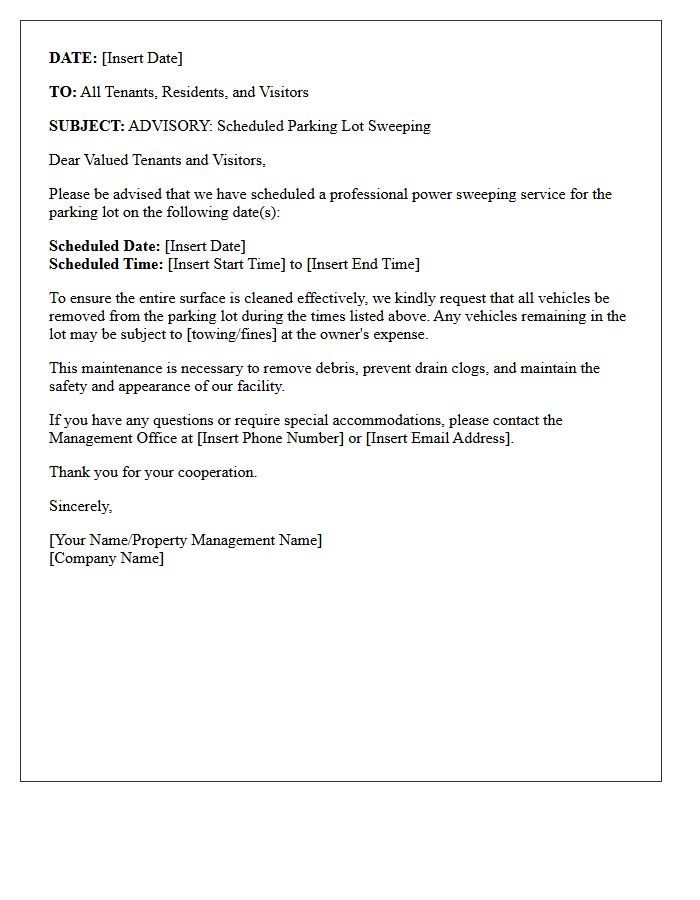
A Parking Lot Sweeping Advisory Letter is an essential communication tool used to notify tenants and visitors of upcoming maintenance. It highlights the scheduled date and time of the cleaning to ensure the area is clear of vehicles. Proper notification prevents towing issues and allows specialized machinery to remove debris effectively. Adhering to these instructions ensures pavement longevity, enhances curb appeal, and maintains a safe environment. Always check the notice for specific relocation instructions to avoid fines and facilitate a thorough sweeping process for the entire facility.
Scheduled Parking Lot Maintenance Letter
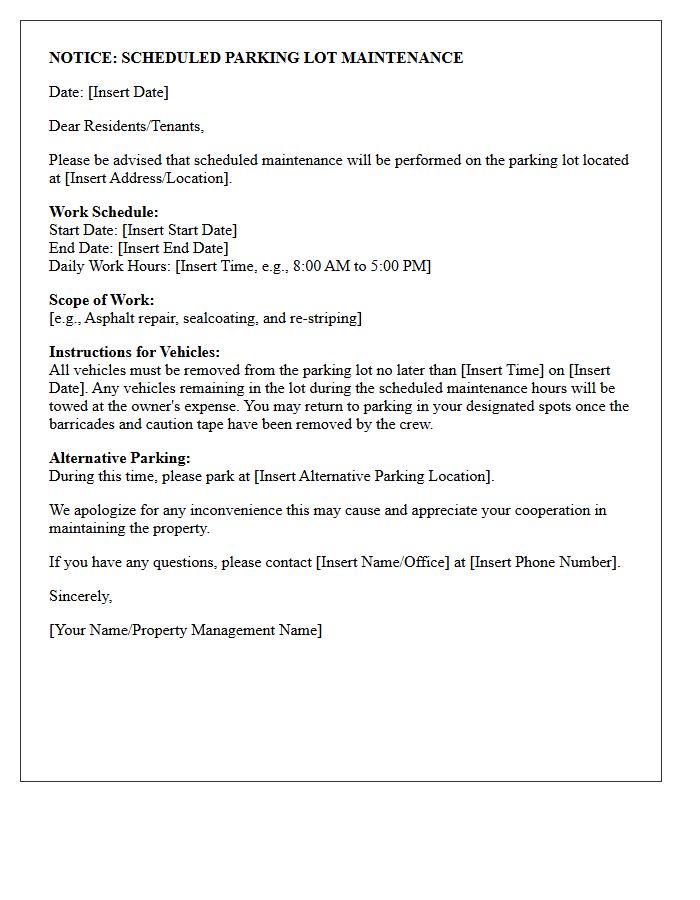
A Scheduled Parking Lot Maintenance Letter is a formal notice sent to tenants or employees to ensure safety and cooperation during property upkeep. It must clearly outline the specific dates and times of work, such as sealcoating or striping. The letter should provide explicit instructions regarding vehicle relocation and alternative parking areas to avoid towing. Clear communication minimizes disruption, prevents property damage, and ensures the project is completed efficiently. Always include a point of contact for questions to maintain transparency and operational flow throughout the maintenance process.
Vehicle Relocation for Parking Lot Sweeping Letter
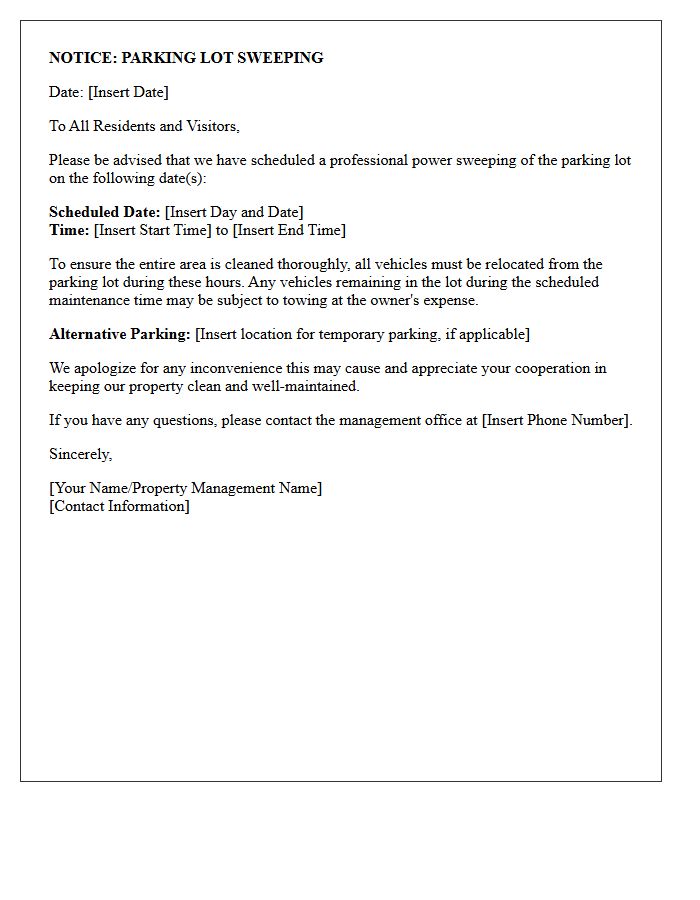
A vehicle relocation letter informs tenants that their cars must be moved for parking lot sweeping to ensure a deep clean. This notice must clearly state the scheduled date and specific times when the lot must be vacant. Providing ample warning prevents towing and allows sweepers to remove debris, sand, and litter effectively. Failure to comply can result in fines or vehicle impoundment. Clear communication minimizes disruptions, maintains property aesthetics, and ensures pavement longevity through professional maintenance. Always check the designated relocation zones to avoid unnecessary expenses or delays during the cleaning process.
Annual Parking Lot Sealcoating and Repair Letter
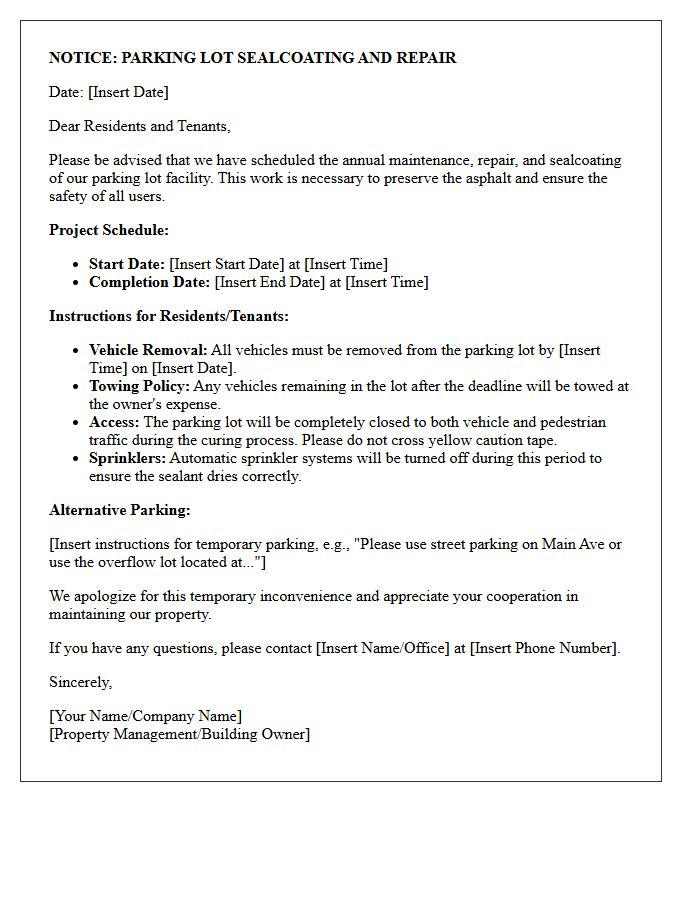
The Annual Parking Lot Sealcoating and Repair Letter serves as a vital formal notice regarding upcoming pavement maintenance. It informs tenants and visitors about scheduled asphalt repairs and the application of protective sealants to prevent deterioration. Key details usually include specific dates, temporary access restrictions, and designated alternative parking zones. Timely communication ensures safety and minimizes disruption while extending the lifespan of the driving surface. Property managers use this document to coordinate vehicle relocation and maintain structural integrity through essential preventative maintenance protocols.
Overnight Parking Lot Sweeping Notice Letter
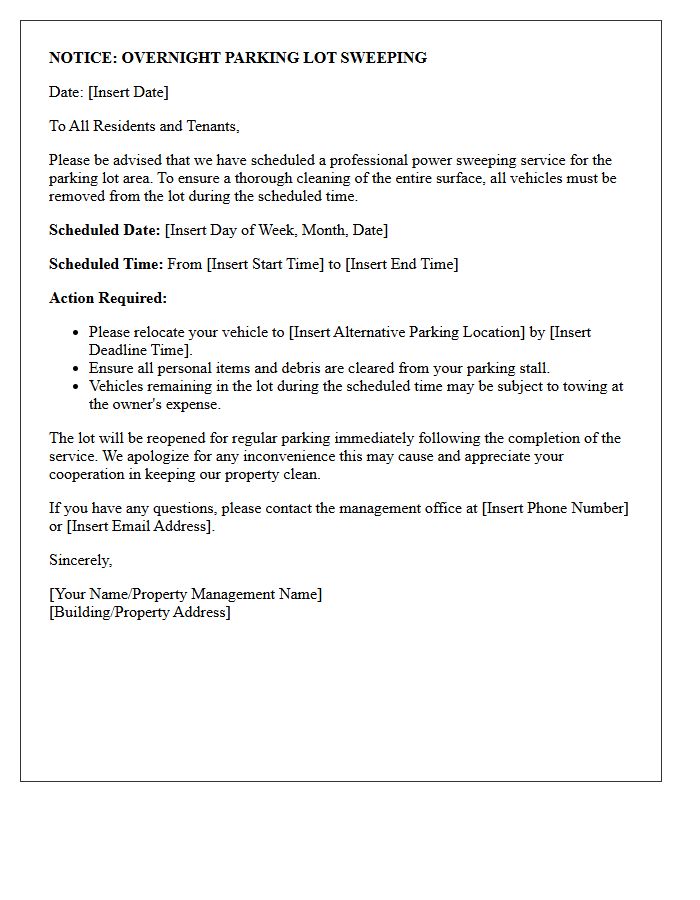
An Overnight Parking Lot Sweeping Notice Letter is an essential communication tool used by property managers to inform tenants and visitors of upcoming maintenance. To ensure thorough debris removal and safety, all vehicles must be relocated during the specified service window. Failure to comply may result in towing at the owner's expense. Clear notification minimizes disruptions, prevents property damage, and maintains a clean, professional environment. Always check the letter for specific dates and times to avoid penalties and assist in keeping the facility well-maintained and accessible for everyone.
Parking Lot Pothole Repair and Maintenance Letter
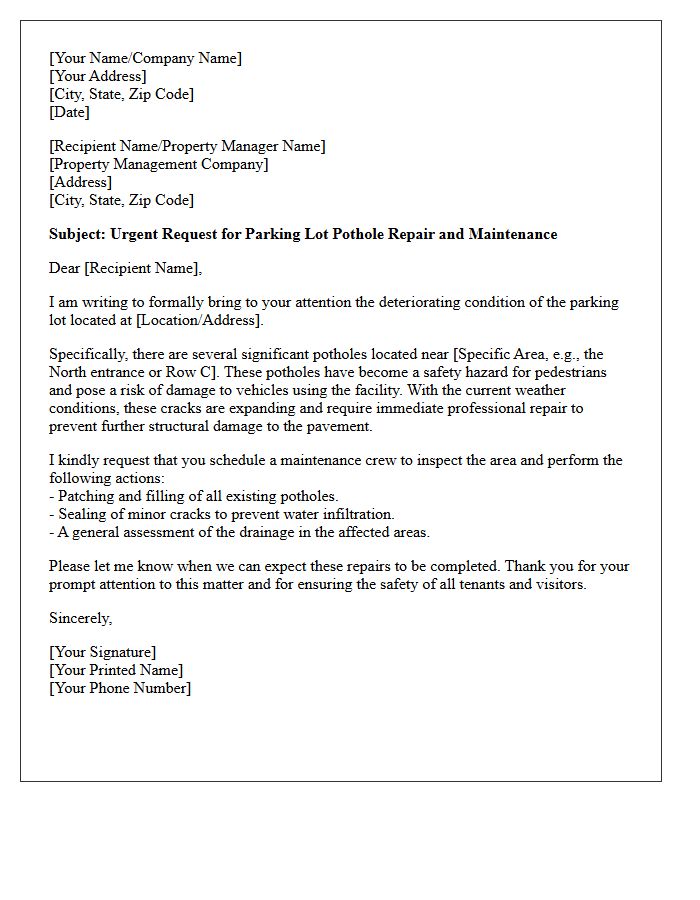
A Parking Lot Pothole Repair and Maintenance Letter is a formal notification sent to property owners or managers regarding pavement hazards. It serves as a liability record and a request for urgent restoration to ensure vehicle and pedestrian safety. Key elements include the precise location of damage, the severity of the structural failure, and a professional recommendation for asphalt patching. Timely documentation helps prevent costly long-term structural degradation and mitigates legal risks associated with trip-and-fall accidents or tire damage within the commercial facility.
Mandatory Vehicle Removal for Parking Lot Sweeping Letter
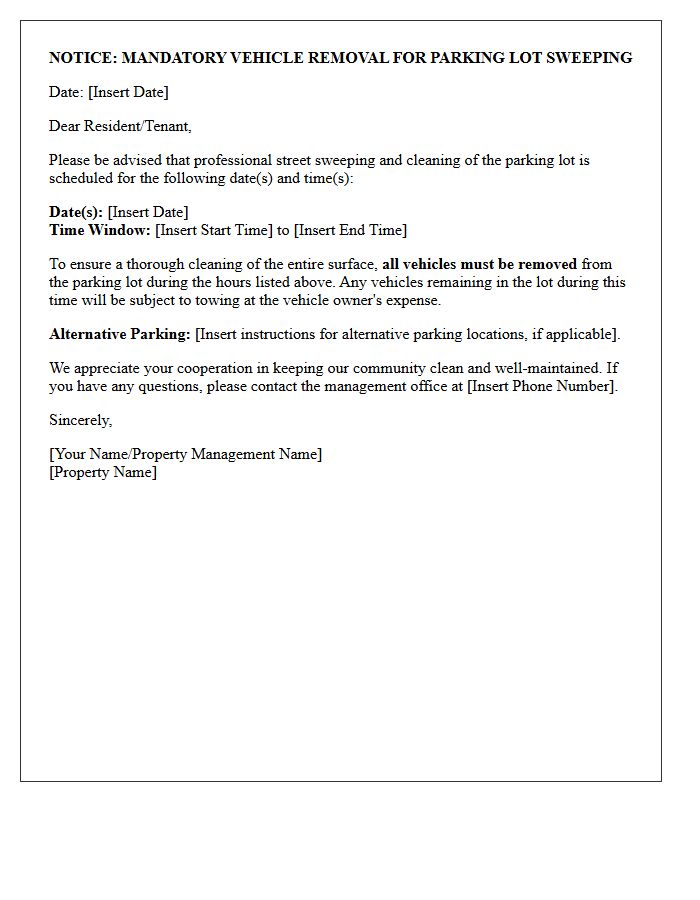
A mandatory vehicle removal letter is a formal notice informing tenants that their cars must be moved for scheduled lot maintenance. Property managers use these notices to ensure sweeping equipment can access the entire surface. Failure to comply often leads to towing at the owner's expense or administrative fines. The letter must clearly state the exact date, start time, and duration of the work to be legally enforceable. Providing clear instructions on alternative parking areas helps maintain community cooperation and ensures a debris-free, professional environment for all residents and visitors.
Monthly Parking Lot Sweeping Schedule Letter
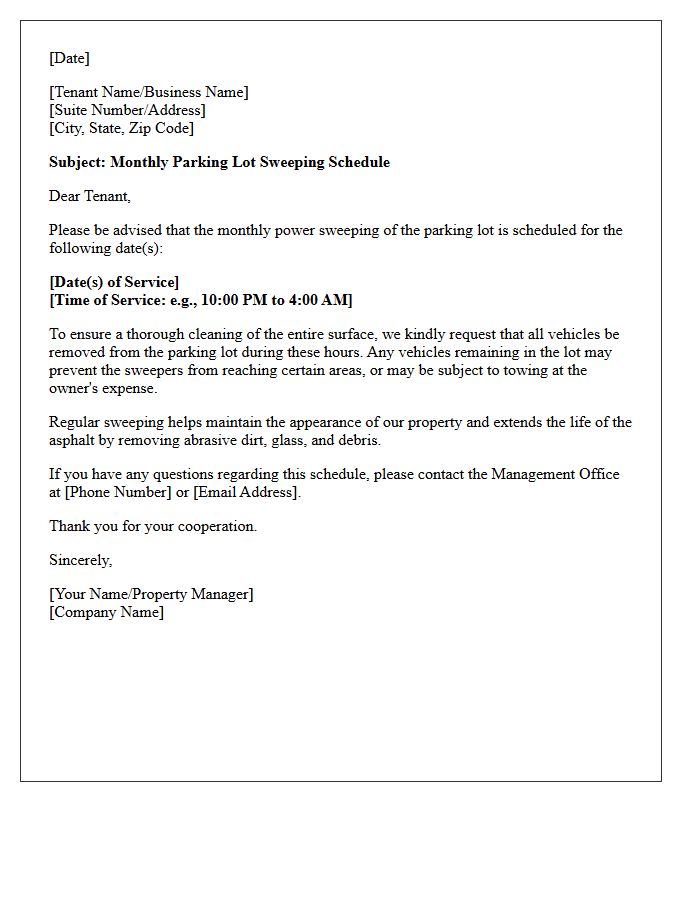
A monthly parking lot sweeping schedule letter is a formal notification sent to tenants or residents to ensure operational efficiency. It provides advance notice regarding specific dates and times when vehicles must be relocated to avoid towing. This communication is essential for maintaining property aesthetics and removing hazardous debris. By outlining clear expectations, the letter minimizes confusion and ensures a seamless cleaning process. Clear signage and consistent scheduling within the document help preserve pavement longevity and enhance the overall safety of the facility for all users.
Parking Lot Line Striping Advisory Letter
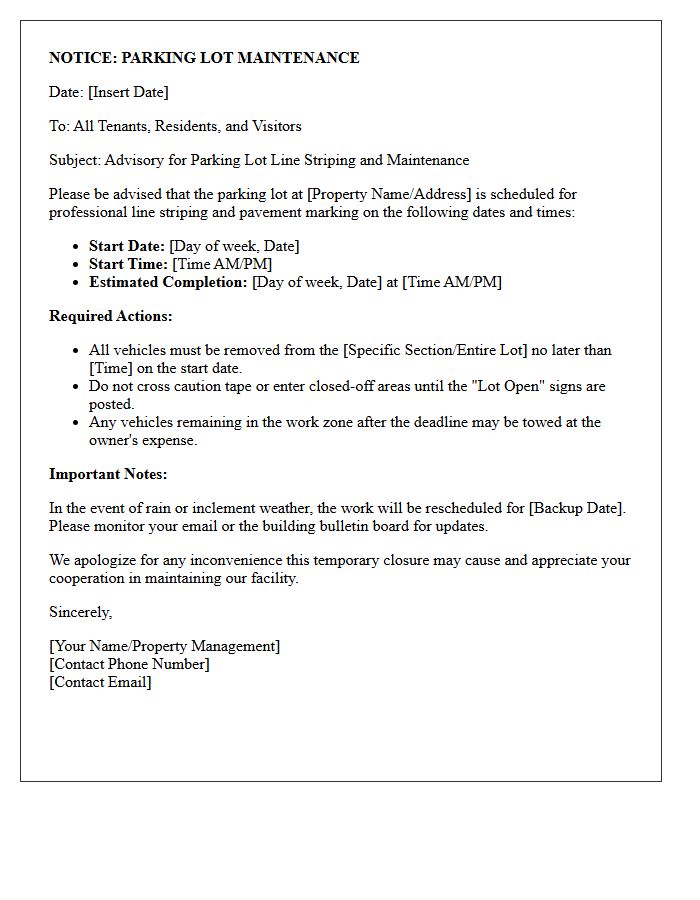
A Parking Lot Line Striping Advisory Letter is essential for notifying tenants and customers about upcoming maintenance. It highlights the scheduled dates and specific areas being serviced to ensure safety and compliance. Clear communication prevents vehicle displacement and maximizes operational efficiency. The letter should emphasize temporary closures and provide clear instructions for alternative parking options. By providing advance notice, property managers minimize disruptions and maintain a professional environment while enhancing the property's curb appeal and traffic flow through freshly painted pavement markings.
Emergency Parking Lot Maintenance Advisory Letter
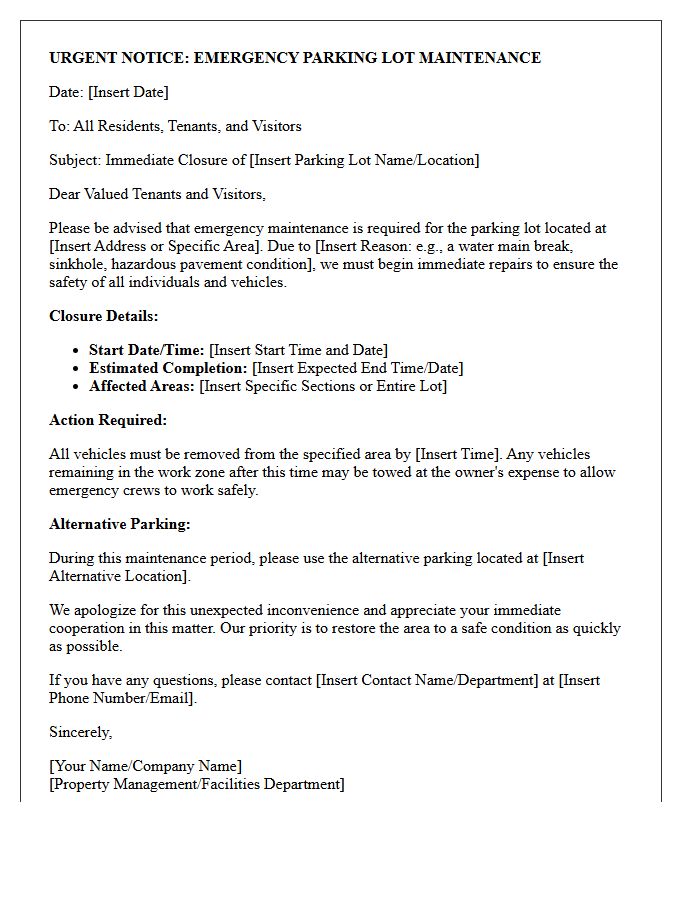
An Emergency Parking Lot Maintenance Advisory Letter is a critical notification issued to tenants and visitors regarding immediate repairs. It serves as formal documentation of hazardous conditions, such as sinkholes or severe asphalt damage, that require urgent intervention. The letter must clearly state the scheduled closure dates, specific zones affected, and alternative parking arrangements. Timely communication ensures public safety, minimizes property liability, and prevents vehicle damage. Property managers should distribute these notices via email and physical signage to guarantee all stakeholders are informed of the temporary access restrictions and safety protocols.
Temporary Parking Lot Closure for Sweeping Letter
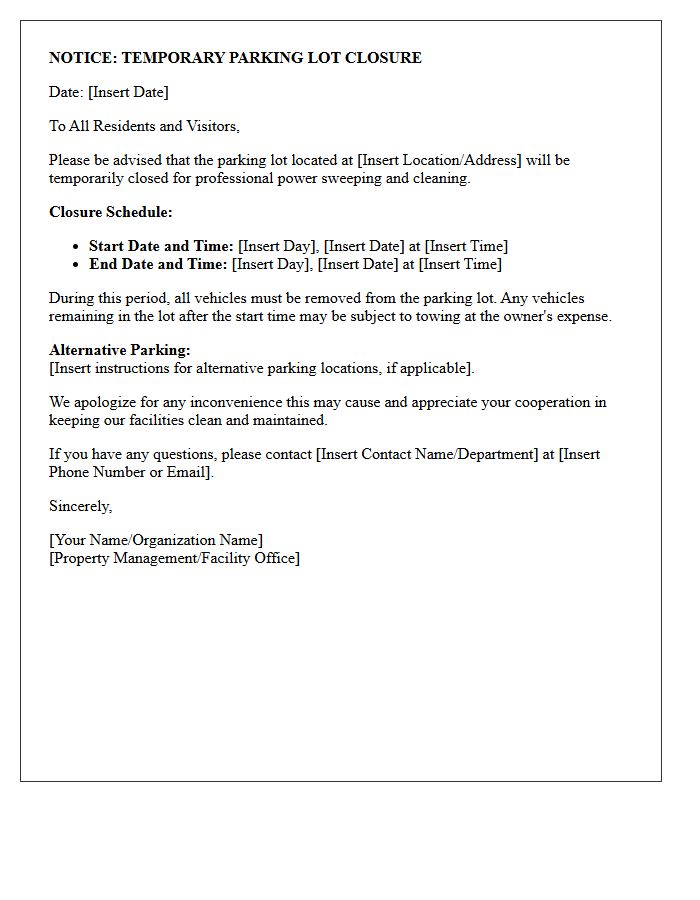
Please be advised that the facility will undergoes a temporary parking lot closure to facilitate essential power sweeping and debris removal. This maintenance ensures a clean and safe environment for all visitors. The closure is scheduled for specific dates, during which all vehicles must be relocated to avoid towing. We apologize for the temporary inconvenience and appreciate your cooperation in keeping our premises well-maintained. Please follow all posted directional signage to find alternative parking areas during this brief maintenance period.
Commercial Parking Lot Power Washing and Sweeping Letter
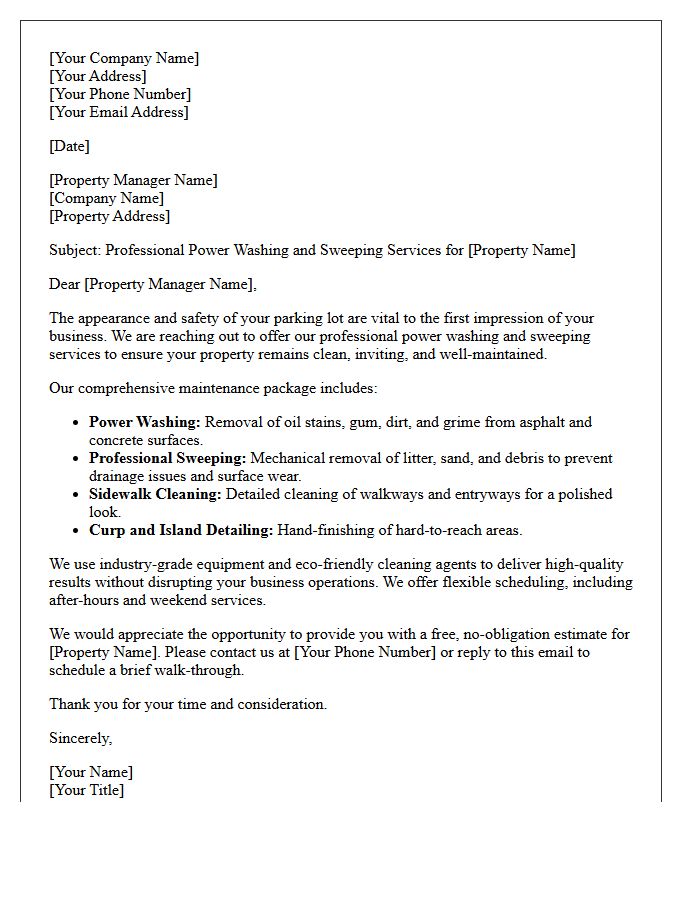
A professional Commercial Parking Lot Power Washing and Sweeping Letter is essential for maintaining property value and safety. This document informs tenants about scheduled maintenance to remove hazardous debris, oil stains, and environmental pollutants. Clear communication ensures vehicles are relocated, preventing damage and allowing specialized equipment to achieve a deep clean. Regularly scheduled preventative maintenance extends asphalt longevity, enhances curb appeal, and reduces liability risks by ensuring a clean, slip-free surface for customers and employees. Clear notification is the key to a successful, well-coordinated service operation.
Why is regular parking lot sweeping essential for pavement longevity?
Regular sweeping removes abrasive debris, sand, and heavy sediments that act like sandpaper under vehicle tires. By eliminating these materials, you prevent the accelerated erosion of the asphalt surface and extend the lifespan of your sealcoating.
How does routine maintenance reduce property liability and safety risks?
Proactive maintenance identifies hazards such as potholes, faded striping, and accumulated oil spills before they cause accidents. Clear markings and debris-free surfaces reduce the risk of "slip and fall" incidents and vehicular collisions, protecting property owners from legal claims.
What are the environmental benefits of professional parking lot filtering and sweeping?
Sweeping prevents harmful pollutants, heavy metals, and hydrocarbons from entering local storm drains and waterways. Adhering to a consistent cleaning schedule helps property managers remain compliant with environmental regulations and Clean Water Act standards.
How often should a high-traffic commercial parking lot be professionally swept?
For high-traffic retail or commercial centers, we advise a frequency of 2 to 7 times per week depending on the debris volume. Regular intervals prevent trash accumulation, deter pests, and maintain a positive aesthetic impression for arriving customers.
Can regular sweeping lower overall long-term repair costs?
Yes. Removing standing dirt and organic matter prevents moisture retention on the asphalt surface. Since moisture penetration is the primary cause of cracks and structural failure, frequent sweeping reduces the need for expensive structural repairs and frequent resurfacing.


Comments