
Receiving a Recreational Vehicle Parking Violation Notice can be stressful for owners and neighbors alike. This notice ensures compliance with local zoning laws and homeowner association regulations regarding large vehicle storage. Understanding these rules helps avoid costly fines and legal action. To help you draft or respond to these formal warnings, below are some ready to use templates.
Image cover: RV Parking Violation Notices: Professional Templates and Essential Samples
Letter Samples List
- Initial Recreational Vehicle Parking Violation Notice Letter
- Friendly Reminder Recreational Vehicle Parking Violation Letter
- Second Notice of Recreational Vehicle Parking Violation Letter
- Final Warning Recreational Vehicle Parking Violation Letter
- Notice of Intent to Tow Recreational Vehicle Violation Letter
- Homeowners Association Recreational Vehicle Parking Violation Letter
- Lease Agreement Recreational Vehicle Parking Violation Letter
- Unauthorized Guest Recreational Vehicle Parking Violation Letter
- Community Rules Recreational Vehicle Parking Violation Letter
- Overnight Recreational Vehicle Parking Violation Notice Letter
- Common Area Recreational Vehicle Parking Violation Letter
- Lawn and Sidewalk Recreational Vehicle Parking Violation Letter
Initial Recreational Vehicle Parking Violation Notice Letter
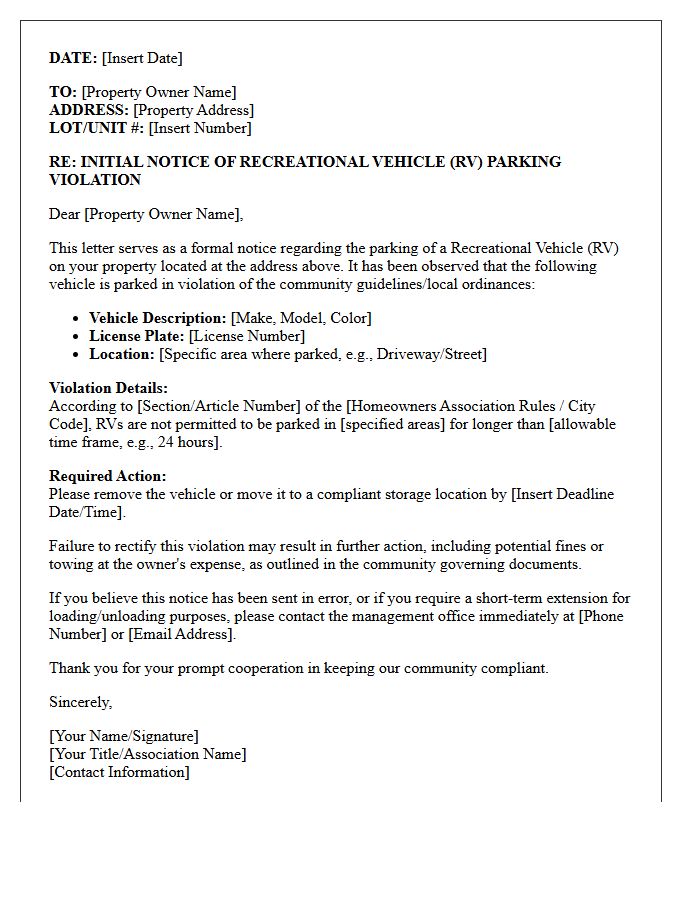
An Initial Recreational Vehicle Parking Violation Notice serves as a formal warning regarding non-compliance with local zoning ordinances or HOA regulations. This document identifies specific infractions, such as parking on unpaved surfaces or blocking public rights-of-way. It outlines required corrective actions and provides a strict deadline to move the vehicle to avoid fines, towing, or legal escalation. Homeowners should immediately review their property guidelines to ensure the RV is stored according to legal standards to maintain neighborhood safety and aesthetics.
Friendly Reminder Recreational Vehicle Parking Violation Letter
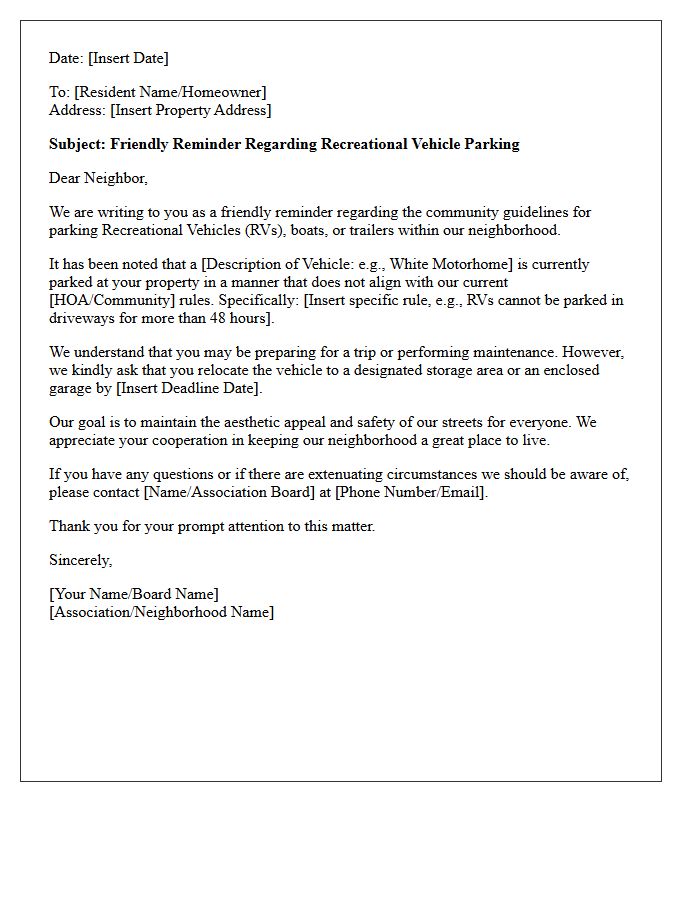
Receiving a Friendly Reminder Recreational Vehicle Parking Violation Letter serves as an initial notification to resolve non-compliance issues. It typically outlines specific local ordinances regarding oversized vehicle storage on residential streets or driveways. To avoid fines or towing, promptly relocate the RV to an approved facility or back behind the required setback line. Addressing this notice immediately maintains neighborhood aesthetics and ensures safety by keeping public right-of-ways clear. Always verify current city codes or HOA regulations to ensure your parking habits remain fully compliant and neighborly.
Second Notice of Recreational Vehicle Parking Violation Letter
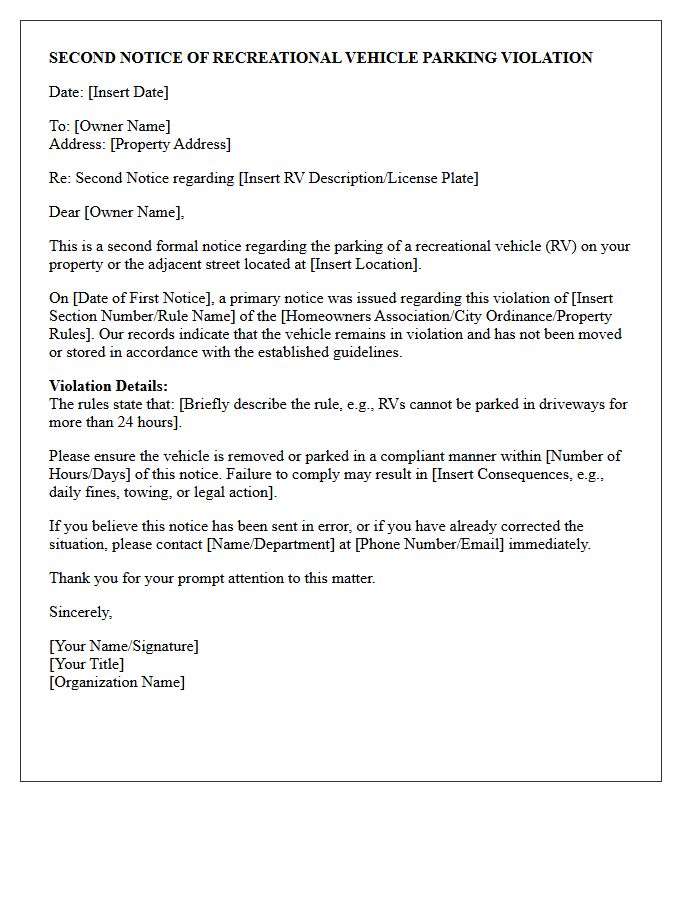
A Second Notice of Recreational Vehicle Parking Violation is a formal warning indicating a repeated HOA or municipal code infraction. This letter serves as a final opportunity to rectify the situation before legal action or monetary fines are imposed. It typically details the specific date of the initial warning, the current violation status, and a strict deadline for vehicle removal. Property owners must respond immediately or relocate the RV to a designated storage facility to avoid towing or lien placement against their property for unpaid penalties.
Final Warning Recreational Vehicle Parking Violation Letter
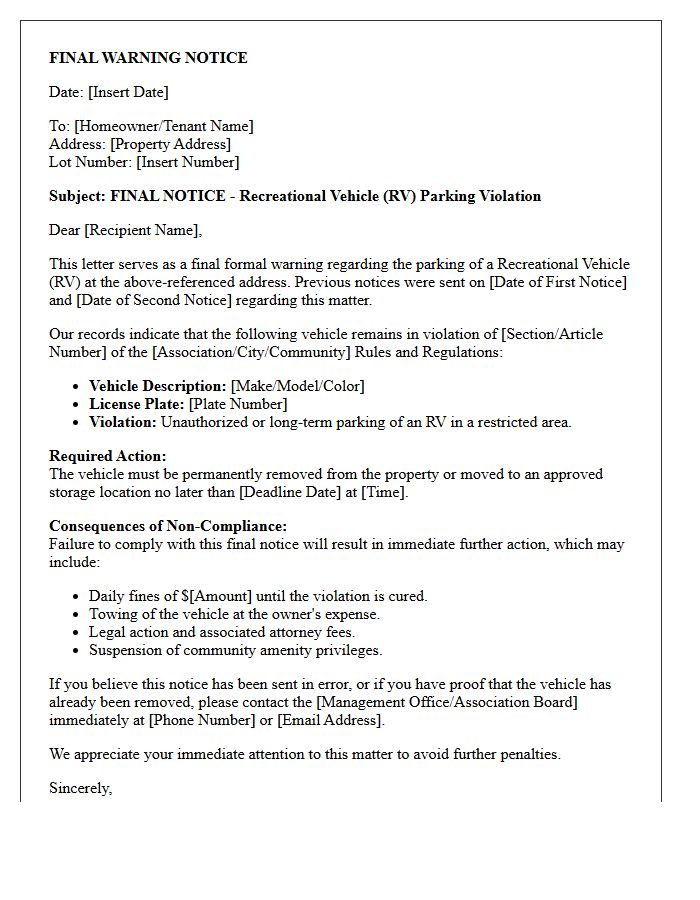
A final warning letter for a recreational vehicle parking violation is a formal notice issued before towing or legal action occurs. This document specifies the exact ordinance or HOA rule being breached, such as exceeding time limits or parking in restricted zones. It serves as a last opportunity for the owner to remove the RV and avoid costly fines. Receipt of this letter indicates that previous warnings were ignored, making immediate compliance essential to prevent impoundment or permanent loss of parking privileges within the community or municipality.
Notice of Intent to Tow Recreational Vehicle Violation Letter
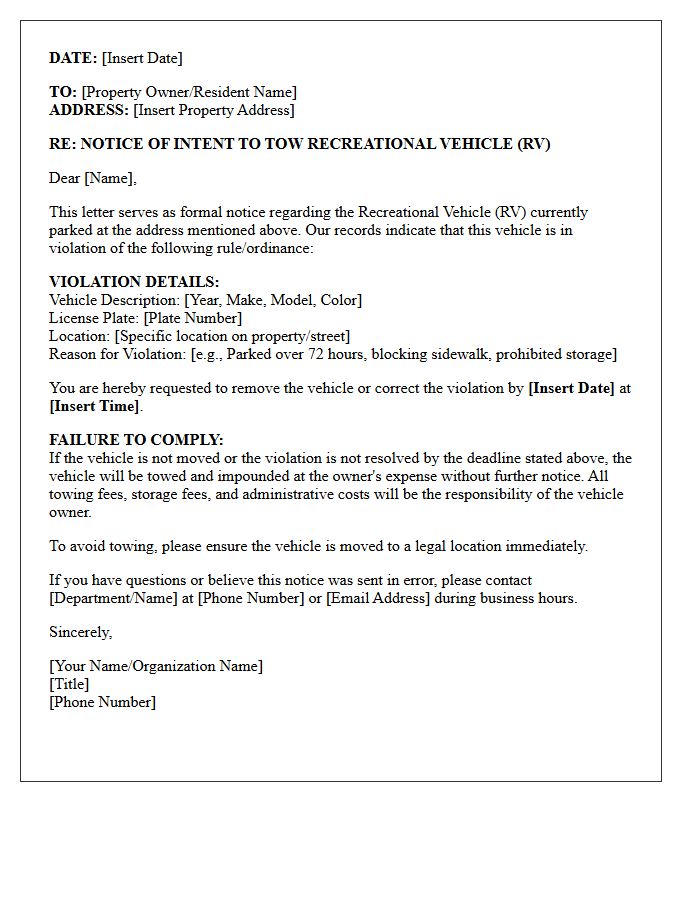
A Notice of Intent to Tow for a Recreational Vehicle (RV) violation is a formal legal warning issued by property owners, HOAs, or municipalities. This letter specifies the parking ordinance or community rule being breached. To prevent removal, owners must rectify the violation within the mandatory notice period, typically ranging from 24 to 72 hours. Ignoring this document allows authorities to legally impound the vehicle at the owner's expense. Always verify local zoning regulations to ensure your RV storage complies with specific dimensional and location requirements to avoid towing.
Homeowners Association Recreational Vehicle Parking Violation Letter
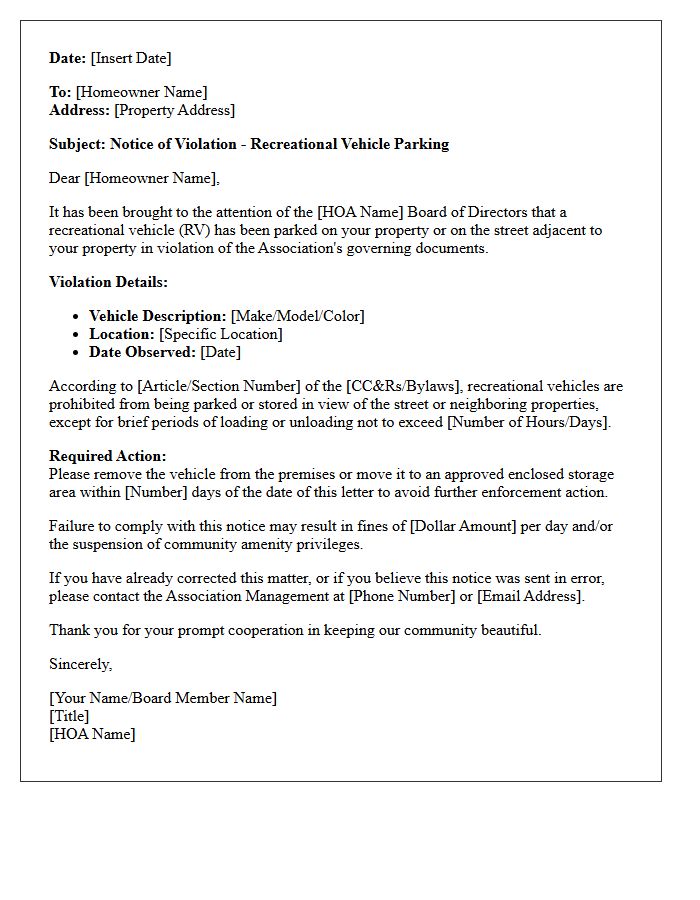
Receiving a Homeowners Association Recreational Vehicle Parking Violation Letter signifies a formal notice regarding non-compliance with community CC&Rs. These documents typically outline specific infractions, such as parking a motorhome or trailer in a driveway or street beyond permitted time limits. It is crucial to review your HOA bylaws immediately to understand designated storage rules and grace periods. Promptly addressing the notice by moving the vehicle or requesting a variance can prevent costly fines, legal action, or vehicle towing. Clear communication with the board is essential to resolve the dispute effectively.
Lease Agreement Recreational Vehicle Parking Violation Letter
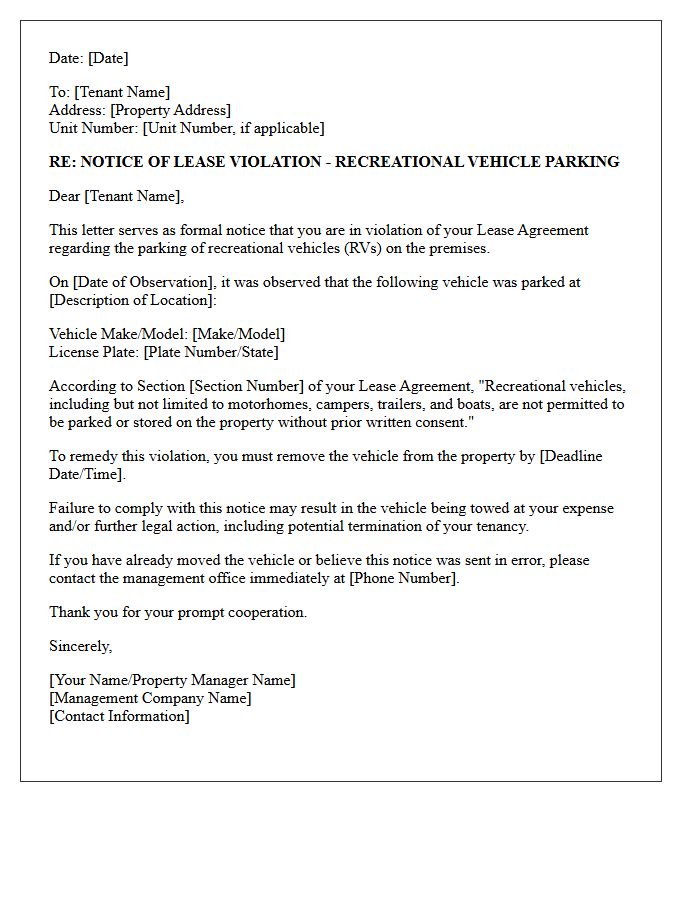
A Lease Agreement Recreational Vehicle Parking Violation Letter is a formal notice issued to tenants who breach property rules by parking unauthorized RVs, campers, or trailers. This document serves as a legal warning, clearly identifying the specific lease violation and providing a deadline for removal. It is essential for maintaining community standards and ensuring safety compliance. Landlords use this letter to document the issue, which is a critical step before pursuing further legal action or eviction proceedings. Always ensure the notice references the exact clause within the signed rental agreement.
Unauthorized Guest Recreational Vehicle Parking Violation Letter
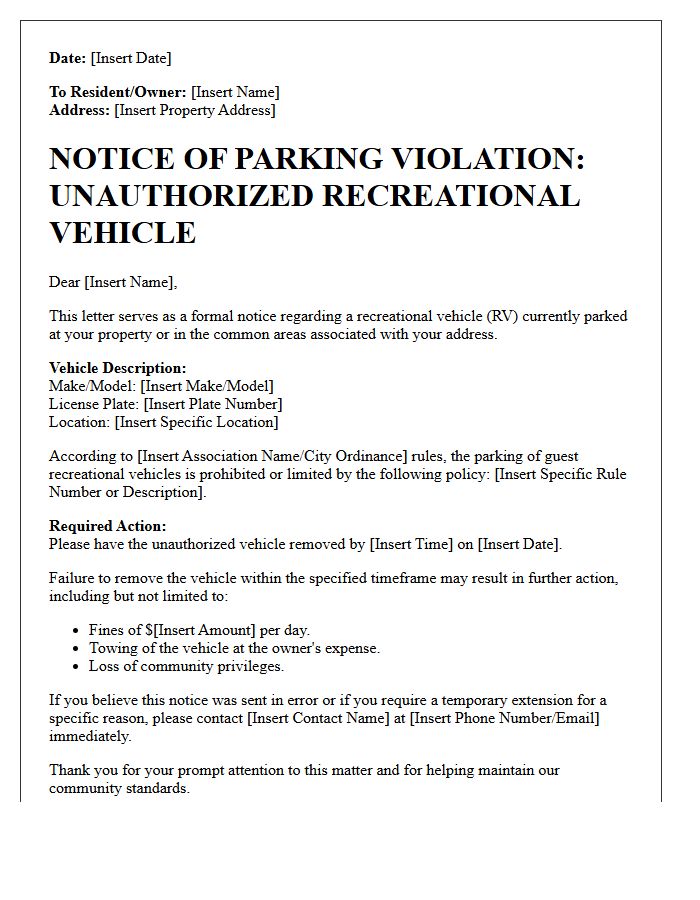
An Unauthorized Guest Recreational Vehicle Parking Violation Letter serves as a formal notice to residents violating community regulations or local ordinances. This document specifies the prohibited vehicle, its location, and the required deadline for removal to avoid fines or towing. It acts as essential legal documentation of the rule breach, ensuring due process before enforcement actions occur. Homeowners should promptly address these notices by relocating the RV or requesting a temporary permit to maintain compliance and avoid costly penalties or property liens.
Community Rules Recreational Vehicle Parking Violation Letter
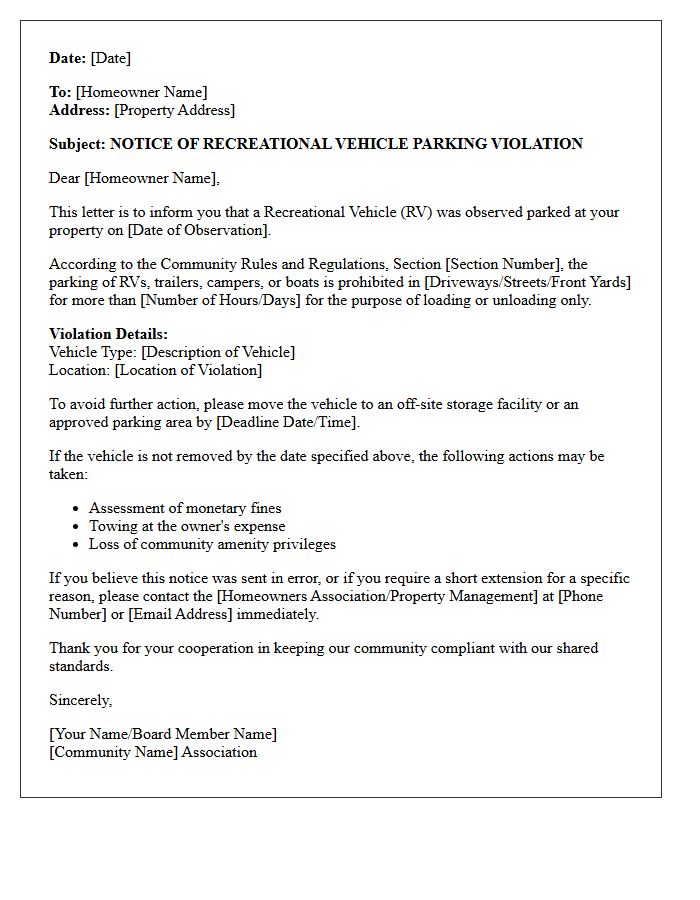
Receiving a Recreational Vehicle Parking Violation Letter signifies a breach of community HOA covenants or local ordinances. These notices typically address issues like oversized vehicle dimensions, blocking sidewalks, or exceeding temporary parking duration limits. To avoid costly fines or vehicle towing, residents must immediately review their CC&Rs for specific compliance standards. Timely communication with the homeowners association or property management is essential to request a variance or confirm that the violation has been resolved through proper storage or removal of the RV.
Overnight Recreational Vehicle Parking Violation Notice Letter
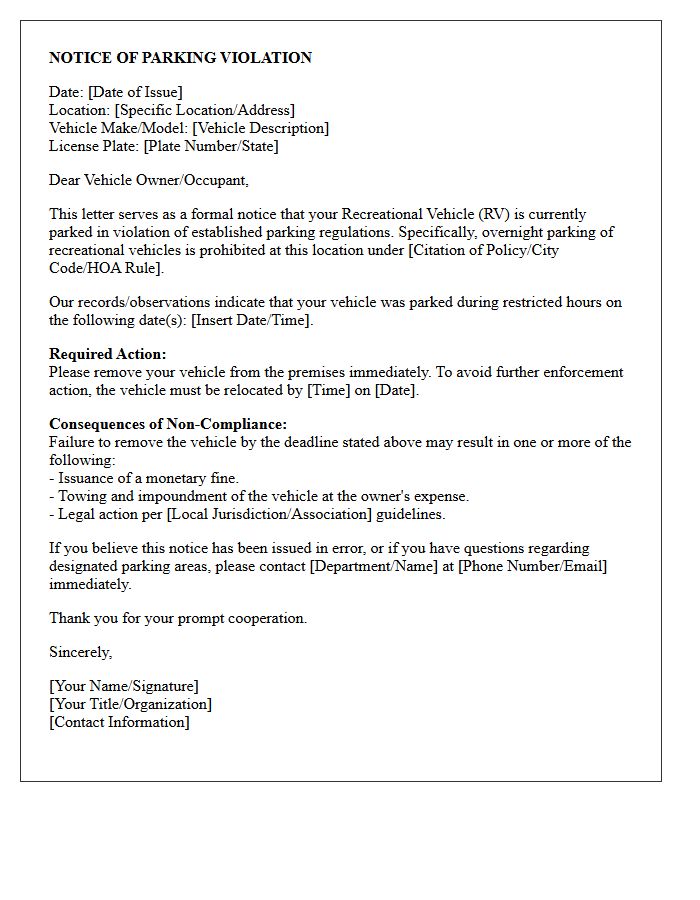
An Overnight Recreational Vehicle Parking Violation Notice serves as a formal warning for vehicles parked in restricted zones outside permitted hours. This official document identifies the specific municipal code or private property rule being breached. To avoid towing or monetary fines, the owner must relocate the vehicle immediately. The letter typically records the vehicle's license plate, location, and the date of the infraction. Timely compliance is essential to prevent legal escalation or impoundment costs associated with unauthorized long-term occupancy on public streets or private residential premises.
Common Area Recreational Vehicle Parking Violation Letter
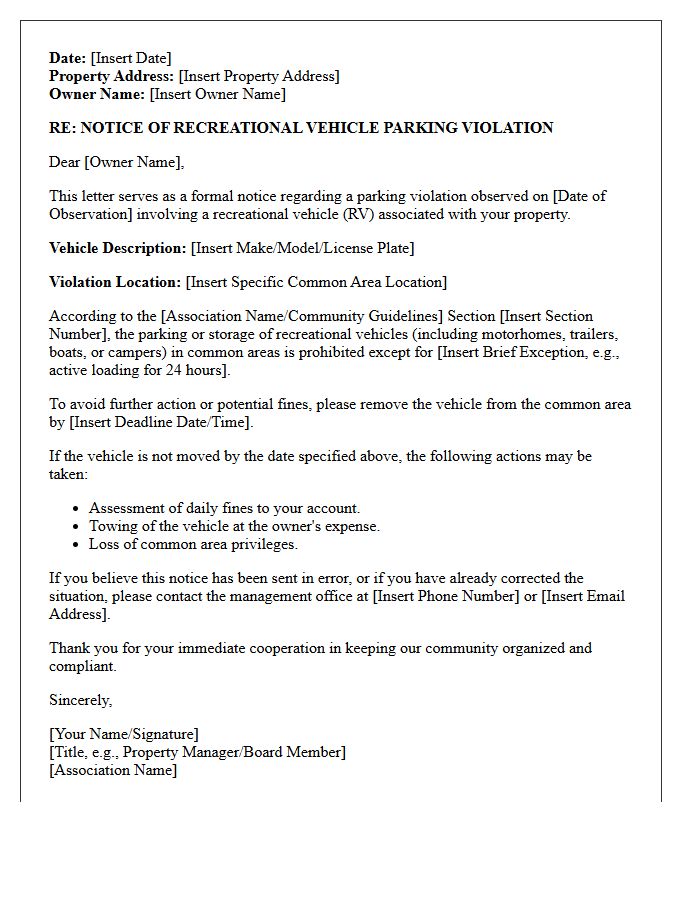
A common area recreational vehicle parking violation letter serves as a formal notice from a Homeowners Association (HOA) regarding unauthorized RV storage. This document details the specific governing document breach, such as parking on shared lawns or exceeding time limits. It is crucial to understand that these notices outline required corrective actions and potential fines to ensure community compliance. Property owners should review their CC&Rs immediately upon receipt to avoid legal escalation or vehicle towing, as maintaining clear common areas is essential for neighborhood safety and aesthetic standards.
Lawn and Sidewalk Recreational Vehicle Parking Violation Letter
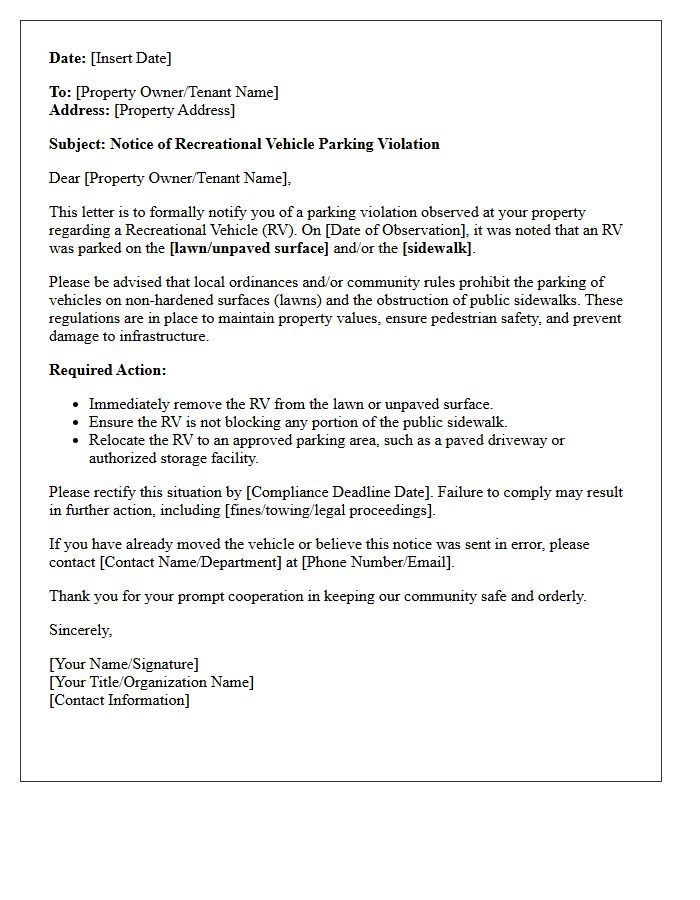
Receiving a Lawn and Sidewalk Recreational Vehicle Parking Violation Letter indicates that your RV is improperly staged, obstructing public pathways or damaging soft landscapes. Local ordinances strictly prohibit parking on sidewalks to ensure pedestrian safety and accessibility. Additionally, parking on the lawn often violates zoning codes intended to prevent soil compaction and neighborhood blight. To avoid fines or towing, you must promptly relocate the vehicle to a paved driveway or an approved storage facility. Always check your specific municipal bylaws to ensure compliance with recreational vehicle storage regulations.
What is a Recreational Vehicle (RV) parking violation notice?
A Recreational Vehicle parking violation notice is an official citation issued when an RV, motorhome, or travel trailer is parked in breach of local municipal codes, such as exceeding time limits, obstructing public rights-of-way, or parking on unapproved residential surfaces.
How long can I legally park my RV on a public street?
Most jurisdictions restrict RV street parking to a maximum of 24 to 72 hours for the purposes of loading or unloading. Continuous parking beyond these timeframes typically triggers a violation notice and potential towing at the owner's expense.
What are the common reasons for receiving an RV parking citation?
Common triggers for a violation notice include parking an oversized vehicle on narrow residential streets, blocking sidewalks or fire hydrants, "living" in the vehicle on public property, or failing to display a valid oversized vehicle permit where required.
Can I park my RV on my driveway without getting a violation notice?
Regulations vary by city; while many areas allow driveway storage, some local ordinances and Homeowners Associations (HOAs) prohibit RVs from being visible from the street or require them to be parked on a paved, non-permeable surface behind a side-yard fence.
How do I contest or appeal a Recreational Vehicle parking violation?
To appeal a notice, you must follow the instructions on the back of the citation, which usually involves submitting a written request for an administrative review within 15â30 days and providing evidence such as photos or proof of a valid parking permit.


Comments