
A landlord issues a Demand to Replenish Security Deposit when funds are deducted during a tenancy to cover repairs or unpaid rent. Maintaining a full deposit is essential for ongoing lease compliance and financial protection. This article explains your legal rights and the formal process for requesting additional funds. To assist you, below are some ready to use template.
Image cover: Professional Notice Templates for Security Deposit Replenishment
Letter Samples List
- Standard Security Deposit Replenishment Request Letter
- Demand to Replenish Security Deposit Due to Property Damage Letter
- Letter to Replenish Security Deposit for Unpaid Rent Deduction
- Urgent Letter Demanding Security Deposit Replenishment
- Security Deposit Replenishment Letter for Unpaid Late Fees
- Notice and Letter to Replenish Depleted Security Deposit
- Pet Damage Security Deposit Replenishment Demand Letter
- Letter Demanding Replenishment of Security Deposit After HOA Fines
- Final Warning Letter to Replenish Security Deposit Funds
- Security Deposit Replenishment Letter Following Utility Bill Deduction
- Lease Violation Security Deposit Replenishment Demand Letter
- Mid-Lease Security Deposit Replenishment Demand Letter
Standard Security Deposit Replenishment Request Letter
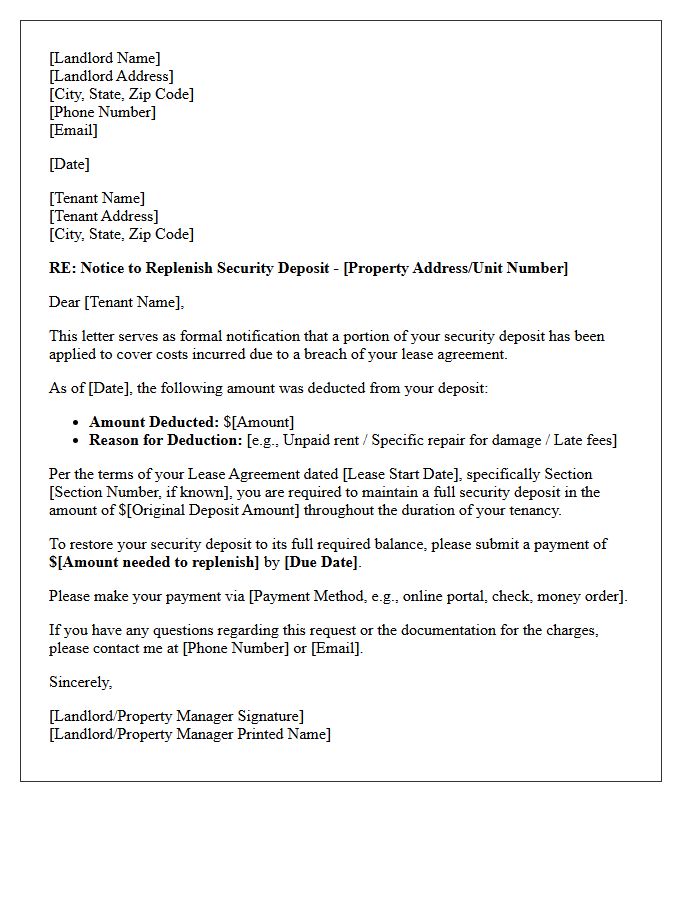
A Standard Security Deposit Replenishment Request Letter is a formal notice sent by a landlord to a tenant requiring them to restore the security deposit to its full original amount. This typically occurs after a landlord applies funds from the deposit to cover unpaid rent or property repairs during the tenancy. To ensure legal compliance, the letter must clearly outline the specific deductions made, provide supporting invoices, and state the mandatory deadline for repayment to maintain the financial security of the lease agreement.
Demand to Replenish Security Deposit Due to Property Damage Letter
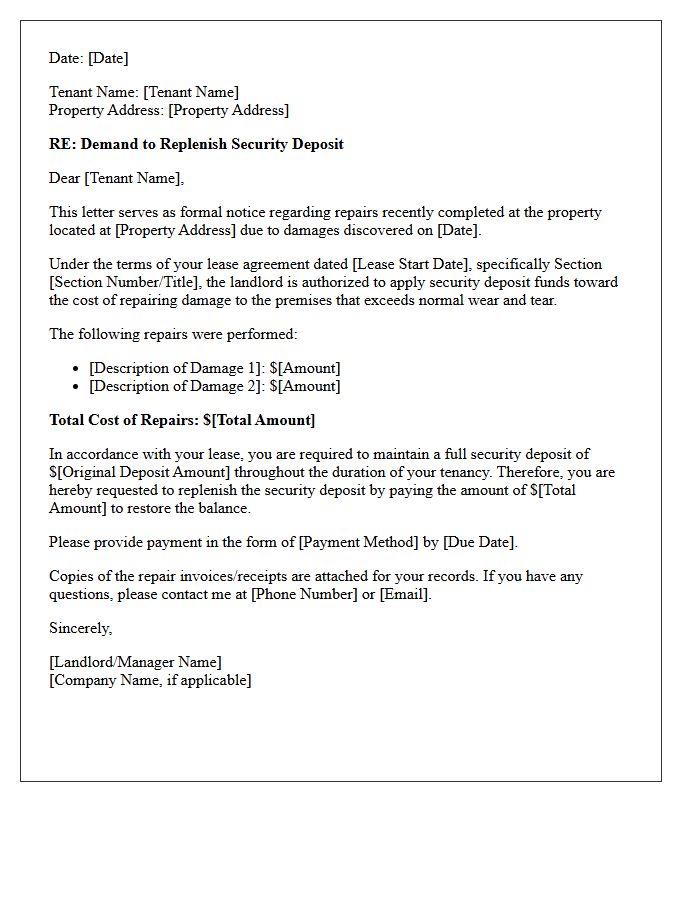
A Demand to Replenish Security Deposit is a formal notice sent by a landlord when property damage repairs have depleted the original deposit. This letter specifies the exact repair costs and requires the tenant to restore the full deposit amount as stipulated in the lease agreement. It serves as essential legal documentation to ensure the security fund remains intact for the remainder of the tenancy. Timely delivery is critical to maintain financial protection against future liabilities or additional damages incurred before the move-out date.
Letter to Replenish Security Deposit for Unpaid Rent Deduction
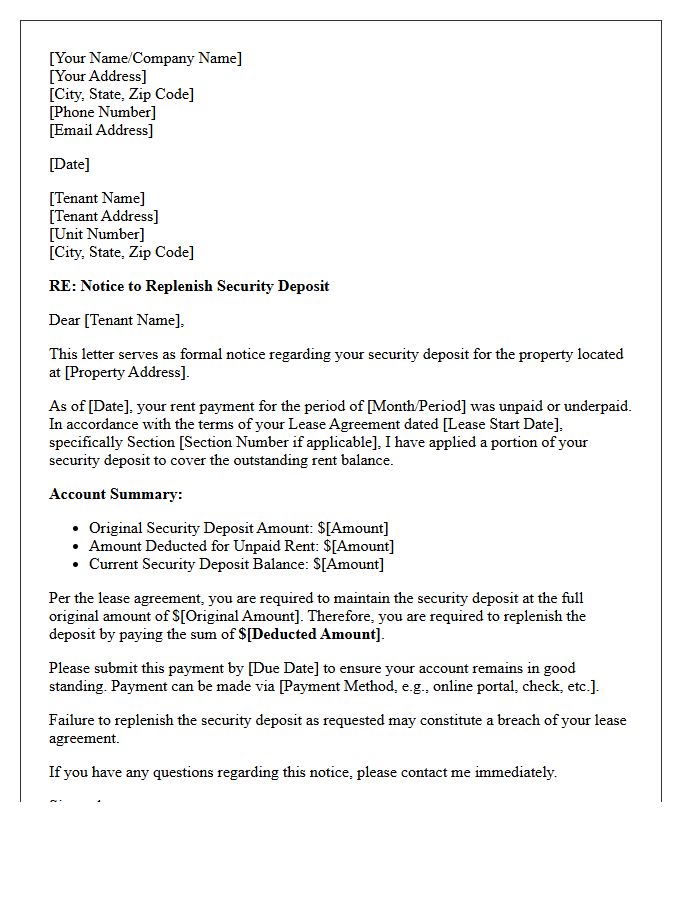
When rent arrears occur, a landlord must send a formal Letter to Replenish Security Deposit to the tenant. This document demands reimbursement for the specific portion of the deposit used to cover unpaid rent. Maintaining a full security deposit is essential for protecting the property owner against future damages or lease violations. The notice should clearly state the amount deducted, the remaining balance, and the mandatory deadline for repayment according to local laws. Providing this written record ensures legal compliance and maintains the financial security of the rental agreement.
Urgent Letter Demanding Security Deposit Replenishment
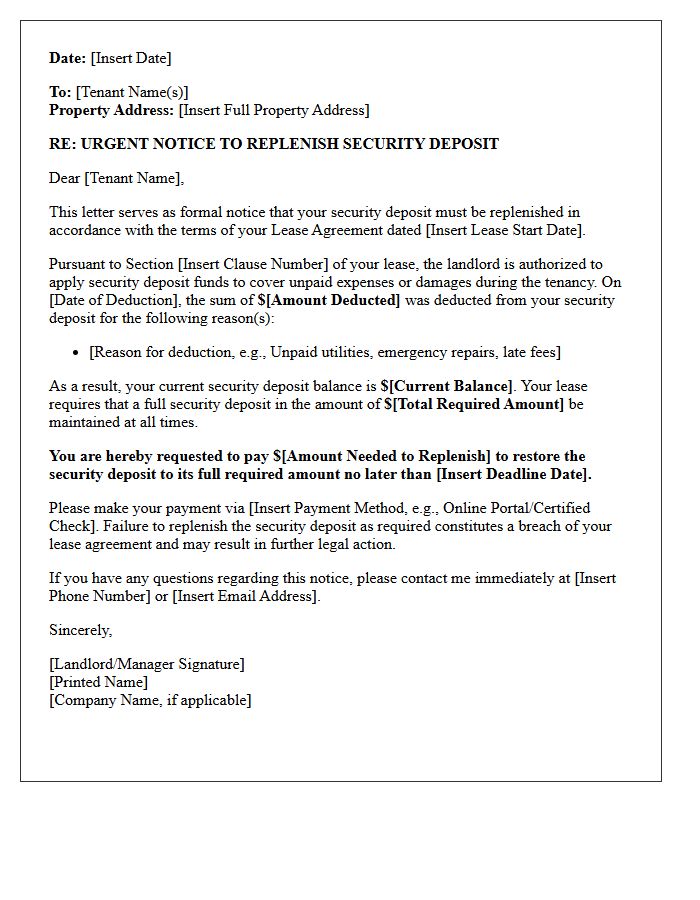
An Urgent Letter Demanding Security Deposit Replenishment is a formal notice issued by a landlord when a tenant's deposit falls below the required balance. This typically occurs after funds are used to cover unpaid rent or property damages during the tenancy. To maintain the lease agreement integrity, the tenant must restore the full amount within a specific timeframe. Failure to comply with this legal demand can lead to breach of contract or eventual eviction. This document serves as vital written evidence of the landlord's attempt to enforce financial security protocols.
Security Deposit Replenishment Letter for Unpaid Late Fees
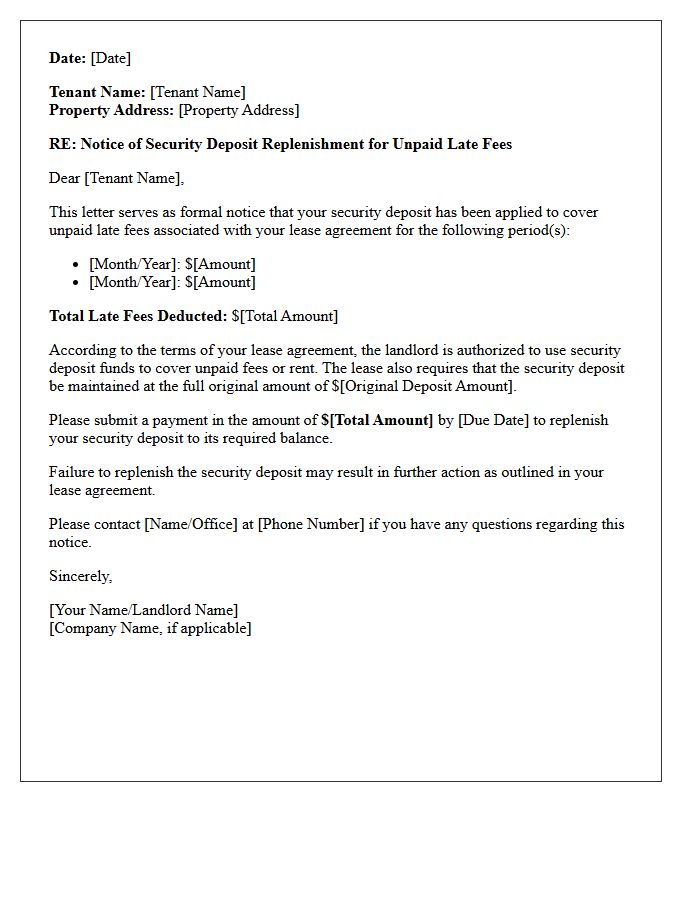
A security deposit replenishment letter is a formal notice requiring a tenant to restore their deposit after funds were deducted to cover unpaid late fees. When a tenant fails to pay penalties on time, landlords may apply a portion of the security deposit to satisfy the debt. This letter serves as legal documentation of the deduction and specifies a deadline for the tenant to repay the difference. Maintaining a full deposit is essential for financial protection against future property damages or lease violations, ensuring the landlord remains adequately covered throughout the tenancy.
Notice and Letter to Replenish Depleted Security Deposit
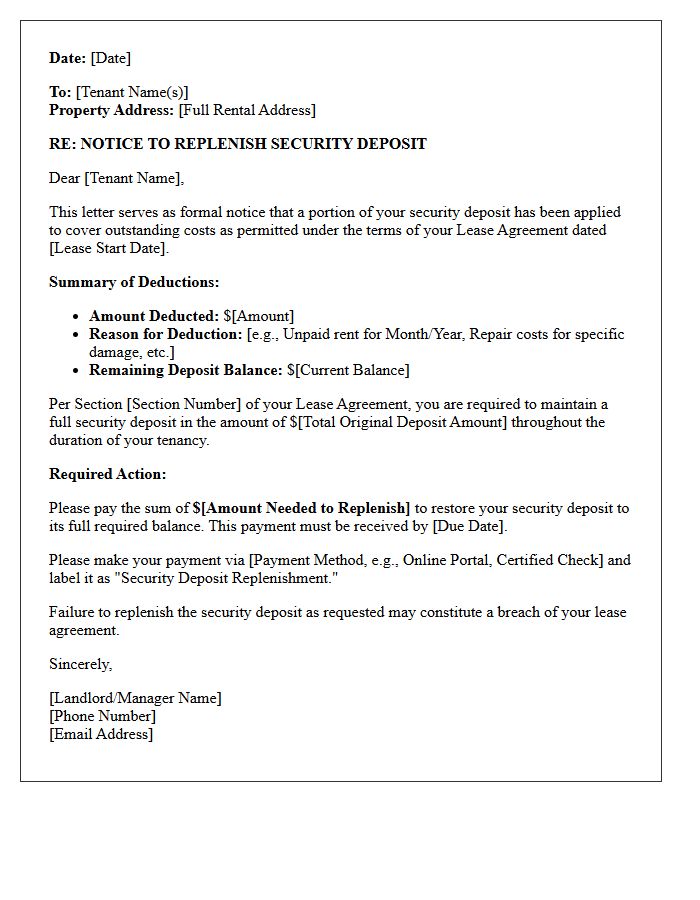
A Notice to Replenish Security Deposit is a formal legal demand sent by a landlord to a tenant. It requires the tenant to restore the original deposit balance after the landlord has legally deducted funds for repairs or unpaid rent during the tenancy. Most lease agreements mandate that the full security amount be maintained as financial protection. Tenants must act promptly to avoid lease violations or potential eviction. It is essential to verify that all deductions were justified and documented with itemized receipts according to local housing laws.
Pet Damage Security Deposit Replenishment Demand Letter
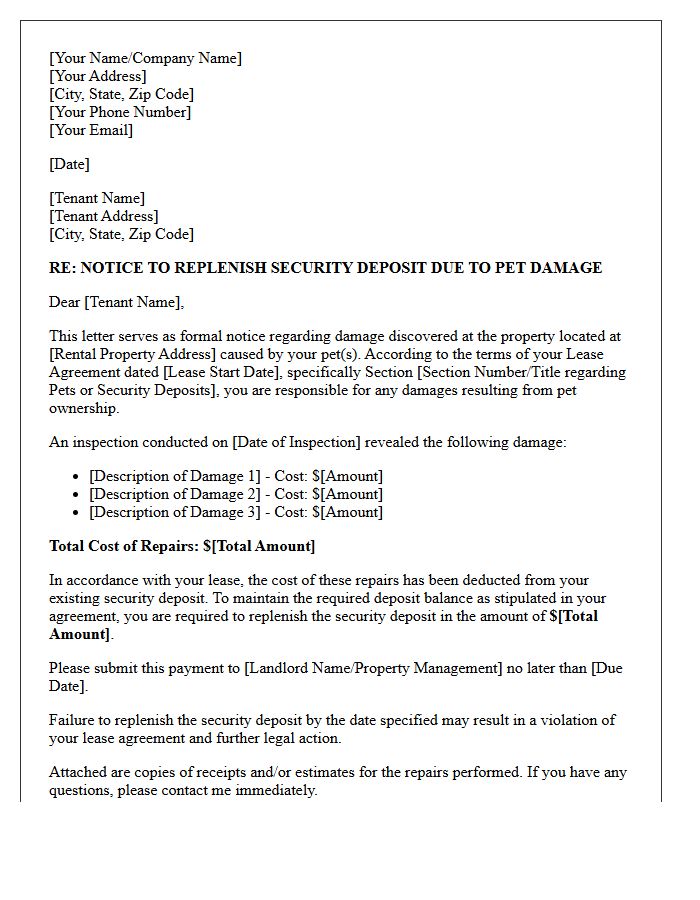
A Pet Damage Security Deposit Replenishment Demand Letter is a formal notice sent by a landlord when animal-related destruction exceeds the initial deposit or requires immediate restoration of funds. This document legally requests that the tenant pays to bring the security balance back to its original amount. It must detail specific damages, provide itemized repair costs, and reference the lease agreement terms. Promptly sending this letter ensures the property remains protected against future risks while maintaining a clear financial paper trail for potential legal or eviction proceedings regarding property maintenance.
Letter Demanding Replenishment of Security Deposit After HOA Fines
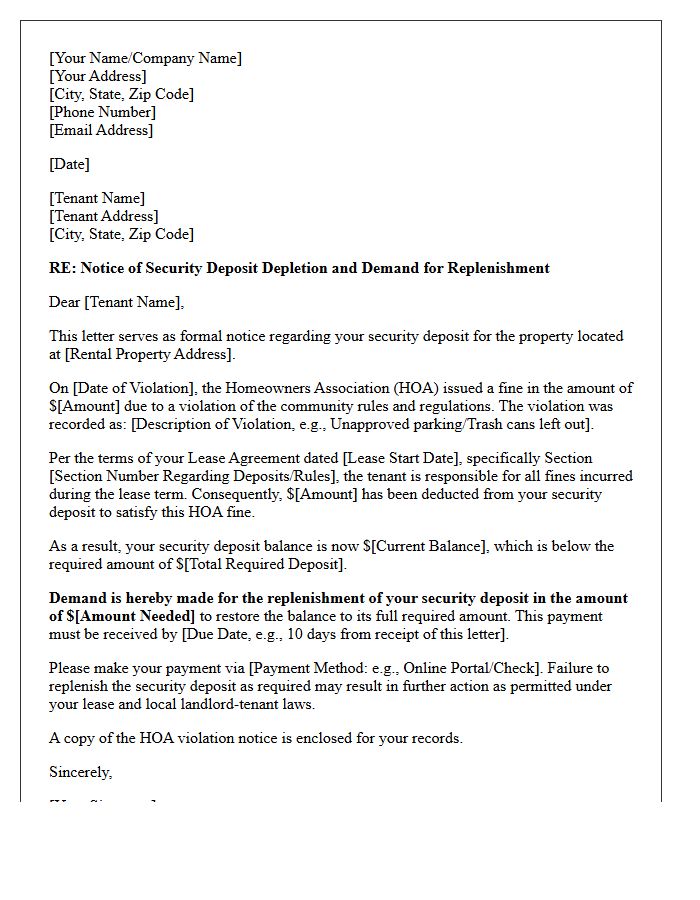
When a homeowner violates community rules, the HOA may deduct fines from the Security Deposit. A Letter Demanding Replenishment is a formal notice requiring the owner to restore the account to its original balance. Failure to comply often leads to additional Late Fees or legal action. Homeowners should verify the specific Violation Notice and ensure the fine aligns with the CC&Rs. Timely payment is essential to maintain compliance and avoid potential Property Liens or loss of community privileges.
Final Warning Letter to Replenish Security Deposit Funds
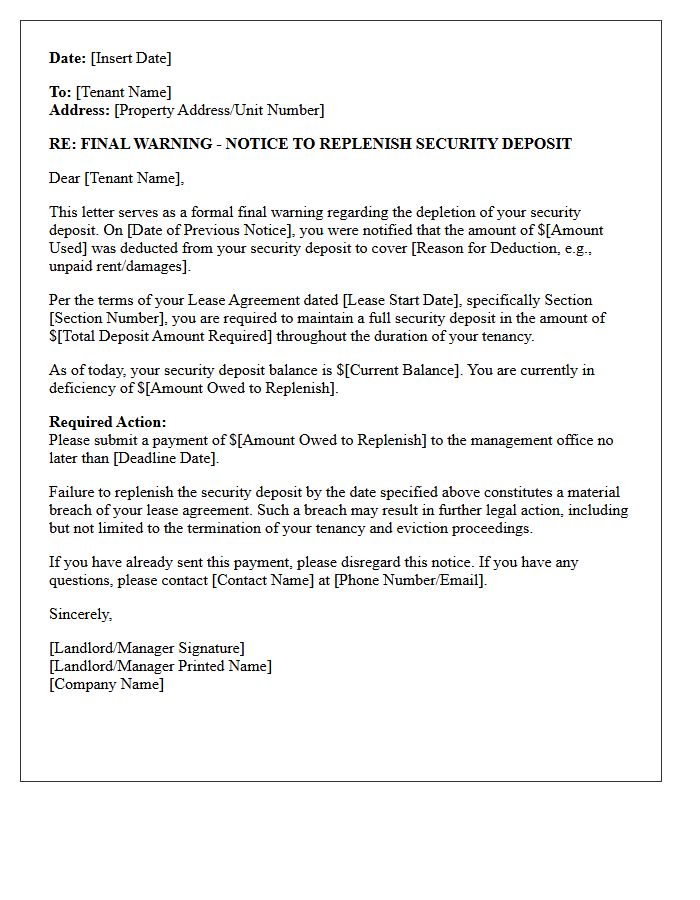
A Final Warning Letter serves as a formal notice that a tenant must immediately replenish security deposit funds used to cover damages or unpaid rent. Failure to restore the full balance violates the lease agreement. If the account remains underfunded after this notification, the landlord may initiate eviction proceedings or legal action. Tenants should treat this as a last chance to maintain their residency. Always verify the deadline and payment methods specified in the letter to ensure compliance and protect your housing status.
Security Deposit Replenishment Letter Following Utility Bill Deduction
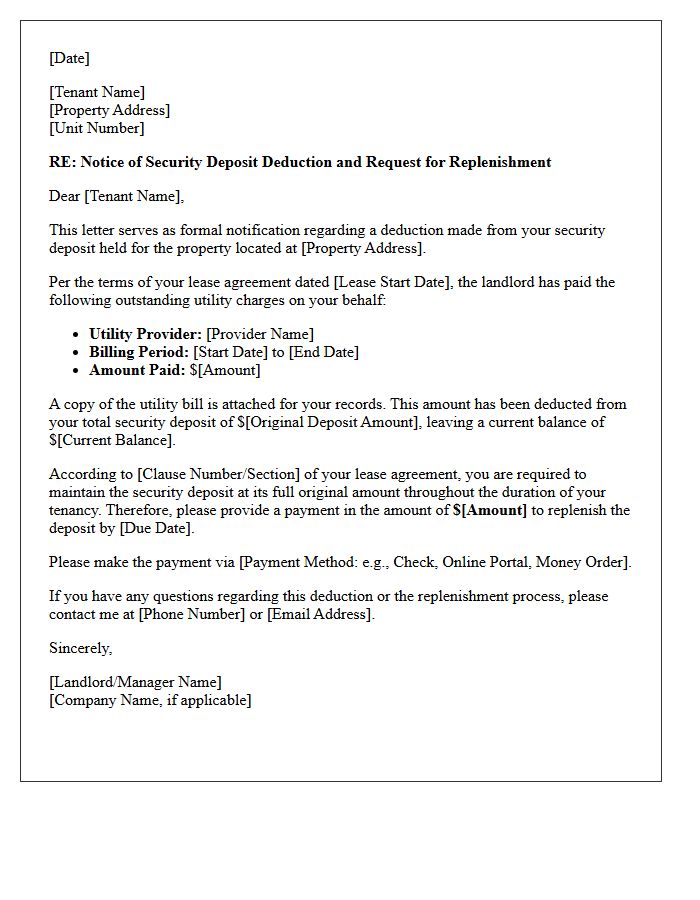
A Security Deposit Replenishment Letter is a formal notice sent to tenants after funds are used to cover unpaid utility bills. Since the deposit serves as collateral for future liabilities, the landlord requires the tenant to restore the full balance within a specific timeframe. This document should clearly itemize the deduction amount, provide copies of the outstanding invoices, and cite the lease clause governing security funds. Prompt replenishment ensures the security deposit remains intact to protect the property owner against subsequent damages or financial defaults during the remaining tenancy.
Lease Violation Security Deposit Replenishment Demand Letter
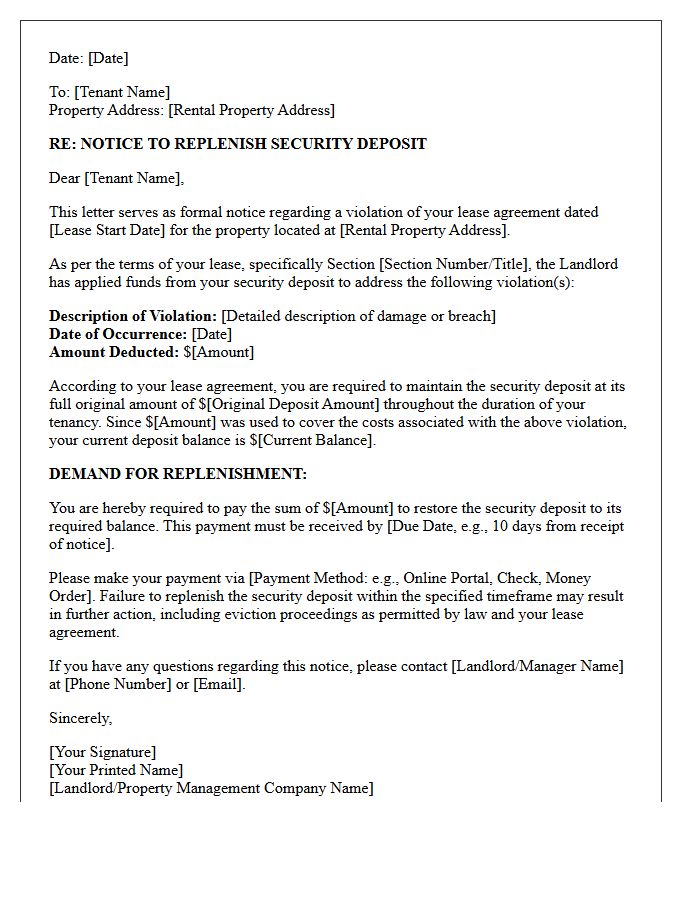
A Lease Violation Security Deposit Replenishment Demand Letter is a formal notice requiring a tenant to restore their security deposit balance after a landlord uses funds to cover damages or lease breaches. It serves as a legal record that the tenant must pay back the deducted amount to maintain the full deposit required by the contract. This document ensures the landlord remains protected against future financial risks. Failure to comply with this reimbursement request may result in further legal action or potential eviction proceedings for violating the terms of the original lease agreement.
Mid-Lease Security Deposit Replenishment Demand Letter
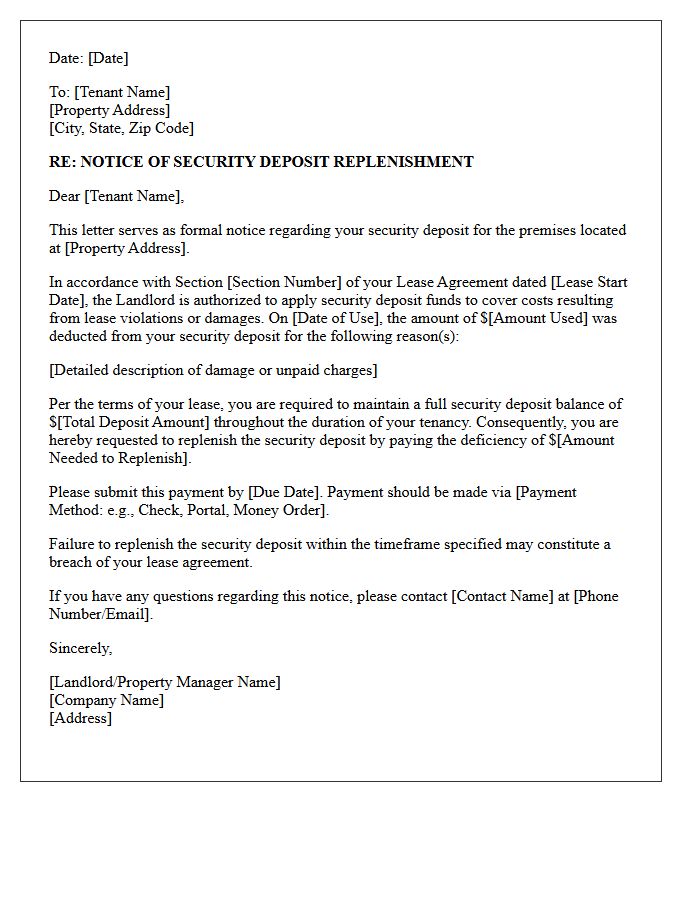
A Mid-Lease Security Deposit Replenishment Demand Letter is a formal notice sent by a landlord when tenant damages or lease violations have depleted the original deposit during the tenancy. This document requires the tenant to restore the full balance to maintain financial protection for the owner. It must specify the exact amount used, provide itemized proof of repairs, and cite the specific lease clause authorizing reimbursement before the contract ends. Prompt compliance ensures the security fund remains intact for potential future claims or final move-out inspections.
What is a Demand to Replenish Security Deposit?
A Demand to Replenish Security Deposit is a formal written notice sent by a landlord to a tenant requiring them to restore the security deposit to its full original amount after a portion has been used to cover unpaid rent, damages, or lease violations during the tenancy.
When can a landlord legally demand a security deposit replenishment?
A landlord can demand replenishment if the lease agreement contains a specific clause allowing them to apply deposit funds toward cures for defaults-such as repairing tenant-caused damage or covering late rent-prior to the end of the lease term.
How much time does a tenant have to replenish the security deposit?
The timeline for replenishment is typically governed by the terms of the lease agreement, often ranging from 3 to 10 days after receiving the formal demand notice. Failure to comply within this period may constitute a material breach of the lease.
What should be included in a Demand to Replenish Security Deposit notice?
The notice should include the date, the specific dollar amount withdrawn from the deposit, a detailed description of the repairs or costs the funds covered (including receipts if applicable), and the deadline by which the tenant must pay the remaining balance.
Can a tenant refuse to replenish the security deposit?
A tenant can only legally refuse if they dispute the validity of the charges or if the lease does not authorize the landlord to draw from the deposit during the active tenancy. If the charges are legitimate according to the lease, refusal to replenish can lead to eviction proceedings.


Comments