
Improve your recruitment process by sending a Feedback Request Letter to passive candidates. Understanding their outreach experience helps refine your headhunting strategy and boosts employer branding, even if they aren't ready to move. Learning why talent stays engaged or declines is essential for long-term hiring success. To help you get started, below are some ready to use templates.
Image cover: Optimizing the Candidate Experience: Feedback Request Templates for Passive Outreach
Letter Samples List
- Passive Candidate Outreach Experience Feedback Letter
- Recruitment Agency Approach Evaluation Letter
- Confidential Feedback Letter On Sourcing Experience
- Candidate Experience Survey Letter For Passive Talent
- Post-Outreach Feedback Request Letter From Recruitment Team
- Recruiting Experience Assessment Letter For Approached Candidates
- Talent Acquisition Outreach Feedback Letter
- Passive Candidate Engagement Review Letter
- Recruitment Contact Experience Feedback Letter
- Headhunter Approach Feedback Request Letter
- Executive Search Outreach Evaluation Letter
- Initial Contact Feedback Letter For Passive Professionals
Passive Candidate Outreach Experience Feedback Letter
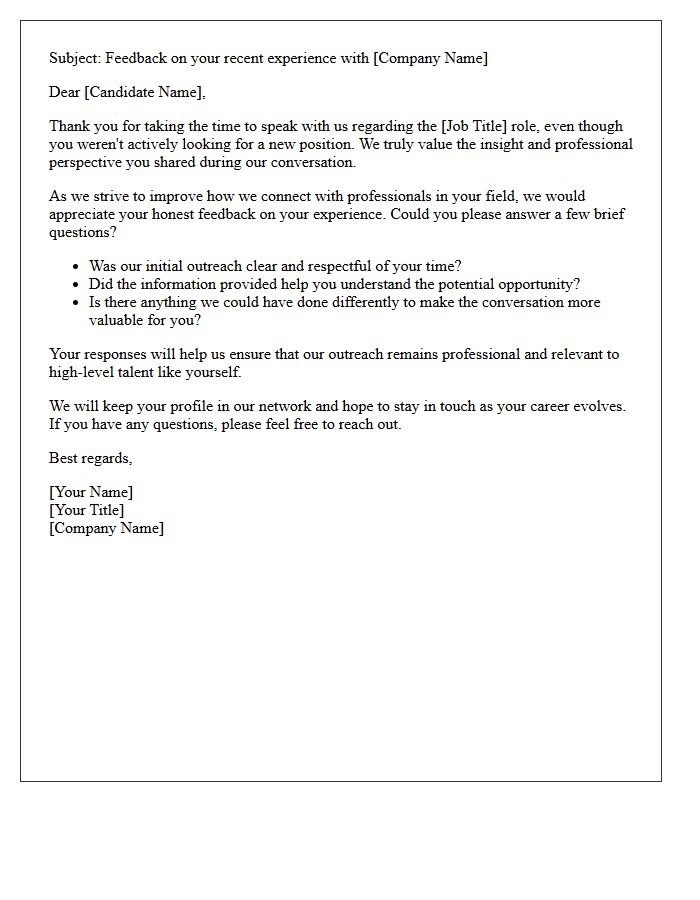
A Passive Candidate Outreach Experience Feedback Letter is a strategic tool used to refine recruitment processes. It seeks honest insights from high-value prospects who did not apply but were contacted by recruiters. By measuring the quality of the initial touchpoint, messaging relevance, and brand perception, companies can optimize their engagement strategies. This feedback helps internal teams improve conversion rates and ensure a positive employer brand, even when candidates aren't actively looking. Understanding why a passive lead declined or responded provides a competitive edge in securing top-tier talent in a crowded market.
Recruitment Agency Approach Evaluation Letter
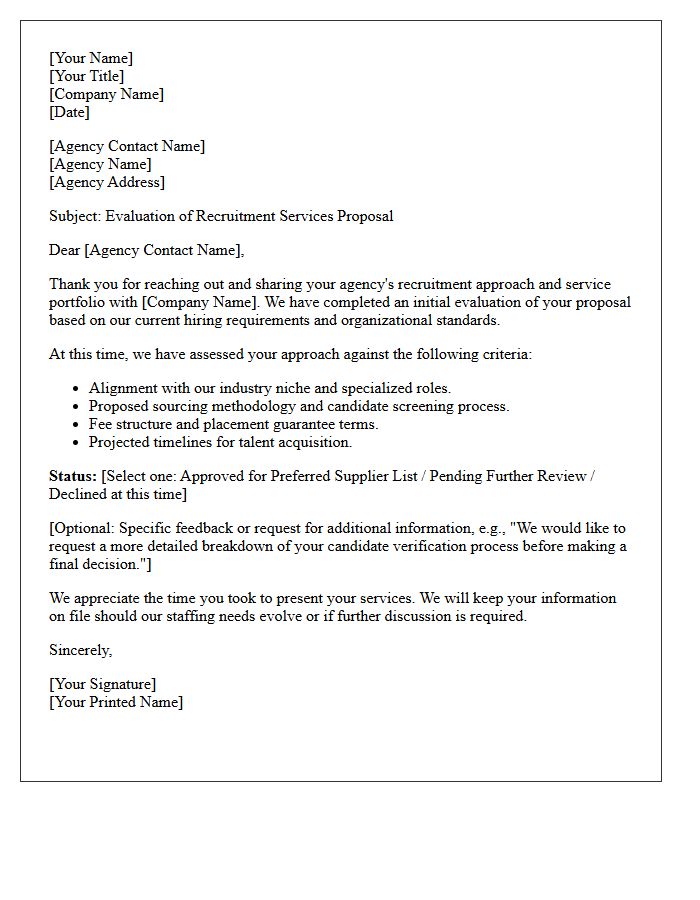
A Recruitment Agency Approach Evaluation Letter is a professional document used to assess the quality and alignment of a search firm's outreach. It helps organizations determine if a headhunter's methodology matches their corporate culture and hiring standards. Key elements include evaluating the agency's candidate sourcing techniques, industry expertise, and communication style. This systematic review ensures the selection of effective recruitment partners, optimizing the talent acquisition process while maintaining high brand integrity. By formalizing this feedback, companies can improve long-term placement success and ensure a higher return on investment for external hiring services.
Confidential Feedback Letter On Sourcing Experience
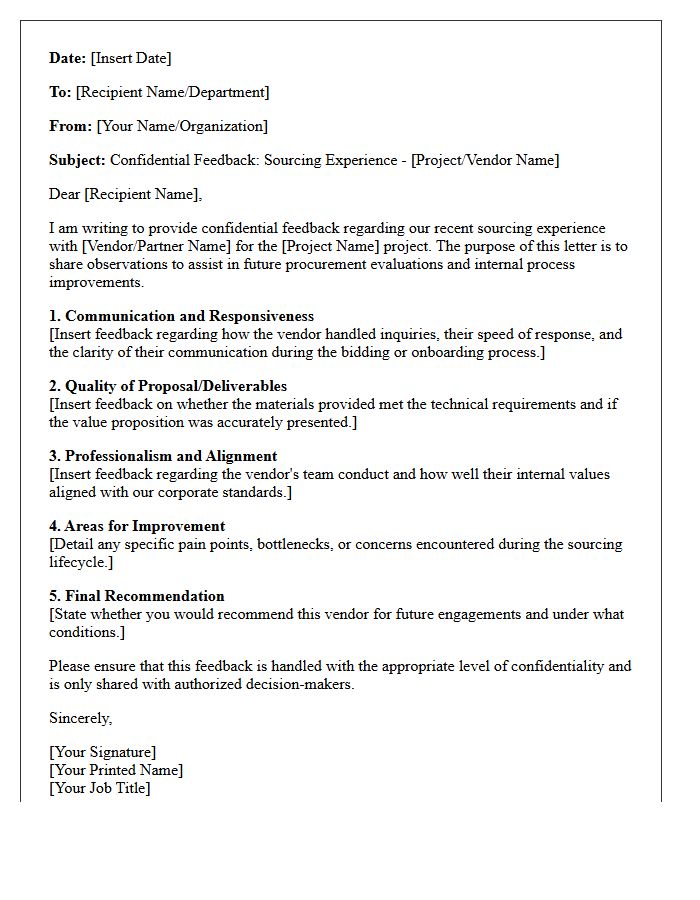
A Confidential Feedback Letter on your sourcing experience is a strategic tool used to provide honest, anonymous insights regarding supplier interactions. It evaluates key performance indicators such as transparency, responsiveness, and ethical conduct during the procurement cycle. This document allows organizations to identify systemic bottlenecks and improve vendor relationships without fear of reprisal. By highlighting specific pain points or successes, stakeholders can drive continuous improvement in their supply chain management and ensure future sourcing activities align with corporate standards and efficiency goals.
Candidate Experience Survey Letter For Passive Talent
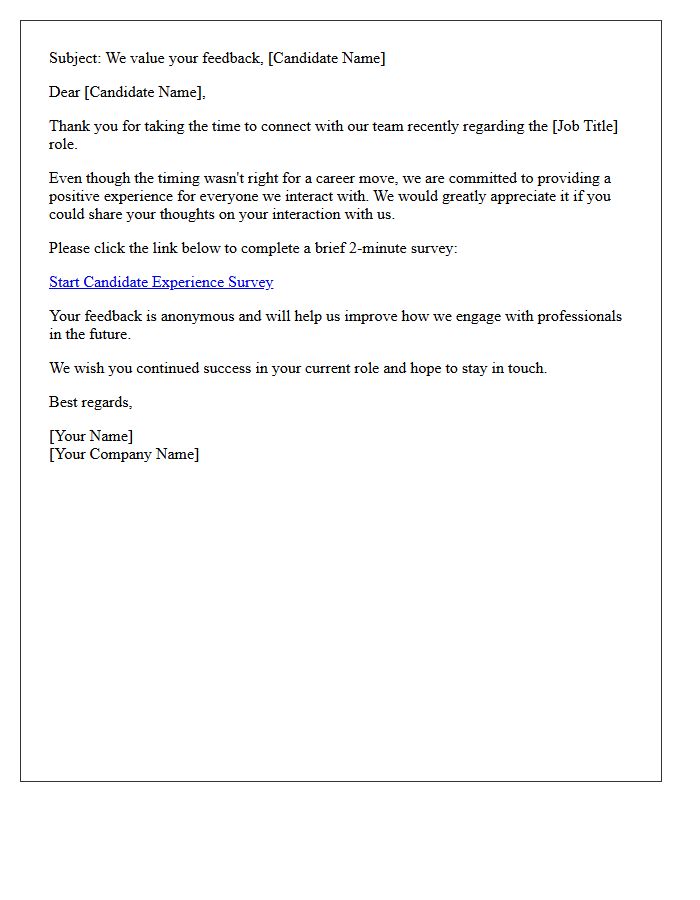
A candidate experience survey letter for passive talent must prioritize engagement by being brief and respectful of their time. Since these individuals did not actively apply, use a personalized approach to solicit feedback on your outreach process. Focus on employer branding to maintain a positive relationship, even if they aren't ready to switch roles. Clearly state how their insights improve future talent acquisition strategies. Ensuring the survey is mobile-friendly and anonymous increases participation rates, providing valuable data to refine your recruitment marketing and candidate journey for high-value prospects.
Post-Outreach Feedback Request Letter From Recruitment Team
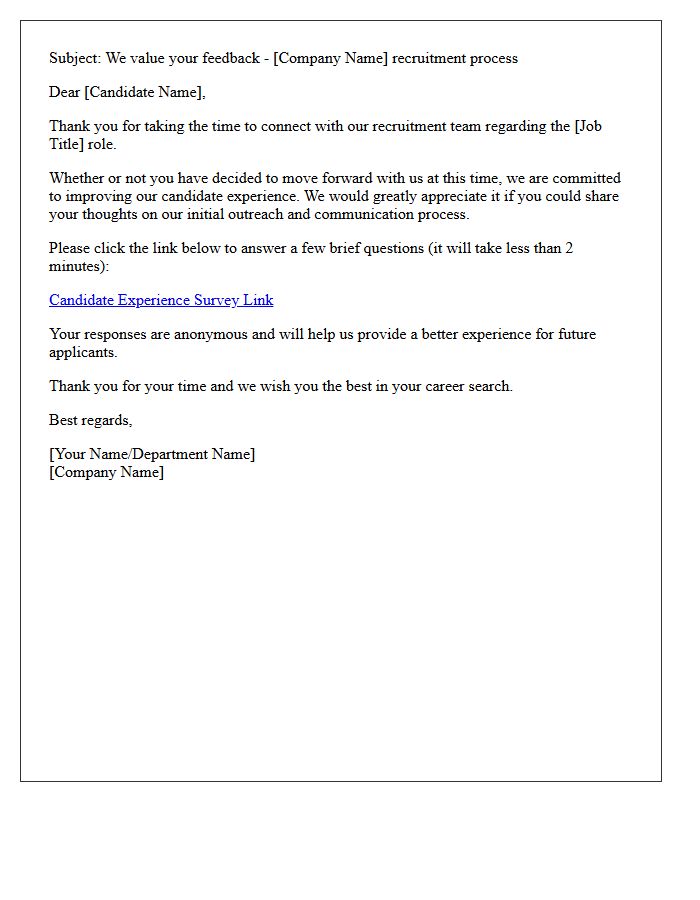
A post-outreach feedback request letter is a strategic tool used by recruitment teams to optimize their hiring process. By asking candidates about their initial communication experience, firms gain insights into brand perception and candidate engagement. This brief survey helps identify friction points in the recruitment funnel, allowing teams to refine their messaging and improve response rates. Collecting data on why prospects decline or ignore offers ensures a more candidate-centric approach, ultimately enhancing the company's employer brand and talent acquisition efficiency in a competitive job market.
Recruiting Experience Assessment Letter For Approached Candidates
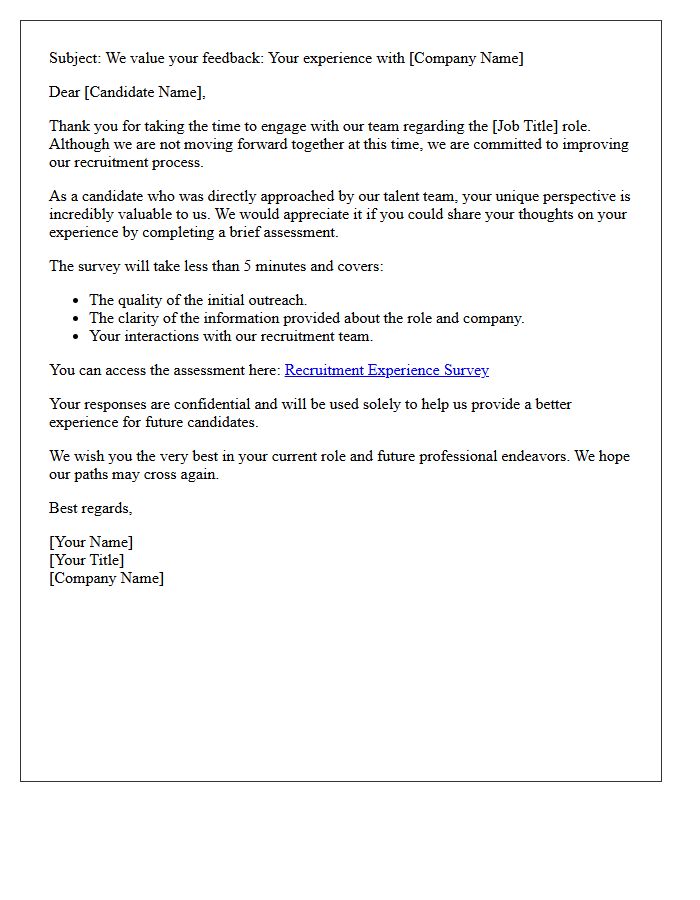
A Recruiting Experience Assessment Letter is a strategic tool used to gather feedback from approached candidates regarding your hiring process. This professional inquiry helps organizations measure candidate satisfaction, identify friction points, and refine their employer branding. By evaluating the initial outreach, communication quality, and interview structure, companies can enhance their talent acquisition strategies. Even if a candidate is not hired, providing a positive experience through this assessment fosters a strong professional reputation and ensures a high-quality talent pipeline for future organizational growth and recruitment success.
Talent Acquisition Outreach Feedback Letter
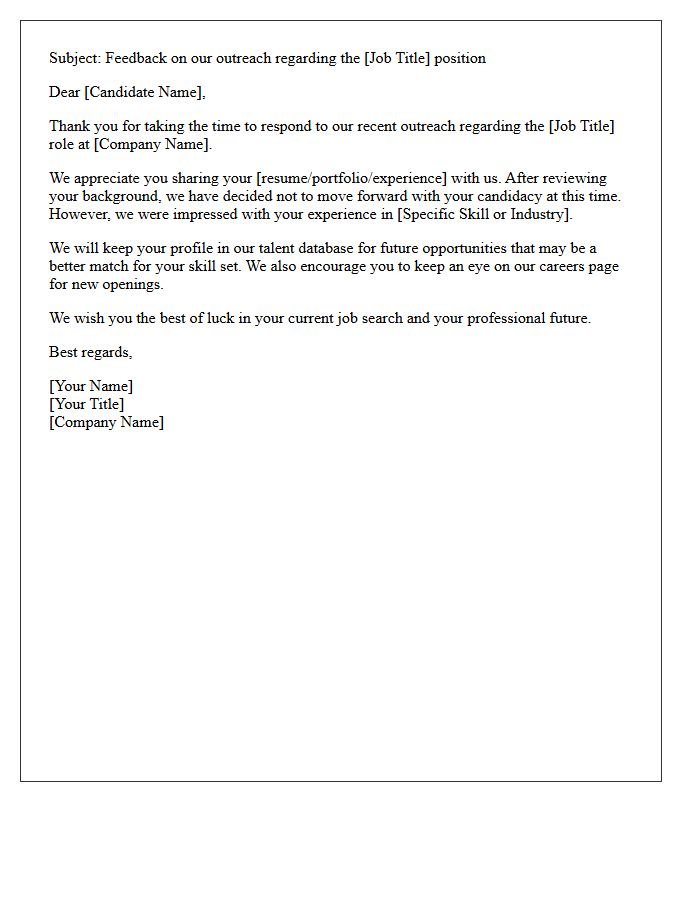
A Talent Acquisition Outreach Feedback Letter is a professional communication sent to candidates after an interview or application review. Its primary purpose is to provide constructive insights regarding a candidate's performance and fit for a specific role. Providing clear, respectful feedback enhances the candidate experience and protects your employer brand. Effective letters balance transparency with encouragement, helping applicants understand areas for improvement while maintaining a positive relationship for future opportunities. Timely and personalized feedback demonstrates organizational integrity and fosters a diverse, high-quality talent pipeline for long-term hiring success.
Passive Candidate Engagement Review Letter
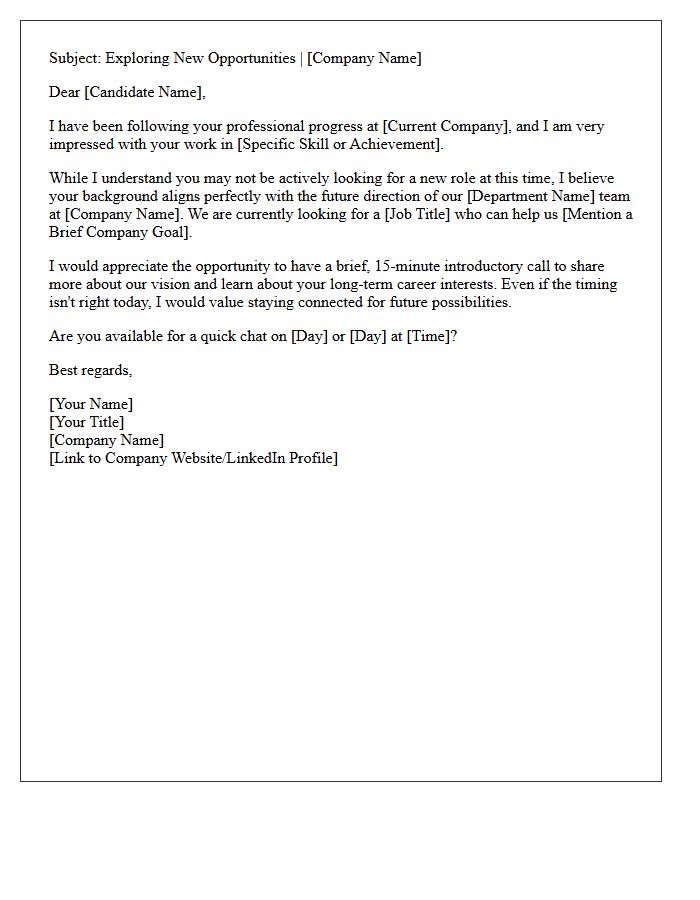
A Passive Candidate Engagement Review Letter is a strategic communication tool designed to nurture top-tier talent who are not actively seeking employment. This personalized outreach focuses on highlighting mutual value propositions rather than immediate job openings. To be effective, the content must demonstrate deep research into the candidate's professional background and achievements. By establishing a low-pressure connection, recruiters build long-term relationships and strengthen their employer brand. Clear, respectful messaging is essential to capture the interest of high-value individuals who require a compelling reason to consider a career transition.
Recruitment Contact Experience Feedback Letter
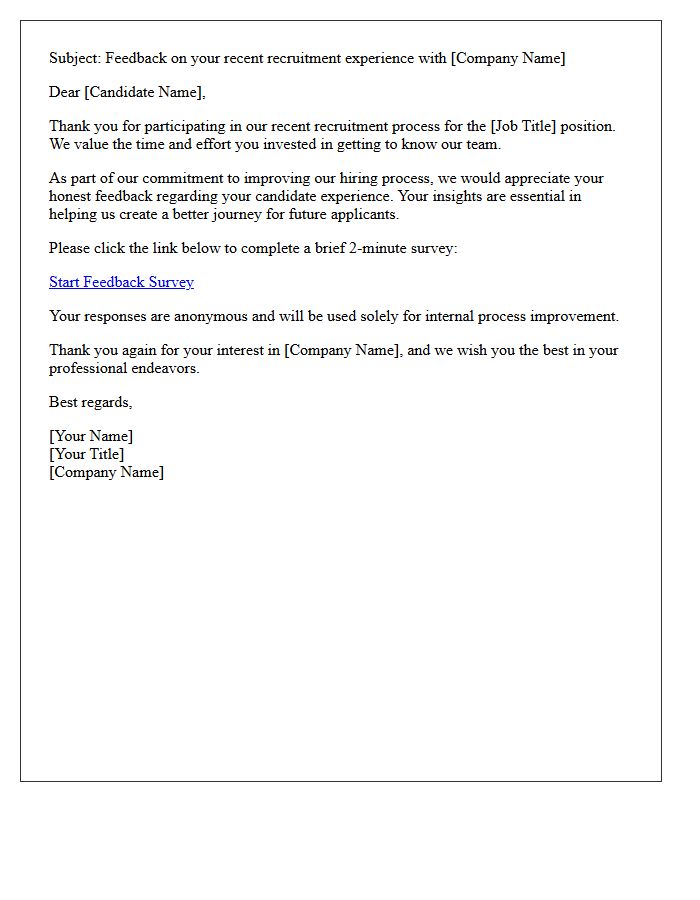
A Recruitment Contact Experience Feedback Letter is a professional document used to evaluate the candidate journey during the hiring process. This feedback highlights key interactions with recruiters, focusing on communication clarity, professionalism, and procedural efficiency. By providing constructive insights, candidates help organizations refine their talent acquisition strategies and improve brand reputation. Whether positive or negative, these letters ensure that candidate experience remains a priority, fostering transparency and helping companies attract top-tier talent through more respectful and streamlined recruitment practices.
Headhunter Approach Feedback Request Letter
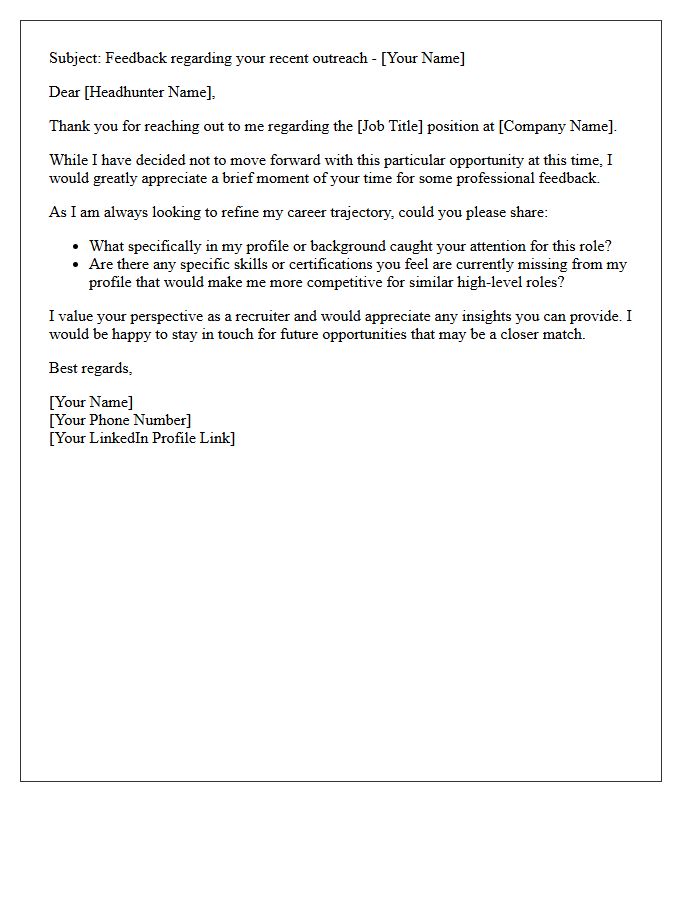
A Headhunter Approach Feedback Request Letter is a strategic tool used to refine your professional positioning. When a recruiter contacts you about a role that isn't a perfect match, sending this follow-up allows you to gather insights into why your profile was flagged. It helps you understand your market value and identify potential gaps in your experience. By maintaining a professional tone, you turn a brief inquiry into a long-term networking opportunity, ensuring that future outreach aligns more accurately with your career goals and expertise.
Executive Search Outreach Evaluation Letter
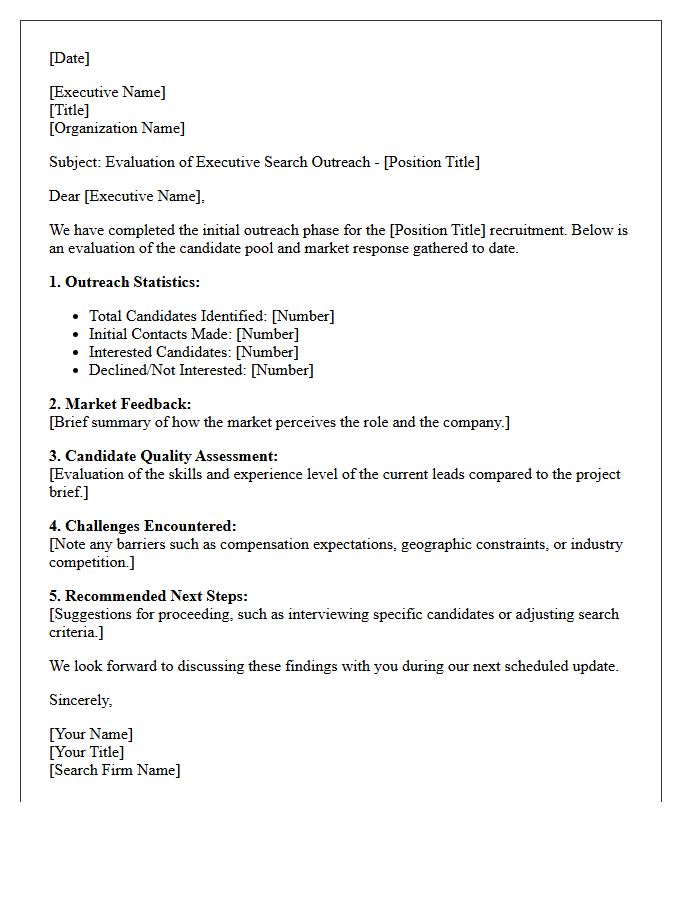
An Executive Search Outreach Evaluation Letter is a formal document used to assess the initial compatibility between a high-level candidate and a leadership role. It summarizes the recruiter's preliminary vetting process, highlighting how the candidate's expertise aligns with specific organizational goals. This letter serves as a critical bridge, detailing the strategic rationale for advancement in the hiring funnel. It ensures transparency by documenting the candidate's professional trajectory and potential cultural fit, providing stakeholders with a clear, qualitative analysis before proceeding to intensive interview stages.
Initial Contact Feedback Letter For Passive Professionals
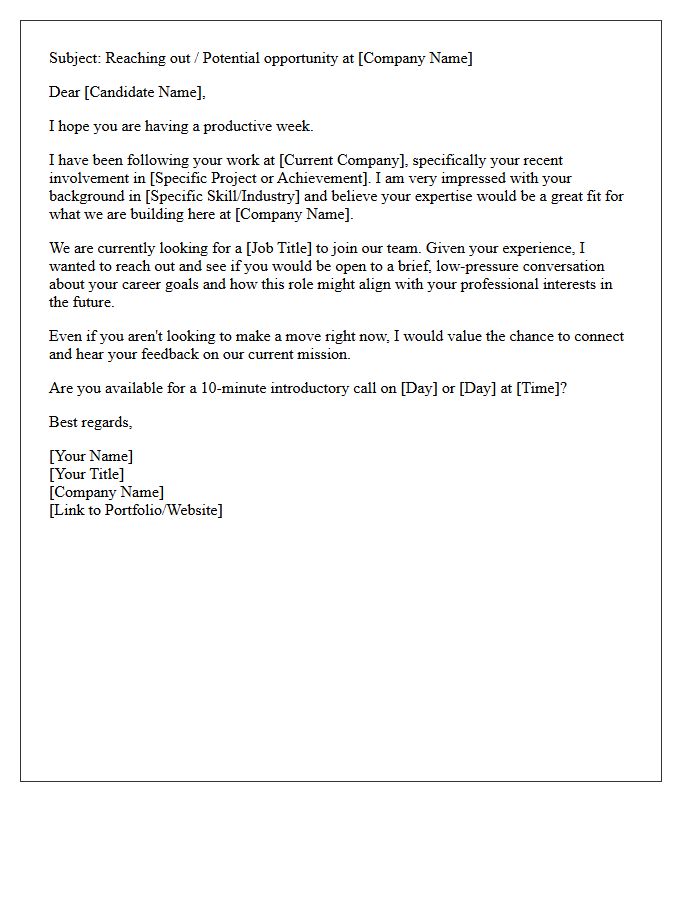
An initial contact feedback letter for passive professionals must prioritize a personalized value proposition to capture attention. Unlike active job seekers, these individuals require a clear explanation of why their specific background fits a unique opportunity. The message should remain brief, respectful of their time, and focus on long-term career growth rather than an immediate sale. Highlighting cultural alignment and potential impact ensures the outreach feels like a tailored professional consultation, increasing the likelihood of a positive response from high-caliber talent not currently looking for a change.
What is the purpose of a feedback request letter to a passive candidate?
The purpose is to gather insights on your recruitment outreach strategy from professionals who declined your initial contact, helping you improve candidate experience and engagement rates for future talent acquisition.
When should I send a feedback survey to a passive candidate?
You should send the request within 3 to 5 business days after the candidate has formally declined the opportunity or stopped responding to your follow-ups, ensuring the experience is still fresh in their mind.
What questions should I include in a recruitment outreach feedback form?
Key questions should focus on the relevance of the job description, the tone and personalization of the initial message, the preferred frequency of contact, and the primary reason they chose not to engage at this time.
How can I encourage passive candidates to provide feedback on my outreach?
To encourage participation, keep the request extremely brief (under 2 minutes), emphasize that their input is anonymous, and explain that their feedback will be used to create a more respectful and less intrusive experience for other professionals.
How do I use candidate experience feedback to improve my hiring process?
Analyze the data to identify patterns in why candidates decline, such as generic messaging or poor timing, and then adjust your sourcing templates, communication channels, and employer branding to better align with talent expectations.

Comments