
Receiving an insufficient portfolio submission rejection letter is a common part of the creative hiring process. This notification informs candidates that their provided work samples did not meet the specific technical or aesthetic requirements for the role. Clear communication helps maintain professional relationships and provides valuable feedback for growth. To simplify your recruitment process, below are some ready to use templates.
Image cover: Professional Portfolio Rejection Letter Templates: Addressing Insufficient Submissions
Letter Samples List
- Insufficient Portfolio Submission Rejection Letter
- Inadequate Portfolio Sample Candidate Rejection Letter
- Creative Portfolio Requirement Unmet Rejection Letter
- Recruitment Agency Insufficient Portfolio Rejection Letter
- Candidate Portfolio Shortfall Application Rejection Letter
- Incomplete Work Portfolio Submission Rejection Letter
- Lacking Portfolio Evidence Candidate Rejection Letter
- Substandard Portfolio Submission Agency Rejection Letter
- Portfolio Quality Insufficient Application Rejection Letter
- Unsatisfactory Talent Portfolio Submission Rejection Letter
- Insufficient Project Portfolio Recruitment Rejection Letter
- Missing Portfolio Details Candidate Rejection Letter
Insufficient Portfolio Submission Rejection Letter
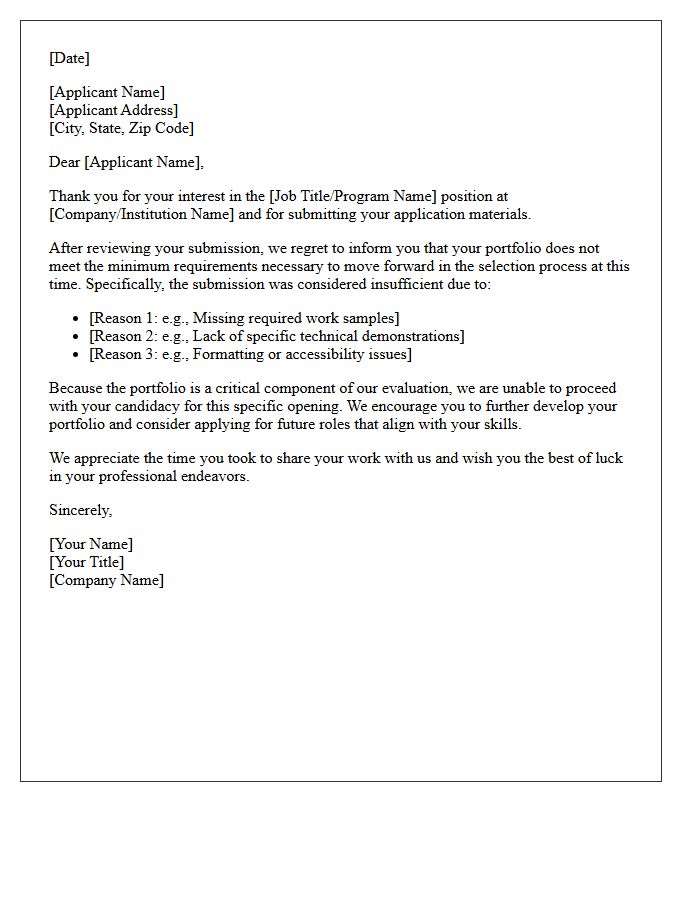
An Insufficient Portfolio Submission Rejection Letter informs candidates that their creative work failed to meet the required technical standards or professional benchmarks for a specific role. This formal notice typically indicates that the samples provided lacked the necessary depth, relevance, or skill level expected by the hiring team. Receiving this feedback is a vital part of professional growth, as it highlights the need to curate a more tailored selection of work that effectively demonstrates expertise and aligns with the organization's unique visual or strategic requirements.
Inadequate Portfolio Sample Candidate Rejection Letter
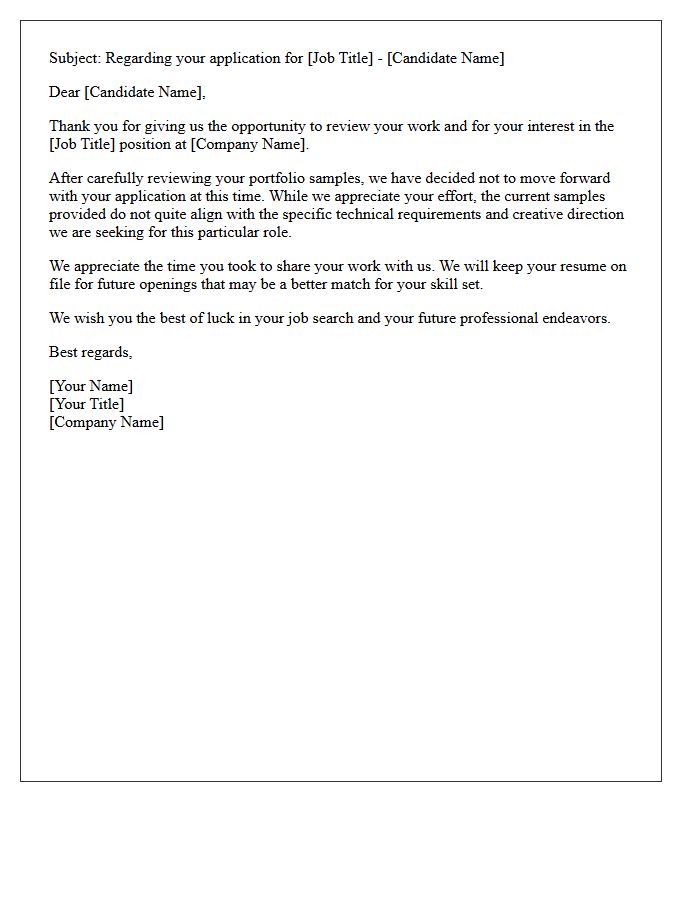
When sending an Inadequate Portfolio Sample Candidate Rejection Letter, prioritize professional clarity and constructive feedback. Clearly state that the visual or technical work did not align with current project requirements or quality standards. This specific communication helps applicants understand that their creative execution was the deciding factor. Maintaining a supportive tone protects your employer brand while encouraging the candidate to refine their skills for future opportunities. Keep the message brief, thanking them for their effort while confirming the decision is final for this specific role.
Creative Portfolio Requirement Unmet Rejection Letter
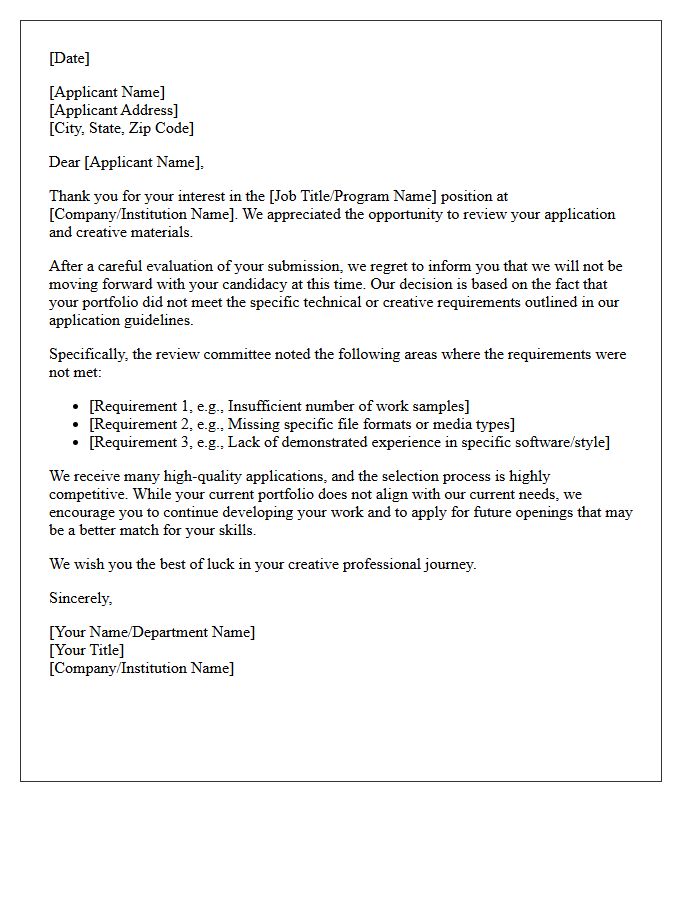
Receiving a Creative Portfolio Requirement Unmet rejection letter indicates that your submitted work did not align with the specific technical standards, stylistic expectations, or mandatory formatting guidelines of the institution. This decision usually means the reviewers found a gap between your current artistic output and their specialized criteria. To improve, carefully analyze the feedback provided, refine your presentation, and ensure your next application demonstrates the exact skills and creative vision requested by the program's unique requirements.
Recruitment Agency Insufficient Portfolio Rejection Letter
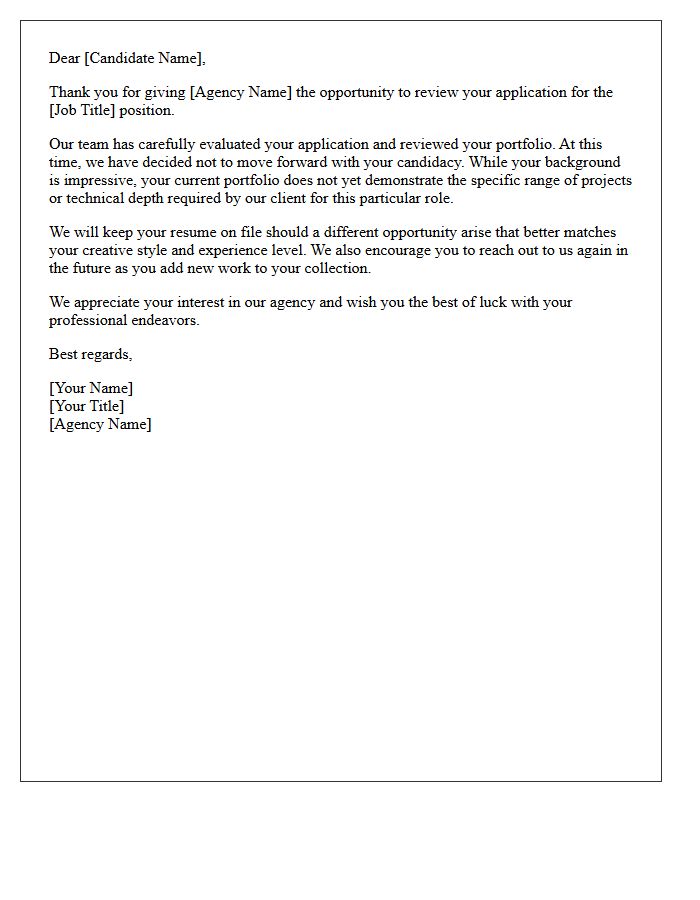
A recruitment agency rejection letter due to an insufficient portfolio indicates that your current work samples do not meet specific client benchmarks. This feedback is constructive, suggesting you need more diverse projects or better presentation of your technical skills. To improve, update your case studies to highlight measurable results and industry-specific expertise. Treat this as a professional roadmap to refine your professional brand. Enhancing your portfolio's depth ensures you remain competitive for future roles within the agency's talent pipeline.
Candidate Portfolio Shortfall Application Rejection Letter
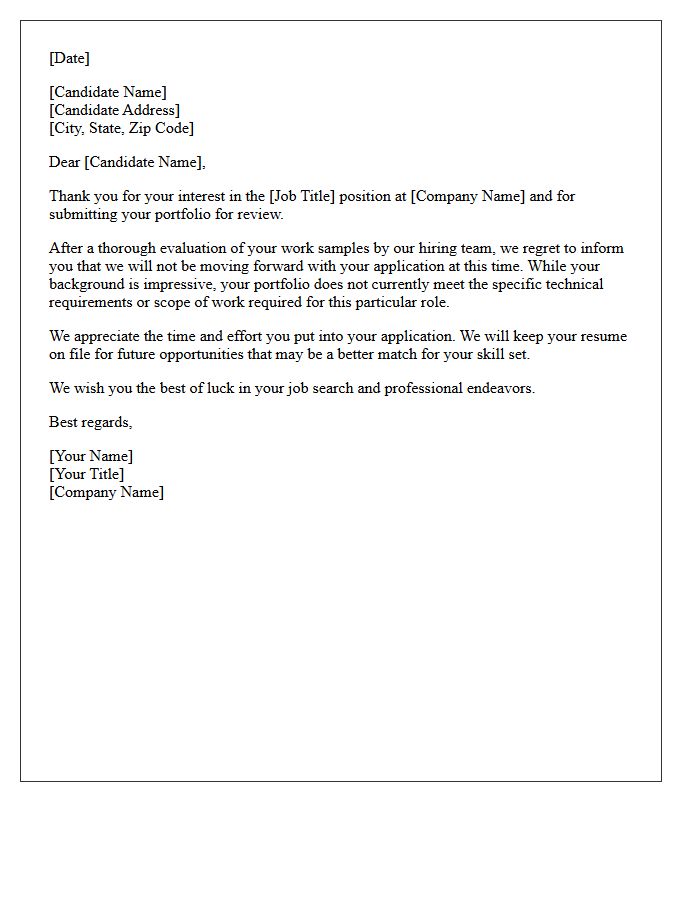
A candidate portfolio shortfall rejection letter informs applicants that while their experience is valuable, their creative portfolio lacks specific technical skills or industry-relevant examples required for the role. This professional feedback explains that the current body of work does not fully align with the company's aesthetic or functional standards. Receiving this notice allows designers to identify gaps in their visual storytelling or software proficiency. It is a standard part of the hiring process used to maintain high quality benchmarks while encouraging candidates to refine their professional presentation for future opportunities.
Incomplete Work Portfolio Submission Rejection Letter
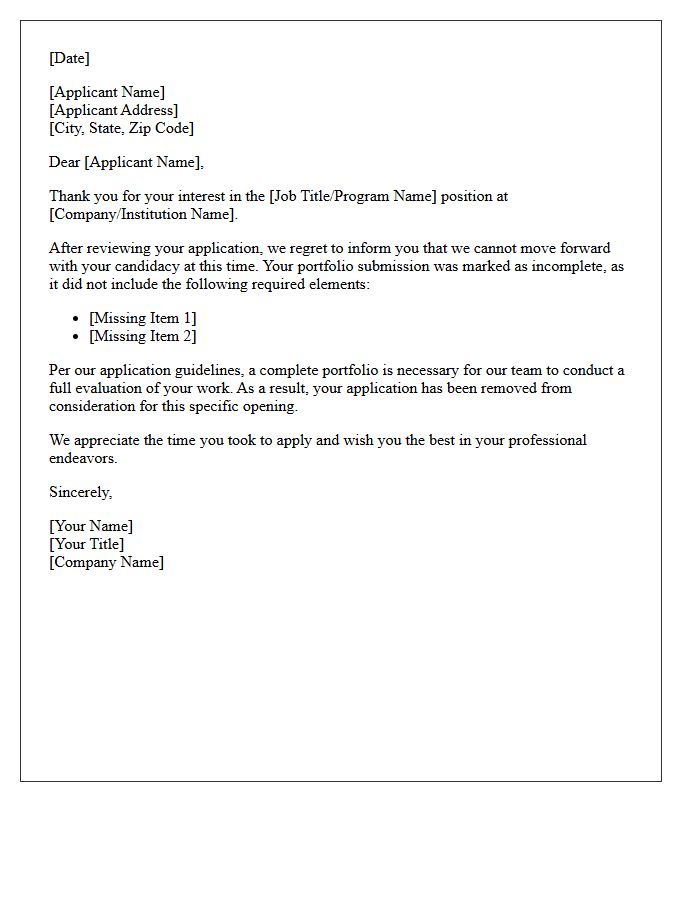
Receiving an Incomplete Work Portfolio Submission Rejection Letter indicates that your application lacked the necessary evidence required for assessment. This formal notice typically outlines specific missing components or non-compliance with submission guidelines. It is essential to review the feedback carefully to address gaps before resubmitting. Promptly providing the required documentation ensures your skills are accurately evaluated. Understanding the rejection criteria is the first step toward refining your professional presentation and meeting the standards of the reviewing body to secure future approval.
Lacking Portfolio Evidence Candidate Rejection Letter
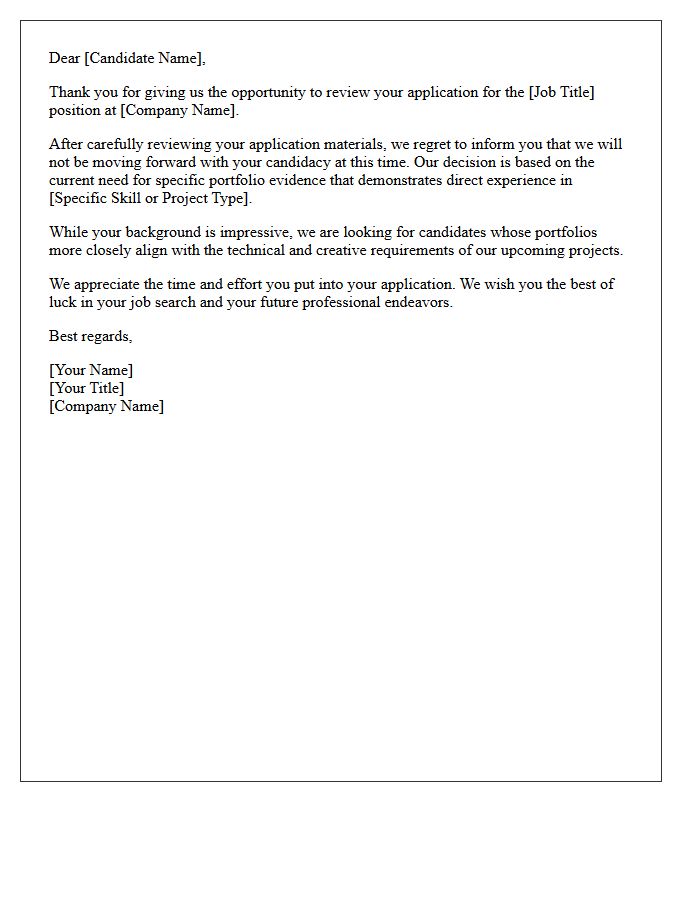
A rejection letter due to lacking portfolio evidence must be professional and constructive. Clearly state that while their background is noted, the decision stems from a need for specific tangible work samples that demonstrate technical proficiency. Providing actionable feedback helps the candidate understand how to align their visual proof with role expectations. A brief, transparent explanation maintains your employer brand integrity and encourages the applicant to refine their documentation for future opportunities. Keep the tone empathetic to ensure a positive candidate experience despite the immediate hiring disqualification.
Substandard Portfolio Submission Agency Rejection Letter
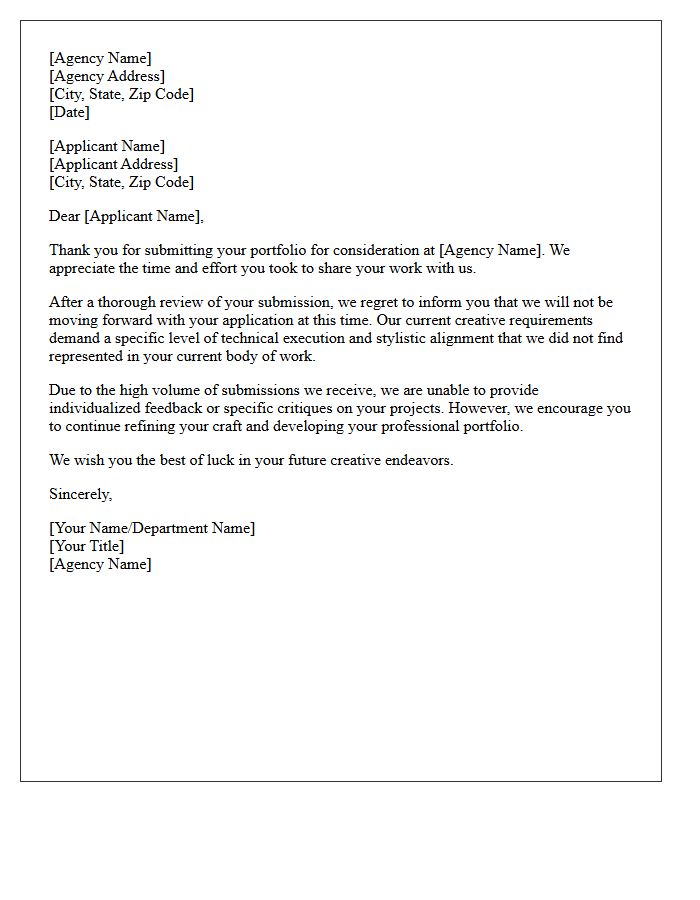
Receiving a rejection letter from a literary or creative agency often stems from a substandard portfolio submission. To avoid being discarded, ensure your work adheres strictly to submission guidelines and showcases a professional standard. Agencies prioritize marketability and technical proficiency; therefore, a weak presentation or incomplete samples suggest unreadiness for the industry. Analyze feedback to identify specific deficiencies in your craft or formatting. Refining your creative assets before reapplying is essential to transition from an automated refusal to professional representation and long-term career success.
Portfolio Quality Insufficient Application Rejection Letter
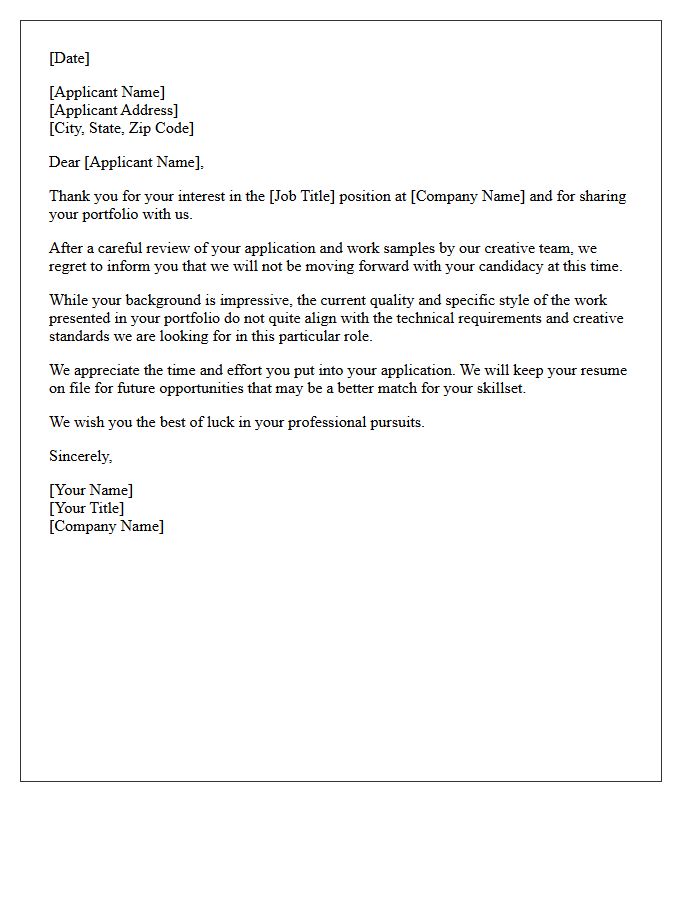
A rejection letter for insufficient portfolio quality indicates that your creative work failed to meet the specific technical or aesthetic standards required for the role. Employers prioritize demonstrated proficiency through relevant projects that showcase problem-solving skills and professional execution. To improve future outcomes, seek detailed feedback to identify gaps in your craftsmanship or presentation style. Refining your best pieces and tailoring your visual narrative to align with a company's unique brand identity is essential for overcoming this specific application barrier and securing future opportunities.
Unsatisfactory Talent Portfolio Submission Rejection Letter
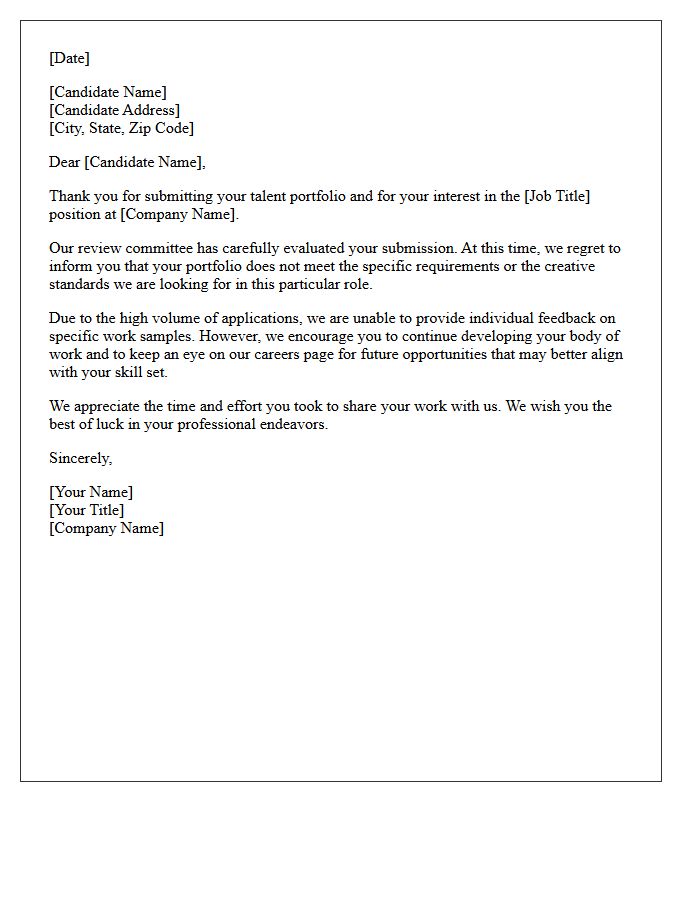
Receiving an Unsatisfactory Talent Portfolio Submission Rejection Letter typically indicates that your creative work did not meet specific technical standards or aesthetic requirements. To improve, carefully analyze any provided feedback regarding composition, skill level, or alignment with the brand's vision. This rejection is often not a final judgment of potential but an invitation to refine your presentation and strengthen your craft. Use this opportunity to update your projects, ensuring your next submission demonstrates growth and a clear understanding of the industry expectations required for professional acceptance.
Insufficient Project Portfolio Recruitment Rejection Letter
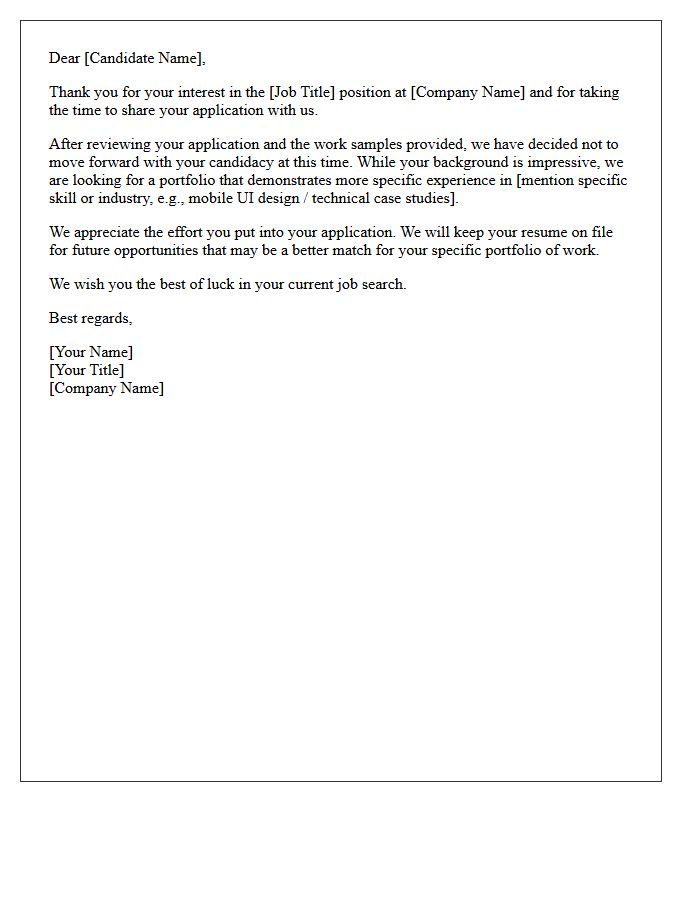
Receiving an insufficient project portfolio rejection letter indicates that your submitted work lacked the technical depth, variety, or specific evidence required for the role. Employers use these letters when a candidate's demonstrated skills do not align with the professional standards of the position. To improve, focus on showcasing end-to-end projects with clear problem-solving outcomes. Use quantitative results and high-quality documentation to prove your expertise. Treat this feedback as a roadmap to refine your professional presentation and bridge the gap between your current experience and industry expectations.
Missing Portfolio Details Candidate Rejection Letter
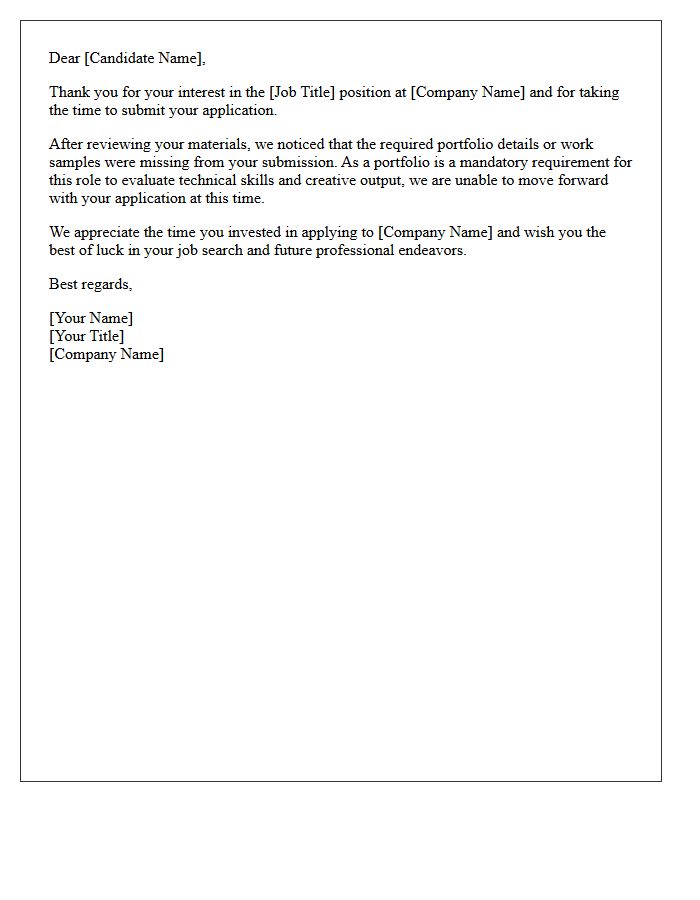
A rejection letter based on missing portfolio details should remain professional and constructive. Clearly state that the application cannot proceed because specific work samples are required to evaluate technical proficiency. Encourage the candidate to update their documentation and reapply in the future once their portfolio is complete. Providing this feedback helps maintain a positive employer brand while ensuring applicants understand that demonstrated experience is a critical requirement for the selection process. Being transparent about these missing requirements saves time for both the hiring team and the potential candidate.
Why was my portfolio submission rejected for being "insufficient"?
An insufficient rejection typically means the portfolio did not contain enough samples to demonstrate the required range of skills, or it lacked the specific technical depth and documentation required by the review committee.
What are the most common missing elements in a rejected portfolio?
Common omissions include a lack of process documentation (sketches or case studies), missing technical specifications, an inadequate number of diverse projects, or failing to include a required artist/professional statement.
How can I improve my portfolio after receiving an insufficiency notice?
To improve your submission, focus on quality over quantity by selecting projects that directly align with the program's criteria, adding detailed descriptions of your creative process, and ensuring all work is presented in a high-resolution, professional format.
Can I appeal the decision or resubmit my portfolio immediately?
Most institutions allow for resubmission during the next application cycle; however, you should review the specific rejection letter for an "intent to resubmit" clause, which may allow you to provide supplemental materials within a specific timeframe.
Does an insufficient portfolio rejection mean my work lacks talent?
No, an insufficient rejection is usually a critique of the volume or relevance of the evidence provided rather than a judgment on your inherent talent. It indicates that the current selection of work does not yet meet the specific evidence standards required for evaluation.

Comments