
Managing high-volume recruitment requires clear communication to maintain your employer brand. Sending a professional Volume Applicant Pool Rejection Letter ensures unsuccessful candidates feel respected while streamlining your HR workflow. Providing timely updates prevents uncertainty and fosters a positive reputation among potential future hires. To help you automate this process effectively, below are some ready to use template.
Image cover: Professional Rejection Letter Templates for Large Applicant Pools
Letter Samples List
- Standard Volume Applicant Pool Rejection Letter
- Future Opportunities Pool Rejection Letter
- High Volume Campaign General Rejection Letter
- Seasonal Staffing Volume Applicant Rejection Letter
- Entry Level Candidate Pool Rejection Letter
- Talent Network Opt-In Volume Rejection Letter
- Client Specific Volume Applicant Rejection Letter
- Resume Database Addition Volume Rejection Letter
- Temporary Role Applicant Pool Rejection Letter
- Initial Screening Volume Applicant Rejection Letter
- Post-Assessment Volume Candidate Rejection Letter
- General Application Pool Closing Rejection Letter
Standard Volume Applicant Pool Rejection Letter
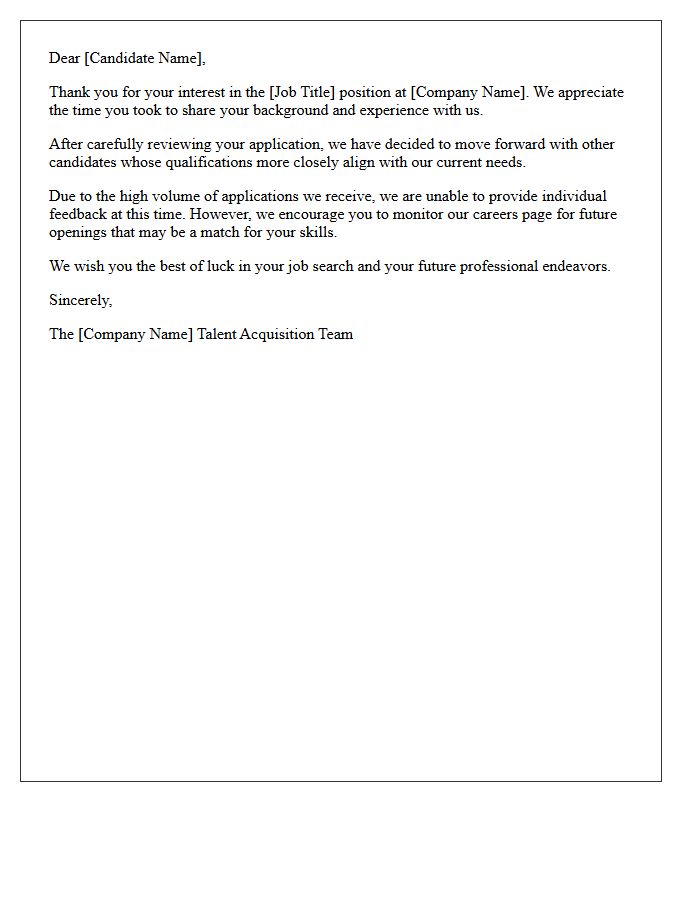
A standard volume applicant pool rejection letter is a formal notification sent to candidates who were not selected for a specific role. The primary purpose is to provide a professional closure while maintaining the company's brand reputation. It is essential to keep the tone respectful and concise, thanking the individual for their interest and time. While automated, the messaging should avoid overly robotic language. Ensuring a timely response helps candidates move forward in their search and fosters a positive candidate experience, which is vital for future talent acquisition and long-term organizational growth.
Future Opportunities Pool Rejection Letter
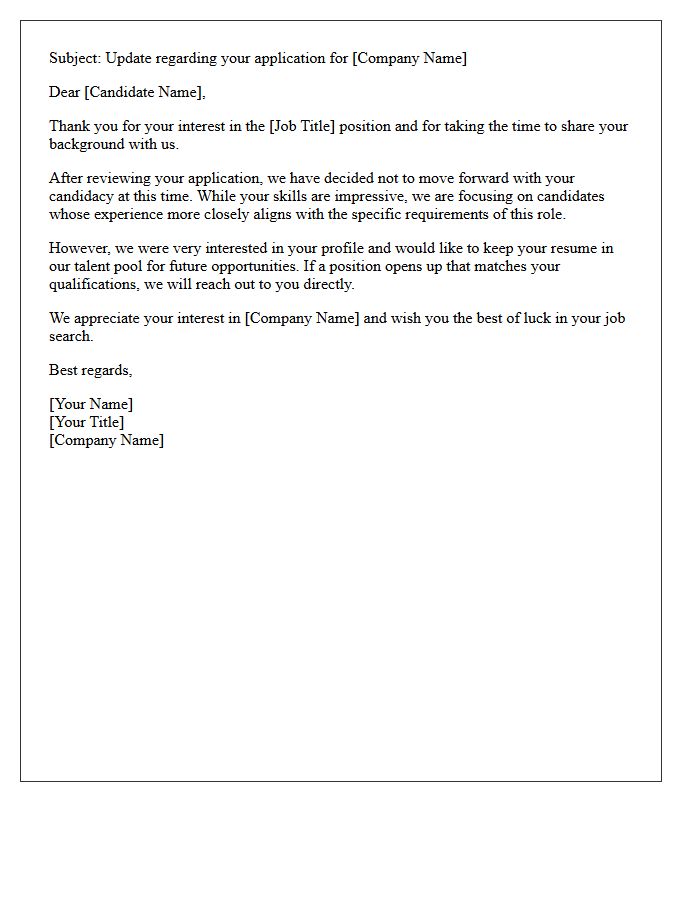
A Future Opportunities Pool rejection letter confirms that while you were not selected for a specific vacancy, the company intends to keep your resume in their talent pipeline. This soft rejection signifies that your qualifications met the benchmark, but another candidate was a better immediate fit. It is an invitation to maintain a professional relationship for upcoming roles. You should treat this as a positive networking signal; respond with a brief thank-you note to express continued interest, as it increases your visibility for unadvertised openings within the organization's future recruitment cycles.
High Volume Campaign General Rejection Letter
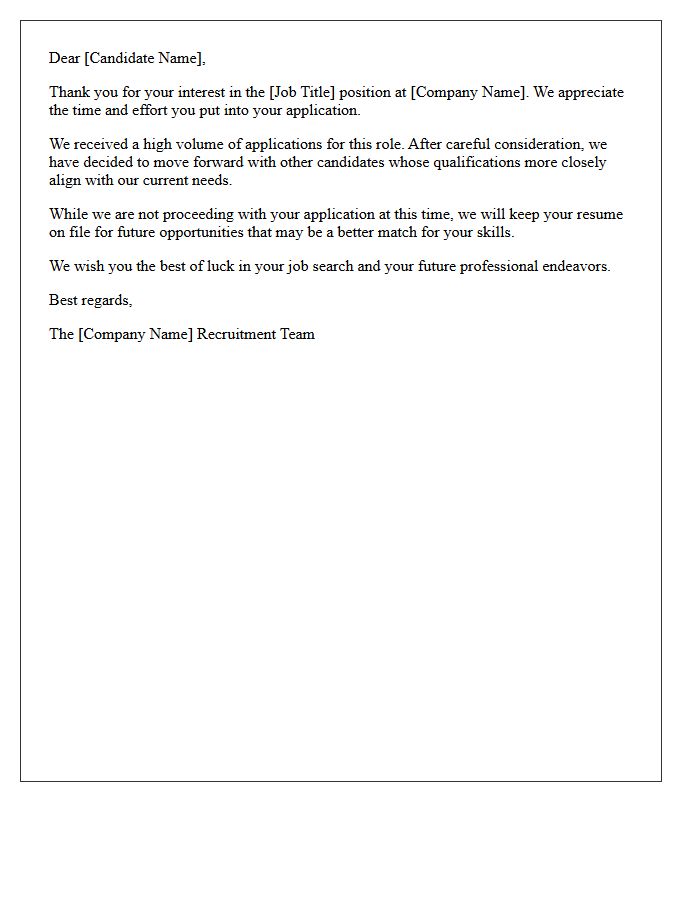
A high volume campaign general rejection letter is an automated notification sent when a candidate is disqualified from a large-scale recruitment process. The most important thing to know is that these letters are often triggered by Applicant Tracking Systems (ATS) based on specific filtering criteria. Receiving one typically means your application did not meet the predefined keyword requirements or technical benchmarks. To improve future outcomes, candidates should focus on tailoring resumes to specific job descriptions and ensuring all mandatory application fields are accurately completed to bypass automated filters.
Seasonal Staffing Volume Applicant Rejection Letter
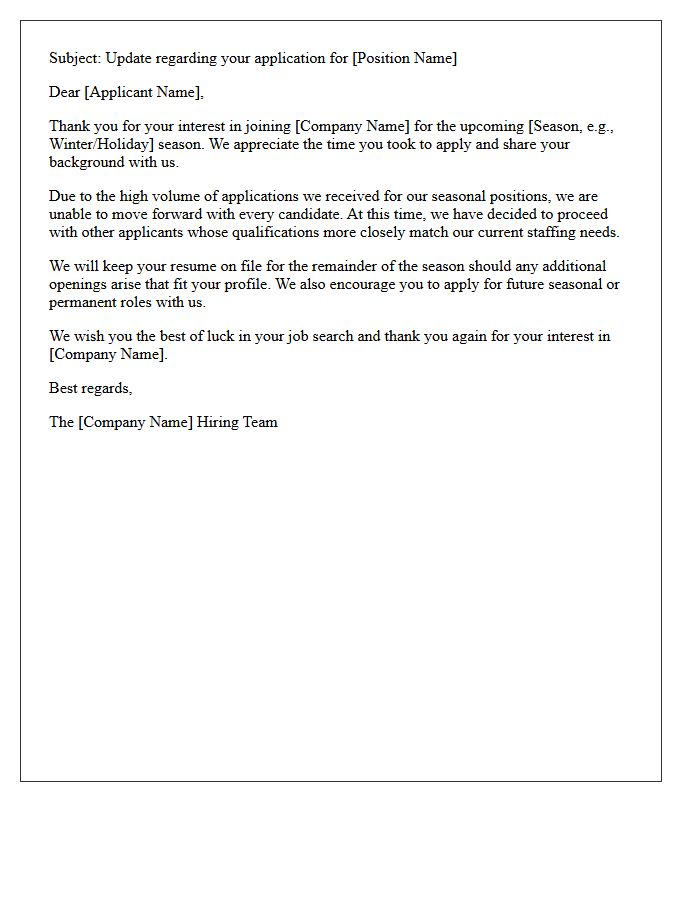
A seasonal staffing volume applicant rejection letter is an essential tool for maintaining employer branding during high-traffic hiring periods. When managing large candidate pools, it is vital to provide timely communication to ensure a positive candidate experience. This professional notification should clearly state the decision while expressing gratitude for the applicant's interest. By automating these responses, companies protect their reputation and keep the door open for future opportunities. Brief, respectful, and transparent messaging helps candidates move forward quickly while streamlining your high-volume recruitment workflow efficiently.
Entry Level Candidate Pool Rejection Letter
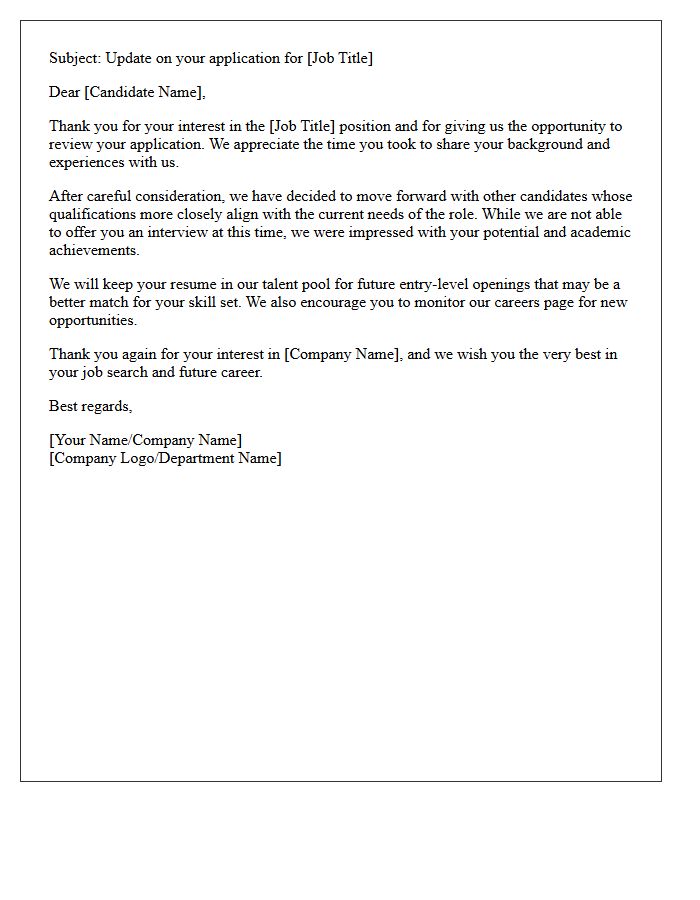
An entry level candidate pool rejection letter is a formal notification informing applicants they were not selected for a specific role. The primary purpose is to maintain a professional employer brand while providing closure. It is essential to use a courteous tone that encourages future applications. High-quality letters briefly explain that the decision was based on the current competitive talent pool and specific business needs. Timely communication ensures a positive candidate experience, preventing applicants from waiting indefinitely and allowing them to focus their job search efforts elsewhere.
Talent Network Opt-In Volume Rejection Letter
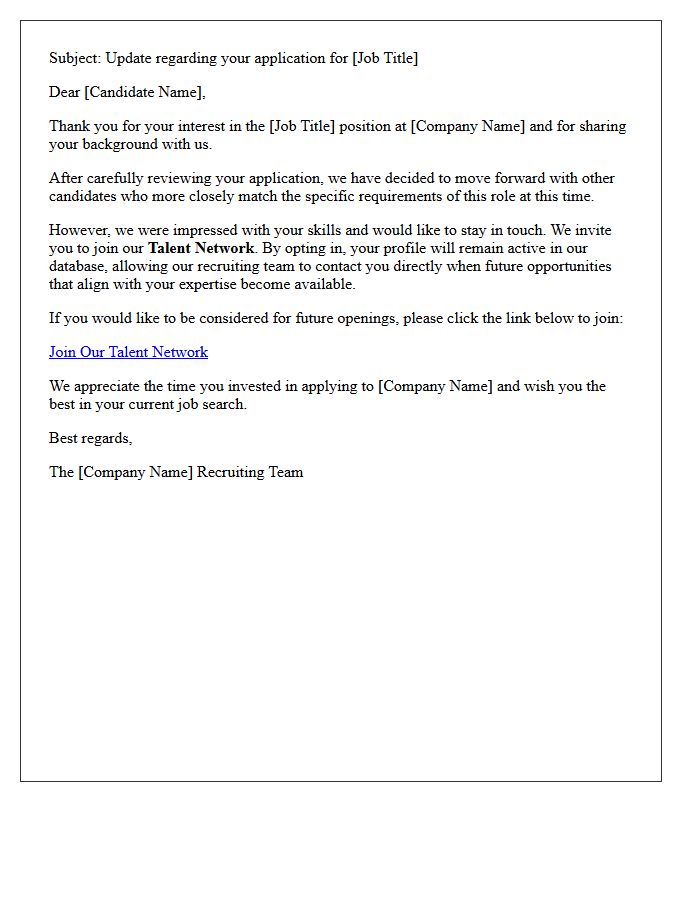
A Talent Network Opt-In Volume Rejection Letter informs candidates that their application was not selected due to a high volume of qualified applicants. This automated notification ensures a professional candidate experience by providing closure rather than silence. It allows organizations to maintain a positive employer brand while inviting unsuccessful applicants to remain in the talent community for future opportunities. Timely delivery of these letters is essential for maintaining recruitment transparency and managing expectations within a competitive job market.
Client Specific Volume Applicant Rejection Letter
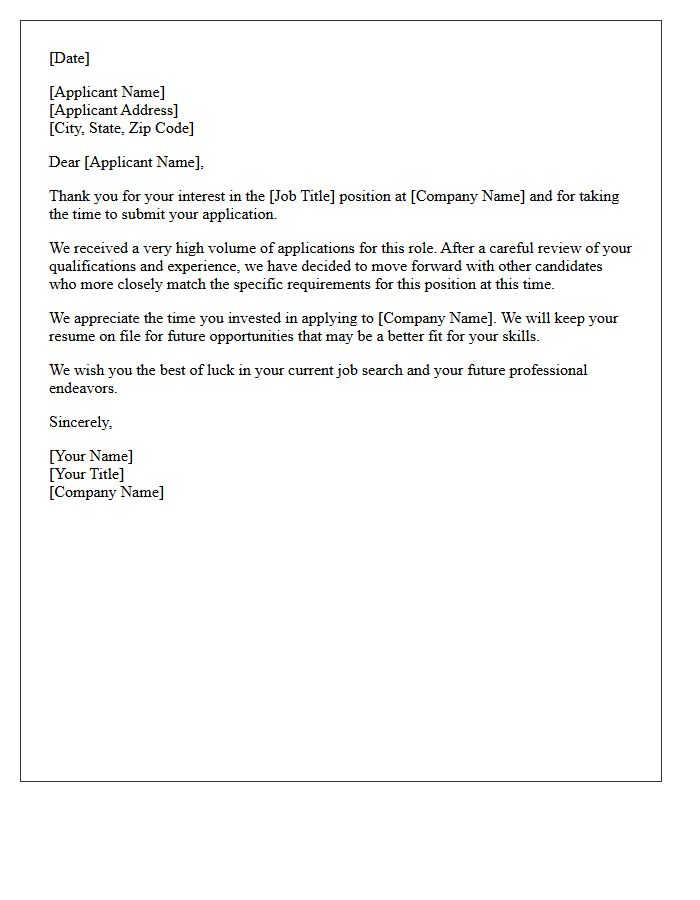
A Client Specific Volume Applicant Rejection Letter is a formal notification sent when a high volume of candidates necessitates a standardized disqualification process. It ensures professional communication while managing recruitment efficiency for specific job openings. Key elements include thanking the candidate, stating the decision clearly without disclosing sensitive internal metrics, and maintaining brand reputation. Using a structured template helps organizations mitigate legal risks and provides closure to applicants, ensuring a respectful transition despite the competitive selection environment common in large-scale hiring phases.
Resume Database Addition Volume Rejection Letter
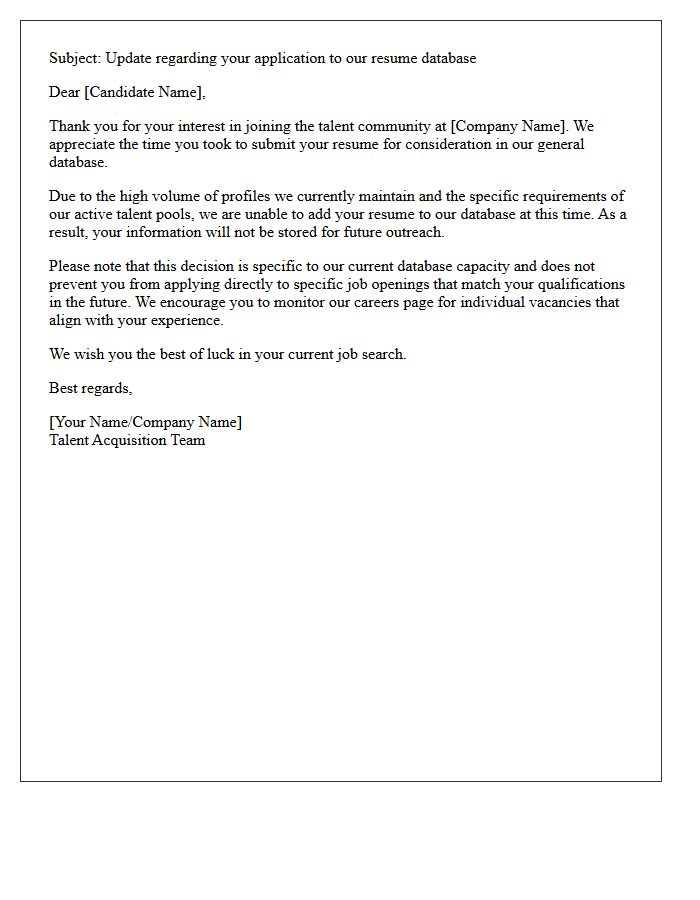
A Resume Database Addition Volume Rejection Letter is an automated notification sent when a company's applicant tracking system reaches its storage capacity or undergoes data purging. Receiving this notice often means your profile was not processed due to technical limitations rather than your specific qualifications. To ensure visibility, job seekers should optimize their resumes with relevant keywords and reapply during active hiring cycles. Understanding these volume-based rejections helps candidates focus on proactive networking and direct outreach to bypass automated database restrictions and secure human review.
Temporary Role Applicant Pool Rejection Letter
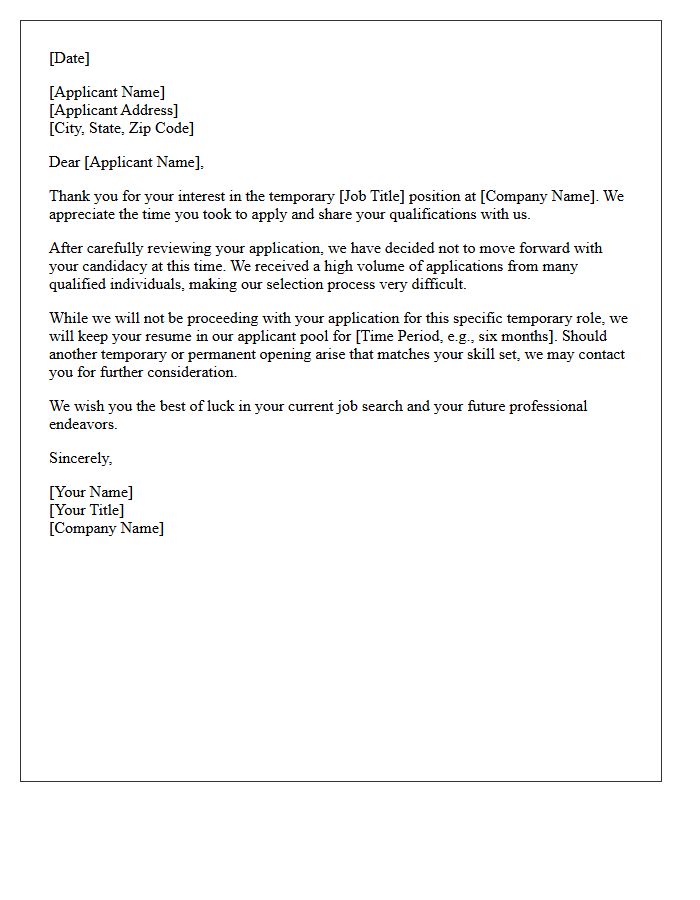
Receiving a rejection from a temporary role applicant pool means you were not selected for the current cycle, but your profile may remain in a database. It is essential to professionalize your follow-up by requesting feedback to improve future chances. These letters often signify high competition rather than a lack of qualifications. Ensure you update your resume regularly and continue applying for active openings, as pool rejections are frequently automated based on specific hiring criteria or immediate capacity limits within the organization's seasonal staffing needs.
Initial Screening Volume Applicant Rejection Letter
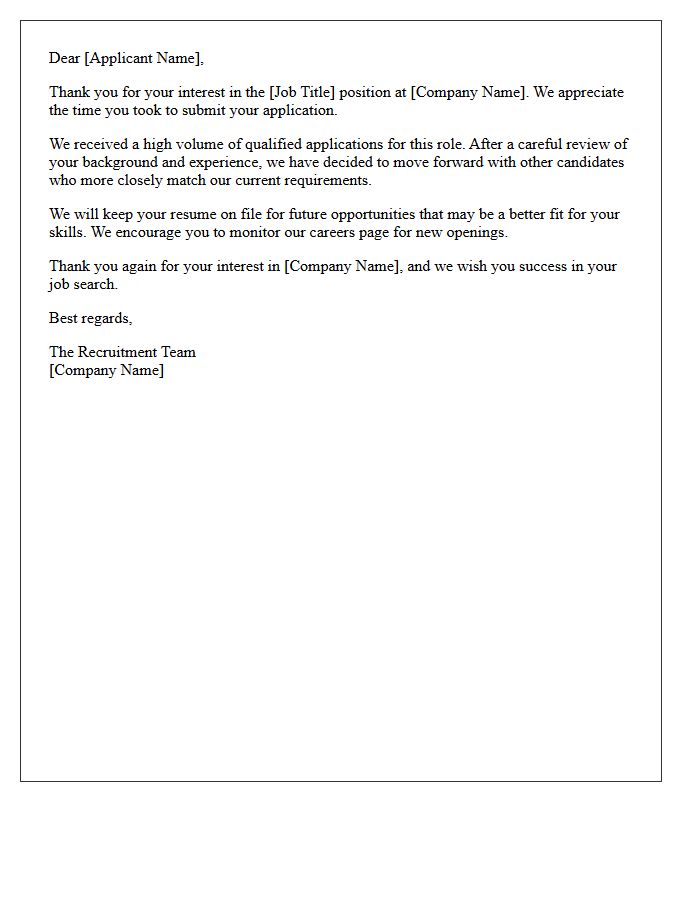
An Initial Screening Volume Applicant Rejection Letter is a professional notification sent to candidates who do not meet basic qualifications during the first phase of recruitment. When managing a high volume of resumes, clear communication is vital for maintaining a positive employer brand. These letters should be concise, polite, and neutral to mitigate legal risks. Promptly informing applicants that they are no longer being considered shows respect for their time while allowing your HR department to focus resources on top-tier talent moving forward in the hiring funnel.
Post-Assessment Volume Candidate Rejection Letter
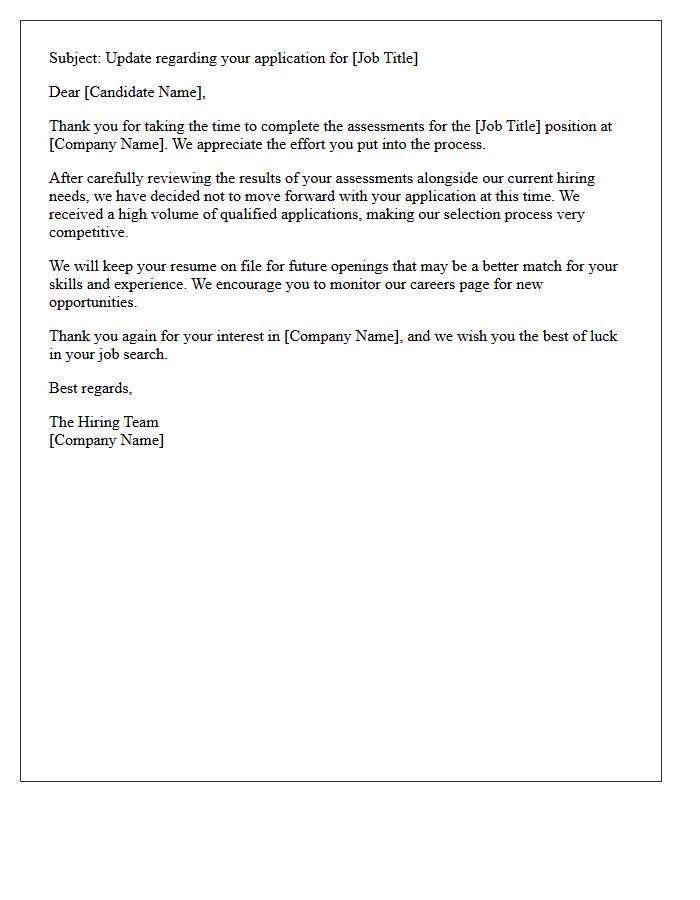
A post-assessment volume candidate rejection letter is a strategic communication tool used to notify multiple applicants simultaneously after testing. It is essential to maintain a professional employer brand by ensuring the message is clear, respectful, and timely. Providing constructive closure prevents candidate frustration and protects your company reputation. Automated templates should remain personalized and empathetic to improve the overall candidate experience, even when delivering negative news. Transparent communication helps manage high applicant volumes while fostering a positive perception of your organization's hiring integrity and operational efficiency.
General Application Pool Closing Rejection Letter
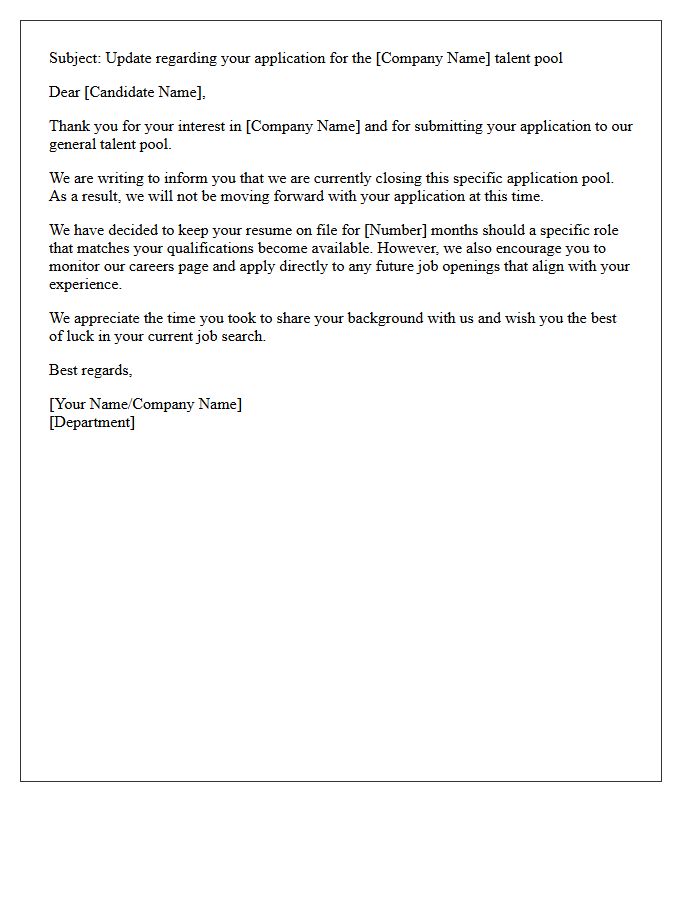
A General Application Pool Closing Rejection Letter informs candidates that a broad recruitment cycle has ended without a placement. This notice signifies that the hiring process for that specific period is officially complete. It is a professional courtesy ensuring applicants are not left waiting for updates. Receiving this does not necessarily reflect your skills, but rather indicates the position was filled or the talent pool was archived. Most organizations encourage future applications, so treat this as a signal to pursue new opportunities while maintaining a positive connection with the company's talent network.
What is a volume applicant pool rejection letter?
A volume applicant pool rejection letter is a standardized professional communication sent to a large group of candidates who were not selected for a specific job opening. It allows employers to maintain a positive employer brand by providing closure to all applicants efficiently.
When should a company send out bulk rejection emails?
Bulk rejection emails should be sent as soon as a hiring decision has been made or when a candidate no longer meets the necessary criteria for the role. Timely communication prevents "candidate ghosting" and improves the overall candidate experience during high-volume recruitment cycles.
What should be included in a high-volume candidate rejection letter?
A standard rejection letter should include the candidate's name, the specific job title, a clear statement that the application will not be moving forward, a brief thank you for their interest, and a note on whether you will keep their resume on file for future opportunities.
Can you personalize rejection letters when dealing with a large applicant pool?
Yes, personalization in volume rejection can be achieved using Applicant Tracking Systems (ATS) that utilize "merge tags" to insert the candidate's name and the specific role title. While the core message remains standardized, these small details help the email feel more professional and respectful.
Why is it important to notify unsuccessful applicants in a large pool?
Notifying all applicants protects your company's reputation and glassdoor ratings. Candidates who receive a polite and timely rejection are more likely to apply for other roles in the future and maintain a positive perception of your organization's professionalism.

Comments