
When a client requests changes to your standard contract, a formal Letter Rejecting Client-Proposed Amendments ensures your legal protections remain intact while maintaining a professional relationship. This document clearly explains why your original terms are necessary for risk management and operational consistency. To help you respond effectively, below are some ready to use template options.
Image cover: Professional Response Templates: Declining Client Requests for Terms of Business Amendments
Letter Samples List
- Letter Rejecting Proposed Amendments to Standard Recruitment Fee Structure
- Letter Declining Client Modifications to Candidate Ownership Period
- Letter Rejecting Extended Rebate Period Amendments in Terms of Business
- Letter Refusing Alterations to Standard Payment Terms and Invoicing
- Letter Rejecting Client-Proposed Changes to Liability and Indemnity Clauses
- Letter Declining Requested Modifications to Exclusivity and Retainer Agreements
- Letter Rejecting Amendments to Permanent Placement Guarantee Conditions
- Letter Refusing Client Revisions to Temporary Staffing Margin Rates
- Letter Rejecting Proposed Adjustments to Candidate Introduction Validity
- Letter Declining Amendments Due to Agency-Wide Compliance Policies
- Letter Rejecting Unacceptable Alterations to Non-Solicitation Clauses
- Letter Refusing Client-Proposed Contractual Penalty Clauses for Placements
- Letter Rejecting Amendments While Proposing Mutual Terms of Business Compromise
Letter Rejecting Proposed Amendments to Standard Recruitment Fee Structure
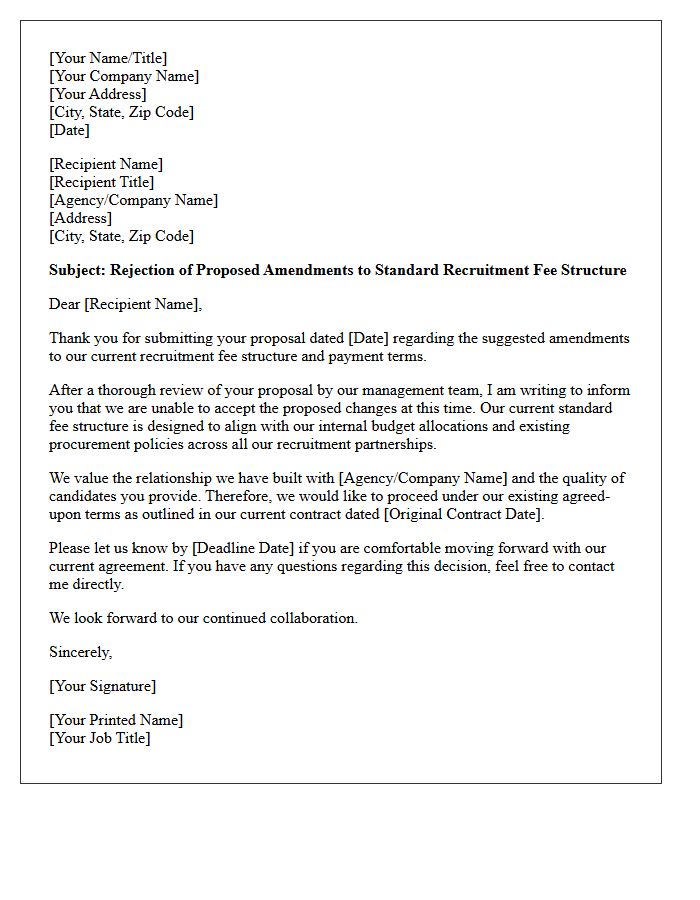
A letter rejecting proposed amendments to a standard recruitment fee structure serves as a formal notice to maintain existing commercial terms. It is essential to clearly state that the proposed changes are declined to prevent ambiguity in future billing. Highlighting specific clauses ensures both parties remain aligned with the original fee agreement. Providing a concise rationale for the rejection, such as budget constraints or market parity, helps preserve the professional partnership. Timely delivery of this document is crucial for contractual certainty and preventing unauthorized adjustments to placement costs or service level expectations.
Letter Declining Client Modifications to Candidate Ownership Period
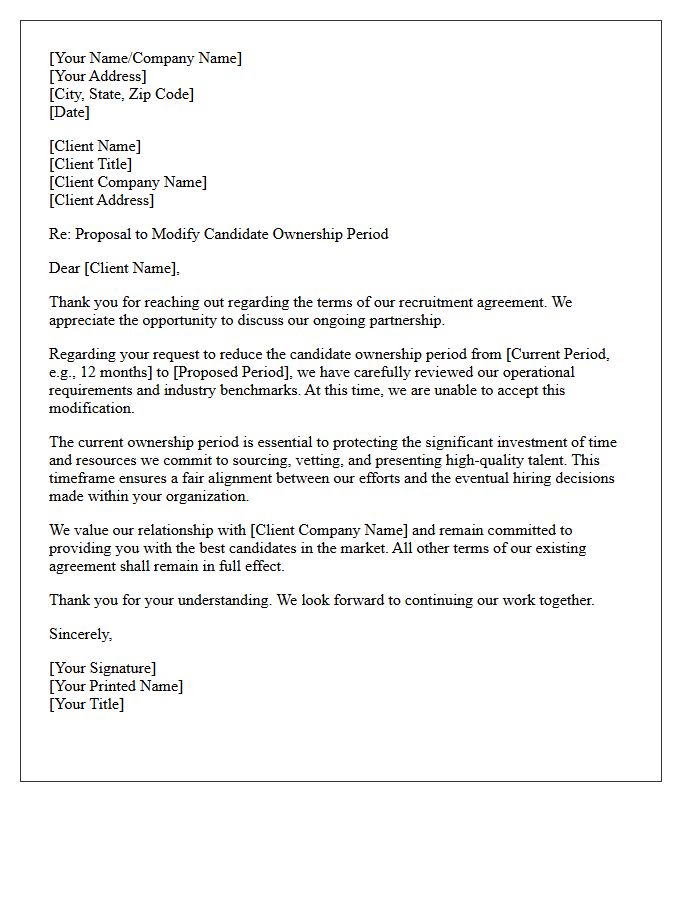
When drafting a letter declining client modifications to candidate ownership periods, it is essential to protect your recruitment revenue. Standard terms typically ensure a 12-month ownership duration for introduced talent. Reducing this timeframe increases the risk of "backdoor hires" without commission. Clearly communicate that these terms maintain the integrity of the search process and reflect the long-term value provided by your sourcing efforts. Stand firm on your referral period to ensure your agency receives fair compensation for identifying high-quality candidates who may be hired for future vacancies.
Letter Rejecting Extended Rebate Period Amendments in Terms of Business
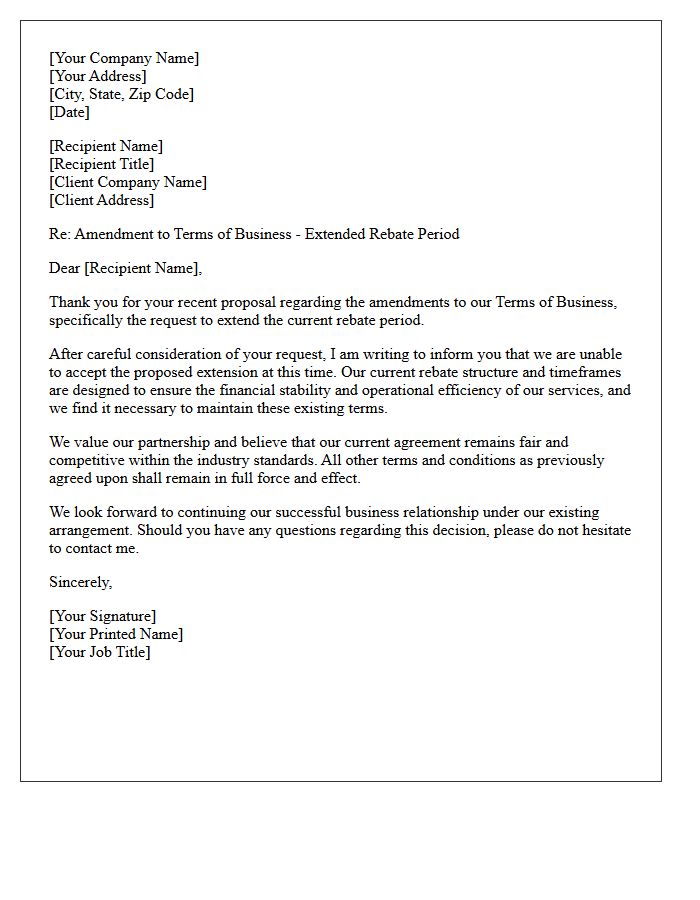
A formal letter rejecting extended rebate period amendments is essential for maintaining your firm's financial stability. This document officially declines a client's request to prolong payment cycles, ensuring your Terms of Business remain unchanged. By issuing a clear refusal, you protect your cash flow and prevent unfavorable precedents in contract negotiations. It is vital to reference the specific clauses being upheld to provide legal clarity. Sending this rejection promptly reinforces your standard payment terms and maintains professional boundaries regarding commercial credit risks and operational liquidity.
Letter Refusing Alterations to Standard Payment Terms and Invoicing
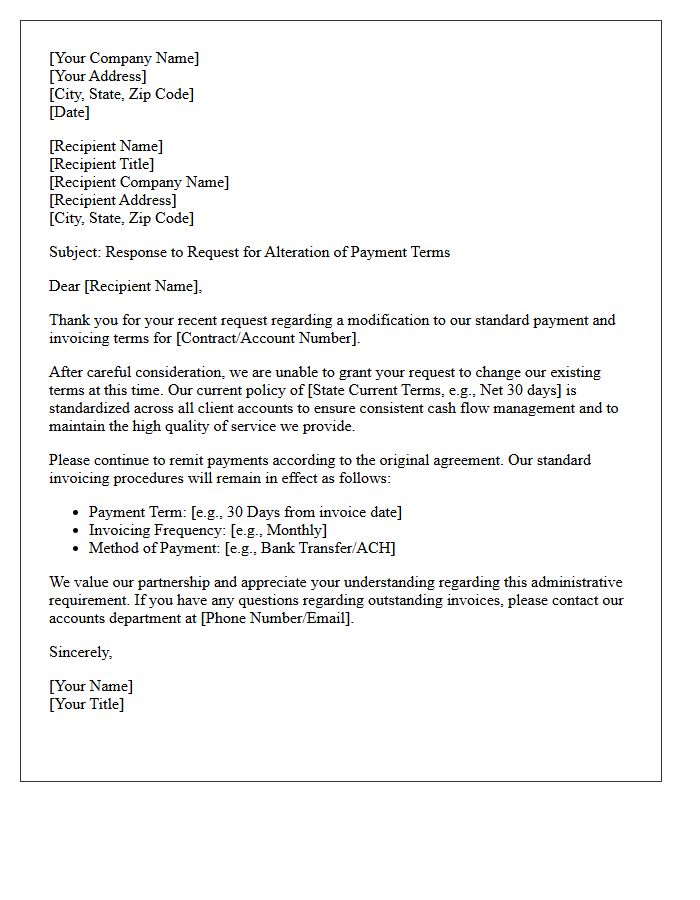
A letter refusing alterations to standard payment terms serves as a formal rejection of a client's request to modify agreed financial schedules. It is crucial to maintain cash flow stability while clearly stating that existing contractual obligations remain in effect. The response should be professional, explaining that standardized invoicing procedures ensure operational efficiency and fair treatment across all accounts. Firmly declining these changes protects your business from extended credit risk and administrative complications, reinforcing the necessity of adhering to the original payment cycles established during the initial negotiation phase.
Letter Rejecting Client-Proposed Changes to Liability and Indemnity Clauses
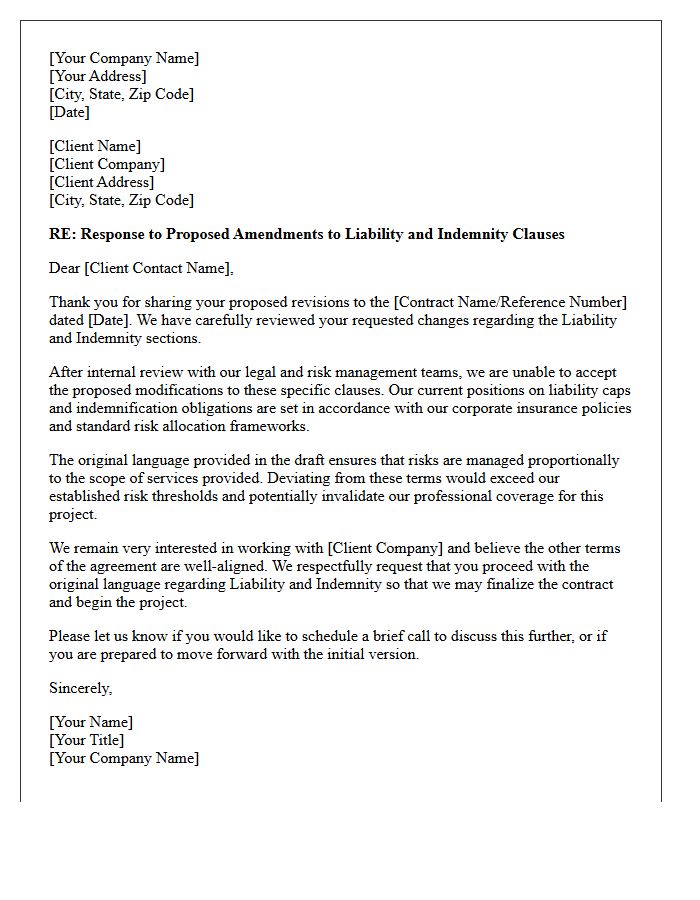
A formal rejection letter protects your business by maintaining established risk allocation standards. It clearly communicates that proposed modifications to liability and indemnity clauses are unacceptable due to insurance limitations or internal policy. By professionally declining these amendments, you prevent unlimited liability and ensure project stability. This document serves as a critical legal record, reaffirming that original contract terms remain the final basis for agreement. Using clear, firm language helps manage client expectations while safeguarding your company's financial exposure and long-term legal interests during professional negotiations.
Letter Declining Requested Modifications to Exclusivity and Retainer Agreements
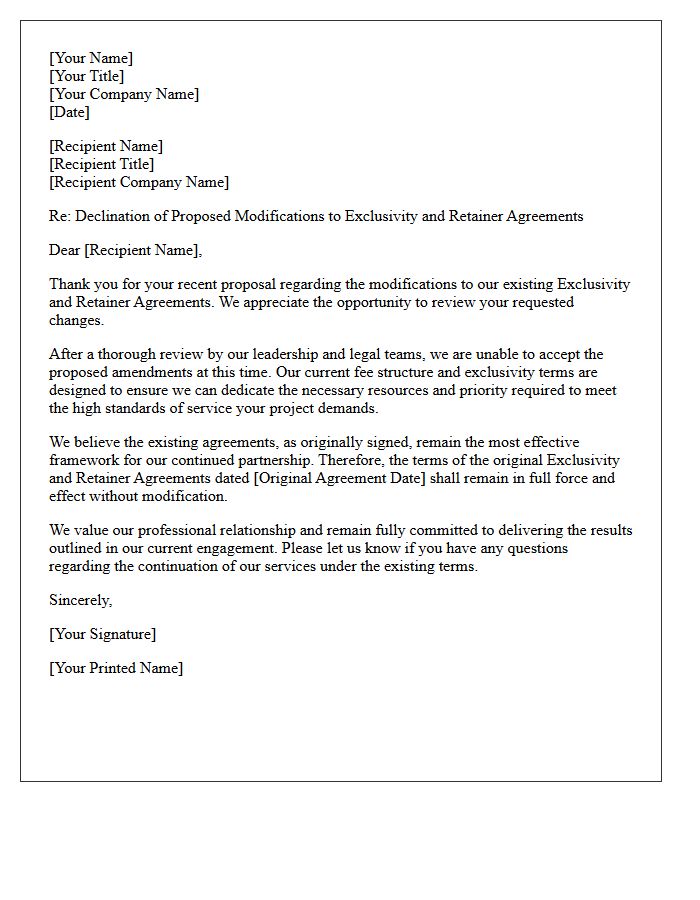
A letter declining requested modifications to exclusivity and retainer agreements serves as a formal notice that the original contract terms remain unchanged. It is essential to clearly reference the existing binding clauses to maintain legal consistency. The response should professionally address the counter-offer while reaffirming that current financial commitments and performance obligations are non-negotiable. Using precise language ensures that there is no ambiguity regarding the contractual status, protecting the interests of the party upholding the initial agreement and preventing unauthorized deviations from the established business relationship.
Letter Rejecting Amendments to Permanent Placement Guarantee Conditions
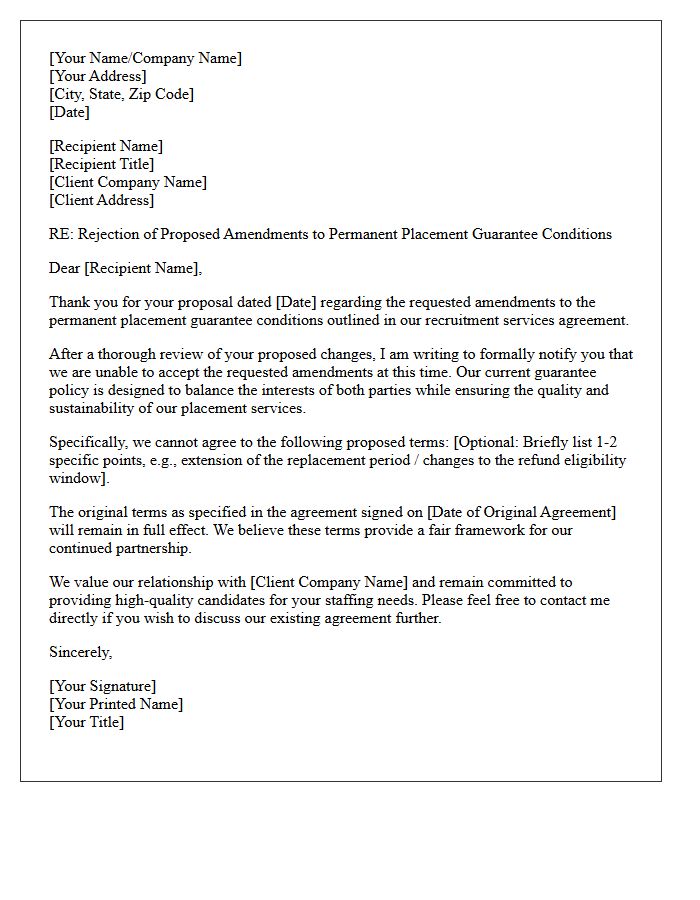
A letter rejecting amendments to permanent placement guarantee conditions is a formal notice sent by a recruitment agency to a client. It declines proposed changes to the original service agreement, typically regarding refund periods or replacement terms. The document must clearly state the rejection while citing specific contract clauses to maintain legal consistency. Effective communication ensures that the existing guarantee policy remains enforceable. It is essential for protecting the agency's financial interests and ensuring that both parties understand their ongoing contractual obligations without ambiguity or unintended liability shifts.
Letter Refusing Client Revisions to Temporary Staffing Margin Rates
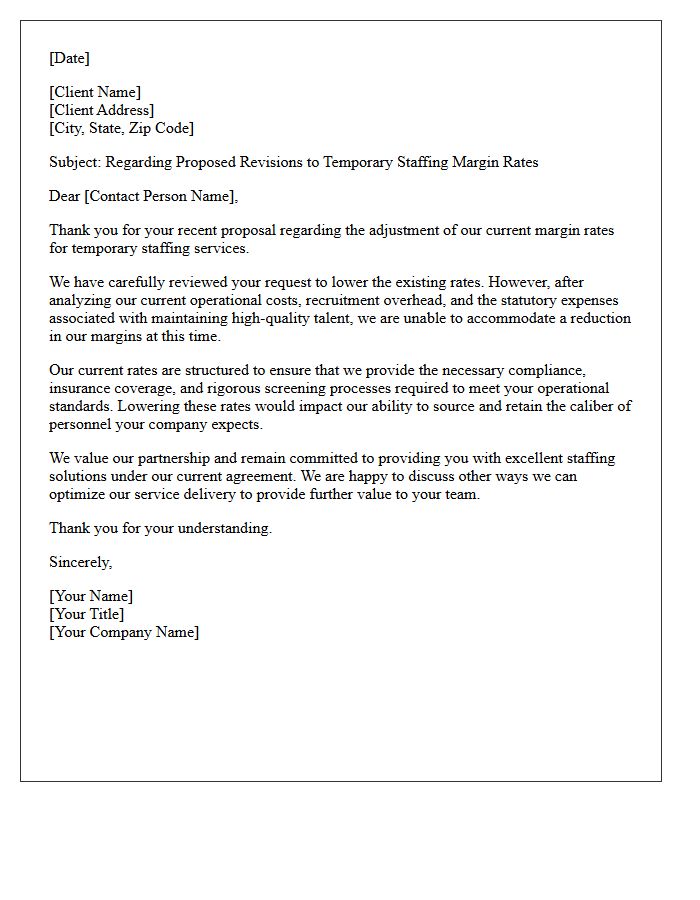
A formal letter refusing client revisions to temporary staffing margin rates must justify current pricing based on service quality and operational costs. It is essential to explain that existing margins cover statutory obligations, recruiter expertise, and overhead to maintain compliance. Clearly state that lowering rates would compromise the ability to source top-tier talent. This professional response aims to protect profitability while reaffirming the value of the partnership. By maintaining firm pricing, agencies ensure long-term sustainability without sacrificing the quality of personnel provided to the client's workforce.
Letter Rejecting Proposed Adjustments to Candidate Introduction Validity
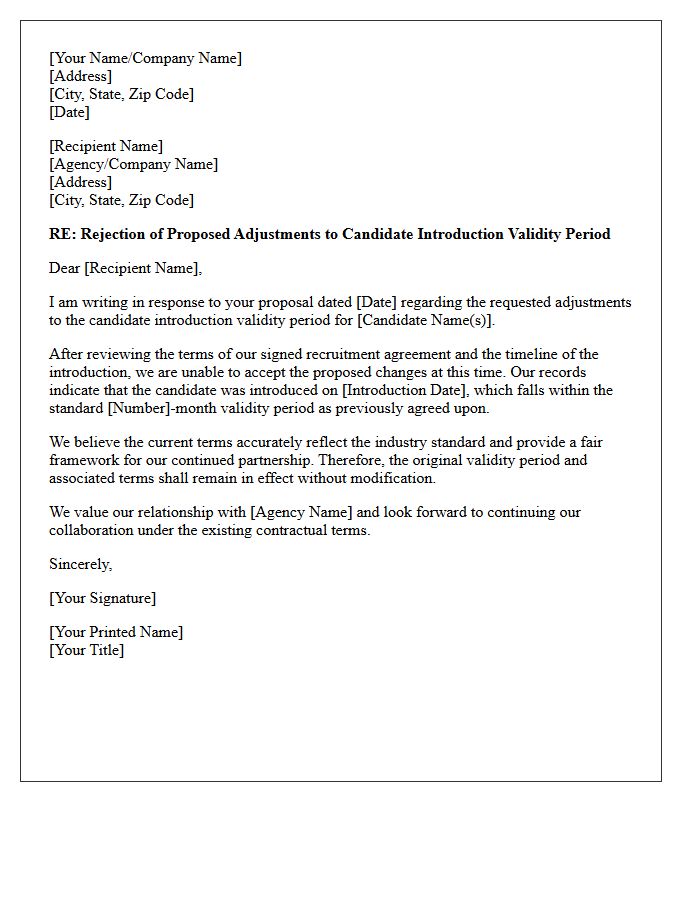
A formal rejection letter contesting proposed adjustments must clearly articulate why the candidate's introduction validity remains sound. It is essential to present objective evidence or specific performance data that justifies the original evaluation criteria. By systematically addressing each disputed point, the sender reinforces the integrity of the initial assessment process. This document serves as a vital record in maintaining standardized recruitment protocols and ensuring that valid candidate entries are not unfairly altered or dismissed without substantive merit or verified procedural errors.
Letter Declining Amendments Due to Agency-Wide Compliance Policies
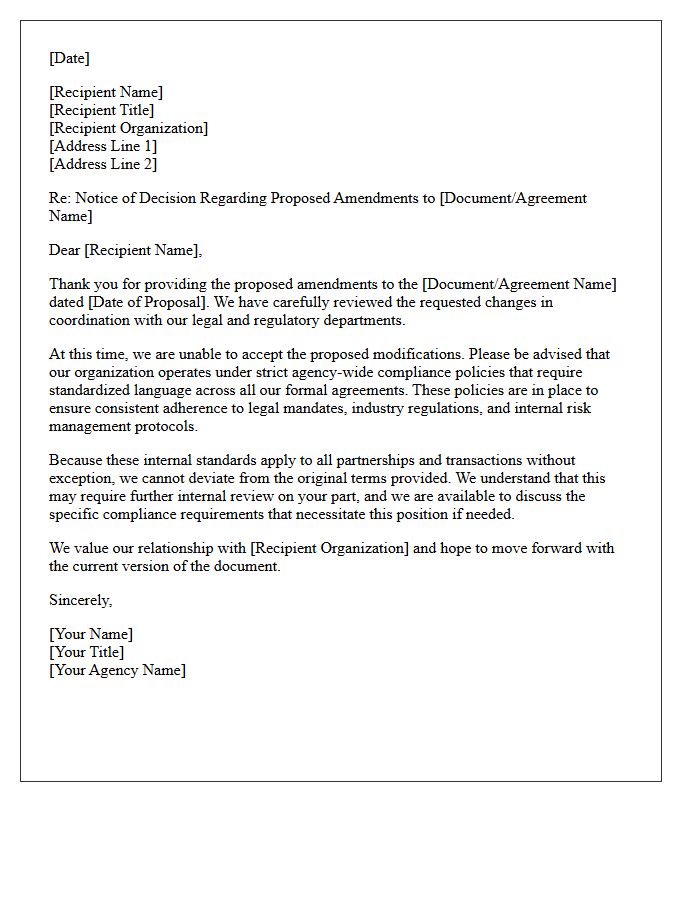
A formal letter declining amendments based on agency-wide compliance policies ensures regulatory consistency across all operations. When a request conflicts with established legal frameworks or internal governance standards, the agency must prioritize institutional integrity over individual contract modifications. This refusal is typically non-negotiable, as exceptions could create legal vulnerabilities or operational precedents. Clear communication regarding these mandatory requirements helps maintain transparency and protects the organization from non-compliance risks while defining the boundaries of professional agreements.
Letter Rejecting Unacceptable Alterations to Non-Solicitation Clauses
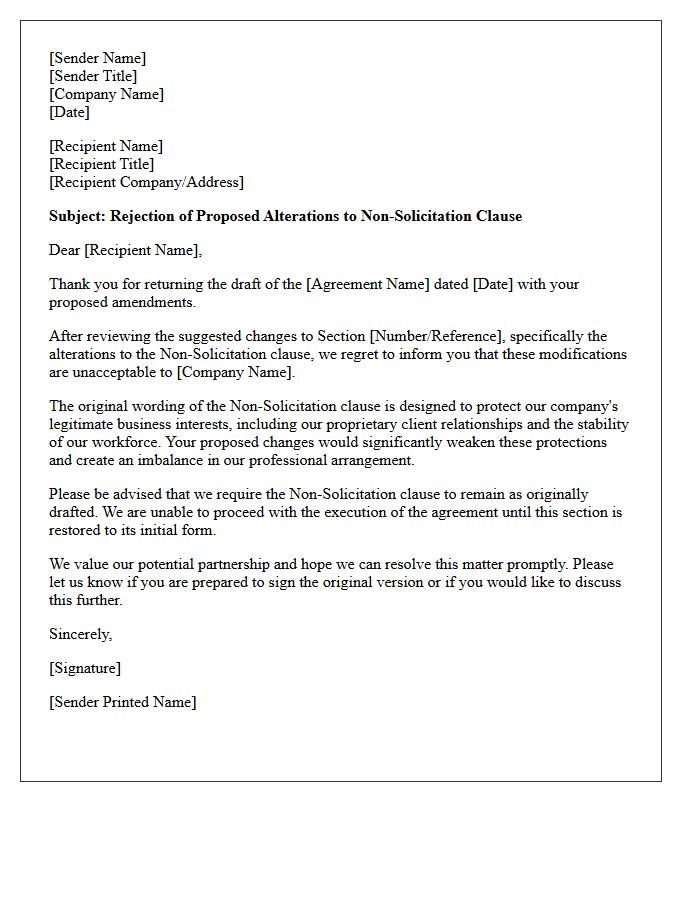
A formal letter rejecting unacceptable alterations to non-solicitation clauses is essential for protecting your company's client relationships and workforce. When a counterparty attempts to weaken these terms, you must issue a clear written refusal to maintain enforceable restrictive covenants. This document ensures that competitors cannot poach your employees or divert customers, preserving your business stability and competitive advantage. Explicitly stating that the original protections are non-negotiable prevents future legal ambiguity and reinforces the contractual integrity of your professional agreements during negotiations or employment departures.
Letter Refusing Client-Proposed Contractual Penalty Clauses for Placements
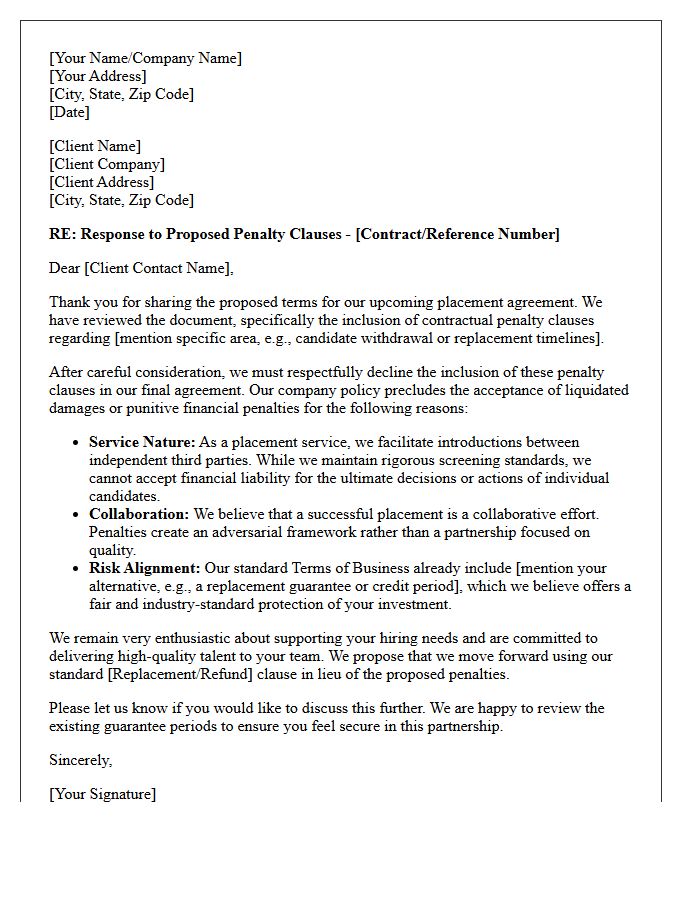
When responding to a client's demand for penalty clauses, it is vital to emphasize that such terms often constitute unenforceable penalties under contract law. Instead of punitive measures, propose liquidated damages that reflect a genuine pre-estimate of loss. Explain that standard recruitment fees are contingent on success, and additional penalties create an imbalance of risk. By refusing these clauses, you protect your agency from disproportionate financial liability while maintaining a focus on service quality and professional partnership. Always offer alternative performance guarantees or rebate structures to ensure mutual accountability without legal risk.
Letter Rejecting Amendments While Proposing Mutual Terms of Business Compromise
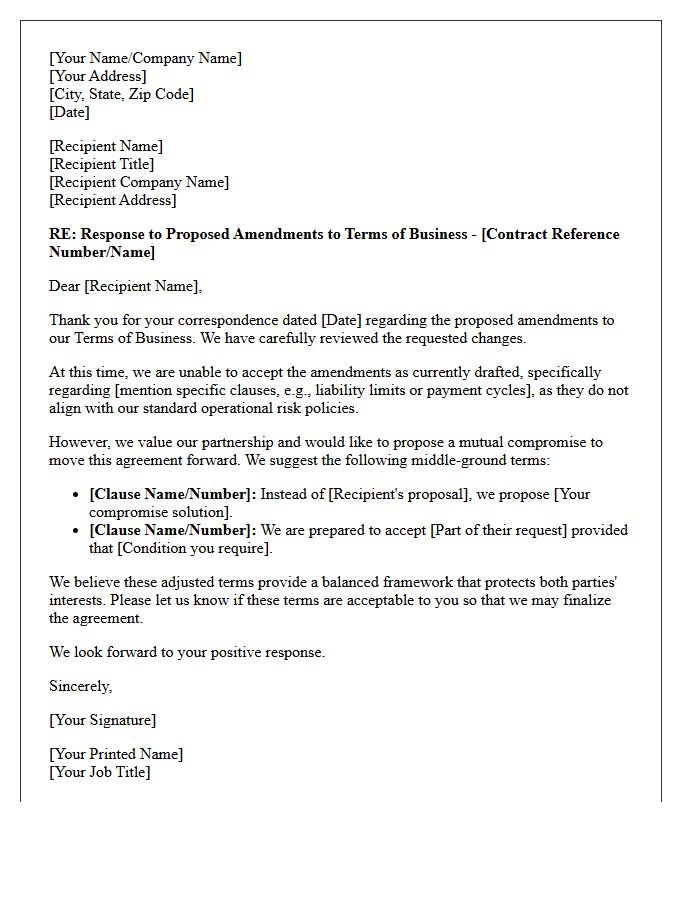
When a party issues a Letter Rejecting Amendments, they formally decline proposed changes to a contract while offering a mutual compromise to sustain the partnership. This document serves as a strategic counter-offer, balancing legal protection with commercial flexibility. It is essential to clearly state which specific terms are unacceptable while proposing alternative business terms that satisfy both parties' core interests. Using this approach helps avoid a stalemate, ensuring that contractual negotiations continue productively without fully terminating the underlying agreement or damaging the professional relationship.
Why is the company rejecting the proposed amendments to the Terms of Business?
The proposed amendments were rejected because they deviate significantly from our standard risk allocation and operational procedures, which are designed to ensure consistency and service quality for all clients.
Can the client still work with the company if the amendments are rejected?
Yes, the rejection of amendments means our original Terms of Business remain in effect; service can proceed immediately upon the client's formal acceptance of the standard agreement.
Is the rejection of these contract changes open to further negotiation?
While the current letter serves as a formal rejection of the specific terms proposed, we remain open to discussing alternative solutions that protect both parties' interests without compromising our core business model.
What happens to the pending project during this contract dispute?
Work on the project is generally paused until a formal agreement is signed; however, we aim to resolve these administrative differences quickly to prevent any impact on your delivery timelines.
Who should the client contact to discuss the reasoning behind the rejection?
Clients are encouraged to contact their dedicated account manager or our legal department to schedule a call for a detailed walkthrough of our standard compliance requirements.

Comments