
Accurate financial reporting requires a formal Inventory Valuation and Observation Representation Letter to confirm stock quantities and pricing methods. This document ensures management takes responsibility for asset integrity during audits, reducing valuation risks and ensuring regulatory compliance. It serves as a vital bridge between physical counts and balance sheet accuracy. Below are some ready to use template.
Image cover: Professional Templates for Inventory Valuation and Observation Representation Letters
Letter Samples List
- Inventory Valuation And Observation Representation Letter
- Management Representation Letter For Inventory Observation
- Auditor Inventory Valuation Confirmation Letter
- Inventory Count And Condition Representation Letter
- Obsolete And Slow-Moving Inventory Valuation Letter
- Third-Party Inventory Custodian Confirmation Letter
- Client Representation Letter For Inventory Pricing
- Inventory Existence And Completeness Representation Letter
- Work-In-Progress Inventory Valuation Representation Letter
- Consigned Inventory Acknowledgment And Valuation Letter
- Year-End Inventory Observation Audit Letter
- Inventory Impairment And Lower Of Cost Or Market Letter
- Subsequent Events Inventory Representation Letter
- Raw Materials Valuation And Count Representation Letter
- Finished Goods Inventory Audit Representation Letter
Inventory Valuation And Observation Representation Letter
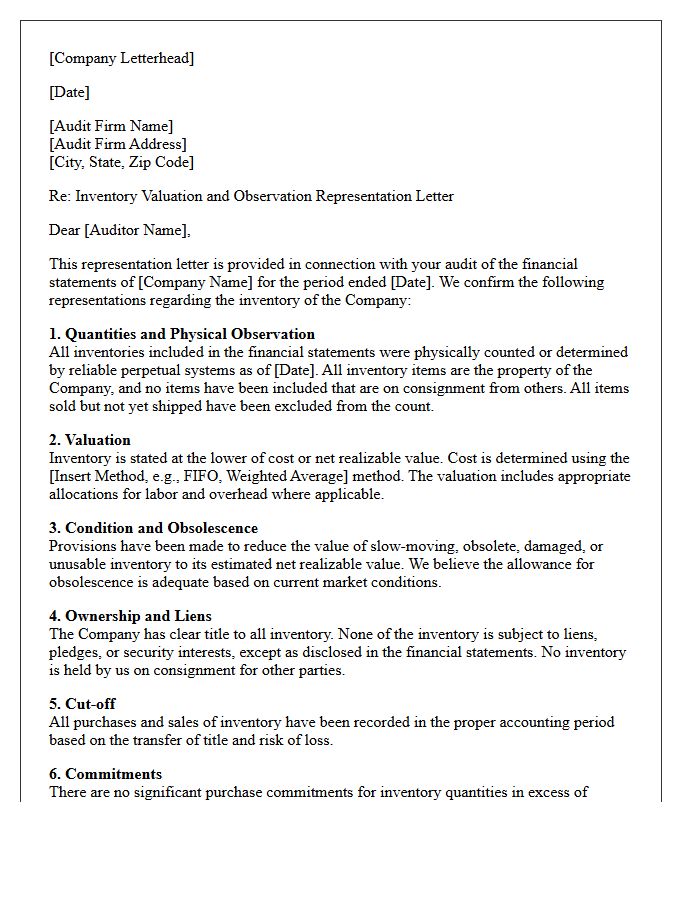
The Inventory Valuation and Observation Representation Letter is a formal document provided by management to auditors to confirm the accuracy of inventory assertions. It verifies that physical counts were performed correctly, valuation methods like FIFO or LIFO were consistently applied, and obsolete goods were properly written down. This letter mitigates auditor risk by ensuring management accepts responsibility for the existence and condition of assets. It serves as essential audit evidence, confirming that recorded inventory reflects the true financial position of the company without material misstatements or hidden liabilities.
Management Representation Letter For Inventory Observation
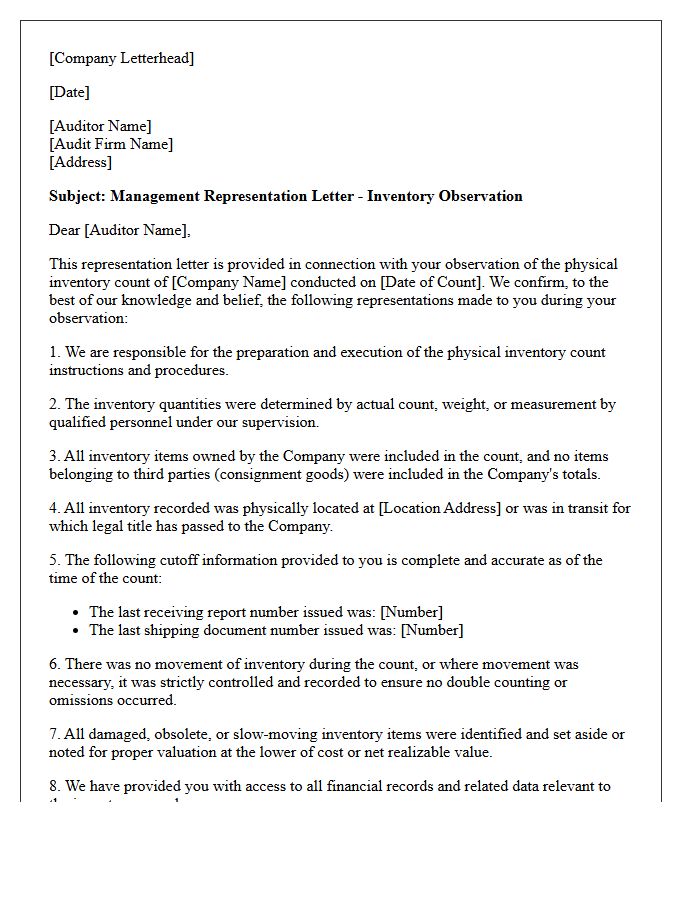
A Management Representation Letter for inventory observation is a formal document provided by client management to auditors. It confirms that the inventory quantities, conditions, and ownership recorded during the physical count are accurate and complete. This letter serves as audit evidence, acknowledging management's responsibility for the financial statements and disclosing any known discrepancies, obsolete stock, or pledged goods. It bridge the gap between physical observation and the final valuation, ensuring management takes full legal accountability for the reported assets before the audit report is finalized.
Auditor Inventory Valuation Confirmation Letter
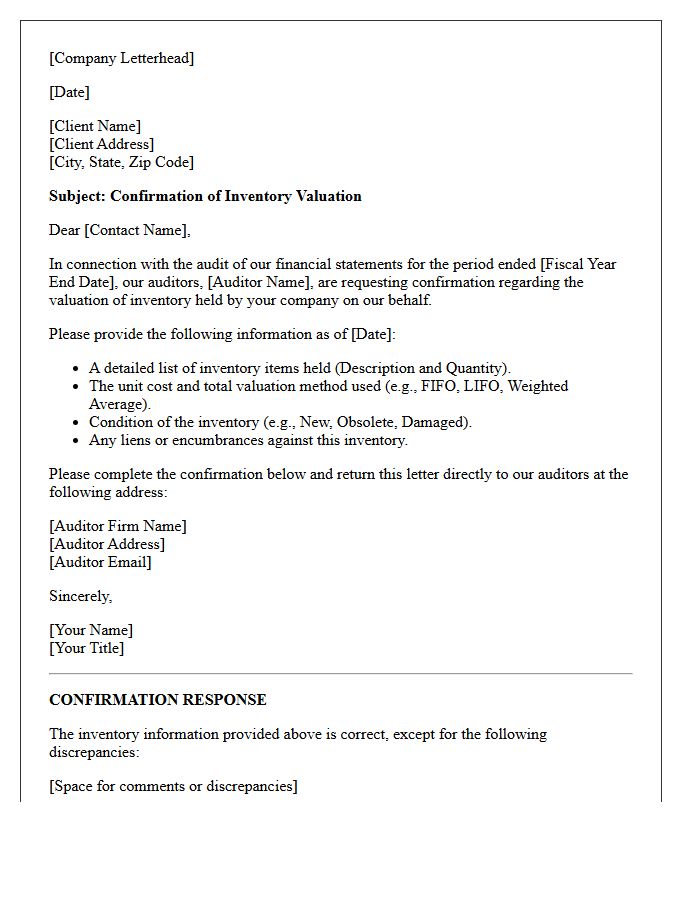
An Auditor Inventory Valuation Confirmation Letter is a formal request sent to third parties to verify the existence and monetary worth of stock held off-site. It serves as critical audit evidence to ensure that financial statements accurately reflect asset values. By confirming quantities and conditions, auditors mitigate risks of material misstatement. This process validates that inventory is recorded at the lower of cost or net realizable value, ensuring compliance with accounting standards and providing stakeholders with assurance regarding the company's reported inventory valuation accuracy.
Inventory Count And Condition Representation Letter
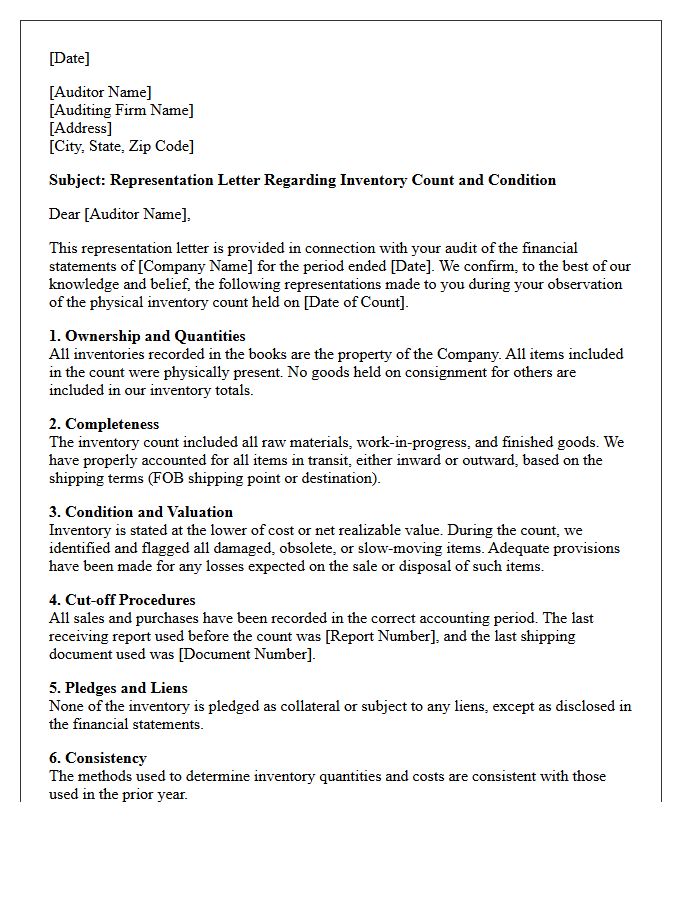
The Inventory Count and Condition Representation Letter is a formal document issued by management to auditors. It provides written assurance that the physical existence, ownership, and quality of stock are accurately reported. This letter confirms that all inventory items were properly counted and that any obsolete or damaged goods have been appropriately written down to their net realizable value. By signing this, management accepts full responsibility for the valuation and integrity of inventory data presented within the financial statements, reducing the risk of material misstatements during the audit process.
Obsolete And Slow-Moving Inventory Valuation Letter
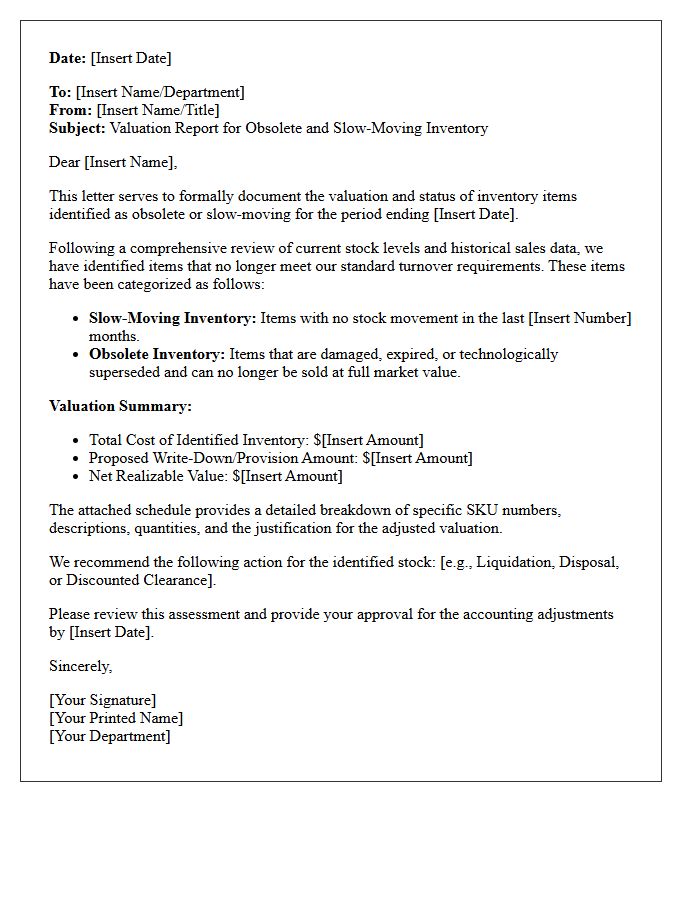
An Obsolete and Slow-Moving (OSM) Inventory Valuation Letter is a critical accounting document used to justify write-downs or reserve adjustments for stock that has lost market value. It provides a formal analysis of inventory aging, decreased demand, or physical deterioration to ensure compliance with GAAP or IFRS standards. By accurately documenting the Net Realizable Value, businesses prevent overstating assets on the balance sheet and maintain financial transparency for auditors and stakeholders during year-end reporting.
Third-Party Inventory Custodian Confirmation Letter
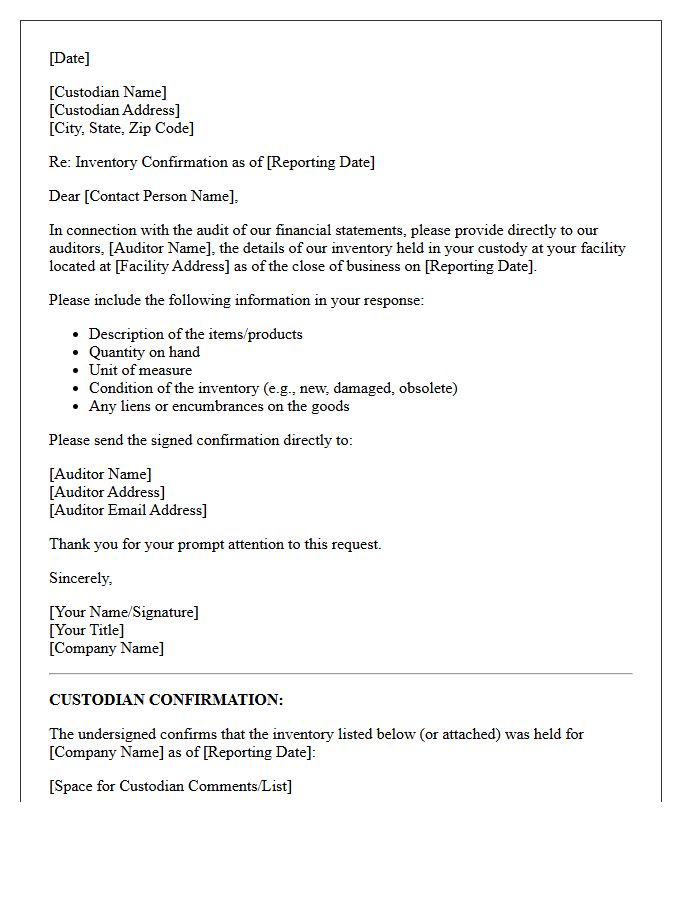
A Third-Party Inventory Custodian Confirmation Letter is a vital audit tool used to verify the existence and ownership of stock held externally. Auditors send this request to warehouses or consignees to obtain independent evidence regarding quantities and condition. This process mitigates the risk of material misstatement and ensures inventory valuation accuracy on financial statements. It is a mandatory procedure under auditing standards when physical observation is not feasible, providing a secure paper trail that confirms assets are properly accounted for and free of undisclosed liens or encumbrances.
Client Representation Letter For Inventory Pricing
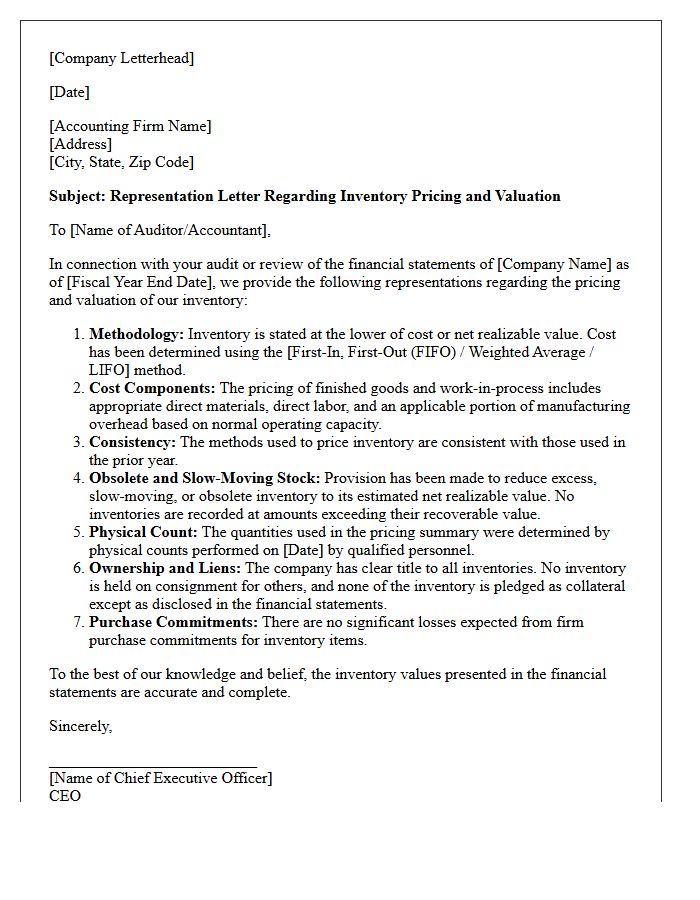
A client representation letter for inventory pricing is a formal document where management confirms the accuracy of stock valuations to auditors. It ensures that inventory is recorded at the lower of cost or net realizable value, reflecting true market conditions. By signing this, officials take full responsibility for the pricing methods used and the disclosure of any obsolete or damaged items. This letter serves as critical audit evidence, protecting auditors by documenting that the financial statements regarding inventory valuation are based on honest, complete information provided by the client.
Inventory Existence And Completeness Representation Letter
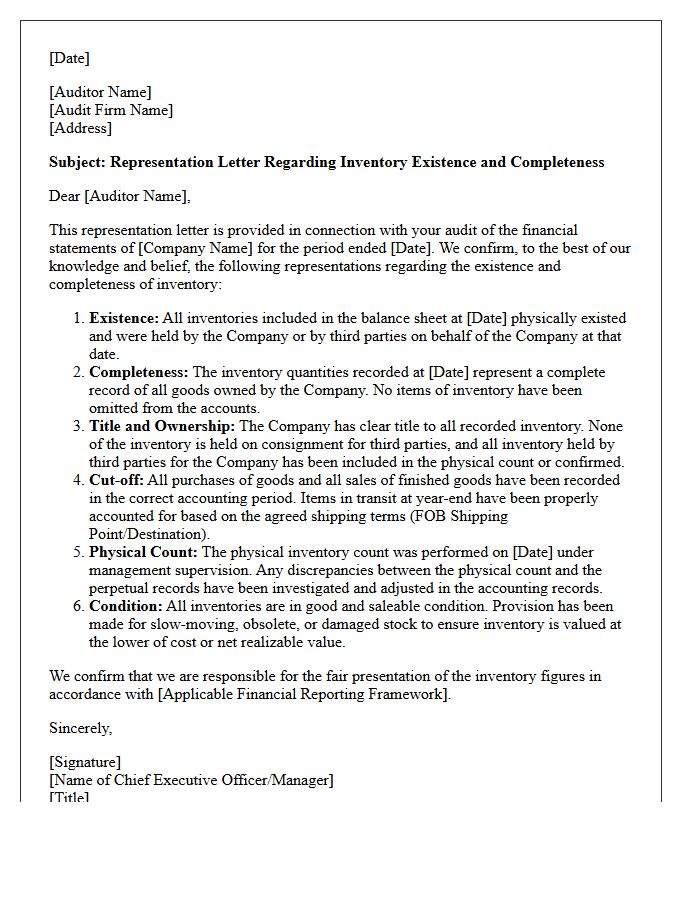
An Inventory Existence and Completeness Representation Letter is a formal document provided by management to auditors to confirm that all listed stock assets physically exist and are fully recorded. This letter serves as critical audit evidence, affirming that the financial statements reflect all owned goods without omissions. It clarifies management's responsibility for accurate valuation and ownership, ensuring that obsolete or damaged items are appropriately disclosed. By signing this, leadership validates the integrity of inventory data, reducing the risk of material misstatements regarding the company's current assets and overall financial health.
Work-In-Progress Inventory Valuation Representation Letter
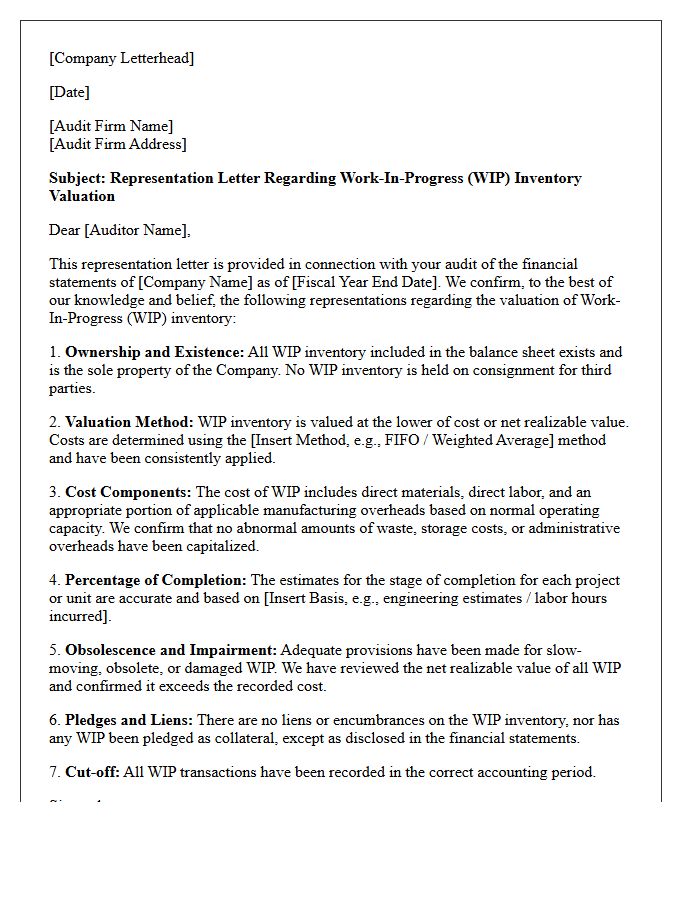
A Work-In-Progress (WIP) Inventory Valuation Representation Letter is a formal document where management confirms the accuracy of unfinished goods' values. It ensures that labor, overhead, and raw material costs are correctly allocated according to accounting standards. This letter mitigates audit risks by providing written assurance that the inventory is not overstated and reflects its net realizable value. It acts as a critical internal control, protecting the integrity of financial statements by documenting the methodology used to estimate the stage of completion for inventory assets.
Consigned Inventory Acknowledgment And Valuation Letter
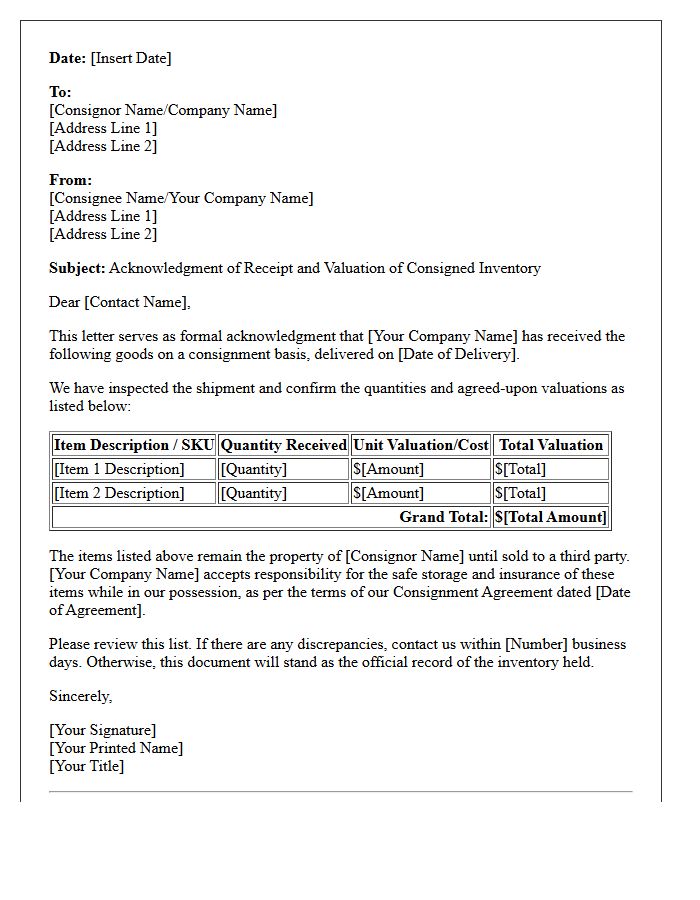
A Consigned Inventory Acknowledgment and Valuation Letter is a formal document confirming that a consignee holds goods owned by a consignor. It serves as a legal record for asset verification and audit purposes. This letter explicitly states the quantity and current market value of the items held in custody. By signing this acknowledgment, the bailee assumes responsibility for the physical protection of the stock while ensuring accurate financial reporting for the owner's balance sheet. It prevents discrepancies regarding ownership rights and inventory valuation during fiscal reviews.
Year-End Inventory Observation Audit Letter
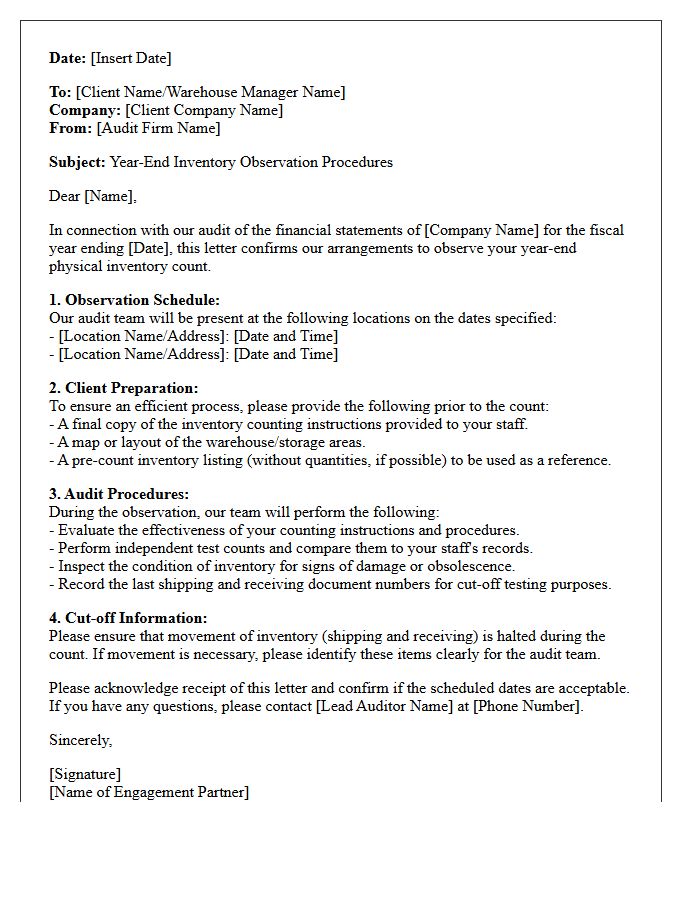
The Year-End Inventory Observation Audit Letter is a formal notification sent by external auditors to coordinate the physical count of stock. This critical document outlines the audit procedures, required documentation, and specific locations to be inspected. It ensures that the company's recorded inventory balances exist and are accurately valued for financial reporting. Timely preparation and clear communication are essential to minimize discrepancies, fulfill regulatory requirements, and provide the necessary evidence for an unqualified audit opinion regarding the organization's current assets.
Inventory Impairment And Lower Of Cost Or Market Letter
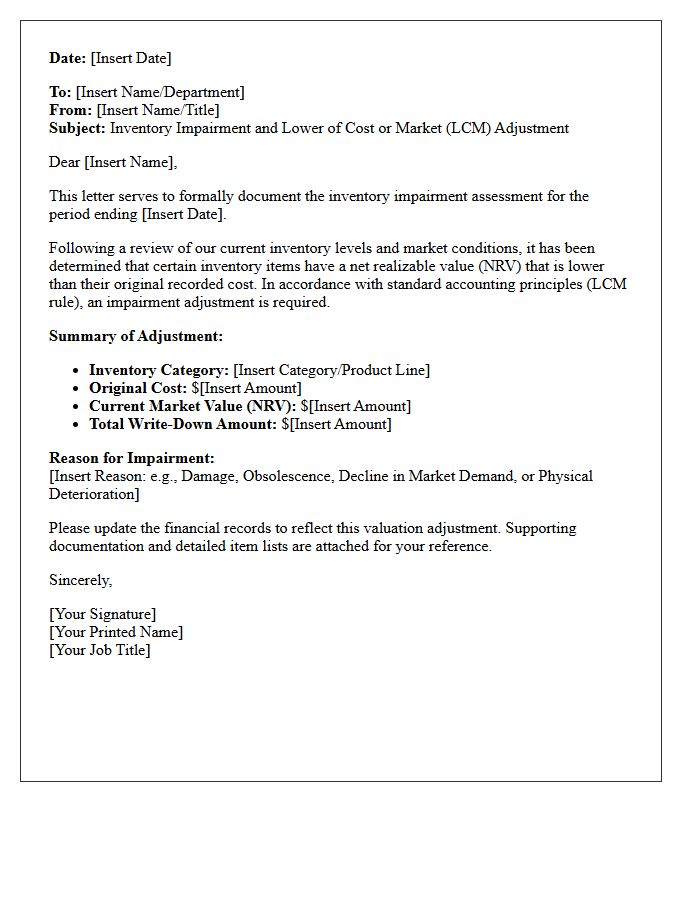
Inventory impairment occurs when the market value of stock falls below its original purchase price. Under the Lower of Cost or Market (LCM) rule, businesses must record inventory at the lower valuation to reflect economic reality. An impairment letter formally documents this write-down, ensuring compliance with accounting standards like GAAP. This process prevents overstating assets on the balance sheet, providing financial transparency for stakeholders by recognizing losses in the period they occur. It is a critical adjustment for maintaining accurate inventory records and realistic profit reporting.
Subsequent Events Inventory Representation Letter
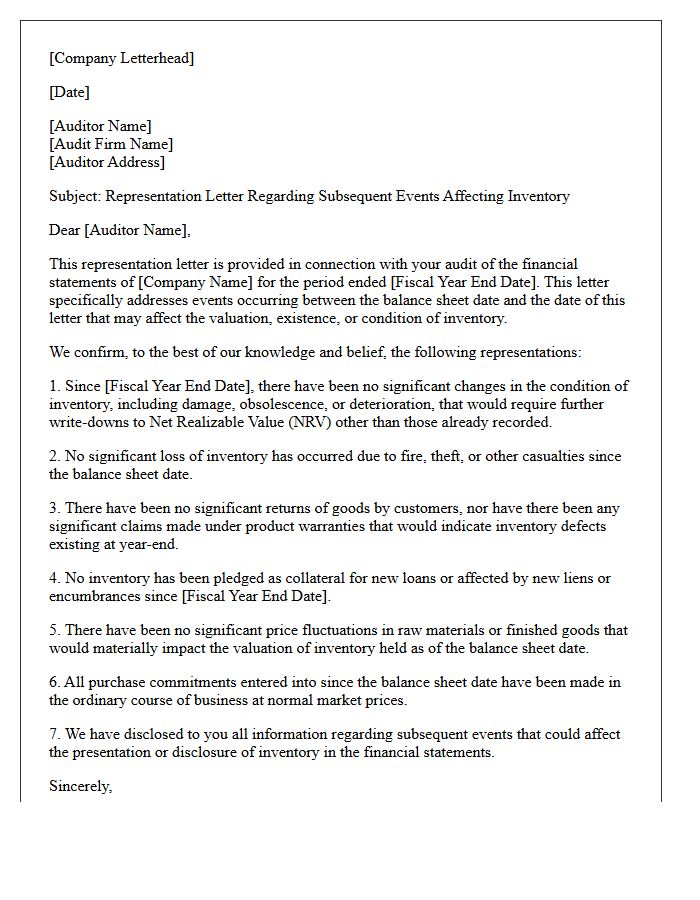
A Subsequent Events Inventory Representation Letter is a formal document where management confirms to auditors that no material changes occurred after the balance sheet date. It ensures the valuation and existence of stock remain accurate before financial statements are finalized. This letter mitigates risk by disclosing inventory impairment, losses, or legal claims arising during the subsequent period. Providing this written assurance is a critical step in the audit evidence process, verifying that the financial position reflects all significant economic events up to the issuance date.
Raw Materials Valuation And Count Representation Letter
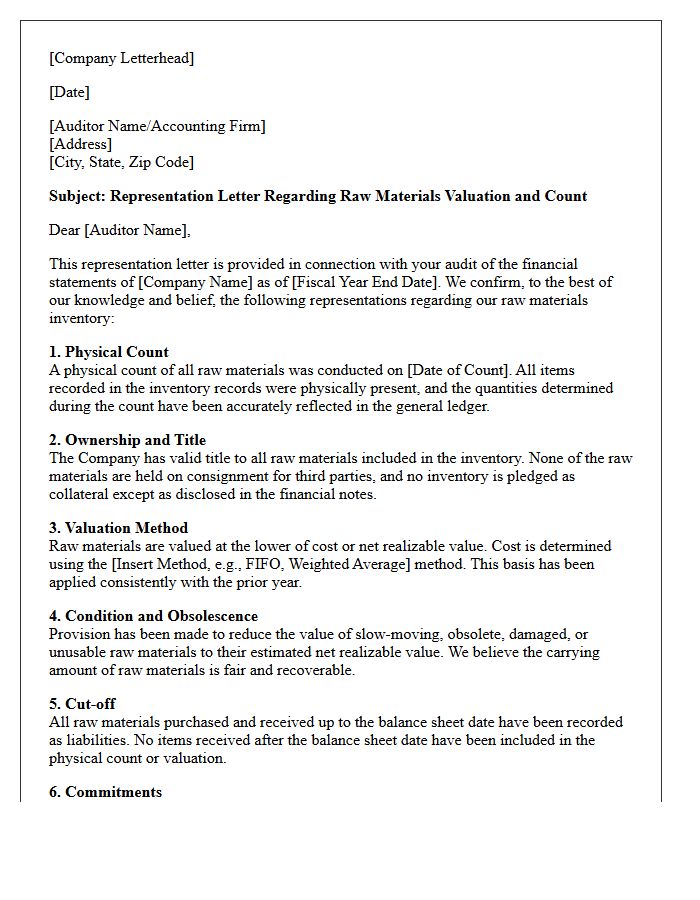
A Raw Materials Valuation and Count Representation Letter is a formal document where management confirms the accuracy of inventory records to auditors. It asserts that the physical quantities recorded are correct and that the valuation methods, such as FIFO or LIFO, comply with accounting standards. This letter ensures that raw materials are reported at the lower of cost or net realizable value, accounting for potential obsolescence. By signing this statement, leadership accepts legal responsibility for the integrity of inventory data reflected in the financial statements.
Finished Goods Inventory Audit Representation Letter
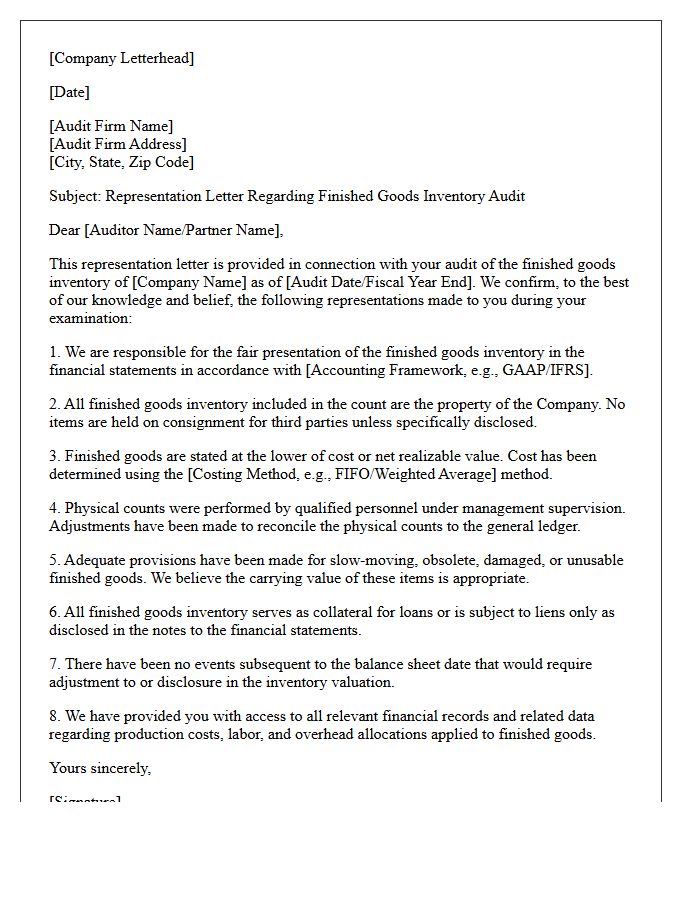
A Finished Goods Inventory Audit Representation Letter is a formal declaration issued by management to external auditors. This document confirms that the stated value, quantity, and ownership of completed products are accurate and comply with accounting standards. It serves as essential audit evidence, ensuring that all obsolete or damaged items are properly written down and that inventory counts were conducted thoroughly. By signing this letter, management accepts primary responsibility for the financial integrity of the inventory reporting, reducing the auditor's risk regarding potential valuation misstatements or undisclosed liens.
What is an Inventory Valuation and Observation Representation Letter?
An Inventory Valuation and Observation Representation Letter is a formal document provided by management to external auditors confirming that inventory quantities were accurately recorded during the physical count and that the valuation methods used comply with the applicable financial reporting framework.
Why do auditors require a management representation letter for inventory?
Auditors require this letter to document management's formal acknowledgement of their responsibility for the existence, condition, and proper valuation of inventory, serving as complementary audit evidence to physical observations and testing.
What key assertions are covered in an Inventory Representation Letter?
The letter typically covers key assertions including existence (inventory physically exists), rights and obligations (the company owns the goods), completeness (all items are included), and valuation (inventory is recorded at the lower of cost or net realizable value).
How are obsolete or damaged goods addressed in the representation letter?
The letter includes a specific declaration from management stating that all slow-moving, obsolete, or damaged inventory has been identified and that adequate write-downs or provisions have been recorded to reflect their net realizable value.
Does the representation letter cover inventory held by third parties?
Yes, the letter typically includes a confirmation that all inventory held at third-party locations or on consignment is either properly included in the financial statements or excluded if the risks and rewards of ownership have passed to another party.

Comments