
Protect your finances by immediately sending a Lost or Stolen Card Notification Letter to your bank. This formal document serves as written evidence of your report, limiting your liability for unauthorized transactions and ensuring a secure record of the incident. Acting quickly helps safeguard your credit score and personal information. To help you get started, below are some ready to use templates.
Image cover: Professional Card Loss and Theft Notification Templates
Letter Samples List
- Personal Debit Card Lost Notification Letter
- Credit Card Stolen Notification Letter
- Corporate Business Card Lost Notification Letter
- ATM Card Theft Notification Letter
- Prepaid Travel Card Lost Notification Letter
- Joint Account Debit Card Stolen Notification Letter
- Stolen Credit Card Fraud Dispute Letter
- Lost Bank Card Account Freeze Request Letter
- Stolen Debit Card Replacement Request Letter
- Lost Credit Card Liability Waiver Letter
- Compromised Bank Card Lost Notification Letter
- Student Account Lost ATM Card Letter
- Business Credit Card Stolen Notification Letter
Personal Debit Card Lost Notification Letter
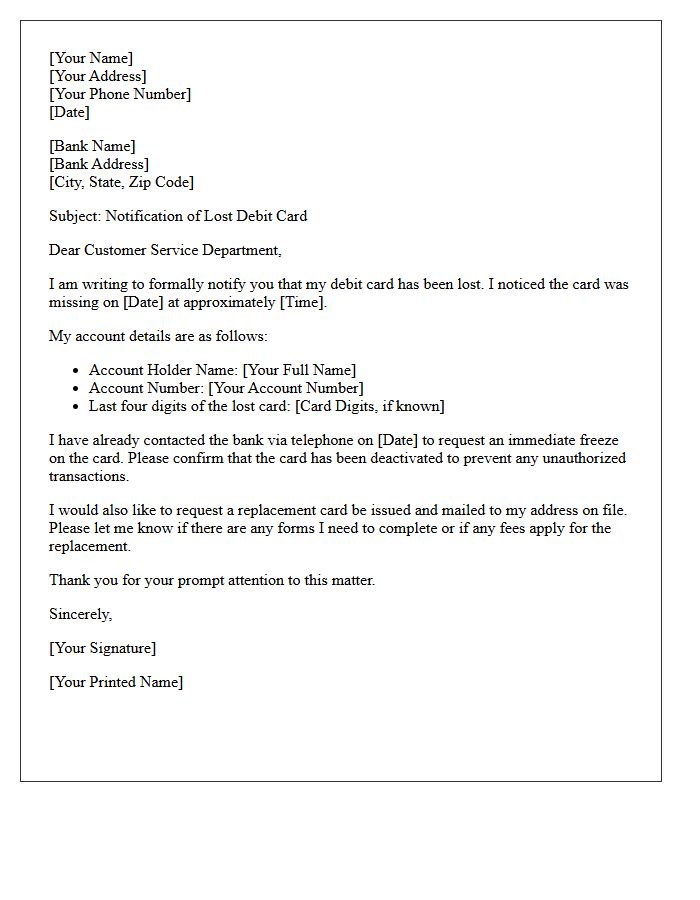
A personal debit card lost notification letter is a critical legal document used to report unauthorized access or misplacement of your banking credentials. To minimize financial liability, you must promptly notify your financial institution in writing. Clearly state your account details, the date the card was lost, and any suspicious transactions observed. Sending this letter via certified mail provides legal proof of notification, ensuring your rights under consumer protection regulations are upheld. Acting quickly helps secure your funds and allows the bank to issue a replacement card immediately.
Credit Card Stolen Notification Letter
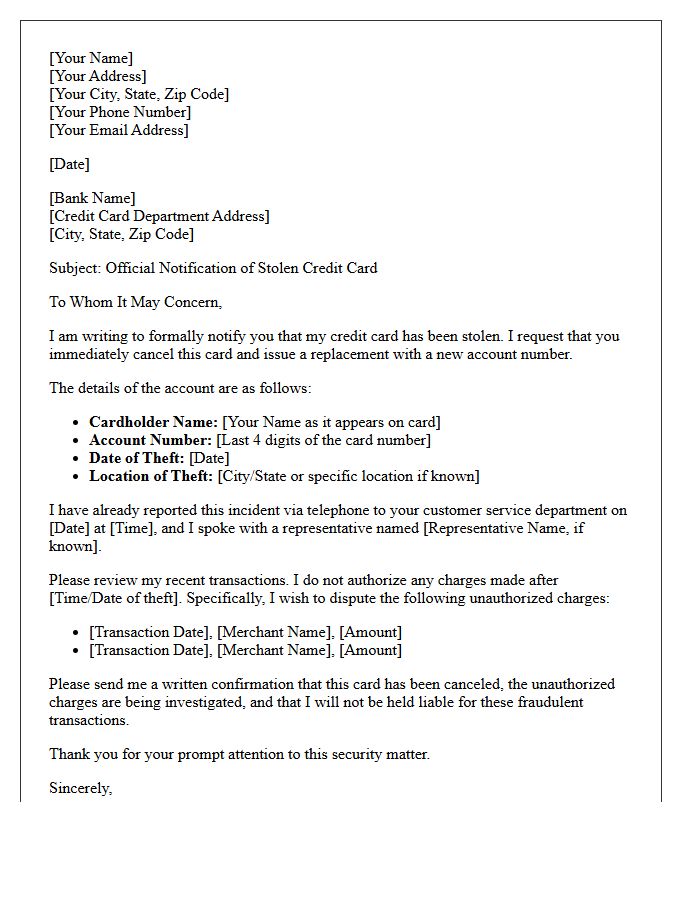
A credit card stolen notification letter is a critical formal notice sent to your financial institution to report unauthorized access. This document serves as legal proof of notification, which is essential for limiting your personal liability for fraudulent charges under federal law. Ensure the letter includes your account details, the date of discovery, and a list of disputed transactions. Sending this via certified mail provides a verified paper trail, protecting your credit score and ensuring the bank initiates a comprehensive identity theft investigation immediately.
Corporate Business Card Lost Notification Letter
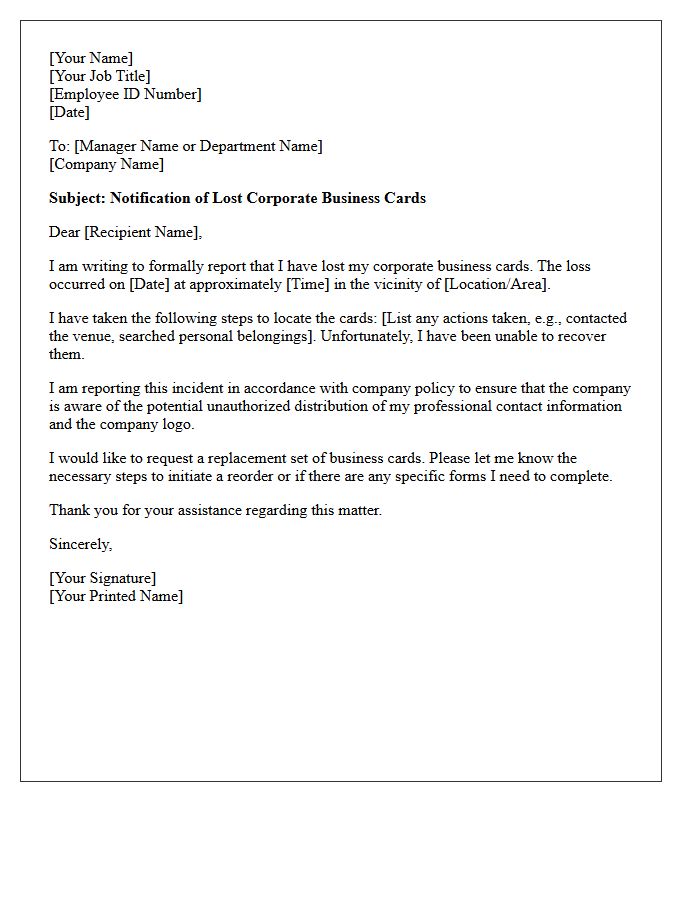
A Corporate Business Card Lost Notification Letter is a formal document used to report a missing company credit card. It is essential to submit this notice immediately to minimize financial liability and prevent unauthorized transactions. The letter should include the cardholder's name, account details, and the exact time the loss was discovered. Providing this written record protects the employee and ensures the organization can quickly initiate security protocols, such as freezing the account and issuing a replacement, maintaining strict financial compliance and corporate security standards.
ATM Card Theft Notification Letter
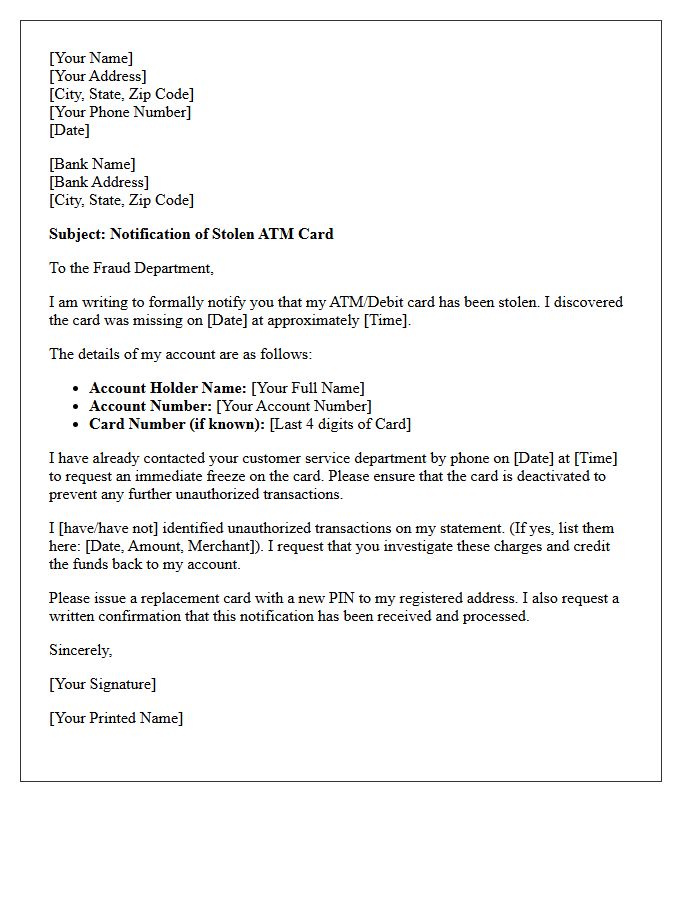
An ATM Card Theft Notification Letter is a critical document sent to your bank to report a stolen card and limit your financial liability. To ensure protection under federal law, you must provide your account details and the exact date of the theft. Sending this notice promptly via certified mail creates a legal record of your report. Acting within two business days significantly reduces your potential losses from unauthorized transactions. Always include a request for a replacement card to restore access to your funds while securing your account from further fraudulent activity.
Prepaid Travel Card Lost Notification Letter
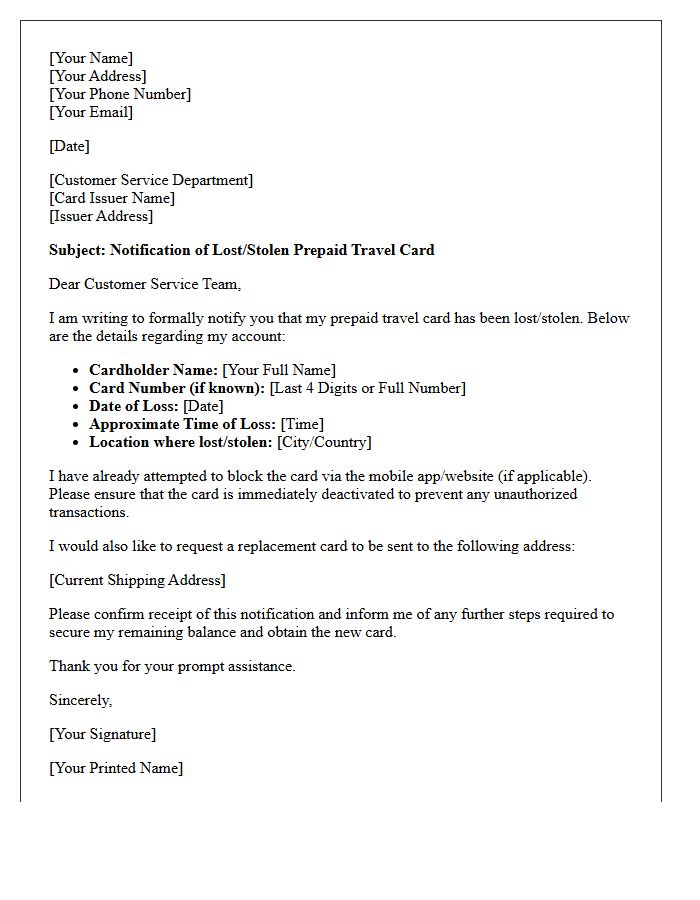
A Prepaid Travel Card Lost Notification Letter is a formal document used to report a missing card to the issuing bank or financial provider. It is essential to include your account details and the exact time you discovered the loss to limit liability for unauthorized transactions. Submitting this written notice promptly helps protect your remaining balance and serves as legal proof of notification. Always request a replacement card and a formal confirmation to ensure your travel funds are secured during your trip.
Joint Account Debit Card Stolen Notification Letter
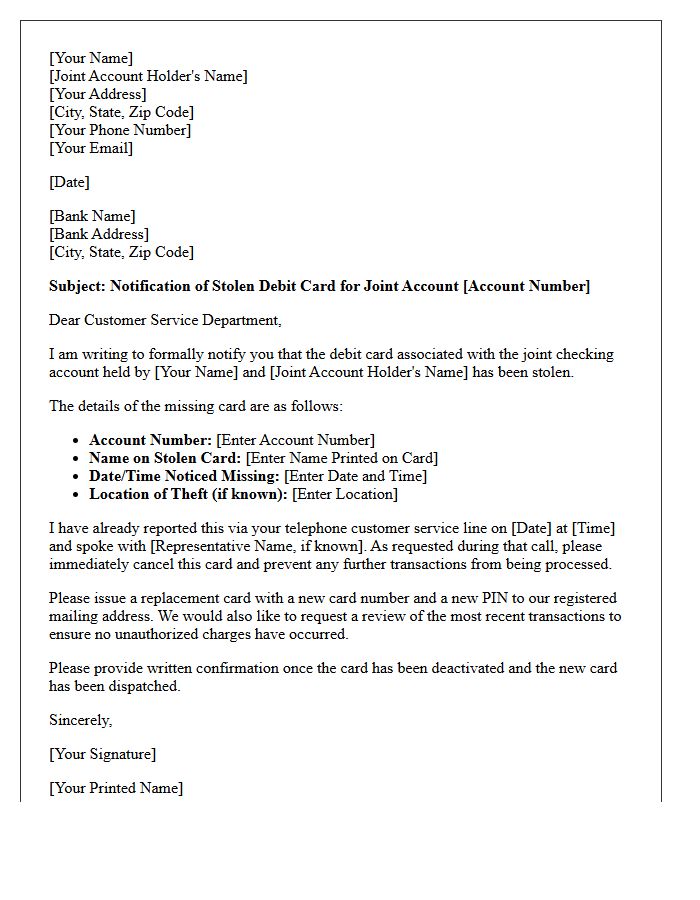
When drafting a Joint Account Debit Card Stolen Notification Letter, immediate action is essential to limit financial liability. Clearly state the account number, the name of the authorized user, and the exact date the theft was discovered. Formally request an immediate card deactivation and the issuance of a new PIN to prevent unauthorized transactions. Sending this notice via certified mail provides a legal paper trail of your report. Prompt notification ensures both account holders remain protected under banking regulations while securing your shared remaining balance against further fraudulent activity.
Stolen Credit Card Fraud Dispute Letter
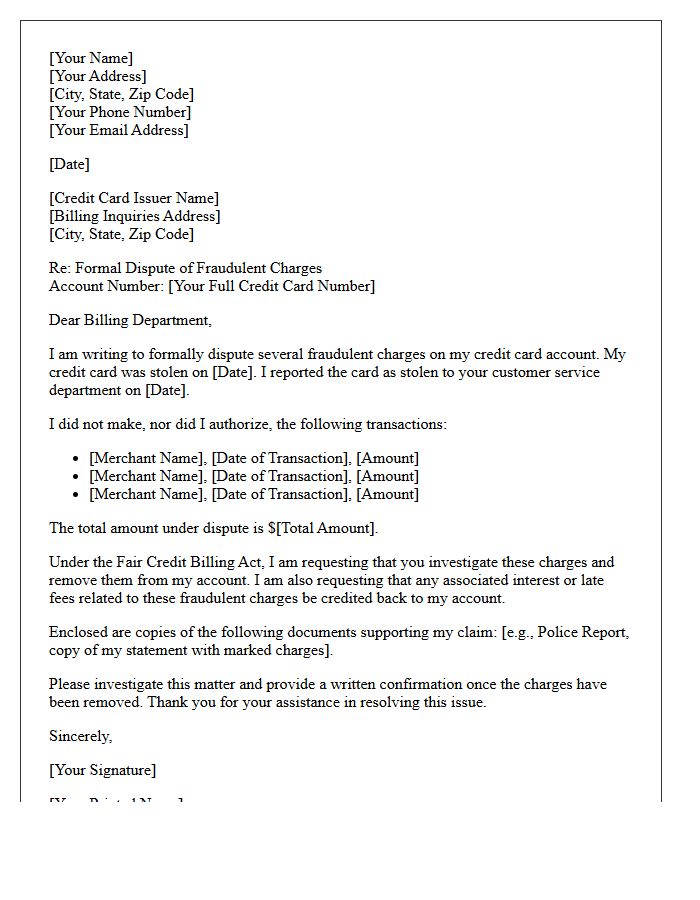
A Stolen Credit Card Fraud Dispute Letter is a formal legal notification sent to your bank to contest unauthorized charges. Under the Fair Credit Billing Act, you must submit this written notice within 60 days of the statement date to protect your consumer rights. Clearly list the fraudulent transactions, include a copy of the police report, and explicitly state that the card was stolen. Sending this letter via certified mail provides essential proof of delivery, ensuring the creditor investigates the identity theft and removes the fraudulent debt from your account.
Lost Bank Card Account Freeze Request Letter
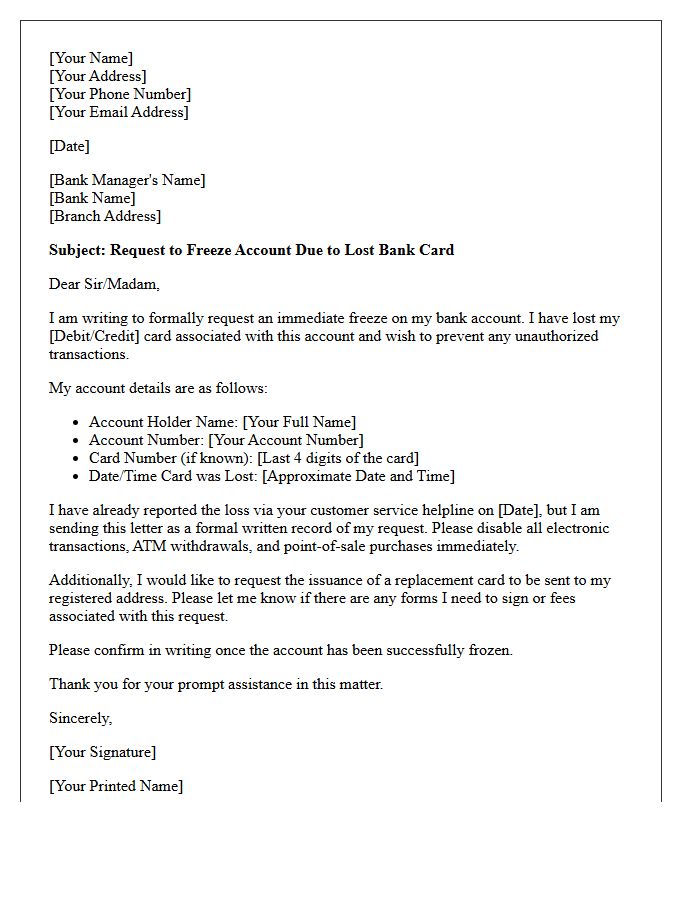
A Lost Bank Card Account Freeze Request Letter is a formal notice sent to your financial institution to prevent unauthorized transactions. It is essential to include your account details, the date of loss, and a clear instruction to suspend all card activities immediately. Providing this written record protects you from liability for fraudulent charges and serves as legal proof of notification. Always request a confirmation of receipt from the bank to ensure your funds remain secure while you await a replacement card or further investigation.
Stolen Debit Card Replacement Request Letter
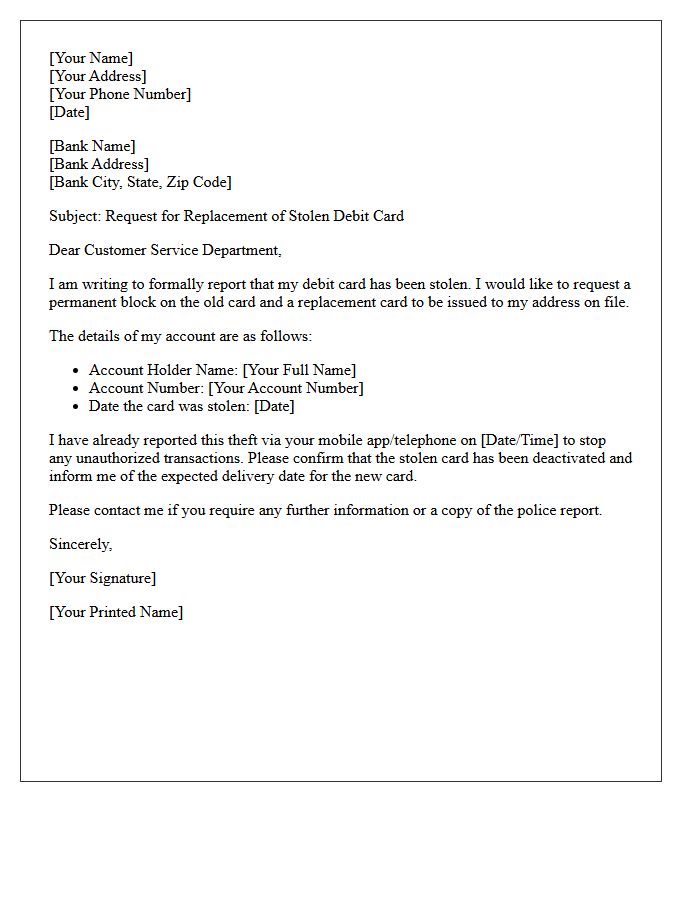
When writing a Stolen Debit Card Replacement Request Letter, prioritize security by including your full name, account number, and the exact date the card was lost. Clearly state that you are reporting unauthorized access to protect yourself from liability. Formally request an immediate permanent block on the old card and the issuance of a new one. Sending this via certified mail provides a legal paper trail of your notification. Always review your recent transactions for fraud and mention any disputed charges to ensure the bank initiates a prompt investigation.
Lost Credit Card Liability Waiver Letter
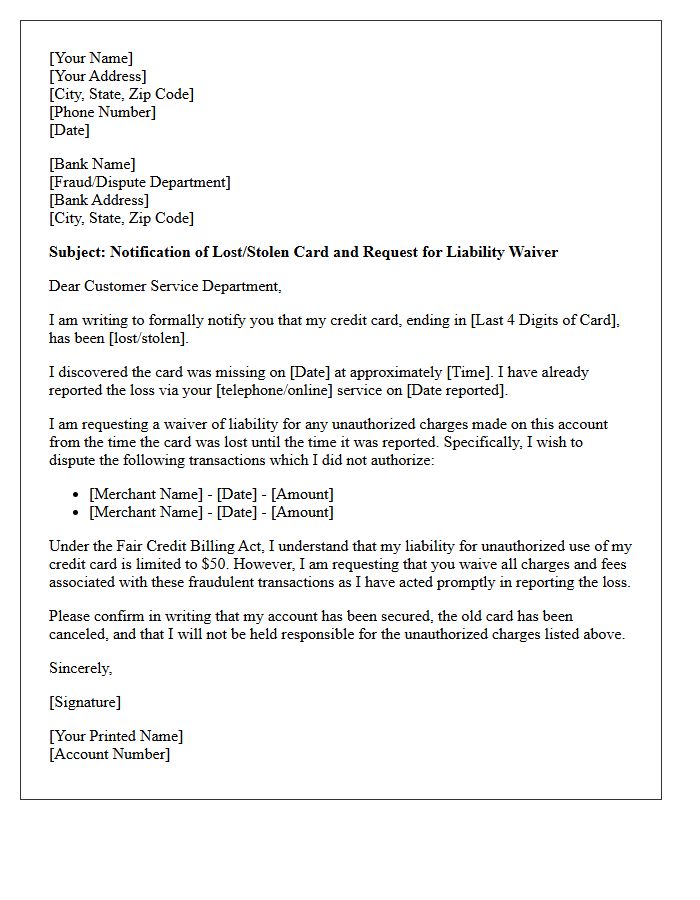
A Lost Credit Card Liability Waiver Letter is a formal document used to notify issuers of unauthorized charges. Under the Fair Credit Billing Act, your maximum liability is typically limited to $50 if reported promptly. This letter creates a crucial paper trail to dispute fraudulent transactions and protect your credit score. Ensure you include your account details, the specific date the card was lost, and a list of disputed charges. Sending this via certified mail ensures legal proof of your request to waive responsibility for illegal activity.
Compromised Bank Card Lost Notification Letter
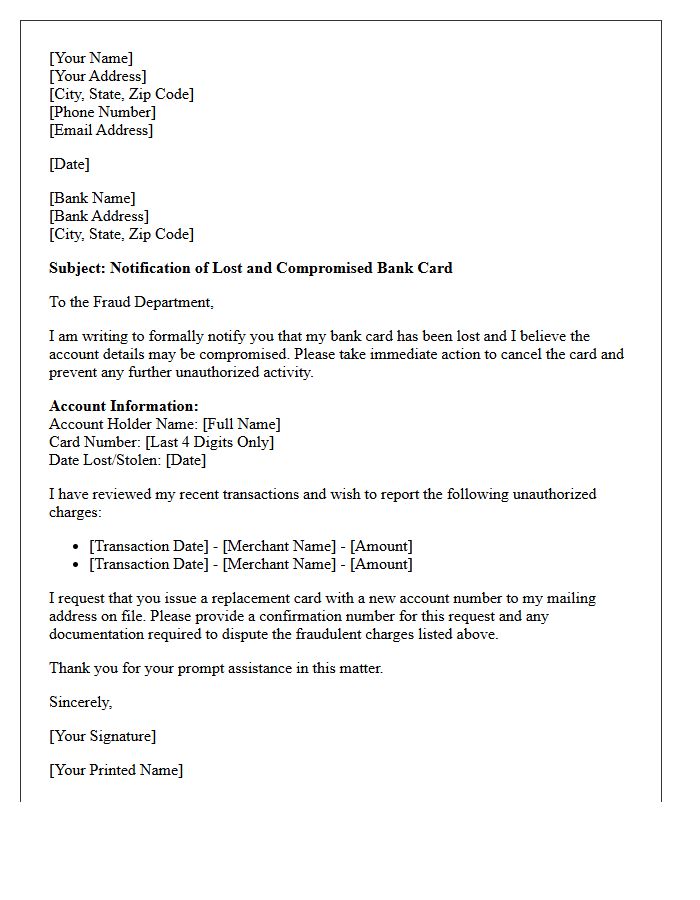
A Compromised Bank Card Lost Notification Letter is a critical security document informing cardholders that their payment data may be exposed. It confirms that the financial institution has deactivated the vulnerable card to prevent unauthorized transactions. Upon receipt, you must immediately review your account statements for suspicious activity. The letter typically includes instructions for activating a replacement card and updating recurring payments. Promptly following these steps is essential to protecting your financial identity and ensuring continuous access to your funds after a security breach.
Student Account Lost ATM Card Letter
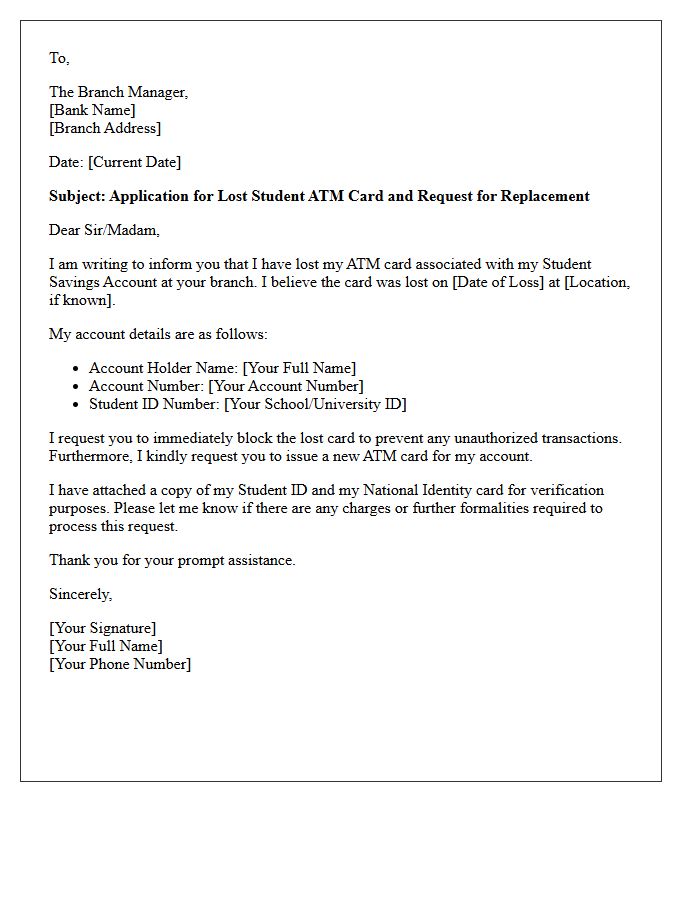
When writing a Student Account Lost ATM Card Letter, you must immediately notify your bank to prevent unauthorized transactions. Clearly state your full name, account number, and the date of loss to establish a formal record. Formally request a card replacement and ask for a temporary block on the old card for security. Providing your contact information ensures the bank can reach you quickly. This written notification serves as essential legal protection under banking regulations, limiting your liability for any fraudulent activity that occurs after the report is filed.
Business Credit Card Stolen Notification Letter
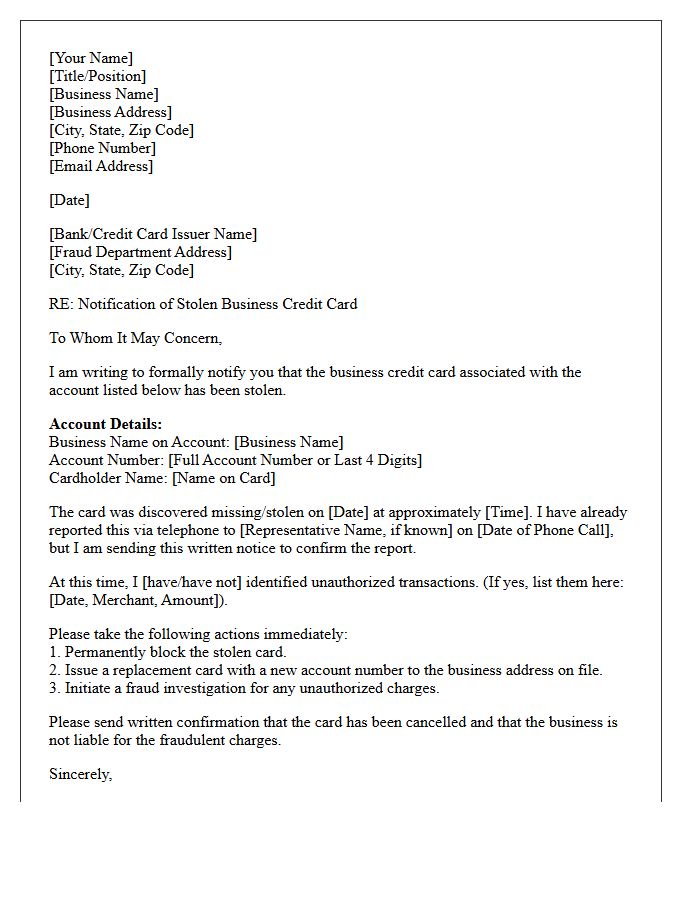
When drafting a Business Credit Card Stolen Notification Letter, immediate communication is critical to mitigate financial liability. Clearly state the account number, the date of the theft, and any unauthorized transactions identified. Formally request an immediate account freeze and the issuance of a replacement card. Sending this document via certified mail provides a legal record of your due diligence. Acting swiftly protects your company's credit score and ensures compliance with banking security protocols, limiting your business's exposure to fraudulent charges and potential long-term financial damage.
What should be included in a lost or stolen card notification letter?
A lost or stolen card notification letter should include your full name, account number, the date the card went missing, the location where it was last used, and a formal request to cancel the card and issue a replacement.
How soon should I send a written notification after losing my credit card?
You should send a written notification letter immediately after reporting the loss by phone. Providing a written notice via certified mail creates a legal paper trail that protects you under the Fair Credit Billing Act.
Can a notification letter protect me from unauthorized charges?
Yes, a formal notification letter serves as evidence that you informed the financial institution of the loss. Timely reporting limits your liability for unauthorized transactions, often to a maximum of $50 or zero, depending on the card issuer's policy.
Where should I mail my lost or stolen card notification letter?
The letter should be sent to the specific address designated for "Billing Inquiries" or "Customer Correspondence" listed on your monthly statement, rather than the general payment address.
Do I need to send a notification letter if I already locked my card in a mobile app?
While locking your card via an app provides immediate security, sending a formal notification letter is still recommended. It provides a permanent record of the report which is essential if you need to dispute fraudulent charges or face legal complications later.

Comments