
An Anti-Money Laundering Policy Advisory Letter is a formal document used to notify clients or stakeholders about mandatory compliance standards and regulatory updates. It ensures institutional transparency while mitigating financial crime risks. Establishing clear protocols helps maintain legal integrity and operational security within your organization. To help you draft these essential communications, below are some ready to use template.
Image cover: Professional Anti-Money Laundering Policy Advisory Letter Templates and Samples
Letter Samples List
- Initial Anti-Money Laundering Policy Implementation Advisory Letter
- Annual Anti-Money Laundering Compliance Review Advisory Letter
- Customer Due Diligence Policy Update Advisory Letter
- Suspicious Activity Reporting Procedure Advisory Letter
- Enhanced Due Diligence Strategy Advisory Letter
- Regulatory Framework Adjustment Advisory Letter
- Transaction Monitoring Threshold Revision Advisory Letter
- Know Your Customer Policy Enhancement Advisory Letter
- Internal Audit Findings and Recommendations Advisory Letter
- Cross-Border Transaction Policy Advisory Letter
- Employee Compliance Training Program Advisory Letter
- High-Risk Account Management Advisory Letter
- Sanctions Screening Policy Modification Advisory Letter
Initial Anti-Money Laundering Policy Implementation Advisory Letter
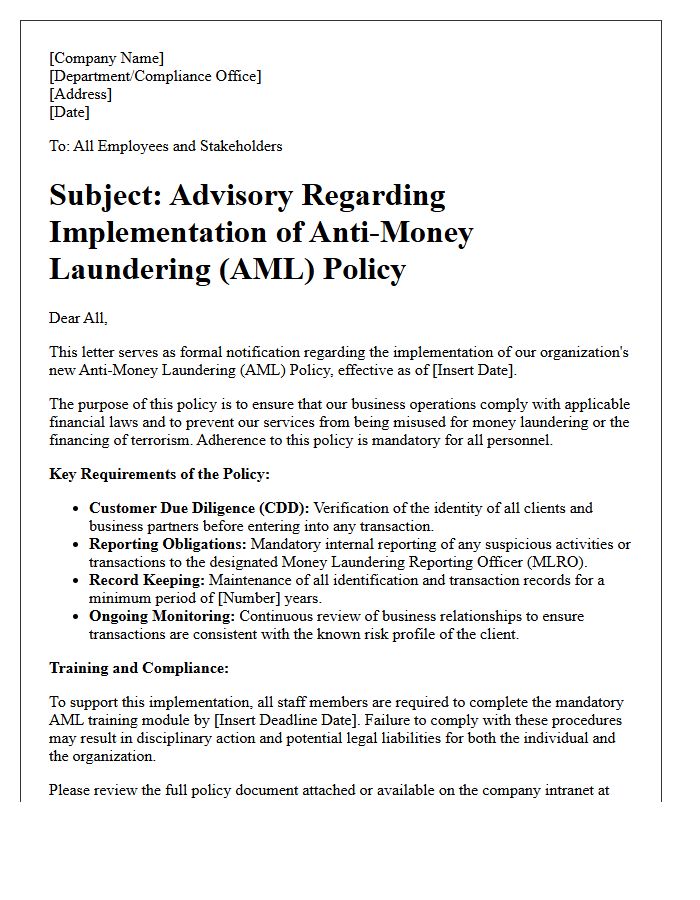
The Initial Anti-Money Laundering Policy Implementation Advisory Letter serves as a critical regulatory roadmap for financial institutions. It outlines compliance expectations and foundational frameworks necessary to mitigate financial crime risks. This document guides entities in establishing robust internal controls, reporting mechanisms, and customer due diligence procedures. By following these preliminary guidelines, organizations ensure alignment with legal mandates, helping to prevent illicit activities like terrorist financing. Adhering to this advisory is the essential first step in building a transparent, audit-ready environment that protects the integrity of the global financial system.
Annual Anti-Money Laundering Compliance Review Advisory Letter
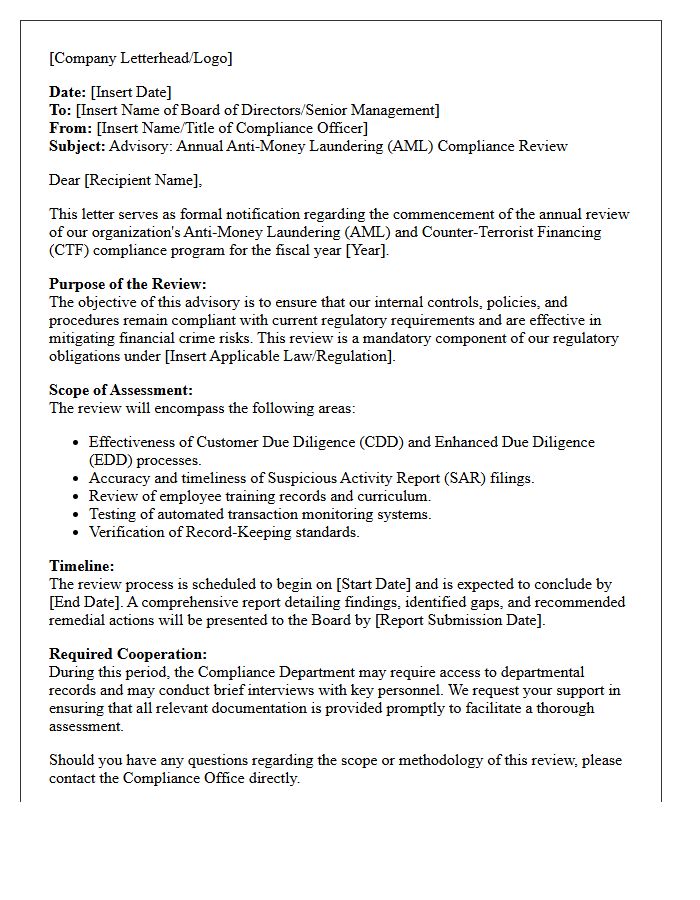
The Annual Anti-Money Laundering Compliance Review Advisory Letter is a critical regulatory communication highlighting essential updates for financial institutions. It outlines evolving legal requirements and identifies high-risk vulnerabilities within existing frameworks. Firms must use this guidance to conduct rigorous independent testing and enhance their internal controls. Proactively addressing these findings ensures alignment with FinCEN and regulatory standards, effectively mitigating risks of financial crime, penalties, and operational failures. Reviewing this letter is vital for maintaining a robust risk-based approach to global compliance and institutional integrity.
Customer Due Diligence Policy Update Advisory Letter
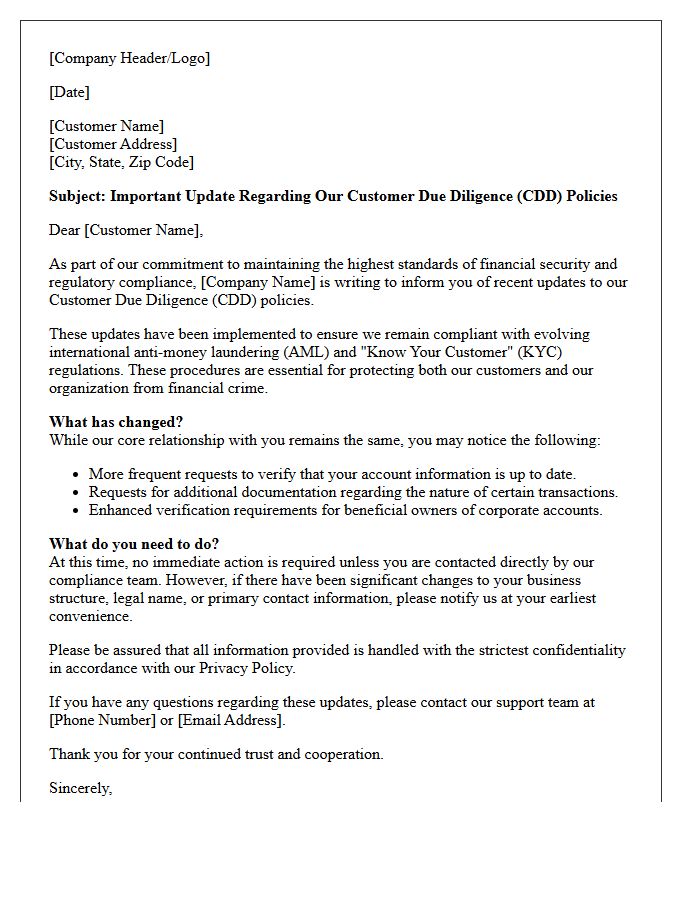
A Customer Due Diligence (CDD) Policy Update Advisory Letter notifies clients about essential changes in regulatory compliance protocols. This document outlines updated identity verification requirements and risk assessment procedures mandated by anti-money laundering laws. It is crucial to respond promptly, as failing to provide requested documentation may result in account restrictions. Understanding these updates ensures your business maintains legal transparency while protecting financial systems from illicit activities. Always review the specific compliance deadlines mentioned in the letter to ensure uninterrupted service and ongoing adherence to global banking standards.
Suspicious Activity Reporting Procedure Advisory Letter
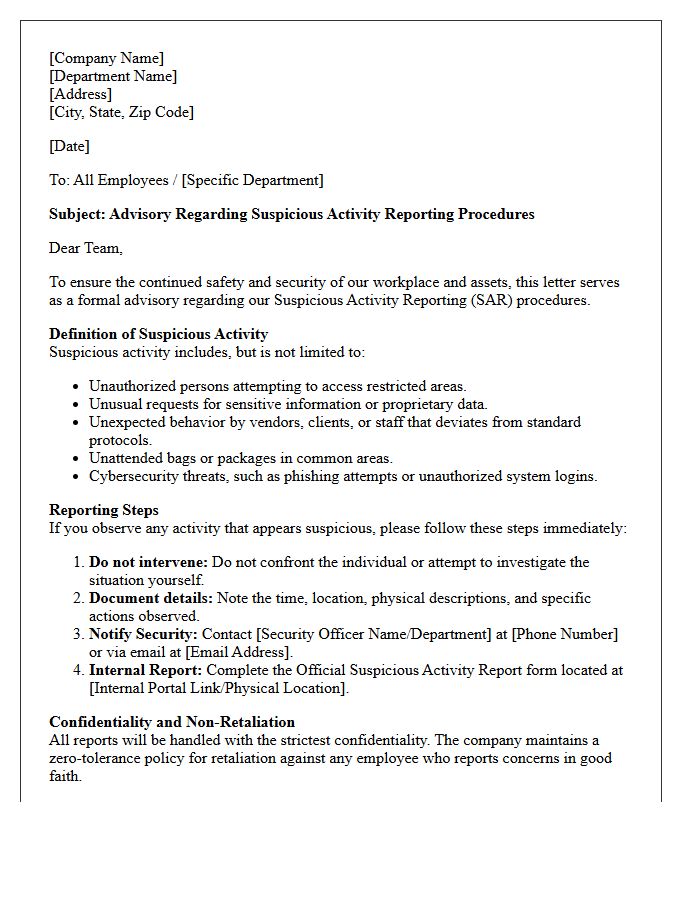
The Suspicious Activity Reporting Procedure Advisory Letter provides critical guidelines for financial institutions to identify and document potential illicit behaviors. It outlines mandatory steps for filing a Suspicious Activity Report (SAR) when red flags like money laundering or fraud are detected. Compliance ensures that organizations meet regulatory obligations set by authorities such as FinCEN. Following these procedures is essential to mitigate legal risks, maintain financial integrity, and support law enforcement in preventing systemic financial crimes.
Enhanced Due Diligence Strategy Advisory Letter
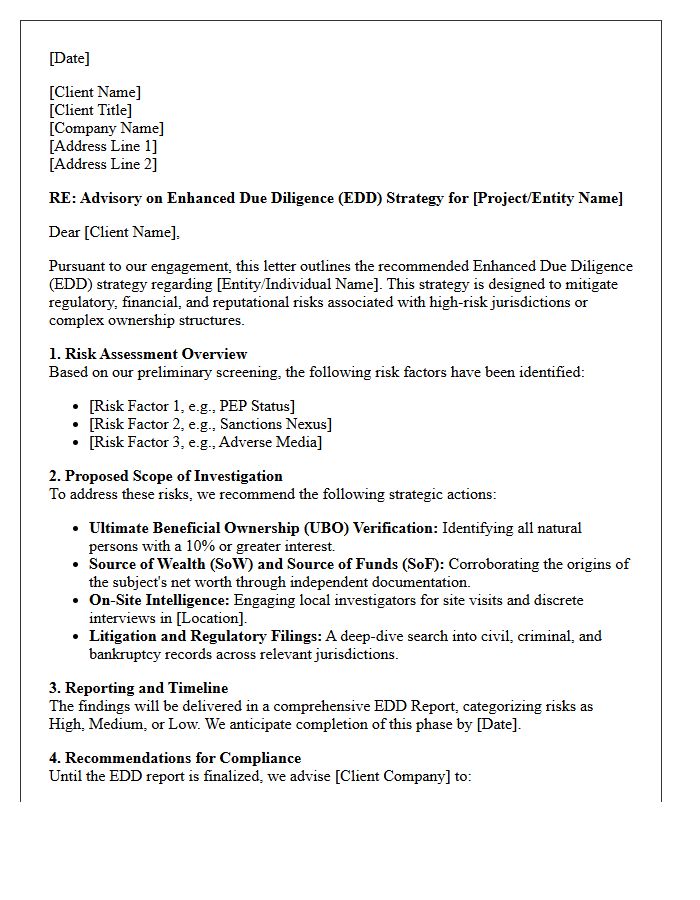
An Enhanced Due Diligence (EDD) Strategy Advisory Letter is a critical document used to manage high-risk financial relationships. It outlines specialized investigation procedures required to mitigate potential money laundering, fraud, or regulatory non-compliance. This advisory letter provides a strategic framework for analyzing ultimate beneficial ownership, source of wealth, and complex corporate structures. By implementing these expert recommendations, organizations ensure robust risk mitigation and maintain strict adherence to global AML/KYC standards, protecting the institution from legal penalties and reputational damage in sensitive jurisdictions or high-stakes transactions.
Regulatory Framework Adjustment Advisory Letter
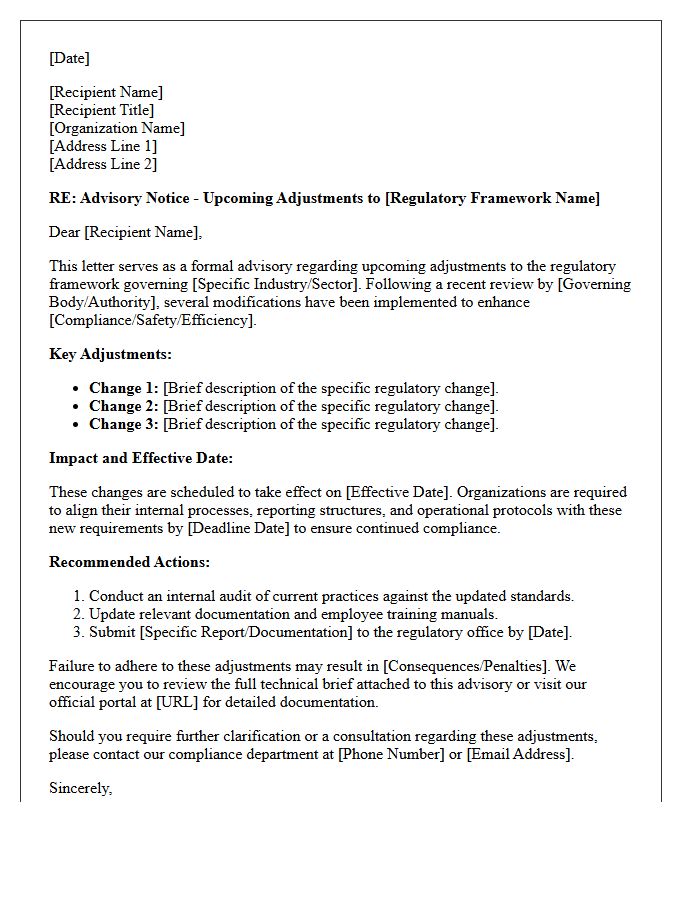
A Regulatory Framework Adjustment Advisory Letter is a formal notification issued by authorities to inform organizations about mandatory compliance updates. This document outlines critical modifications to existing legal standards, ensuring businesses align with new governance requirements. It serves as a proactive measure to mitigate risks and maintain operational integrity within changing legislative landscapes. Recipients must carefully analyze the specified regulatory shifts to implement necessary internal policy adjustments promptly. Ignoring these advisories can lead to significant legal penalties or loss of licensing, making timely strategic responses essential for long-term organizational stability.
Transaction Monitoring Threshold Revision Advisory Letter
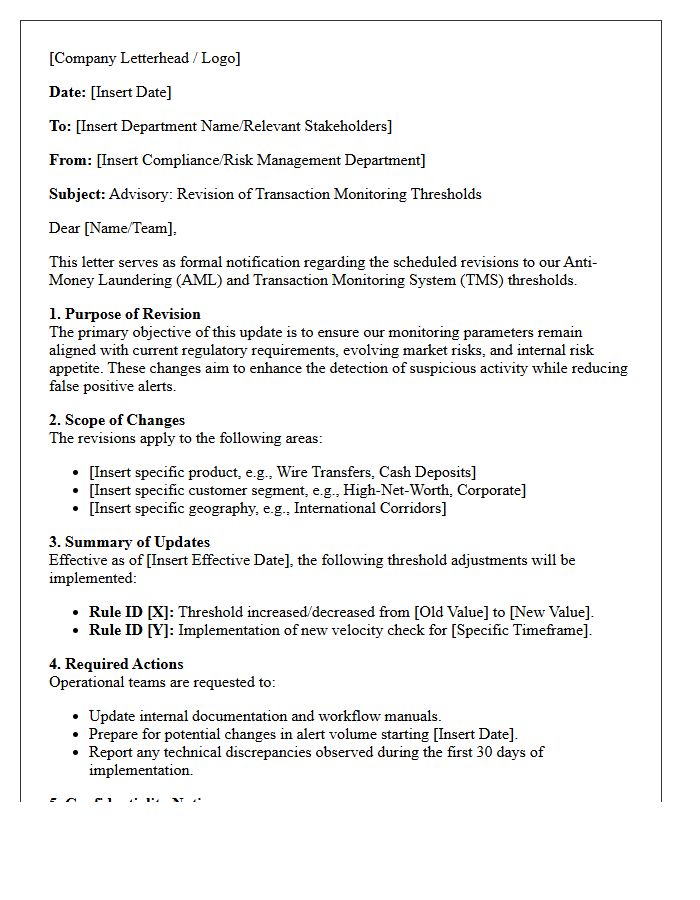
The Transaction Monitoring Threshold Revision Advisory Letter is a formal document issued by financial institutions to justify changes in anti-money laundering (AML) detection settings. It serves as a critical audit trail for regulators, detailing the methodology, data analysis, and risk assessment used to update monitoring parameters. The primary goal is to optimize system performance by reducing false positives while ensuring that suspicious activity remains detectable. Proper documentation through this advisory ensures compliance with evolving financial crimes regulations and demonstrates effective governance over automated surveillance systems.
Know Your Customer Policy Enhancement Advisory Letter
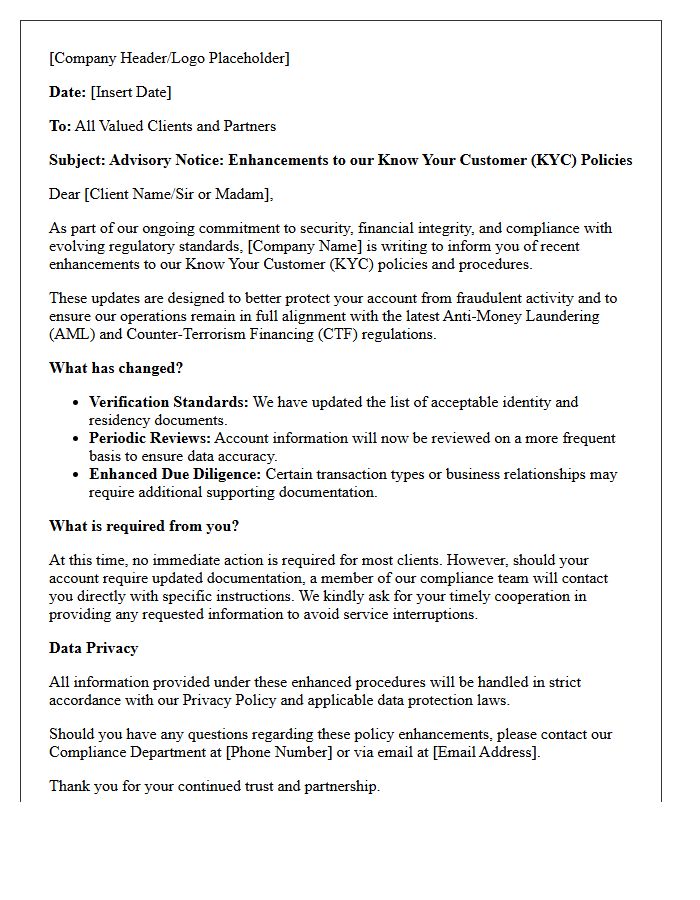
The Know Your Customer Policy Enhancement Advisory Letter outlines critical updates to financial institutions' due diligence protocols. It emphasizes the need for robust verification processes to mitigate risks associated with money laundering and terrorism financing. By enhancing risk assessment frameworks, the advisory ensures organizations maintain compliance with evolving regulatory standards. Key focus areas include identifying beneficial owners and monitoring suspicious transactions to bolster financial integrity. Adhering to these enhancements is vital for safeguarding the global banking system and preventing illicit activities through improved transparency and rigorous oversight.
Internal Audit Findings and Recommendations Advisory Letter
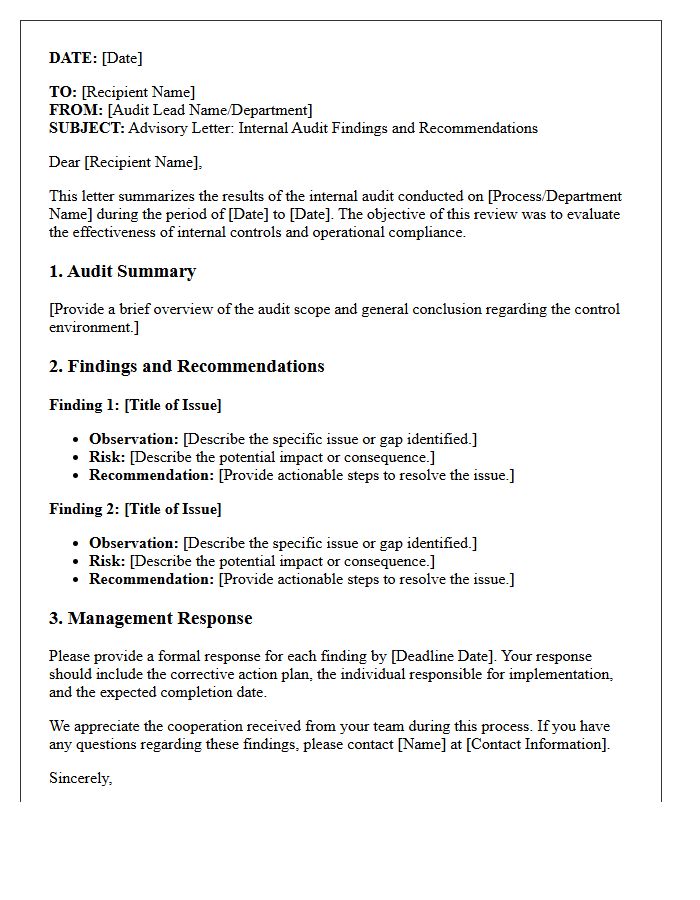
An Internal Audit Findings and Recommendations Advisory Letter is a formal document communicating control weaknesses and operational inefficiencies identified during a review. It provides management with a structured corrective action plan to mitigate risks. Unlike a final report, this advisory focuses on remediation strategies and proactive improvements. It ensures transparency, strengthens governance, and helps organizations align with compliance standards. Understanding these results is essential for enhancing internal processes and maintaining organizational integrity through timely implementation of expert suggestions.
Cross-Border Transaction Policy Advisory Letter
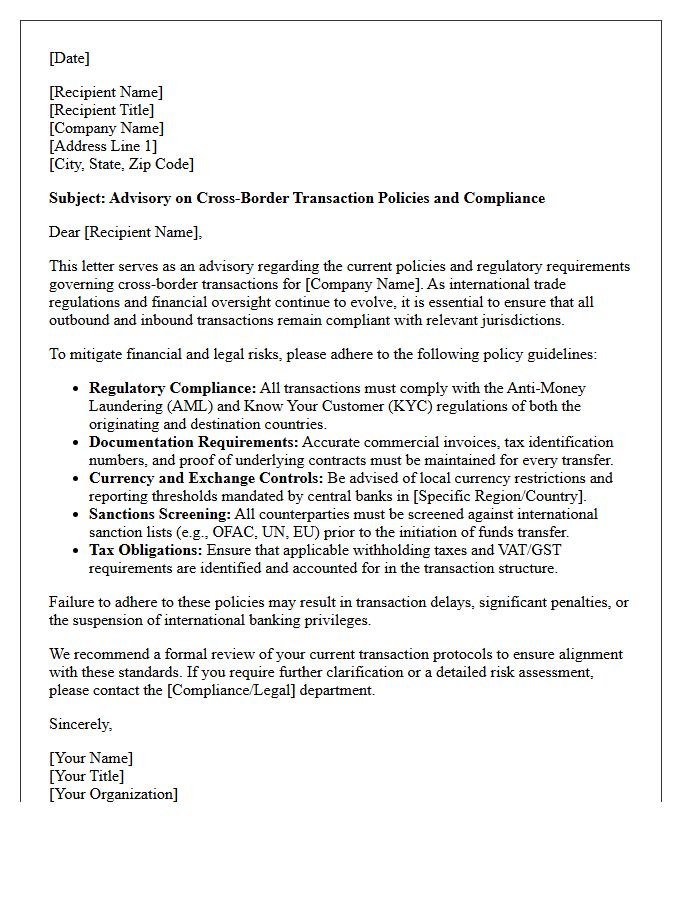
A Cross-Border Transaction Policy Advisory Letter is a critical document used to ensure compliance with international trade regulations. It provides specific guidance on navigating regulatory frameworks, tax implications, and legal requirements across different jurisdictions. These letters help businesses mitigate risks associated with foreign exchange, sanctions, and anti-money laundering laws. By following this expert advice, companies can streamline their global operations while maintaining transparency and legal integrity during complex international financial transfers.
Employee Compliance Training Program Advisory Letter
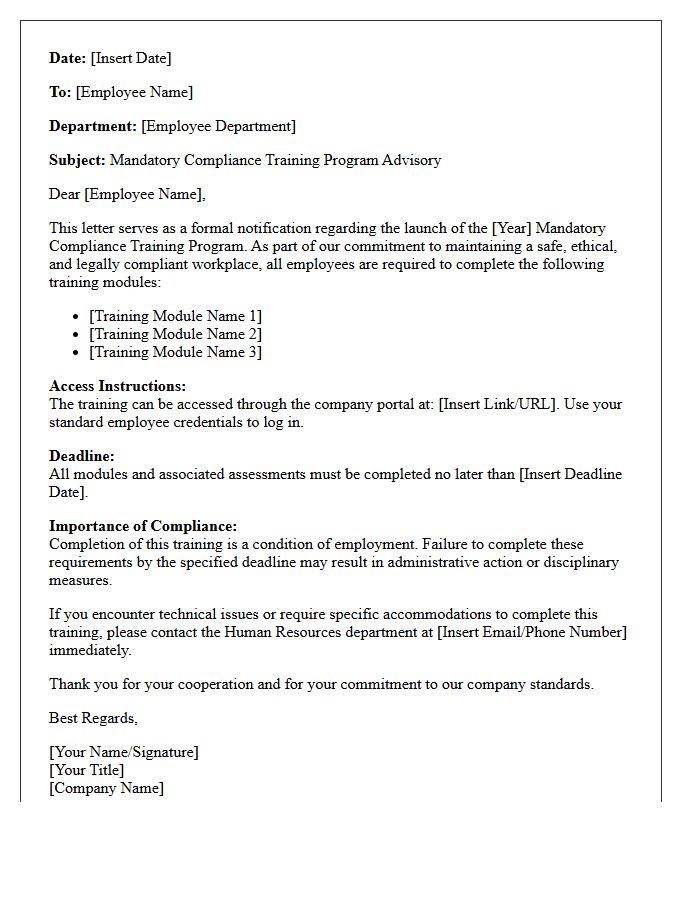
An Employee Compliance Training Program Advisory Letter serves as a formal notification to staff regarding mandatory educational requirements. This document outlines critical legal obligations, industry standards, and internal policies that employees must follow to mitigate corporate risk. It details specific deadlines, consequence for non-completion, and the scope of modules such as data privacy or workplace safety. By clearly communicating these expectations, organizations ensure regulatory adherence and foster a culture of ethics. It is an essential tool for documenting corporate due diligence and protecting the company from potential liability or non-compliance penalties.
High-Risk Account Management Advisory Letter
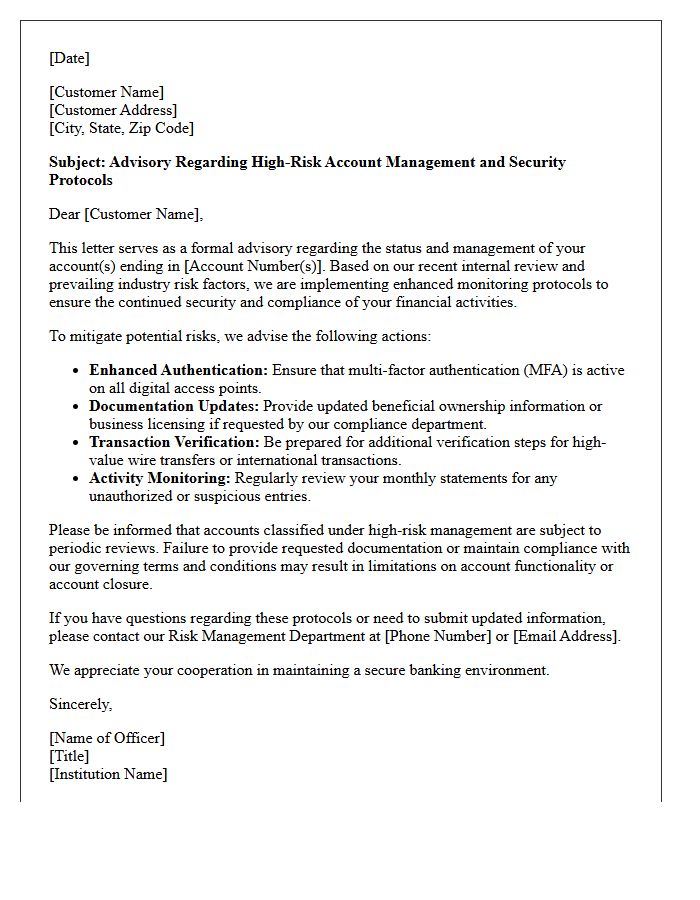
A High-Risk Account Management Advisory Letter is a formal communication from financial institutions regarding enhanced due diligence requirements. It signals that an account exhibits heightened risk profiles due to unusual transaction patterns, geographic locations, or business structures. Compliance is essential to avoid account restrictions or termination. Recipients must provide detailed documentation to verify the legitimacy of funds and business activities. Promptly addressing these concerns ensures adherence to Anti-Money Laundering (AML) regulations and maintains the integrity of the banking relationship while mitigating potential legal or financial liabilities.
Sanctions Screening Policy Modification Advisory Letter
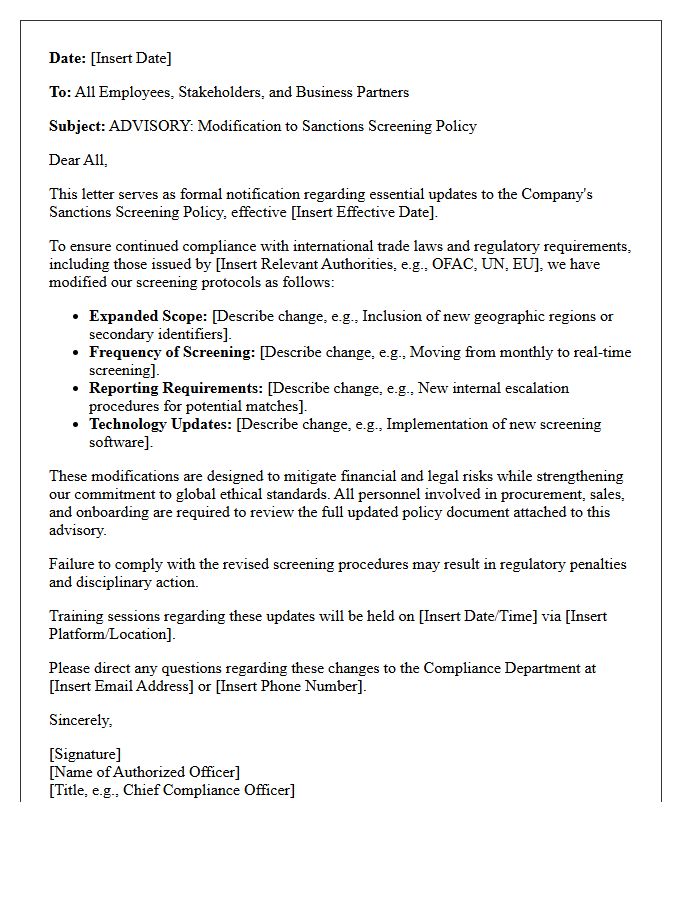
The Sanctions Screening Policy Modification Advisory Letter serves as a formal notification regarding critical updates to compliance protocols. It outlines essential adjustments to risk management strategies and screening parameters required to align with evolving global regulations. Organizations must review these modifications immediately to ensure their internal controls remain effective. Failure to implement these mandated changes can result in significant legal penalties, operational disruptions, and reputational damage. This letter ensures all stakeholders understand their responsibilities in maintaining rigorous regulatory compliance and preventing illicit financial activities within their systems.
What is an Anti-Money Laundering (AML) Policy Advisory Letter?
An AML Policy Advisory Letter is a formal document issued by legal or compliance experts that evaluates an organization's internal controls against current financial regulations and provides specific recommendations to mitigate risks related to financial crimes.
Why is an AML Advisory Letter essential for financial institutions?
This letter serves as a professional validation of a company's compliance framework, ensuring that their policies align with the Bank Secrecy Act (BSA) and Financial Action Task Force (FATF) standards, thereby preventing regulatory penalties and legal sanctions.
What key components should be included in an AML Advisory Letter?
A comprehensive advisory letter typically includes a risk assessment summary, an evaluation of Customer Due Diligence (CDD) procedures, a review of transaction monitoring systems, and actionable guidance for remediation of identified compliance gaps.
How often should an organization seek an AML Policy Advisory update?
Organizations should commission an AML Advisory Letter annually or whenever there are significant changes in local or international financial laws, or if the business undergoes substantial operational shifts such as entering new markets or launching new financial products.
Can an AML Advisory Letter assist during a regulatory audit?
Yes, providing an AML Advisory Letter to regulators demonstrates proactive governance and a commitment to maintaining a robust compliance culture, which can significantly reduce the likelihood of enforcement actions during a formal examination.

Comments