
Protect your organization from evolving digital risks with our comprehensive Cybersecurity Threat Mitigation Advisory Letter. This guide outlines essential strategies to communicate critical vulnerabilities, implement defensive protocols, and enhance your overall security posture against sophisticated cyberattacks. Clear communication is vital for rapid incident response and risk reduction. To help you get started, below are some ready to use templates.
Image cover: Professional Cybersecurity Threat Mitigation Advisory: Letter Samples and Templates
Letter Samples List
- Ransomware Attack Mitigation Advisory Letter for Banking Operations
- Phishing Campaign Threat Mitigation Advisory Letter for Retail Banking
- Third-Party Vendor Cybersecurity Threat Advisory Letter
- Mobile Banking Vulnerability Mitigation Advisory Letter
- Internal Insider Threat Mitigation Advisory Letter for Financial Institutions
- Customer Data Privacy Mitigation Advisory Letter
- Financial Trojan Threat Mitigation Advisory Letter
- Cloud Infrastructure Cyber Threat Advisory Letter for Banks
- Post-Incident Cybersecurity Mitigation Advisory Letter
- Wire Transfer Fraud Threat Mitigation Advisory Letter
- Executive Board Cybersecurity Threat Advisory Letter
- Advanced Persistent Threat Mitigation Advisory Letter for Core Banking Systems
- Automated Teller Machine Network Vulnerability Mitigation Advisory Letter
Ransomware Attack Mitigation Advisory Letter for Banking Operations
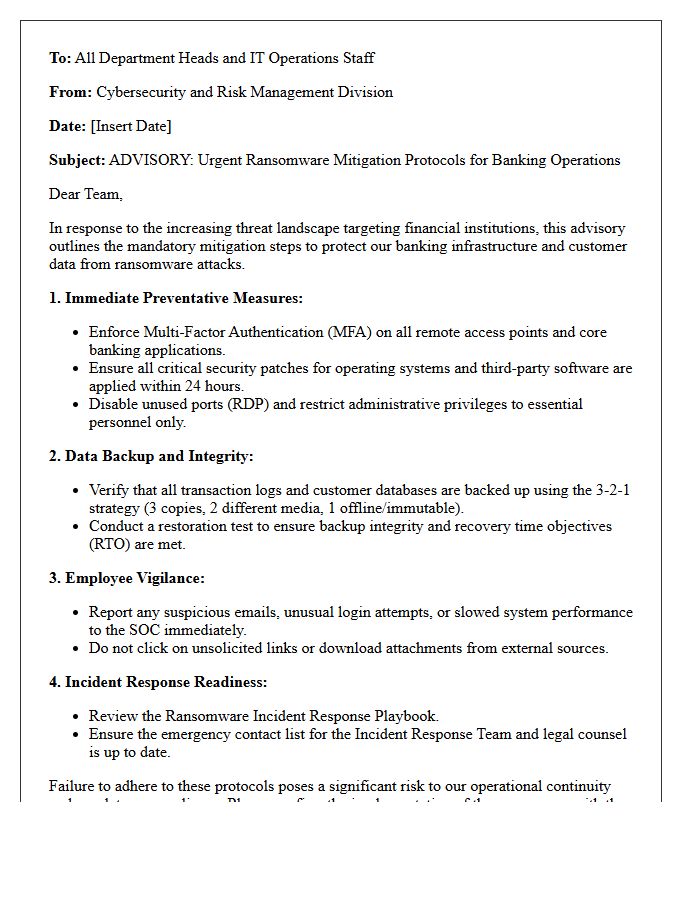
Financial institutions must prioritize a proactive Ransomware Attack Mitigation strategy to protect critical assets. This advisory letter outlines essential protocols, emphasizing the immutable backup of sensitive banking data and the enforcement of multi-factor authentication. Operations should focus on rapid incident response frameworks and regular vulnerability assessments to neutralize threats before encryption occurs. Ensuring employee awareness and robust network segmentation are vital steps in maintaining operational resilience. Adhering to these security standards minimizes financial loss, ensures regulatory compliance, and safeguards the integrity of customer trust during potential cyber emergencies.
Phishing Campaign Threat Mitigation Advisory Letter for Retail Banking
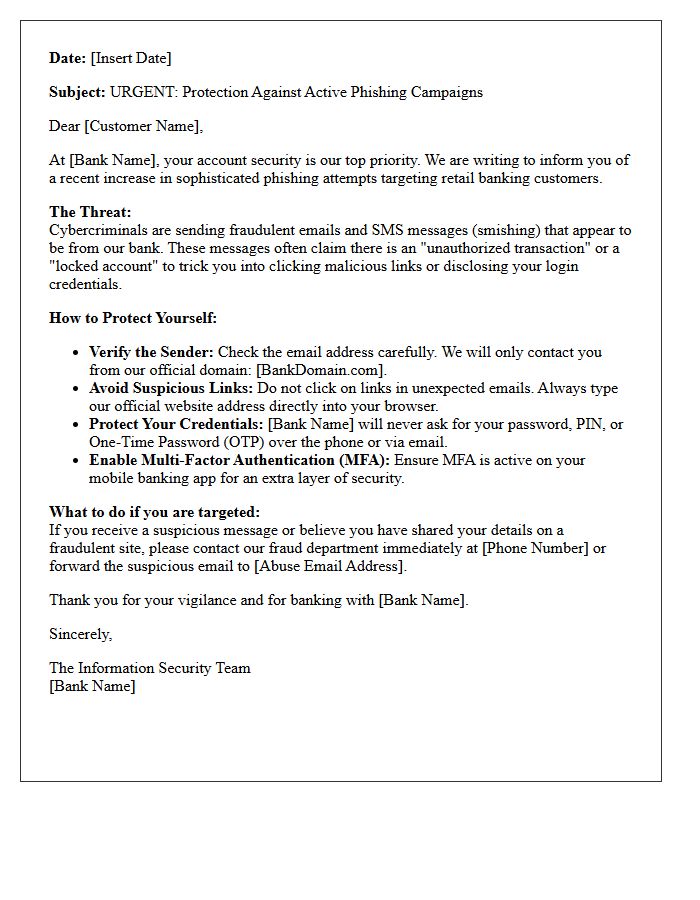
This advisory letter provides critical guidance for retail banking institutions to neutralize evolving phishing campaigns. It outlines proactive steps to identify deceptive emails, malicious URLs, and social engineering tactics targeting customer credentials. Implementing robust threat mitigation strategies, such as multi-factor authentication and real-time transaction monitoring, is essential to protect financial assets. Banks must prioritize employee training and clear customer communication to strengthen the security perimeter. Timely reporting of suspicious activity ensures rapid response, reducing the risk of data breaches and maintaining systemic trust within the global banking infrastructure.
Third-Party Vendor Cybersecurity Threat Advisory Letter
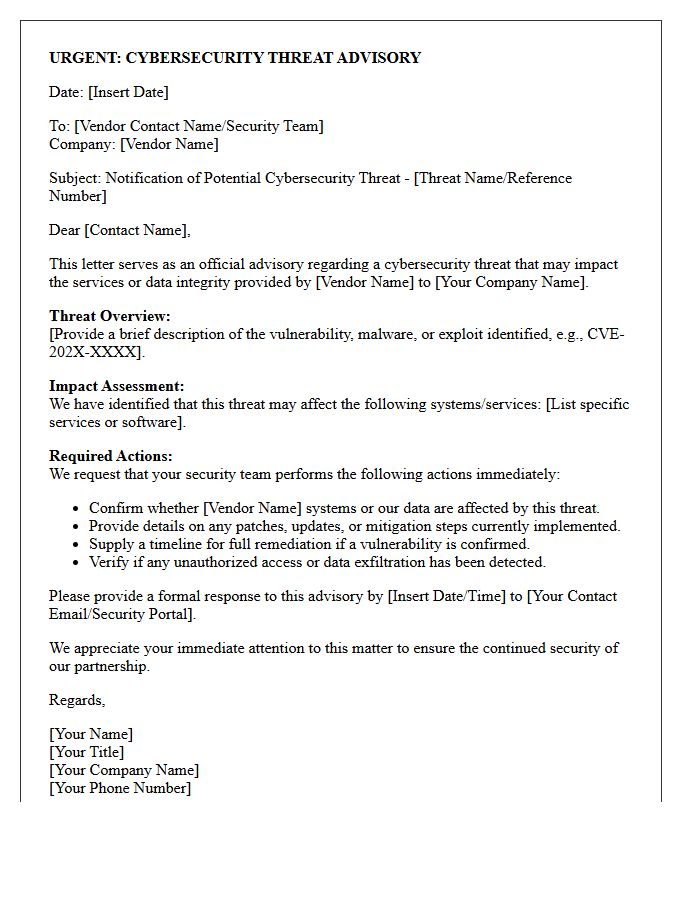
A Third-Party Vendor Cybersecurity Threat Advisory Letter is a critical notification informing stakeholders about potential vulnerabilities or active breaches within a service provider's network. It serves as an essential communication tool for risk mitigation, detailing how a security incident might compromise your organization's sensitive data. Upon receipt, companies must immediately assess their exposure, update security protocols, and verify vendor compliance. Timely response to these advisories is vital for maintaining operational integrity and preventing cascading supply chain attacks that could lead to devastating financial and legal consequences.
Mobile Banking Vulnerability Mitigation Advisory Letter
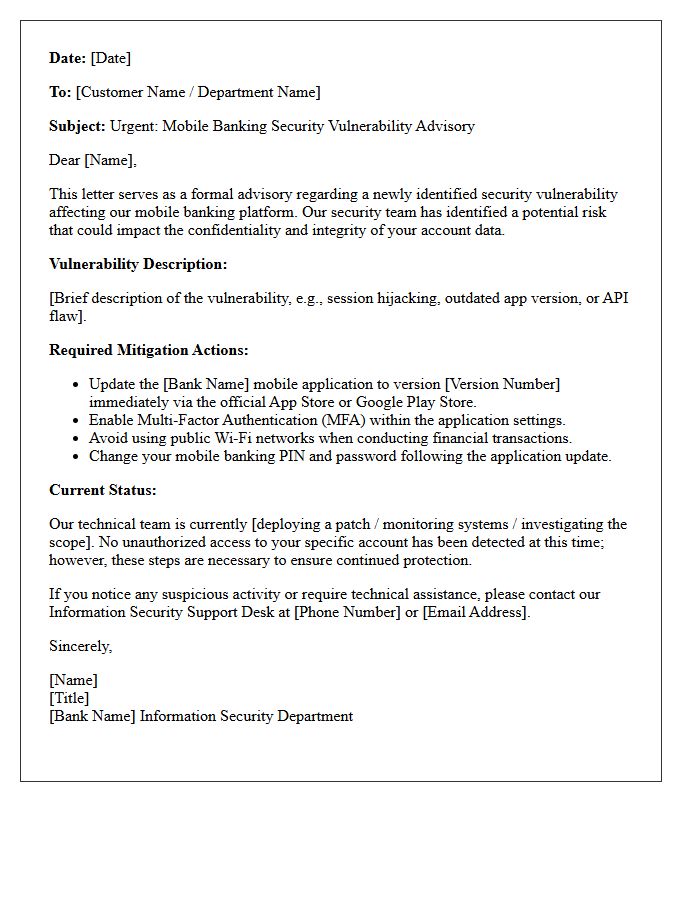
A Mobile Banking Vulnerability Mitigation Advisory Letter is a critical document designed to inform users about cybersecurity risks targeting financial applications. It outlines essential mitigation strategies to prevent unauthorized access and data breaches. Key recommendations include enabling multi-factor authentication, avoiding public Wi-Fi for transactions, and keeping device software updated. Financial institutions issue these advisories to enhance proactive defense mechanisms, ensuring customers understand how to safeguard their sensitive information against sophisticated mobile threats like phishing and malware. Staying informed through these letters is vital for maintaining personal financial security.
Internal Insider Threat Mitigation Advisory Letter for Financial Institutions
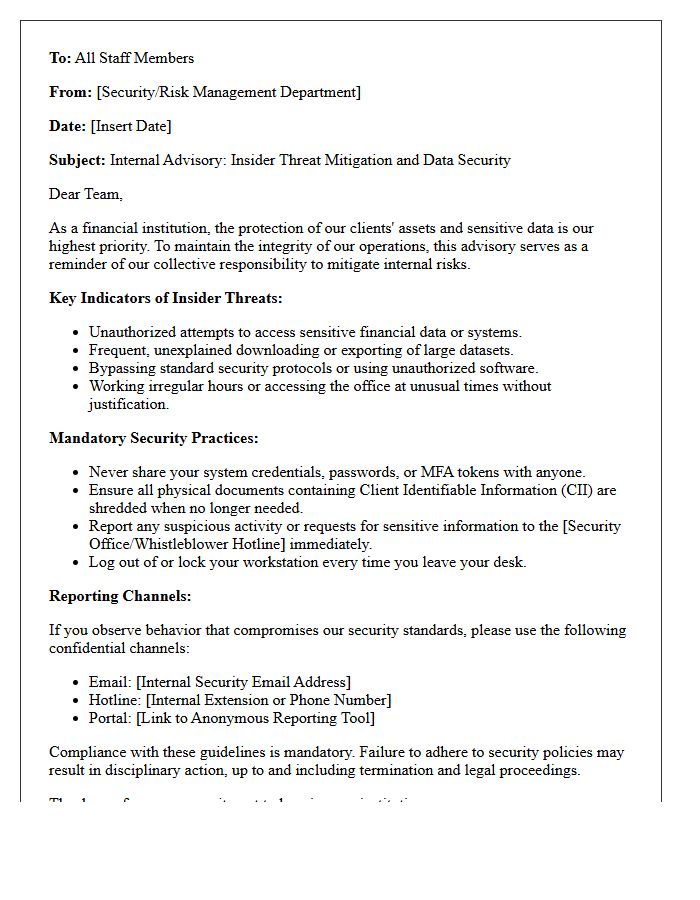
Financial institutions must prioritize an Internal Insider Threat Mitigation Advisory Letter to safeguard sensitive data. This formal document outlines protocols for detecting unauthorized access and behavioral anomalies among employees. It provides a strategic framework for risk assessment, ensuring compliance with banking regulations. By implementing these guidelines, organizations can effectively monitor high-privilege accounts and prevent financial fraud. Proactive communication through this advisory enhances institutional cybersecurity resilience, protecting both corporate assets and client trust against malicious or negligent internal actors.
Customer Data Privacy Mitigation Advisory Letter
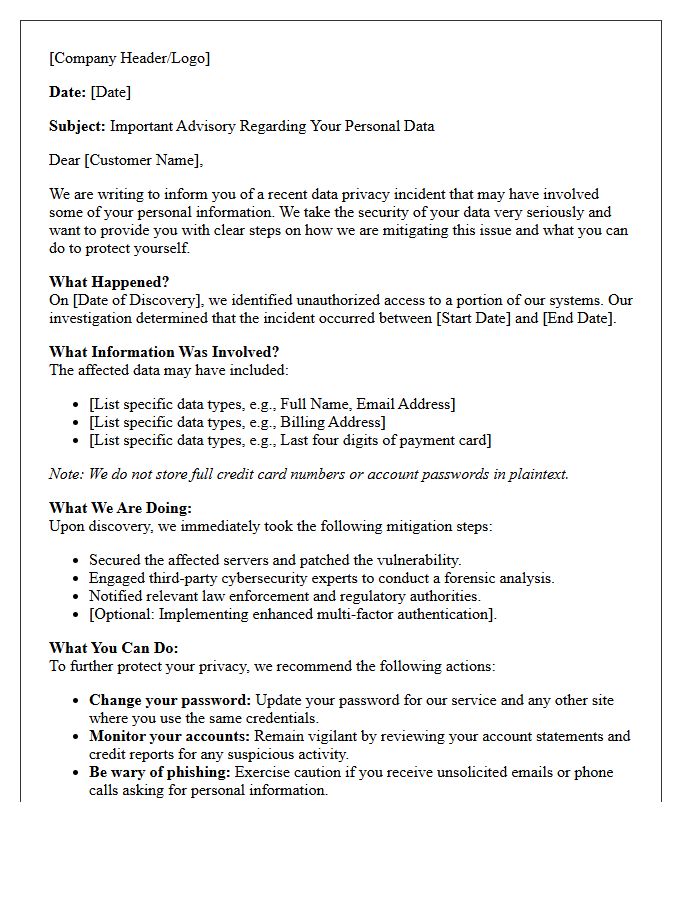
A Customer Data Privacy Mitigation Advisory Letter is a formal notification sent to individuals after a data breach. It outlines the specific types of compromised personal information and details the remediation steps being taken to minimize harm. This document typically offers protective services, such as credit monitoring or identity theft restoration, to affected parties. Its primary purpose is to fulfill legal transparency requirements, restore consumer trust, and provide actionable guidance for mitigating potential identity fraud risks. Receiving this letter indicates that your private data may be at risk and requires immediate attention.
Financial Trojan Threat Mitigation Advisory Letter
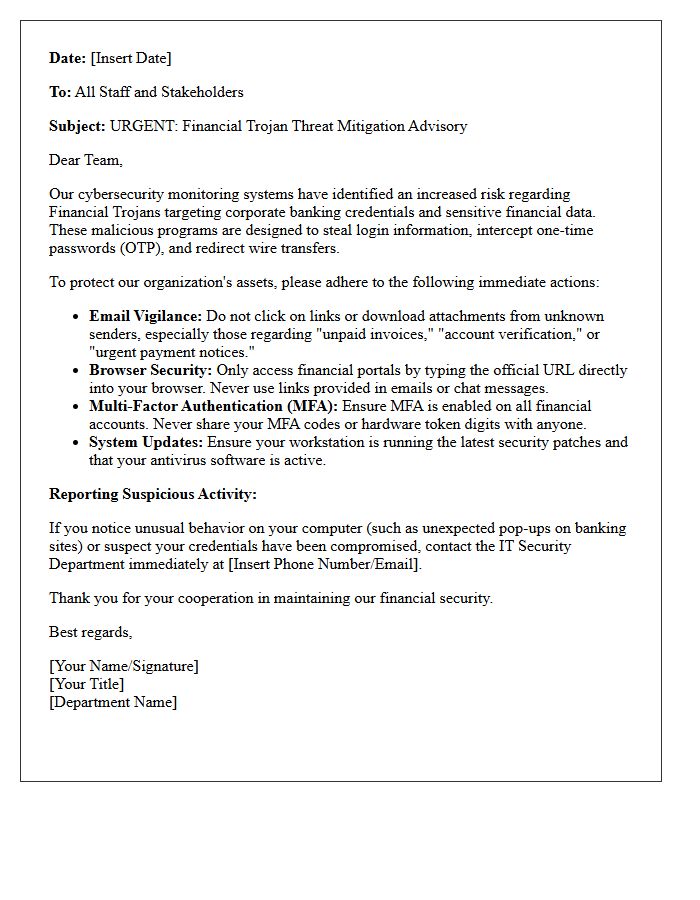
A Financial Trojan Threat Mitigation Advisory Letter is a critical communication designed to alert organizations about banking malware targeting sensitive data. These advisories provide actionable intelligence to prevent unauthorized fund transfers and credential theft. Key mitigation strategies include enforcing multi-factor authentication, performing regular security audits, and educating employees on phishing tactics. By implementing these recommended safeguards, businesses can significantly reduce the risk of financial loss and maintain systemic integrity against evolving cyber threats. Promptly reviewing these advisories ensures your infrastructure remains resilient against sophisticated administrative-level compromises.
Cloud Infrastructure Cyber Threat Advisory Letter for Banks
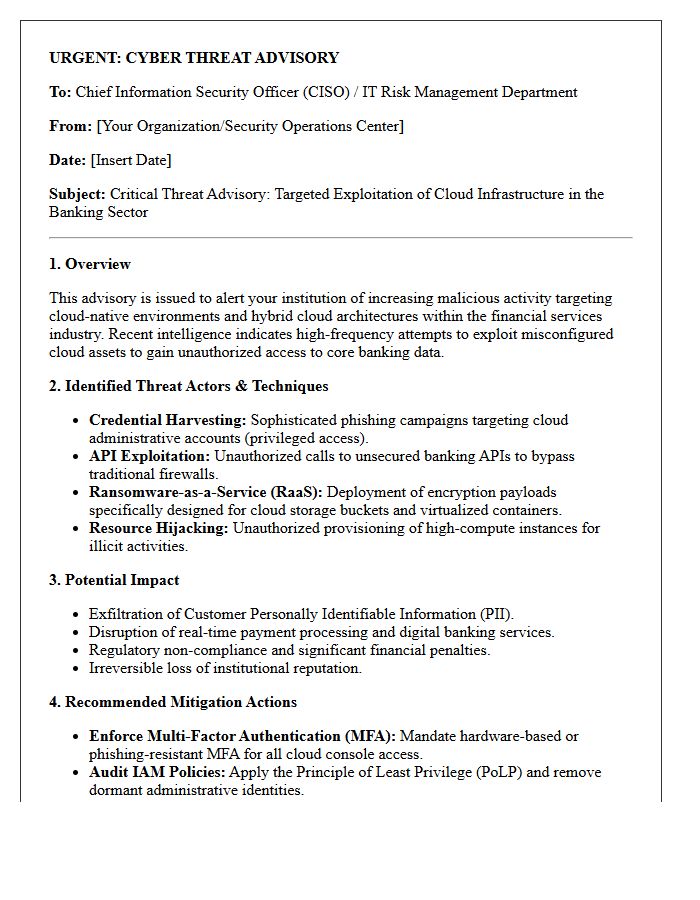
A Cloud Infrastructure Cyber Threat Advisory Letter informs banks about emerging vulnerabilities targeting distributed financial networks. These notices highlight risks like misconfigured storage, API insecurities, and sophisticated ransomware. Financial institutions must prioritize identity access management and data encryption to maintain regulatory compliance. This advisory serves as a critical blueprint for enhancing defensive postures against state-sponsored actors and cybercriminals. Promptly implementing these security recommendations ensures the resilience of cloud-based banking operations and protects sensitive customer information from unauthorized exploitation in an increasingly hostile digital landscape.
Post-Incident Cybersecurity Mitigation Advisory Letter
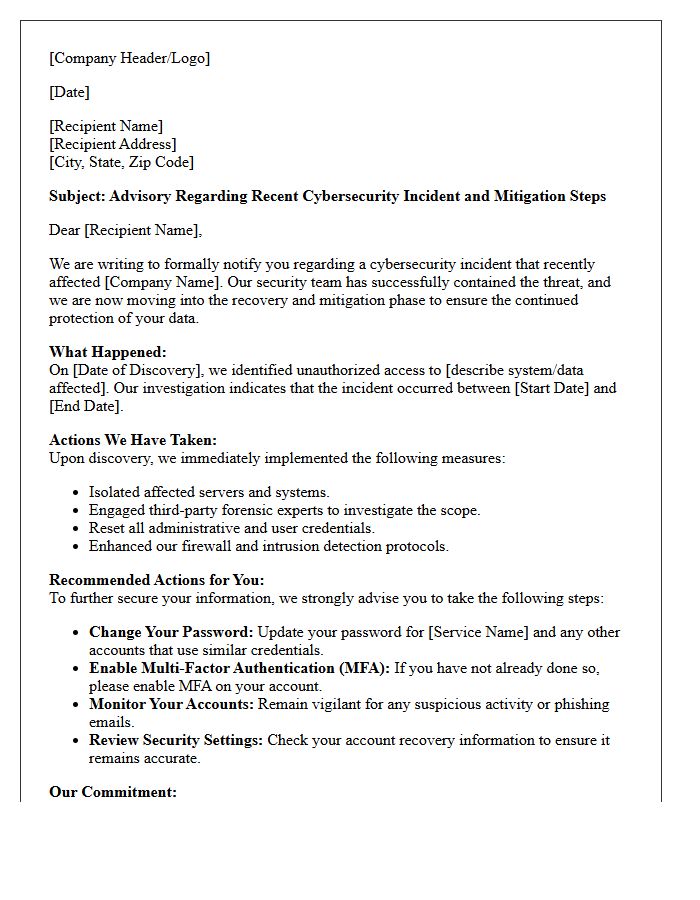
A Post-Incident Cybersecurity Mitigation Advisory Letter is a formal notification sent to stakeholders after a data breach. Its primary purpose is to provide transparency regarding the scope of the incident and legal compliance. The document outlines specific remediation steps, such as password resets and credit monitoring, to protect affected parties. It also detail technical improvements made to prevent future recurrences. Receiving this letter is a critical signal for users to heighten their security posture and follow all recommended defensive protocols to mitigate potential identity theft or further unauthorized access.
Wire Transfer Fraud Threat Mitigation Advisory Letter
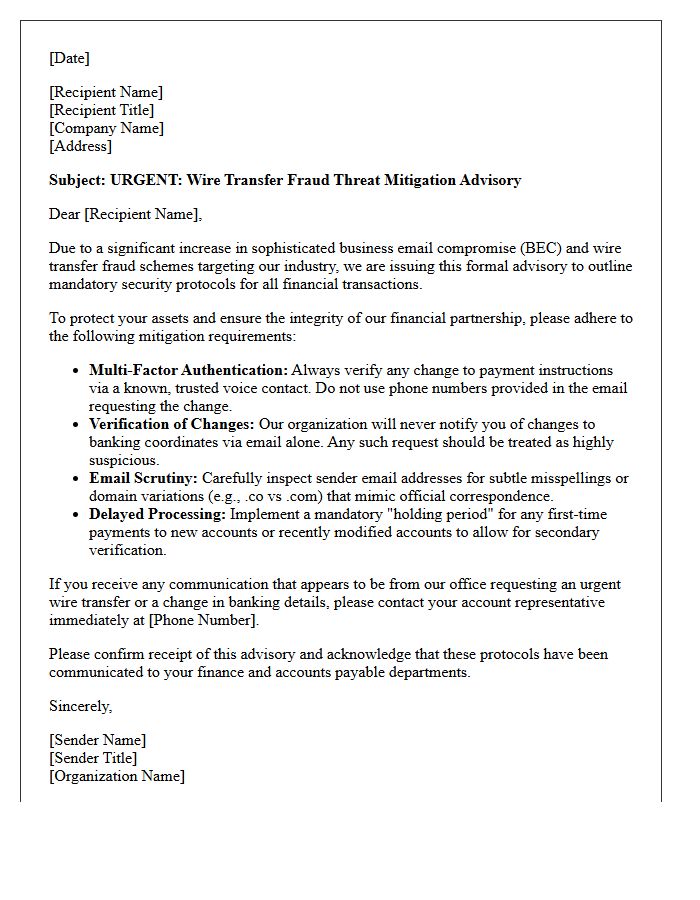
A Wire Transfer Fraud Threat Mitigation Advisory Letter is a critical communication designed to prevent business email compromise and unauthorized fund diversions. These letters alert organizations to evolving social engineering tactics used by cybercriminals to intercept financial transactions. Key mitigation strategies involve implementing multi-factor authentication and strictly enforcing voice-callback verification procedures for all banking change requests. Establishing these internal controls is essential to safeguarding corporate assets against sophisticated phishing schemes. Regularly updating employees on these security protocols ensures a proactive defense against significant financial losses and data breaches.
Executive Board Cybersecurity Threat Advisory Letter
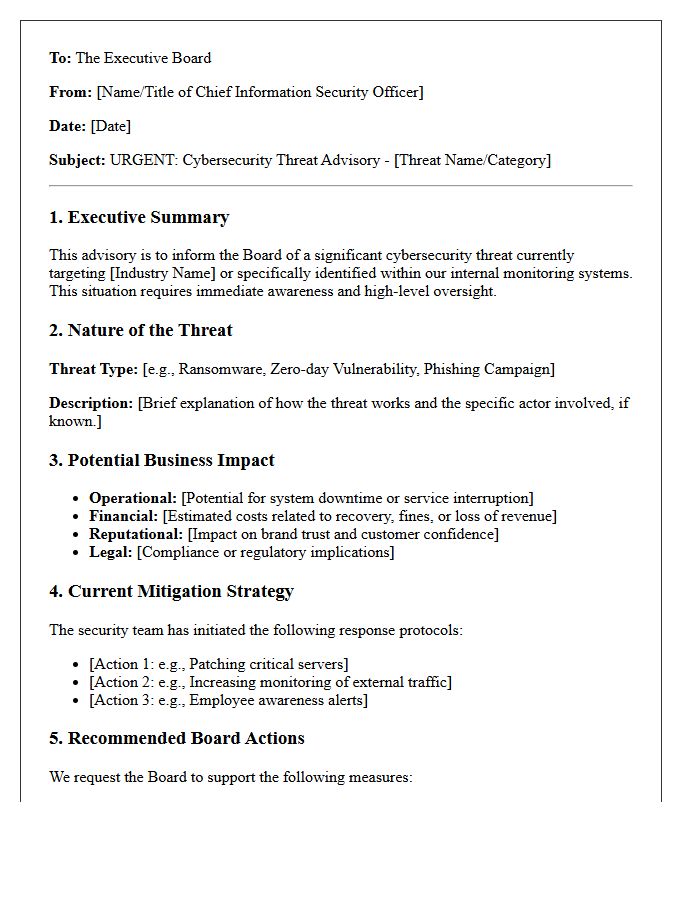
The Executive Board Cybersecurity Threat Advisory Letter is a high-level communication designed to inform leadership about critical vulnerabilities and emerging risks. It translates complex technical data into actionable business intelligence, focusing on potential financial impact and operational disruptions. This document prioritizes strategic mitigation strategies, ensuring that board members can make informed decisions regarding resource allocation and risk management. Understanding this advisory is essential for maintaining robust corporate governance and ensuring long-term organizational resilience against sophisticated cyber attacks and data breaches.
Advanced Persistent Threat Mitigation Advisory Letter for Core Banking Systems
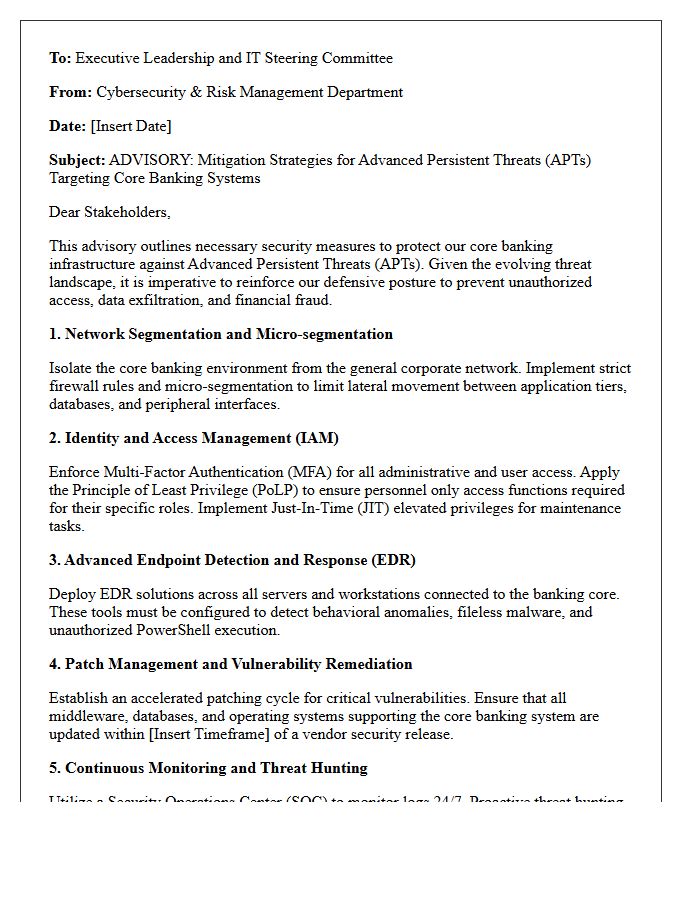
This advisory outlines critical defenses for core banking systems against an Advanced Persistent Threat (APT). Financial institutions must implement multi-layered security to prevent unauthorized access to sensitive ledgers. Key strategies include real-time anomaly detection, strict network segmentation, and Zero Trust architecture. Regular integrity audits and continuous monitoring are essential to neutralize stealthy, long-term intrusions. Prioritizing these measures ensures the resilience of financial data and maintains institutional trust against sophisticated state-sponsored or organized cybercriminals targeting central processing environments.
Automated Teller Machine Network Vulnerability Mitigation Advisory Letter
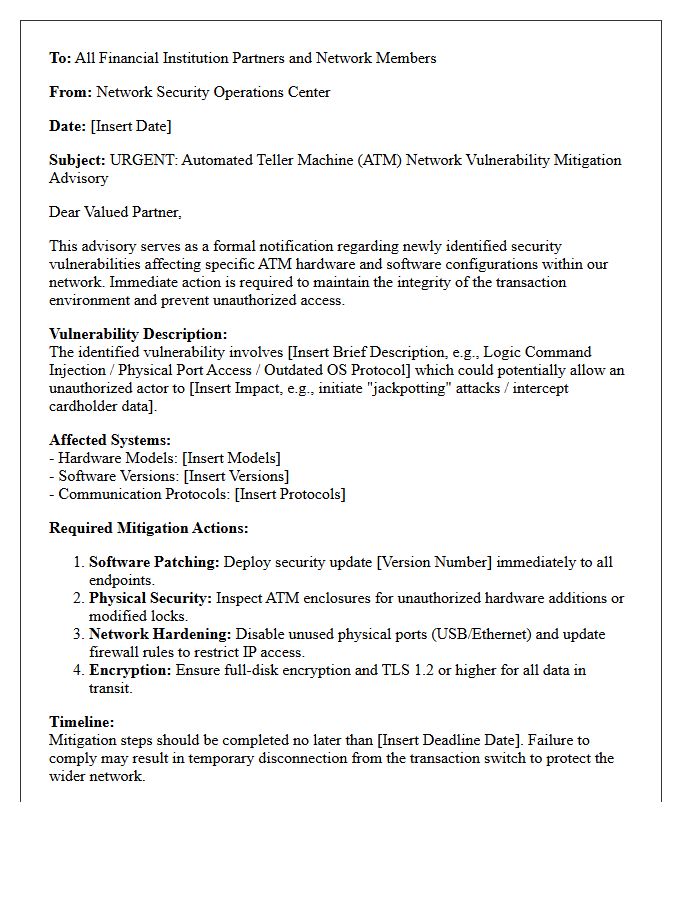
The ATM Network Vulnerability Mitigation Advisory provides critical security updates to protect financial infrastructure. It identifies systemic risks like jackpotting, black-box attacks, and skimming techniques used by cybercriminals. Financial institutions must implement end-to-end encryption, robust BIOS passwords, and physical security layers to prevent unauthorized access. Regular software patching and network segmentation are essential to neutralize malware threats. Adhering to these mitigation protocols ensures the integrity of cash transactions and maintains consumer trust by safeguarding sensitive banking data against evolving cybersecurity threats within global automated teller networks.
What is a Cybersecurity Threat Mitigation Advisory Letter?
A Cybersecurity Threat Mitigation Advisory Letter is an official communication sent to stakeholders to inform them of identified digital risks, ongoing security vulnerabilities, and the specific strategic actions required to neutralize or minimize those threats.
Why did I receive a Cybersecurity Threat Mitigation Advisory?
You received this advisory because our monitoring systems or security partners have detected a potential security gap, a new strain of malware, or an active phishing campaign that specifically targets your industry, organization, or data assets.
What immediate steps should be taken after reading the advisory?
Recipients should immediately follow the "Recommended Actions" section, which typically includes patching software vulnerabilities, updating firewall configurations, resetting compromised credentials, and conducting an endpoint security scan across the network.
How does this advisory help in long-term risk management?
This advisory serves as a roadmap for hardening your security posture by identifying systemic weaknesses, improving incident response times, and ensuring compliance with data protection regulations through proactive threat intelligence sharing.
Who should be notified about the contents of this threat advisory?
The contents should be shared with your internal IT department, the Chief Information Security Officer (CISO), and relevant department heads to ensure coordinated defense measures and employee awareness training are implemented effectively.


Comments