
A Lease Finance Audit Confirmation Letter is an essential document used to verify the accuracy of lease obligations, outstanding balances, and interest rates between lessees and lessors. This process ensures financial reporting integrity and compliance during annual audits. Streamline your verification workflow by using our professional samples; below are some ready to use template.

Image cover: Professional Lease Finance Audit Confirmation Templates and Letter Samples
Letter Samples List
- Standard Lease Finance Audit Confirmation Letter
- Outstanding Lease Obligation Audit Confirmation Letter
- Capital Lease Balance Audit Confirmation Letter
- Operating Lease Finance Audit Confirmation Letter
- Syndicated Lease Finance Audit Confirmation Letter
- Equipment Lease Finance Audit Confirmation Letter
- Commercial Real Estate Lease Finance Audit Confirmation Letter
- Lease Liability and Interest Audit Confirmation Letter
- Non-Performing Lease Finance Audit Confirmation Letter
- Master Lease Agreement Audit Confirmation Letter
- Financial Lease Receivables Audit Confirmation Letter
- Lease Finance Arrears and Penalties Audit Confirmation Letter
- Direct Financing Lease Audit Confirmation Letter
- Sale and Leaseback Finance Audit Confirmation Letter
- Foreign Currency Lease Finance Audit Confirmation Letter
Standard Lease Finance Audit Confirmation Letter
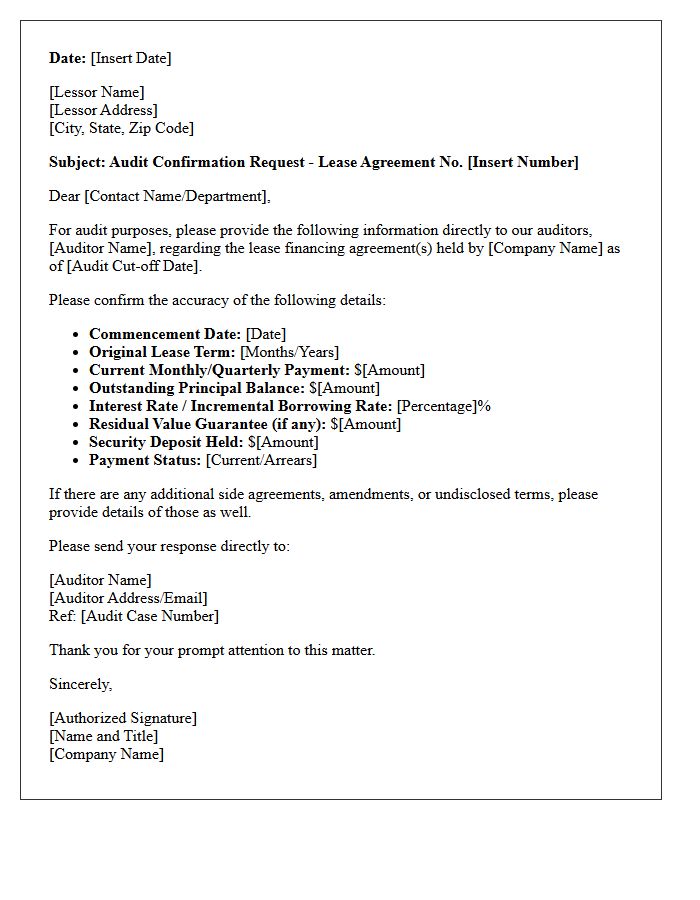
A Standard Lease Finance Audit Confirmation Letter is a formal document sent by auditors to verify the accuracy of lease obligations. It confirms critical financial data, including outstanding balances, interest rates, payment schedules, and maturity dates directly with the lessor. This process ensures the completeness and valuation of liabilities reported on a company's balance sheet. By reconciling internal records with external third-party statements, auditors mitigate risks of material misstatement and ensure compliance with accounting standards like ASC 842 or IFRS 16.
Outstanding Lease Obligation Audit Confirmation Letter
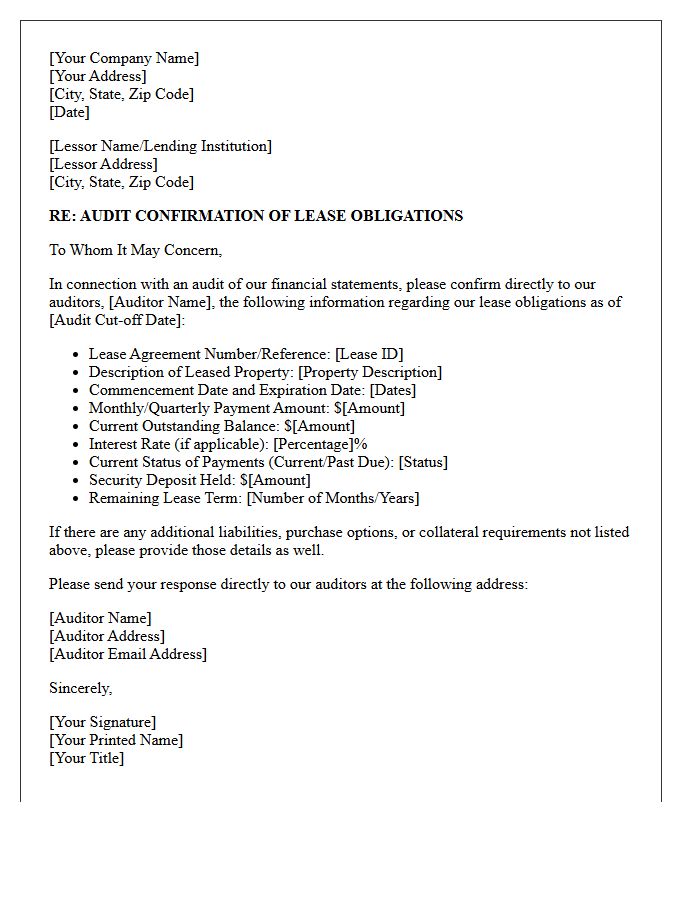
An Outstanding Lease Obligation Audit Confirmation Letter is a formal request sent by auditors to verify a company's financial liabilities with its lessor. It ensures that the lease terms, remaining balances, and interest rates reported on the balance sheet are accurate and complete. This process helps prevent financial misstatement and confirms compliance with accounting standards. Proper documentation of these obligations is essential for financial transparency and provides third-party validation of a business's long-term debt commitments during a year-end audit.
Capital Lease Balance Audit Confirmation Letter
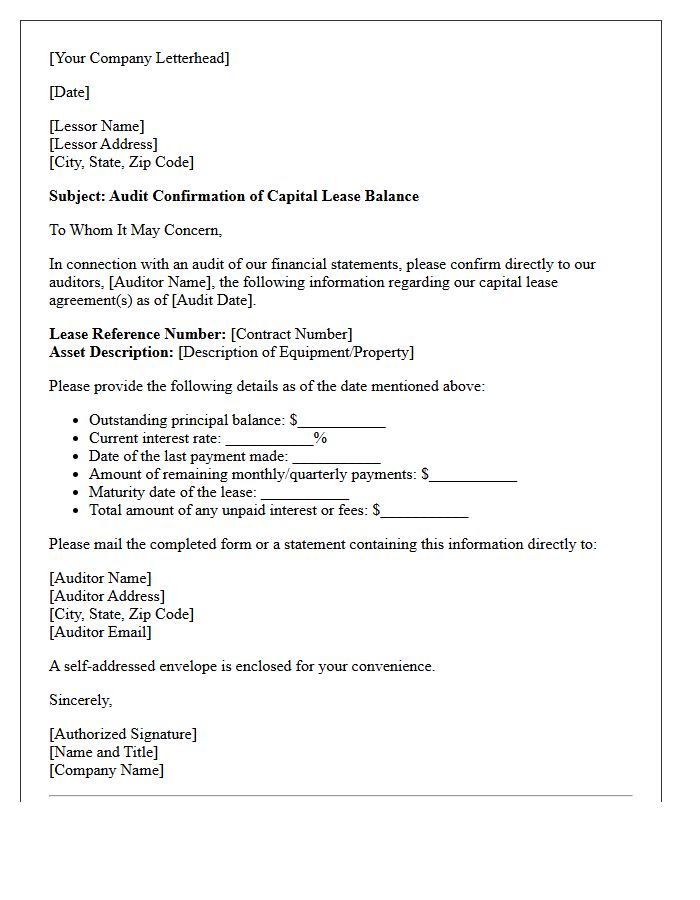
A Capital Lease Balance Audit Confirmation Letter is a formal request sent by auditors to a lessor to verify the accuracy of financial obligations. It validates critical details, including the outstanding principal, interest rates, and payment schedules. This external verification ensures the lease is correctly classified on the balance sheet according to accounting standards. Accurate confirmations are essential for identifying unrecorded liabilities and ensuring the integrity of financial statements. Companies must provide authorization to lessors to release this sensitive data, facilitating a transparent audit trail for regulatory compliance and stakeholder trust.
Operating Lease Finance Audit Confirmation Letter
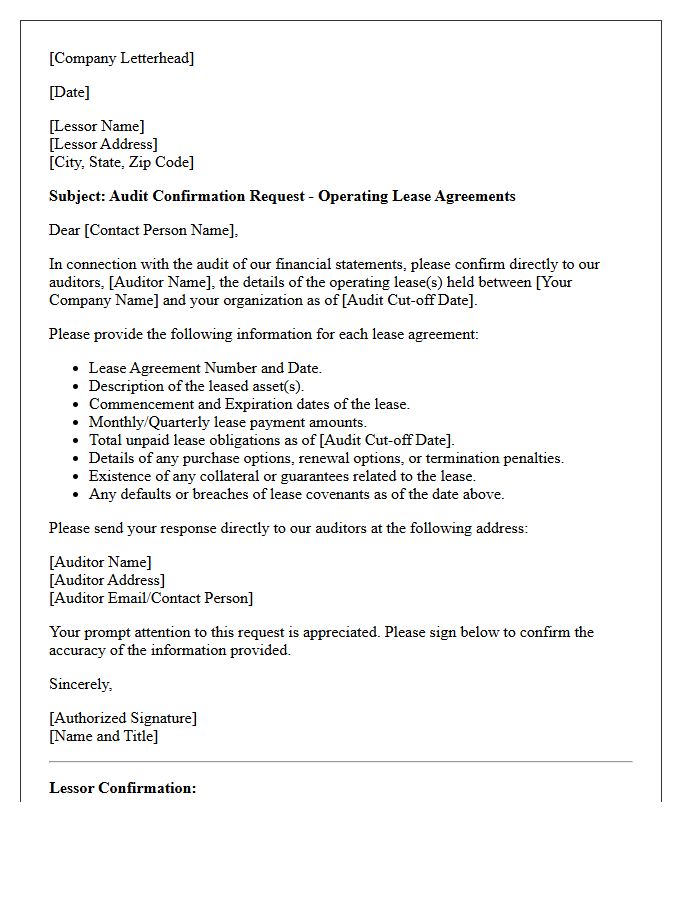
An Operating Lease Finance Audit Confirmation Letter is a formal request sent by auditors to verify off-balance sheet obligations and contractual terms with lessors. This document confirms critical financial data, including payment schedules, remaining lease terms, and outstanding balances. Ensuring accuracy in these letters is essential for financial transparency and regulatory compliance under modern accounting standards. It serves as independent evidence to validate that lease liabilities and asset usage are correctly reported, helping to prevent material misstatements in a company's financial statements during the annual audit process.
Syndicated Lease Finance Audit Confirmation Letter
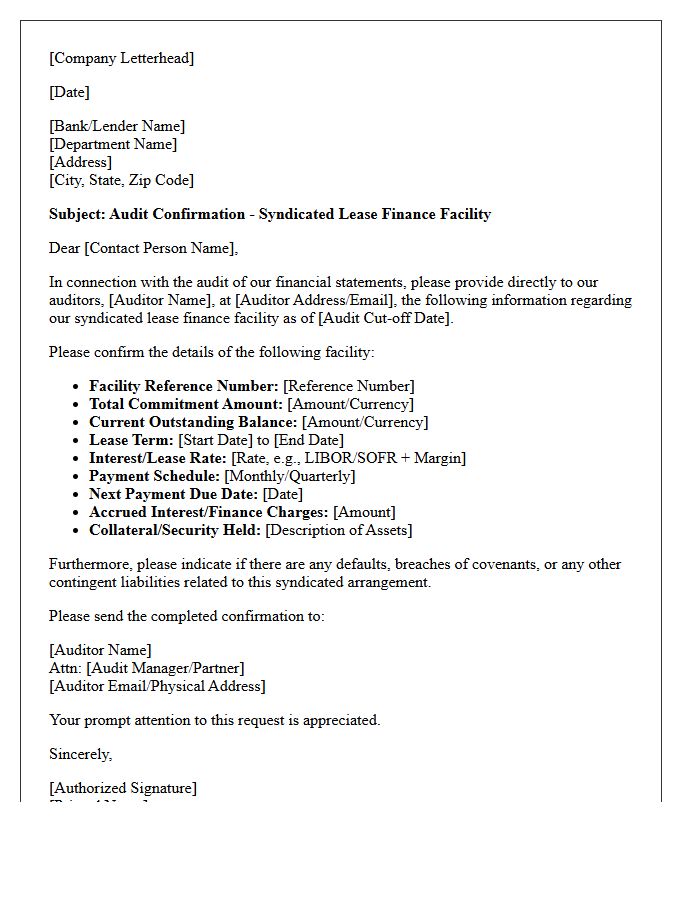
A Syndicated Lease Finance Audit Confirmation Letter is a formal request used to verify the accuracy of financial obligations within a multi-lender agreement. It ensures that the outstanding balance, interest rates, and payment terms reported by the borrower align with the records of the lead agent and participating banks. This document is crucial for financial transparency and regulatory compliance, helping auditors detect discrepancies or undisclosed liabilities. It confirms the specific commitment levels of each syndicate member, ensuring the integrity of the financial statements during an annual or periodic audit process.
Equipment Lease Finance Audit Confirmation Letter
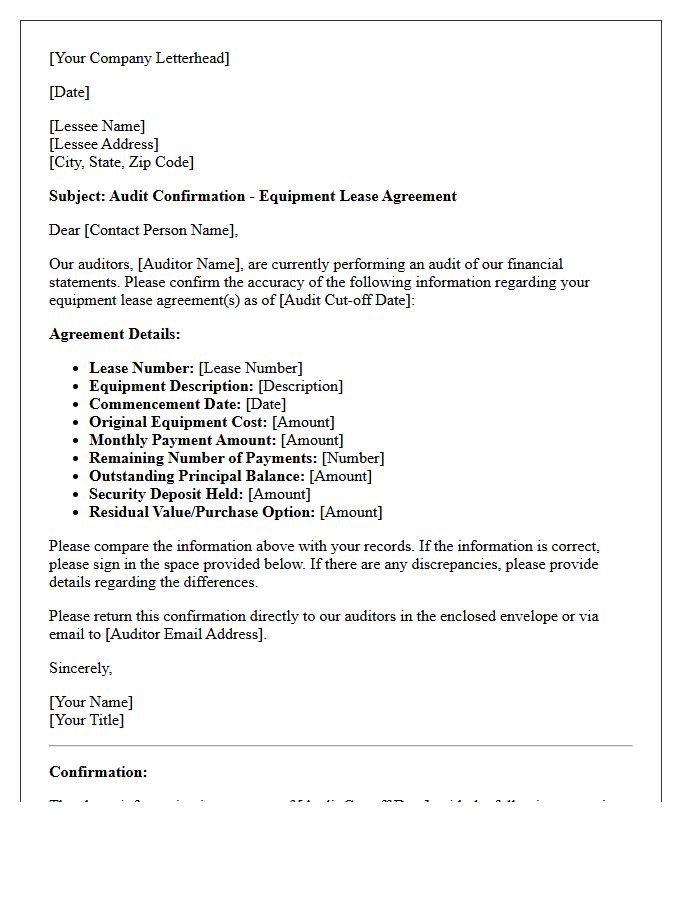
An Equipment Lease Finance Audit Confirmation Letter is a formal request sent by auditors to verify the accuracy of financial records. It ensures that the outstanding balance, payment terms, and lease obligations reported by a company match the records of the financing institution. This process is essential for financial transparency and fraud prevention, confirming the existence of assets and the validity of liabilities. Timely responses are critical to complete the audit trail and maintain compliance with accounting standards, protecting both the lessee and the financial stakeholders involved in the transaction.
Commercial Real Estate Lease Finance Audit Confirmation Letter
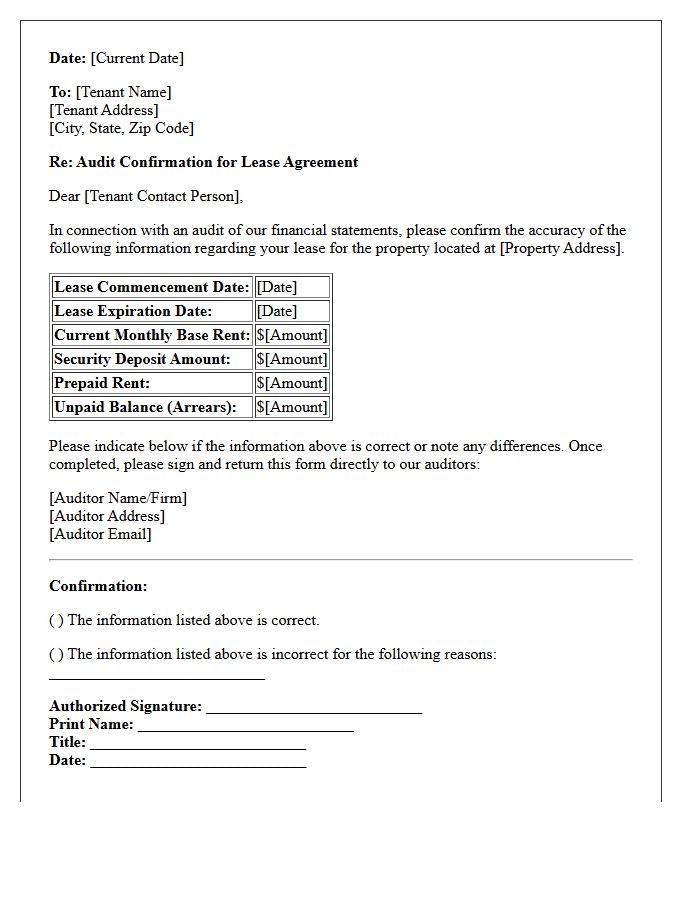
A Commercial Real Estate Lease Finance Audit Confirmation Letter is a formal document used by auditors to verify financial obligations and lease terms directly with third parties. It ensures the accuracy of balance sheet liabilities, monthly rent amounts, and security deposits. This process mitigates risks of financial misstatement by confirming lease commencement dates and outstanding balances. For property owners and tenants, responding accurately to these requests is essential for maintaining transparent financial reporting and satisfying statutory audit requirements during annual fiscal reviews or major property transactions.
Lease Liability and Interest Audit Confirmation Letter
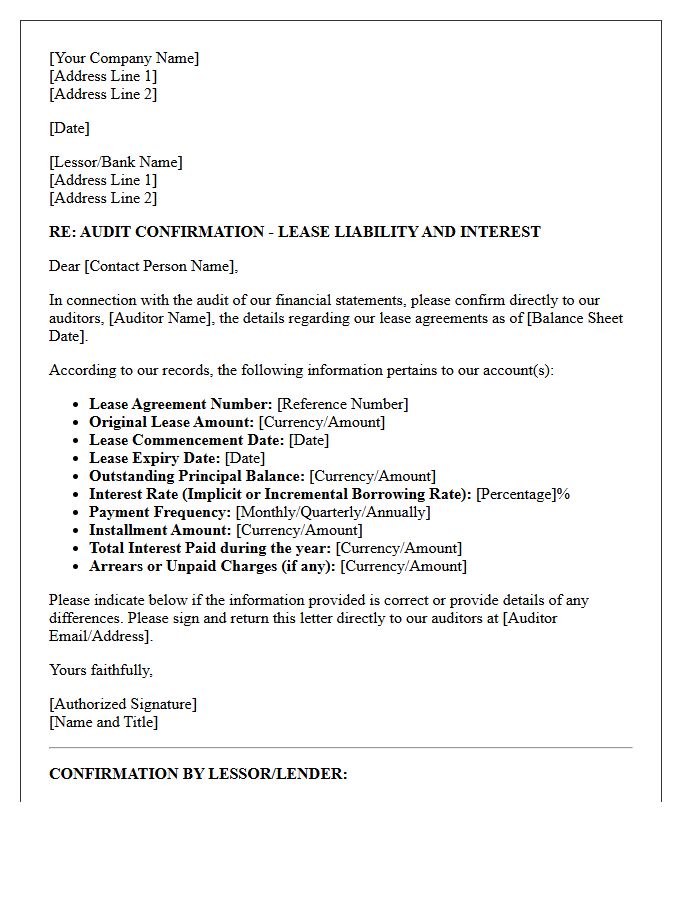
A Lease Liability and Interest Audit Confirmation Letter is a formal request sent to lessors to verify outstanding balances and financial terms under IFRS 16 or ASC 842. This document ensures the accuracy of reported debts, interest expenses, and payment schedules on financial statements. Auditors use this third-party verification to mitigate risks of material misstatement. Key details confirmed include the principal balance, applicable discount rates, and lease duration. Obtaining direct confirmation is a critical procedure for validating financial obligations and ensuring full compliance with modern accounting standards during a year-end audit.
Non-Performing Lease Finance Audit Confirmation Letter
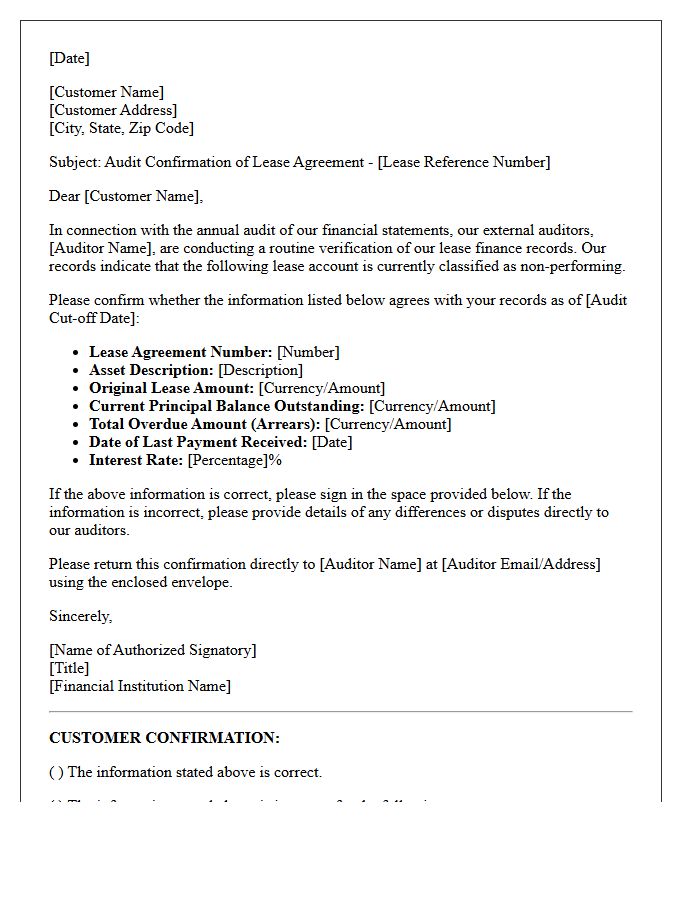
A Non-Performing Lease Finance Audit Confirmation Letter is a critical verification tool used by auditors to validate the accuracy of defaulted lease agreements. It requires the lessee to confirm outstanding balances, arrears, and collateral status directly. This process ensures transparency in financial reporting and helps identify potential credit losses or reporting discrepancies. By verifying these high-risk assets, financial institutions can accurately assess their impairment provisions and maintain regulatory compliance while mitigating the risk of financial misstatement regarding non-accrual lease portfolios.
Master Lease Agreement Audit Confirmation Letter
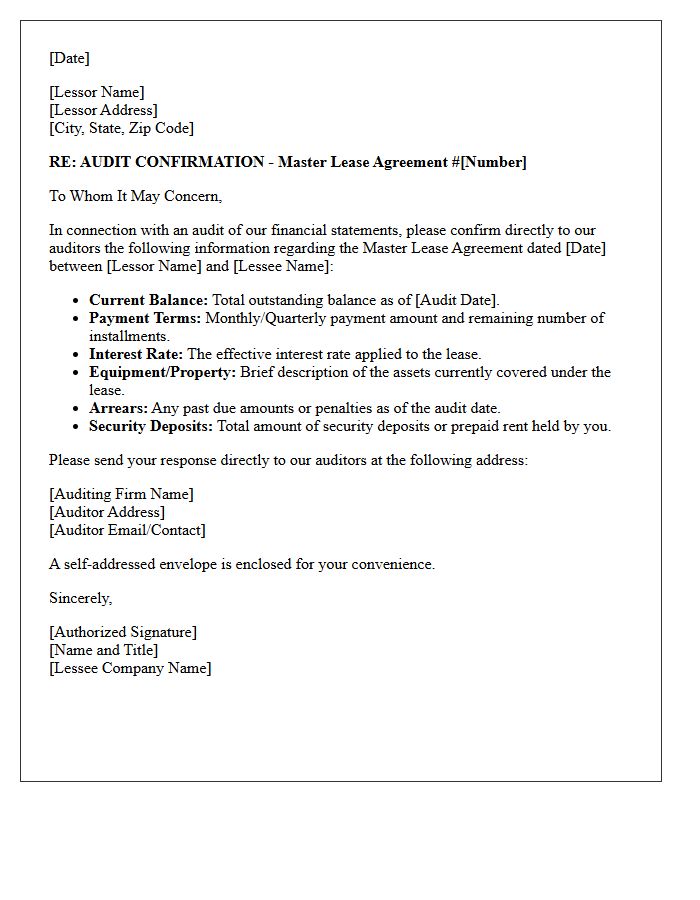
A Master Lease Agreement Audit Confirmation Letter is a formal request sent by auditors to verify the accuracy of financial obligations. It ensures that the lease terms, outstanding balances, and payment schedules recorded in a company's books align with the lessor's records. This process is critical for financial reporting compliance and internal control validation. By confirming details like asset descriptions and interest rates, organizations prevent discrepancies, mitigate fraud risks, and guarantee transparency in long-term equipment or property financing agreements during a standard corporate audit.
Financial Lease Receivables Audit Confirmation Letter
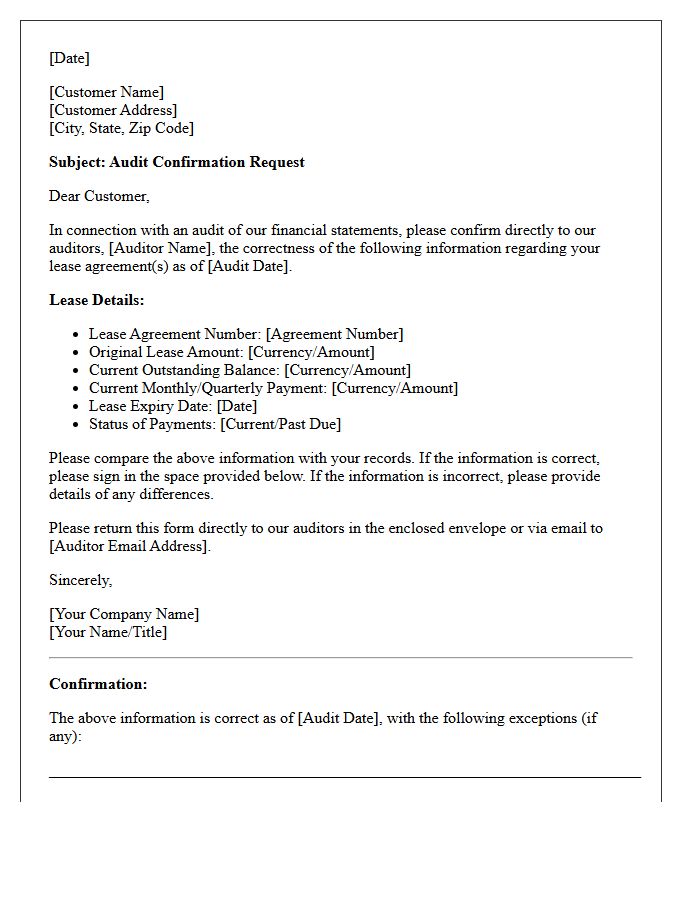
A financial lease receivables audit confirmation letter is a crucial verification tool used by auditors to validate the accuracy of a balance sheet. This document requests that lessees confirm outstanding lease obligations, interest rates, and payment terms directly with the auditor. By reconciling internal records with external third-party data, companies ensure the existence and valuation of reported assets. Timely responses are essential to identify potential reporting discrepancies, prevent fraud, and maintain compliance with financial reporting standards during an annual audit process.
Lease Finance Arrears and Penalties Audit Confirmation Letter
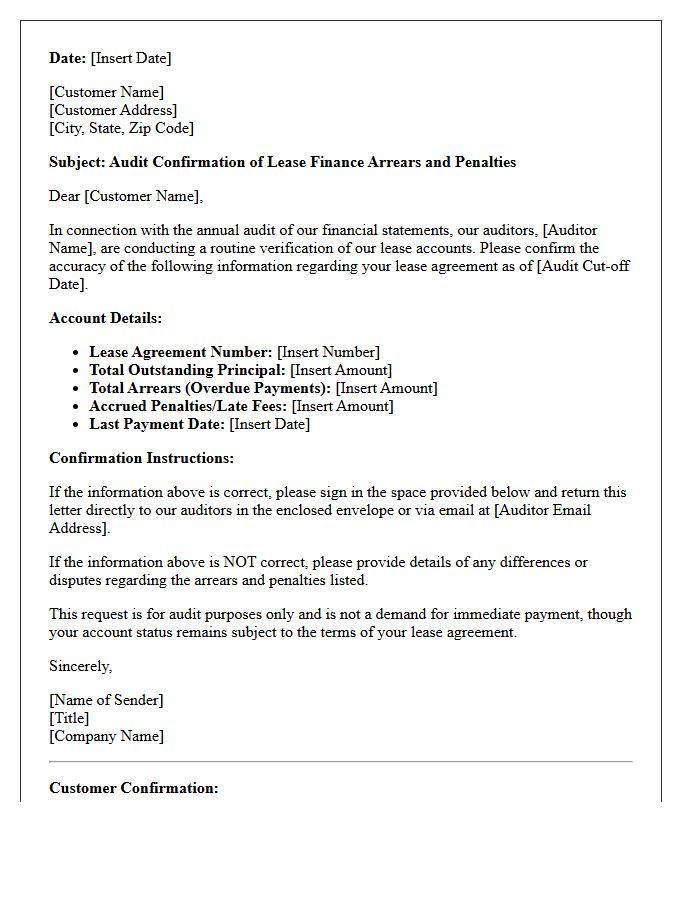
A Lease Finance Arrears and Penalties Audit Confirmation Letter is a formal document used to verify the accuracy of outstanding balances recorded in financial statements. Auditors send this request to lessees to confirm specific arrears, accrued interest, and penalty charges associated with lease agreements. This process ensures transparency and validates that the lessor's reported assets are correctly valued. It is a critical control measure for identifying reporting discrepancies, preventing fraud, and ensuring regulatory compliance during a comprehensive financial audit of leasing activities.
Direct Financing Lease Audit Confirmation Letter
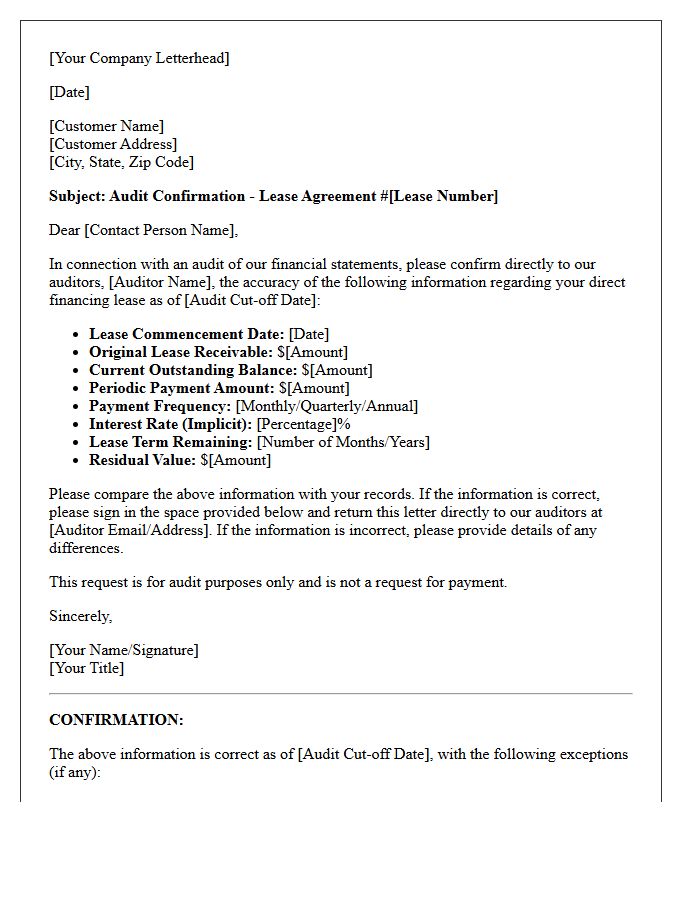
A Direct Financing Lease Audit Confirmation Letter is a formal request sent by auditors to verify the accuracy of lease financial data. It requires the lessee to confirm the outstanding principal balance, interest rates, and remaining payment schedules. This process ensures the asset valuation and revenue recognition align with accounting standards like ASC 842. Accurate responses help detect discrepancies, prevent reporting errors, and validate the existence of the contractual obligation between the lessor and lessee, ensuring transparency in financial statements and maintaining audit compliance.
Sale and Leaseback Finance Audit Confirmation Letter
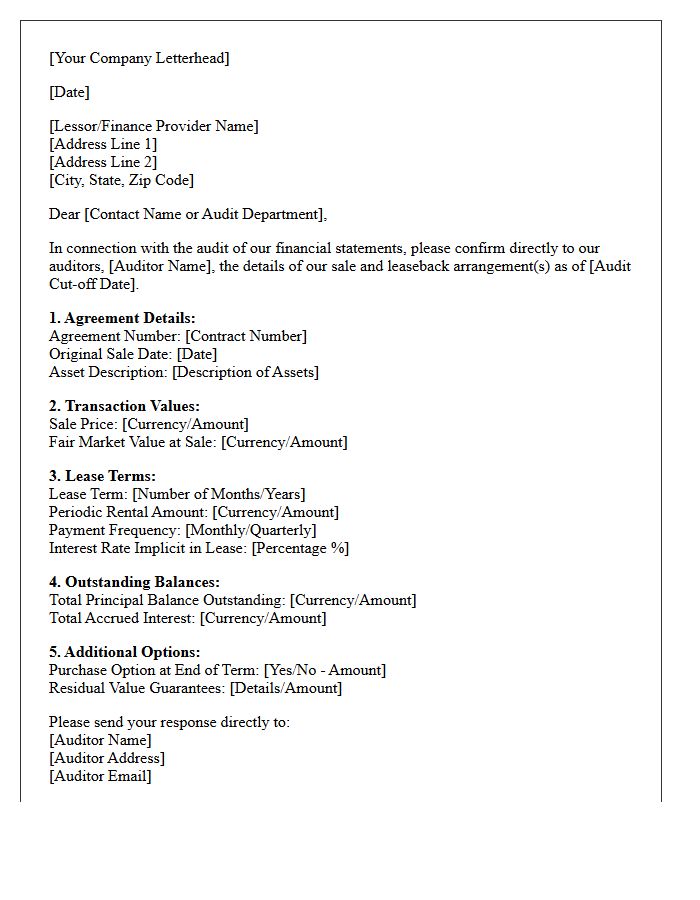
A Sale and Leaseback Finance Audit Confirmation Letter is a formal document used by auditors to verify the accuracy of off-balance-sheet financing arrangements. It ensures that the asset valuation, lease terms, and recognized gains or losses align with accounting standards like IFRS 16 or ASC 842. This verification process prevents financial misstatement by confirming the transaction's commercial substance and legal transfer of ownership between the seller-lessee and the buyer-lessor. Accurate confirmation is essential for maintaining transparent financial reporting and ensuring that the entity's long-term liabilities and liquidity ratios are correctly disclosed to stakeholders.
Foreign Currency Lease Finance Audit Confirmation Letter
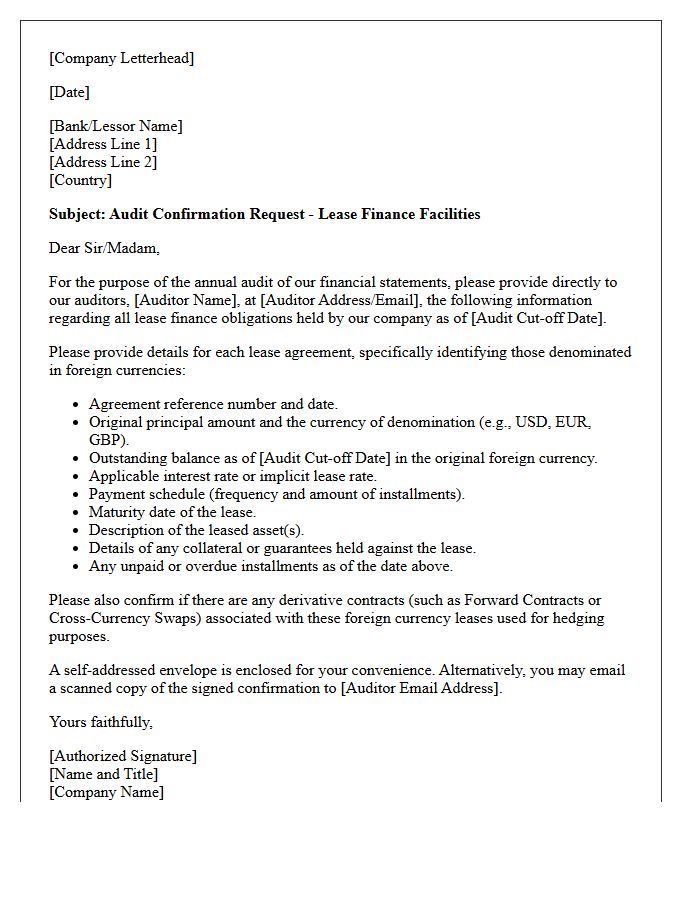
A Foreign Currency Lease Finance Audit Confirmation Letter is a critical verification document used by auditors to validate outstanding lease liabilities held in non-local denominations. It ensures the accuracy of reported exchange rates, remaining principal balances, and interest terms. This independent verification mitigates risks related to translation errors and financial misstatements. By reconciling lessor records with the lessee's balance sheet, auditors confirm that foreign exchange fluctuations are correctly accounted for, maintaining compliance with international accounting standards and providing a transparent view of the entity's long-term contractual obligations.
What is a Lease Finance Audit Confirmation Letter?
A lease finance audit confirmation letter is a formal request sent by an independent auditor to a lessor or lessee to verify the accuracy of lease-related financial data, such as outstanding balances, interest rates, and payment terms, reported in a company's financial statements.
What key information is verified in a lease audit confirmation?
The letter typically confirms critical contractual details including the commencement date, remaining lease liability, periodic payment amounts, residual value guarantees, security deposits, and any contingent rent provisions or lease incentives.
Why do auditors require third-party confirmation for lease financing?
Auditors use third-party confirmations to obtain reliable evidence directly from external sources, ensuring that the lease obligations and assets disclosed in the balance sheet exist, are accurately valued, and comply with accounting standards like ASC 842 or IFRS 16.
Who is responsible for sending and signing the lease confirmation request?
While the auditor prepares the document and manages the mailing process, the management of the company being audited must sign the request to authorize the lessor or financial institution to release confidential lease information to the auditor.
How does a lease confirmation help in detecting undisclosed liabilities?
By comparing the lessor's records with the lessee's books, the confirmation process helps identify discrepancies, such as unrecorded lease modifications, missed payments, or side agreements that could indicate undisclosed financial obligations or errors in the financial records.


Comments