
A Line of Credit Audit Confirmation Letter is a formal request sent by auditors to financial institutions to verify the accuracy of a company's reported credit balances and terms. This process ensures financial transparency and debt compliance during an external audit. To streamline your documentation process, below are some ready to use template options.

Image cover: Mastering the Line of Credit Audit Confirmation: Professional Templates and Best Practices
Letter Samples List
- Standard Commercial Line of Credit Audit Confirmation Letter
- Revolving Line of Credit Balance Confirmation Letter
- Secured Business Line of Credit Audit Letter
- Unsecured Corporate Line of Credit Confirmation Letter
- Zero Balance Line of Credit Audit Confirmation Letter
- Syndicated Line of Credit Facility Audit Letter
- Real Estate Equity Line of Credit Confirmation Letter
- Standby Letter of Credit Audit Confirmation Letter
- Equipment Financing Line of Credit Audit Letter
- Seasonal Working Capital Line of Credit Confirmation Letter
- Agricultural Line of Credit Bank Audit Letter
- International Trade Line of Credit Confirmation Letter
Standard Commercial Line of Credit Audit Confirmation Letter
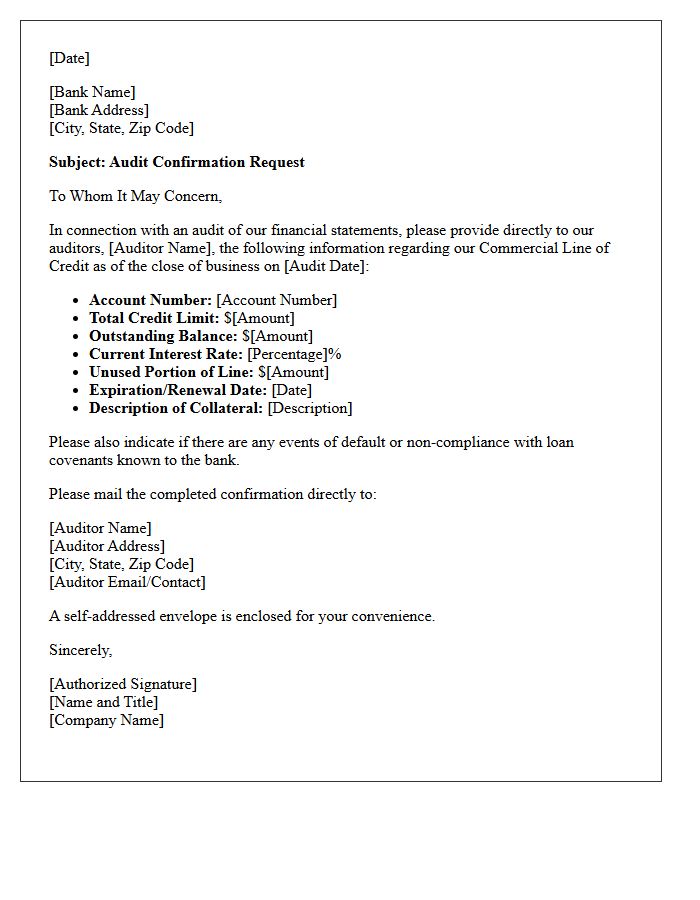
A Standard Commercial Line of Credit Audit Confirmation Letter is a formal verification request used by auditors to corroborate financial details with lending institutions. This process ensures the accuracy of reported outstanding balances, interest rates, and available credit limits. It serves as critical third-party evidence to detect undisclosed liabilities and confirm compliance with loan covenants. By validating the integrity of a company's financial statements, this document mitigates risk and prevents material misstatements during the annual auditing cycle.
Revolving Line of Credit Balance Confirmation Letter
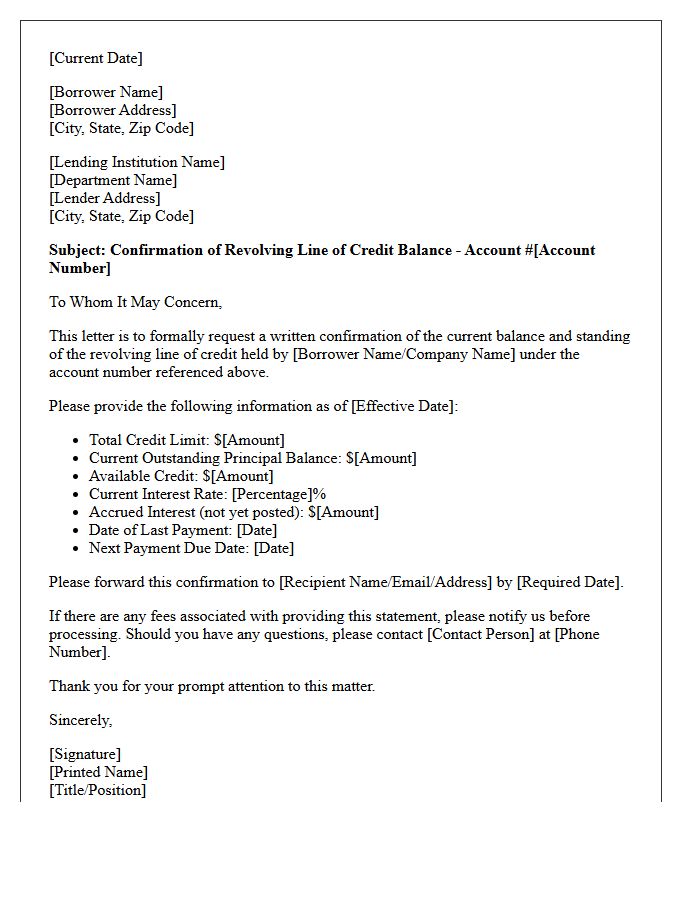
A Revolving Line of Credit Balance Confirmation Letter is a formal document issued by a financial institution to verify the current outstanding debt and available credit limit. This statement is essential for financial auditing and accounting transparency, ensuring that internal records match the bank's ledger. It typically includes the account number, interest rates, and repayment terms. Stakeholders use this confirmation to assess liquidity and debt obligations accurately. Obtaining this letter helps businesses maintain precise financial reporting and ensures compliance during professional audits or loan reviews.
Secured Business Line of Credit Audit Letter
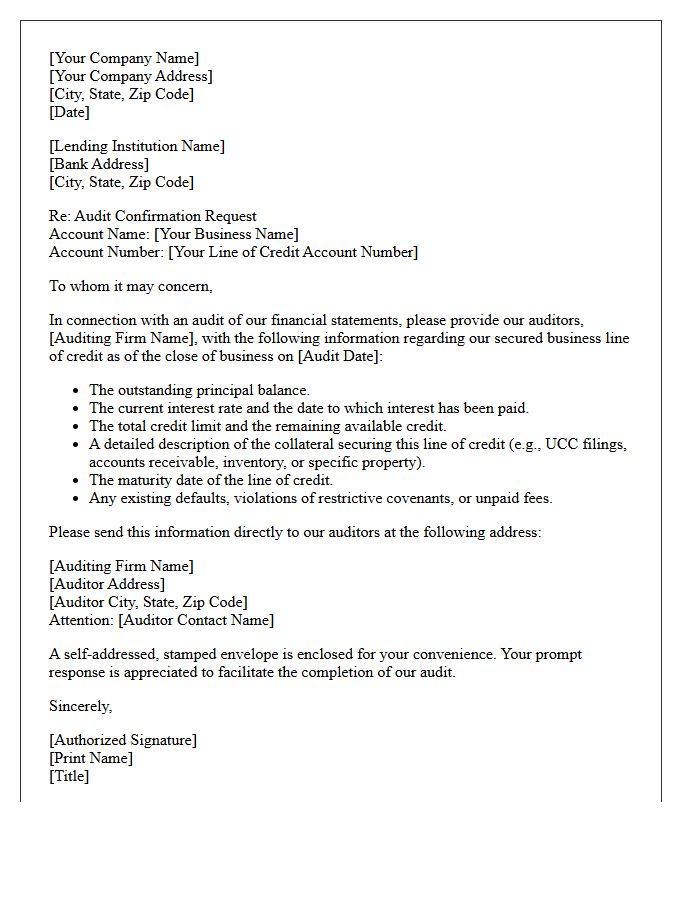
A Secured Business Line of Credit Audit Letter is a formal request sent by auditors to a financial institution to verify the details of a company's borrowing arrangement. This document confirms the outstanding balance, interest rates, and specific assets used as collateral. It serves as a critical internal control to ensure financial statements accurately reflect liabilities and debt obligations. Businesses must ensure all records align with the bank's response to maintain compliance and transparency during an external examination of their financial health and credit standing.
Unsecured Corporate Line of Credit Confirmation Letter
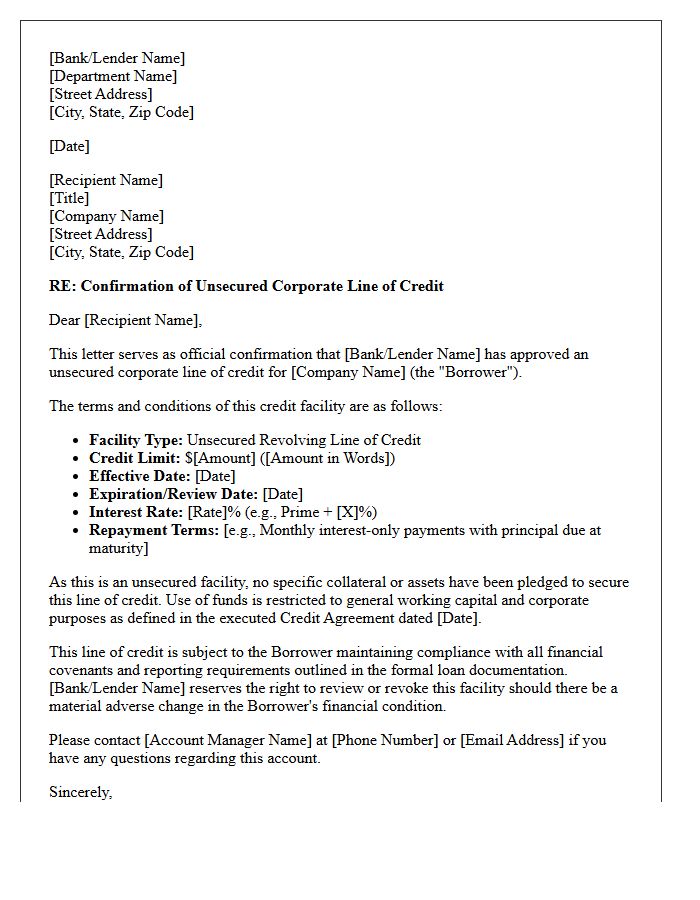
An Unsecured Corporate Line of Credit Confirmation Letter is an official document issued by a lender verifying the availability of flexible business funding. Unlike secured loans, this facility does not require collateral, relying instead on the company's creditworthiness and financial history. The letter confirms the maximum borrowing limit, interest rates, and repayment terms. It serves as essential proof of liquidity, demonstrating to partners or vendors that the business possesses the financial capacity to cover operational expenses or strategic investments without pledging specific assets as security.
Zero Balance Line of Credit Audit Confirmation Letter
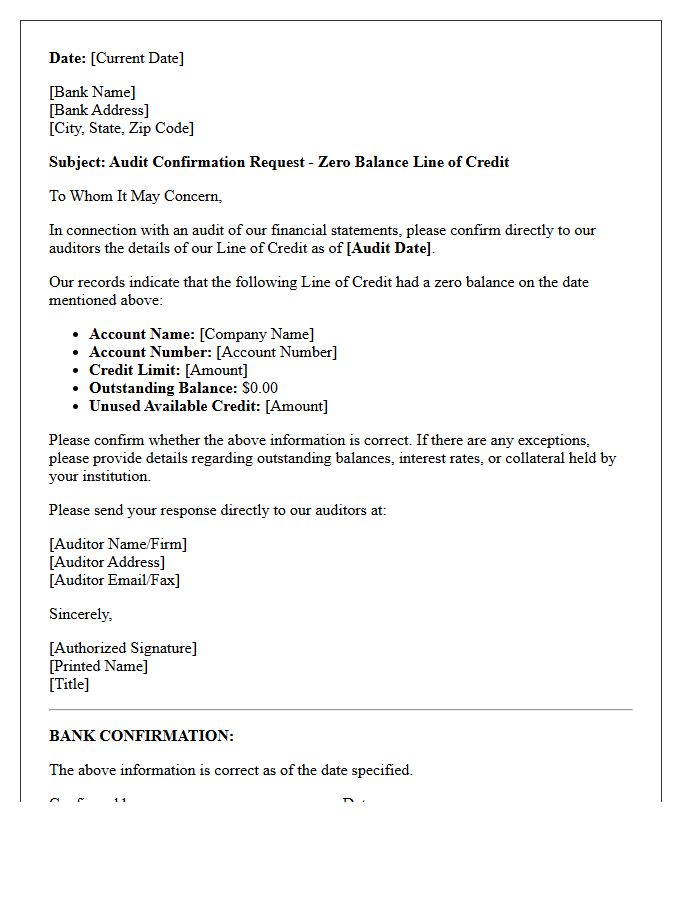
A Zero Balance Line of Credit Audit Confirmation Letter is a formal request sent to financial institutions to verify that a specific credit facility has no outstanding debt. It serves as crucial third-party evidence for auditors to ensure financial statement accuracy and prevent undisclosed liabilities. This document confirms the credit limit, interest rates, and legal terms, even when the balance is nil. Precise verification is essential for risk management and maintaining transparent corporate governance during annual financial reporting cycles.
Syndicated Line of Credit Facility Audit Letter
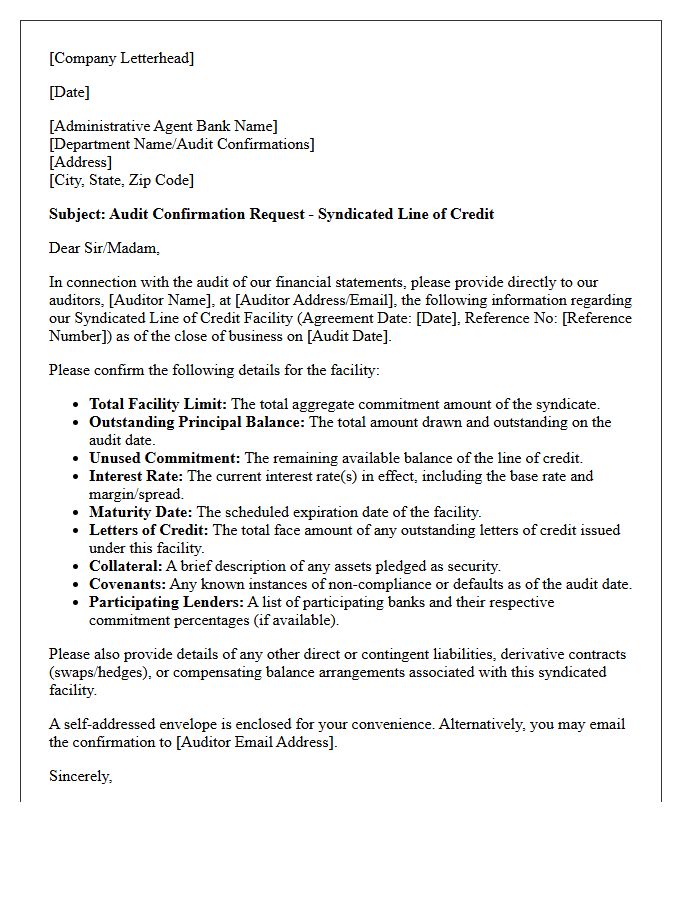
A Syndicated Line of Credit Facility Audit Letter is a formal confirmation sent by a borrower's administrative agent to external auditors. Its primary purpose is to verify the outstanding debt obligations, interest rates, and compliance status of a multi-lender loan agreement. This document ensures financial transparency by reconciling the borrower's records with the syndicate's ledger. Accuracy is critical, as it confirms the available liquidity and specific repayment terms necessary for certified financial reporting and regulatory oversight in complex corporate financing structures.
Real Estate Equity Line of Credit Confirmation Letter
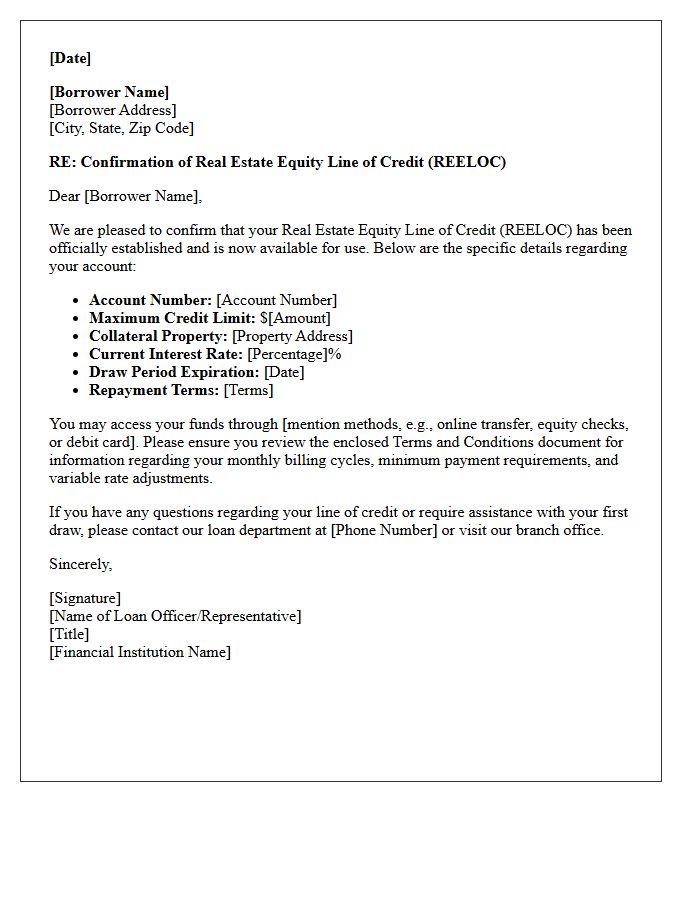
A Real Estate Equity Line of Credit Confirmation Letter serves as official verification of an approved borrowing limit secured by property. This document outlines critical terms, including the maximum credit line, interest rate, and repayment structure. It is essential for financial planning and serves as proof of available liquidity when making offers on additional properties or funding renovations. Lenders use this letter to confirm that a homeowner has successfully established a revolving credit facility, providing immediate access to capital based on their existing home equity.
Standby Letter of Credit Audit Confirmation Letter
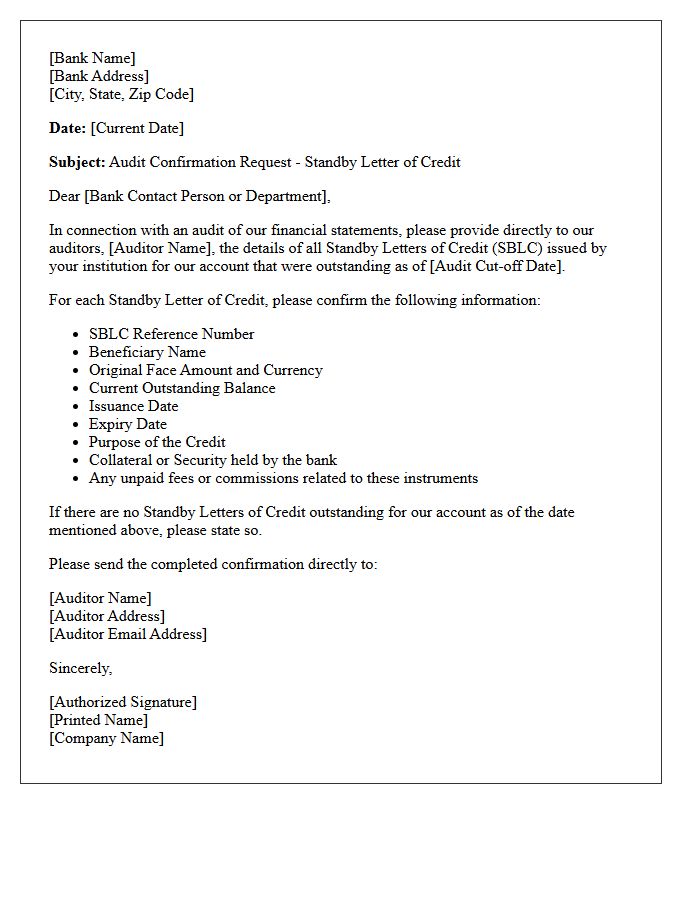
A Standby Letter of Credit Audit Confirmation Letter is a formal document sent by an auditor to a financial institution to verify active credit obligations. Its primary purpose is to ensure the accuracy of a company's financial statements by confirming the face amount, expiration date, and terms of outstanding standby letters of credit. This process mitigates risk by validating off-balance sheet liabilities and contingent commitments. Accurate verification prevents reporting discrepancies, ensuring the business maintains transparency and compliance with standard accounting practices during a fiscal year-end review.
Equipment Financing Line of Credit Audit Letter
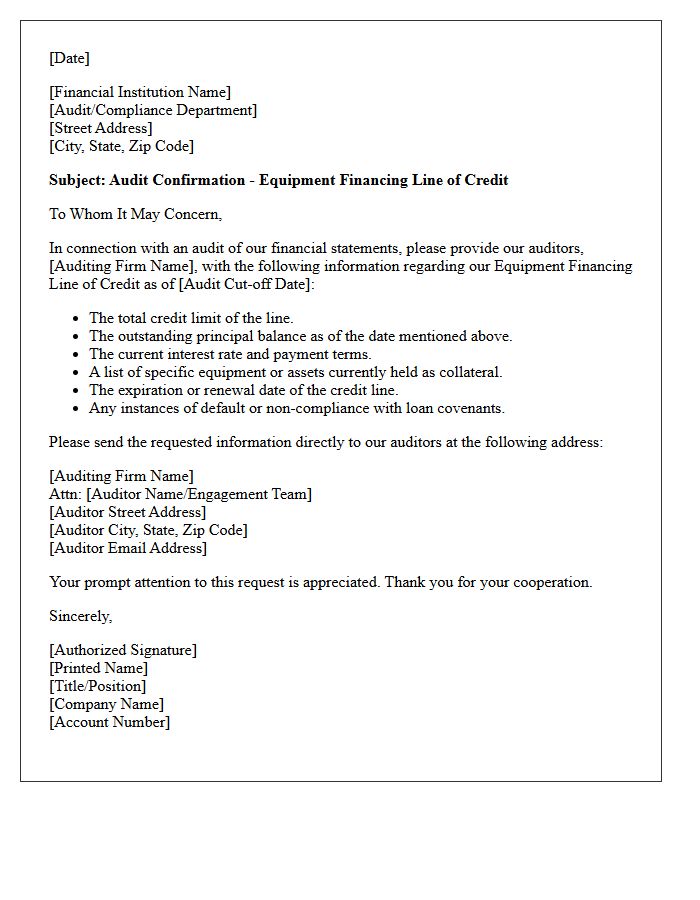
An Equipment Financing Line of Credit Audit Letter is a formal request from auditors to verify your business's current financial obligations. It confirms outstanding balances, interest rates, and available credit limits directly with the lender. This document ensures financial transparency and accuracy in corporate reporting. Understanding this letter is crucial for maintaining compliance during annual audits, as it reconciles internal records with third-party data. Promptly responding to these requests helps secure your company's creditworthiness and ensures that your equipment acquisition strategy aligns with official accounting standards.
Seasonal Working Capital Line of Credit Confirmation Letter
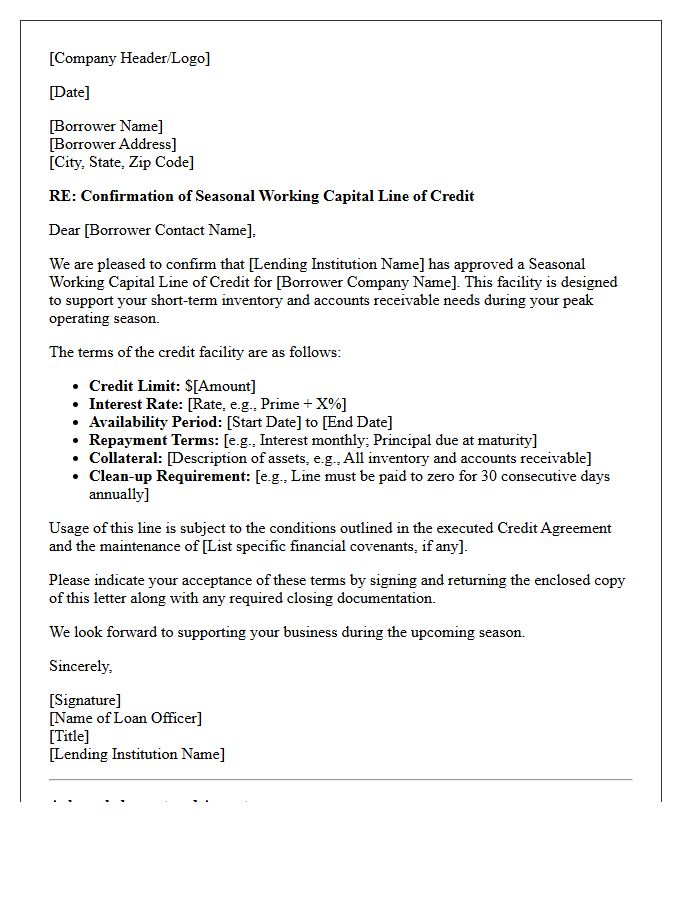
A Seasonal Working Capital Line of Credit Confirmation Letter is a critical document verifying a business's access to short-term financing during peak operational cycles. It outlines the approved credit limit, interest rates, and specific repayment terms tailored to seasonal cash flow fluctuations. Lenders issue this formal statement to confirm liquidity availability, ensuring a company can cover inventory costs or payroll before revenue spikes. Understanding the expiration date and covenants within this letter is essential for maintaining financial flexibility and meeting immediate obligations during high-demand periods.
Agricultural Line of Credit Bank Audit Letter
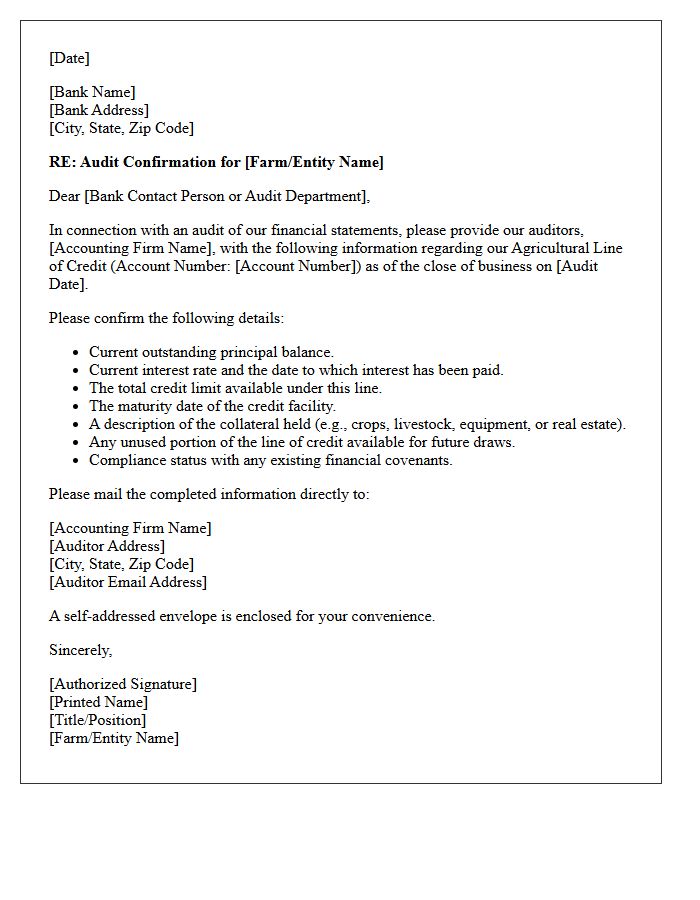
An Agricultural Line of Credit Bank Audit Letter is a formal document used by auditors to verify the financial standing of a farm operation. It confirms critical details such as the outstanding balance, interest rates, and collateral pledged against the loan. This external verification ensures that the borrower's financial statements accurately reflect their liabilities. Lenders must provide precise information to maintain regulatory compliance and transparency. For farmers, ensuring these records match their internal accounting is essential for maintaining a healthy credit relationship and securing future funding.
International Trade Line of Credit Confirmation Letter
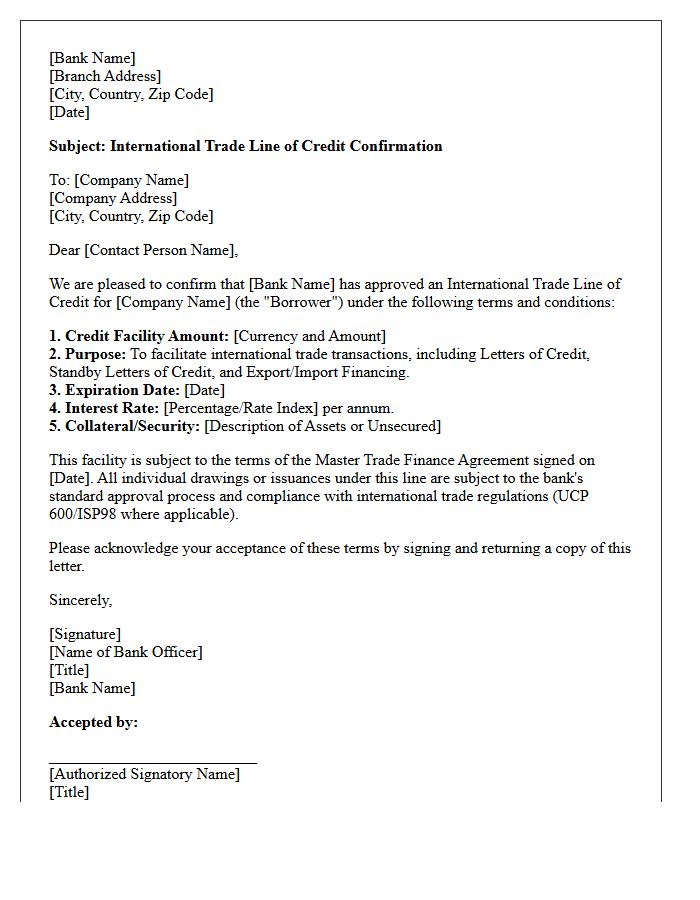
An International Trade Line of Credit Confirmation Letter is a critical document where a confirming bank guarantees payment to an exporter. This adds a layer of security beyond the issuing bank's commitment, effectively mitigating country and credit risk in cross-border transactions. By verifying the credit line's authenticity and availability, it ensures the seller receives funds upon meeting contractual terms. This instrument facilitates global commerce by providing financial certainty, enhancing liquidity, and building trust between international trading partners who may lack established relationships.
What is a line of credit audit confirmation letter?
A line of credit audit confirmation letter is a formal request sent by an independent auditor to a financial institution to verify the accuracy of a borrower's reported credit balance, interest rates, and loan terms as of a specific date.
Why do auditors require a bank confirmation for a line of credit?
Auditors use bank confirmations to obtain direct, third-party evidence that validates the existence of the debt, ensures the completeness of the liabilities recorded on the balance sheet, and confirms any collateral pledged against the credit line.
What information is typically included in a line of credit confirmation request?
The request typically includes the account number, the outstanding principal balance, the current interest rate, the maturity date, unused credit availability, and details regarding any restrictive covenants or security agreements.
How does a positive confirmation differ from a negative confirmation in credit audits?
A positive confirmation requires the bank to respond regardless of whether the information is correct, providing stronger audit evidence, whereas a negative confirmation only requests a response if the bank disagrees with the stated balance.
What is the process for sending a line of credit audit confirmation?
The process involves the client authorizing the bank to release information, the auditor mailing or electronically sending the request directly to the financial institution, and the bank returning the verified details directly to the auditor to prevent tampering.

Comments