
An accurate Loan and Advance Balance Audit Confirmation Letter is essential for verifying financial liabilities and ensuring reporting integrity. This process involves cross-checking internal records with third-party statements to detect discrepancies or fraud. Our guide explains the best practices for professional balance verification. To help you get started quickly, below are some ready to use template.
Image cover: Mastering Loan and Advance Audit Confirmation: Professional Letter Samples and Templates
Letter Samples List
- Commercial Term Loan Balance Audit Confirmation Letter
- Retail Mortgage Advance Audit Confirmation Letter
- Corporate Syndicated Loan Audit Confirmation Letter
- Small Business Overdraft Facility Audit Confirmation Letter
- Personal Credit Card Advance Audit Confirmation Letter
- Trade Finance Loan Balance Audit Confirmation Letter
- Working Capital Advance Audit Confirmation Letter
- Vehicle Financing Loan Audit Confirmation Letter
- Agricultural Advance Balance Audit Confirmation Letter
- Construction Project Loan Audit Confirmation Letter
- Non-Performing Loan Balance Audit Confirmation Letter
- Interbank Advance Facility Audit Confirmation Letter
Commercial Term Loan Balance Audit Confirmation Letter
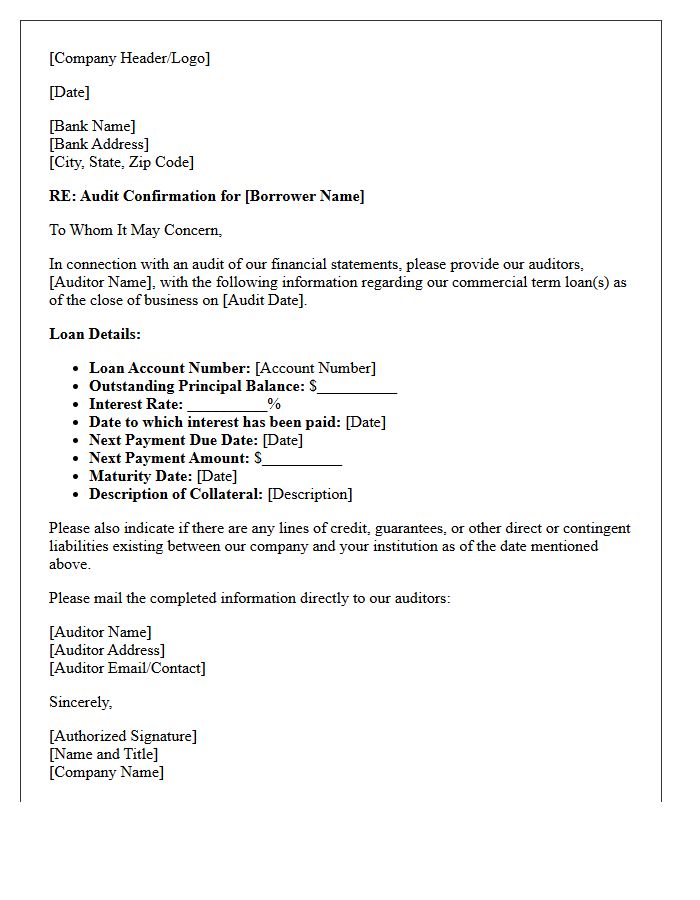
A Commercial Term Loan Balance Audit Confirmation Letter is a formal request sent by auditors to verify the outstanding principal, interest rates, and repayment terms directly with the lender. This document ensures financial transparency and accuracy in a company's records. It serves as critical third-party evidence to prevent reporting errors or fraud. For businesses, ensuring the balance matches the bank's statement is essential for compliant financial auditing and maintaining stakeholder trust during year-end reviews.
Retail Mortgage Advance Audit Confirmation Letter
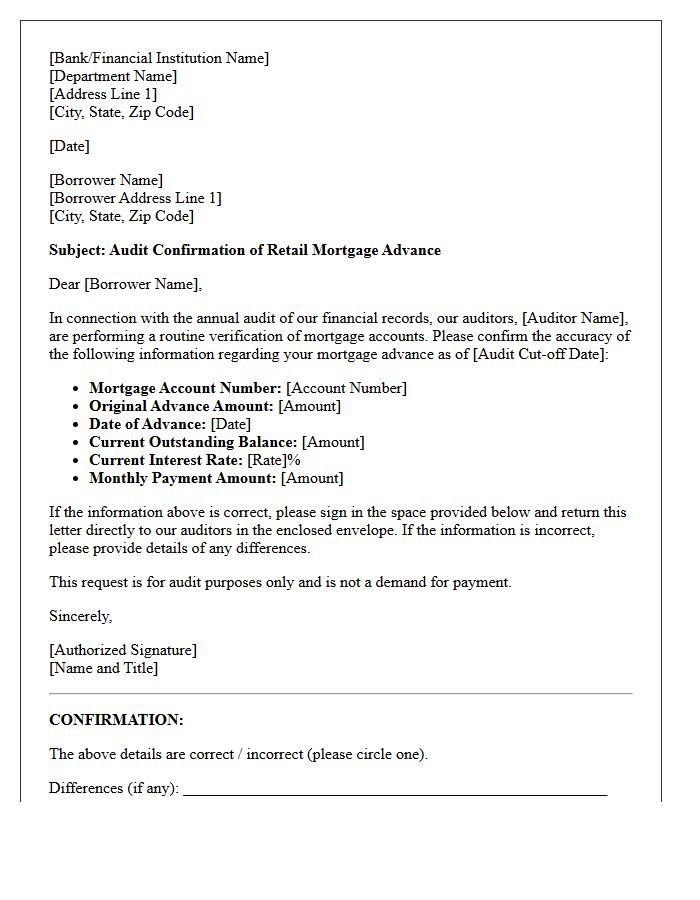
A Retail Mortgage Advance Audit Confirmation Letter is a formal document used by lenders or auditors to verify the accuracy of loan details. It ensures the outstanding balance, interest rates, and disbursement dates match the borrower's records. This process is a critical internal control to prevent fraud and identify reporting errors. Borrowers must review the statement carefully to confirm that the principal amount advanced aligns with their actual mortgage agreement. Timely verification helps maintain the financial integrity of the lending institution and protects the homeowner's legal interests.
Corporate Syndicated Loan Audit Confirmation Letter
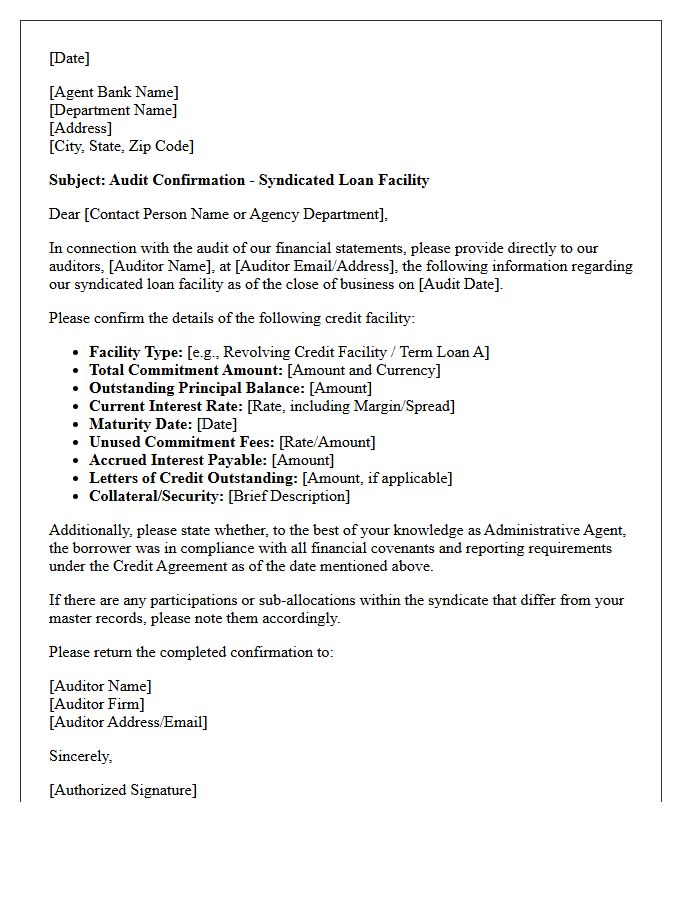
A Corporate Syndicated Loan Audit Confirmation Letter is a critical document used by auditors to verify a company's outstanding debt obligations. It ensures the accuracy of financial statements by confirming loan balances, interest rates, and maturity dates directly with the administrative agent of the lending group. This process mitigates risks of financial misstatement and validates the legal commitment between the borrower and the syndicate. Accurate responses are essential for regulatory compliance and establishing financial transparency for stakeholders and investors during the year-end auditing cycle.
Small Business Overdraft Facility Audit Confirmation Letter
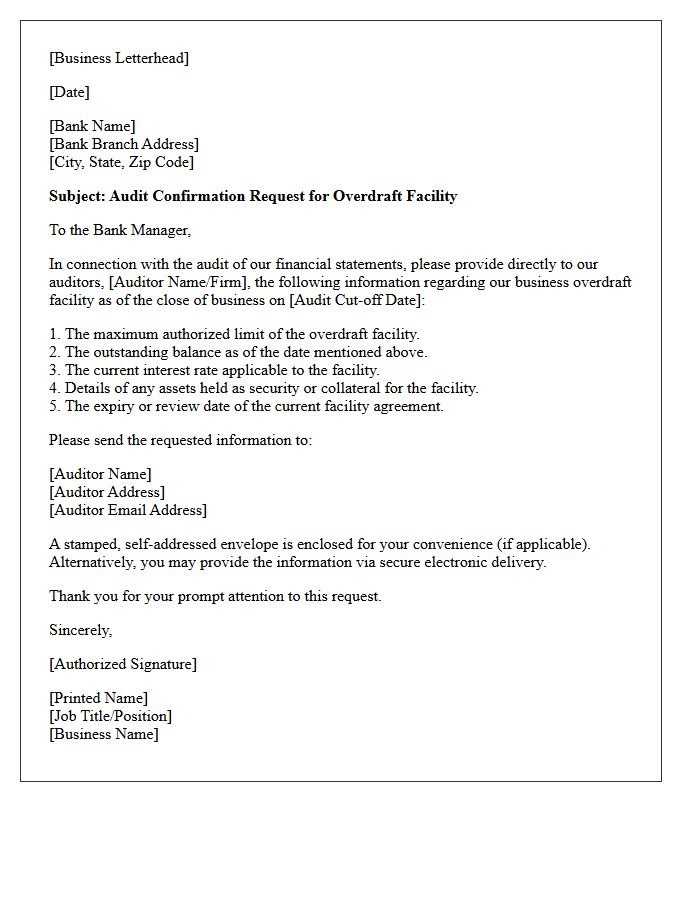
A Small Business Overdraft Facility Audit Confirmation Letter is a critical document used by external auditors to verify a company's financial liabilities. It serves as independent verification of the outstanding balance, interest rates, and repayment terms directly with the lending institution. This process ensures the accuracy of financial statements and detects potential discrepancies or undisclosed debts. For business owners, timely responses are essential to maintain compliance and facilitate a smooth audit trail, confirming that all credit obligations are transparently reported and aligned with official bank records.
Personal Credit Card Advance Audit Confirmation Letter
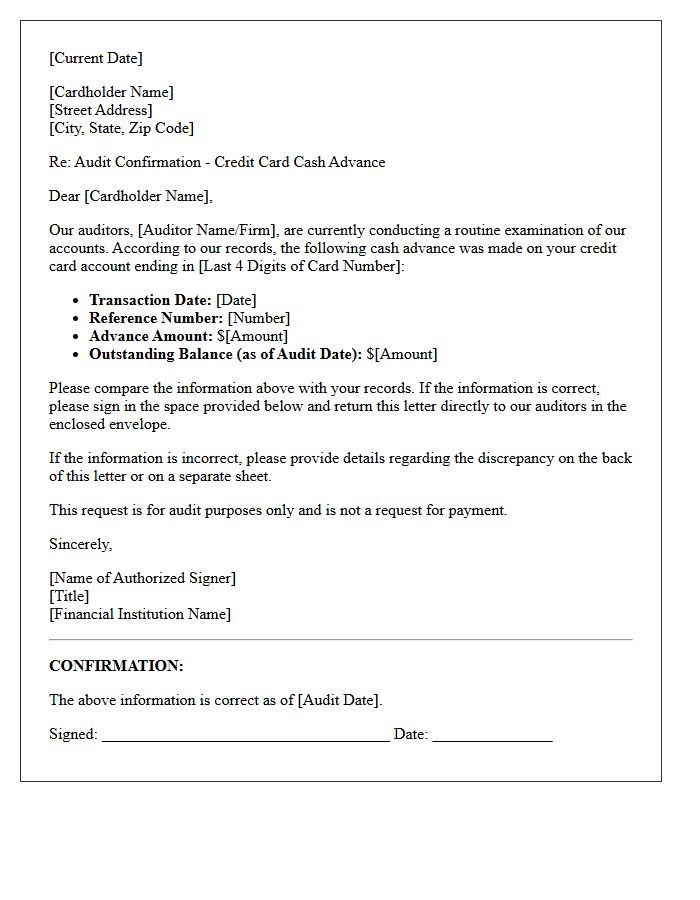
A Personal Credit Card Advance Audit Confirmation Letter is a formal request sent by auditors to verify the accuracy of outstanding balances. This process ensures that the financial records of the cardholder match the bank's internal data. Recipients must validate the reported transaction history and confirm the total amount owed as of a specific date. Returning this signed document promptly is crucial for maintaining financial transparency and detecting potential discrepancies or unauthorized activities during a standard financial review or audit procedure.
Trade Finance Loan Balance Audit Confirmation Letter
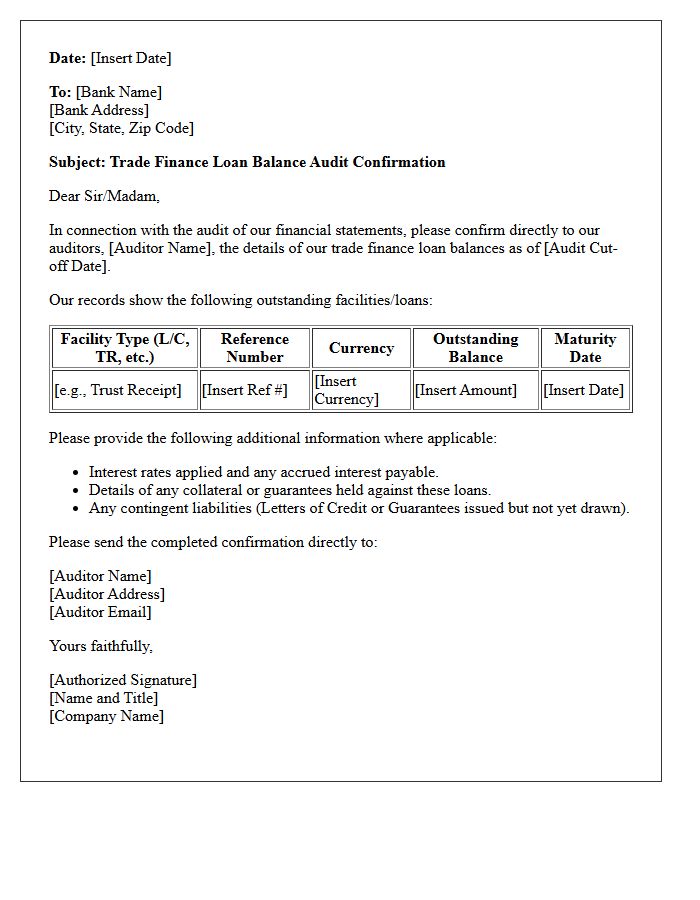
A Trade Finance Loan Balance Audit Confirmation Letter is a formal request sent by auditors to verify the accuracy of outstanding liabilities. It requires the borrower to confirm specific details, including the principal amount, interest rates, and maturity dates of trade-related credit facilities. This process is a vital internal control that ensures financial statements correctly reflect current debt obligations. Promptly responding to these requests helps prevent reporting discrepancies and maintains transparency between the lending institution and the client during the annual audit cycle.
Working Capital Advance Audit Confirmation Letter
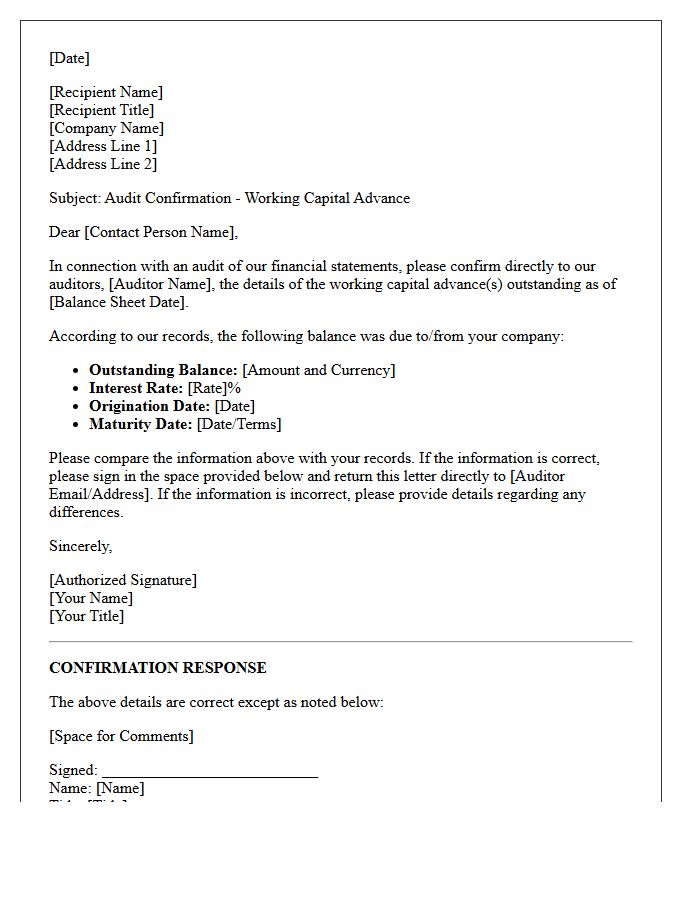
A Working Capital Advance Audit Confirmation Letter is a formal request used by auditors to verify the outstanding balance and terms of a short-term financing arrangement. This document ensures the accuracy of financial statements by confirming the specific amount owed, interest rates, and repayment status directly with the lender. It serves as critical third-party evidence to prevent reporting errors or fraud. For businesses, responding promptly to these inquiries is essential for maintaining transparent financial compliance and completing a successful annual audit process.
Vehicle Financing Loan Audit Confirmation Letter
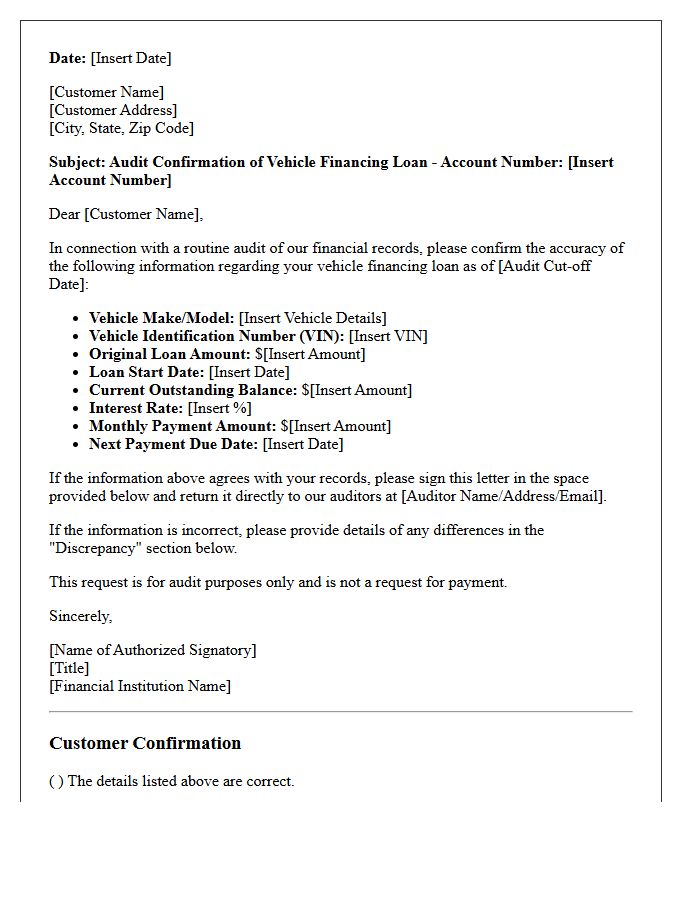
A Vehicle Financing Loan Audit Confirmation Letter is a formal document used by auditors to verify the accuracy of outstanding loan balances and interest rates directly with the borrower. This process ensures that the financial institution's records match the borrower's obligations, preventing accounting errors or fraud. It is essential for borrowers to review the reported principal amount, payment history, and maturity date carefully. Timely completion and return of this verification help maintain the integrity of financial reporting and confirm the legal standing of the vehicle's lien and financing terms.
Agricultural Advance Balance Audit Confirmation Letter
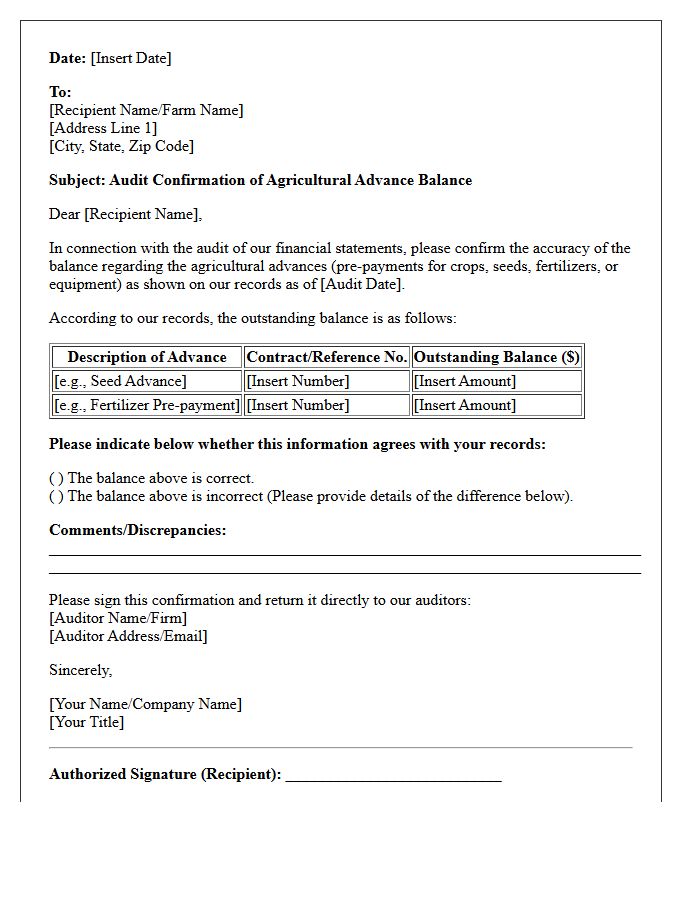
An Agricultural Advance Balance Audit Confirmation Letter is a formal verification document used by financial institutions to validate the accuracy of outstanding farm credit balances. This process ensures that recorded debt amounts align with the borrower's records, providing critical oversight for loan compliance and financial reporting. It serves as a risk management tool to prevent accounting discrepancies and fraud within agricultural lending portfolios. Receivers must verify the principal, interest rates, and repayment terms before signing, as this confirmation is essential for maintaining transparent and audited financial statements in the agribusiness sector.
Construction Project Loan Audit Confirmation Letter
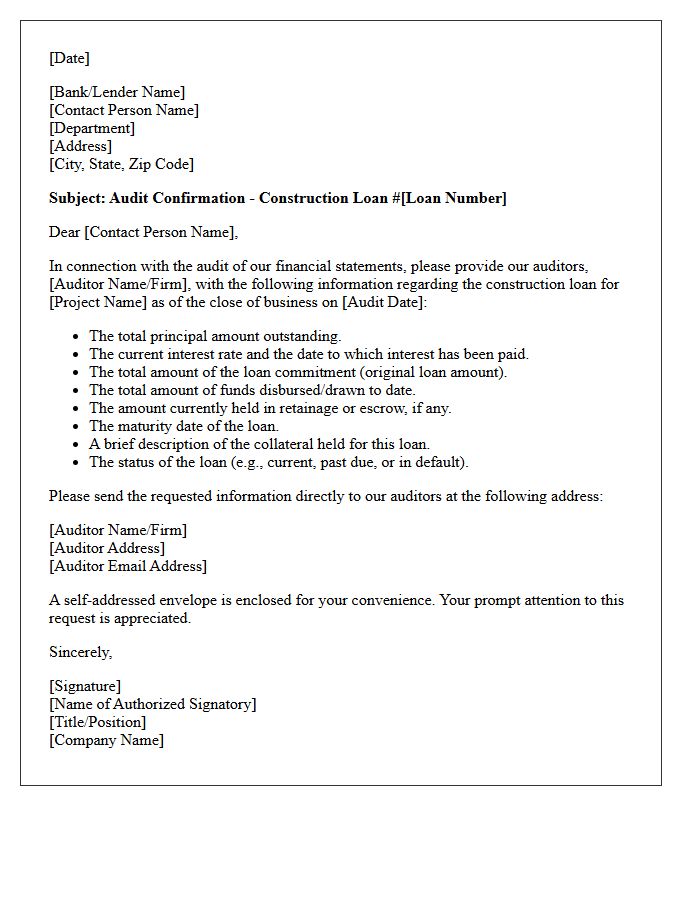
A Construction Project Loan Audit Confirmation Letter is a financial verification document sent by auditors to lenders. It ensures the accuracy of reported loan balances, interest rates, and funding disbursements. This process mitigates risks of fraud or accounting errors by reconciling the borrower's records with the bank's data. For stakeholders, it serves as critical third-party validation of project liabilities and equity. Confirming these figures is essential for maintaining transparent financial reporting and ensuring the project remains compliant with banking covenants and construction milestones.
Non-Performing Loan Balance Audit Confirmation Letter
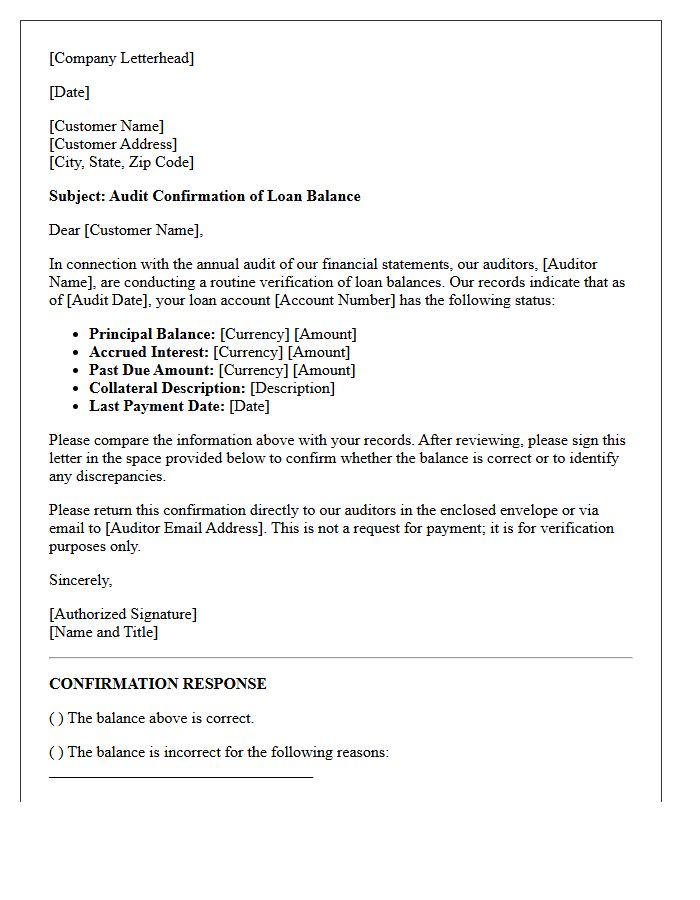
A Non-Performing Loan Balance Audit Confirmation Letter is a formal request sent by auditors to borrowers to verify the exact outstanding debt on defaulted accounts. This process ensures the accuracy of financial statements and validates the lender's reported losses. It serves as a critical internal control to detect fraud or accounting errors regarding delinquent assets. Recipients must confirm the principal, interest, and fees owed to ensure the bank's records match the borrower's obligations, maintaining transparency during the financial auditing process.
Interbank Advance Facility Audit Confirmation Letter
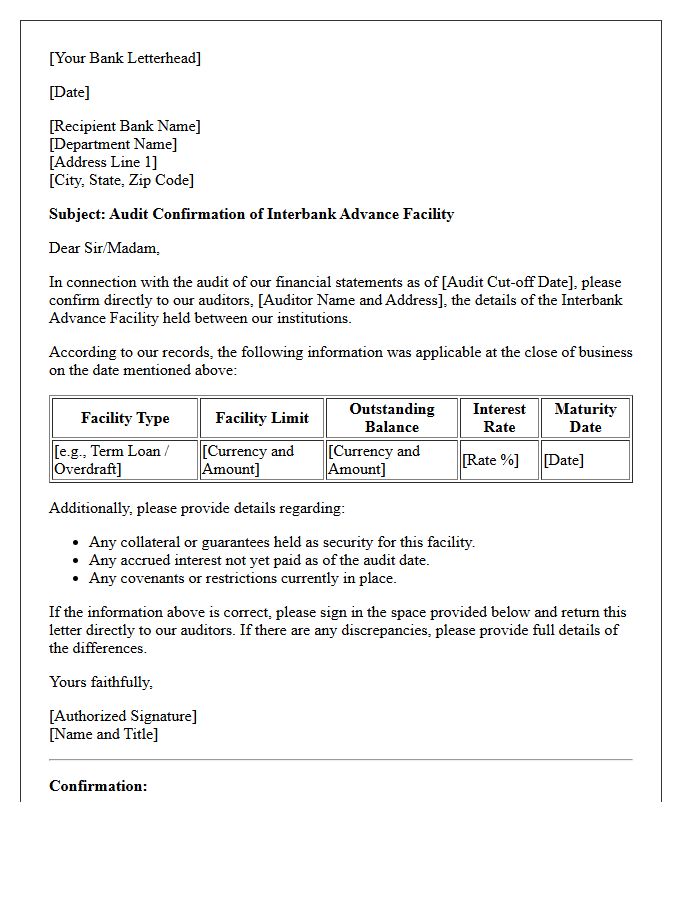
An Interbank Advance Facility Audit Confirmation Letter is a formal request used by auditors to verify the outstanding balances and specific terms of credit lines between financial institutions. This document ensures the accuracy of reported assets and liabilities during financial examinations. It confirms critical details like interest rates, maturity dates, and collateral requirements. By cross-referencing bank records with internal ledgers, this process mitigates operational risk and prevents financial misstatements, maintaining the integrity of the global interbank lending market through standardized third-party verification.
What is a Loan and Advance Balance Audit Confirmation Letter?
It is an official document sent by auditors to a borrower's financial institution or lender to verify the accuracy of the outstanding principal, interest rates, and repayment terms recorded in the entity's financial statements.
Why do auditors request a direct confirmation for loan balances?
Auditors request direct confirmation to obtain independent audit evidence that validates the existence, completeness, and valuation of the liability, ensuring that the reported debt matches the lender's records.
What key information is included in a loan balance confirmation request?
The letter typically includes the account number, the outstanding principal balance as of the audit date, the interest rate, maturity date, collateral details, and any restrictive covenants or guarantees associated with the loan.
Is a loan confirmation letter mandatory for a statutory audit?
Yes, external confirmation is a standard auditing procedure under professional standards (such as ISA 505) to mitigate risks related to material misstatement, undisclosed liabilities, or fraudulent reporting.
How should a company handle discrepancies in a loan audit confirmation?
If the lender's confirmed balance differs from the company's books, the auditor must perform a reconciliation to identify timing differences, unrecorded interest charges, or errors in the accounting ledger.


Comments