
False rumors about a financial institution's stability can trigger devastating bank runs. A Cease and Desist Letter for Defamatory Statements Regarding Bank Solvency is a critical legal tool to stop the spread of misinformation and protect institutional reputation. This guide explores how to demand an immediate retraction to mitigate financial panic. To help you take action, below are some ready to use templates.
Image cover: Stopping Bank Defamation: Legal Cease and Desist Templates for False Solvency Claims
Letter Samples List
- Cease and Desist Letter for Defamatory Statements Regarding Bank Solvency
- Cease and Desist Letter Regarding False Social Media Claims of Bank Insolvency
- Cease and Desist Letter Demanding Retraction of Defamatory Publication on Bank Liquidity
- Cease and Desist Letter to Competitor Regarding Malicious Rumors of Bank Solvency
- Cease and Desist Letter to Former Employee Spreading Defamatory Statements on Bank Financial Health
- Urgent Cease and Desist Letter to Prevent Defamation-Induced Bank Run
- Cease and Desist Letter to Financial Analyst Broadcasting False Bank Insolvency Claims
- Cease and Desist Letter for Libelous Articles Questioning Banking Institution Solvency
- Cease and Desist Letter for Slanderous Public Statements Regarding Bank Capitalization
- Pre-Litigation Cease and Desist Letter Concerning Defamatory Remarks on Bank Financial Stability
- Cease and Desist Letter to Bloggers Publishing Defamatory Content on Bank Solvency
- Cease and Desist Letter Issued by Board of Directors Regarding Defamatory Insolvency Claims
- Cease and Desist Letter Addressing False Accusations of Banking Institution Bankruptcy
Cease and Desist Letter for Defamatory Statements Regarding Bank Solvency
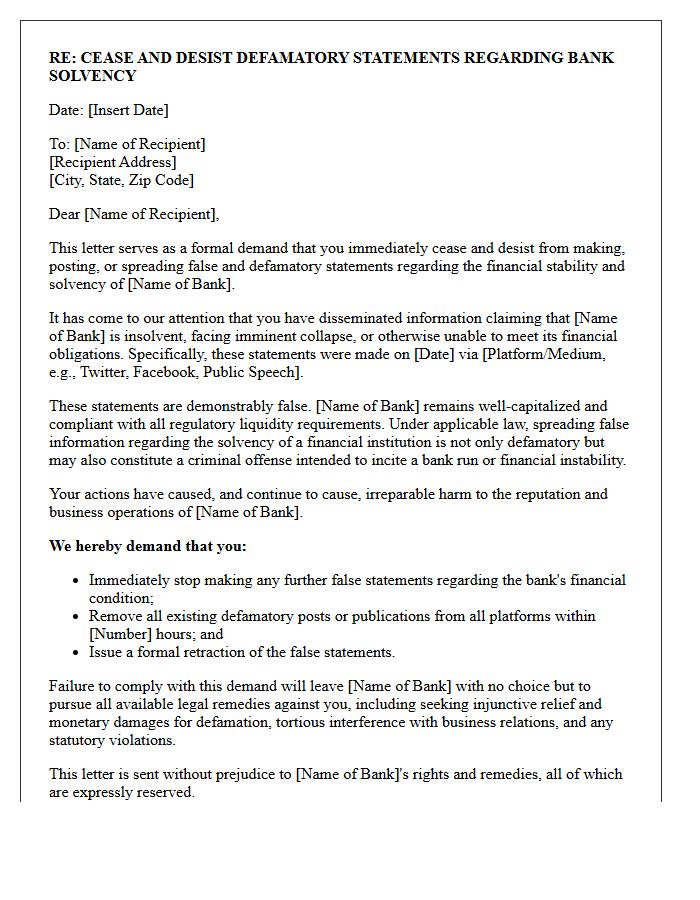
A cease and desist letter for defamatory statements regarding bank solvency is a formal legal demand to stop spreading false claims about a financial institution's liquidity. These letters warn that unfounded rumors can trigger a bank run, causing irreparable economic harm. Recipients must immediately halt the dissemination of libelous information to avoid litigation. Proving the statements are demonstrably false is crucial for legal action, as banks prioritize protecting their reputation to maintain public trust and overall market stability. Failure to comply often results in significant monetary damages and court injunctions.
Cease and Desist Letter Regarding False Social Media Claims of Bank Insolvency
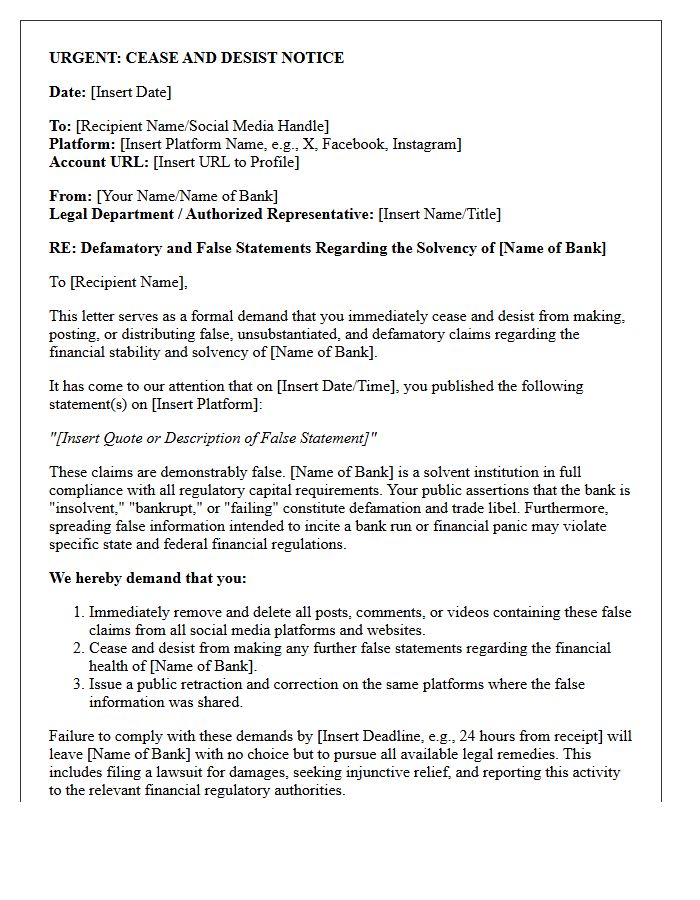
A Cease and Desist Letter is a formal legal demand requiring an individual to stop spreading false social media claims regarding a bank's insolvency. Disseminating baseless rumors about a financial institution's liquidity can trigger a bank run, causing irreparable economic harm. These letters serve as a final warning before pursuing litigation for defamation or trade libel. Recipients must immediately remove the defamatory content to avoid significant legal liability, as banks aggressively protect their reputation and financial stability against harmful misinformation in the digital landscape.
Cease and Desist Letter Demanding Retraction of Defamatory Publication on Bank Liquidity
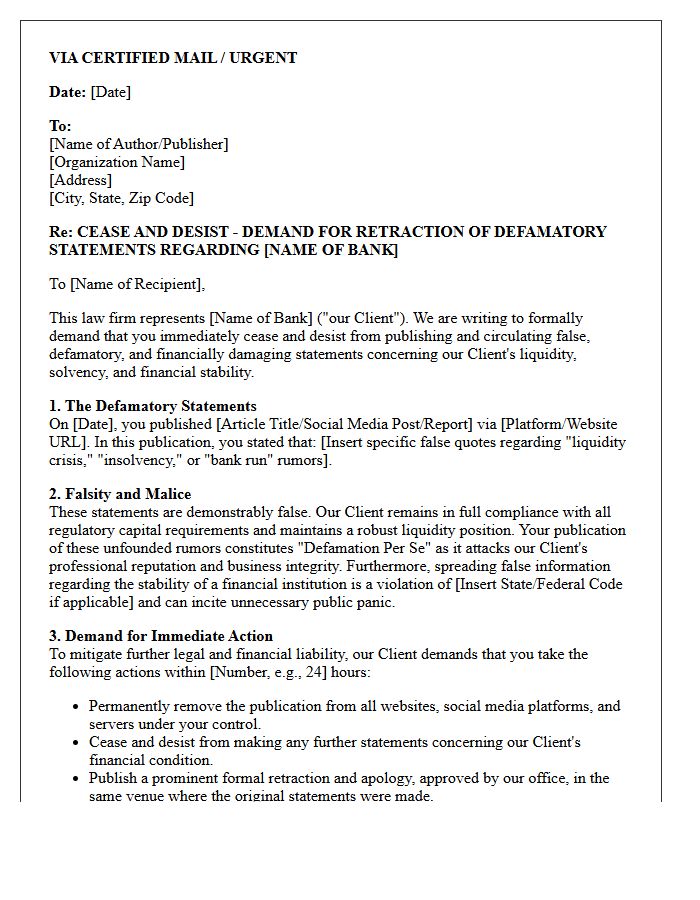
A Cease and Desist Letter regarding bank liquidity serves as a formal legal warning to halt the spread of defamatory publications. False claims concerning a financial institution's solvency can trigger panic or a bank run, causing irreparable reputational harm. This document demands an immediate retraction and the removal of false statements to mitigate damages. Establishing that the information is demonstrably false and published with malice or negligence is crucial. Legal action often follows if the recipient fails to comply, as protecting a bank's perceived stability is vital for maintaining market confidence and operational viability.
Cease and Desist Letter to Competitor Regarding Malicious Rumors of Bank Solvency
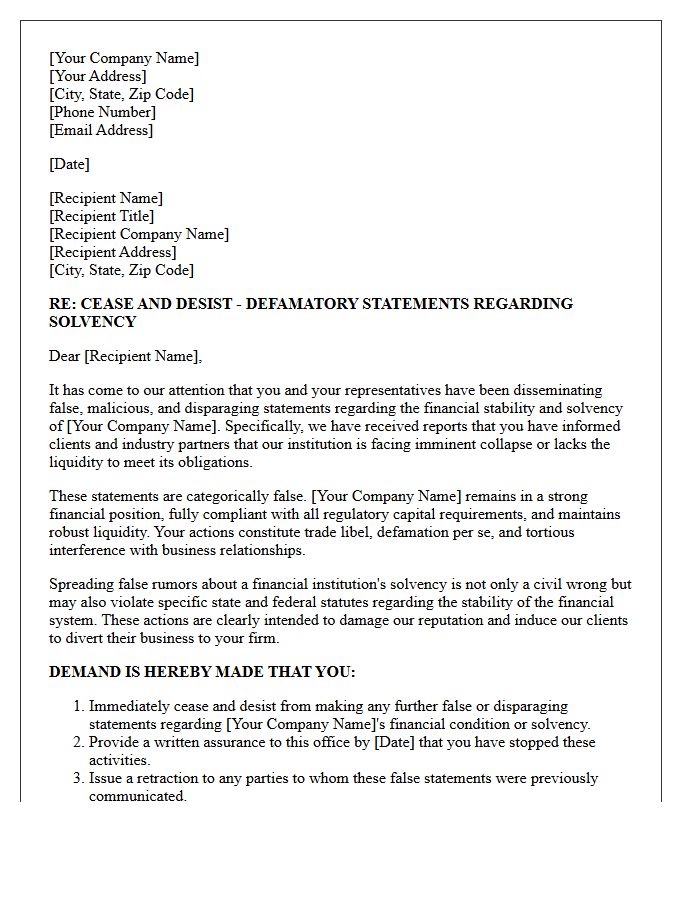
Sending a formal cease and desist letter is a critical legal step to halt tortious interference and trade libel. When a competitor spreads false claims about your bank's solvency, they risk triggering a financial panic and severe reputational damage. This document demands an immediate end to defamatory statements and preserves your right to pursue litigation for damages. Timely intervention protects your institution's liquidity reputation and market stability by establishing a clear legal record against malicious misinformation intended to divert clients or destabilize your operations.
Cease and Desist Letter to Former Employee Spreading Defamatory Statements on Bank Financial Health
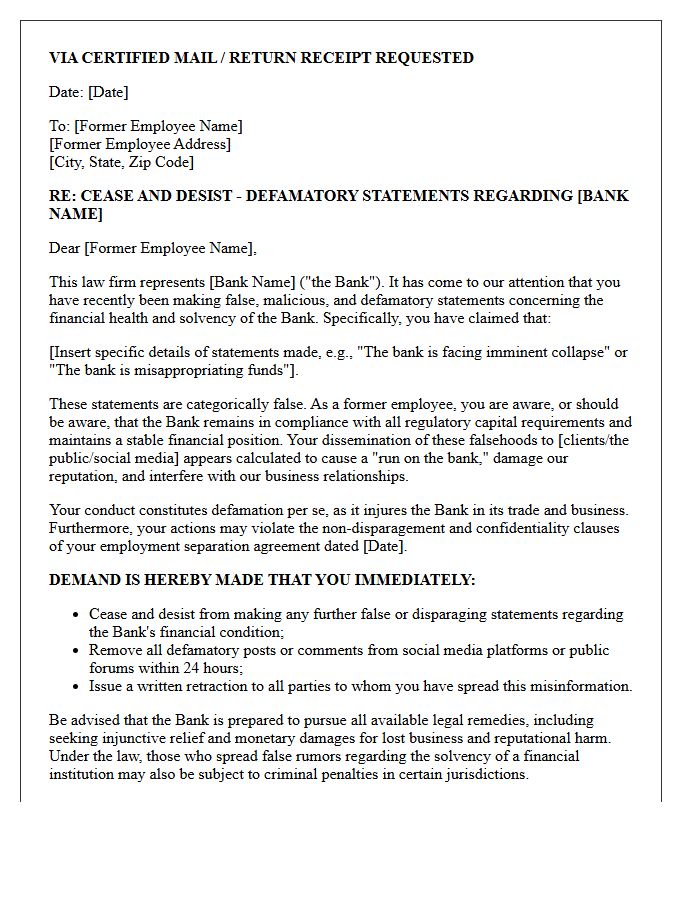
A Cease and Desist Letter is a formal legal warning issued to stop a former employee from making false claims. In the banking sector, defamatory statements regarding financial health can trigger panic, violate confidentiality agreements, and cause irreparable reputational harm. This document demands an immediate end to the misinformation and outlines potential litigation for damages. It serves as a critical first step to protect the institution's solvency and public trust by establishing a legal record of the breach before pursuing further court action or financial restitution.
Urgent Cease and Desist Letter to Prevent Defamation-Induced Bank Run
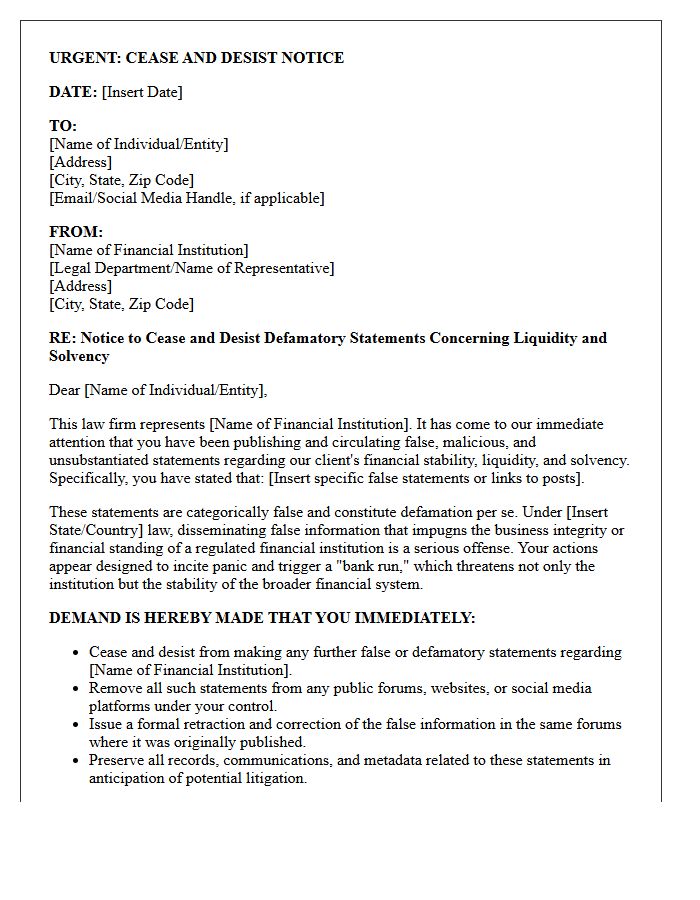
An urgent cease and desist letter is a critical legal tool to halt the spread of false information that threatens financial stability. In the digital age, defamatory statements regarding a bank's liquidity can trigger a catastrophic bank run. This formal notice demands the immediate removal of harmful content and threatens litigation to prevent panic-driven withdrawals. By establishing a clear legal record, institutions can mitigate reputational damage and restore public confidence before systemic collapse occurs. Prompt action is essential to protect assets and maintain the integrity of the financial system.
Cease and Desist Letter to Financial Analyst Broadcasting False Bank Insolvency Claims
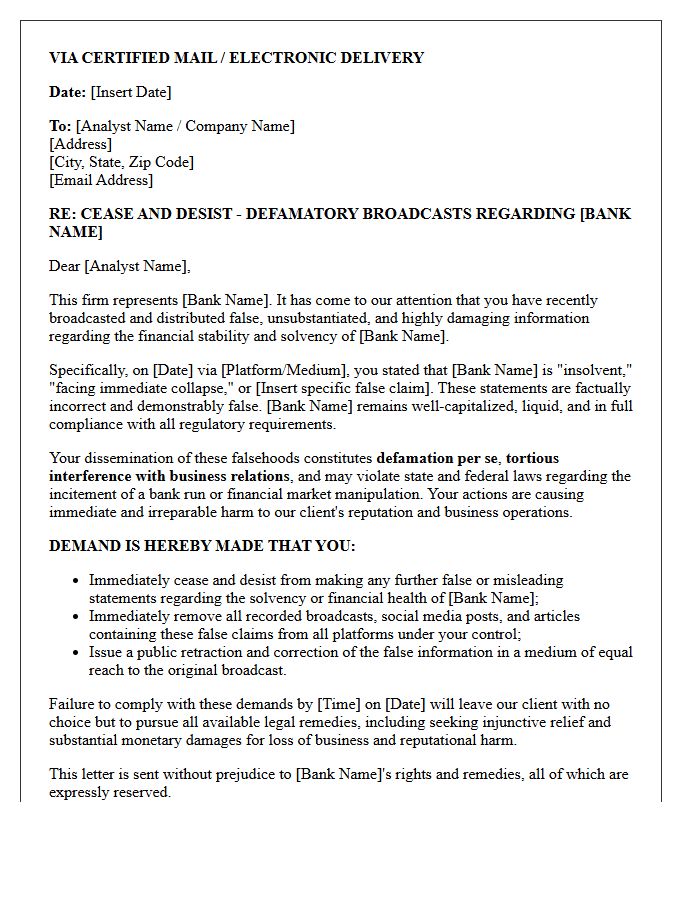
Issuing a Cease and Desist Letter is a critical legal step to halt a financial analyst from broadcasting false bank insolvency claims. Such baseless allegations can trigger a bank run, causing irreparable reputational damage and systemic instability. The letter formally demands an immediate end to the defamatory statements and warns of impending litigation for tortious interference or market manipulation. This document serves as essential evidence of a formal warning, protecting the institution's fiscal integrity while establishing a legal basis for seeking injunctive relief and monetary damages in court.
Cease and Desist Letter for Libelous Articles Questioning Banking Institution Solvency
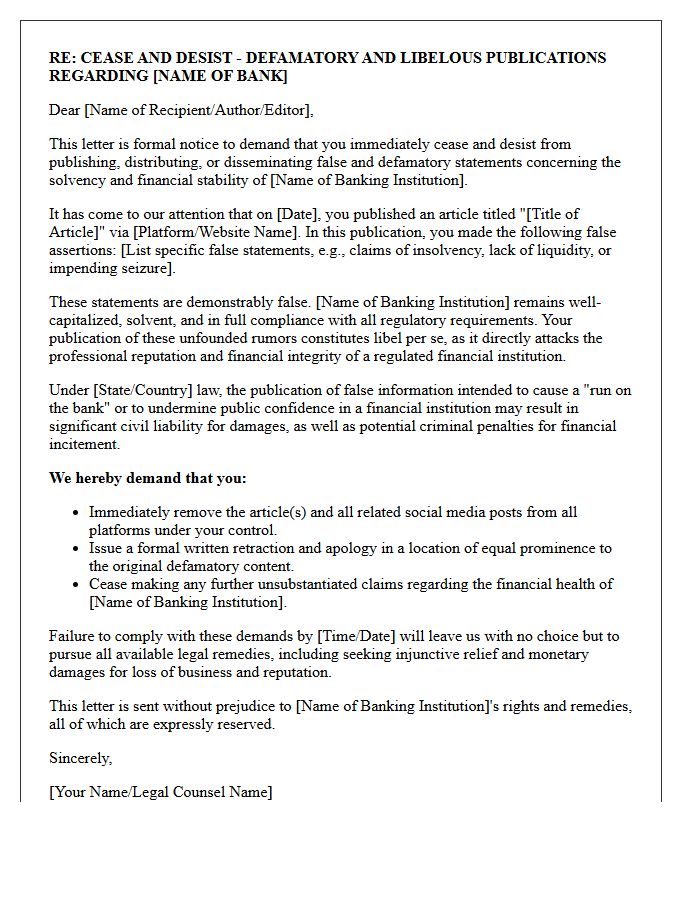
A Cease and Desist Letter is a critical legal tool used by banking institutions to halt the spread of libelous articles. False claims questioning a bank's solvency can trigger catastrophic financial panic and bank runs. These letters formally demand the immediate removal of defamatory content and a public retraction. Since financial stability relies on public trust, banks use these notices to protect their reputation and mitigate potential liquidity risks. Sending this letter serves as a necessary prerequisite before pursuing litigation for damages caused by malicious misinformation.
Cease and Desist Letter for Slanderous Public Statements Regarding Bank Capitalization
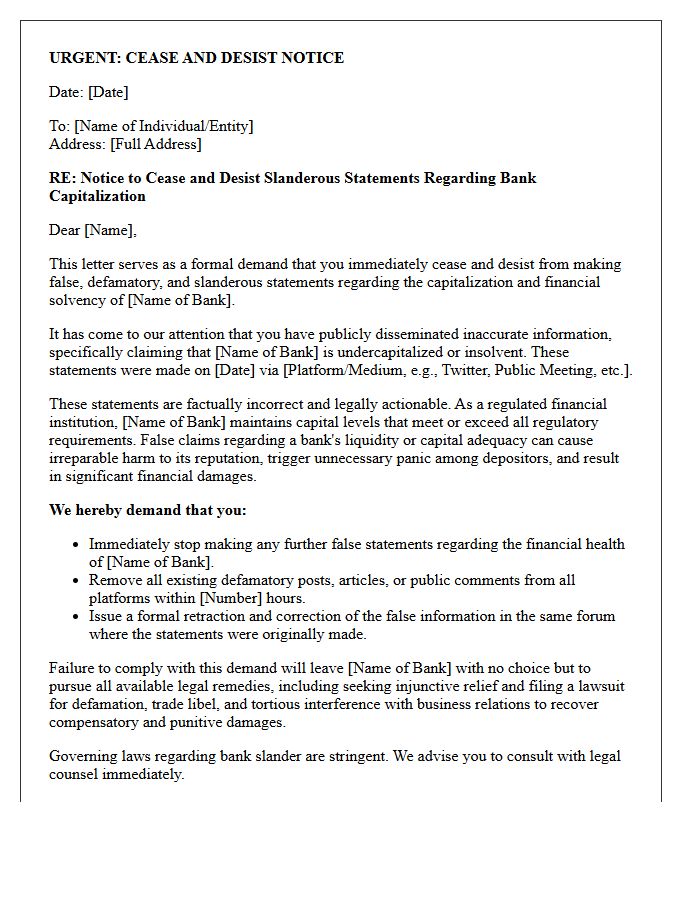
A cease and desist letter for slanderous public statements regarding bank capitalization is a formal legal demand to halt the dissemination of false financial information. These letters are critical because bank runs can be triggered by unfounded rumors, leading to systemic instability. The document serves as a final warning to retract defamatory claims before pursuing litigation for defamation. Protecting a financial institution's reputation and solvency is paramount, as malicious falsehoods concerning capital adequacy can cause irreparable economic harm and regulatory scrutiny.
Pre-Litigation Cease and Desist Letter Concerning Defamatory Remarks on Bank Financial Stability
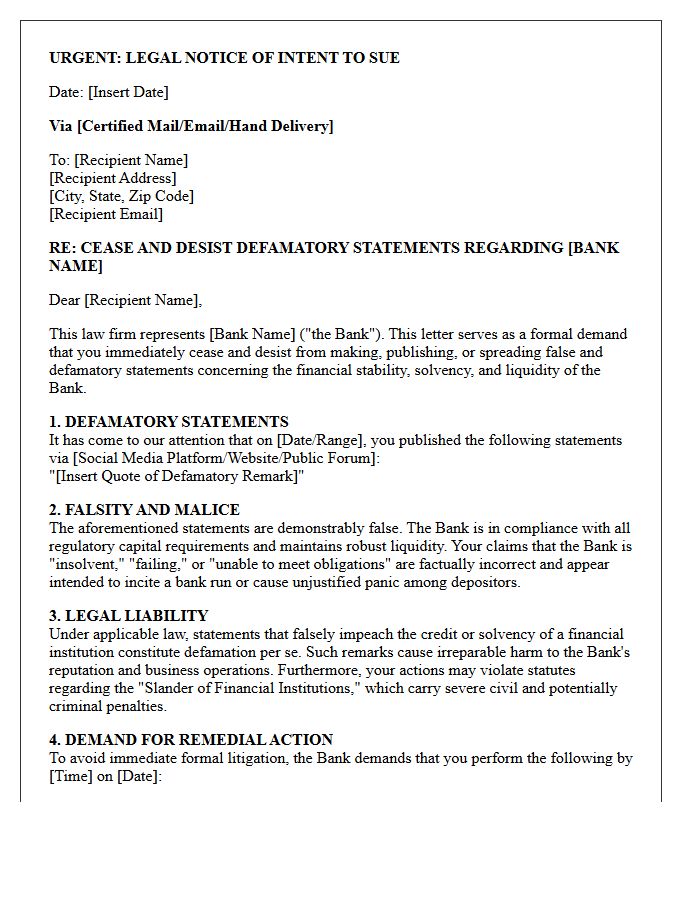
A pre-litigation cease and desist letter regarding bank financial stability is a formal legal demand to stop spreading false claims about a financial institution's solvency. In the banking sector, unfounded rumors can trigger bank runs and catastrophic liquidity crises. Sending this letter establishes a legal paper trail, asserting that the remarks constitute defamation per se. It warns the offender of potential liability for significant economic damages. This proactive measure is essential to protect a bank's reputation and ensure market confidence before pursuing formal litigation in court.
Cease and Desist Letter to Bloggers Publishing Defamatory Content on Bank Solvency
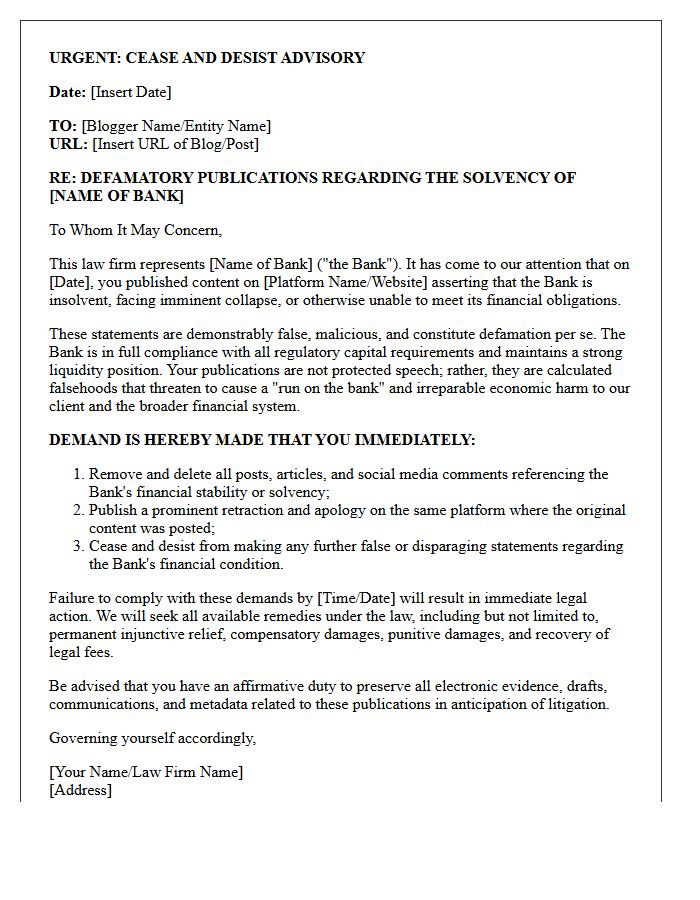
Sending a Cease and Desist Letter is a critical legal step to halt the spread of defamatory content regarding bank solvency. False claims about financial instability can trigger a bank run, causing irreparable economic harm. The letter must explicitly identify the false statements, demand immediate removal, and outline potential litigation for libel. For bloggers, ignoring such formal notice risks significant monetary damages. Banks prioritize these actions to protect their reputation and maintain public confidence, making professional legal drafting essential to ensure the communication is enforceable and contractually sound.
Cease and Desist Letter Issued by Board of Directors Regarding Defamatory Insolvency Claims
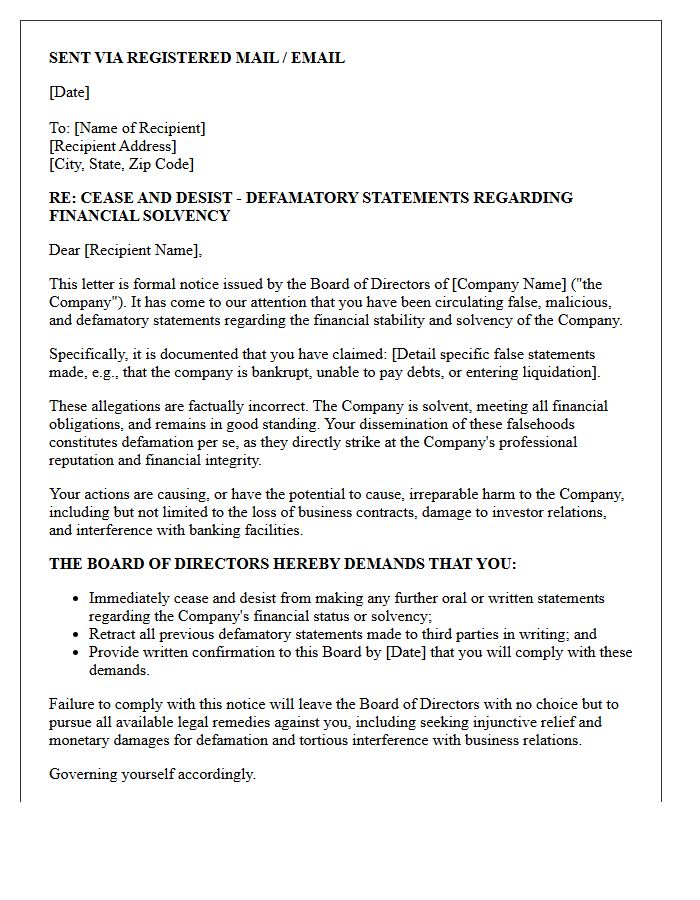
A Cease and Desist Letter issued by a Board of Directors serves as a formal legal warning against individuals spreading defamatory insolvency claims. False allegations regarding a company's financial failure can cause irreparable reputational damage and trigger immediate legal action. This document demands the perpetrator stop disseminating harmful falsehoods to protect the organization's creditworthiness and stakeholder trust. Recipients must understand that continuing these baseless assertions may lead to a defamation lawsuit seeking significant compensatory damages for financial losses incurred due to the malicious misinformation.
Cease and Desist Letter Addressing False Accusations of Banking Institution Bankruptcy
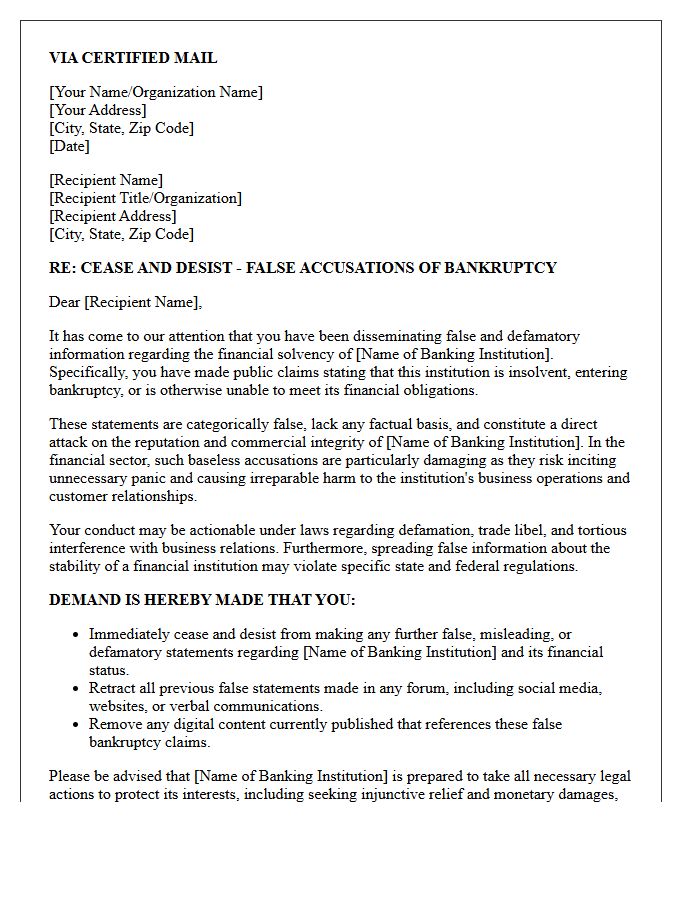
A Cease and Desist Letter is a formal legal notice used to halt the spread of defamatory falsehoods regarding a financial institution's solvency. Maliciously claiming a bank is bankrupt can trigger a panic or a bank run, causing irreparable economic harm. This document demands that the sender immediately stop disseminating unsubstantiated rumors and retract existing statements. Providing clear evidence of financial stability protects the institution's reputation. Failure to comply often leads to litigation for libel or slander, as protecting public trust is vital for maintaining banking sector stability.
What is a cease and desist letter for bank solvency defamation?
A cease and desist letter for bank solvency defamation is a formal legal notice demanding that an individual or entity immediately stop making false claims regarding a financial institution's capital reserves, liquidity, or ability to meet its financial obligations. It serves as a final warning before the bank initiates litigation for defamation per se or tortious interference.
How can false statements about a bank's solvency be legally classified?
False statements regarding a bank's solvency are often classified as defamation per se or commercial disparagement. Because banks rely on public confidence to prevent bank runs, falsely claiming a bank is insolvent or "collapsing" is legally presumed to cause harm to the institution's business reputation without the bank needing to prove specific monetary loss.
What are the legal consequences of spreading rumors about a bank's financial stability?
Individuals who spread false rumors about a bank's stability may face lawsuits for substantial compensatory and punitive damages. Furthermore, under certain state and federal laws, spreading false information intended to harm a financial institution can lead to criminal charges for financial institutional fraud or violating banking stability regulations.
Can a bank sue for defamatory statements made on social media regarding its liquidity?
Yes, a bank can file a defamation lawsuit against parties who post false or misleading information about its liquidity on social media platforms. A cease and desist letter is typically the first step in this process, requiring the poster to delete the content and issue a retraction to mitigate further damage to the bank's reputation.
What should I do if I receive a cease and desist letter from a bank regarding my public comments?
If you receive a cease and desist letter from a bank, you should immediately stop making the contested statements and consult with legal counsel. Failure to comply with the demands-which often include removing the defamatory content and signing a formal agreement to remain silent on the matter-frequently results in the bank filing an immediate injunction or lawsuit.

Comments