
An Asset-Based Lending Commitment Letter is a formal document issued by a lender outlining the specific terms, conditions, and borrowing limits for a loan secured by company assets. This essential agreement serves as a binding roadmap for financing, ensuring both parties align on collateral requirements and interest rates before final execution. To help you get started, below are some ready to use templates.
Image cover: Mastering the Asset-Based Lending Commitment Letter: Essential Templates and Samples
Letter Samples List
- Asset-Based Lending Commitment Letter
- Asset-Based Lending Fee Letter
- Asset-Based Lending Engagement Letter
- Asset-Based Lending Syndication Letter
- Asset-Based Lending Collateral Access Letter
- Asset-Based Lending Deposit Account Control Letter
- Asset-Based Lending Landlord Waiver Letter
- Asset-Based Lending Payoff Reliance Letter
- Asset-Based Lending Borrowing Request Letter
- Asset-Based Lending Compliance Certificate Letter
- Asset-Based Lending Post-Closing Letter
- Asset-Based Lending Facility Termination Letter
Asset-Based Lending Commitment Letter
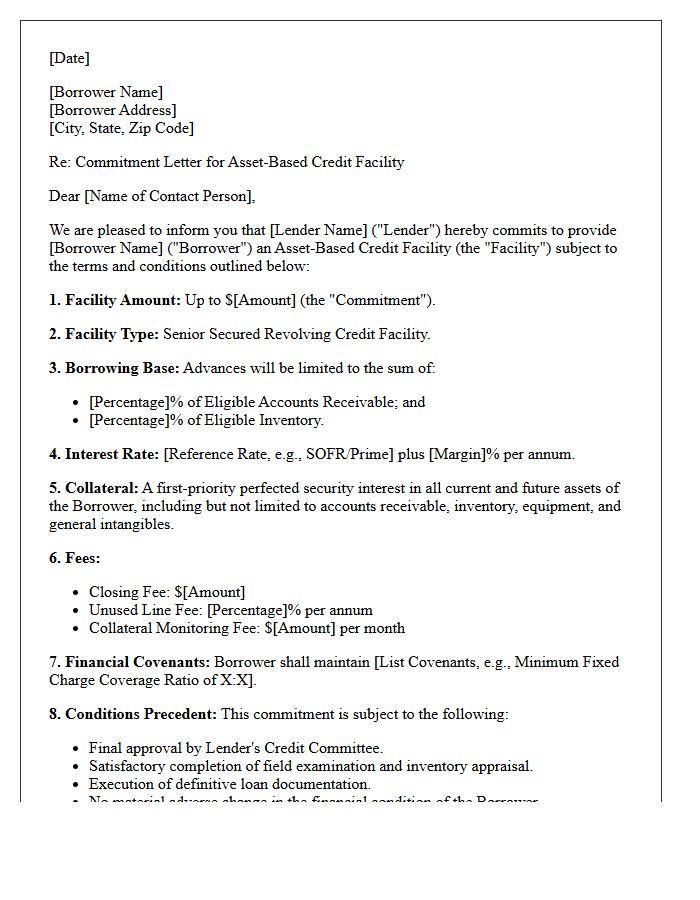
An Asset-Based Lending Commitment Letter is a formal document where a lender pledges to provide financing secured by a company's collateral, such as inventory or accounts receivable. It outlines critical terms including the maximum borrowing base, interest rates, and specific financial covenants. This letter serves as a preliminary agreement before final loan documentation. Understanding the advance rates and reporting requirements is essential, as they determine actual liquidity. Once signed, it signals the lender's intent to fund, provided all conditions precedent and due diligence requirements are met by the borrower.
Asset-Based Lending Fee Letter
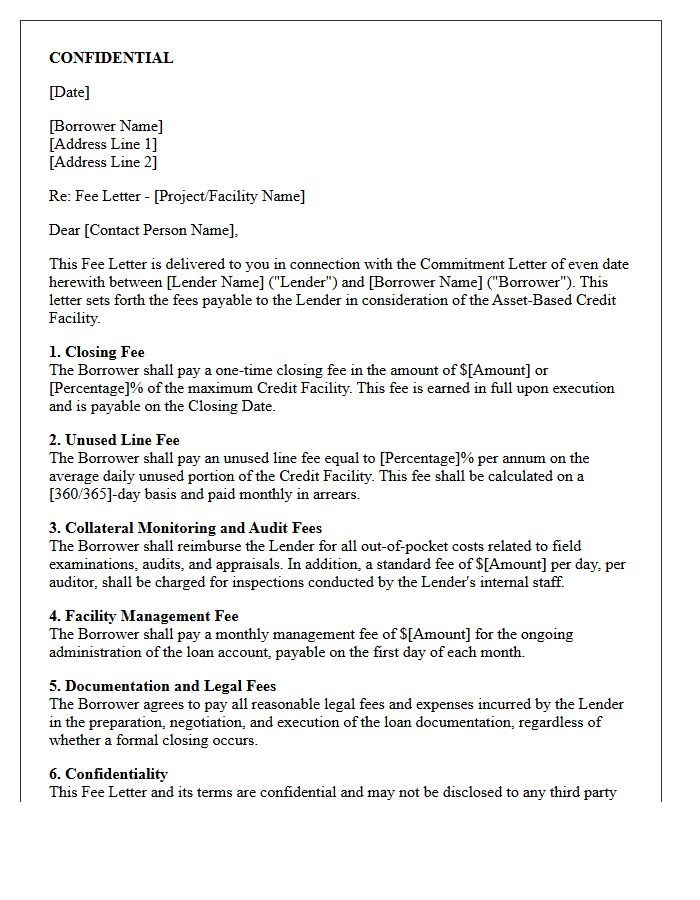
An Asset-Based Lending (ABL) Fee Letter is a confidential document outlining the specific costs associated with a credit facility. It detailing origination fees, unused line fees, and administrative charges separate from the main loan agreement. Understanding these terms is crucial because they directly impact the effective cost of capital. This document remains binding even if the loan does not close, ensuring the lender is reimbursed for underwriting expenses. Borrowers must carefully review syndication clauses and payment schedules to manage liquidity and ensure total transparency during the financing process.
Asset-Based Lending Engagement Letter
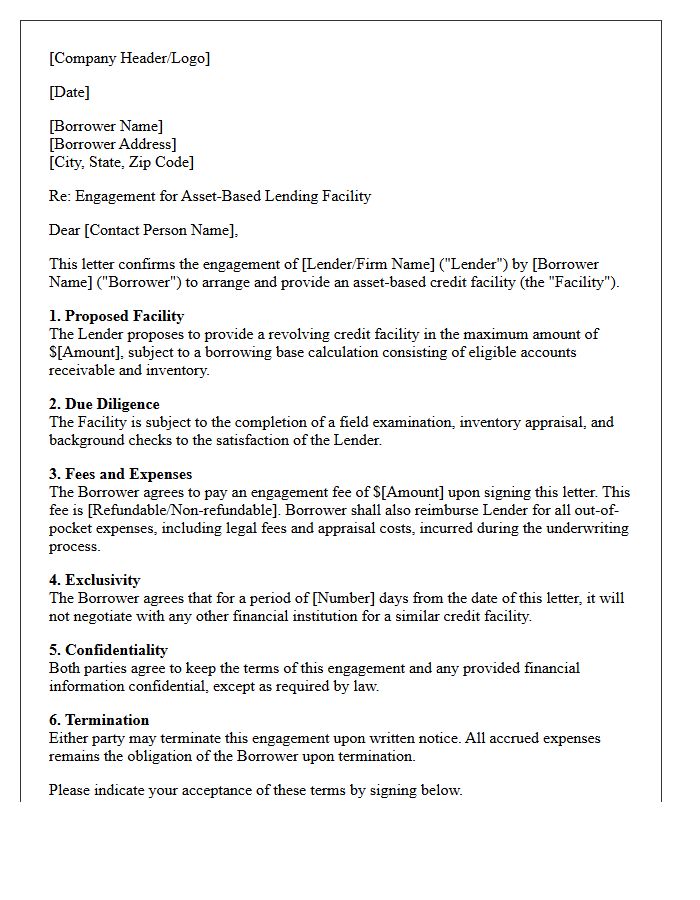
An Asset-Based Lending Engagement Letter is a preliminary agreement between a borrower and a lender outlining the proposed terms for financing secured by collateral. It specifies the mandate to structure the facility, anticipated interest rates, and required due diligence procedures like field audits and inventory appraisals. This document establishes the fee structure, including commitment and underwriting costs, while emphasizing confidentiality and exclusivity during the credit approval process. Signing this letter signifies a formal intent to proceed, though it remains subject to final credit committee authorization and legal documentation.
Asset-Based Lending Syndication Letter
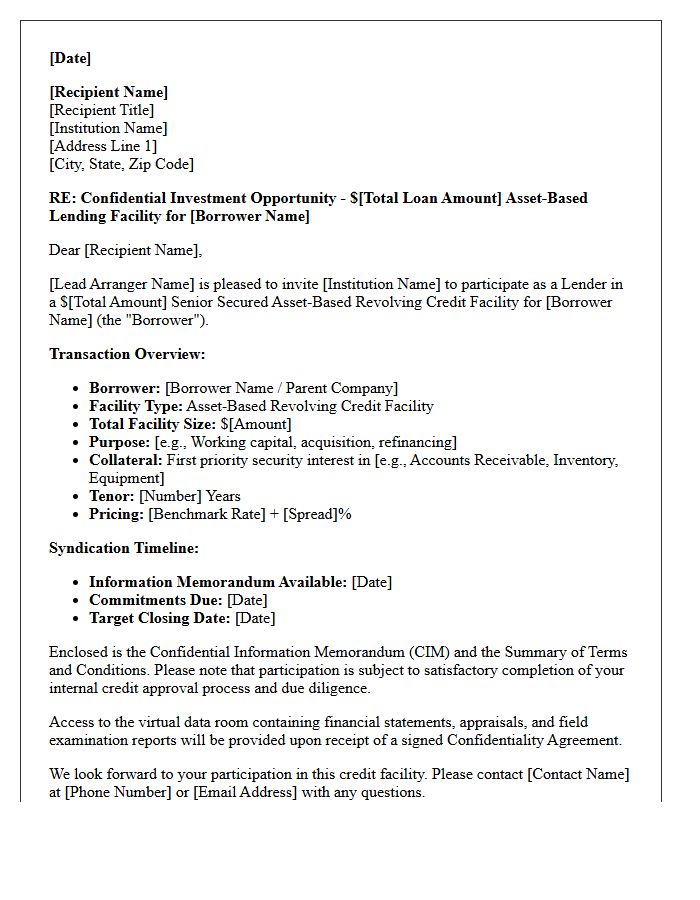
An Asset-Based Lending (ABL) Syndication Letter is a formal document outlining the terms under which a lead arranger invites other financial institutions to participate in a secured loan facility. It details the borrowing base, collateral requirements, and fee structures. This letter serves as a critical mandate, ensuring all lenders align on risk assessment and credit monitoring protocols. For borrowers, it signifies the transition from a single-lender relationship to a multi-bank credit facility, providing increased liquidity and expanded capital access while maintaining asset-backed security compliance.
Asset-Based Lending Collateral Access Letter
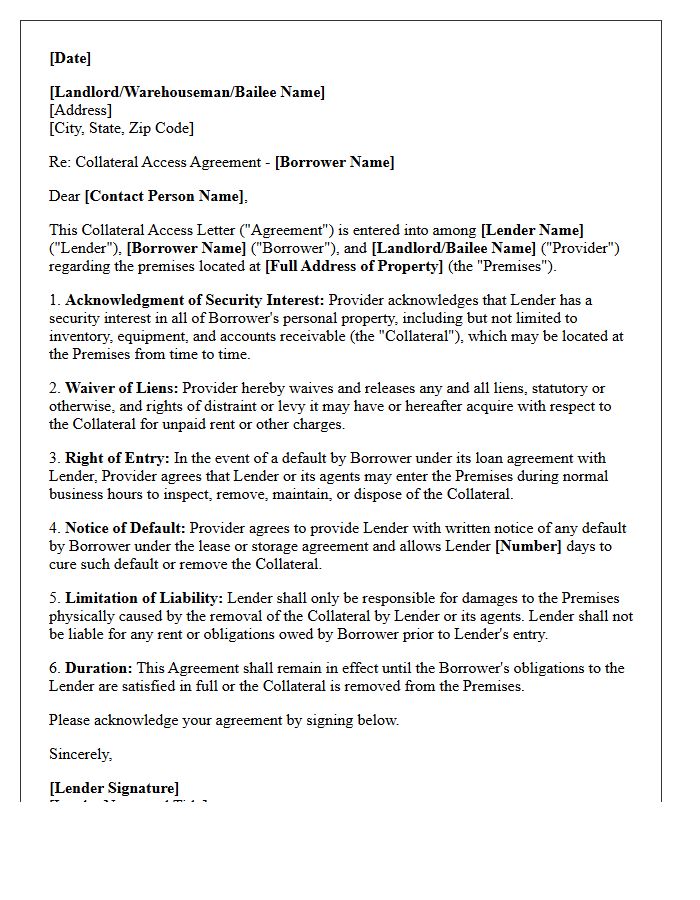
An Asset-Based Lending Collateral Access Letter, or Bailee Agreement, is a critical legal document that grants a lender rights to inspect and retrieve inventory stored at a third-party location. It ensures the lender can bypass landlord liens or warehouse claims if the borrower defaults. By securing landlord waivers or access consent, this letter protects the lender's security interest and ensures collateral liquidity. Without this signed document, a lender may exclude inventory at that specific location from the borrowing base, significantly reducing the company's available credit and operational funding.
Asset-Based Lending Deposit Account Control Letter
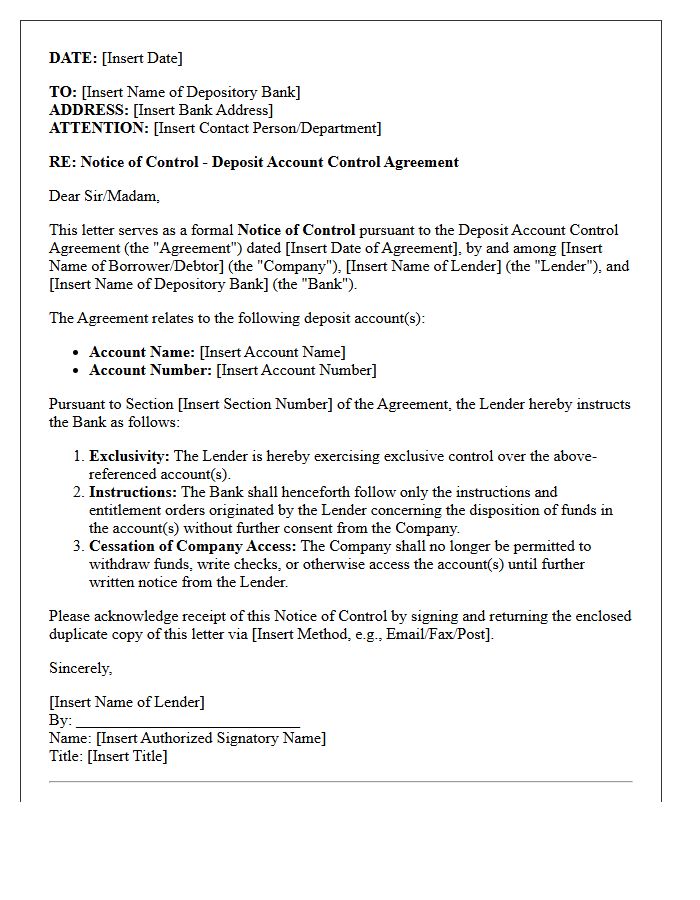
An Asset-Based Lending Deposit Account Control Agreement (DACA) is a legal tripartite contract between a borrower, a lender, and a bank. It provides the lender with perfected security interest over the borrower's cash deposits, ensuring they have legal priority over other creditors. In the event of default, the control letter allows the lender to direct disposition of funds. This document is essential for risk mitigation, as it ensures that liquid collateral is accessible to secure the loan and guarantees repayment priority within the structured financing arrangement.
Asset-Based Lending Landlord Waiver Letter
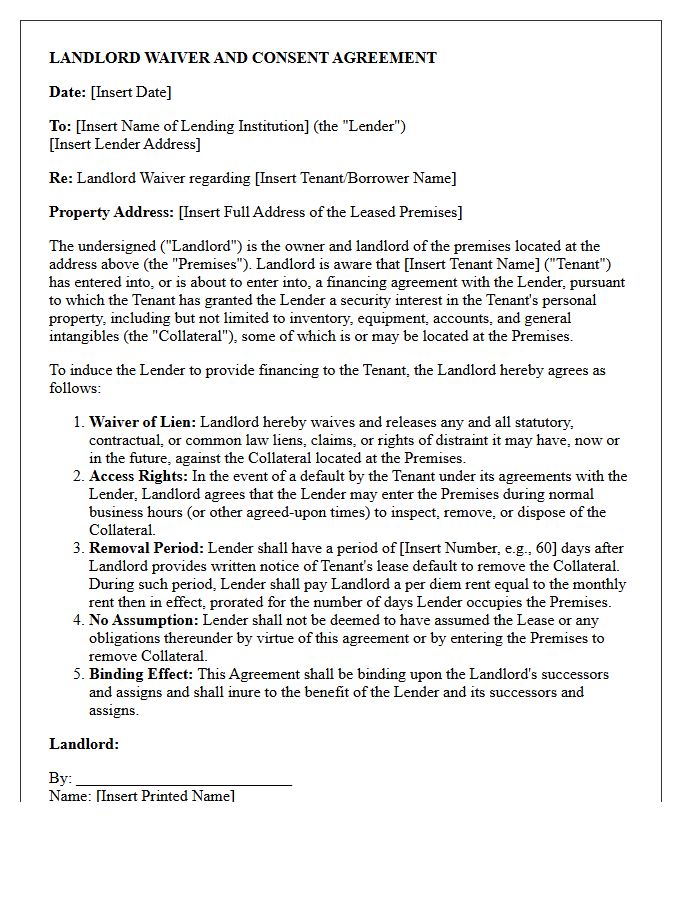
An Asset-Based Lending Landlord Waiver is a legal agreement where a property owner relinquishes their statutory lien rights over a tenant's business assets. This document is essential for secured lenders to ensure they have first-priority access to collateral, such as inventory or equipment, in the event of a loan default. By signing, the landlord permits the lender to enter the premises to inspect or remove pledged property. This waiver mitigates collateral risk, facilitating smoother financing approvals for commercial tenants while clarifying legal boundaries between the property owner and the financial institution.
Asset-Based Lending Payoff Reliance Letter
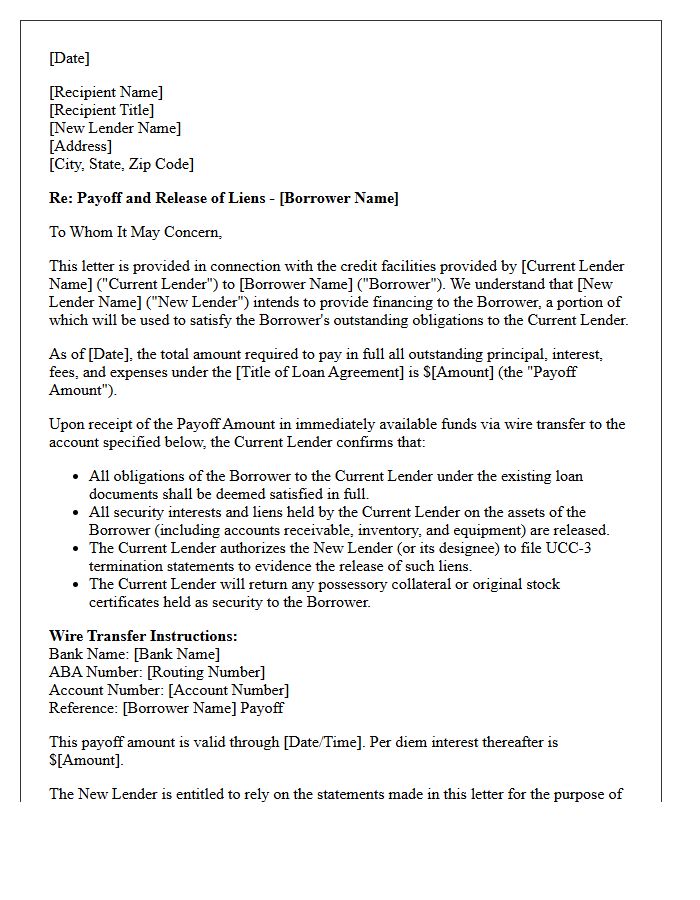
An Asset-Based Lending Payoff Reliance Letter is a critical legal document used during debt refinancing. It outlines the exact outstanding balance required to satisfy a loan and confirms that the current lender will release their security interests upon receipt of funds. This letter protects the new creditor by providing guaranteed payoff instructions they can legally rely on. It ensures a smooth transition of collateral control, preventing legal disputes over lien priority and ensuring the borrower's assets are properly cleared for new financing arrangements.
Asset-Based Lending Borrowing Request Letter
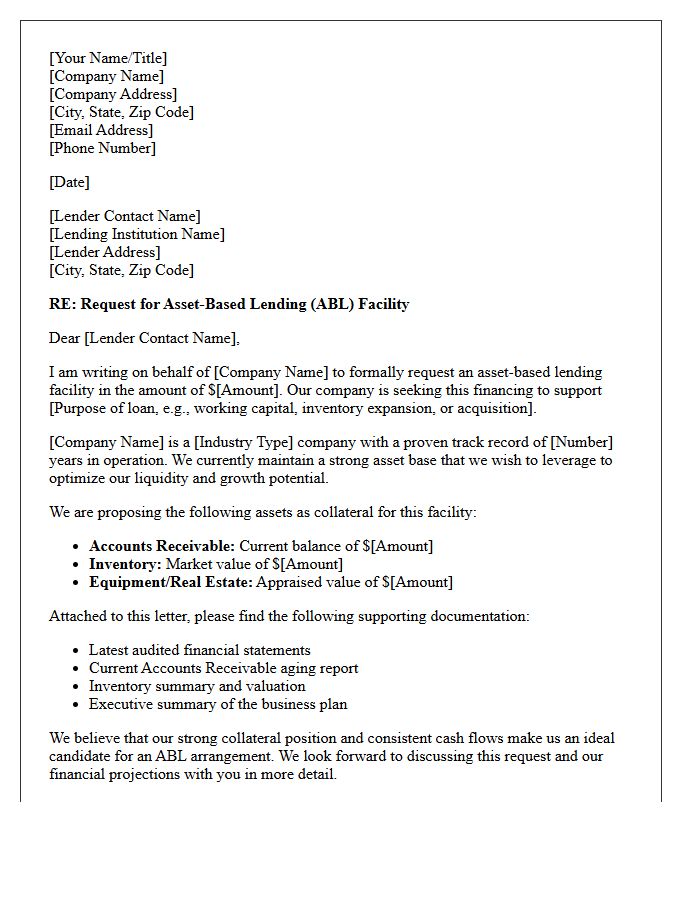
An Asset-Based Lending Borrowing Request Letter is a formal proposal used to secure financing by leveraging company assets as collateral. This document must clearly outline the loan purpose, requested amount, and specific collateral details, such as accounts receivable or inventory. Lenders evaluate this letter to assess the borrower's liquidity and operational stability. Including updated financial statements and an asset aging report increases transparency. A well-structured request demonstrates fiscal responsibility and highlights the business's ability to maintain sufficient working capital while mitigating the lender's risk through tangible security.
Asset-Based Lending Compliance Certificate Letter
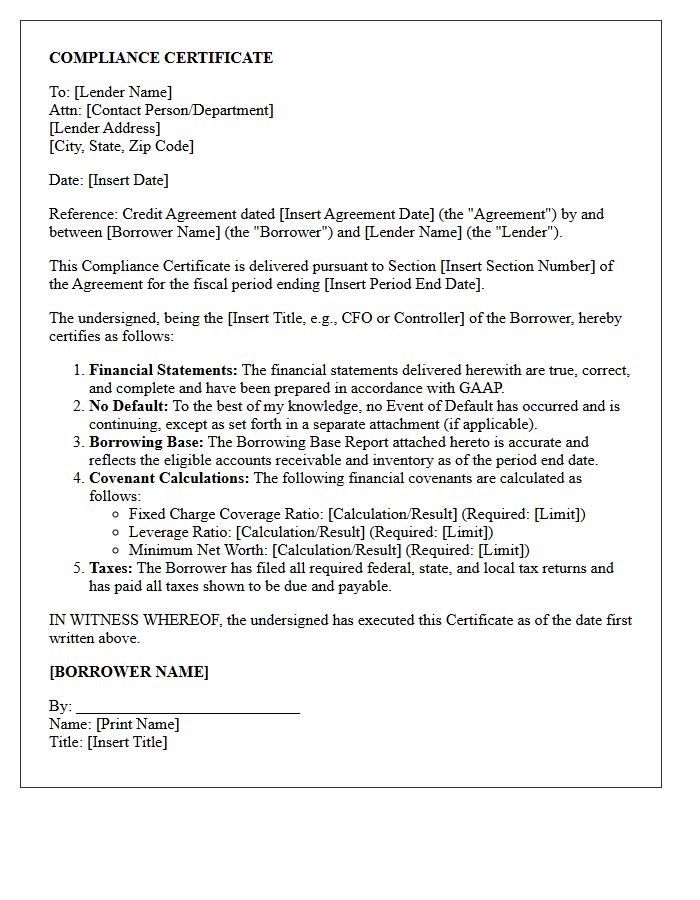
An Asset-Based Lending (ABL) Compliance Certificate Letter is a mandatory document submitted by borrowers to verify adherence to loan covenants. It typically accompanies the Borrowing Base Certificate, providing a formal statement that financial ratios and reporting requirements are met. This letter ensures transparency regarding collateral value, such as accounts receivable and inventory. Maintaining accurate compliance is crucial to avoid technical defaults and ensure continuous access to revolving credit lines. Lenders use this verified data to monitor risk levels and confirm the borrower's ongoing financial health and operational integrity.
Asset-Based Lending Post-Closing Letter
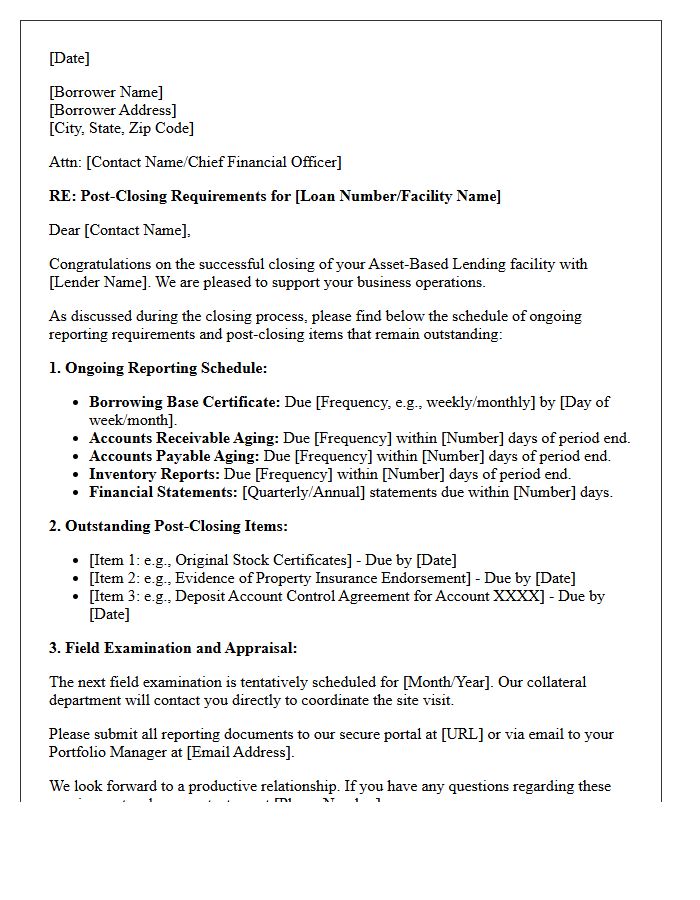
An Asset-Based Lending Post-Closing Letter serves as a formal roadmap for ongoing loan compliance. It highlights reporting requirements, such as borrowing base certificates and financial statements, ensuring the borrower maintains transparency. This document clarifies the operational obligations and deadlines necessary to sustain liquidity. Understanding these terms is vital to prevent technical defaults and maintain a healthy credit relationship. By outlining specific monitoring procedures, the letter ensures both lender and borrower remain aligned on collateral management and debt service expectations throughout the life of the credit facility.
Asset-Based Lending Facility Termination Letter
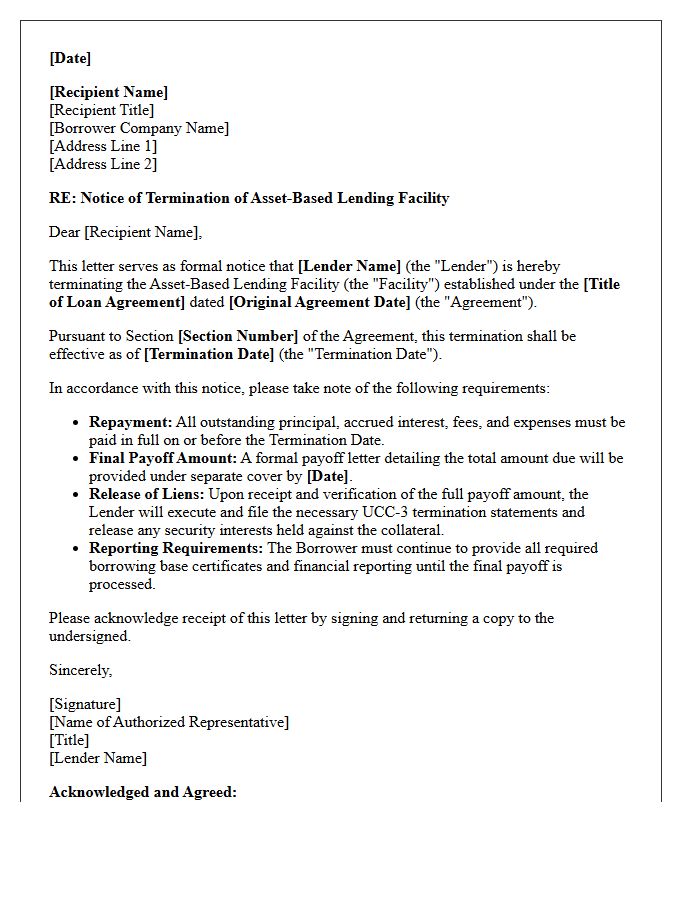
An Asset-Based Lending Facility Termination Letter is a formal legal document that officially concludes a credit agreement between a borrower and a lender. It confirms the full repayment of outstanding debts, including principal, interest, and fees. Crucially, this letter serves as evidence for the release of liens and security interests previously held against company assets. Businesses must ensure they receive this document to regain clear title to their collateral, enabling them to secure new financing or complete corporate transactions without existing encumbrances obstructing the process.
What is an Asset-Based Lending (ABL) commitment letter?
An Asset-Based Lending commitment letter is a formal document issued by a lender outlining the specific terms, conditions, and credit limits under which they agree to provide financing secured by a company's accounts receivable, inventory, and other corporate assets.
Is an ABL commitment letter legally binding for the lender?
Generally, an ABL commitment letter is a binding agreement to lend, provided that the borrower satisfies all "conditions precedent," such as successful completion of field audits, inventory appraisals, and the absence of any material adverse change in the business.
What key financial terms are typically included in an ABL commitment letter?
Key financial terms include the maximum facility amount, specific advance rates for different asset classes (e.g., 85% on receivables, 50% on inventory), the interest rate spread over a benchmark index, and a schedule of required fees such as origination and unused line fees.
What are the common conditions precedent in an Asset-Based Lending commitment?
Common conditions include a satisfactory borrowing base report, perfection of first-priority security interests (liens), execution of a lockbox or blocked account agreement, and a "clean" environmental or collateral audit conducted by the lender's third-party examiners.
What is the difference between an ABL commitment letter and a term sheet?
A term sheet is typically a non-binding summary of proposed terms used for initial negotiation, whereas a commitment letter represents a formal obligation by the lender to fund the loan once the specified closing conditions and final documentation are met.

Comments