
When users breach legal terms or internal safety policies, businesses must issue an Account Closure Notice for Compliance Violations to mitigate risks. This essential communication details the specific policy breach and outlines the permanent termination process to ensure regulatory adherence. Clear documentation protects your organization while maintaining transparency. To help you draft these formal notifications efficiently, below are some ready to use templates.
Image cover: Official Notice: Account Closure Due to Compliance Violations (Templates Included)
Letter Samples List
- Account Closure Notice Letter for Anti-Money Laundering Violations
- Notice of Account Closure Letter for Know Your Customer Non-Compliance
- Suspicious Activity Account Termination Letter
- Breach of Terms and Conditions Account Closure Letter
- Fraudulent Transaction Account Termination Notice Letter
- Regulatory Compliance Violation Account Closure Letter
- Unverified Identity Account Suspension and Closure Letter
- Sanctions List Match Account Termination Letter
- High-Risk Business Activity Account Closure Letter
- Unexplained Fund Source Account Closure Notice Letter
- Bank Secrecy Act Non-Compliance Account Termination Letter
- Prohibited Transaction Policy Violation Closure Letter
- Failure to Provide Required Documentation Account Closure Letter
- Legal and Compliance Risk Account Termination Letter
Account Closure Notice Letter for Anti-Money Laundering Violations
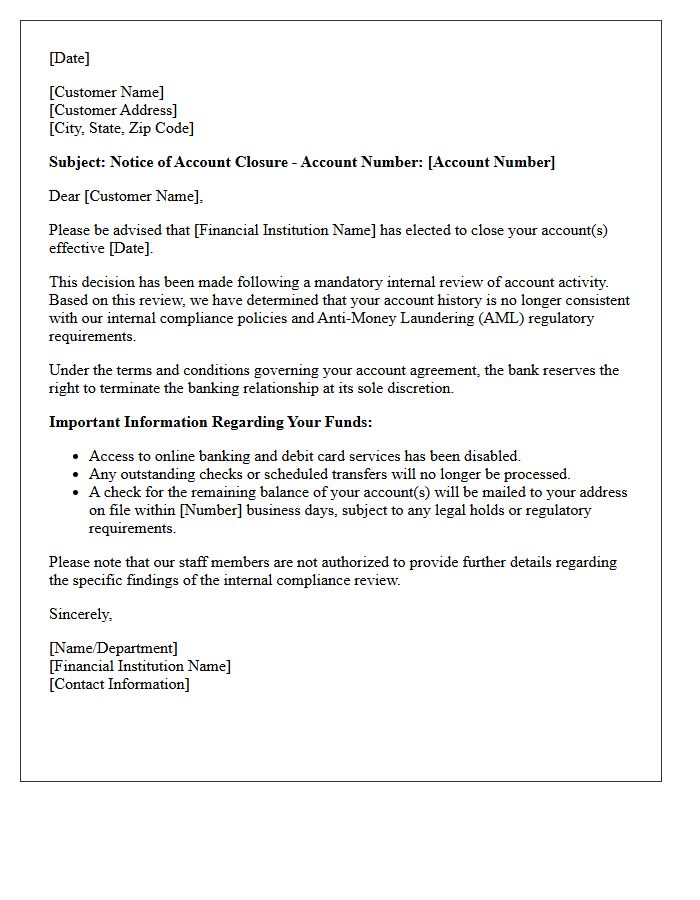
An Account Closure Notice Letter is a formal notification from a financial institution terminating a banking relationship due to Anti-Money Laundering (AML) policy violations. Banks issue these non-negotiable notices when they detect suspicious patterns, such as unusual structuring or unverified funding sources, that pose regulatory risks. Most letters provide a brief wind-down period for remaining balances but rarely disclose specific internal investigation details to prevent tipping off. Receiving this notice often indicates high-risk activity, potentially leading to long-term de-risking and difficulties opening future accounts at other institutions.
Notice of Account Closure Letter for Know Your Customer Non-Compliance
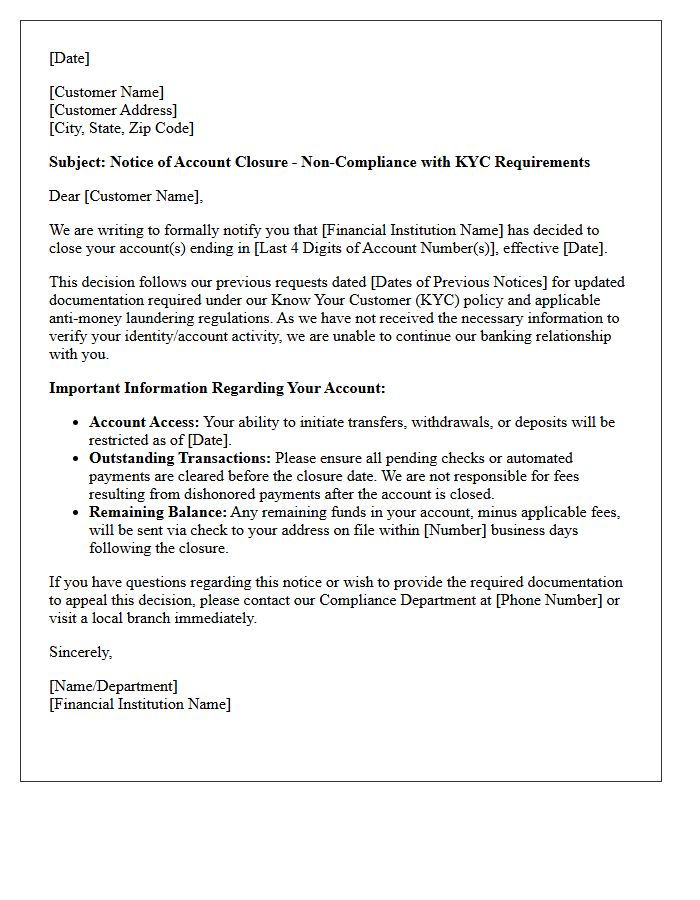
A Notice of Account Closure due to KYC Non-Compliance is a formal notification that a financial institution is terminating your relationship. This occurs when a customer fails to provide mandatory identification documents or verify their source of funds. To prevent permanent service disruption, you must respond immediately to any information requests. Failure to comply often leads to restricted access, frozen assets, and a mandatory report to regulatory authorities. Ensuring your personal profile remains current and verified is essential to maintaining your banking privileges and preventing involuntary account termination.
Suspicious Activity Account Termination Letter
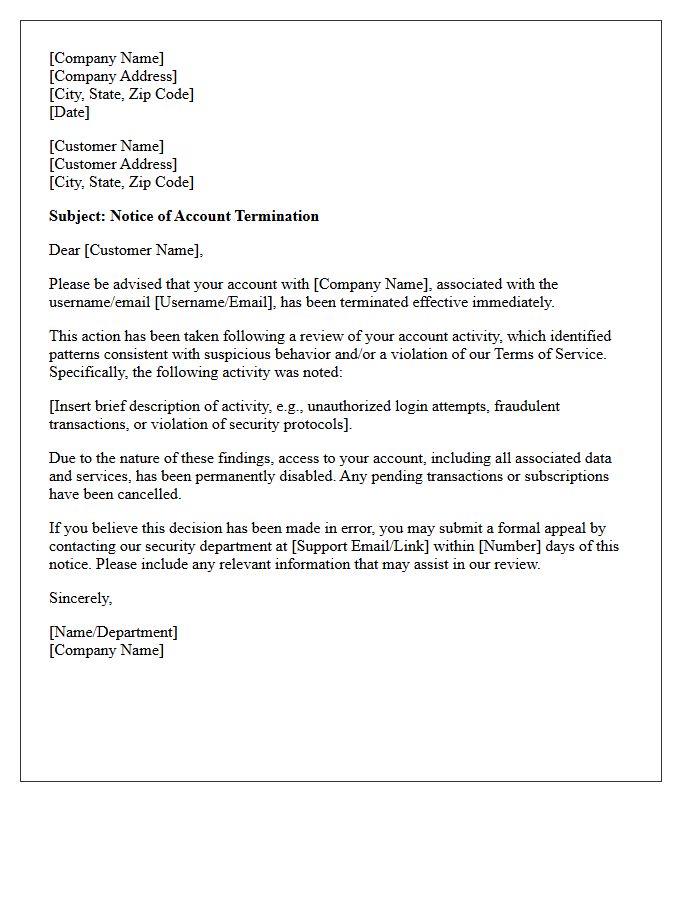
Receiving a Suspicious Activity Account Termination Letter means a financial institution has identified behavior potentially linked to fraud, money laundering, or policy violations. These letters often state that the relationship is ended immediately to mitigate risk. Due to strict compliance regulations like the Bank Secrecy Act, banks are frequently prohibited from disclosing the specific reason for closure. If you receive one, prioritize withdrawing remaining funds and updating your direct deposits. Consult a legal professional if you suspect an error, as such flags can impact your ChexSystems record and future banking accessibility.
Breach of Terms and Conditions Account Closure Letter
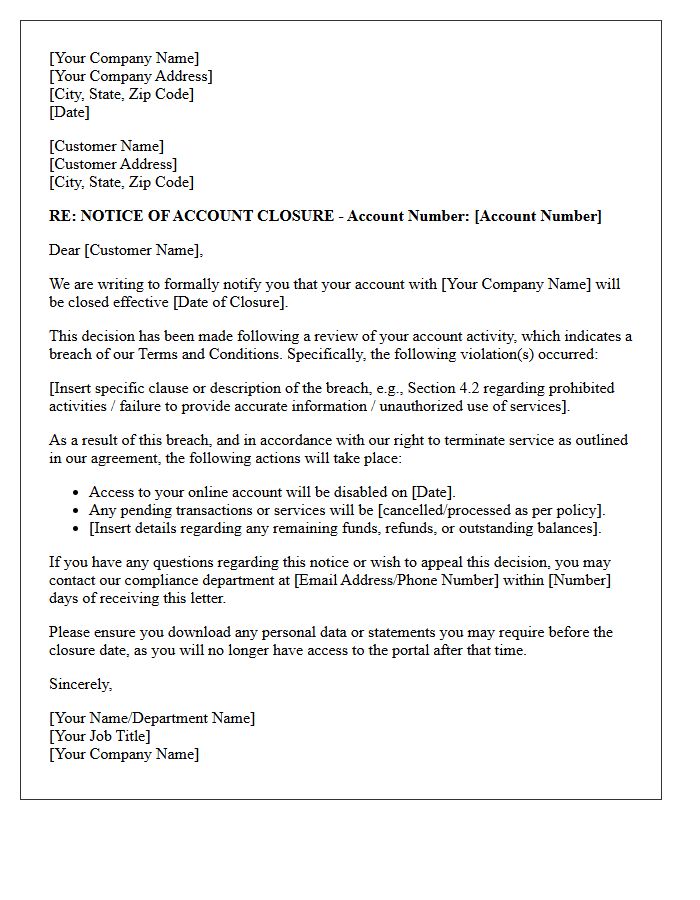
A Breach of Terms and Conditions Account Closure Letter is a formal notification terminating a business relationship due to policy violations. It serves as legal proof that a user violated specific agreements, such as engaging in fraud, harassment, or unauthorized activities. This document outlines the effective date of closure, mentions the specific clauses breached, and explains the status of remaining funds or data. Clarity in this letter is essential to mitigate legal liability and ensure compliance with regulatory standards regarding account suspension and consumer notification procedures.
Fraudulent Transaction Account Termination Notice Letter
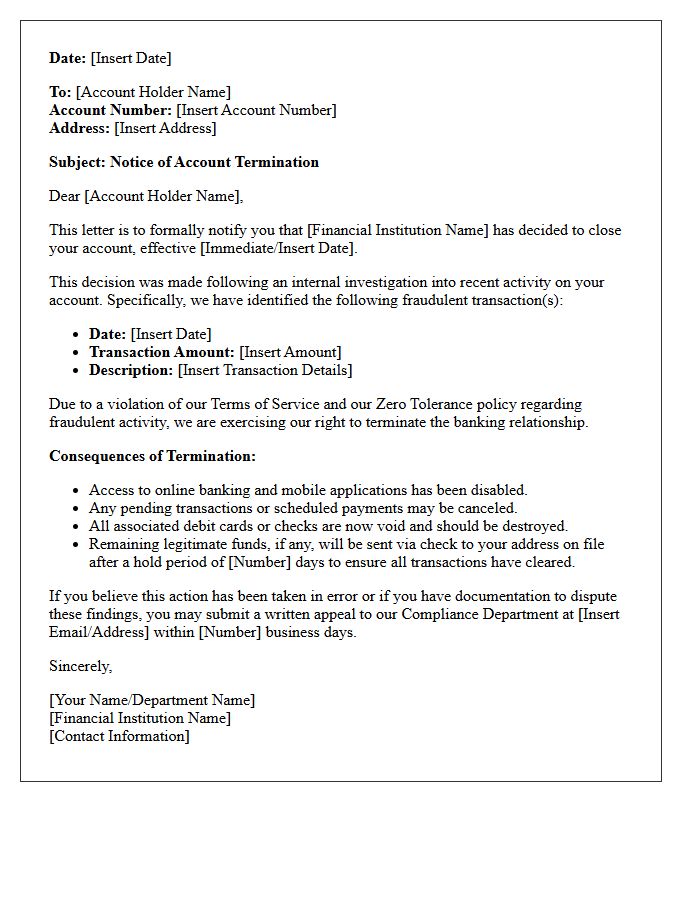
A Fraudulent Transaction Account Termination Notice Letter is a formal notification issued by a financial institution to inform a customer that their account is being closed due to suspicious or unauthorized activity. This document outlines the specific policy violations and the effective date of closure. It is crucial to review this notice immediately to understand the appeals process and protect your financial reputation. Promptly addressing these allegations can help mitigate long-term impacts on your creditworthiness and ability to open future banking accounts with other providers.
Regulatory Compliance Violation Account Closure Letter
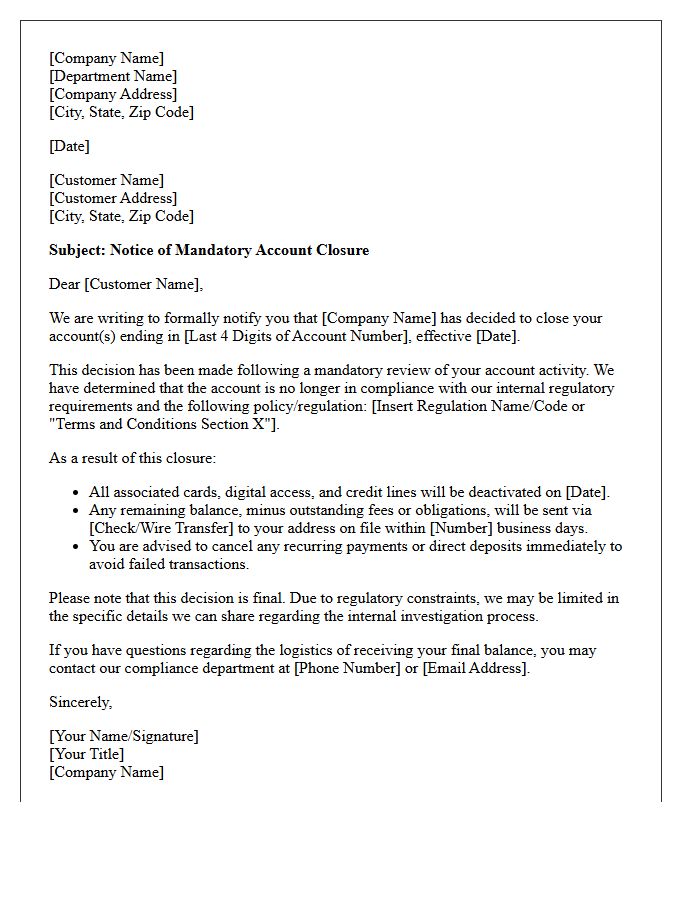
A Regulatory Compliance Violation Account Closure Letter is a formal notification sent by a financial institution to inform a client that their account is being terminated. This action usually results from a failure to meet legal standards or anti-money laundering requirements. The letter typically outlines the effective date of closure and instructions for fund liquidation. It is crucial to understand that these decisions are often final and mandatory to mitigate institutional risk. Recipients should review the document carefully to address any remaining outstanding obligations and ensure compliance with remaining regulatory protocols.
Unverified Identity Account Suspension and Closure Letter
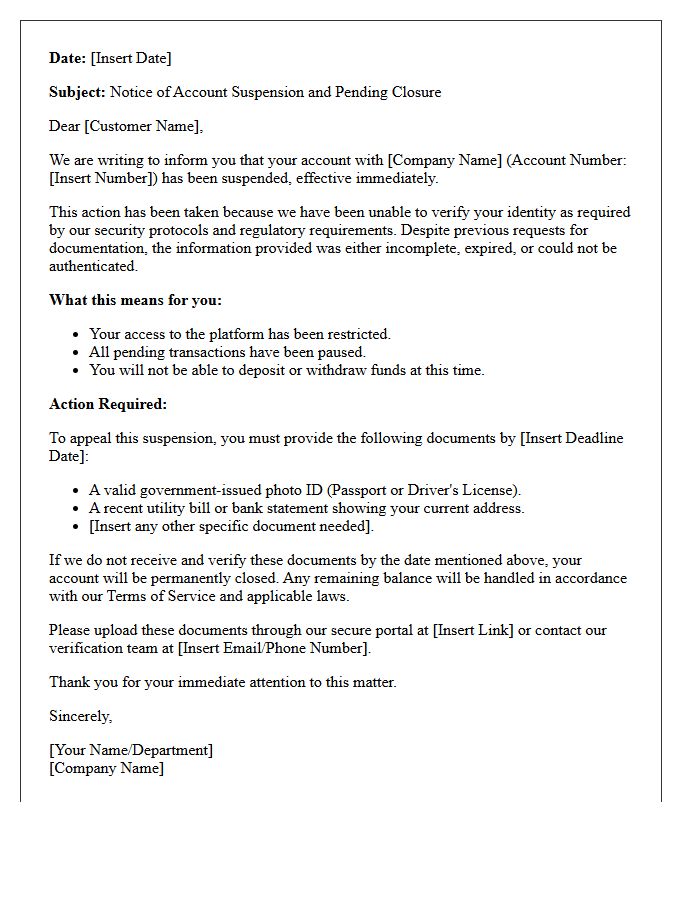
An Unverified Identity Account Suspension and Closure Letter is a formal notice issued when a user fails to provide valid KYC documentation. Financial institutions and digital platforms use these alerts to comply with Anti-Money Laundering (AML) regulations. If your identity remains unconfirmed within the specified deadline, the provider will restrict access to funds and permanently terminate the service. To resolve this, you must promptly submit government-issued identification or proof of address to verify your identity and prevent permanent loss of account privileges and assets.
Sanctions List Match Account Termination Letter
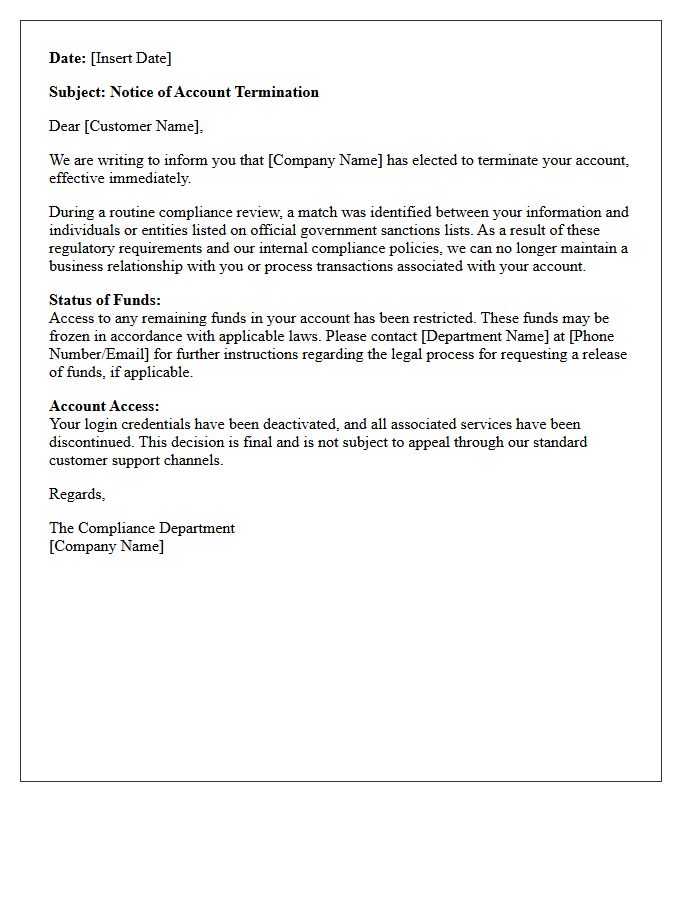
A Sanctions List Match Account Termination Letter notifies a client that their relationship is ending due to global regulatory compliance. Financial institutions must legally sever ties if a user appears on Specially Designated Nationals (SDN) or similar watchlists. This action prevents money laundering and financing of prohibited entities. Upon receiving this notice, the account is typically frozen immediately to comply with Office of Foreign Assets Control (OFAC) mandates. It is a non-negotiable legal requirement for banks to mitigate financial crime risks and avoid severe government penalties.
High-Risk Business Activity Account Closure Letter
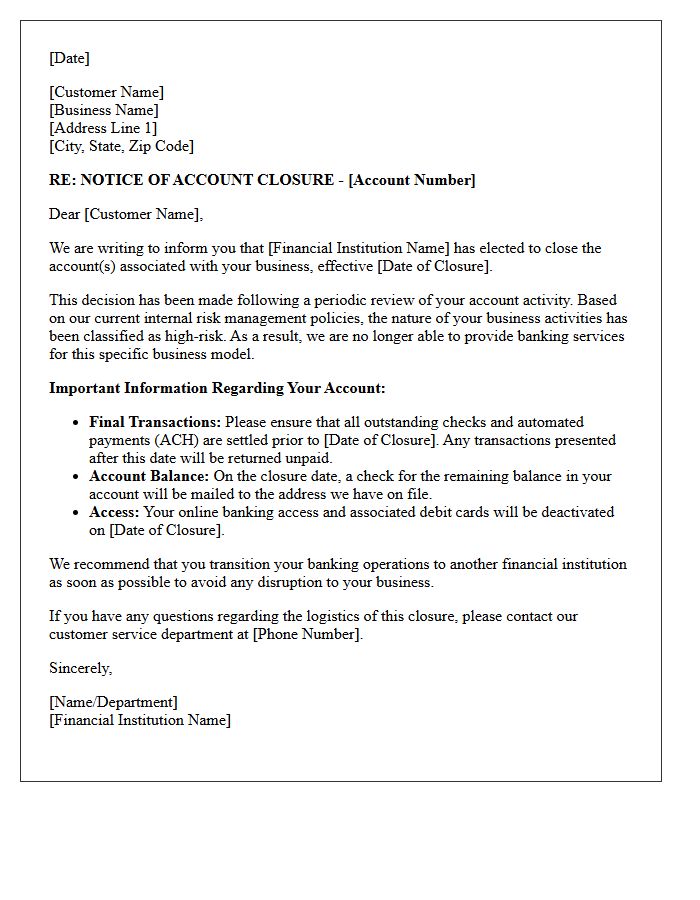
A High-Risk Business Activity Account Closure Letter is a formal notice from a bank terminating a financial relationship due to perceived compliance risks. Financial institutions issue these when a company's operations fall outside their risk appetite or violate anti-money laundering (AML) policies. Receiving this letter often results in immediate fund freezes and operational disruptions. To mitigate impact, businesses must maintain detailed documentation and seek alternative high-risk merchant accounts designed for sensitive industries like gaming, CBD, or adult entertainment to ensure continued payment processing and financial stability.
Unexplained Fund Source Account Closure Notice Letter
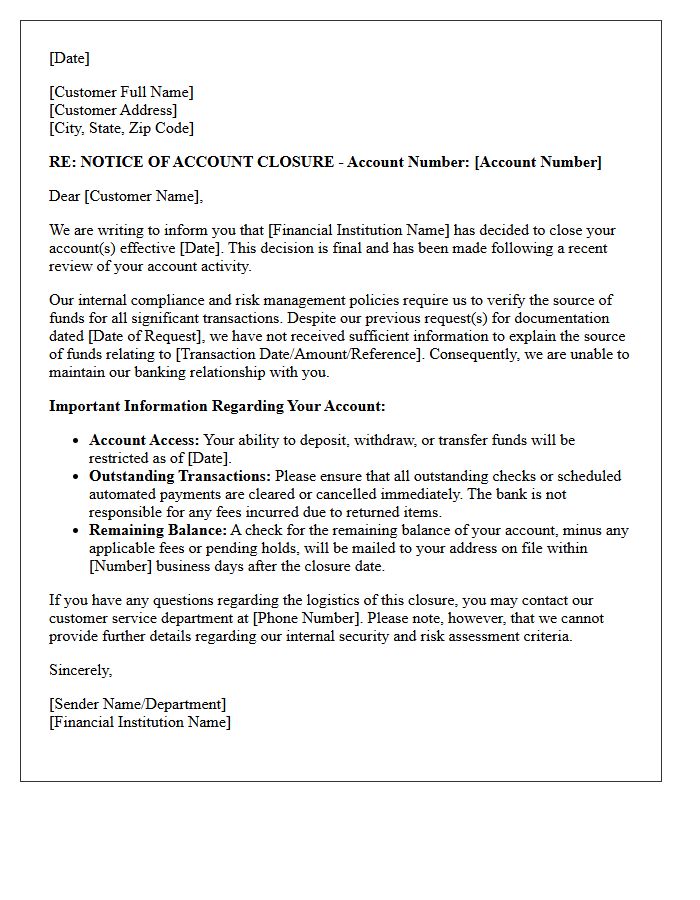
An Unexplained Fund Source Account Closure Notice Letter is a formal notification from a financial institution stating they are terminating your banking relationship. This typically occurs when internal compliance audits detect suspicious patterns or large transactions lacking verifiable origins. Banks issue these notices to mitigate risks related to money laundering or fraud. It is crucial to review the notice period provided, as you must promptly transfer remaining balances to a different institution before the account access is permanently revoked and the relationship is legally severed.
Bank Secrecy Act Non-Compliance Account Termination Letter
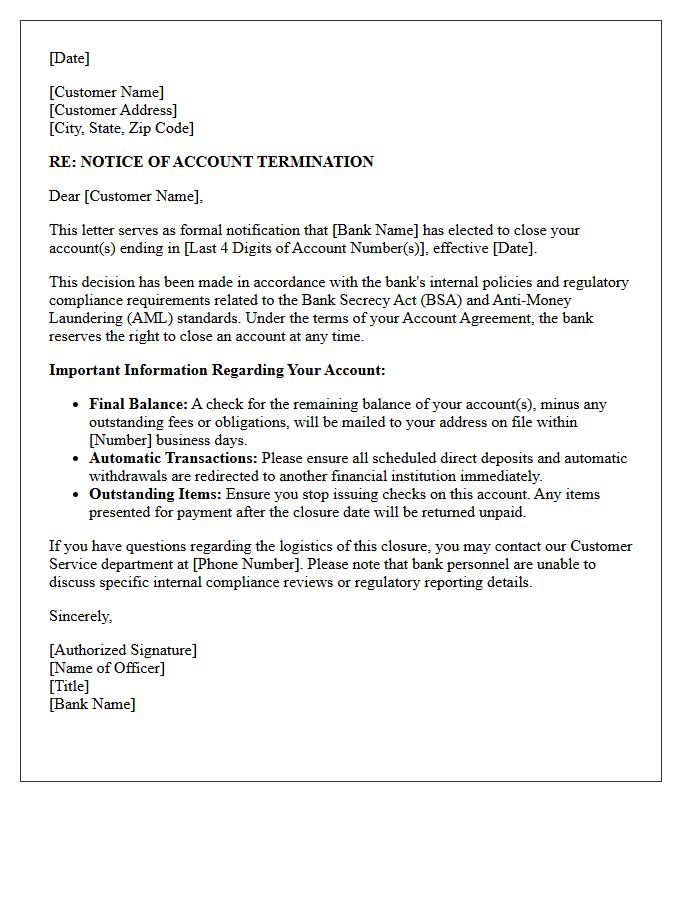
Receiving a Bank Secrecy Act (BSA) non-compliance account termination letter signifies that a financial institution has identified suspicious activity or insufficient documentation regarding your transactions. Banks must adhere to strict federal anti-money laundering (AML) regulations to prevent financial crimes. If your account is flagged for potential regulatory violations, the bank may terminate the relationship abruptly to mitigate risk. This process is often final and non-negotiable. It is crucial to review your records for unusual patterns and consult a professional if you suspect identity theft or reporting errors occurred.
Prohibited Transaction Policy Violation Closure Letter
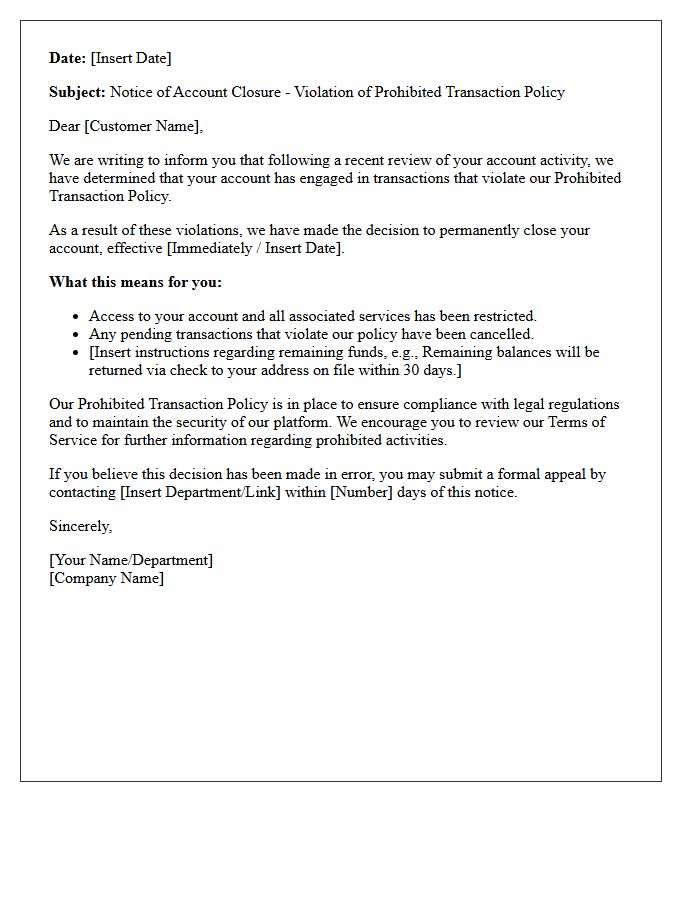
Receiving a Prohibited Transaction Policy Violation Closure Letter signifies a permanent termination of your account due to restricted activities. This notice indicates that the institution identified transactions involving unauthorized goods, illegal services, or high-risk financial maneuvers that breach their terms of service. Such violations are typically non-negotiable and result in an immediate permanent ban. To prevent future issues with other providers, it is essential to review compliance guidelines and ensure all financial movements remain transparent and legal. This closure often includes a final fund hold period for risk mitigation.
Failure to Provide Required Documentation Account Closure Letter
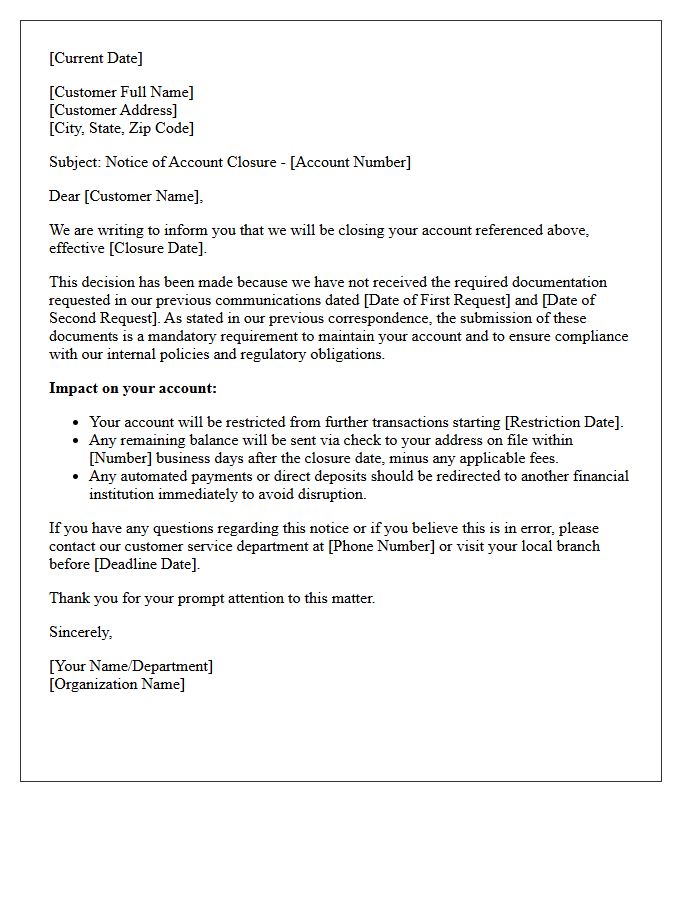
Receiving a Failure to Provide Required Documentation Account Closure Letter indicates that your financial institution is terminating your relationship due to incomplete Know Your Customer (KYC) compliance. Banks are legally mandated to verify identity and source of funds to prevent money laundering. If you miss the specified deadline to submit requested paperwork, your account will be permanently closed. To protect your assets, immediately contact the bank's compliance department to provide the missing files or arrange for the transfer of remaining funds to an external institution before the final lockout date.
Legal and Compliance Risk Account Termination Letter
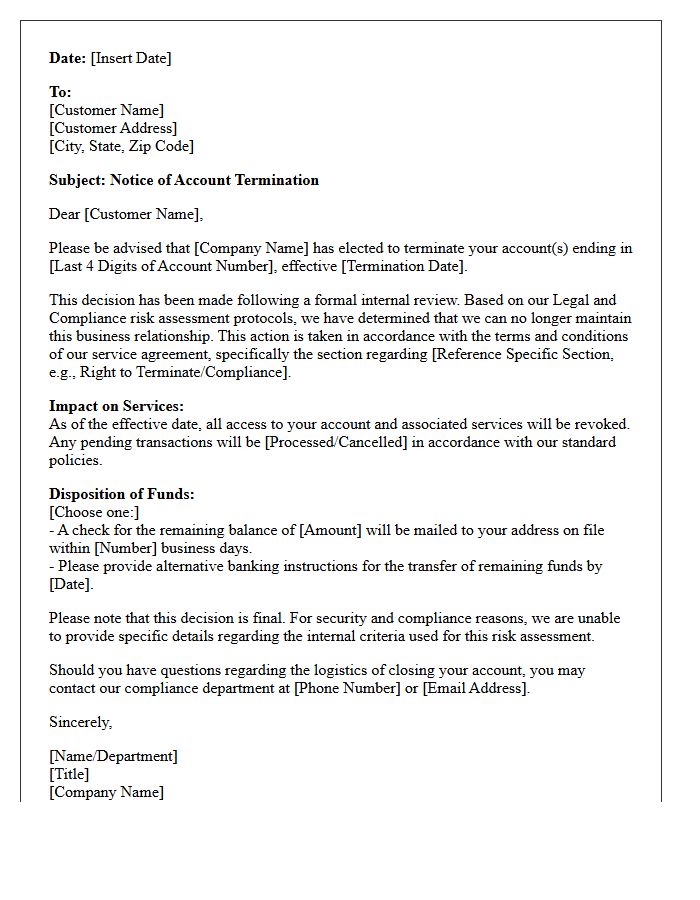
A Legal and Compliance Risk Account Termination Letter is a formal notification issued when a financial institution identifies regulatory violations or suspicious activity. Receiving this document signifies a permanent closure of the banking relationship to prevent legal exposure. It often cites non-compliance with Anti-Money Laundering (AML) or Know Your Customer (KYC) standards. For the recipient, understanding the legal implications is crucial, as this action is typically irreversible and may affect future financial eligibility. Maintaining transparent documentation is essential for navigating the consequences of such risk-based decisions effectively.
Why did I receive an Account Closure Notice for compliance violations?
Your account was flagged during a periodic review for failing to adhere to our established Terms of Service, anti-money laundering (AML) policies, or specific regulatory compliance standards required by law.
Can I appeal the decision to close my account?
In most cases, account closures resulting from severe compliance violations are final; however, you may submit a formal request for review to our Compliance Department if you believe there has been a factual error regarding your identity or transaction history.
How can I withdraw my remaining funds after a compliance closure?
If your account is not subject to a legal freeze or a government hold, you will be provided with instructions on how to transfer your remaining balance to a verified external bank account in your name.
Will a compliance-related account closure affect my credit score?
Closing an account for compliance reasons is an internal administrative action and is not typically reported to credit bureaus, though it may be recorded in inter-bank databases used for risk assessment.
What happens to my personal data after the account is closed?
While your active account status is terminated, we are legally required by regulatory record-keeping obligations to retain certain KYC (Know Your Customer) and transactional data for a specific period, typically five to seven years.

Comments