
The Equal Credit Opportunity Act (ECOA) requires lenders to provide an adverse action letter when denying credit. This formal notice ensures transparency by explaining the specific reasons for rejection, protecting consumers against discrimination. Understanding these compliance requirements is essential for both lenders and applicants to maintain fair lending practices. To simplify your documentation process, below are some ready to use templates.
Image cover: Mastering ECOA Compliance: Adverse Action Letter Templates and Samples
Letter Samples List
- Mortgage Loan Denial Adverse Action Letter
- Credit Card Application Decline Adverse Action Letter
- Auto Loan Refusal Adverse Action Letter
- Notice Of Incomplete Credit Application Letter
- Small Business Loan Rejection Adverse Action Letter
- Personal Loan Denial Adverse Action Letter
- Credit Limit Reduction Adverse Action Letter
- Unfavorable Credit Terms Counteroffer Denial Letter
- Student Loan Decline Adverse Action Letter
- Home Equity Line Of Credit Denial Letter
- Commercial Real Estate Loan Rejection Letter
- Overdraft Protection Application Denial Letter
Mortgage Loan Denial Adverse Action Letter
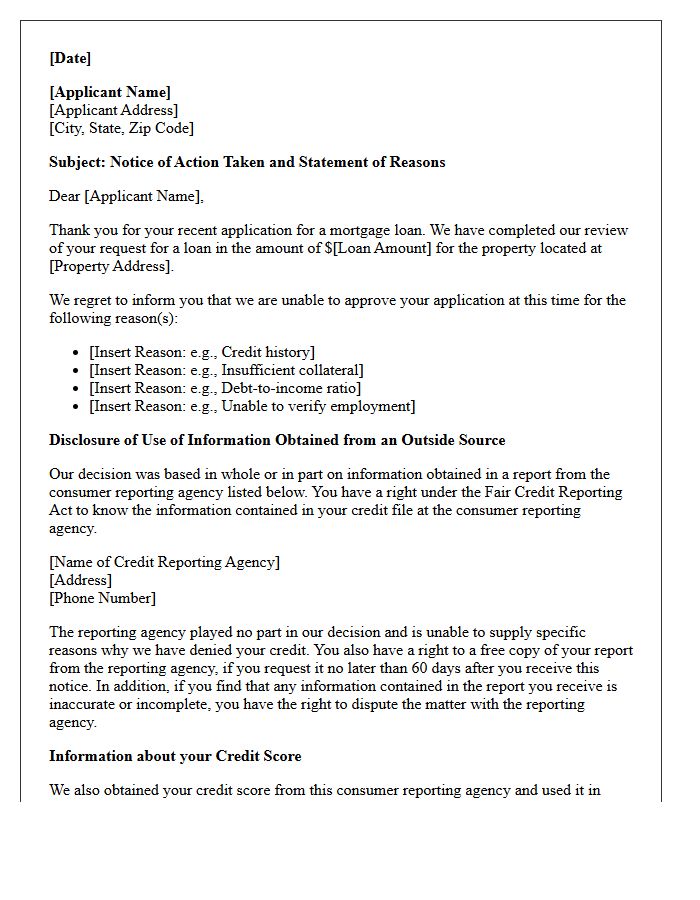
A mortgage loan denial adverse action letter is a mandatory legal notice explaining why your application was rejected. It identifies the specific credit score or financial factors used in the decision, such as high debt-to-income ratios or insufficient collateral. This document is essential because it grants you the right to a free copy of your credit report. Reviewing this adverse action notice allows you to dispute inaccuracies, improve your financial profile, and address the underwriting requirements needed to secure future home financing approval.
Credit Card Application Decline Adverse Action Letter
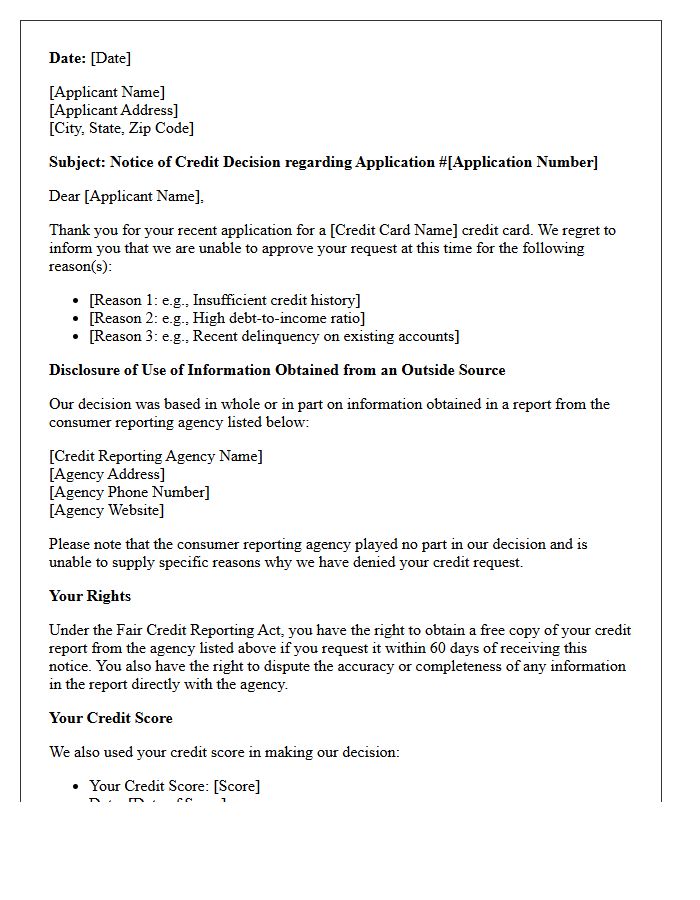
If your credit card application is denied, federal law requires lenders to send an Adverse Action Letter. This document is crucial because it explains the specific reasons for the rejection, such as a low credit score or insufficient income. It must disclose which credit reporting agency provided the data used in the decision. You are entitled to a free copy of your credit report within sixty days to dispute any inaccuracies. Reviewing this letter helps you identify areas for financial improvement before reapplying for credit in the future.
Auto Loan Refusal Adverse Action Letter
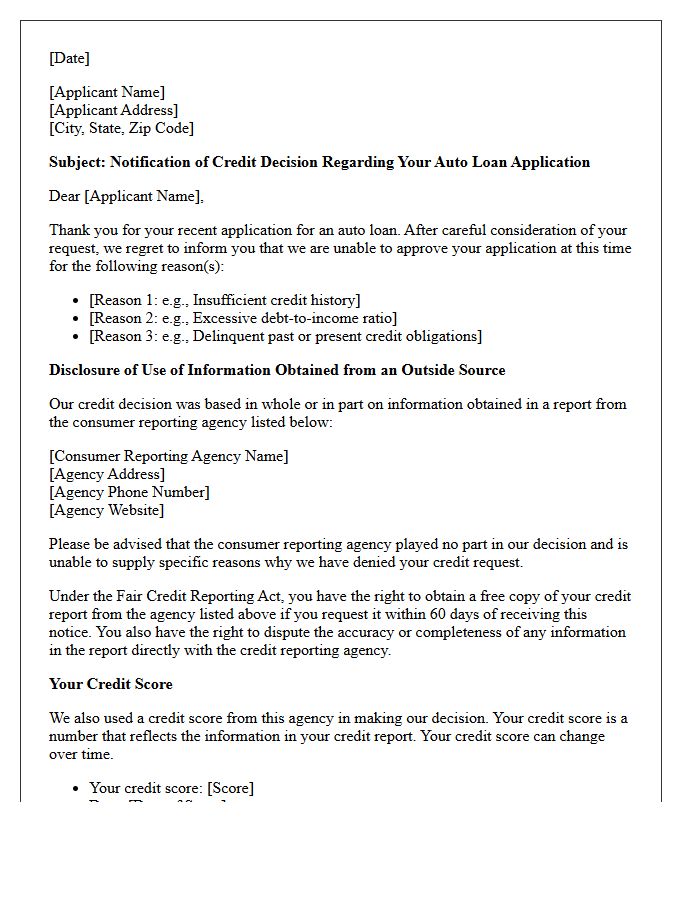
Receiving an auto loan refusal triggers a mandatory Adverse Action Letter under the Equal Credit Opportunity Act. This document is a legal disclosure explaining the specific reasons for your application denial. It identifies the credit reporting agency used and provides your credit score at the time of the inquiry. Reviewing this letter is essential for identifying credit report errors or financial weaknesses. It also grants you the right to request a free copy of your credit report within sixty days to ensure data accuracy and improve future approval odds.
Notice Of Incomplete Credit Application Letter
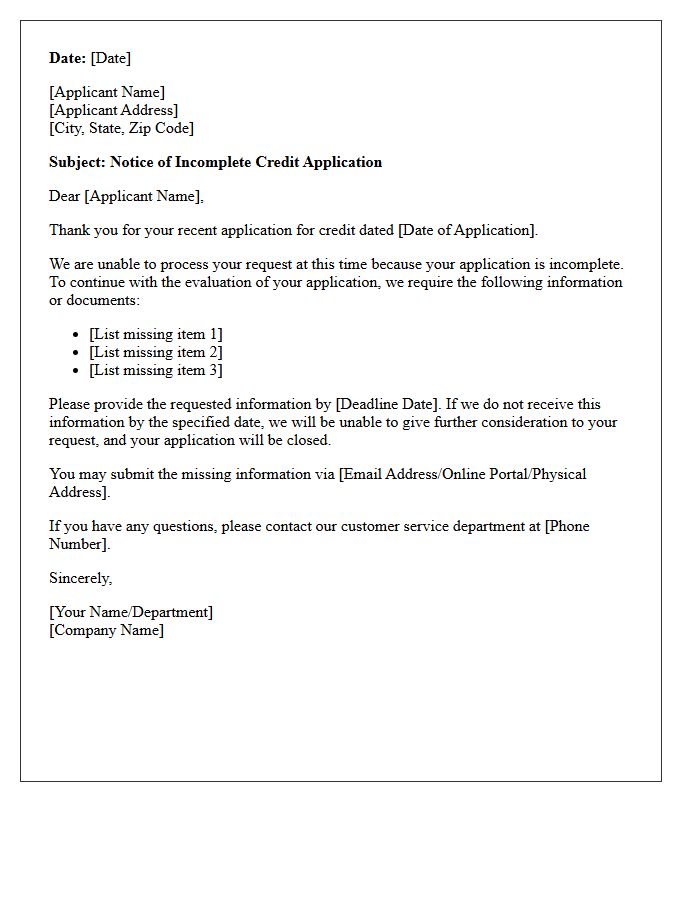
A Notice of Incomplete Credit Application is a critical document sent by lenders under the Equal Credit Opportunity Act (ECOA). If your application lacks necessary data, the creditor must inform you in writing, specifying the missing information required to make a decision. This notice typically includes a deadline for submission. Providing the requested details promptly is essential to restart the review process. Failure to respond within the timeframe allows the lender to close your file without further obligation, potentially delaying your access to financing or credit services.
Small Business Loan Rejection Adverse Action Letter
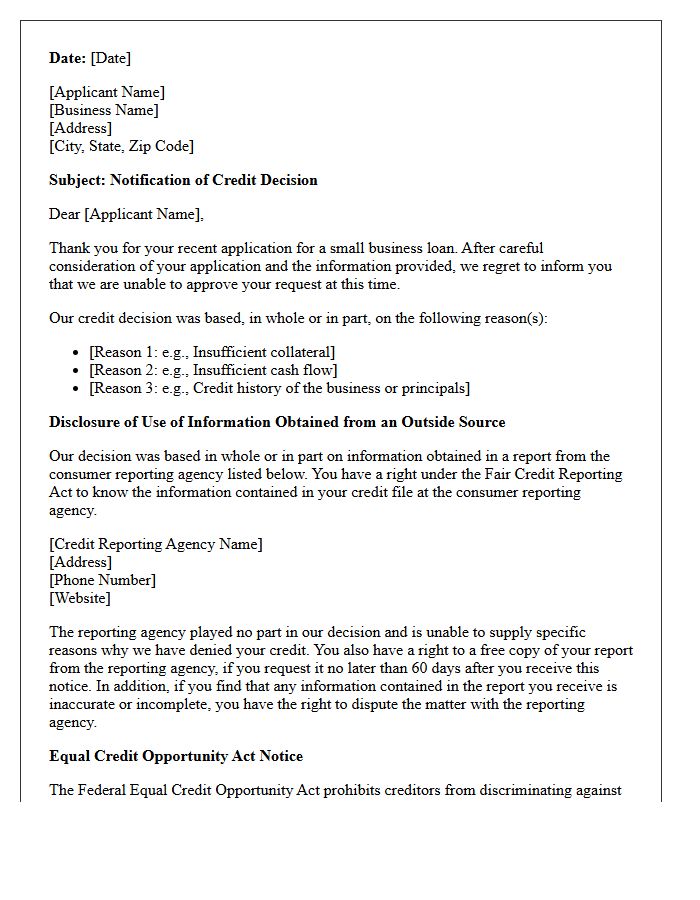
Receiving an Adverse Action Letter is a legal requirement under the Equal Credit Opportunity Act after a small business loan rejection. This document provides transparency by detailing the specific reasons for the denial, such as poor credit scores or insufficient cash flow. It must also disclose which credit reporting agency supplied the information used in the decision. Reviewing this letter is essential for entrepreneurs to identify financial weaknesses, dispute reporting errors, and implement strategic improvements to qualify for future funding opportunities.
Personal Loan Denial Adverse Action Letter
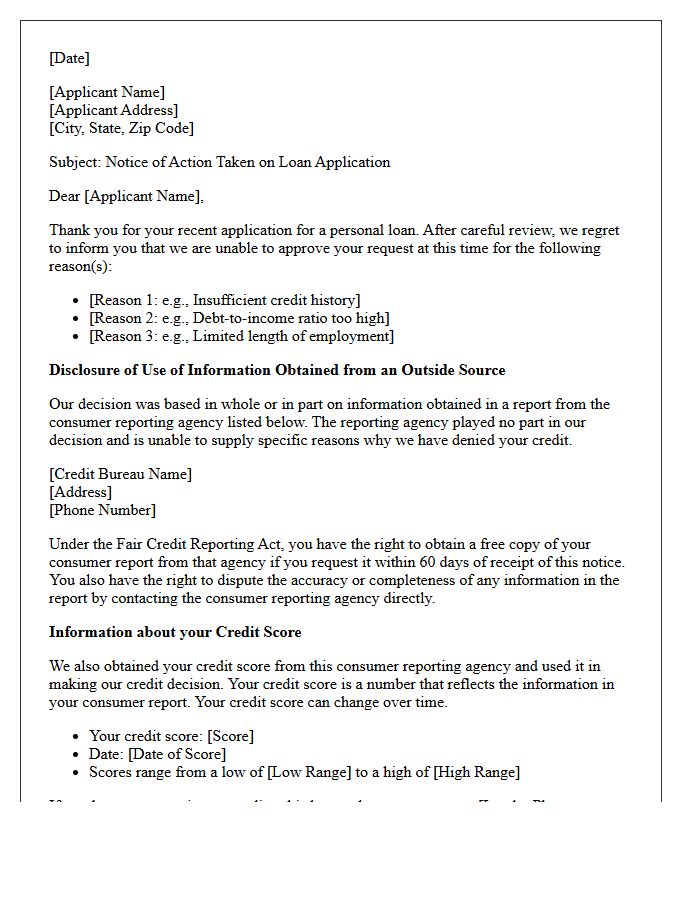
A Personal Loan Denial Adverse Action Letter is a formal notification explaining why your credit application was rejected. Under the Equal Credit Opportunity Act, lenders must provide this document within 30 days. It contains critical information, such as your credit score, the credit reporting agency used, and the specific reasons for denial like high debt-to-income ratios. Reviewing this letter is essential because it allows you to identify errors in your credit report and understand how to improve your financial profile before reapplying for future financing.
Credit Limit Reduction Adverse Action Letter
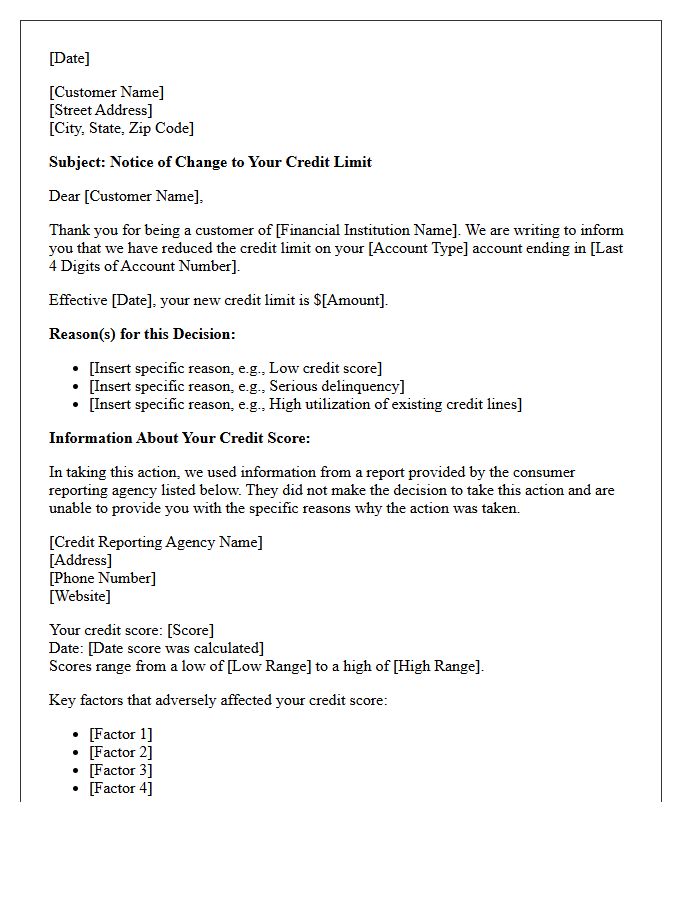
A Credit Limit Reduction Adverse Action Letter is a legally required notice sent by lenders when they decrease your borrowing capacity. Under the Equal Credit Opportunity Act, creditors must provide specific reasons for this decision, such as a lowered credit score, missed payments, or inactive accounts. Receiving this letter does not mean your account is closed, but it may impact your credit utilization ratio. Reviewing the listed factors helps you understand how to improve your financial standing and dispute any inaccurate information found within your credit report.
Unfavorable Credit Terms Counteroffer Denial Letter
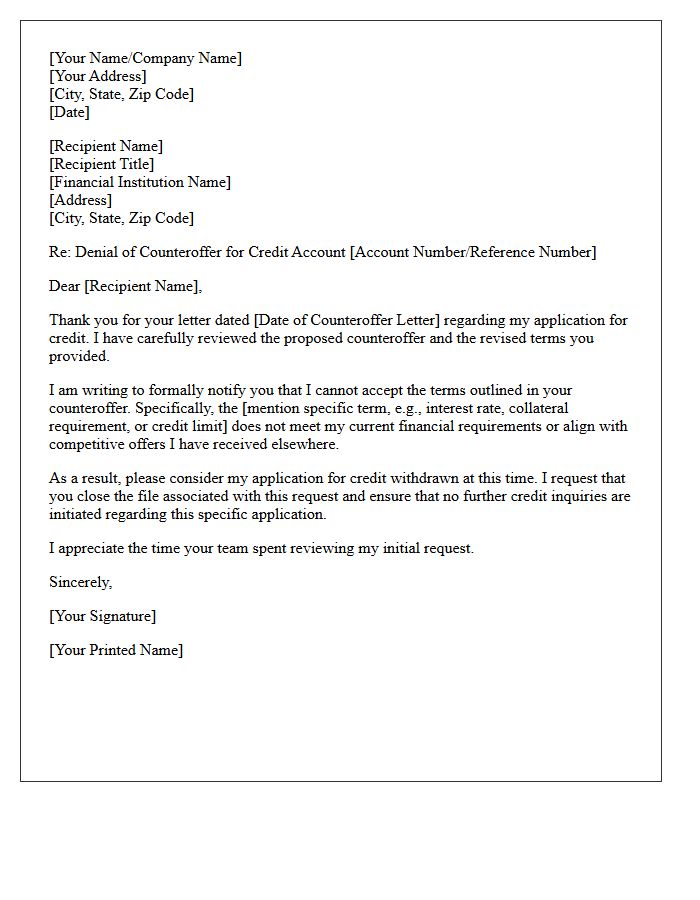
An Unfavorable Credit Terms Counteroffer Denial Letter is a formal notification sent when a consumer rejects a creditor's modified offer. If a lender cannot approve the original application but proposes different rates or limits, the applicant may decline. Consequently, the lender must issue an adverse action notice to comply with the Equal Credit Opportunity Act. This document explains that credit was officially denied because the counteroffer was not accepted. It provides transparency by detailing the specific credit score factors or reasons behind the initial inability to meet the applicant's requested terms.
Student Loan Decline Adverse Action Letter
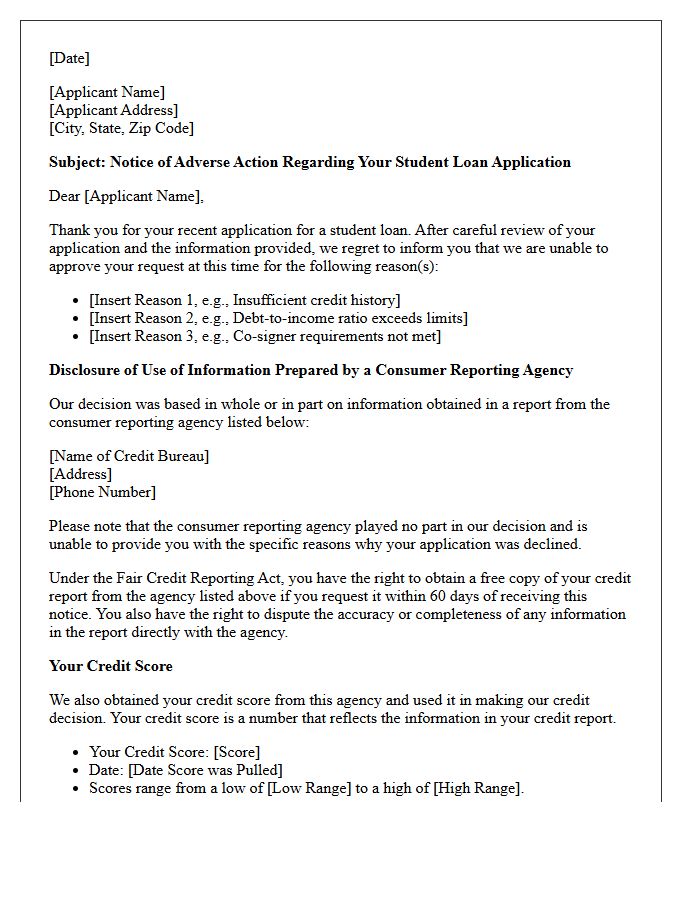
A Student Loan Decline Adverse Action Letter is a formal notification explaining why your private student loan application was rejected. Federal law requires lenders to disclose the specific reasons for denial, such as a low credit score, insufficient income, or high debt-to-income ratios. This document is essential because it identifies which credit reporting agency provided your data, allowing you to dispute inaccuracies. Understanding these factors helps you improve your financial profile before reapplying or seeking a cosigner to meet the lender's eligibility requirements.
Home Equity Line Of Credit Denial Letter
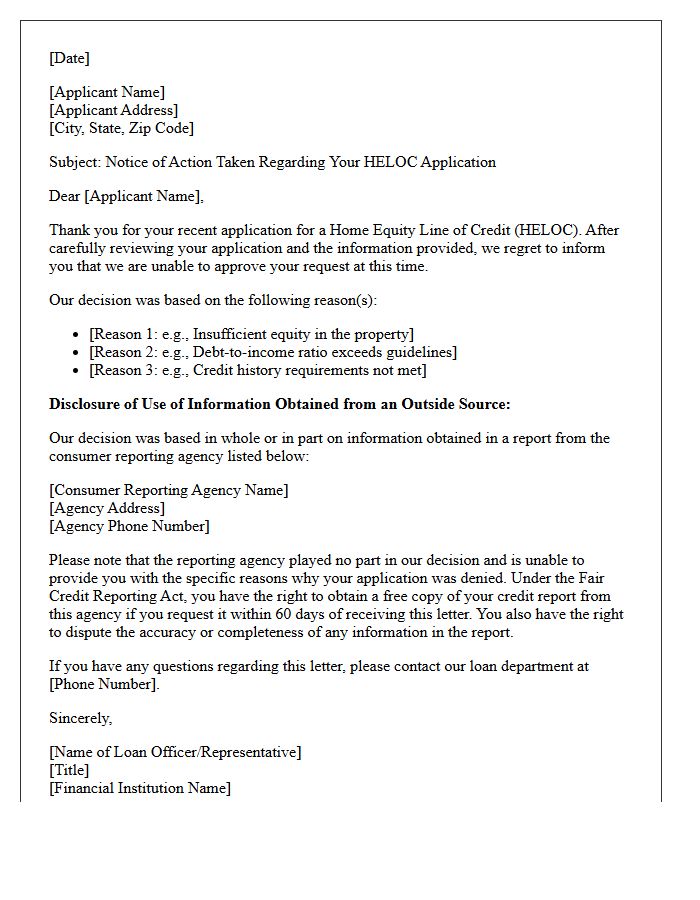
Receiving a Home Equity Line of Credit (HELOC) denial letter is a formal notice explaining why your application was rejected. Under the Equal Credit Opportunity Act, lenders must provide specific adverse action reasons, such as a low credit score, insufficient equity, or a high debt-to-income ratio. Reviewing this document is essential for identifying financial weaknesses. You are entitled to a free copy of the credit report used in the decision. Addressing these highlighted issues allows you to improve your financial profile before reapplying or seeking alternative financing solutions.
Commercial Real Estate Loan Rejection Letter
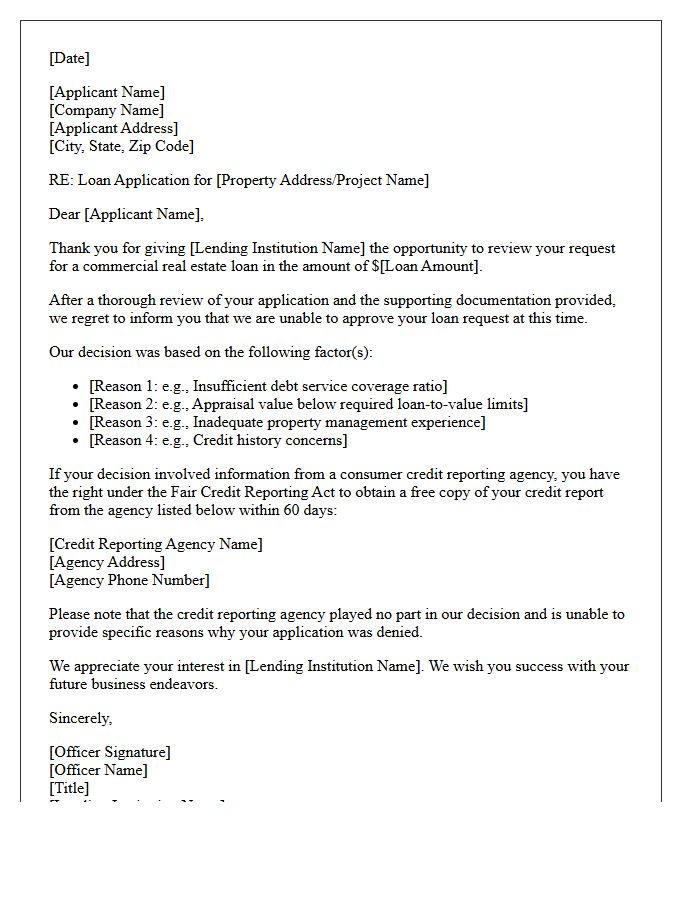
A Commercial Real Estate Loan Rejection Letter is a formal notice issued by a lender when a financing request is denied. It is crucial to review the adverse action notice, which explains the specific reasons for denial, such as insufficient cash flow, poor credit, or low collateral value. Understanding these factors helps borrowers address financial weaknesses before reapplying. Under the Equal Credit Opportunity Act, lenders must provide this written explanation, offering transparency into their decision-making process and allowing businesses to improve their profile for future funding opportunities.
Overdraft Protection Application Denial Letter
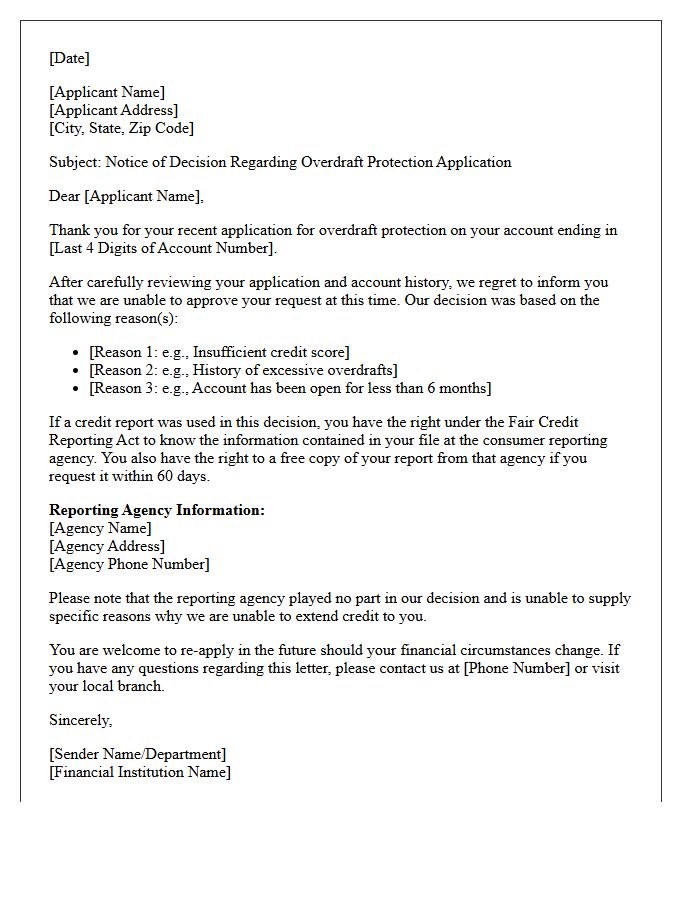
An Overdraft Protection Application Denial Letter is a formal notice explaining why a bank rejected your request for a safety net on your checking account. Common reasons include a low credit score, insufficient income, or a history of frequent account mismanagement. Under the Equal Credit Opportunity Act, lenders must provide specific reasons for the rejection or inform you of your right to request them. Reviewing this document helps you identify financial weaknesses to improve your creditworthiness and eligibility for future banking services and credit products.
What is an ECOA Adverse Action Letter?
An ECOA Adverse Action Letter is a formal notification required by the Equal Credit Opportunity Act that lenders must send to applicants when they are denied credit, provided less favorable terms, or experience a negative change in an existing credit arrangement.
What information must be included in an ECOA Adverse Action notice?
By law, the notice must include a statement of the specific reasons for the denial (or instructions on how to request them), the name and address of the creditor, a required ECOA anti-discrimination statement, and information about the credit reporting agency if a credit score influenced the decision.
How long does a lender have to send an Adverse Action Letter?
Under the Equal Credit Opportunity Act, creditors must notify applicants of an action taken within 30 days of receiving a completed credit application, or within 30 days of taking adverse action on an existing account.
Can a lender provide the reasons for credit denial verbally?
While a lender may initially inform an applicant verbally, the ECOA generally requires a written notification. If a lender provides the reasons orally, they must also inform the applicant of their right to have those reasons confirmed in writing within 30 days of a written request.
What are considered "specific reasons" for denial under ECOA?
Specific reasons must clearly state why the applicant was rejected, such as "insufficient income," "limited credit history," or "excessive obligations." Vague statements like "you didn't meet our internal standards" are legally insufficient under ECOA regulations.

Comments