
If a borrower fails to repay a loan by the agreed due date, you must issue a Demand Letter for Promissory Note Maturity Default. This formal notice protects your legal rights, documents the breach of contract, and requests immediate settlement to avoid litigation. Effectively initiating this recovery process is crucial for debt collection. Below are some ready to use template options.
Image cover: Formal Demand for Payment: Promissory Note Maturity Default Templates
Letter Samples List
- First Demand Letter for Promissory Note Maturity Default
- Second Warning Letter for Promissory Note Maturity Default
- Final Demand Letter for Promissory Note Maturity Default
- Official Notice of Default Letter for Promissory Note Maturity
- Guarantor Demand Letter for Promissory Note Maturity Default
- Acceleration Notice Letter for Promissory Note Default
- Secured Asset Repossession Letter for Promissory Note Default
- Intent to Sue Letter for Promissory Note Maturity Default
- Settlement Offer Letter for Promissory Note Maturity Default
- Corporate Loan Demand Letter for Promissory Note Default
- Legal Counsel Demand Letter for Promissory Note Maturity Default
- Foreclosure Intent Letter for Promissory Note Maturity Default
First Demand Letter for Promissory Note Maturity Default
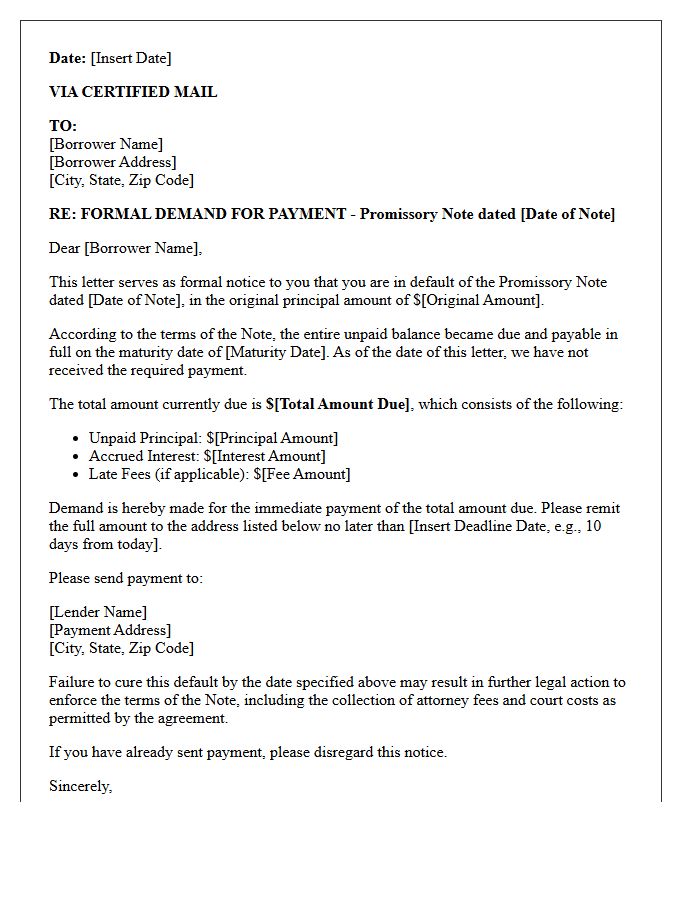
A first demand letter serves as a formal notice when a borrower fails to repay a promissory note by its specified maturity date. This legal document officially declares the loan in default and demands immediate payment of the outstanding principal and accrued interest. It functions as a critical evidentiary step before escalating to litigation or foreclosure. Sending this notice preserves your legal rights, satisfies contractual notice requirements, and provides the debtor a final opportunity to settle the debt voluntarily to avoid additional collection costs or legal action.
Second Warning Letter for Promissory Note Maturity Default
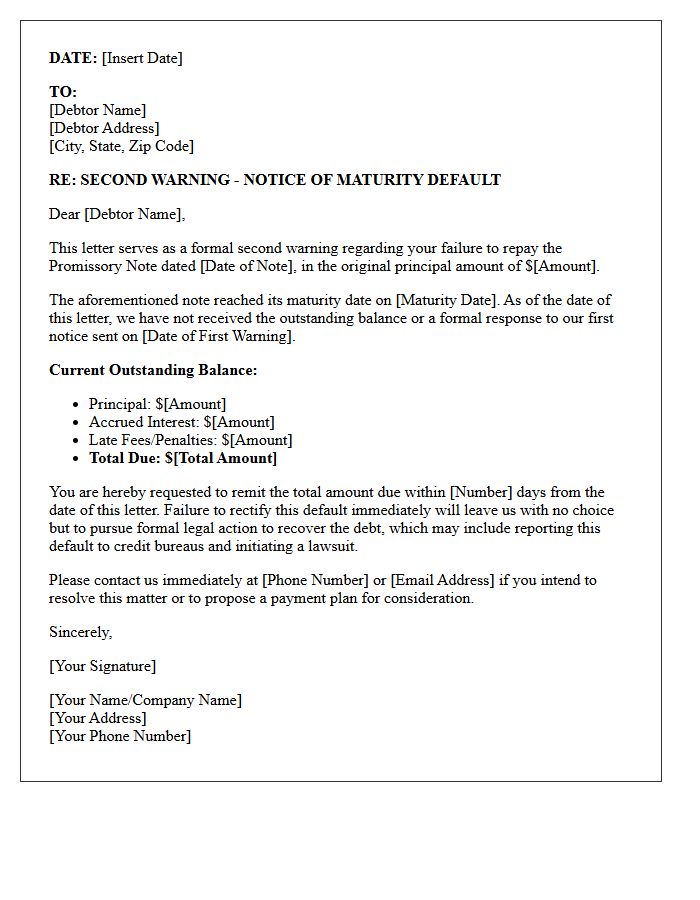
A second warning letter for a promissory note maturity default is a critical legal notice issued when a borrower fails to repay the principal balance by the agreed-upon due date. This formal communication serves as a final opportunity to rectify the breach of contract before the lender initiates aggressive debt collection or legal litigation. It typically outlines the outstanding debt, accrued interest, and specific acceleration clauses. Receiving this letter signifies that the grace period has ended, making immediate communication or full payment essential to avoid a permanent default judgment against your credit.
Final Demand Letter for Promissory Note Maturity Default
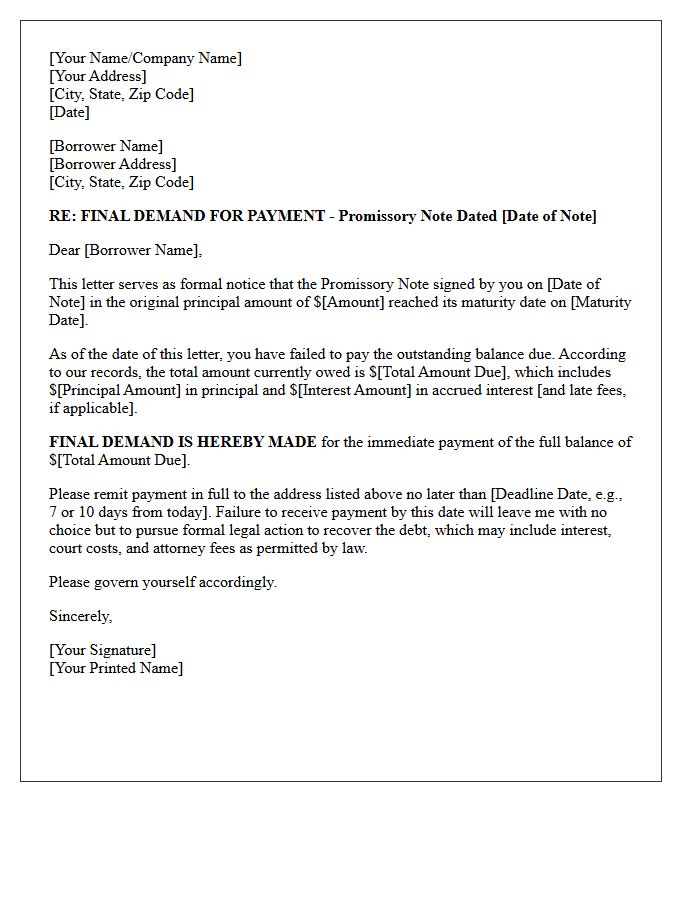
A final demand letter is a formal notice issued after a promissory note reaches its maturity date without repayment. This document serves as a legal prerequisite for litigation, clearly stating the total outstanding balance, including accrued interest and late fees. It establishes a strict deadline for settlement to avoid further action. Providing this written warning is essential for demonstrating the lender's attempt to resolve the default amicably before pursuing debt collection or filing a lawsuit to enforce the terms of the original loan agreement.
Official Notice of Default Letter for Promissory Note Maturity
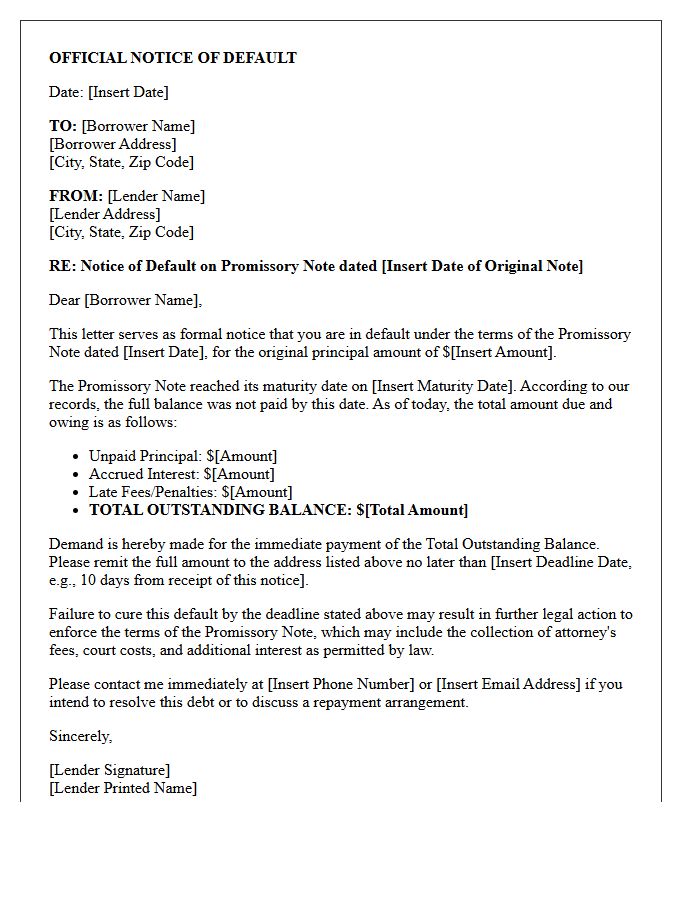
An official notice of default for a promissory note maturity serves as a formal legal demand when a borrower fails to repay the full principal by the maturity date. This document formally records the breach of contract, accelerating the debt collection process. It typically specifies the outstanding balance, accumulated interest, and a final deadline for payment before the lender pursues legal action or foreclosure. Issuing this notice is a critical procedural step to protect the lender's rights and provide clear evidence of default in potential judicial proceedings or debt recovery efforts.
Guarantor Demand Letter for Promissory Note Maturity Default
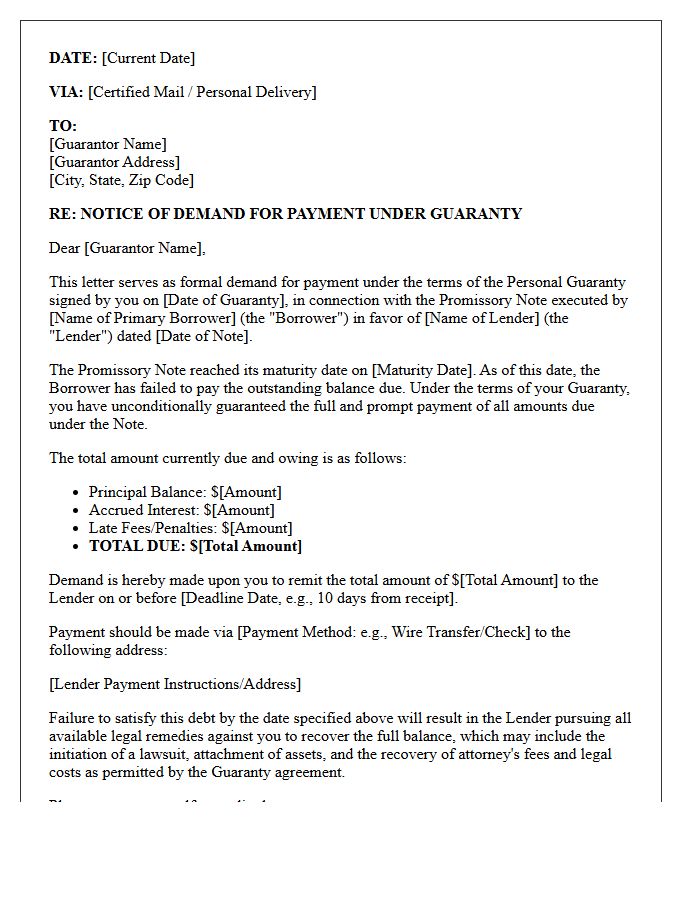
A Guarantor Demand Letter is a formal legal notice issued when a borrower fails to repay a promissory note upon its maturity date. This document notifies the guarantor of their secondary liability, officially demanding immediate payment of the outstanding principal and interest. It serves as a critical prerequisite for legal action, proving that the lender attempted to collect before pursuing litigation or asset seizure. Timely delivery ensures the lender preserves their right to enforce the guarantee agreement against the third party responsible for the debt.
Acceleration Notice Letter for Promissory Note Default
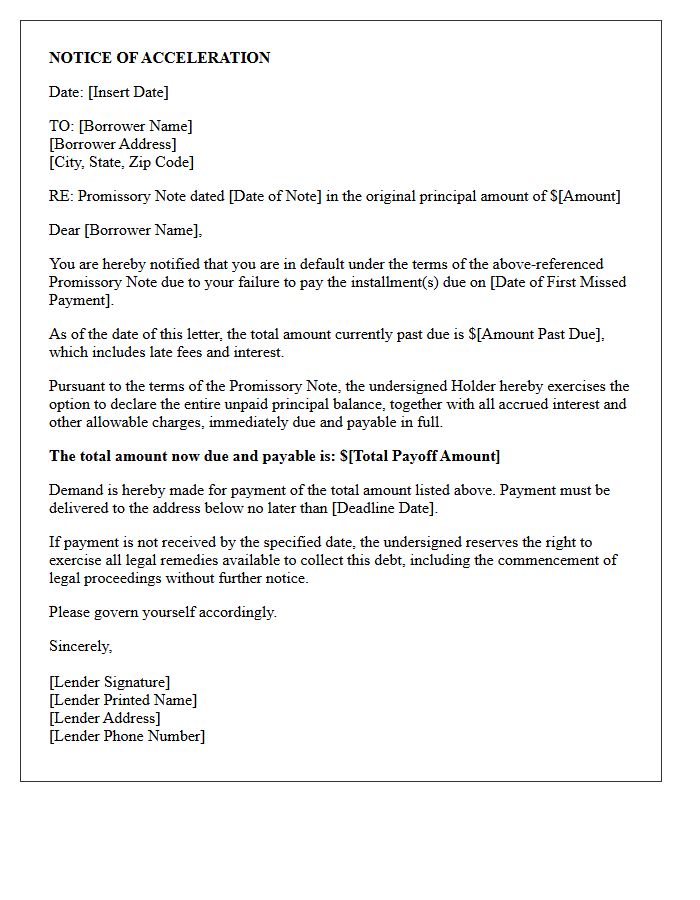
An acceleration notice letter is a formal legal demand issued after a borrower defaults on a promissory note. It informs the debtor that the entire remaining balance, including principal and accrued interest, is now due immediately rather than through future installments. Sending this notice is a critical procedural step before a lender can initiate foreclosure or debt collection lawsuits. It effectively terminates the repayment schedule, stripping the borrower of the right to pay in parts and requiring full satisfaction of the debt to avoid further legal action.
Secured Asset Repossession Letter for Promissory Note Default
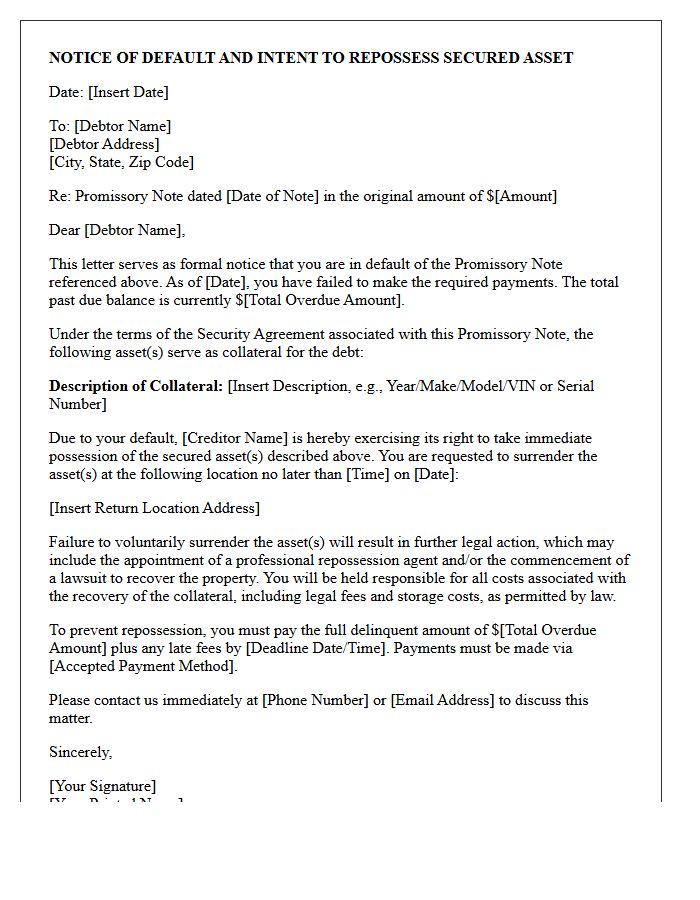
A Secured Asset Repossession Letter serves as a formal legal notice issued when a borrower defaults on a promissory note. This document informs the debtor that the lender is exercising their contractual right to seize specified collateral to satisfy the outstanding debt. It typically outlines the default details, the specific assets to be recovered, and any redemption rights available to the borrower. Clear communication in this letter is essential for ensuring legal compliance during the foreclosure or recovery process and protecting the lender's financial interests under the original loan agreement.
Intent to Sue Letter for Promissory Note Maturity Default
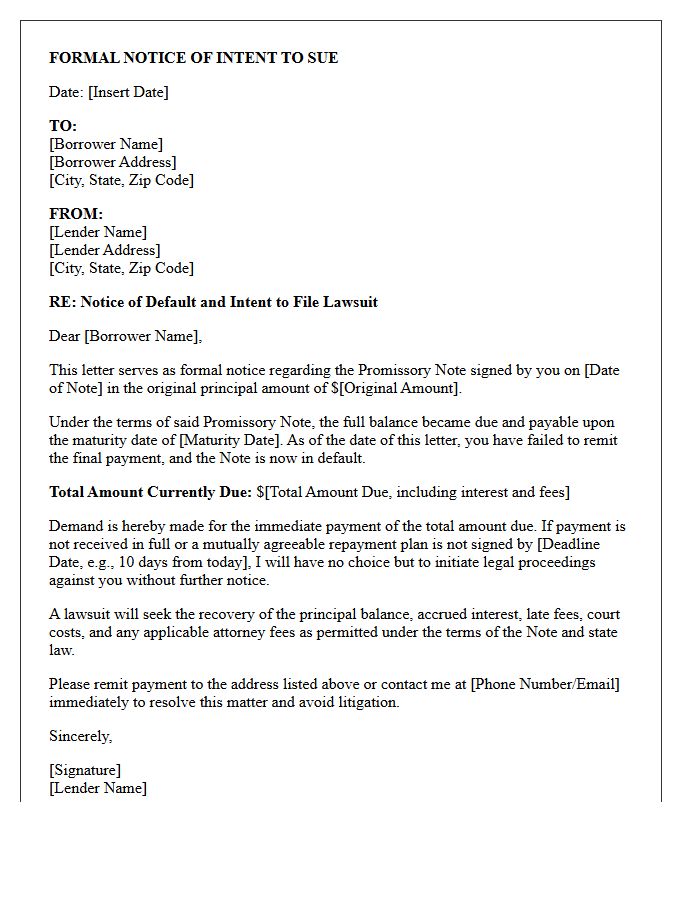
An Intent to Sue Letter serves as a formal notice demanding immediate repayment after a promissory note reaches its maturity date without settlement. This document is a critical legal precursor that establishes a default record, proving the lender attempted to resolve the debt before litigation. It must clearly state the outstanding balance, including accrued interest, and provide a final deadline for payment. Sending this letter is an essential step to demonstrate good faith in court and may compel the borrower to pay to avoid costly legal action and credit damage.
Settlement Offer Letter for Promissory Note Maturity Default
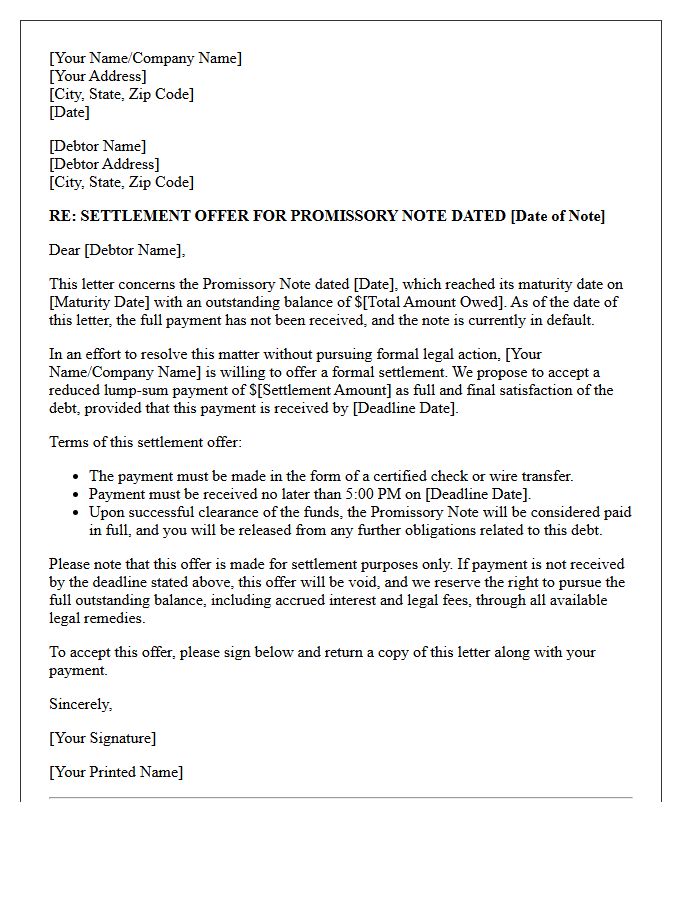
When a borrower fails to repay a Promissory Note by its maturity date, a settlement offer letter serves as a formal proposal to resolve the default without litigation. This document typically outlines a reduced lump-sum payment or a structured repayment plan in exchange for a full release of liability. It is crucial to ensure the offer is marked "without prejudice" to protect legal rights during negotiations. A well-drafted letter clearly states the Settlement Amount, payment deadlines, and the discharge of the original debt upon completion.
Corporate Loan Demand Letter for Promissory Note Default
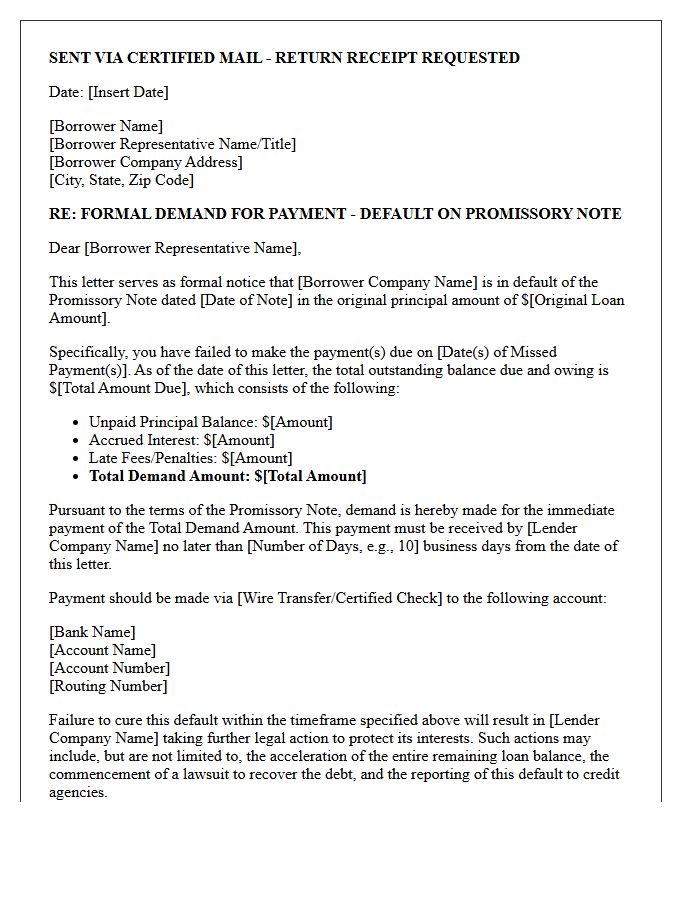
A corporate loan demand letter is a formal legal notice issued when a business fails to meet its obligations under a promissory note. This document serves as a final warning before pursuing litigation or acceleration of the total debt. It must clearly outline the specific default event, the exact amount due including interest, and a strict deadline for payment. Issuing this letter is a critical step to preserve a lender's rights and establish a formal record of non-performance during the recovery process.
Legal Counsel Demand Letter for Promissory Note Maturity Default
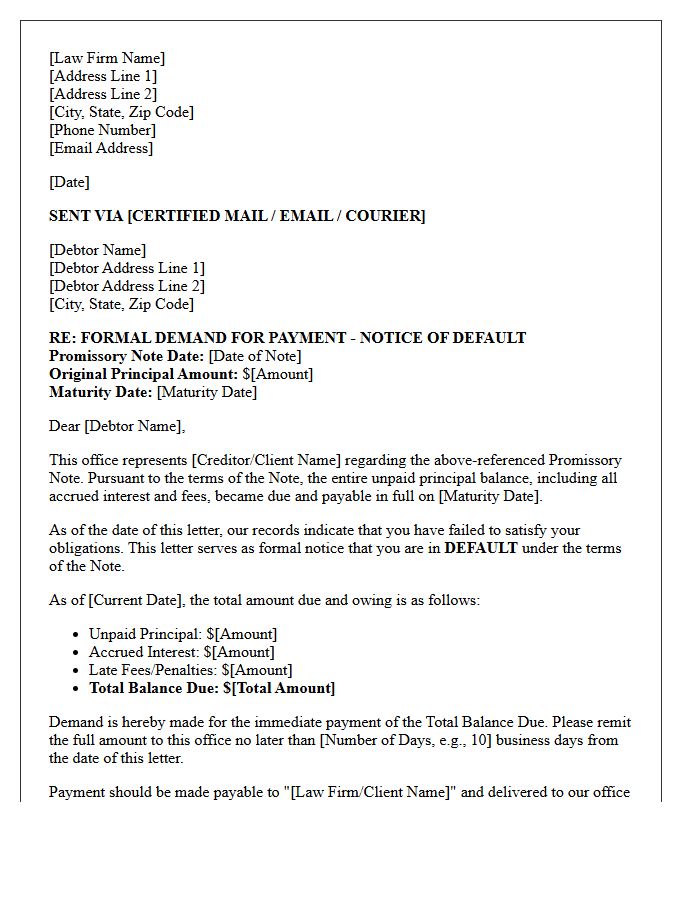
A legal counsel demand letter serves as a formal notice following a promissory note maturity default. This document notifies the borrower that the repayment period has expired and the full balance is immediately due. It establishes a clear paper trail for potential litigation, outlining the principal, accrued interest, and late fees. By utilizing legal counsel, the lender demonstrates a serious intent to enforce the contractual terms and may offer a final opportunity for repayment or settlement before escalating to a formal lawsuit to recover the outstanding debt.
Foreclosure Intent Letter for Promissory Note Maturity Default
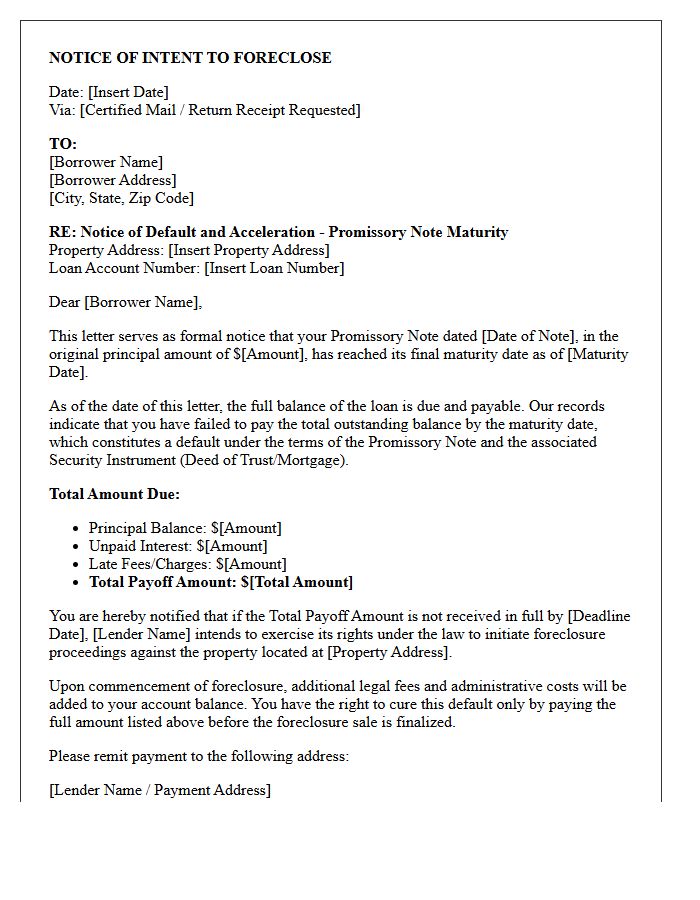
A Foreclosure Intent Letter is a formal legal notice issued when a borrower fails to repay the full balance by the promissory note maturity date. This document serves as a final warning that the lender will initiate legal proceedings to seize the property unless the debt is satisfied. It outlines the total amount due, including interest and penalties, and provides a specific cure period. Receiving this letter indicates that the loan has reached full acceleration, making immediate action critical to prevent a deficiency judgment or the loss of collateral.
What is a Demand Letter for Promissory Note Maturity Default?
A Demand Letter for Promissory Note Maturity Default is a formal written notice sent by a lender to a borrower when a loan has reached its maturity date and the remaining balance remains unpaid. It serves as an official demand for immediate payment and a prerequisite for potential legal action to recover the debt.
What key information must be included in a maturity default demand letter?
The letter must include the original loan date, the total outstanding balance (including principal and accrued interest), the specific maturity date that has passed, a clear demand for payment by a set deadline, and the consequences of non-payment, such as the commencement of legal proceedings.
Can I charge late fees or penalty interest in the demand letter?
Yes, you can include late fees, penalty interest, or collection costs in the demand letter, provided these charges were explicitly outlined in the original signed promissory note and comply with state usury laws and lending regulations.
How much time should I give the borrower to respond to the demand letter?
While the loan is technically due immediately upon maturity, it is standard practice to provide a "cure period"-typically 5 to 10 business days-to allow the borrower to remit payment before the lender escalates the matter to a collection agency or court.
What are the legal implications of sending a demand letter for a matured note?
Sending a demand letter establishes a formal record of the borrower's default and the lender's attempt to resolve the debt out of court. This documentation is often required by courts to prove that the borrower was given notice of the breach before a lawsuit for breach of contract was filed.

Comments