
A Notice of Data Breach is a formal communication sent to individuals whose personal information has been compromised. This essential security incident letter explains what happened, what data was exposed, and the steps taken to mitigate risks. Providing clear instructions helps maintain transparency and regulatory compliance after a leak. To assist your response efforts, below are some ready to use template.
Image cover: Protecting Your Business: Data Breach Notification Templates and Best Practices
Letter Samples List
- Notice of Unauthorized Account Access Letter
- Banking Data Breach Notification Letter
- Compromised Credit Card Information Security Letter
- Customer Notice of Ransomware Incident Letter
- Financial Data Exposure Warning Letter
- Notice of Phishing Breach and Security Incident Letter
- Third-Party Vendor Security Incident Letter
- Compromised Mobile Banking Application Breach Letter
- Wire Transfer System Security Incident Letter
- Notice of Internal Data Mishandling Letter
- Identity Theft Risk and Breach Notification Letter
- Wealth Management Database Security Incident Letter
Notice of Unauthorized Account Access Letter
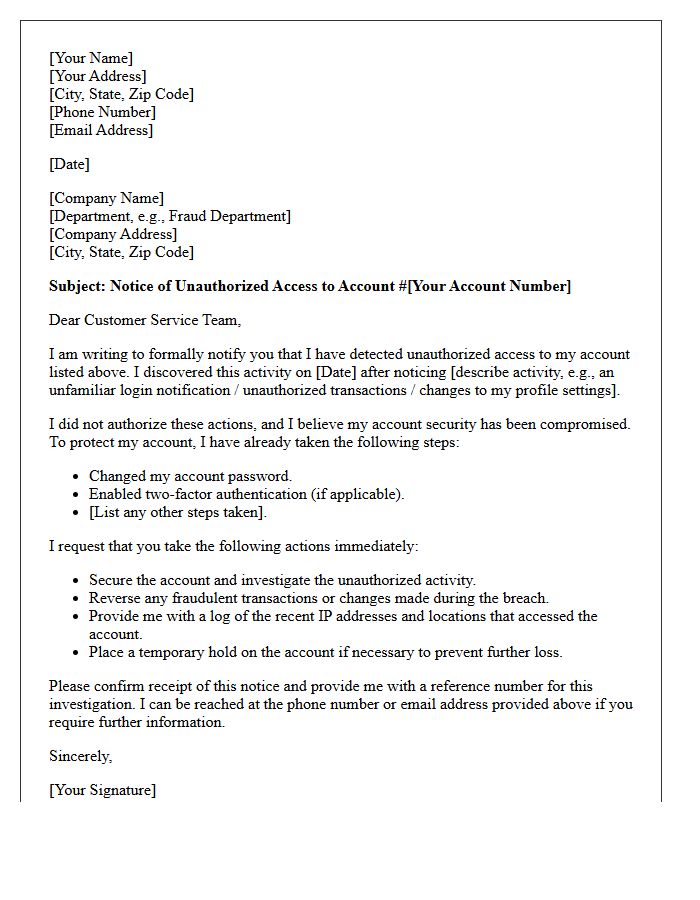
A Notice of Unauthorized Account Access is a critical security alert informing you that an unverified party has entered your account. Upon receiving this, you must immediately change your password and enable multi-factor authentication to prevent further risk. These letters outline when the breach occurred and provide steps to secure your personal data. Always verify the sender's identity to avoid phishing scams. Taking swift action helps mitigate identity theft and financial loss by cutting off illicit access and protecting your digital footprint from future exploitation.
Banking Data Breach Notification Letter
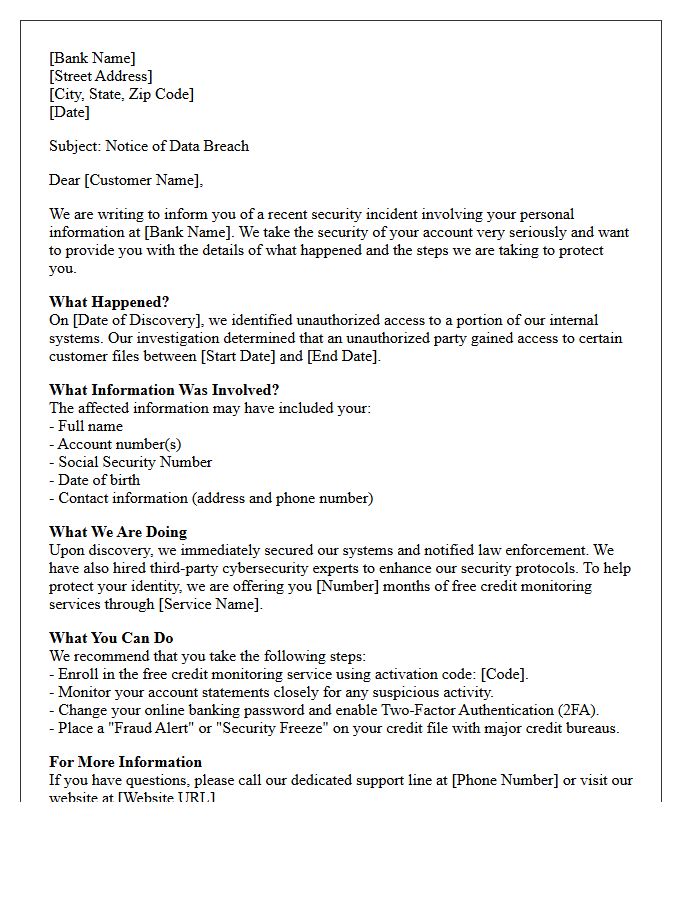
A Banking Data Breach Notification Letter is a formal legal notice informing customers that their sensitive financial information has been compromised. It is crucial to verify the sender to avoid phishing scams while acting quickly to protect your assets. The document typically outlines the specific data exposed, such as account numbers or social security details, and provides instructions for identity theft protection. Upon receipt, you should immediately monitor your statements, update passwords, and consider placing a credit freeze to mitigate potential fraud risks resulting from the security incident.
Compromised Credit Card Information Security Letter
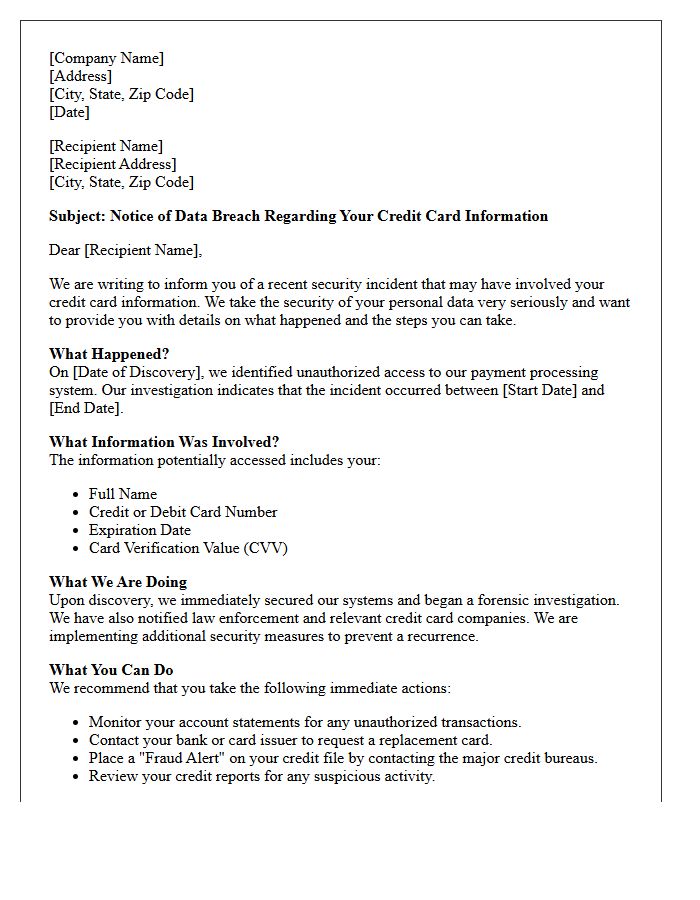
A Compromised Credit Card Information Security Letter is a formal notification sent to consumers when their financial data is exposed during a data breach. This essential document informs you that unauthorized parties may have accessed your account numbers or personal details. It outlines the specific steps taken to secure your account, such as issuing a new card, and provides instructions on how to monitor credit reports for identity theft. Promptly following the letter's guidance is critical to minimizing financial loss and protecting your long-term credit integrity.
Customer Notice of Ransomware Incident Letter
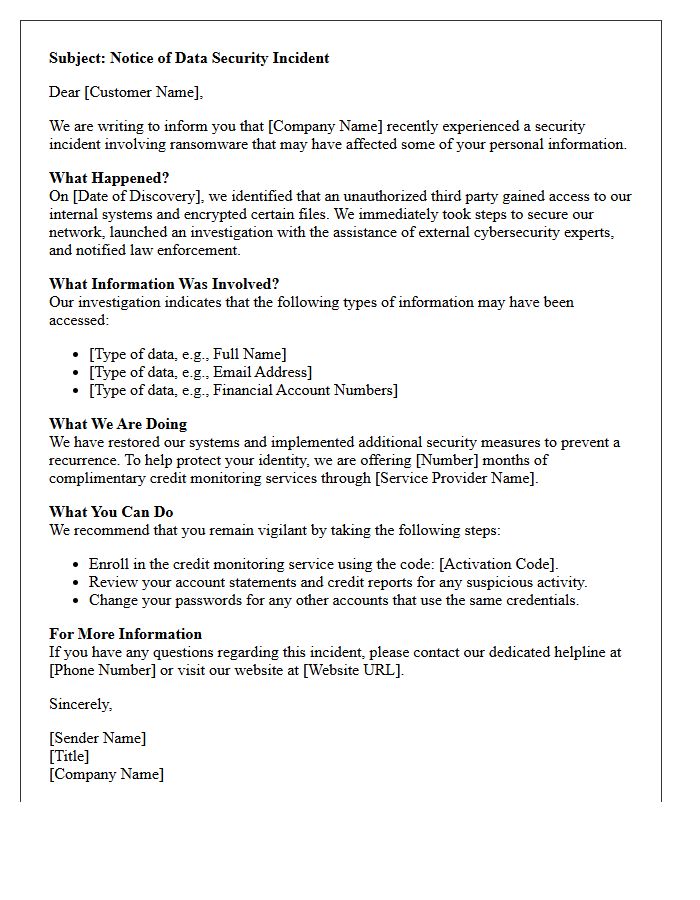
A Customer Notice of Ransomware Incident is a legal communication informing clients that their data was compromised. It must clearly outline what personal information was accessed, such as names or financial details. The letter explains the security measures taken to contain the breach and provides protective steps for customers, including credit monitoring services. Transparency is essential to rebuild trust and comply with data privacy regulations like GDPR or CCPA. Promptly reviewing these notices helps individuals mitigate identity theft risks and secure their accounts effectively.
Financial Data Exposure Warning Letter
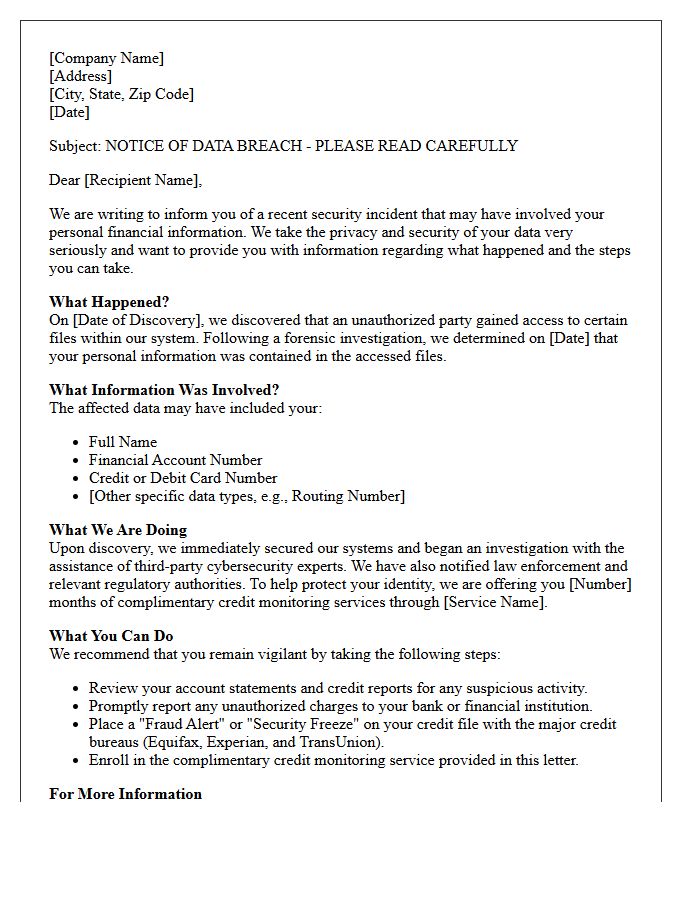
A Financial Data Exposure Warning Letter is a formal notification sent to individuals after a data breach compromises sensitive information. This document outlines exactly what personal financial details, such as bank accounts or credit card numbers, were accessed by unauthorized parties. It is essential to follow the recommended security steps, including monitoring statements and freezing credit reports. Receiving this letter indicates a high risk of identity theft or fraudulent activity, requiring immediate action to secure your financial identity and mitigate potential long-term monetary loss.
Notice of Phishing Breach and Security Incident Letter
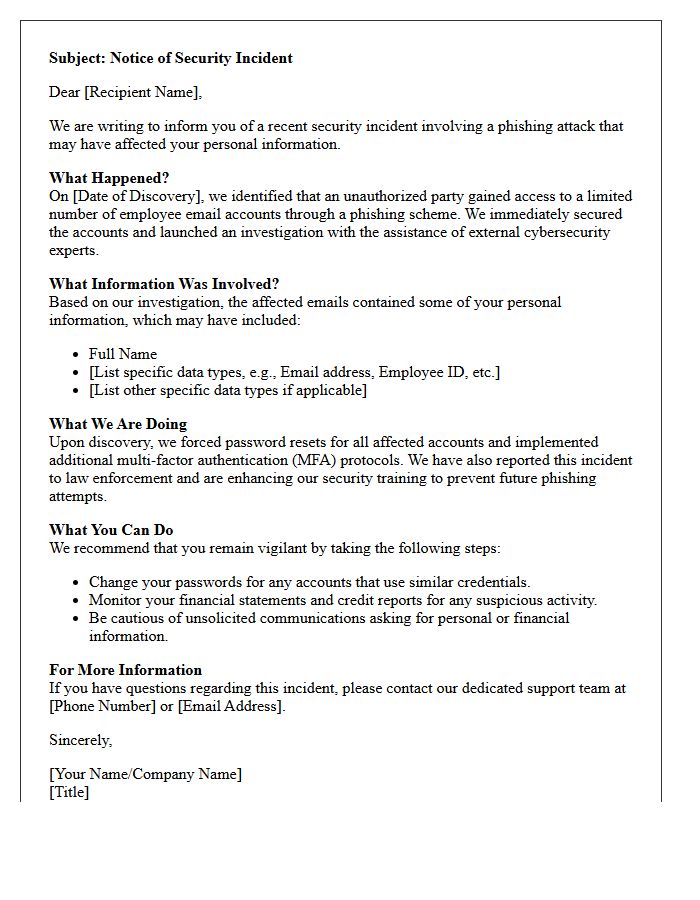
Receiving a Notice of Phishing Breach and Security Incident Letter means your personal data may have been compromised through a deceptive email attack. This formal notification identifies what specific information was accessed, such as your identity details, login credentials, or financial records. It is crucial to follow the letter's instructions immediately to mitigate risks. You should prioritize enrolling in credit monitoring services often provided by the sender, updating your passwords, and enabling multi-factor authentication to secure your accounts against potential identity theft or further unauthorized access.
Third-Party Vendor Security Incident Letter
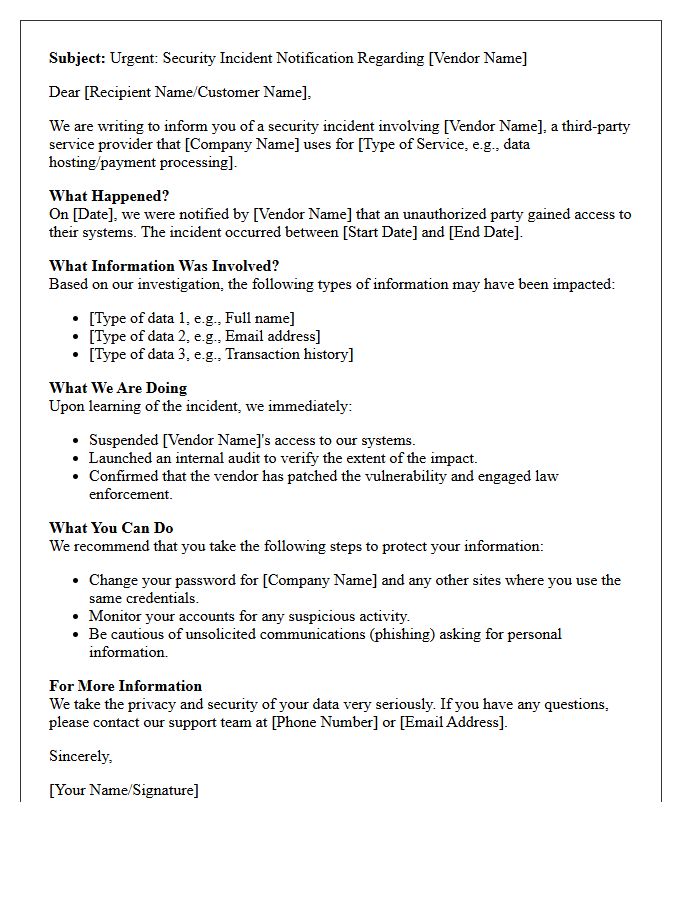
A Third-Party Vendor Security Incident Letter is a formal notification informing stakeholders that a service provider has suffered a data breach. It is crucial to identify the specific compromised information, such as personal identifiers or financial records, to assess potential risks. Organizations must evaluate the vendor's remediation efforts and follow regulatory compliance guidelines for timely disclosure. Receiving this letter requires immediate incident response actions, including password resets and enhanced monitoring, to prevent secondary attacks and ensure long-term data integrity across the entire supply chain ecosystem.
Compromised Mobile Banking Application Breach Letter
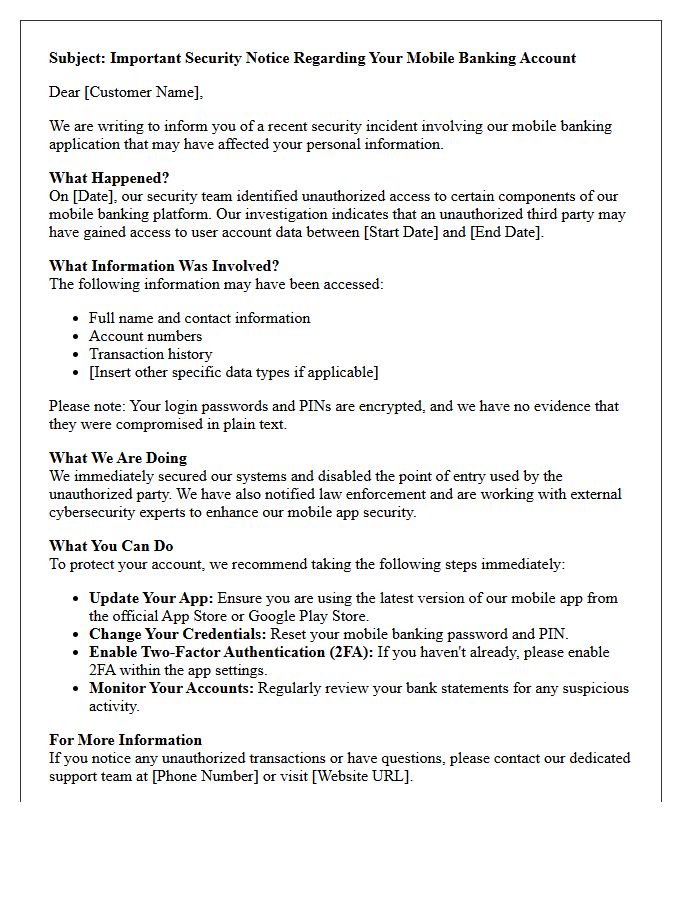
A breach notification letter informs users that their mobile banking application security was compromised. It is essential to identify what sensitive data, such as account numbers or login credentials, was exposed. The letter details the specific steps taken to secure systems and provides mandatory guidance on protective measures. Impacted individuals should immediately update passwords and enable multi-factor authentication. Monitoring credit reports for unauthorized activity is critical to preventing identity theft. Always verify the sender's authenticity to avoid phishing scams targeting breach victims during the recovery process.
Wire Transfer System Security Incident Letter
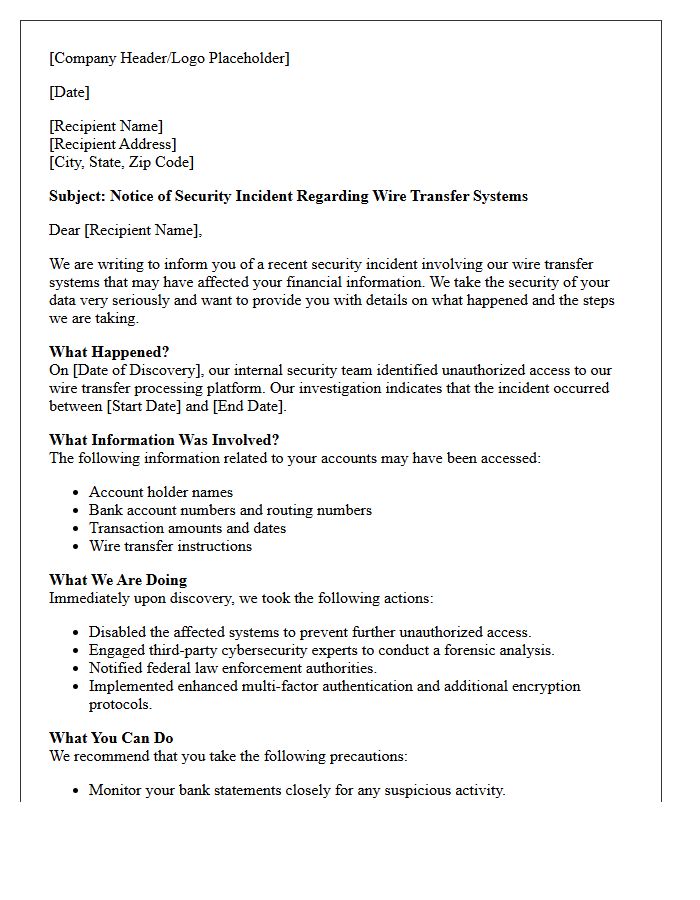
Receiving a Wire Transfer System Security Incident Letter indicates your financial data may be compromised. This formal notice alerts you to unauthorized access involving routing numbers, account details, or personal identifiers. It is critical to monitor bank statements immediately and contact your financial institution to secure your funds. Organizations must provide this disclosure under data breach notification laws. Always verify the letter's authenticity directly with your bank to avoid phishing scams while ensuring your digital identity remains protected against potential fraudulent wire activity or unauthorized transfers.
Notice of Internal Data Mishandling Letter
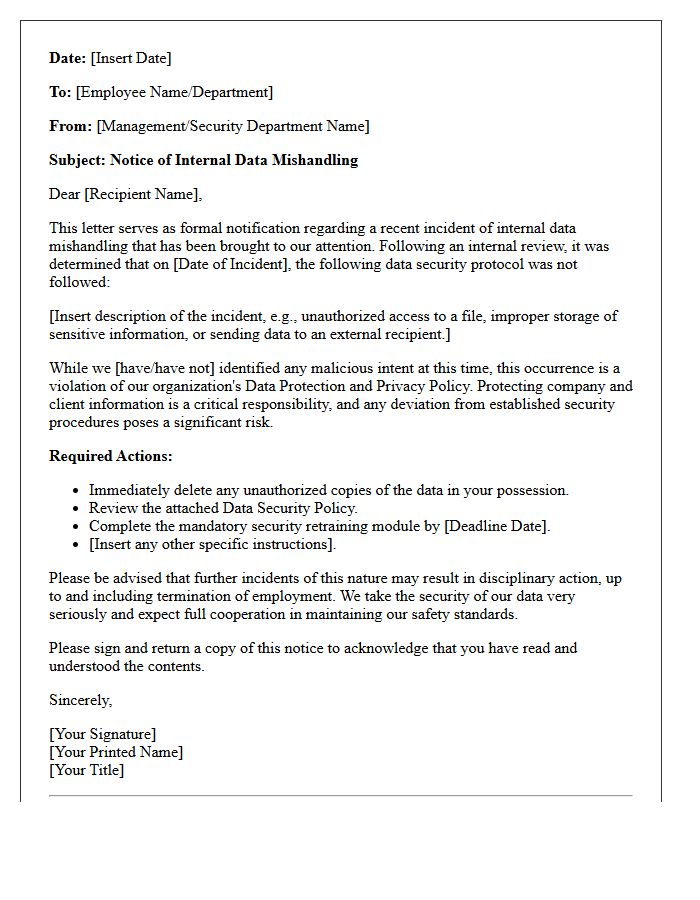
A Notice of Internal Data Mishandling Letter is a formal notification issued by an organization to inform stakeholders about unauthorized access or accidental exposure of sensitive information by employees. This document outlines the specific data involved, the remediation steps taken, and legal rights under privacy laws. It is a critical component of regulatory compliance and transparency, helping to mitigate security risks while rebuilding trust. Recipients should review the letter carefully to understand potential impacts and follow any recommended protective measures to secure their personal information against further misuse.
Identity Theft Risk and Breach Notification Letter
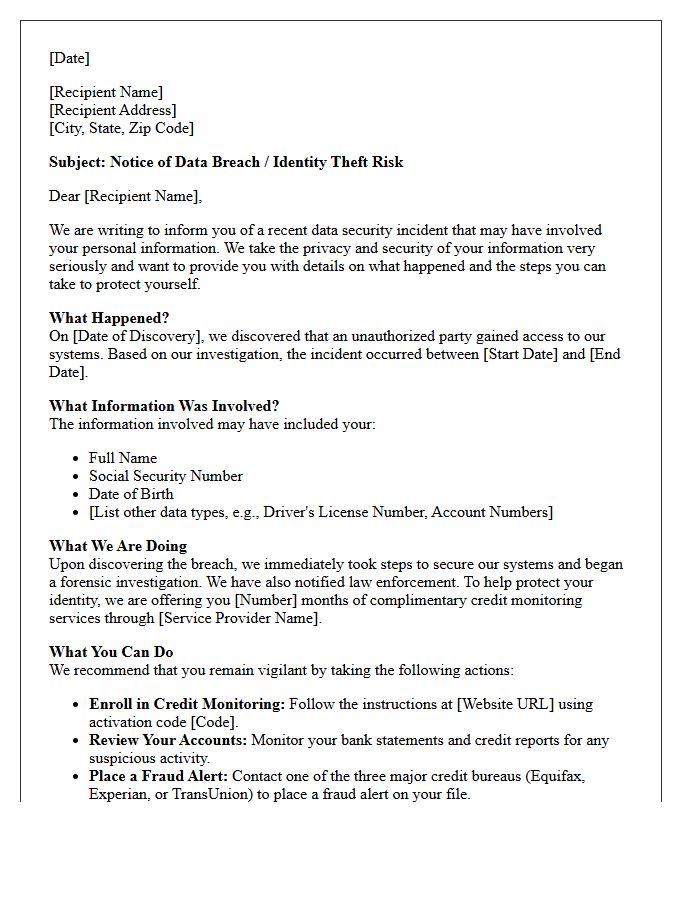
An identity theft risk occurs when your personal data is exposed during a security incident. If your information is compromised, companies are legally required to send a breach notification letter. This document identifies what specific data was stolen, such as Social Security numbers or passwords. It often includes instructions for protective measures, like credit monitoring services or security freezes. Acting quickly upon receiving this notice is essential to prevent financial fraud and secure your digital accounts against unauthorized access and long-term reputational damage.
Wealth Management Database Security Incident Letter
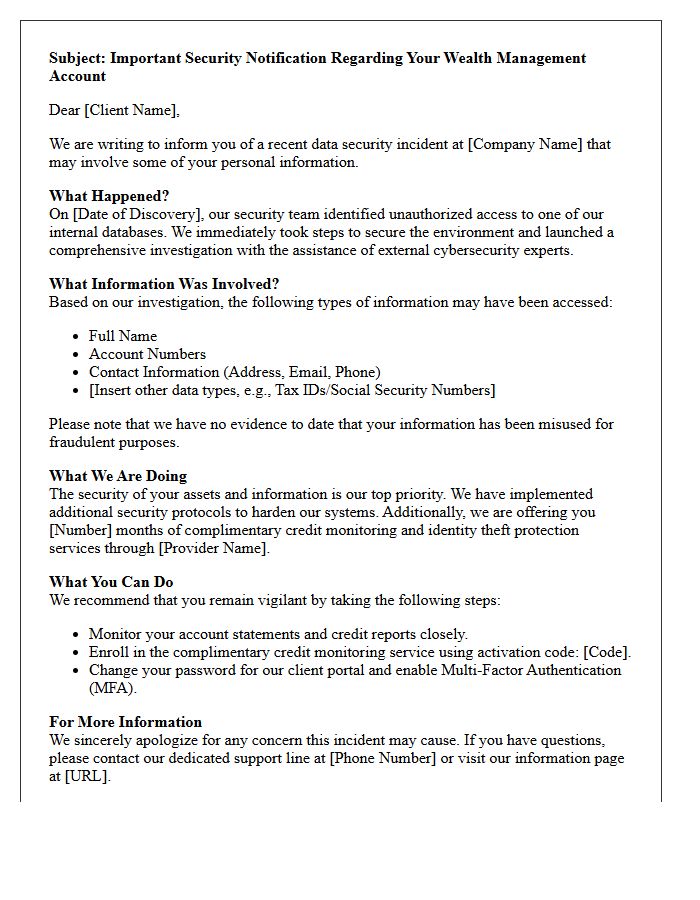
Receiving a Wealth Management Database Security Incident Letter indicates your personal financial data may have been compromised. This formal notification details the specific types of information accessed, such as account numbers or Social Security numbers. It is crucial to follow the recommended remediation steps, which often include enrolling in complimentary credit monitoring services. To protect your assets, immediately update your credentials, enable multi-factor authentication, and monitor your bank statements for unauthorized transactions. Prompt action is essential to mitigate the risk of identity theft and financial fraud following a data breach.
What should I do immediately after receiving a Notice of Data Breach?
You should immediately change your passwords for the affected account and any other accounts that use the same credentials. Monitor your bank statements and credit reports for any unauthorized activity, and consider placing a fraud alert or security freeze on your credit files.
What information was typically compromised in this security incident?
The specific information varies by incident but often includes personal identifiers such as your full name, Social Security number, driver's license number, mailing address, and financial account details. Refer to the specific "Information Involved" section of your formal letter for a precise list of your compromised data.
How can I protect myself from identity theft following a data breach?
To protect yourself, enroll in the complimentary credit monitoring services often provided in the breach notice. Additionally, enable multi-factor authentication (MFA) on all sensitive accounts, remain vigilant against phishing emails or calls, and regularly review your credit reports at AnnualCreditReport.com.
Is the company providing free credit monitoring services?
Most organizations offer a period of free credit monitoring and identity restoration services to affected individuals. Your Notice of Data Breach letter contains a unique activation code and instructions on how to sign up for these services through a third-party provider.
Who can I contact for more information regarding this security incident?
You can contact the dedicated toll-free helpline listed in your notification letter. Organizations typically establish a specific call center to handle inquiries regarding the breach, verify if you were impacted, and assist with the enrollment process for protective services.

Comments