
A Notice of Right to Financial Privacy is a formal legal document that informs consumers about their protections against unauthorized government access to personal banking records. Understanding this notice ensures your sensitive data remains confidential under federal regulations. To help you draft a professional notification, below are some ready to use template.
Image cover: Effective Financial Privacy Rights Notification: Letter Samples and Templates
Letter Samples List
- Account Opening Financial Privacy Notice Letter
- Annual Right To Financial Privacy Update Letter
- Government Subpoena Financial Privacy Notification Letter
- Third-Party Information Sharing Privacy Right Letter
- Customer Opt-Out Financial Privacy Election Letter
- Loan Application Financial Privacy Disclosure Letter
- Joint Account Holder Right To Financial Privacy Letter
- Commercial Entity Financial Privacy Exemption Letter
- Data Breach Financial Privacy Rights Reassurance Letter
- Federal Agency Record Request Privacy Notice Letter
- Mortgage Servicing Financial Privacy Disclosure Letter
- Wealth Management Financial Privacy Policy Letter
- Credit Card Issuance Financial Privacy Notice Letter
- Closed Account Financial Privacy Retention Letter
Account Opening Financial Privacy Notice Letter
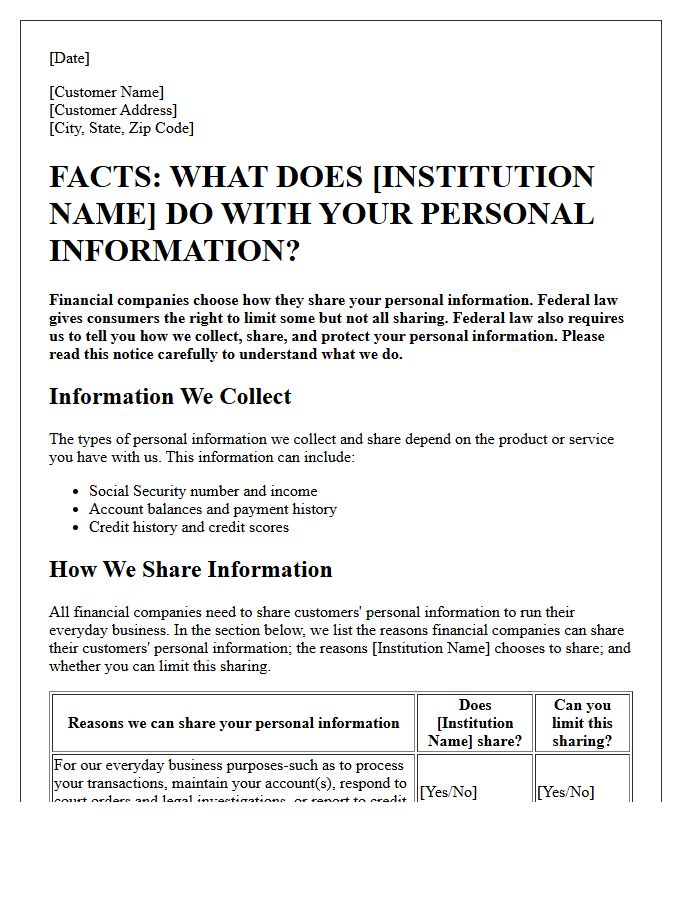
An Account Opening Financial Privacy Notice Letter is a mandatory document informing consumers about how a financial institution collects, protects, and shares their personal data. It explains your right to opt out of certain information-sharing practices with third parties for marketing purposes. This notice ensures transparency regarding data security protocols and regulatory compliance with privacy laws. Reviewing this document is essential to understanding your confidentiality rights and managing how your sensitive financial information is utilized by the bank or credit union during your relationship.
Annual Right To Financial Privacy Update Letter
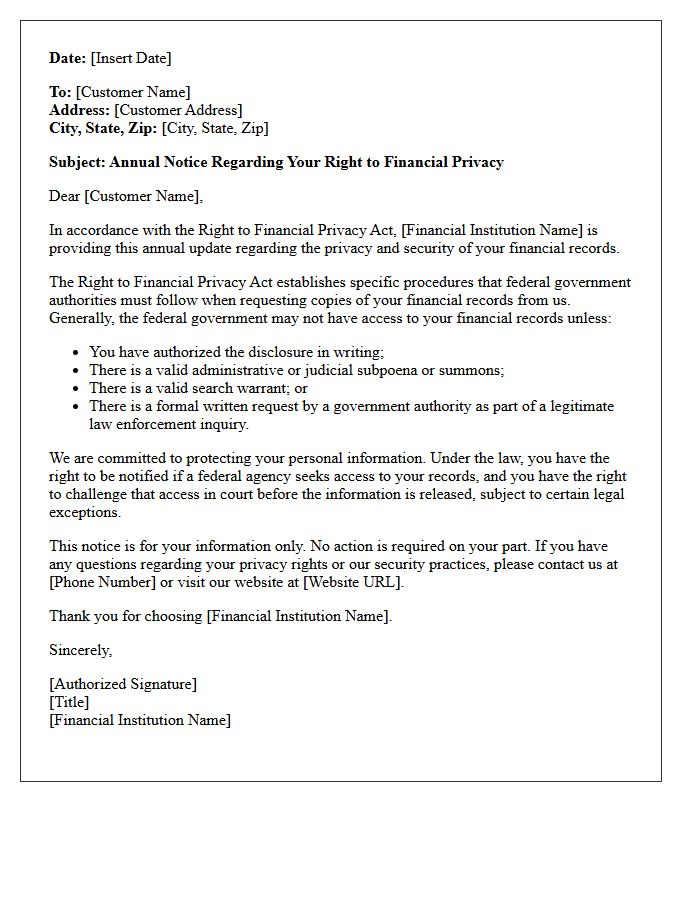
The Annual Right to Financial Privacy Update Letter is a mandatory notice ensuring consumers understand their legal protections regarding personal data. Under the RFPA, federal agencies cannot access your financial records without formal authorization, a subpoena, or a search warrant. This update reinforces your privacy rights and outlines the specific procedures institutions must follow before disclosing information to government authorities. Staying informed about these disclosures helps you maintain control over your confidentiality and ensures financial institutions remain compliant with federal transparency standards.
Government Subpoena Financial Privacy Notification Letter
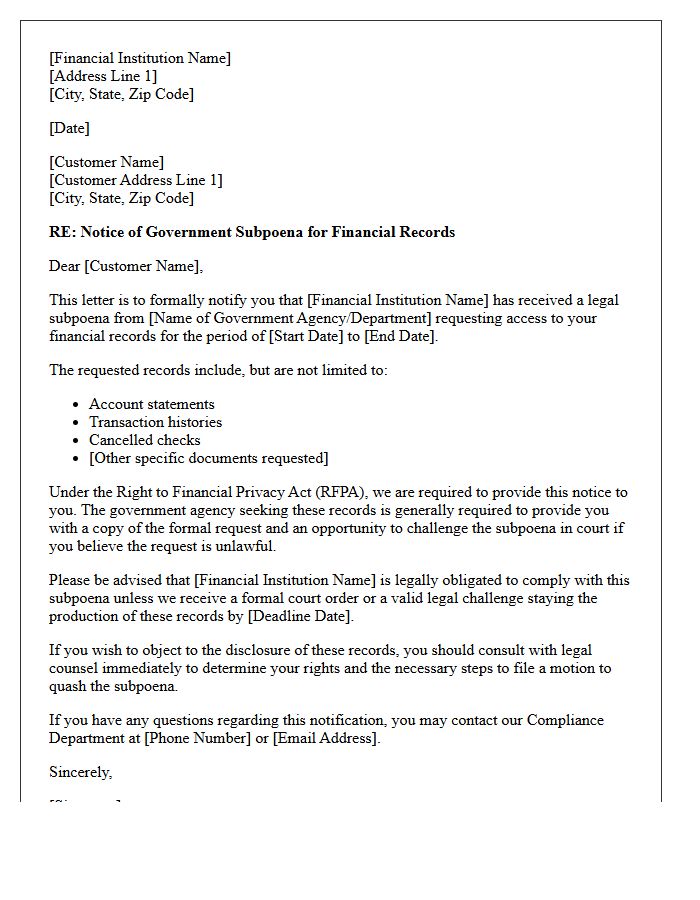
Receiving a Government Subpoena Financial Privacy Notification Letter means a federal agency has formally requested your private banking records. Under the Right to Financial Privacy Act, banks must provide this legal notice before disclosing your data. This allows you a limited window, typically 10 to 14 days, to file a motion to quash or challenge the request in court. If you fail to take immediate legal action, the financial institution is legally obligated to release your sensitive transaction history and account details to the investigating government authority.
Third-Party Information Sharing Privacy Right Letter
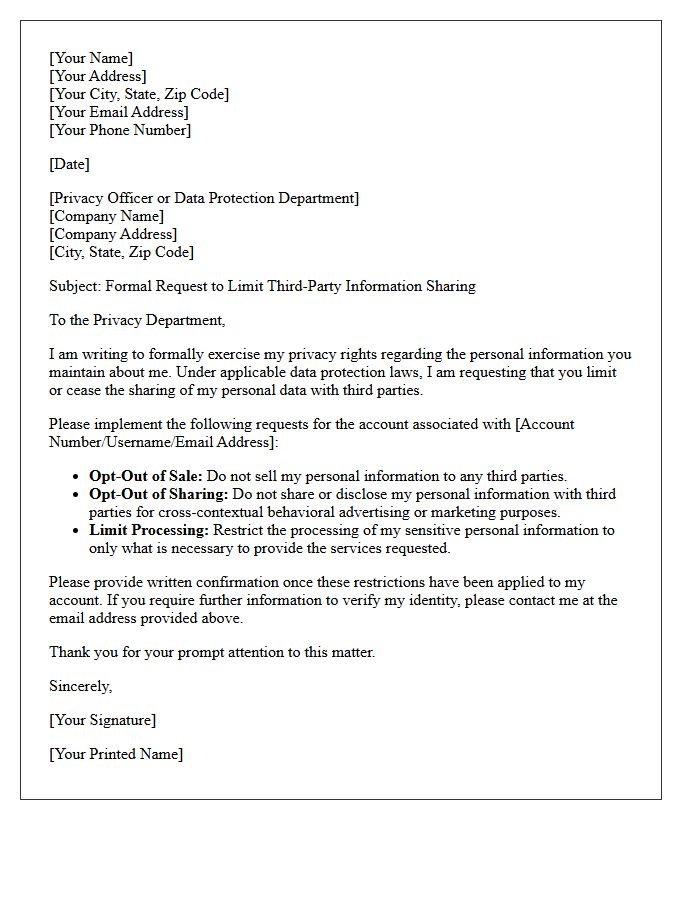
A Third-Party Information Sharing Privacy Right Letter is a formal request used to opt-out of the sale or sharing of your personal data. Under privacy laws like the CCPA or GDPR, you have the legal authority to restrict how companies distribute your sensitive information to external entities. Sending this document helps prevent data brokers from profiting from your profile and significantly reduces targeted advertising. It is a critical tool for maintaining digital privacy and ensuring organizations comply with your specific data protection preferences effectively.
Customer Opt-Out Financial Privacy Election Letter
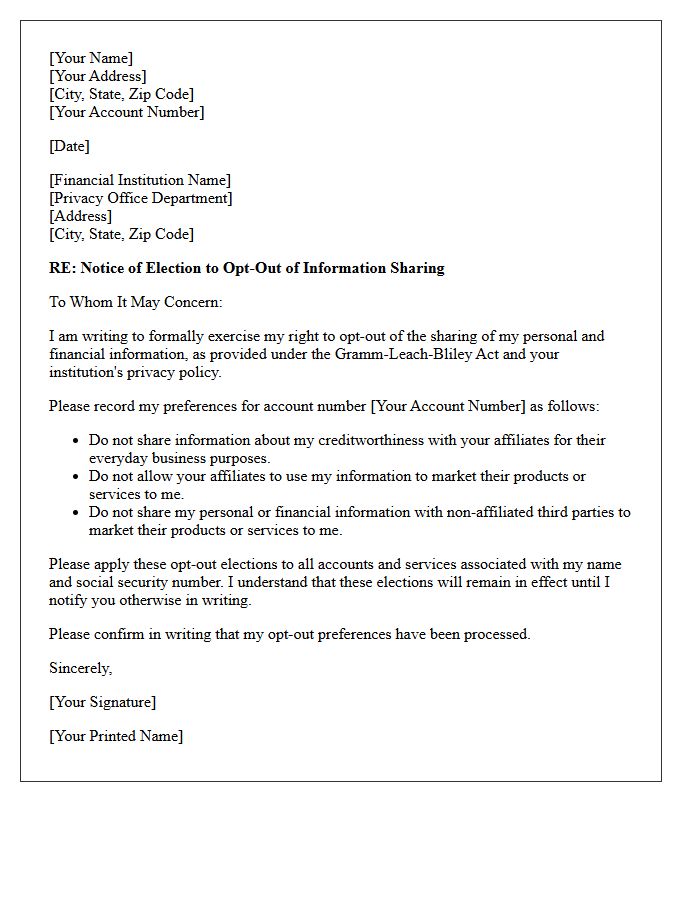
A Customer Opt-Out Financial Privacy Election Letter is a formal document allowing consumers to restrict the sharing of their personal information. Under the Gramm-Leach-Bliley Act, financial institutions must provide this notice to explain how data is collected and distributed. By exercising your opt-out rights, you can prevent companies from selling your sensitive details to non-affiliated third parties for marketing purposes. Submitting this election ensures greater control over your data privacy and reduces unsolicited offers while maintaining the security of your financial records within the institution.
Loan Application Financial Privacy Disclosure Letter
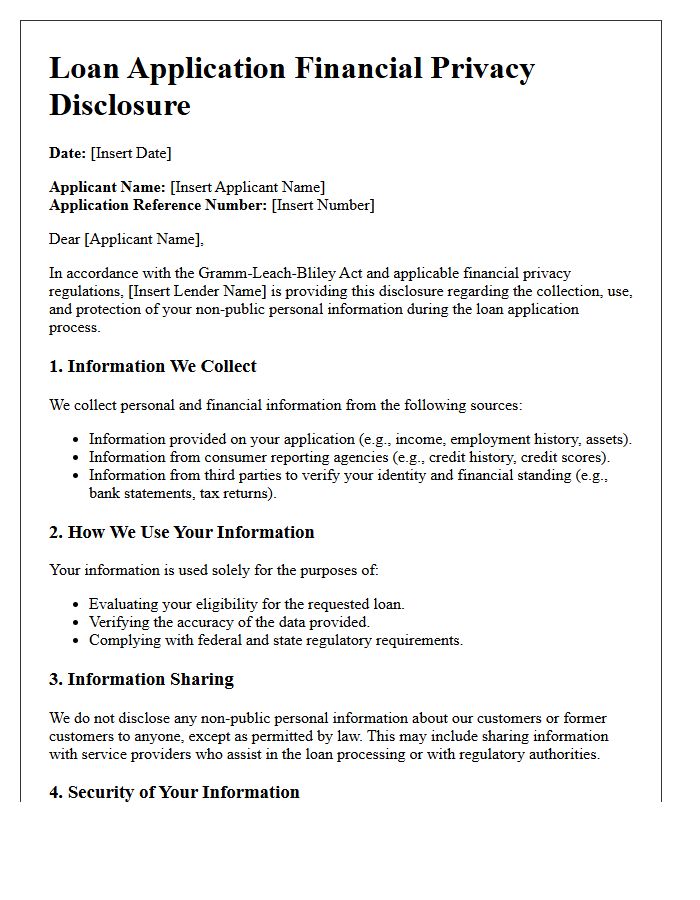
A Loan Application Financial Privacy Disclosure Letter is a mandatory legal notice explaining how lenders collect, protect, and share your sensitive personal data. It outlines your rights regarding information security and details which third parties may access your credit history or income verification. Understanding this document is crucial for maintaining data confidentiality and preventing unauthorized marketing. It typically includes an "opt-out" provision, allowing you to limit the sharing of your non-public information with non-affiliated companies during the mortgage or personal loan underwriting process.
Joint Account Holder Right To Financial Privacy Letter
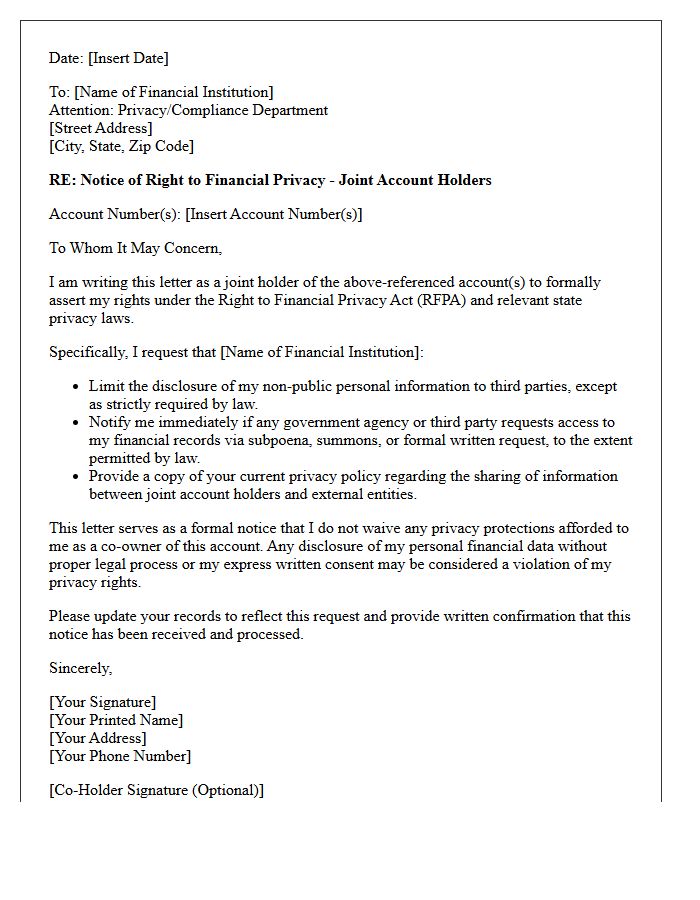
A Joint Account Holder Right to Financial Privacy Letter is a formal notice sent to a banking institution to assert your legal privacy rights. It prevents unauthorized disclosure of your personal information to third parties or ensures that non-public data is only shared according to federal regulations like the GLBA. This document is essential for maintaining individual confidentiality within a shared account, ensuring that each co-owner retains control over how their private financial data is processed, reported, or sold for marketing purposes.
Commercial Entity Financial Privacy Exemption Letter
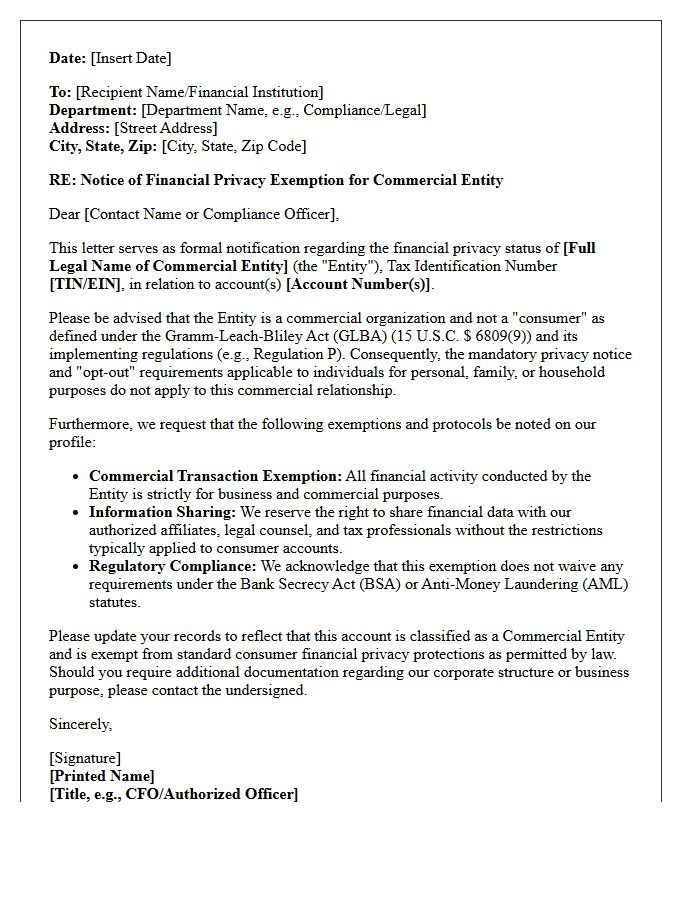
A Commercial Entity Financial Privacy Exemption Letter is a formal notification used to exempt specific business transactions from standard privacy disclosure requirements. This document verifies that an entity meets legal criteria to withhold sensitive financial data from public record or third-party reporting. It is primarily used to protect proprietary trade secrets and maintaining competitive advantages during regulatory audits. Understanding the eligibility requirements is essential for corporations seeking to safeguard their fiscal confidentiality while ensuring full compliance with national financial privacy statutes and transparency laws.
Data Breach Financial Privacy Rights Reassurance Letter
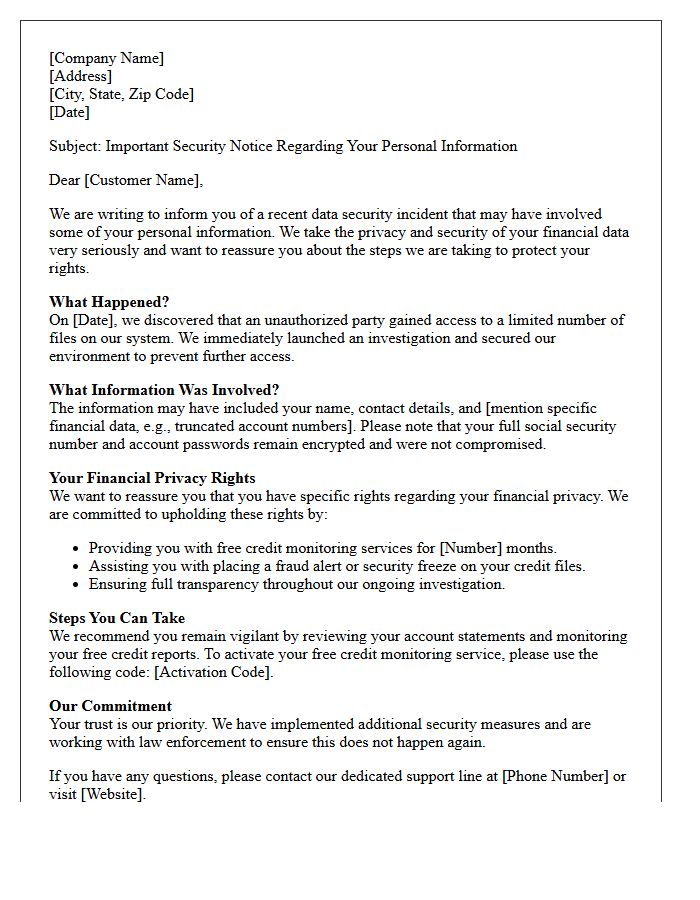
Receiving a reassurance letter after a data breach confirms your legal financial privacy rights and outlines steps for protection. These notices are essential for identity theft prevention, often offering complimentary credit monitoring and identity restoration services. Understanding your rights allows you to hold institutions accountable for security failures. Always verify the letter's authenticity to avoid phishing, then follow the instructions to secure your accounts. Acting quickly ensures your personal information remains safeguarded while minimizing potential financial liability and long-term damages resulting from the exposure of sensitive data.
Federal Agency Record Request Privacy Notice Letter
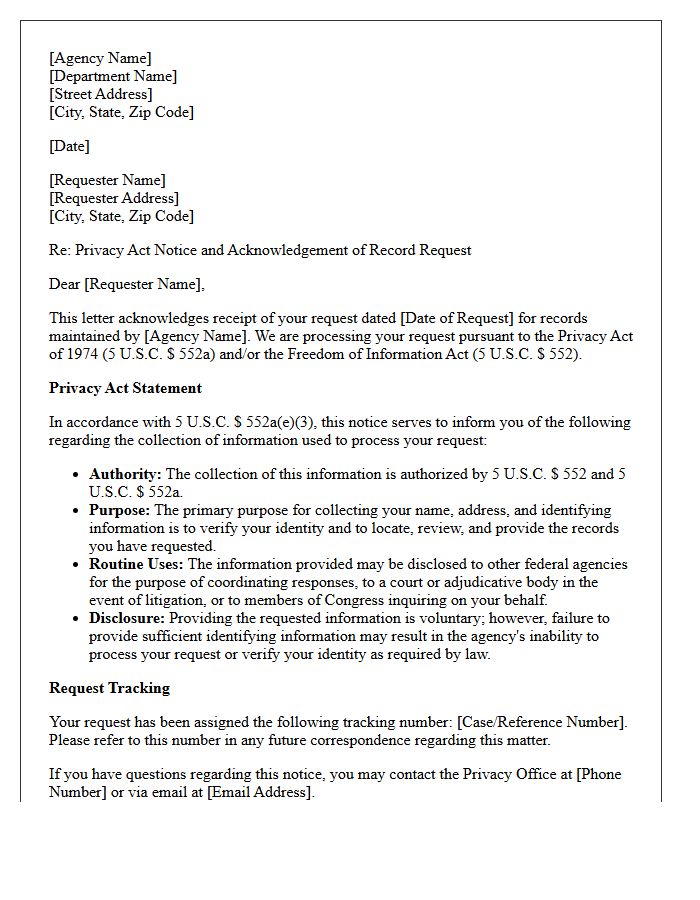
A Federal Agency Record Request Privacy Notice Letter informs individuals how their personally identifiable information (PII) is handled during a records request. This mandatory disclosure, required by the Privacy Act of 1974, explains the legal authority for collecting data, the purpose of its use, and potential routine sharing with other entities. It ensures transparency regarding your data privacy rights and specifies whether providing information is voluntary or mandatory. Understanding this notice is crucial for maintaining legal compliance and protecting your personal confidentiality when interacting with government administrative processes or formal inquiries.
Mortgage Servicing Financial Privacy Disclosure Letter
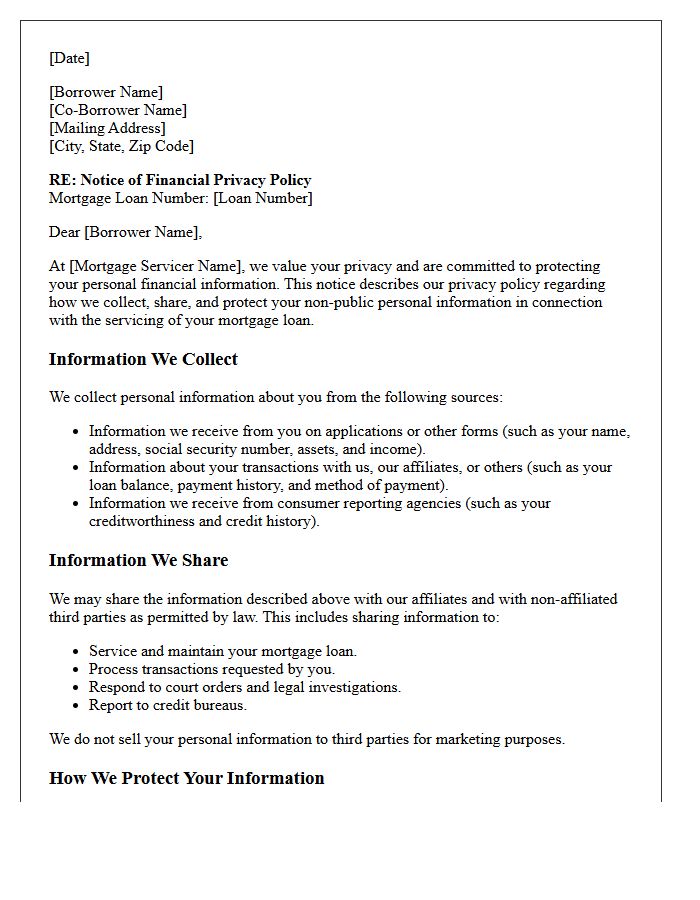
A Mortgage Servicing Financial Privacy Disclosure Letter explains how your loan servicer collects, protects, and shares your personal data. Under federal law, these institutions must disclose if they provide your private information to third-party affiliates for marketing or analytical purposes. The most critical element is your opt-out right, which allows you to restrict certain types of data sharing. Reviewing this document ensures you understand how your sensitive information is managed throughout the life of your home loan and helps protect you against identity theft and unsolicited solicitations.
Wealth Management Financial Privacy Policy Letter
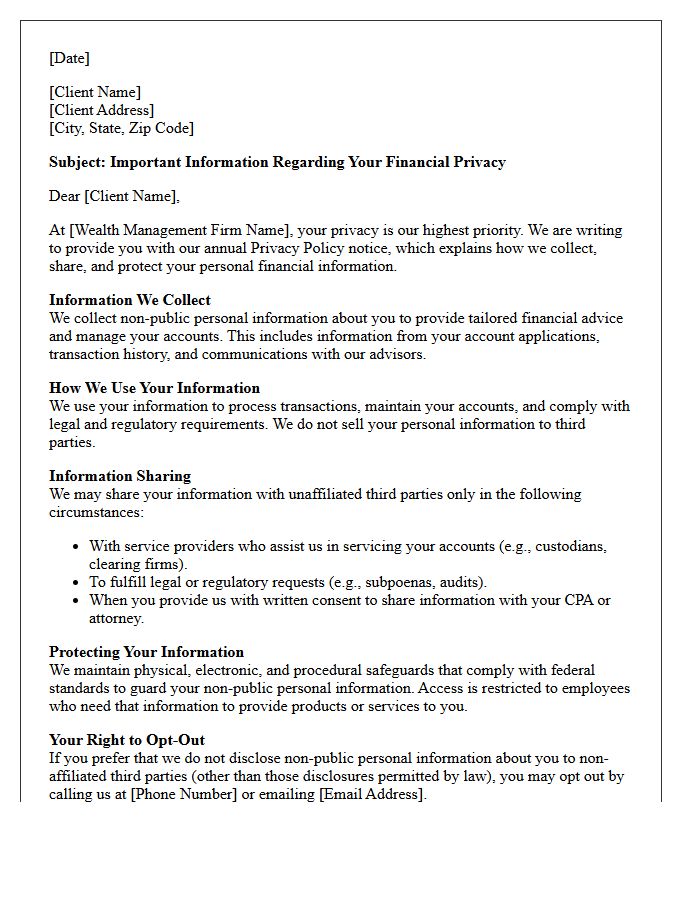
A Wealth Management Financial Privacy Policy Letter is a mandatory disclosure explaining how firms collect, share, and protect your personal sensitive data. It outlines your rights to opt out of third-party marketing and details security measures used to safeguard assets. Understanding these policies is crucial for maintaining confidentiality regarding your net worth and investment strategies. Always review the "Information Sharing" section to see if your data is sold to affiliates. This document ensures transparency between the advisor and client, fulfilling legal requirements to protect your financial footprint from unauthorized access or misuse.
Credit Card Issuance Financial Privacy Notice Letter
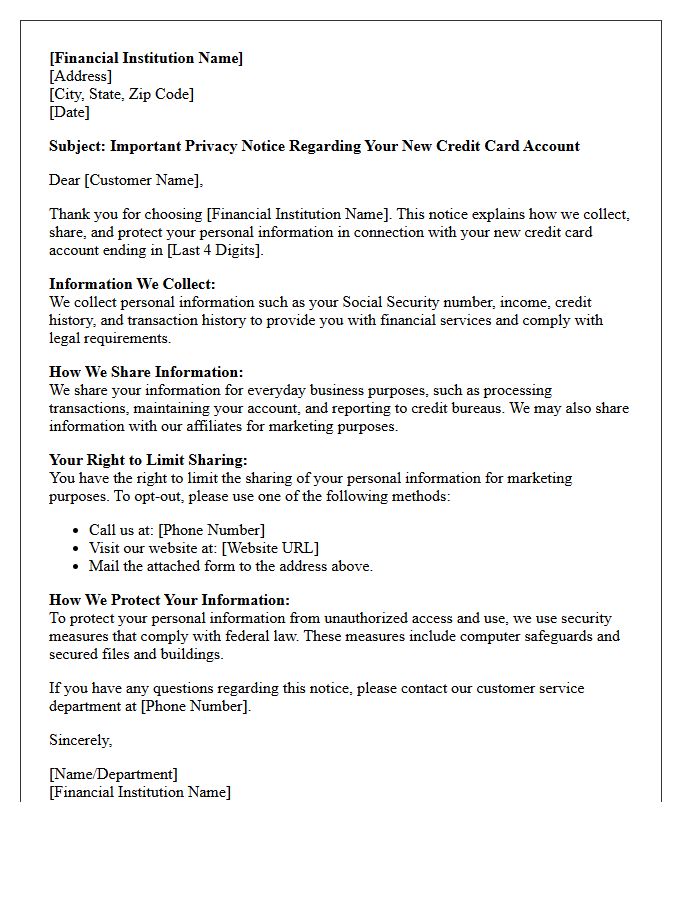
A Credit Card Issuance Financial Privacy Notice Letter is a mandatory document explaining how a bank collects and shares your personal data. It outlines your rights regarding information disclosure to affiliates or third parties for marketing. The most important action for consumers is the opt-out provision, which allows you to restrict certain types of data sharing. Reviewing this notice ensures you understand how your financial privacy is protected and helps you manage your communication preferences effectively to reduce unsolicited offers and safeguard sensitive details.
Closed Account Financial Privacy Retention Letter
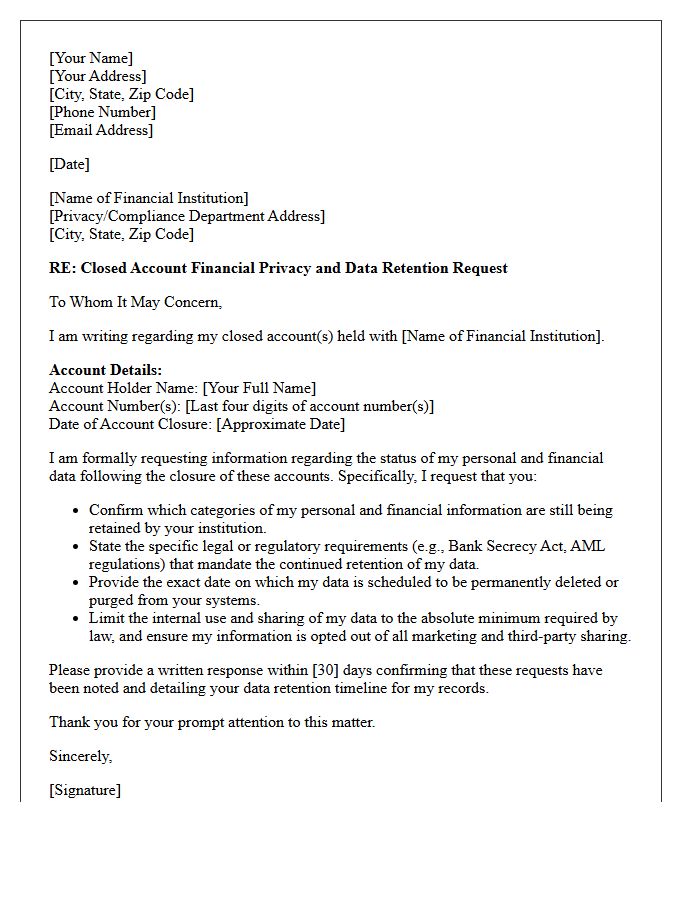
A Closed Account Financial Privacy Retention Letter is a formal notice sent by banks to former clients confirming the closure of their accounts. This document outlines how long the institution will retain your sensitive data to comply with legal regulations like the Bank Secrecy Act. It is essential for identity protection and future auditing, as it specifies the data destruction timeline for your personal records. Understanding this letter helps you track your privacy rights and ensures you know when your financial information is no longer stored on their servers.
What is a Notice of Right to Financial Privacy?
A Notice of Right to Financial Privacy is a formal document issued by a government authority informing an individual that their financial records are being requested from a financial institution. This notice is required under the Right to Financial Privacy Act (RFPA) to ensure individuals are aware of the government's access to their private banking data.
Why did I receive a Notice of Right to Financial Privacy letter?
You received this letter because a federal government agency is seeking access to your financial records as part of a formal investigation or legal proceeding. The notice serves as a legal requirement to provide you with the opportunity to object to the disclosure of your personal financial information before the records are released.
How can I challenge a government request for my financial records?
To challenge the request, you must file a motion to quash the subpoena or a sworn statement in the appropriate federal court within 10 days of service (or 14 days if the notice was mailed). You must demonstrate that the records sought are not relevant to the legitimate law enforcement inquiry or that the government has not complied with the Right to Financial Privacy Act.
What information is included in a Right to Financial Privacy Act notice?
The notice must include the name of the government agency seeking the records, the specific financial records being requested, the legal purpose for the request, and detailed instructions on how you can file a legal challenge to prevent the bank from releasing your information.
Does a bank have to notify me before releasing my records to the government?
Yes, under the RFPA, federal agencies are generally required to provide you with notice and an opportunity to object before a financial institution can release your records. However, there are exceptions for grand jury subpoenas, emergency situations, or if a court grants a delay of notice due to potential flight, evidence destruction, or witness intimidation.

Comments