
Complying with regulatory standards requires a formal Cybersecurity Incident Reporting Requirement Letter to notify authorities and stakeholders of data breaches. Timely communication ensures legal transparency and mitigates potential reputational damage. This guide outlines essential disclosure protocols and documentation necessary for organizational compliance during a security crisis. To streamline your notification process, below are some ready to use template.
Image cover: Cybersecurity Incident Reporting: Formal Letter Templates and Compliance Samples
Letter Samples List
- Initial Cybersecurity Incident Notification Letter
- Regulatory Compliance Incident Reporting Letter
- Customer Data Breach Disclosure Letter
- Central Bank Cyber Incident Alert Letter
- Internal Stakeholder Cybersecurity Update Letter
- Third-Party Vendor Incident Notification Letter
- Financial Authority Cyber Breach Report Letter
- Post-Incident Mitigation Strategy Letter
- Cybersecurity Incident Resolution Confirmation Letter
- Law Enforcement Cyber Crime Notification Letter
- Data Protection Officer Incident Declaration Letter
- Executive Board Incident Escalation Letter
- Shareholder Cybersecurity Impact Briefing Letter
Initial Cybersecurity Incident Notification Letter
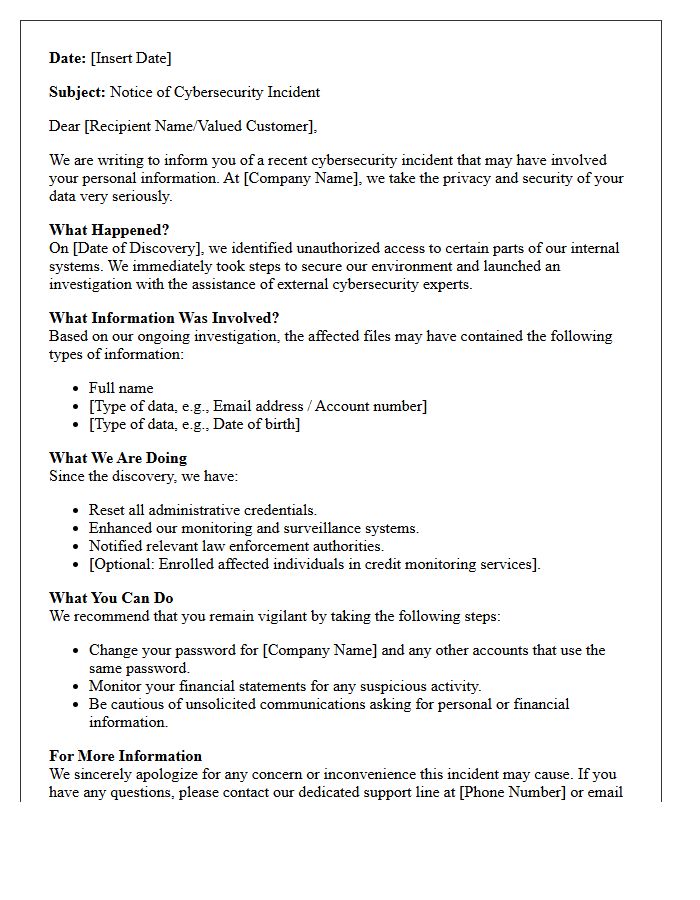
An Initial Cybersecurity Incident Notification Letter serves as a formal communication to inform stakeholders about a potential data breach. The most critical element is timeliness, as many jurisdictions mandate disclosure within specific windows. This document should outline what happened, the types of data involved, and immediate remedial actions taken. It is essential for maintaining trust and regulatory compliance while providing clear guidance on how affected individuals can protect their information. Avoid speculation; focus on verified facts to minimize legal risk and reputational damage during the incident response phase.
Regulatory Compliance Incident Reporting Letter
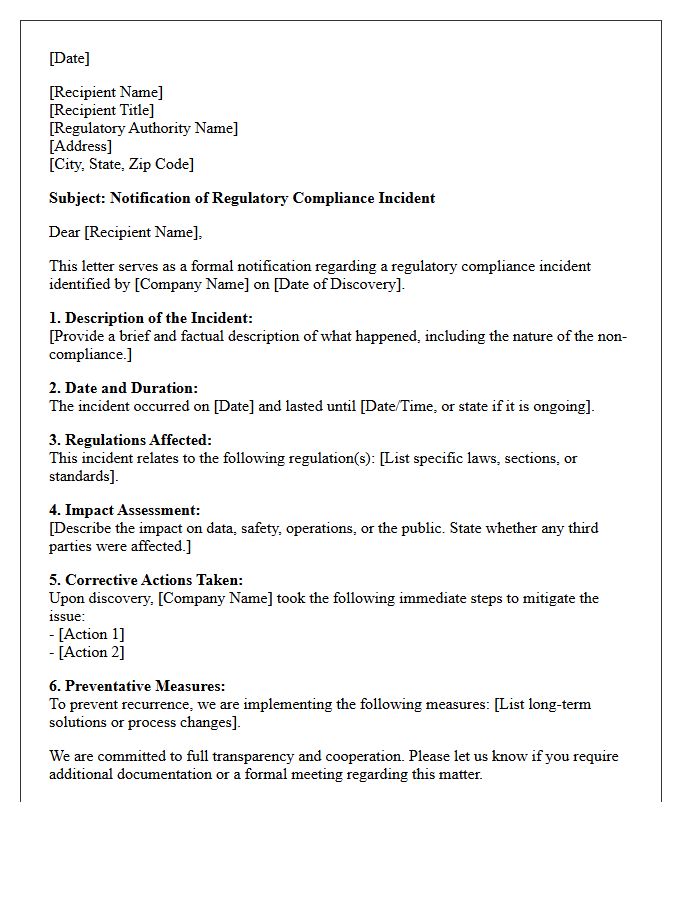
A Regulatory Compliance Incident Reporting Letter is a formal notification sent to authorities following a legal or policy breach. It must provide a transparent account of the event, including the root cause, immediate corrective actions, and future prevention strategies. Timely submission is critical to demonstrate accountability and minimize potential fines or legal penalties. Accuracy ensures that the organization remains compliant with governance standards while maintaining professional integrity during investigations. Clear documentation serves as a vital record for both internal auditing and external regulatory oversight.
Customer Data Breach Disclosure Letter
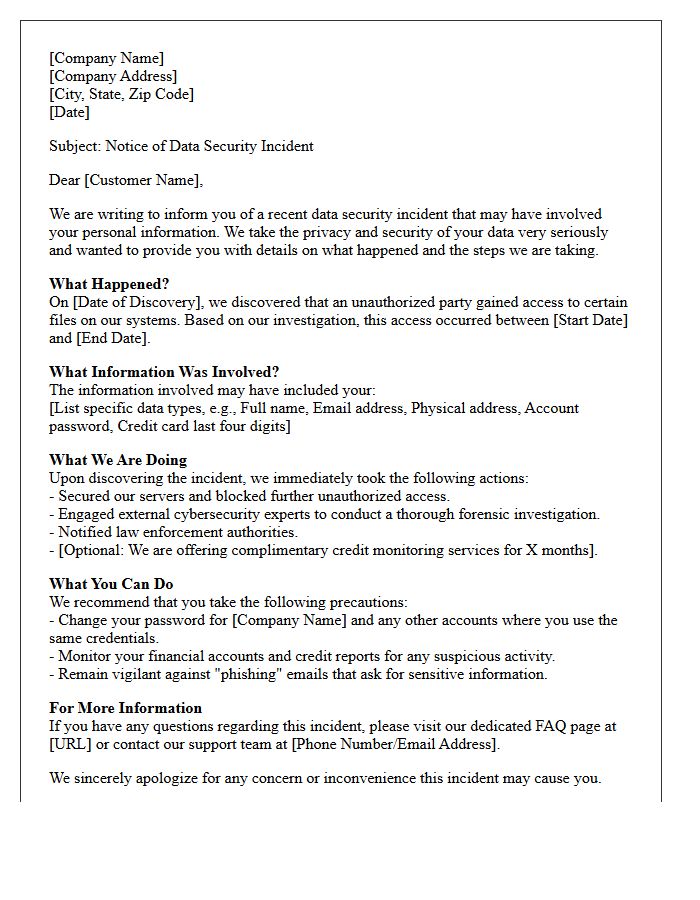
A Customer Data Breach Disclosure Letter is a critical legal notice informing individuals that their personal information has been compromised. It must clearly explain what happened, which specific data types were accessed, and the remedial actions taken to secure systems. Timeliness is essential to comply with privacy regulations like GDPR or CCPA. The letter should provide actionable advice, such as identity theft protection steps, to help users mitigate risks. Transparency in these communications is vital for maintaining brand trust and fulfilling regulatory obligations after a security incident.
Central Bank Cyber Incident Alert Letter
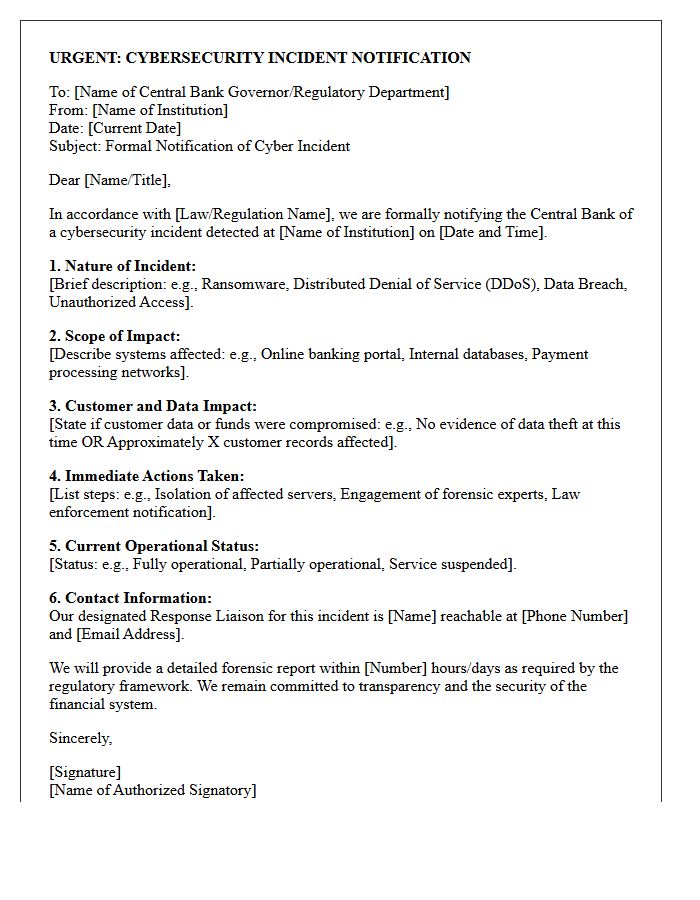
The Central Bank Cyber Incident Alert Letter is a critical regulatory notification requiring financial institutions to report significant security breaches immediately. To ensure compliance, firms must disclose any event that disrupts operations or compromises sensitive data. This formal communication facilitates threat intelligence sharing across the banking sector, helping to mitigate systemic risks. Timely submission is essential to avoid legal penalties and maintain institutional resilience. Understanding these reporting obligations helps organizations strengthen their cybersecurity posture while aligning with national financial stability protocols and emergency response frameworks.
Internal Stakeholder Cybersecurity Update Letter
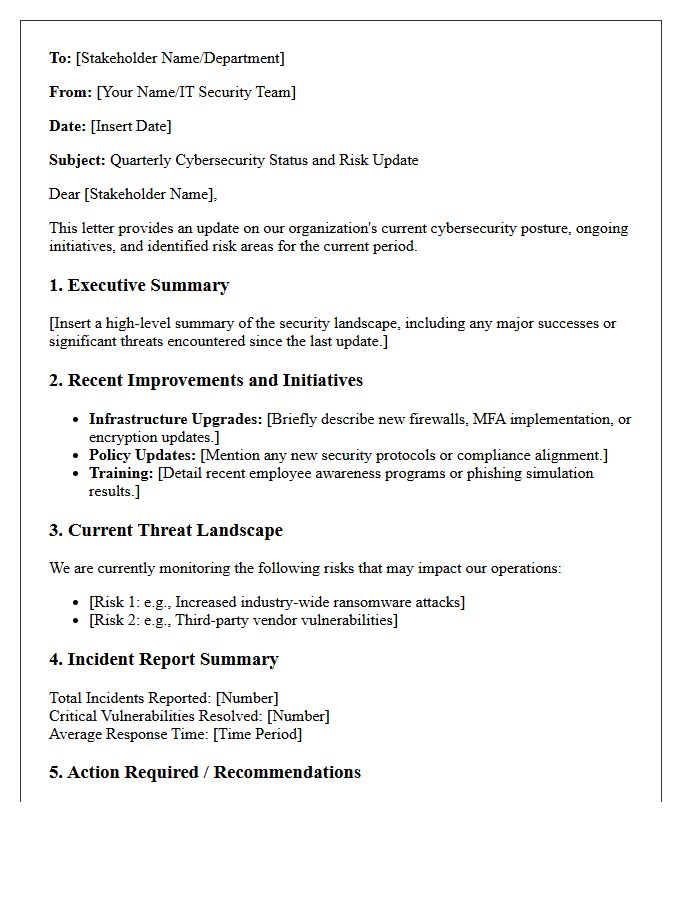
An Internal Stakeholder Cybersecurity Update Letter is a vital communication tool used to maintain organizational transparency regarding digital safety. It informs employees and executives about current threat landscapes, recent security enhancements, and required compliance protocols. This document ensures that every member of the organization understands their role in risk mitigation and follows established security policies. By fostering a proactive security culture, these updates protect sensitive corporate data and minimize the potential impact of human error during evolving cyber attacks.
Third-Party Vendor Incident Notification Letter
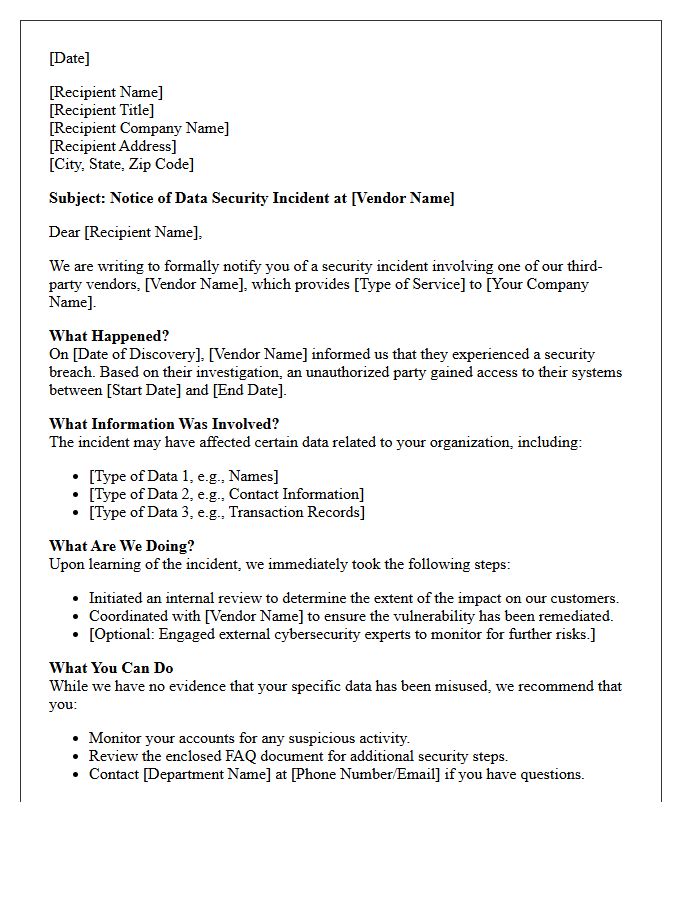
A Third-Party Vendor Incident Notification Letter is a formal communication sent to clients when a data breach occurs at an external service provider. It must clearly outline the nature of the security incident, the specific data compromised, and the corrective actions taken. Timely delivery is essential for regulatory compliance and maintaining transparency. This document serves as a critical tool for risk management, helping affected parties protect their information while preserving professional trust and meeting legal obligations under data privacy laws.
Financial Authority Cyber Breach Report Letter
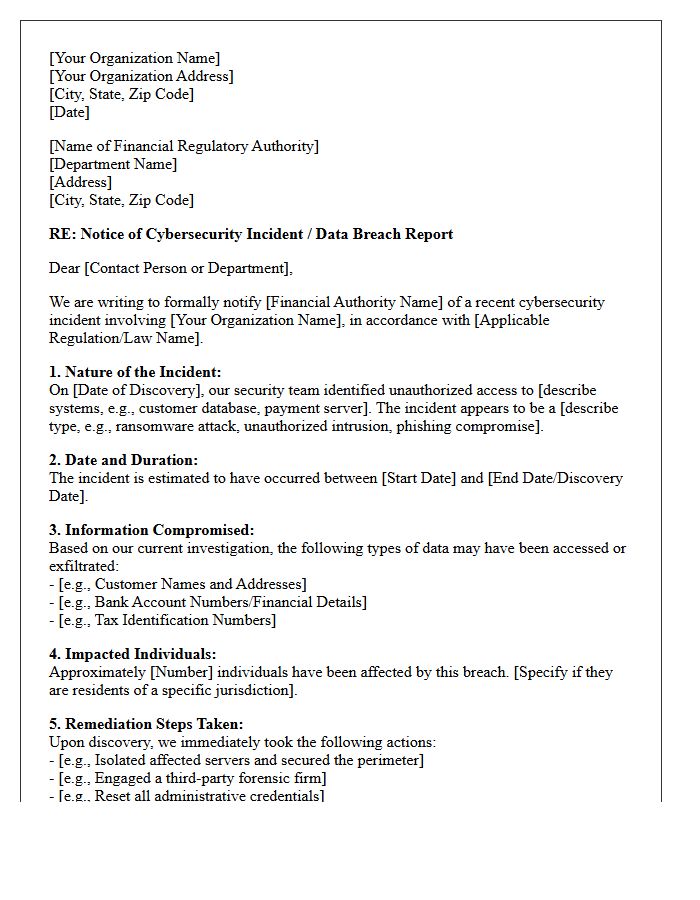
If you receive a Financial Authority Cyber Breach Report Letter, treat it with immediate priority. This formal document notifies you that your sensitive data, such as account numbers or social security details, may be compromised. It is crucial to freeze your credit and monitor bank statements for suspicious activity. Use the contact information provided in the letter to verify the breach's legitimacy directly through official channels. Taking swift action helps mitigate the risk of identity theft and financial loss resulting from the security incident.
Post-Incident Mitigation Strategy Letter
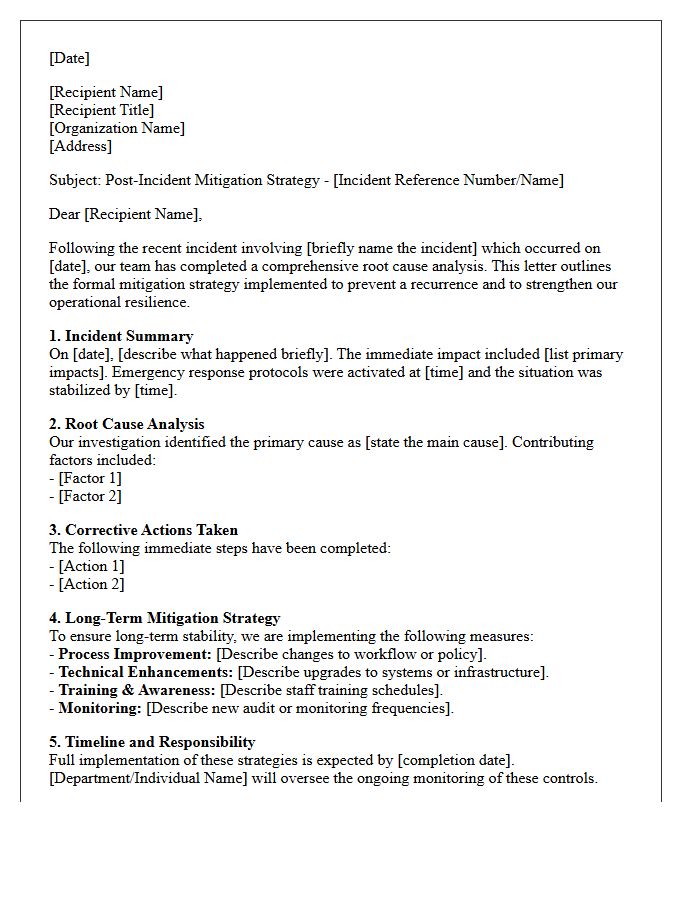
A Post-Incident Mitigation Strategy Letter is a formal document sent to regulatory bodies or stakeholders after a security breach or operational failure. It outlines specific remediation actions taken to resolve the immediate crisis and prevent future recurrences. The letter highlights corrective measures, such as updated security protocols, infrastructure upgrades, or staff training. By demonstrating accountability and a proactive approach, this communication helps restore organizational trust and ensures compliance with legal or safety requirements. It serves as a roadmap for long-term resilience and continuous improvement following a critical incident.
Cybersecurity Incident Resolution Confirmation Letter
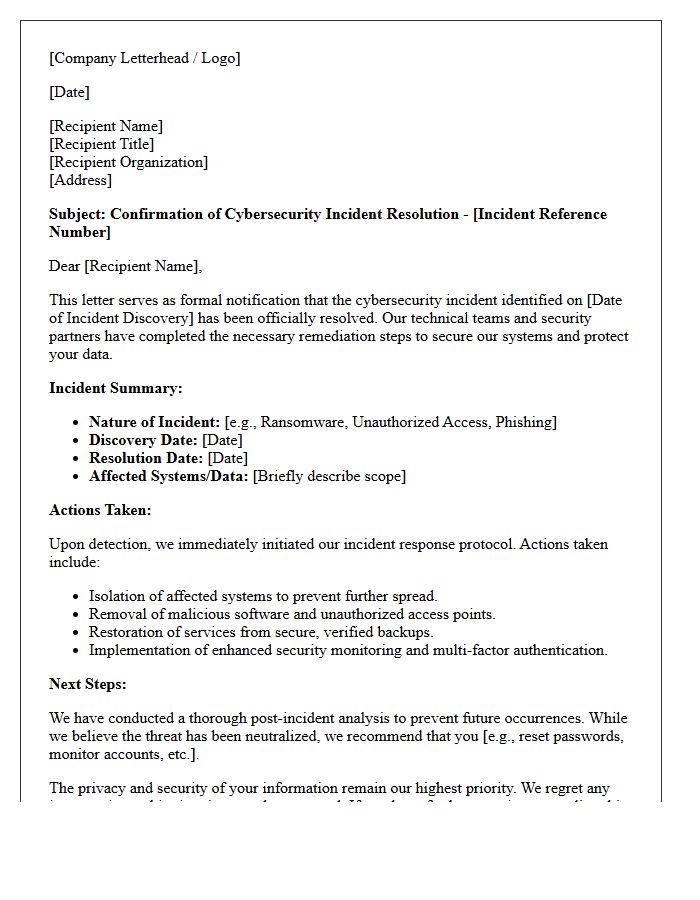
A Cybersecurity Incident Resolution Confirmation Letter is a formal document verifying that a digital threat has been successfully mitigated. This letter of attestation serves as critical evidence for stakeholders, auditors, and regulatory bodies that recovery protocols were followed. It typically details the remediation steps taken, the scope of the containment, and the current security status of the network. Providing this written assurance helps rebuild institutional trust and demonstrates compliance with legal notification requirements following a data breach or system compromise.
Law Enforcement Cyber Crime Notification Letter
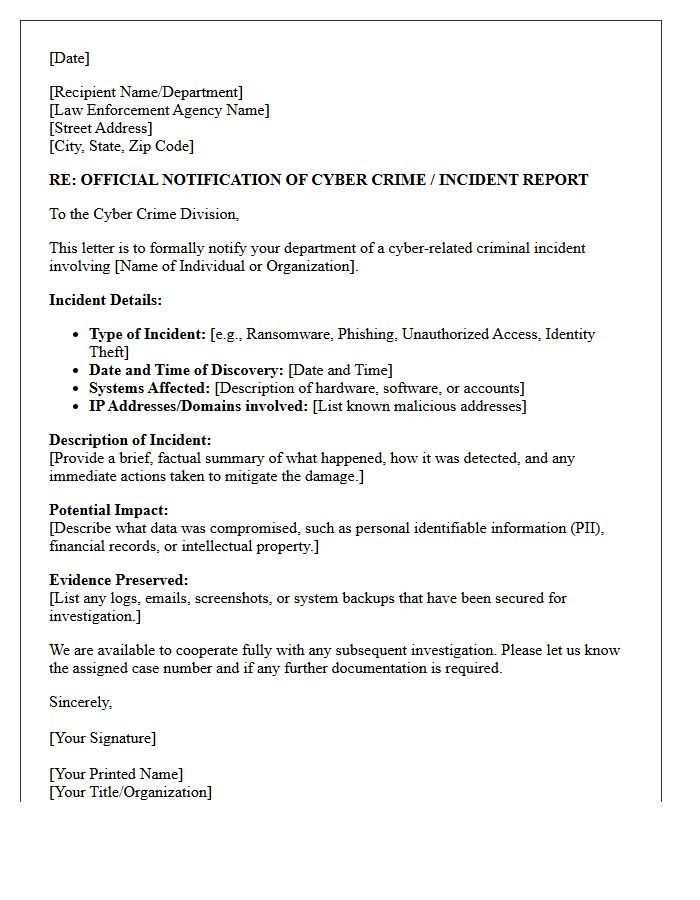
A Law Enforcement Cyber Crime Notification Letter is an official communication informing individuals or organizations that their digital security has been compromised. These notices often originate from agencies like the FBI to warn victims of data breaches, ransomware, or unauthorized access identified during criminal investigations. Receiving this letter requires immediate action to secure systems and preserve evidence. It serves as a critical alert to mitigate further damage, protect sensitive information, and coordinate with authorities to track cybercriminals. Always verify the sender's authenticity to avoid phishing scams while prioritizing incident response protocols.
Data Protection Officer Incident Declaration Letter
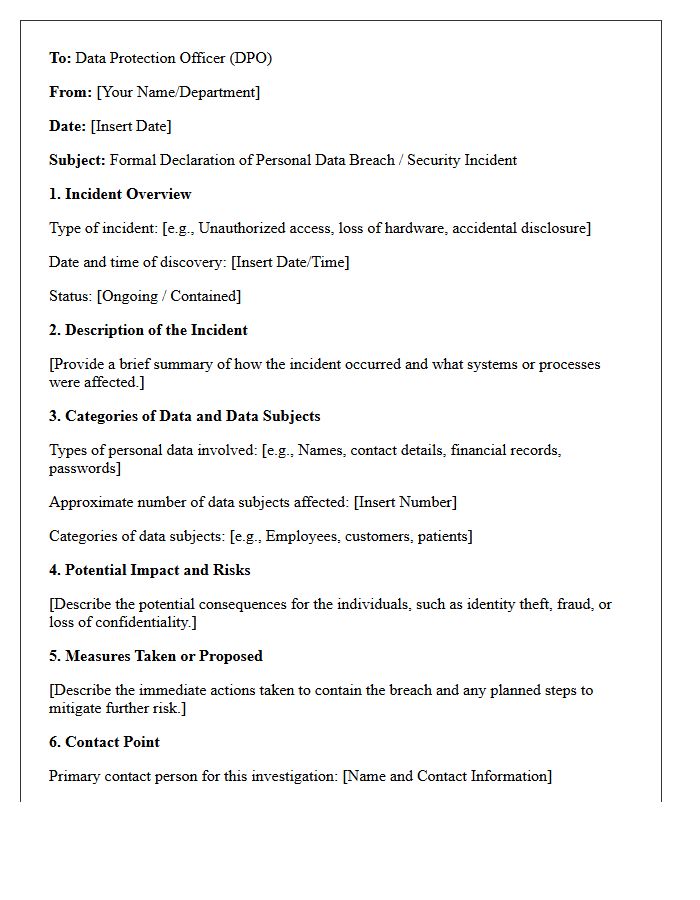
A Data Protection Officer Incident Declaration Letter is a formal notification issued by the DPO to inform regulatory authorities and affected individuals about a personal data breach. It must detail the nature of the security incident, the categories of data compromised, and the immediate remediation measures taken. Timely submission is critical to ensure compliance with GDPR and other privacy laws. This document serves as an official record, demonstrating the organization's commitment to transparency, accountability, and the proactive mitigation of potential risks to user privacy and data security.
Executive Board Incident Escalation Letter
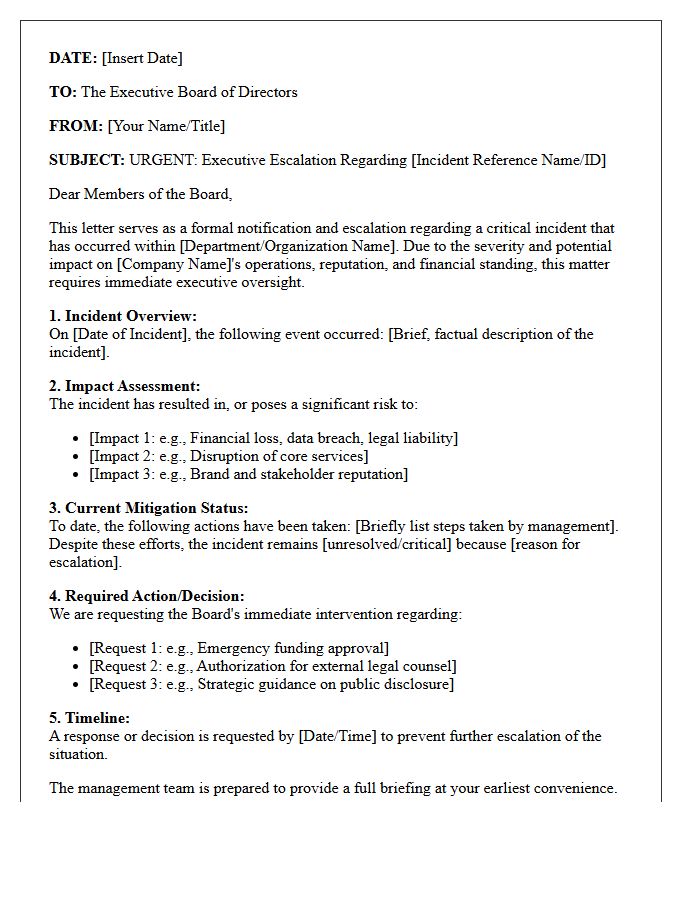
An Executive Board Incident Escalation Letter is a formal notification used to alert top-tier leadership about high-priority risks or operational crises that threaten business continuity. This document ensures strategic alignment and facilitates rapid resource allocation. It must clearly outline the incident's impact, the mitigation steps already taken, and the specific remediation requirements needed from the board. Effective letters prioritize transparency and urgency, providing executives with the critical data necessary to make informed, high-stakes decisions during a security breach or major organizational failure.
Shareholder Cybersecurity Impact Briefing Letter
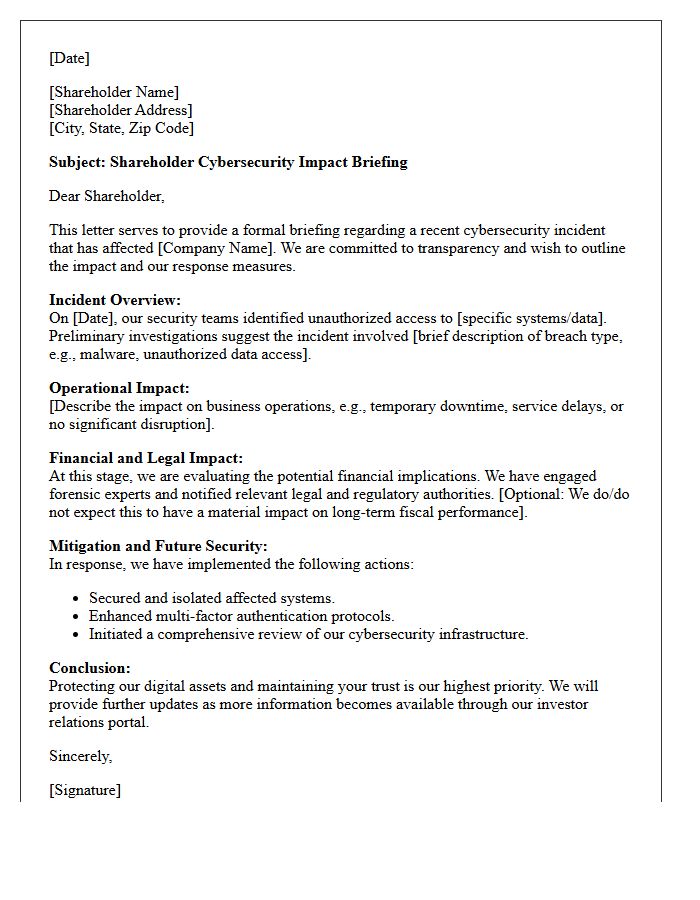
A Shareholder Cybersecurity Impact Briefing Letter is a critical governance document designed to inform investors about a company's digital risk profile. It outlines potential financial consequences of data breaches and evaluates existing mitigation strategies to protect corporate assets. These briefings provide transparency regarding security protocols, regulatory compliance, and incident response readiness. By highlighting the link between cyber resilience and long-term shareholder value, the letter ensures that stakeholders understand how technical vulnerabilities could impact market valuation and operational continuity in an increasingly hostile threat landscape.
What is a Cybersecurity Incident Reporting Requirement Letter?
A Cybersecurity Incident Reporting Requirement Letter is a formal notification sent by regulatory bodies, government agencies, or contractual partners mandating that an organization discloses specific details regarding a security breach or cyber threat within a predefined timeframe.
What information must be included in a cyber incident report?
Typically, the report must include the nature of the incident, the date of discovery, the types of data compromised, the potential impact on stakeholders, and the immediate mitigation steps taken to contain the threat.
What are the legal deadlines for responding to an incident reporting letter?
Deadlines vary by jurisdiction and industry; for example, the SEC requires reporting within four business days of determining an incident is material, while GDPR mandates notification within 72 hours of becoming aware of a personal data breach.
What are the consequences of failing to comply with reporting requirements?
Non-compliance can result in significant financial penalties, legal litigation, loss of operating licenses, and severe reputational damage, as well as increased scrutiny from federal and state regulatory authorities.
Who is responsible for filing a cybersecurity incident report?
Responsibility generally lies with the Chief Information Security Officer (CISO), Chief Compliance Officer, or the legal department, ensuring that the documentation aligns with both technical findings and regulatory obligations.


Comments