
A Community Reinvestment Act Examination Letter is a formal notification from regulators announcing an upcoming audit of a bank's lending and service performance. This critical document outlines the scope, required documentation, and evaluation timeline to ensure compliance with fair lending standards. Preparing early is essential for a successful rating. To help you streamline your response, below are some ready to use template.
Image cover: Winning CRA Examination Response Templates and Communication Samples
Letter Samples List
- Community Reinvestment Act Examination Notification Letter
- Initial Examination Document Request Letter
- Community Contact Interview Request Letter
- Public Comment and Feedback Submission Letter
- Examination Scope and Objective Acknowledgment Letter
- Community Development Lending Documentation Letter
- Retail Banking Services Assessment Letter
- Qualified Investment Verification Letter
- Notice of Public File Update Request Letter
- Preliminary Examination Findings Disclosure Letter
- Management Response to Examination Findings Letter
- Final Performance Evaluation Transmittal Letter
- Examination Closure and Remediation Letter
Community Reinvestment Act Examination Notification Letter
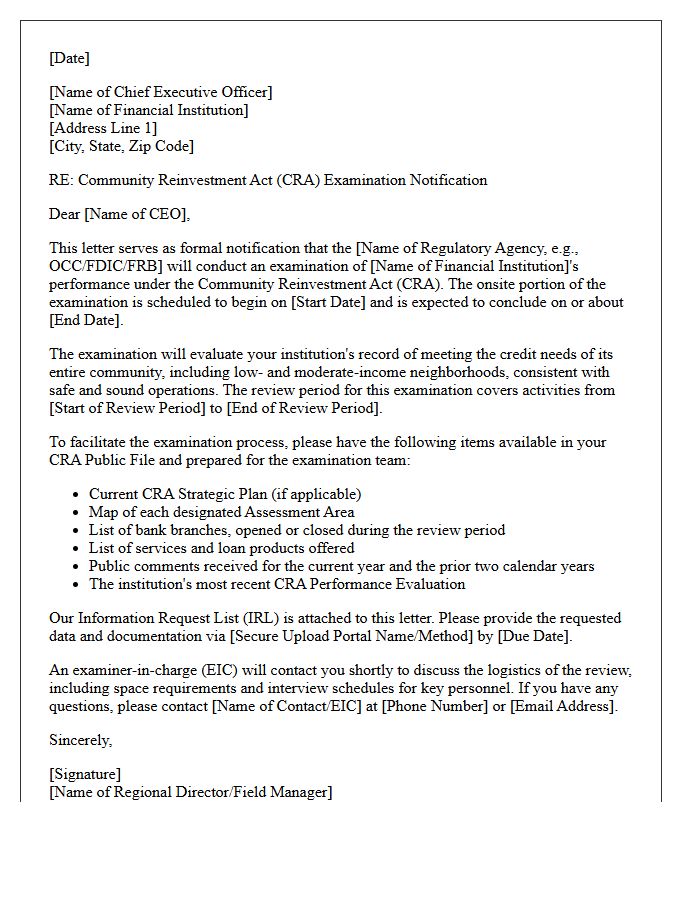
A Community Reinvestment Act Examination Notification Letter is a formal document sent by federal regulators to inform a financial institution of an upcoming performance review. This letter outlines the evaluation period and specific data required to assess how well the bank meets the credit needs of its local community, including low-income neighborhoods. Receiving this notice is critical for compliance preparation, as it initiates the process of auditing lending, investment, and service records. Timely preparation ensures the bank demonstrates its commitment to equitable community development and avoids potential regulatory penalties or rating downgrades.
Initial Examination Document Request Letter
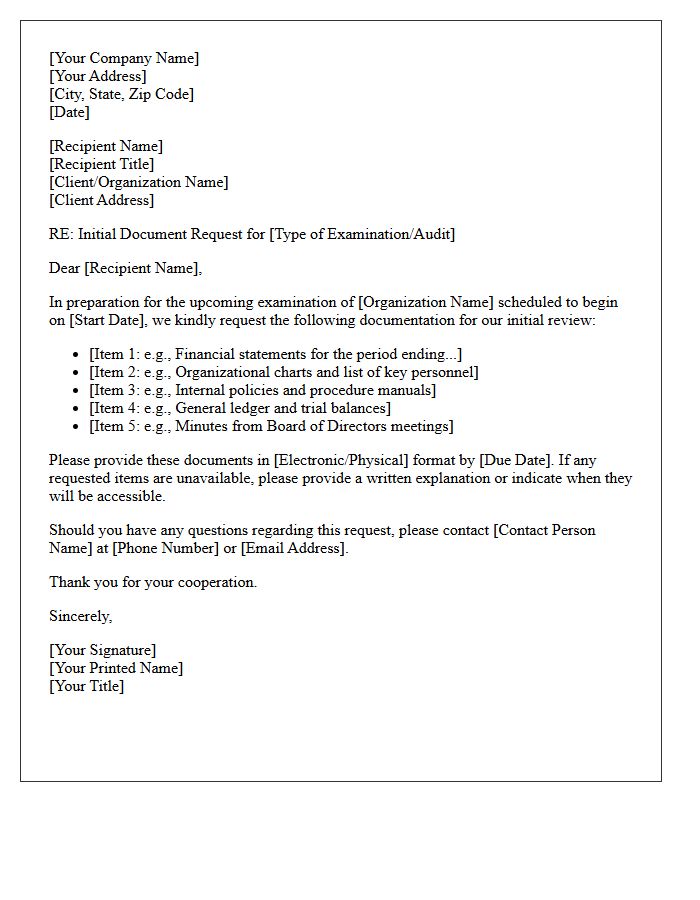
An Initial Examination Document Request Letter is a formal notice issued by regulatory bodies or auditors to begin a compliance review. It outlines specific records, such as financial statements and operational policies, that must be submitted by a set deadline. Providing accurate, organized documentation is critical to demonstrate transparency and ensure a smooth supervisory process. Timely cooperation helps mitigate risks and avoids potential penalties during the audit phase. Understanding these requirements ensures your organization remains prepared for thorough regulatory scrutiny and maintains high standards of accountability.
Community Contact Interview Request Letter
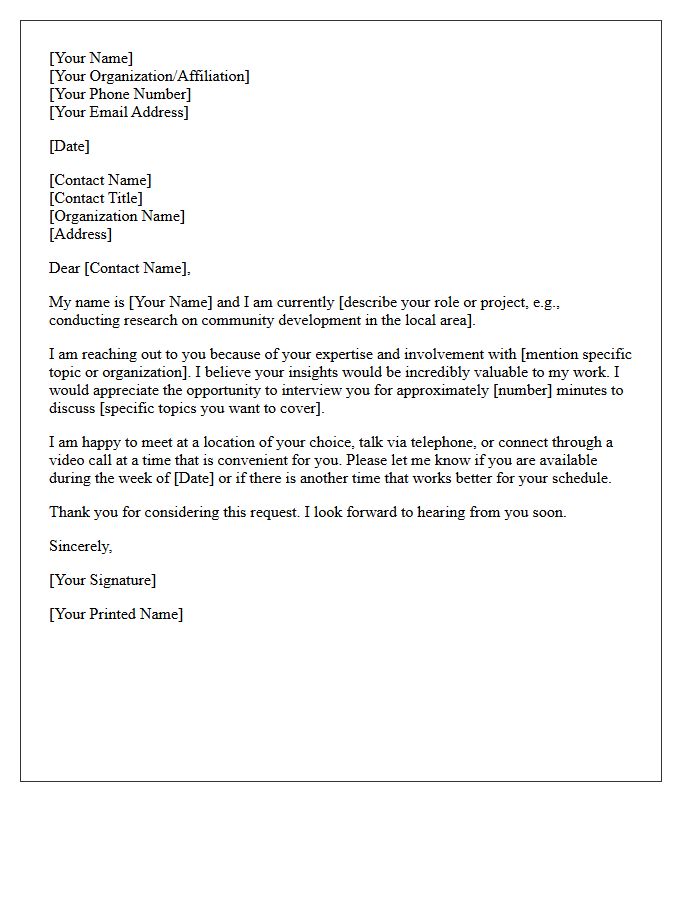
A Community Contact Interview Request Letter is a professional outreach tool used to gain industry insights through informational interviewing. Its primary purpose is to request a brief meeting with an expert to learn about their career path and organizational culture rather than asking for a job. A well-crafted letter should be concise, demonstrate genuine interest in the contact's expertise, and clearly state your objectives. Building professional networks through these requests is essential for discovering the hidden job market and obtaining valuable career mentorship from established community members.
Public Comment and Feedback Submission Letter
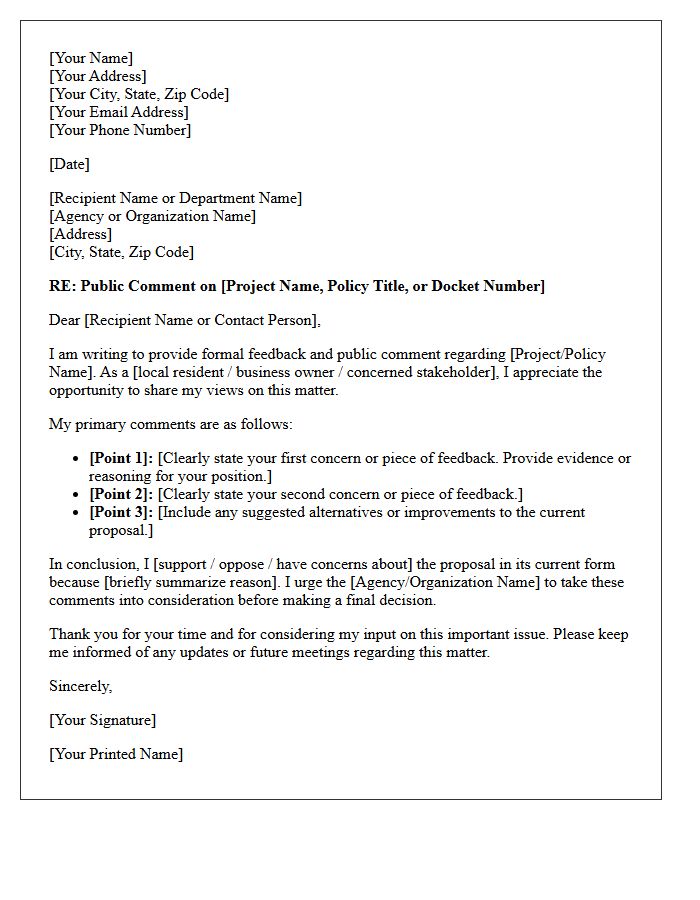
A Public Comment and Feedback Submission Letter is a formal document used to influence government decision-making during open rulemaking periods. It allows citizens to provide evidence-based arguments or personal insights regarding proposed regulations. To be effective, the letter should clearly reference the specific docket number and offer constructive alternatives. These submissions become part of the official public record, ensuring transparency and legal accountability. Providing clear, factual feedback is the most direct way for stakeholders to impact legislative outcomes and shape future policy implementation.
Examination Scope and Objective Acknowledgment Letter
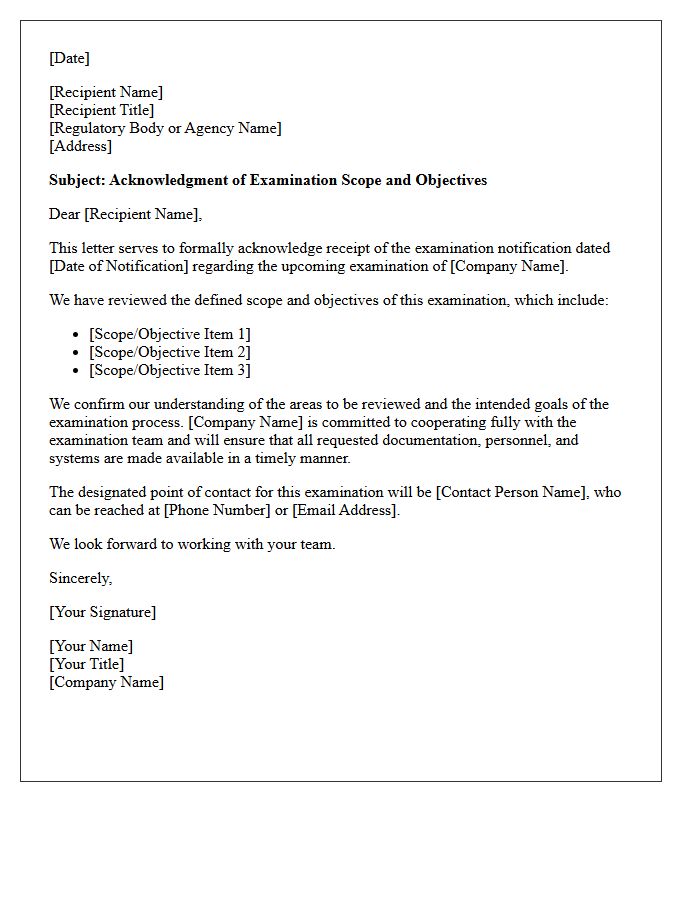
An Examination Scope and Objective Acknowledgment Letter is a formal document used during audits to confirm the boundaries and goals of a review. It ensures both the auditor and the client agree on which financial areas or processes will be tested. By clearly defining the engagement scope, the letter prevents misunderstandings regarding the depth of the investigation. Acknowledging these objectives protects all parties, ensuring regulatory compliance and professional transparency before the examination begins. It serves as a foundational roadmap for a successful, targeted, and efficient audit process.
Community Development Lending Documentation Letter
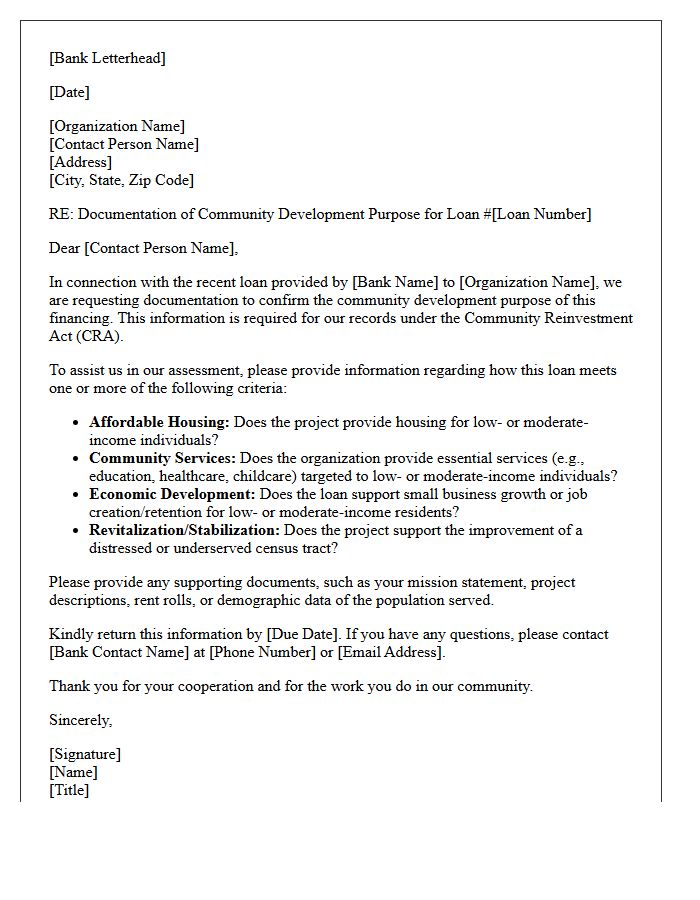
A Community Development Lending Documentation Letter serves as formal evidence that a financial institution's loan supports community revitalization or affordable housing. This essential document verifies that the credit meets specific CRA regulatory standards by benefiting low-to-moderate income populations. It must clearly detail the loan's primary purpose, the measurable community impact, and the qualifying census tract information. Maintaining precise documentation ensures that banks receive proper regulatory credit during compliance examinations while demonstrating a commitment to fostering sustainable local economic growth and social equity within underserved neighborhoods.
Retail Banking Services Assessment Letter
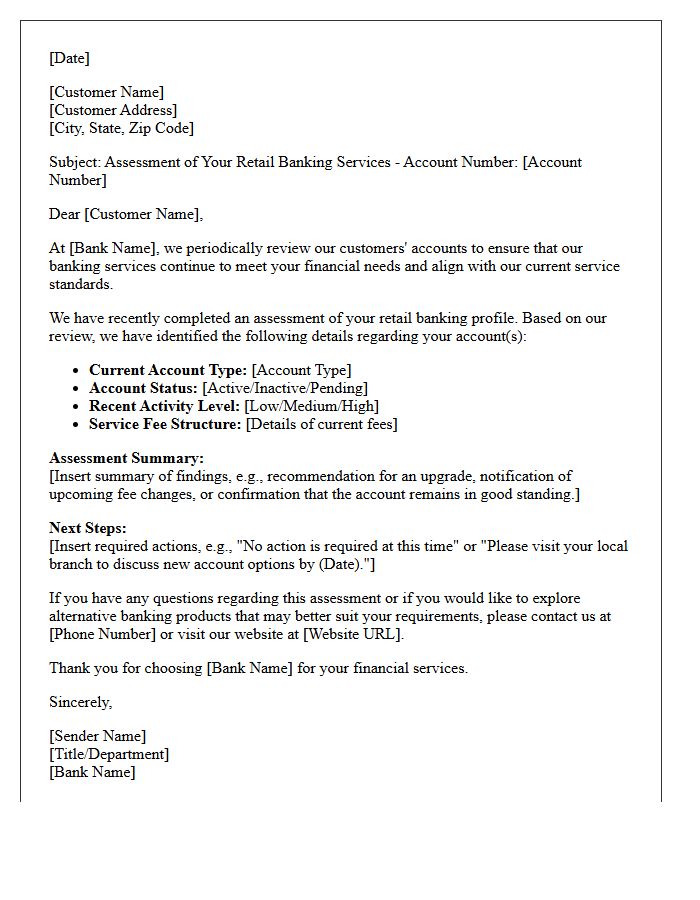
A Retail Banking Services Assessment Letter is a formal document evaluating a financial institution's compliance with fair lending and community reinvestment standards. It provides a performance rating based on how effectively the bank serves diverse consumer needs, including low-to-moderate income areas. This assessment ensures regulatory transparency and accountability within the banking sector. Understanding these letters helps stakeholders gauge a bank's operational integrity, credit accessibility, and overall commitment to equitable financial service delivery in the local market.
Qualified Investment Verification Letter
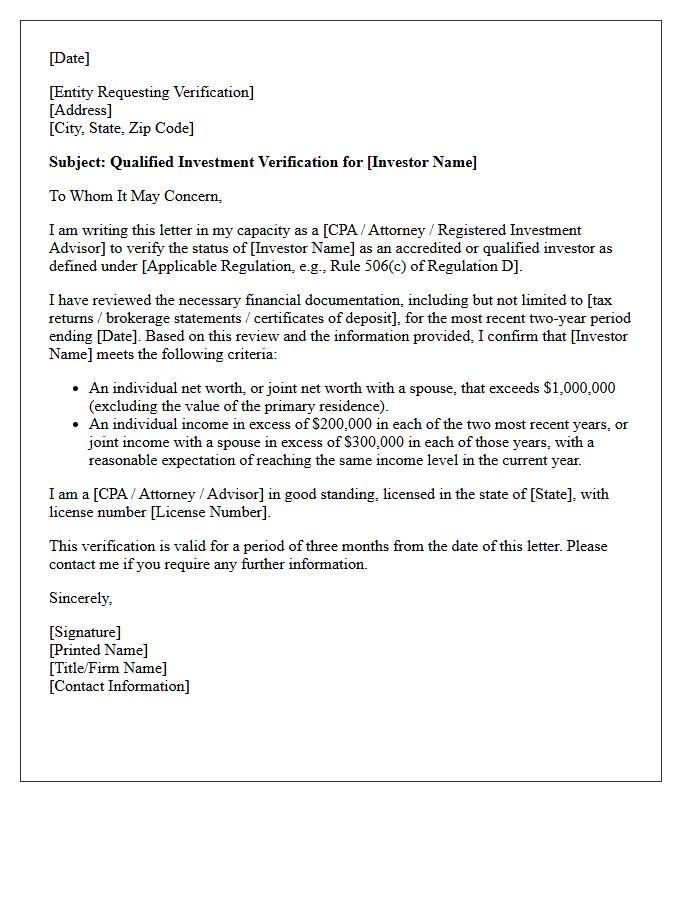
A Qualified Investment Verification Letter is a formal document used to confirm that an investor meets specific financial criteria, such as accredited investor status. Issued by CPAs, attorneys, or financial advisors, it verifies that an individual or entity possesses the necessary income or net worth to participate in private placements. This letter is crucial for regulatory compliance under SEC Rule 506(c), ensuring that issuers mitigate risk while granting investors access to exclusive, high-yield opportunities in private equity or real estate.
Notice of Public File Update Request Letter
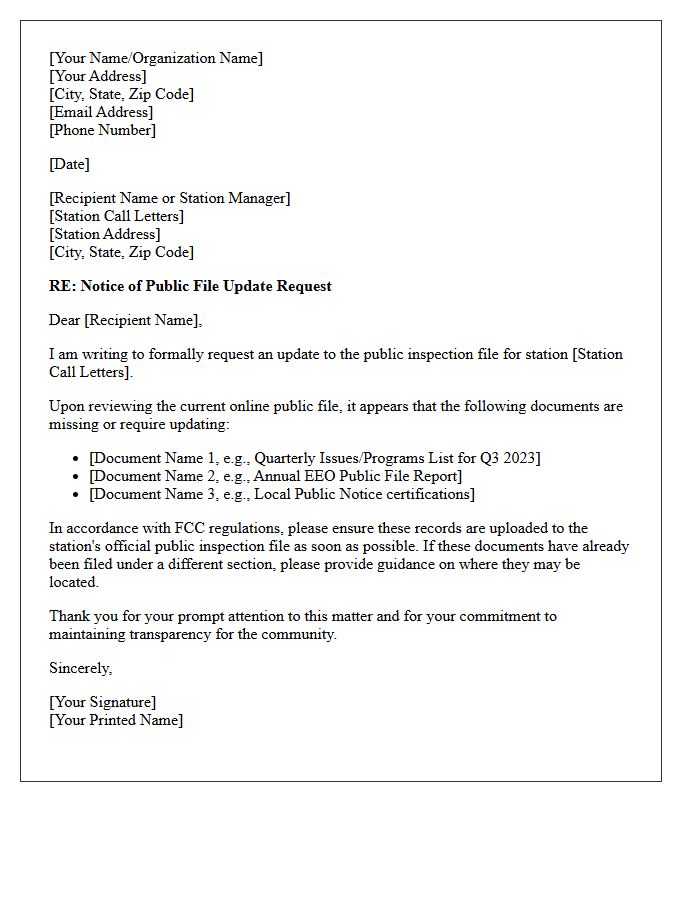
A Notice of Public File Update Request Letter is a formal notification sent to broadcasters or organizations to ensure their regulatory compliance. This letter requests the immediate addition of missing documents or the correction of outdated information within a public inspection file. Maintaining an accurate file is a mandatory legal requirement enforced by governing bodies like the FCC. Failure to respond or update the records can lead to significant fines or licensing issues. Organizations must treat these notices with priority to demonstrate transparency and adherence to public interest obligations.
Preliminary Examination Findings Disclosure Letter
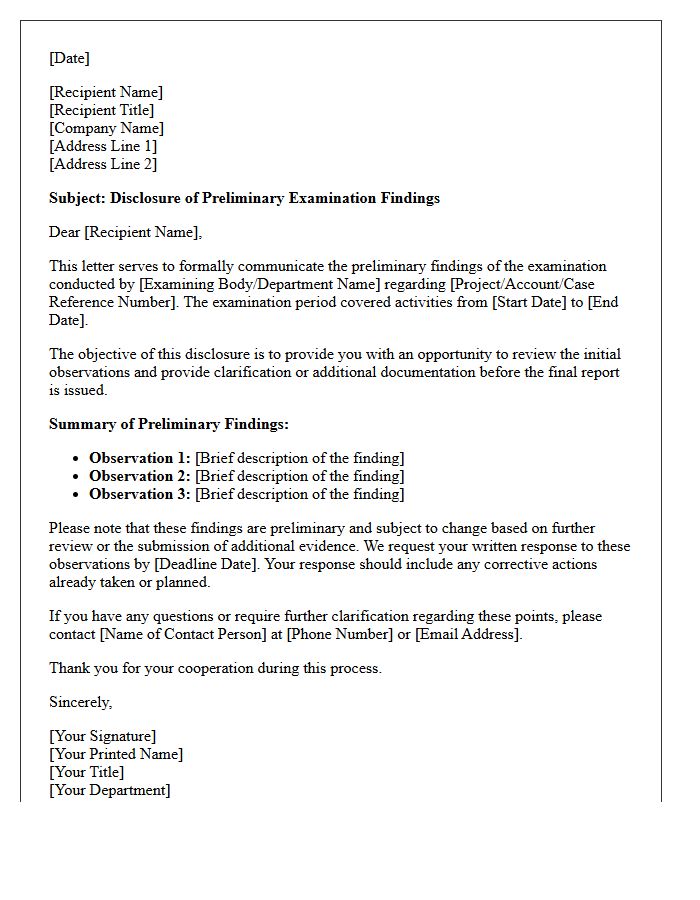
A Preliminary Examination Findings Disclosure Letter is a formal notification issued by patent offices or regulatory bodies outlining initial assessment results. This document is crucial for applicants as it highlights potential deficiencies, prior art conflicts, or compliance issues before a final decision. Receiving this letter allows for a rebuttal or necessary amendments to strengthen the application. Timely response is vital to maintain legal standing and progress through the examination process. Understanding these findings ensures transparency and helps stakeholders navigate complex procedural requirements effectively within the established legal framework.
Management Response to Examination Findings Letter
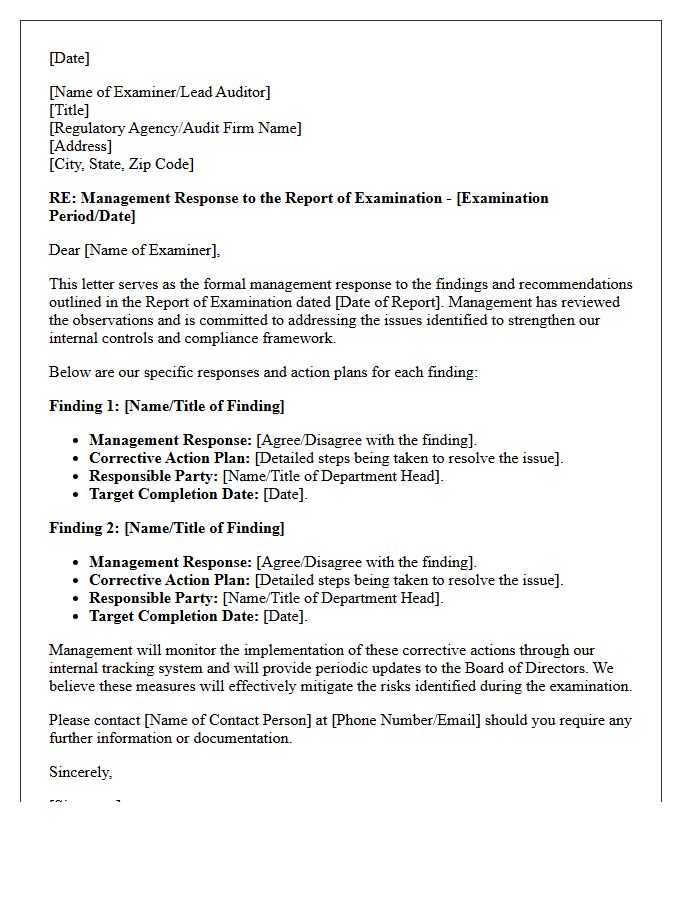
A Management Response to Examination Findings Letter is a critical formal document that addresses deficiencies identified during a regulatory audit. It must outline specific remediation plans, assigned responsibilities, and clear timelines for corrective actions. This letter demonstrates the organization's commitment to compliance and risk mitigation. Providing a proactive and detailed response is essential to satisfy examiners, maintain institutional credibility, and prevent potential enforcement actions or penalties. Effective responses ensure that all material weaknesses are systematically resolved to strengthen the entity's operational and financial integrity.
Final Performance Evaluation Transmittal Letter
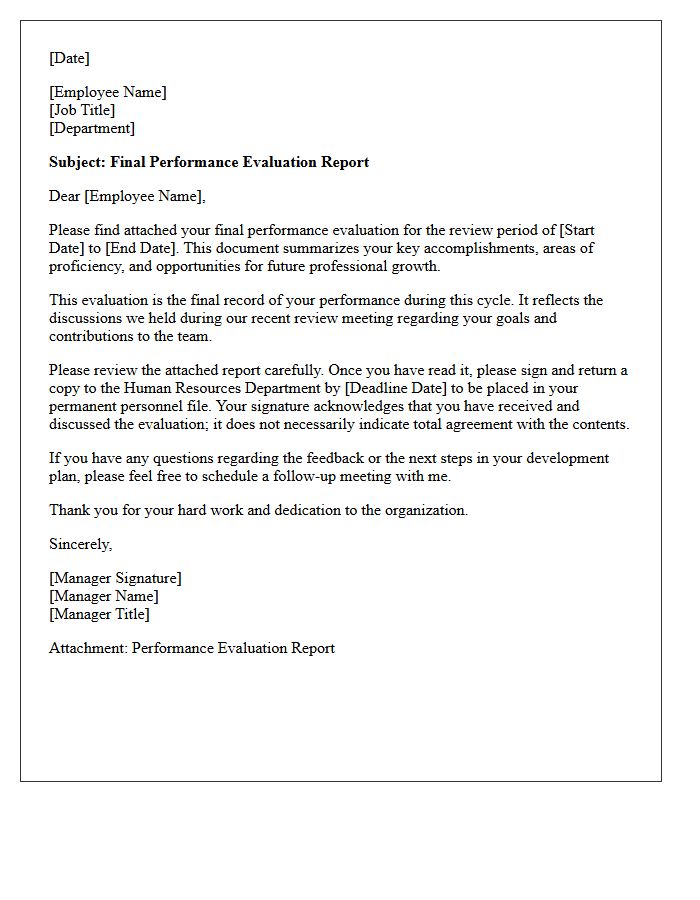
The Final Performance Evaluation Transmittal Letter serves as the official record formalizing the conclusion of a project or employment period. It provides a conclusive summary of achievements, feedback, and final ratings. This document is essential for administrative closure and future reference, ensuring all stakeholders acknowledge the completed assessment. It must clearly outline the evaluation outcomes and any necessary follow-up actions required to finalize the process legally and professionally.
Examination Closure and Remediation Letter
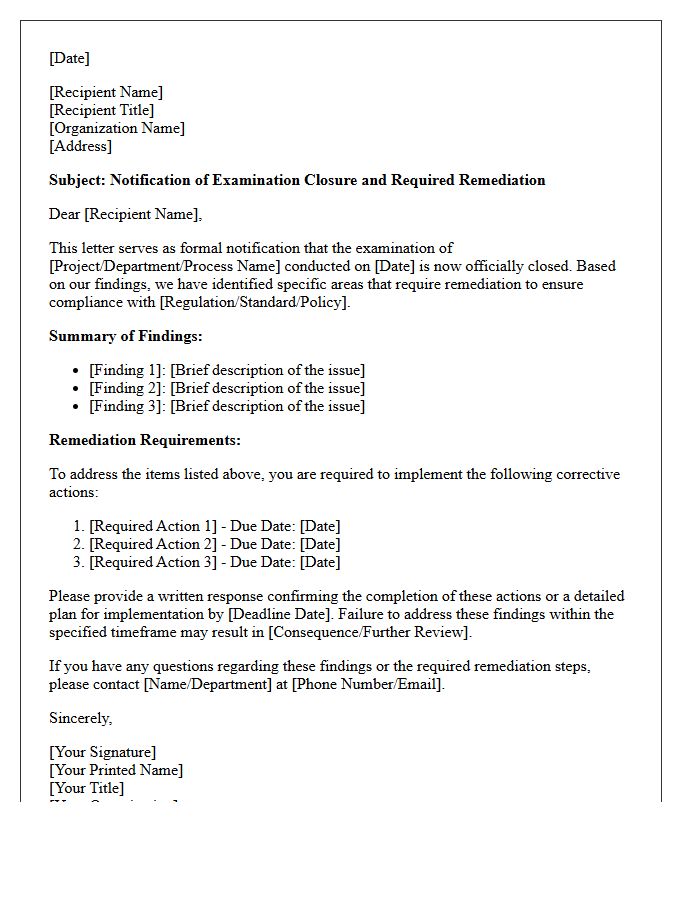
An Examination Closure and Remediation Letter is a formal document issued by regulatory bodies following an audit. It outlines specific deficiencies or non-compliance issues identified during the review. This letter serves as a final directive, requiring the institution to implement corrective actions within a strict timeframe. Understanding the remediation requirements is vital to ensure regulatory compliance and avoid further penalties. Organizations must provide detailed evidence of improvements to successfully resolve the findings and demonstrate that all operational risks have been effectively mitigated for official closure.
What is a Community Reinvestment Act (CRA) Examination Letter?
A CRA Examination Letter is an official notification sent by federal banking regulators-such as the OCC, FDIC, or Federal Reserve-informing a financial institution of an upcoming audit to evaluate how well they meet the credit needs of their entire community, including low- and moderate-income neighborhoods.
What information is typically requested in a CRA Examination Letter?
The letter usually requests data regarding the bank's mortgage, small business, and consumer lending patterns, documentation of community development loans and investments, and evidence of qualified community service activities performed by bank employees.
How much advance notice does a bank receive in a CRA Examination Letter?
Financial institutions typically receive a CRA Examination Letter 30 to 90 days before the onsite or remote review begins, allowing the bank time to organize its Public File and internal data sets for the examiners.
What is the "CRA Public File" mentioned in examination correspondence?
The CRA Public File is a mandatory collection of documents that a bank must maintain and provide upon request, containing the bank's most recent performance evaluation, a list of branches, their hours of operation, and maps of their designated assessment areas.
How does a CRA Examination Letter impact a bank's performance rating?
The letter serves as the formal start of the evaluation process that results in one of four ratings: Outstanding, Satisfactory, Needs to Improve, or Substantial Noncompliance. These ratings are critical for banks seeking regulatory approval for future mergers, acquisitions, or branch expansions.

Comments