
A Foreclosure Payoff Demand Statement is a legal document issued by lenders detailing the exact amount required to satisfy a mortgage debt and halt the foreclosure process. It includes the remaining principal, accrued interest, and legal fees. Understanding this figure is essential for homeowners seeking to reclaim their property title. To simplify your request, below are some ready to use template.
Image cover: Requesting a Foreclosure Payoff Demand Statement: Essential Samples and Templates
Letter Samples List
- Borrower Request for Foreclosure Payoff Demand Letter
- Attorney Drafted Foreclosure Payoff Demand Letter
- Title Company Foreclosure Payoff Request Letter
- Expedited Foreclosure Payoff Demand Letter
- Updated Foreclosure Payoff Demand Letter
- Commercial Loan Foreclosure Payoff Demand Letter
- Residential Mortgage Foreclosure Payoff Demand Letter
- Third-Party Authorization Foreclosure Payoff Letter
- Post-Acceleration Foreclosure Payoff Demand Letter
- Subordinate Lienholder Foreclosure Payoff Demand Letter
- Pre-Foreclosure Payoff Demand Request Letter
- Default Servicing Foreclosure Payoff Demand Letter
Borrower Request for Foreclosure Payoff Demand Letter
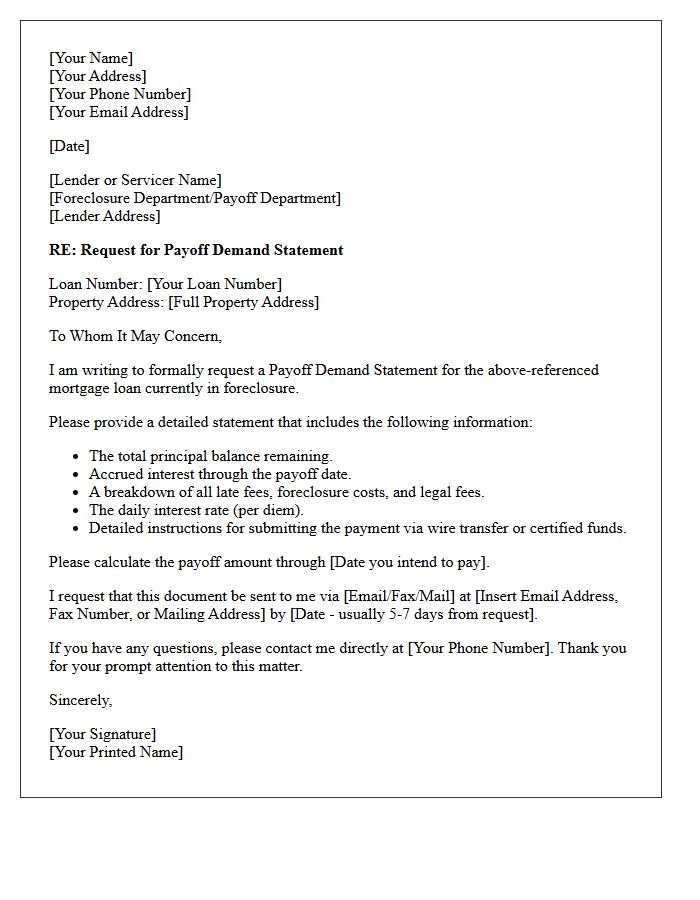
A borrower must submit a formal written request to their lender to obtain a Foreclosure Payoff Demand Letter. This document is essential for debt resolution, as it specifies the exact total required to satisfy the loan, including principal, interest, and legal fees. Timely submission is critical to avoid further penalties or the final sale. Reviewing the reinstatement amount versus the full payoff is vital for financial planning. Always confirm the good-through date to ensure the payment remains valid and successfully halts the foreclosure process before the deadline.
Attorney Drafted Foreclosure Payoff Demand Letter
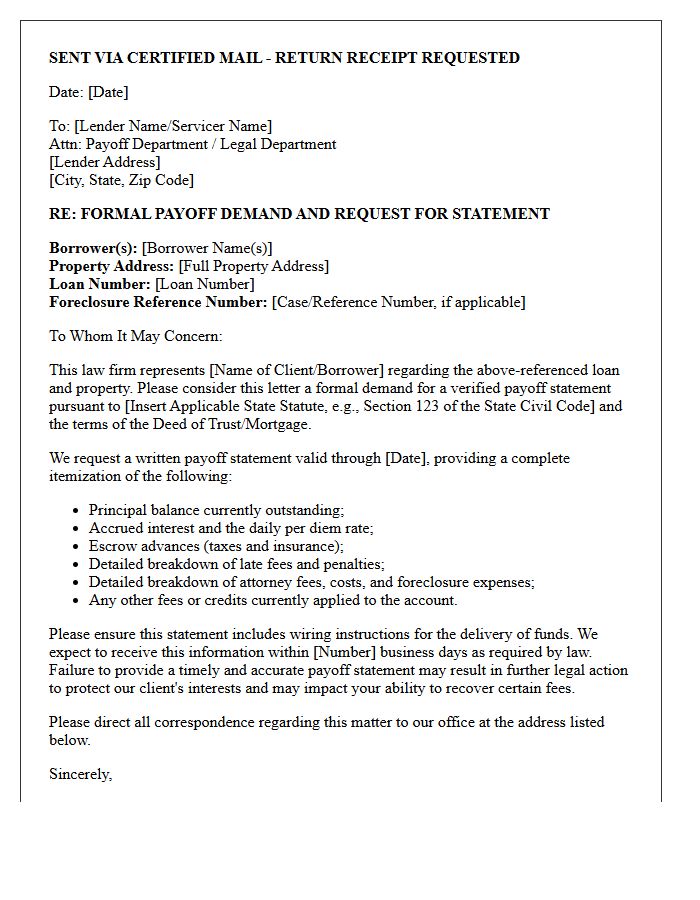
An Attorney Drafted Foreclosure Payoff Demand Letter is a formal legal document calculating the total amount required to fully satisfy a mortgage debt. Unlike standard statements, this letter includes accrued interest, late fees, and legal costs associated with the foreclosure process. It provides a definitive reinstatement or payoff figure with a specific expiration date. Relying on an attorney ensures the calculations are legally accurate and compliant with state regulations, protecting the lender's interests while providing the borrower a final opportunity to resolve the default before a sale occurs.
Title Company Foreclosure Payoff Request Letter
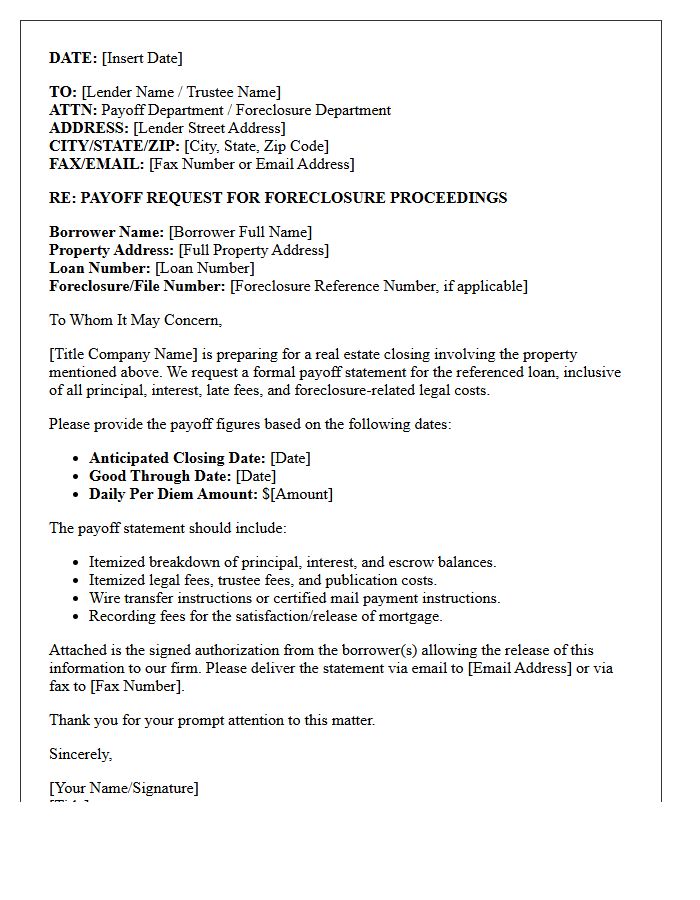
A Title Company Foreclosure Payoff Request Letter is a formal document sent to a mortgage lender to determine the exact outstanding balance required to satisfy a lien. This letter is critical during real estate closings to ensure all debts, interest, and legal fees are paid in full. It prevents delays by providing a clear financial figure for the escrow agent. Accurately requesting this statement protects the buyer from future claims and ensures the seller delivers a clear title, effectively terminating the foreclosure process upon successful disbursement of funds.
Expedited Foreclosure Payoff Demand Letter
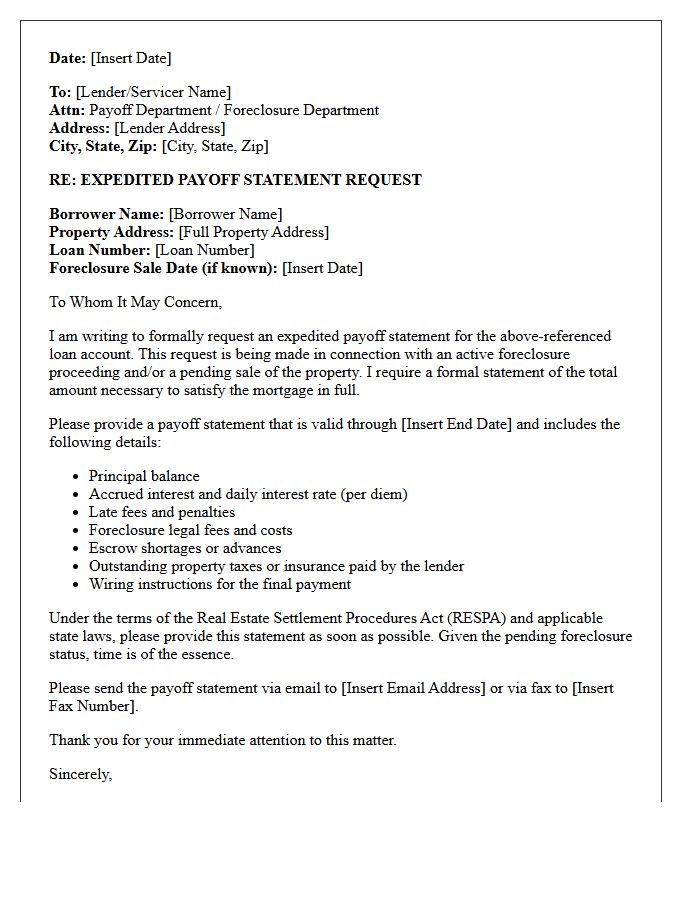
An Expedited Foreclosure Payoff Demand Letter is a formal document reflecting the exact total amount required to fully satisfy a mortgage debt and halt legal proceedings. Under Regulation Z of the Truth in Lending Act, servicers must typically provide this accurate statement within seven business days of a written request. It includes the remaining principal, accrued interest, and specific legal fees. Obtaining this letter is the most critical step for homeowners seeking to reinstate their loan, complete a short sale, or finalize a refinancing to prevent a final home loss.
Updated Foreclosure Payoff Demand Letter
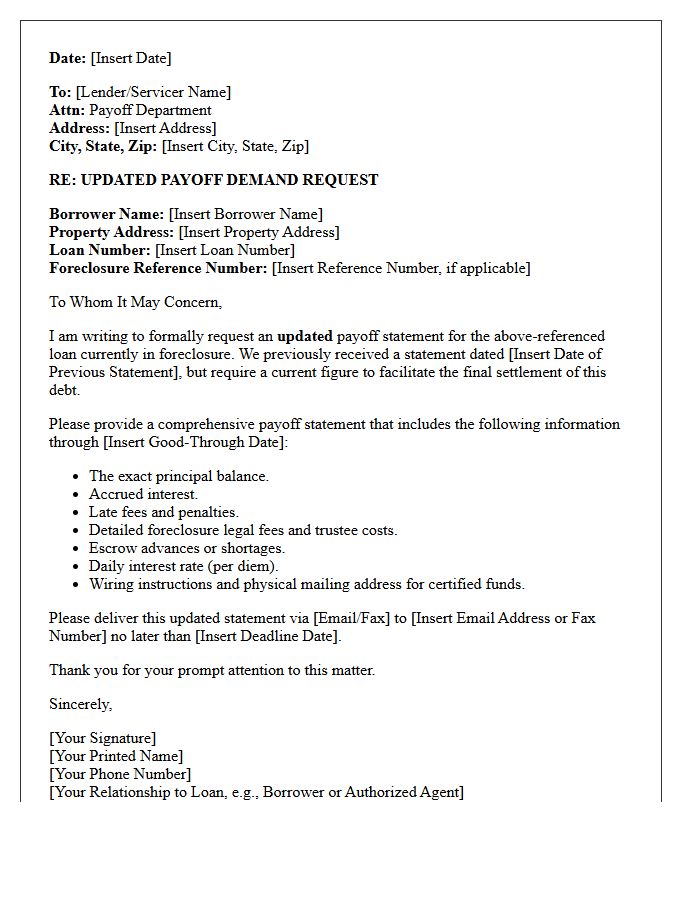
An updated foreclosure payoff demand letter provides the exact total required to fully satisfy a mortgage debt. It reflects the current principal balance, accumulated interest, late fees, and legal costs as of a specific date. This document is essential for homeowners seeking to stop foreclosure through refinancing or property sales. To ensure accuracy, borrowers must request a formal quote from their servicer, as daily interest accruals constantly change the final amount needed to release the lien and clear the title.
Commercial Loan Foreclosure Payoff Demand Letter
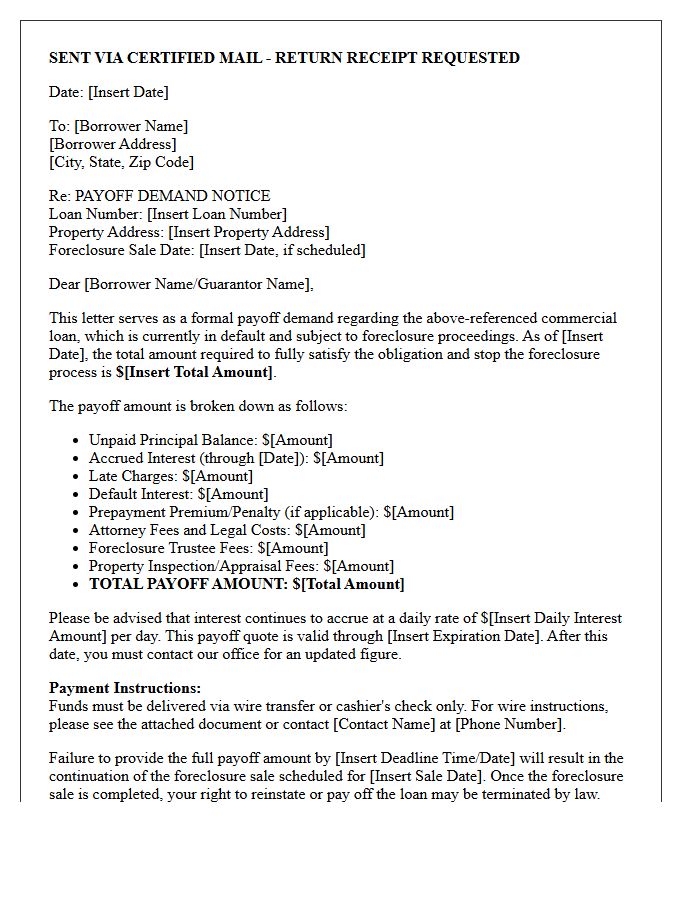
A Commercial Loan Foreclosure Payoff Demand Letter is a critical legal document specifying the exact total debt required to halt legal proceedings. It outlines the principal balance, accrued interest, late fees, and legal costs. For borrowers, obtaining this letter is the essential first step in reinstating a loan or finalizing a property sale to avoid loss. Accuracy is vital, as any discrepancy can delay the closing process, leading to a completed foreclosure. Always verify the expiration date of the quoted figures to ensure a timely and valid payoff.
Residential Mortgage Foreclosure Payoff Demand Letter
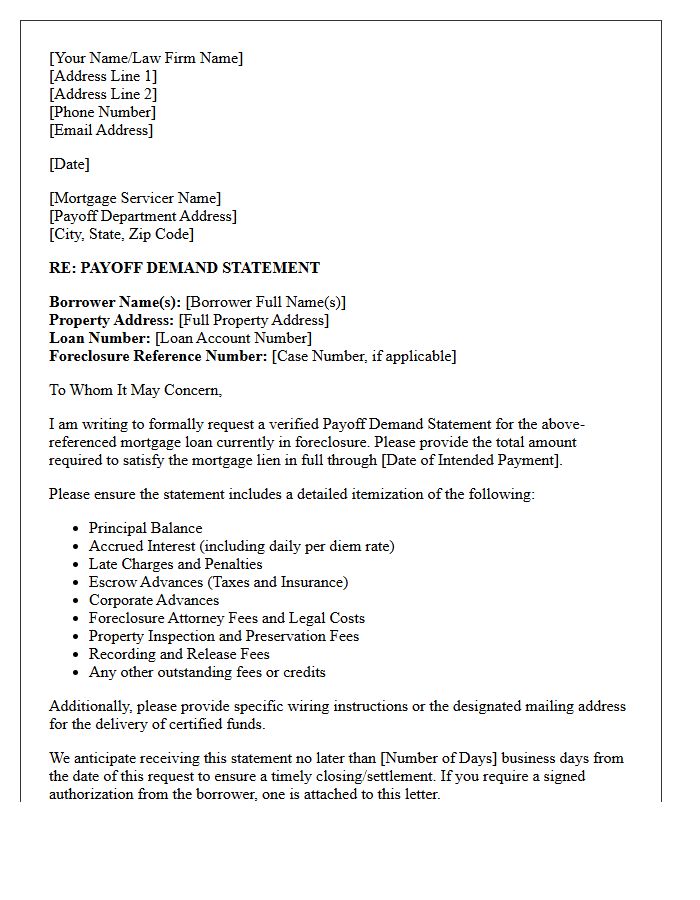
A Residential Mortgage Foreclosure Payoff Demand Letter is a formal document detailing the exact total amount required to fully satisfy a home loan and halt legal proceedings. It includes the remaining principal, accrued interest, late fees, and legal costs. This statement is time-sensitive, featuring a specific expiration date and daily interest charges. For homeowners, obtaining this letter is a critical step in reinstating the mortgage or completing a property sale to prevent the loss of their residence through a final court-ordered foreclosure sale.
Third-Party Authorization Foreclosure Payoff Letter
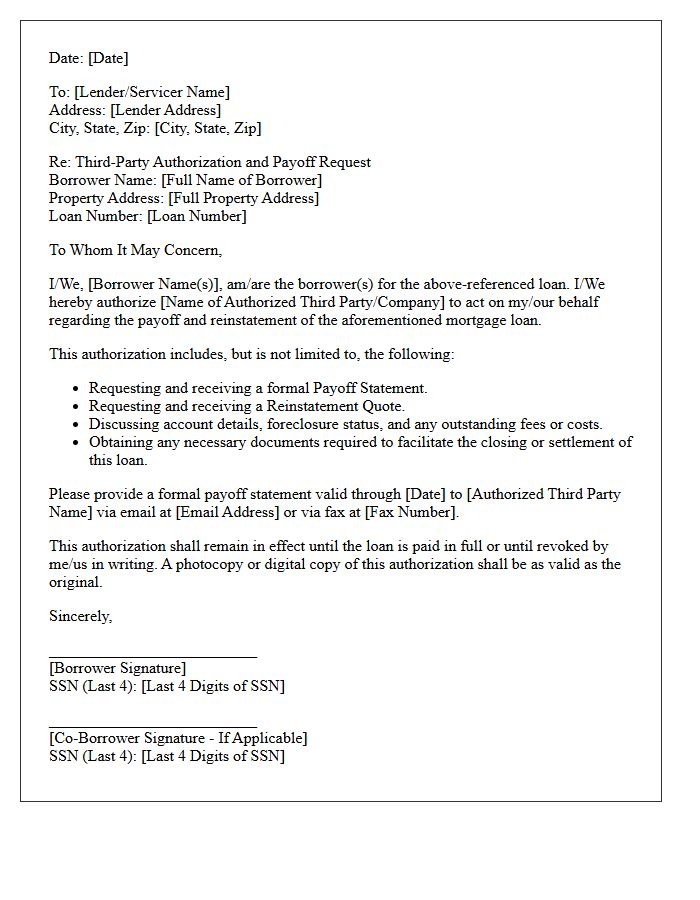
A third-party authorization allows a designated representative to request a foreclosure payoff letter from a mortgage servicer. This document is essential for debt settlement as it provides the exact balance required to satisfy the loan and stop legal proceedings. To ensure security, the borrower must provide a signed release granting the lender permission to disclose sensitive financial information. Obtaining this letter early is a critical step in coordinating a short sale or refinancing to prevent the loss of property through a trustee sale or judicial foreclosure process.
Post-Acceleration Foreclosure Payoff Demand Letter
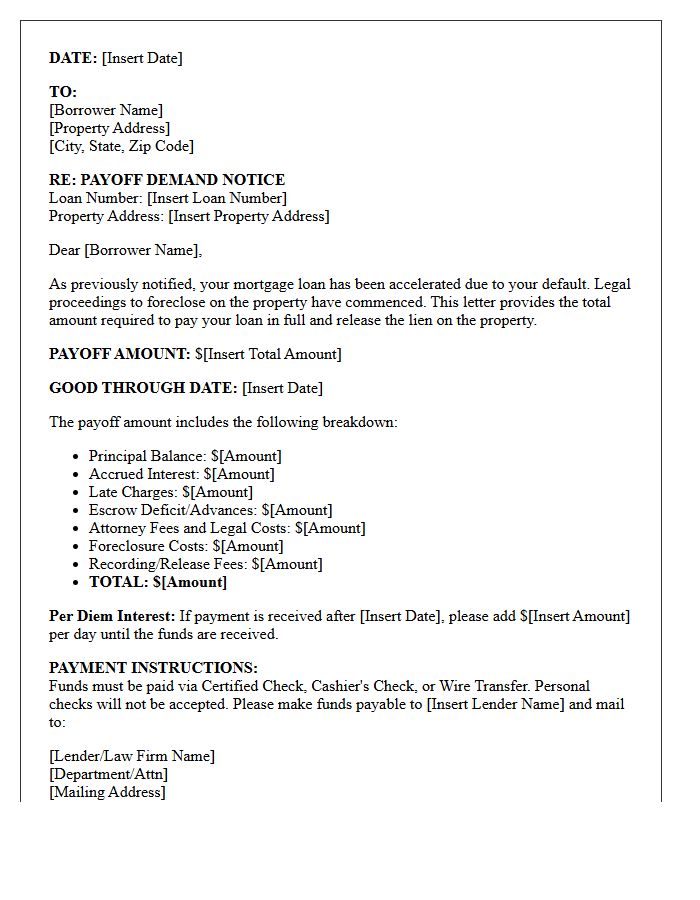
A Post-Acceleration Foreclosure Payoff Demand Letter is a legal notification issued after a lender has called the entire loan balance due. This document provides the exact total amount required to fully satisfy the debt and stop the foreclosure process. It includes the principal balance, accrued interest, and legal fees. Borrowers must review it carefully for accuracy and strict deadlines to prevent the final sale of the property. Understanding this letter is crucial for homeowners seeking to clear their financial obligations and retain ownership through a full redemption.
Subordinate Lienholder Foreclosure Payoff Demand Letter
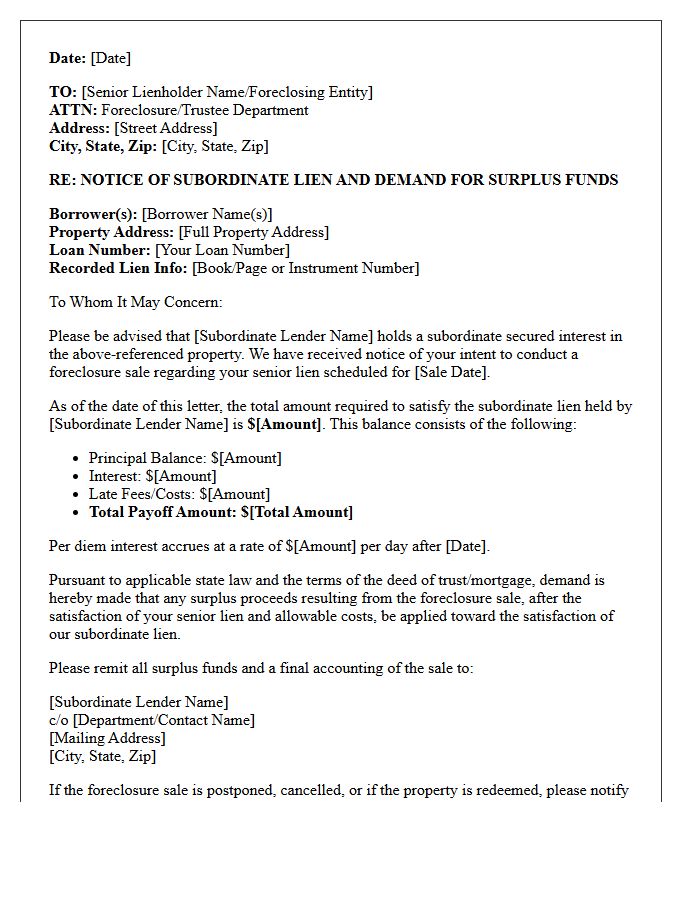
A Subordinate Lienholder Foreclosure Payoff Demand Letter is a formal document issued by a junior lender, such as a second mortgage holder, during a default. It specifies the exact total debt required to satisfy the lien and prevent foreclosure. This letter details the principal balance, accumulated interest, and legal fees. For buyers or senior lenders, obtaining this written statement is essential to ensure all junior encumbrances are cleared, providing a clean title and preventing the subordinate creditor from pursuing future legal claims against the property.
Pre-Foreclosure Payoff Demand Request Letter
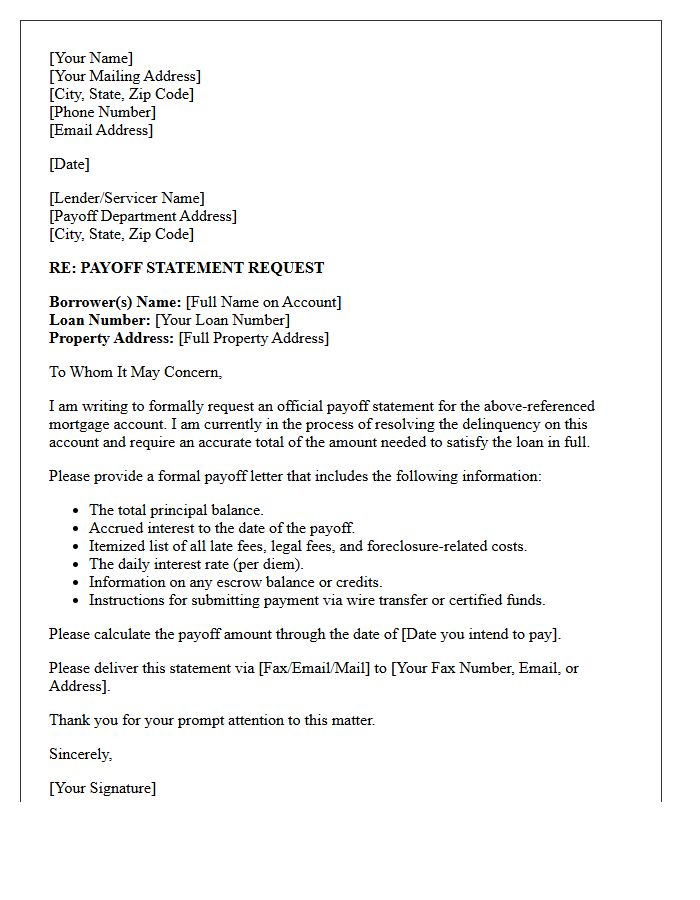
A Pre-Foreclosure Payoff Demand Request Letter is a formal document sent to a mortgage servicer to obtain the exact total amount required to fully satisfy a debt. This letter is crucial for homeowners seeking to stop legal action through reinstatement or a property sale. It must include the specific good-through date to ensure all per diem interest, late fees, and legal costs are covered. Obtaining this certified statement provides legal clarity and prevents foreclosure by establishing a definitive path to clear the title and settle the balance.
Default Servicing Foreclosure Payoff Demand Letter
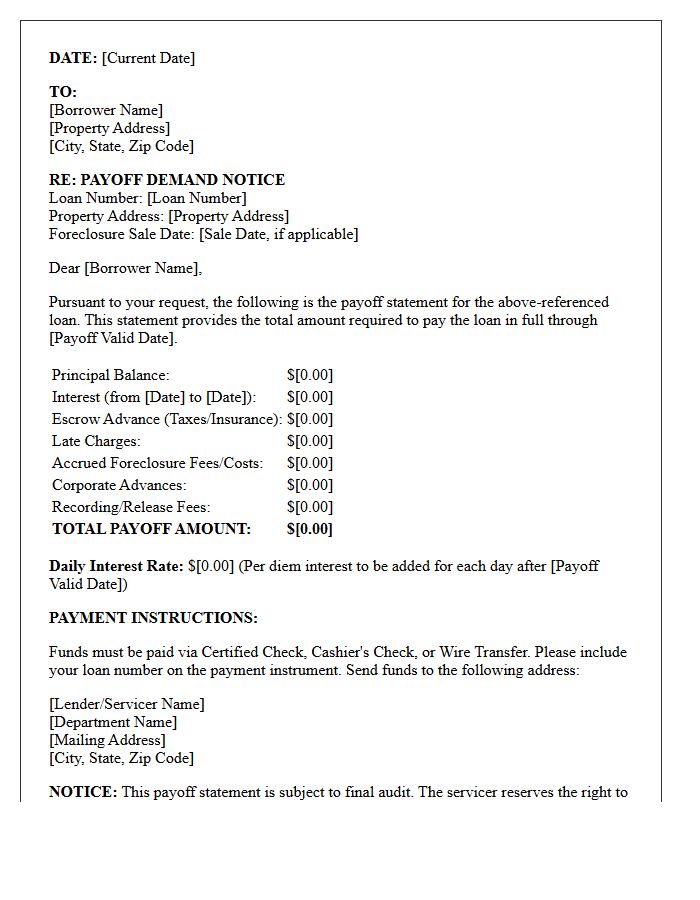
A Foreclosure Payoff Demand Letter is a formal document issued by a mortgage servicer detailing the exact amount required to fully satisfy a loan debt. It is crucial for borrowers seeking to stop legal action through reinstatement or total payoff. This letter includes the principal balance, accrued interest, and legal fees. Accuracy is vital, as these figures have a specific expiration date. Understanding this statement allows homeowners to evaluate loss mitigation options or finalize a property sale to prevent the final loss of their home to the lender.
What is a foreclosure payoff demand statement?
A foreclosure payoff demand statement is an official document issued by a mortgage lender that outlines the exact total amount required to fully satisfy a loan and stop the foreclosure process. It includes the remaining principal balance, accrued interest, late fees, legal costs, and daily interest charges (per diem) up to a specific expiration date.
How do I request a payoff demand statement during foreclosure?
To obtain a payoff demand statement, you must submit a formal request to your mortgage servicer's loss mitigation or payoff department. Most lenders require this request in writing via a signed authorization form, and they are legally obligated to provide the statement within a specific timeframe, typically 7 to 10 business days.
What is the difference between a reinstatement amount and a payoff amount?
A reinstatement amount is the total sum needed to bring a delinquent loan current by paying only the past-due payments and fees. In contrast, a payoff amount is the total sum required to pay off the entire mortgage balance in full, which completely terminates the debt and the lender's lien on the property.
Can a payoff demand statement expire?
Yes, all payoff demand statements include a "good through" date. Because interest accrues daily (the per diem), the total amount owed changes every day. If the full payment is not received and processed by the expiration date listed on the statement, a new updated payoff demand must be requested.
Are legal and trustee fees included in a foreclosure payoff statement?
Yes, if a property has entered the formal foreclosure process, the payoff demand statement will include all "corporate advances." These consist of attorney fees, trustee charges, property inspection fees, and any other costs the lender incurred while initiating legal action to recover the debt.

Comments