
Responding to a subpoena for financial records requires precision and strict legal compliance to protect sensitive data. This inquiry response letter acknowledges the request while outlining the scope of documentation provided or identifying legal objections. Proper documentation ensures you meet judicial obligations without compromising privacy rights. To assist your process, below are some ready to use templates.
Image cover: Professional Response Templates for Financial Record Subpoenas
Letter Samples List
- Subpoena Acknowledgment and Processing Letter
- Customer Notification of Financial Subpoena Letter
- Subpoena Production Extension Request Letter
- Clarification of Subpoena Scope Inquiry Letter
- Objection to Subpoena Scope Response Letter
- Subpoena Processing Fee Assessment Letter
- Partial Financial Records Production Letter
- Complete Financial Records Production Letter
- Certificate of Authenticity Custodian Letter
- No Matching Financial Records Found Letter
- Protective Order Request for Confidential Records Letter
- Final Subpoena Compliance Certification Letter
Subpoena Acknowledgment and Processing Letter
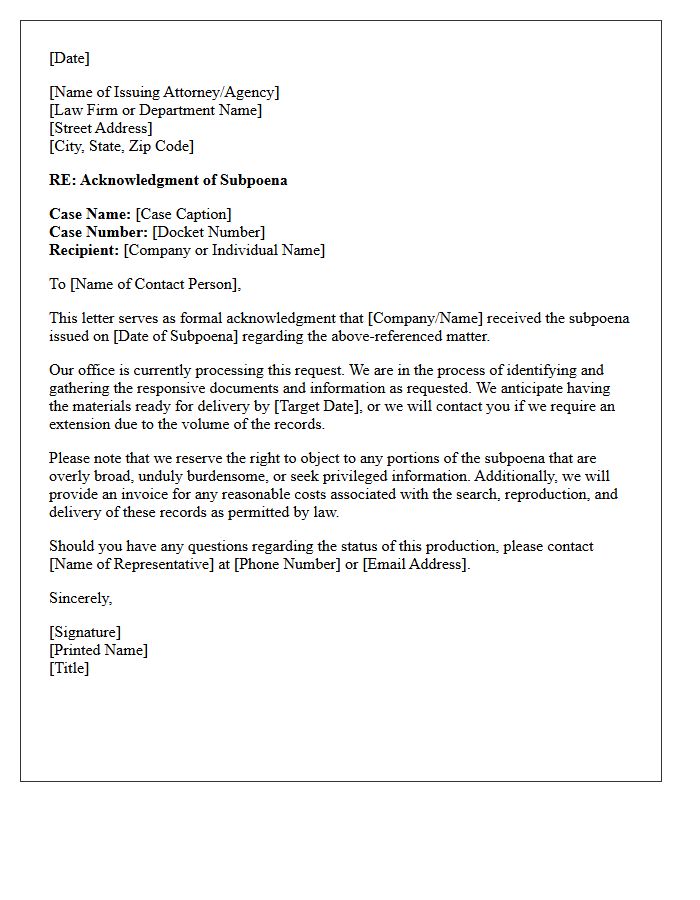
A Subpoena Acknowledgment and Processing Letter is a formal document confirming that a legal entity has received a court order for testimony or evidence. It serves as official verification that the recipient is aware of their legal obligation to comply. This letter typically outlines the next steps, including the timeline for document production and potential fees for administrative handling. Timely acknowledgment is critical to avoid contempt of court charges, ensuring that all parties are aligned regarding the scope of the request and the protection of sensitive data.
Customer Notification of Financial Subpoena Letter
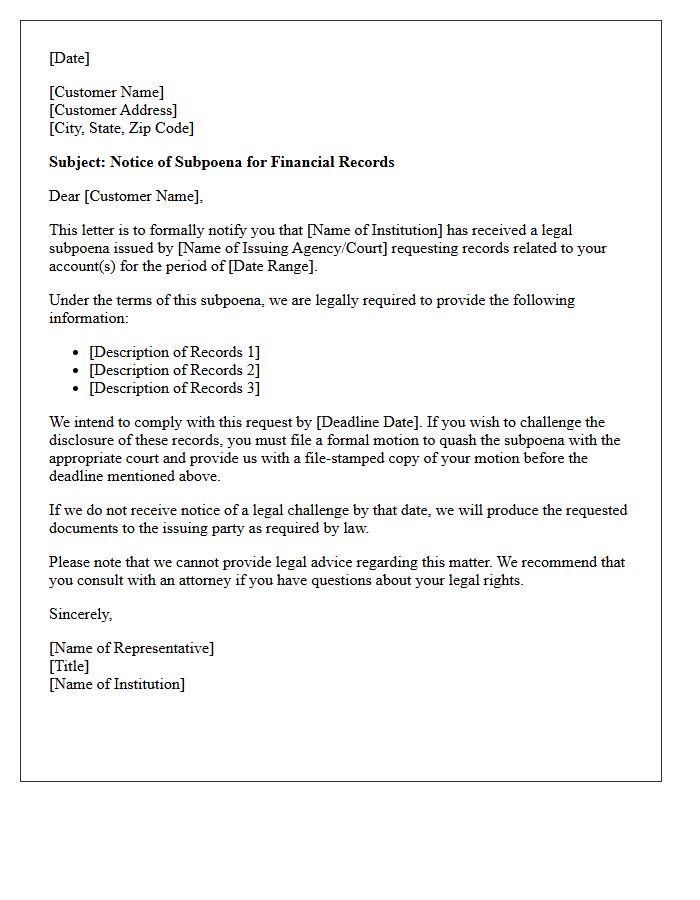
A Customer Notification of Financial Subpoena Letter is a formal notice sent by a bank informing you that a government agency has issued a legal mandate to access your private banking records. Under the Right to Financial Privacy Act, institutions are generally required to notify you before releasing sensitive data. This notification is critical because it grants you a specific legal window to file a motion to quash or challenge the disclosure in court. Reviewing the deadlines immediately is essential to protect your financial privacy rights from unauthorized government oversight.
Subpoena Production Extension Request Letter
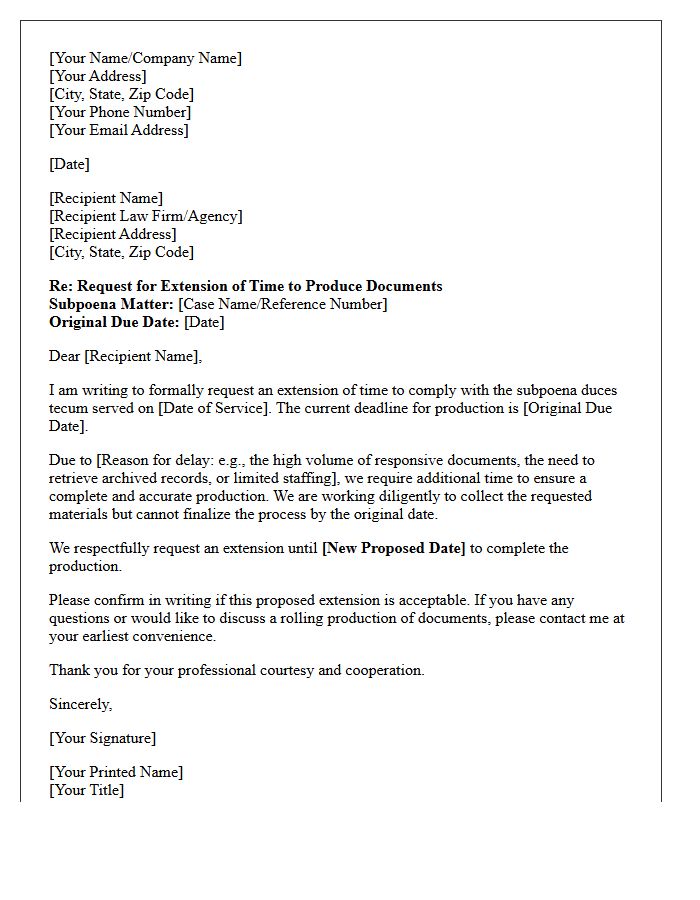
A Subpoena Production Extension Request Letter is a formal written proposal sent to the issuing party or court seeking additional time to gather requested documents. It is crucial to demonstrate good faith by explaining specific reasons for the delay, such as the volume of records or technical difficulties. Submitting this request before the original deadline helps avoid legal sanctions or contempt charges. Always include a proposed new date and document your ongoing efforts to ensure the compliance process remains transparent and professional during litigation.
Clarification of Subpoena Scope Inquiry Letter
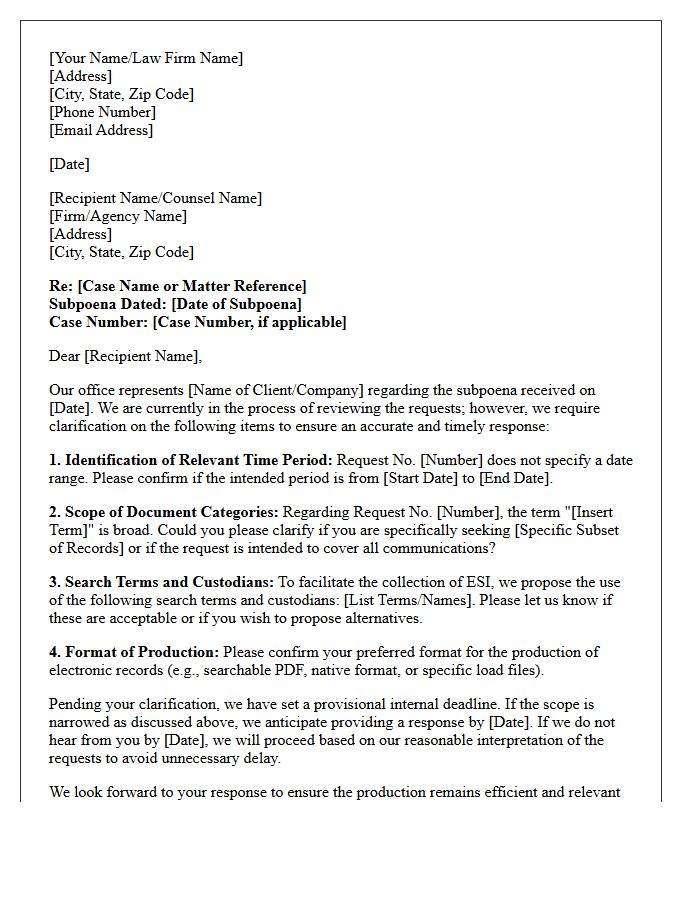
A Clarification of Subpoena Scope Inquiry Letter is a formal legal document used to limit overly broad requests for information. It seeks to define specific parameters regarding timeframes, subjects, and data types to ensure compliance while protecting privileged or irrelevant material. By initiating this dialogue, the recipient can reduce administrative burdens and avoid legal sanctions for non-compliance. This proactive communication helps narrow the discovery process, ensuring that only pertinent evidence is produced, thereby saving time and legal costs for all parties involved in the litigation or investigation.
Objection to Subpoena Scope Response Letter
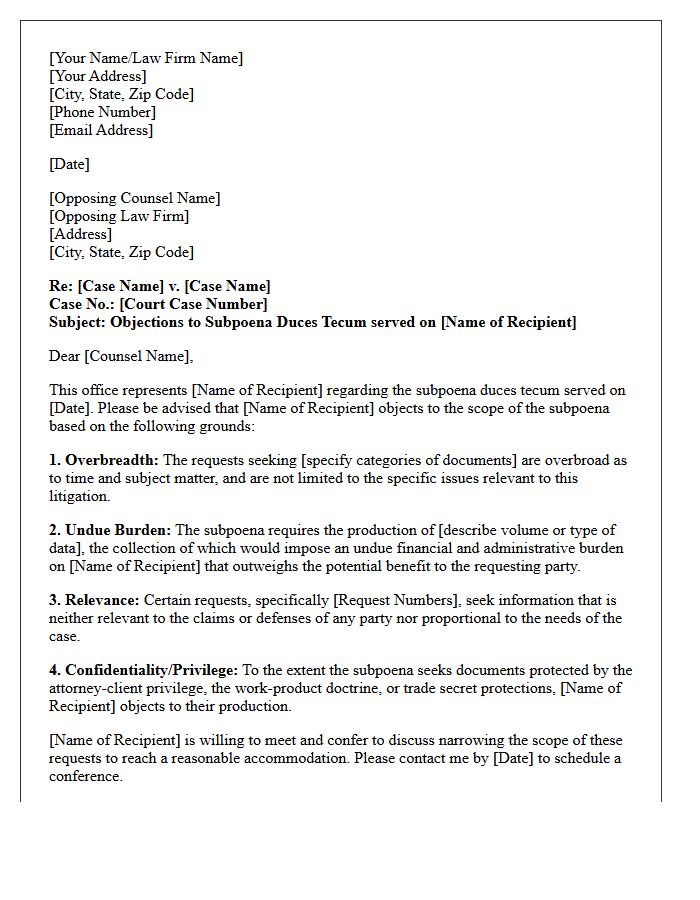
When drafting an Objection to Subpoena Scope Response Letter, you must clearly identify which requests are unduly burdensome or overbroad. Asserting specific legal privileges, such as attorney-client confidentiality, is essential to protect sensitive information. A well-structured response limits the production scope to relevant evidence only, preventing "fishing expeditions" by the opposing party. Timely service of these objections is critical to avoid waiving your right to challenge the request in court. Always ensure your legal justifications are precise to maintain a strong defensive position during discovery.
Subpoena Processing Fee Assessment Letter
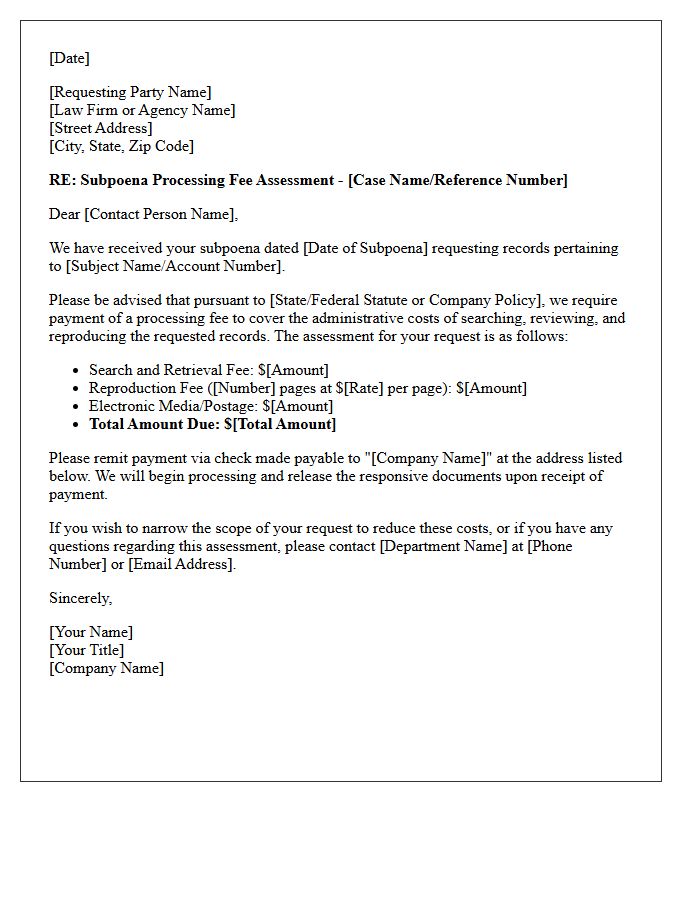
A Subpoena Processing Fee Assessment Letter is a formal notice issued by an organization, often a bank or service provider, to recover administrative costs. This document informs the recipient that a non-refundable fee is required to offset the labor and resources used to comply with a legal request for records. It typically outlines the total amount due, payment instructions, and the specific legal authority allowing for cost reimbursement. Timely payment is usually necessary before the requested documentation is released to the court or requesting party.
Partial Financial Records Production Letter
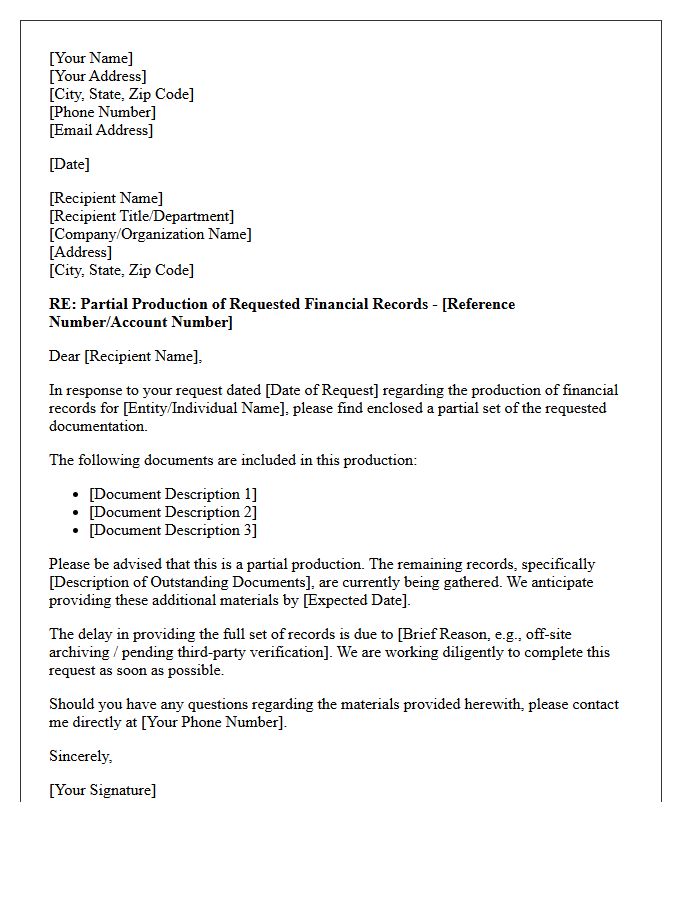
A Partial Financial Records Production Letter is a formal notification issued when a party can only fulfill a specific portion of a financial disclosure request. This document is critical in legal discovery or audits, as it transparently lists which documents are being provided and identifies those still missing or withheld. It helps maintain procedural compliance while offering explanations for delays, such as record retrieval issues or confidentiality concerns. Providing this letter demonstrates good faith, prevents immediate sanctions, and establishes a clear timeline for delivering the remaining financial data required for the case.
Complete Financial Records Production Letter
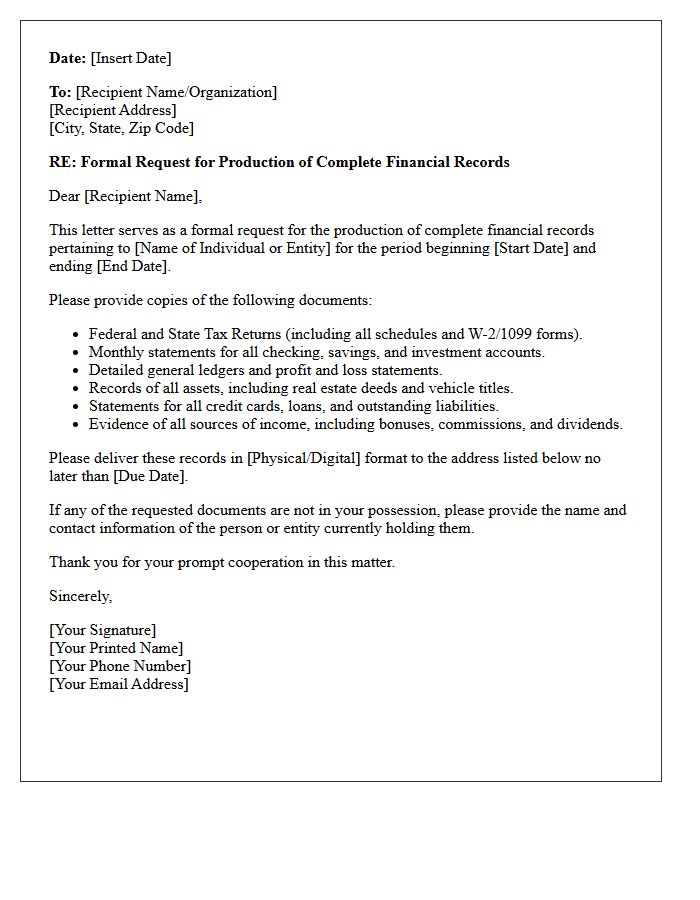
A Complete Financial Records Production Letter is a formal request used in legal and business proceedings to obtain comprehensive financial documentation. It ensures transparency by requiring the disclosure of tax returns, bank statements, and audited financial statements. This document is essential for verifying assets, income accuracy, and fiscal history during litigation, audits, or mergers. Providing a clear, detailed list prevents delays and ensures all parties have a verified financial baseline for informed decision-making or legal compliance.
Certificate of Authenticity Custodian Letter
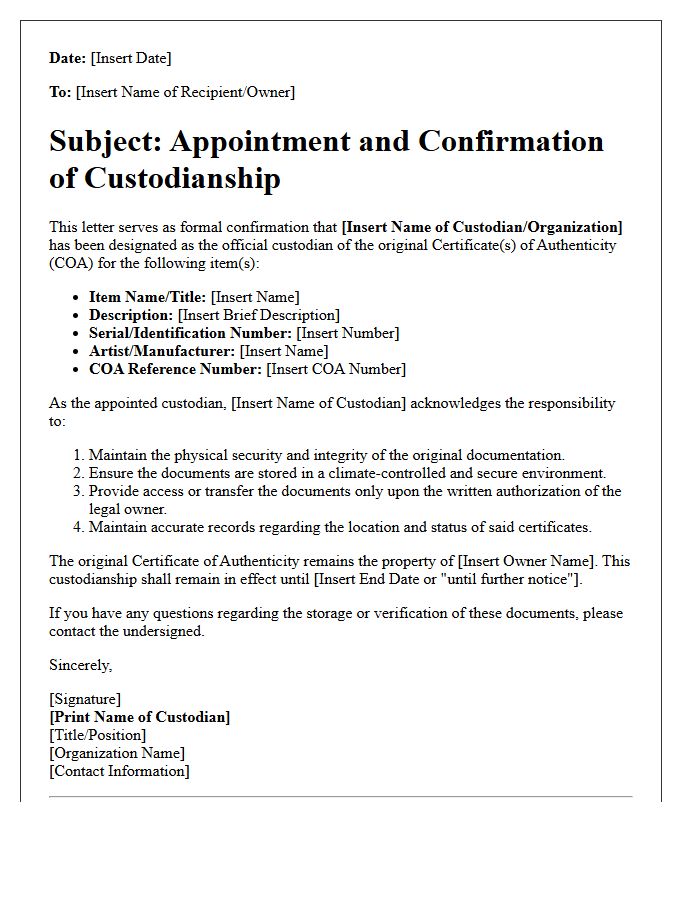
A Certificate of Authenticity Custodian Letter is a legal document confirming that a custodian holds the original provenance records for a valuable asset. It serves as verified proof of ownership and legitimacy when the physical certificate is stored securely elsewhere. This letter is essential for high-value transactions in art, collectibles, or historical documents, ensuring transparency and protecting against fraud. By establishing a clear chain of custody, it maintains the asset's market value and provides legal assurance to buyers that the authenticity has been professionally validated and preserved.
No Matching Financial Records Found Letter
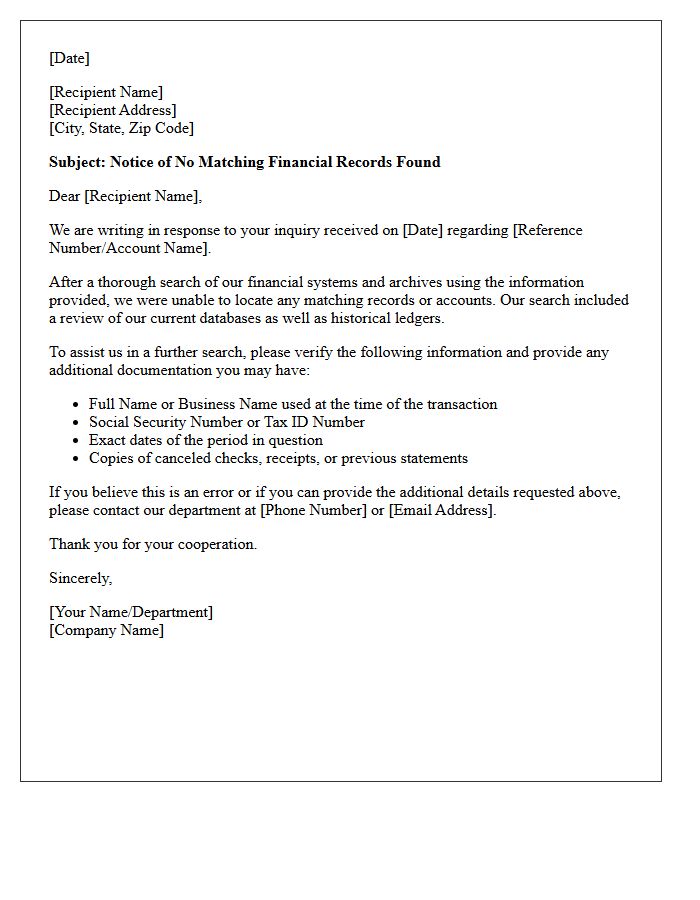
A No Matching Financial Records Found Letter is a formal notice issued when a financial institution cannot locate accounts linked to your identity. This typically occurs during due diligence or background checks. It may indicate an incorrect identification number, a name mismatch, or that the records have been purged due to inactivity. Receiving this requires immediate verification of your personal details to ensure accuracy and prevent potential reporting errors. Always cross-reference your Social Security number and previous addresses to resolve discrepancies and maintain clear financial documentation.
Protective Order Request for Confidential Records Letter
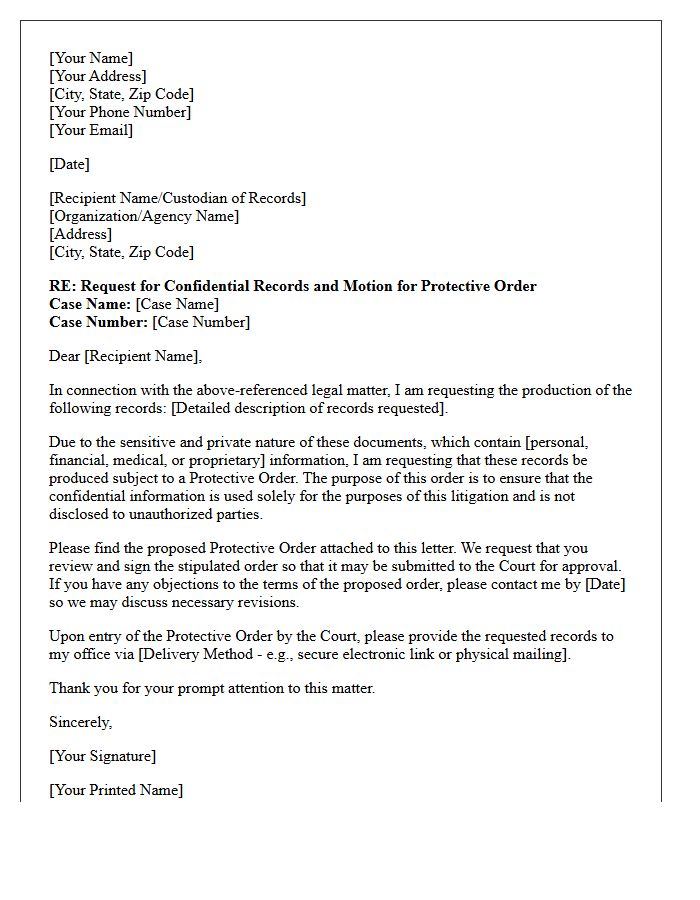
A Protective Order Request for Confidential Records Letter is a formal legal document used to safeguard sensitive information during litigation. It asks the court to limit access to private data, such as trade secrets or personal financial records, ensuring they are not disclosed to the public or unauthorized parties. By establishing strict confidentiality protocols, this letter prevents the misuse of shared evidence while maintaining transparency between legal teams. Properly drafting this request is essential for protecting proprietary interests and maintaining privacy throughout the discovery process.
Final Subpoena Compliance Certification Letter
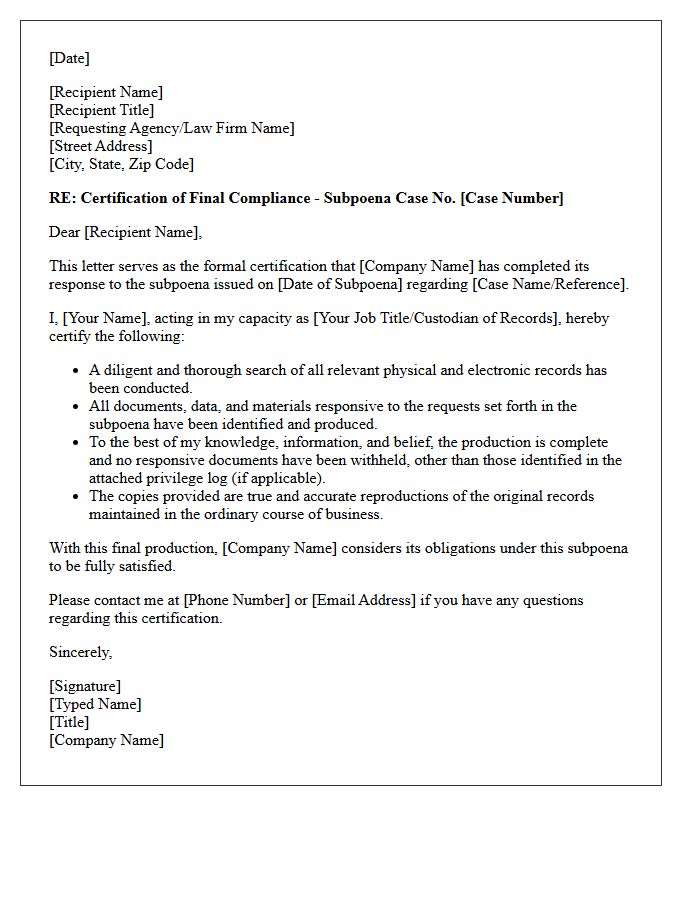
A Final Subpoena Compliance Certification Letter is a formal legal document confirming that a party has fully met all obligations specified in a legal demand. This sworn statement verifies that a thorough search for responsive documents was conducted and that no relevant materials were withheld or destroyed. It serves as legal proof of completion, protecting the producing party from potential contempt charges or sanctions. Ensuring accuracy in this certification is critical, as it signifies the end of the discovery process and validates the integrity of the data provided to the court.
How should I respond to a subpoena for financial records?
You should respond by formally acknowledging receipt of the subpoena in writing, stating whether you will comply, object to specific requests, or require additional time to produce the documents. Ensure your response is sent to the issuing party or court by the specified deadline to avoid legal penalties.
Can I object to a subpoena for my personal financial records?
Yes, you can object if the request is overbroad, irrelevant to the case, seeks privileged information, or poses an undue burden. Your inquiry response letter should clearly outline the legal grounds for each objection while specifying which records you are withholding.
What should be included in a financial records subpoena response letter?
The letter should include the case caption, the subpoena reference number, a detailed list of the documents being provided, a list of any withheld documents based on objections, and a statement regarding the confidentiality of the financial data being disclosed.
Is there a deadline to respond to a subpoena for financial inquiry?
The deadline is typically stated on the face of the subpoena, often 14 to 30 days from the date of service. If you cannot meet the deadline, you must submit a written request for an extension or file a motion to quash before the original due date expires.
What happens if I ignore a subpoena for financial documents?
Ignoring a subpoena can result in a motion to compel, being held in contempt of court, fines, or potential arrest. Even if you believe the subpoena is invalid, you must respond with a formal inquiry letter or a legal objection to protect your rights.

Comments