
A Demand for Cure of Covenant Breach is a formal notice sent when a party fails to meet specific contractual obligations. This document identifies the violation and provides a strictly defined timeframe for rectification to avoid legal consequences or lease termination. Protecting your rights starts with clear communication. To help you draft a professional notice, below are some ready to use templates.
Image cover: Legal Notice Templates for Breach of Covenant and Demands for Cure
Letter Samples List
- Sender Banking Institution Letterhead Details
- Date of the Official Demand Letter
- Borrower and Guarantor Contact Information
- Subject Line Identifying the Covenant Breach
- Reference to the Specific Commercial Loan Agreement
- Detailed Explanation of the Financial Covenant Violation
- Formal Demand for Immediate Covenant Cure
- Specification of the Allowed Cure Period Deadline
- Consequences of Failure to Cure the Breach
- Reservation of All Banking Institution Rights
- Contact Information for the Bank Relationship Manager
- Authorized Banking Officer Signature Block
Sender Banking Institution Letterhead Details
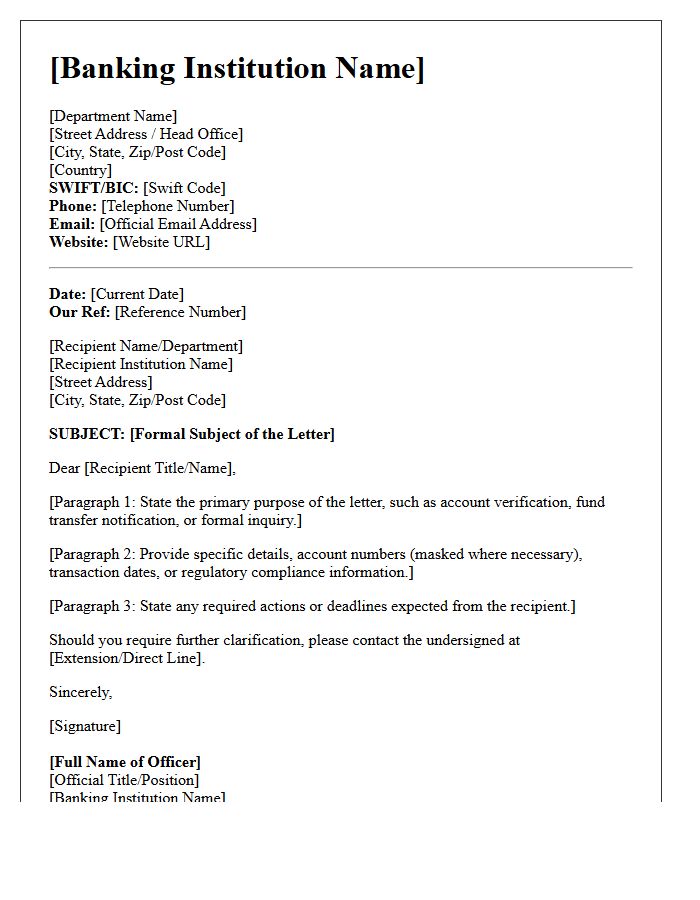
A sender banking institution letterhead must contain official identification details to ensure legal validity. Key elements include the bank's registered name, logo, and corporate address. It should also feature contact information like phone numbers and web domains. For regulatory compliance, including the swift code or routing number is essential for international verification. These details confirm the authenticity of the document, protecting against fraud while facilitating secure financial communication between institutions and clients. Always verify that the letterhead matches the bank's registered regulatory credentials before processing sensitive transactions.
Date of the Official Demand Letter
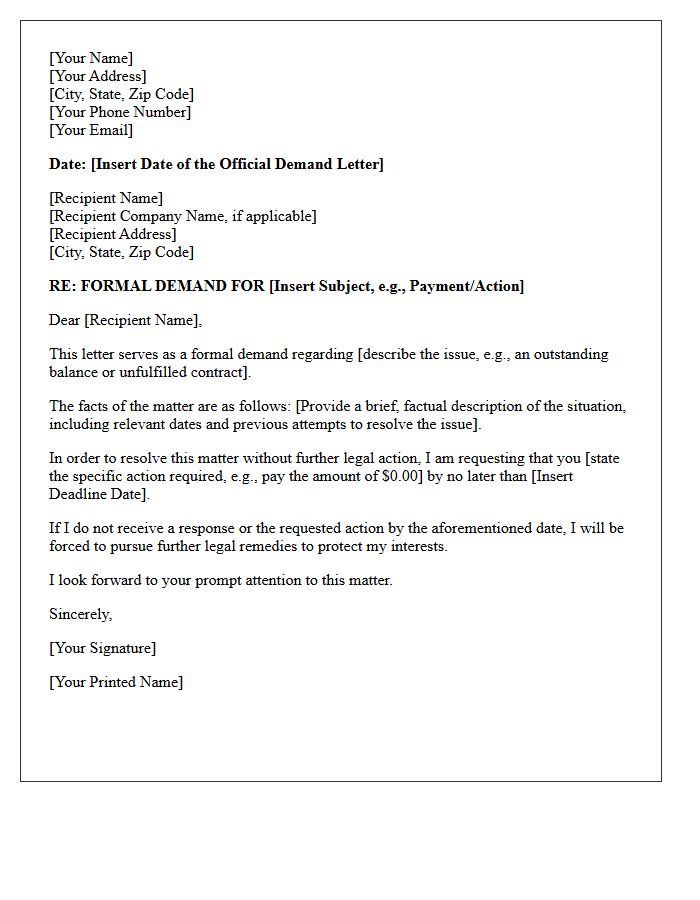
The Date of the Official Demand Letter serves as the critical legal baseline for a claim. It establishes a formal timeline for a response and determines the calculation of potential prejudgment interest. This specific date provides verifiable proof of when notice was given, often functioning as a statute of limitations marker or a prerequisite for filing a lawsuit. Ensuring this date is accurate and documented is essential for maintaining a valid legal evidentiary trail during settlement negotiations or litigation proceedings.
Borrower and Guarantor Contact Information
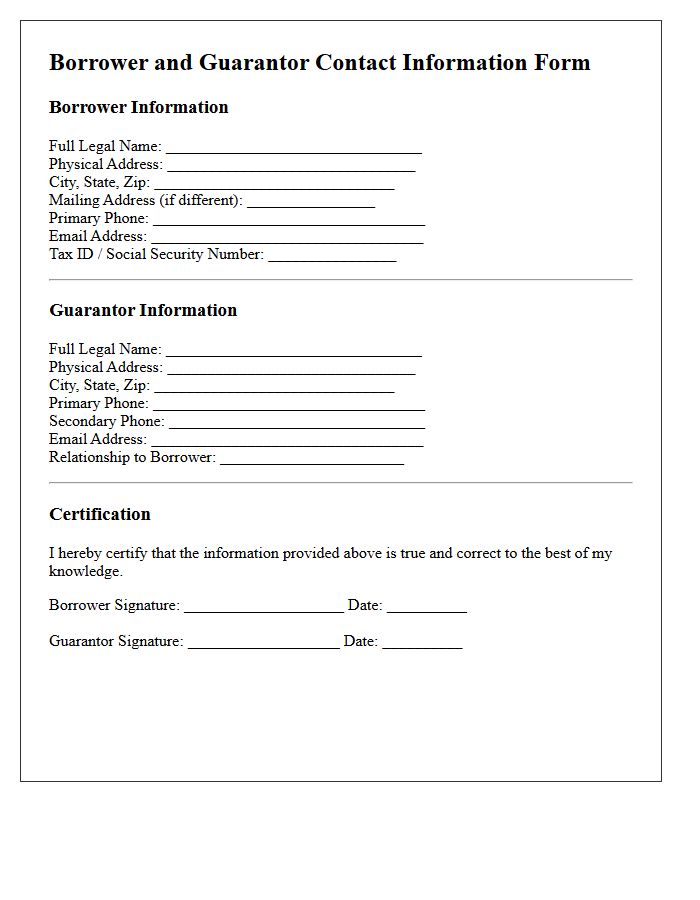
Maintaining accurate Borrower and Guarantor Contact Information is vital for legal compliance and effective communication. Lenders require updated addresses, phone numbers, and emails to deliver disclosures, payment notices, and formal demands. For a guarantor, providing reachable data is critical because they share secondary liability for the debt. Ensuring this information remains current prevents default triggers and facilitates smooth loan servicing. Both parties must promptly notify the creditor of any changes to avoid missing urgent legal notifications regarding their financial obligations and credit standing.
Subject Line Identifying the Covenant Breach
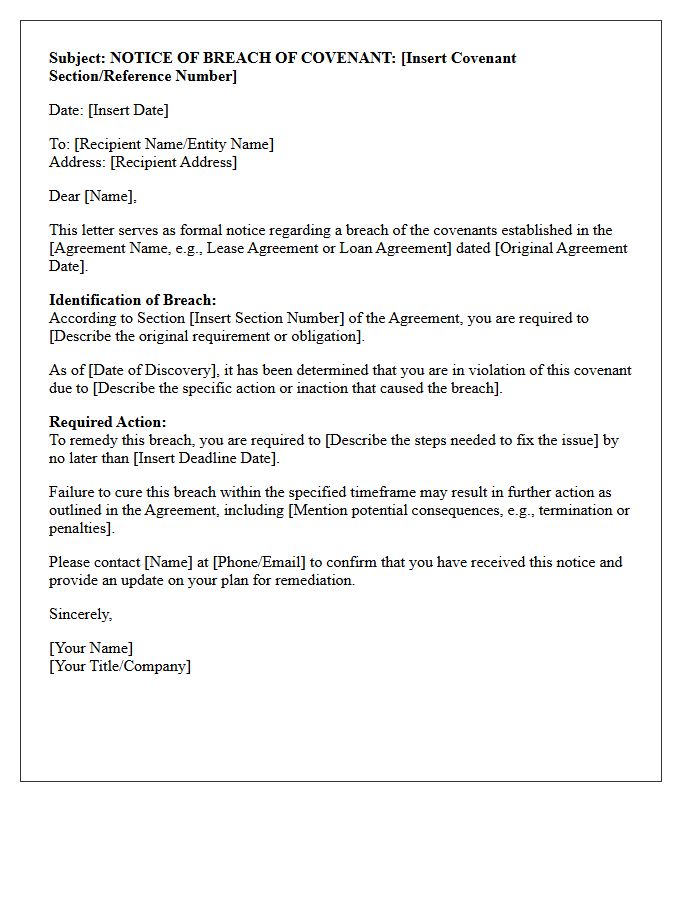
When drafting a Subject Line Identifying the Covenant Breach, clarity is paramount to ensure immediate legal notice. The text must explicitly reference the specific loan agreement or contract section being violated. Using direct language helps avoid ambiguity in formal default notices, ensuring the recipient understands the severity of the non-compliance. Precise identification facilitates faster remediation and protects the lender's rights in potential litigation. Always include the unique deal identifier or account number to provide necessary context for all stakeholders involved in the compliance process.
Reference to the Specific Commercial Loan Agreement
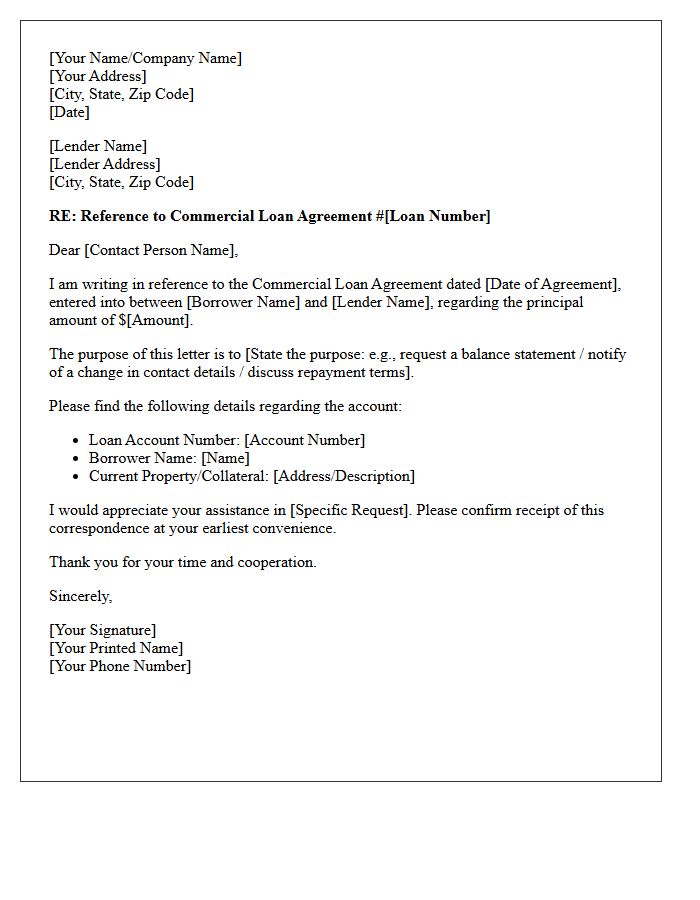
A Specific Commercial Loan Agreement is a legally binding contract detailing the precise terms of a one-time credit facility. Unlike revolving lines, this document outlines a fixed loan amount, specific repayment schedules, interest rates, and defined collateral requirements. It is crucial to review all restrictive covenants and default triggers to ensure compliance. Understanding these unique obligations protects the borrower's assets and ensures the lender's security interest is properly maintained throughout the term of the financing arrangement.
Detailed Explanation of the Financial Covenant Violation
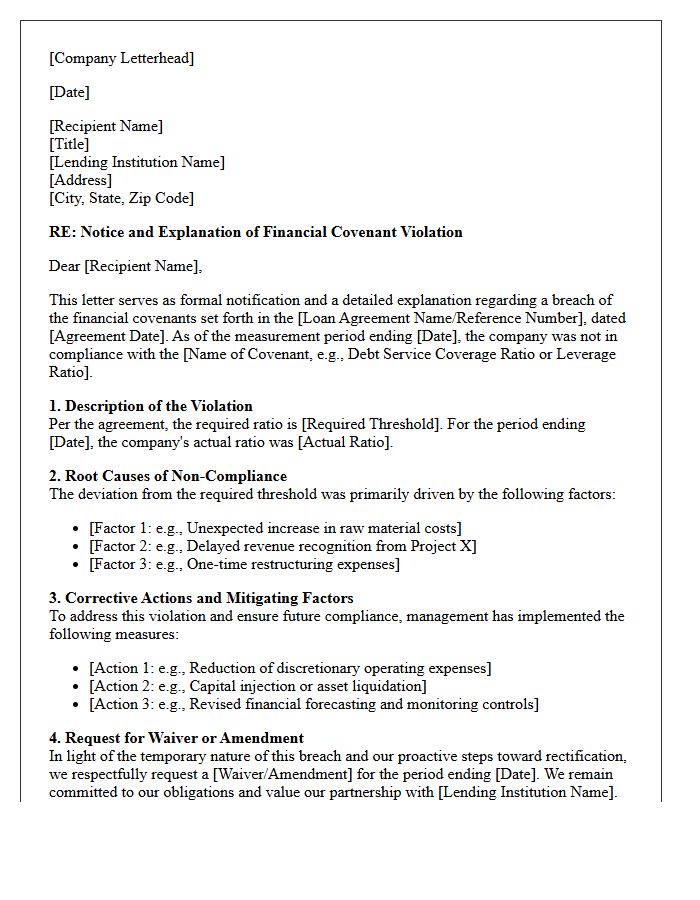
A financial covenant violation occurs when a borrower fails to maintain specific performance ratios required by a loan agreement. These legal benchmarks act as early warning signals for lenders regarding a company's fiscal health. A common breach involves the debt-to-equity ratio or interest coverage limits. When a violation happens, it triggers a technical default, potentially allowing the lender to demand immediate repayment, increase interest rates, or seize collateral. Proactive communication and seeking a waiver are essential strategies for businesses to maintain credit stability and avoid severe penalties.
Formal Demand for Immediate Covenant Cure
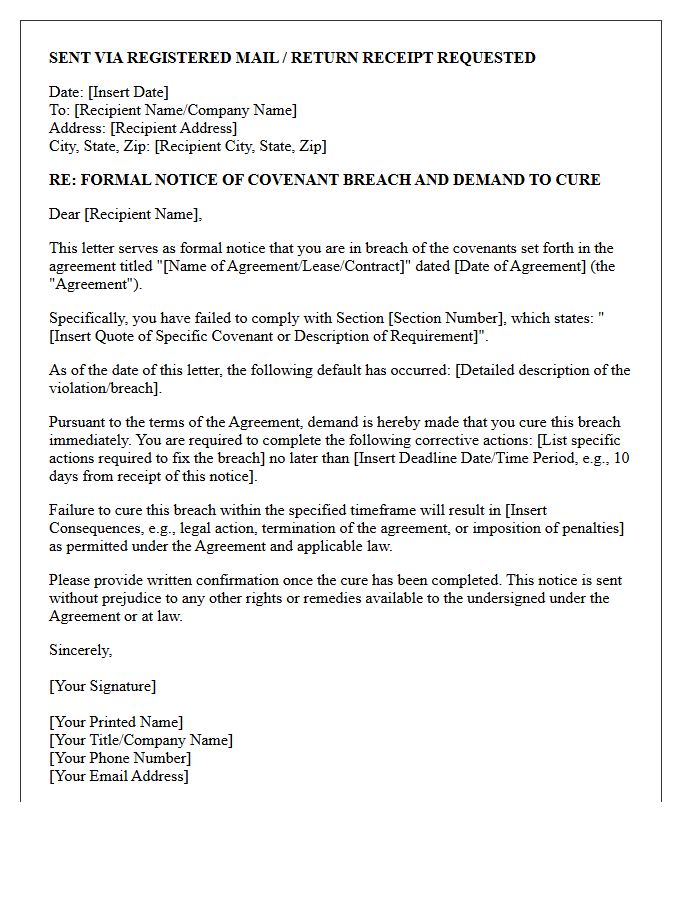
A Formal Demand for Immediate Covenant Cure is a critical legal notice issued when a party breaches specific contractual obligations. This document officially notifies the defaulting party of their failure to comply with agreed-upon terms, such as maintenance standards or financial ratios. It establishes a mandatory remedy period, providing a final opportunity to rectify the violation before the non-breaching party pursues aggressive legal remedies, accelerates debt, or terminates the agreement. Timely response is essential to prevent formal default and mitigate potential litigation or significant financial penalties.
Specification of the Allowed Cure Period Deadline
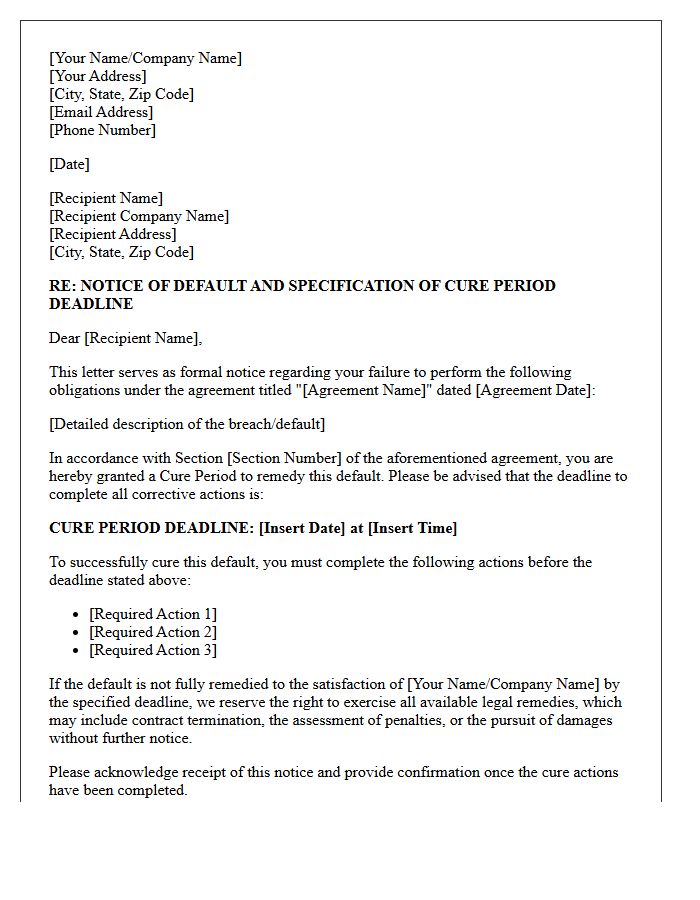
The Allowed Cure Period Deadline represents the final date by which a party must rectify a contractual default. Understanding this timeline is critical for maintaining legal compliance and avoiding termination. Typically triggered by a formal notice of default, the period allows the breaching party to perform their obligations. Failure to resolve the issue before this specific expiration often grants the non-breaching party the right to seek damages or exercise remedies. Always verify if the deadline refers to calendar or business days to ensure timely performance.
Consequences of Failure to Cure the Breach
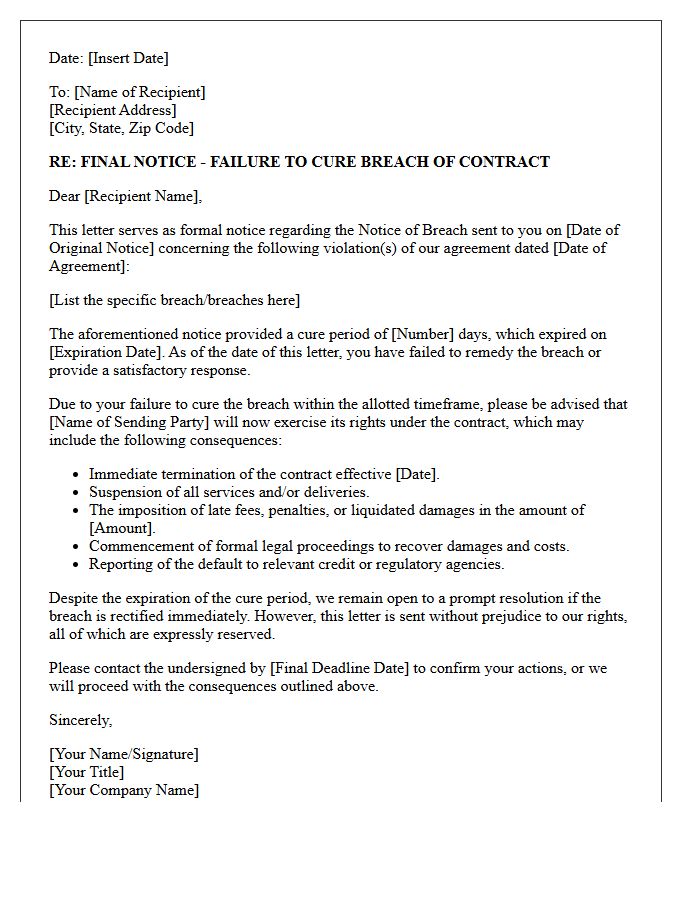
Failing to remedy a contractual violation within the specified timeframe leads to a material breach. This legal status allows the non-breaching party to terminate the agreement immediately without further obligation. Beyond contract cancellation, the defaulting party often faces significant financial liabilities, including compensatory damages, legal fees, or liquidated penalties. Furthermore, a permanent breach may trigger forfeiture of rights or collateral, severely damaging professional reputations and business relationships. Timely remediation is essential to mitigate these risks and preserve the underlying legal enforceability of the commitment.
Reservation of All Banking Institution Rights
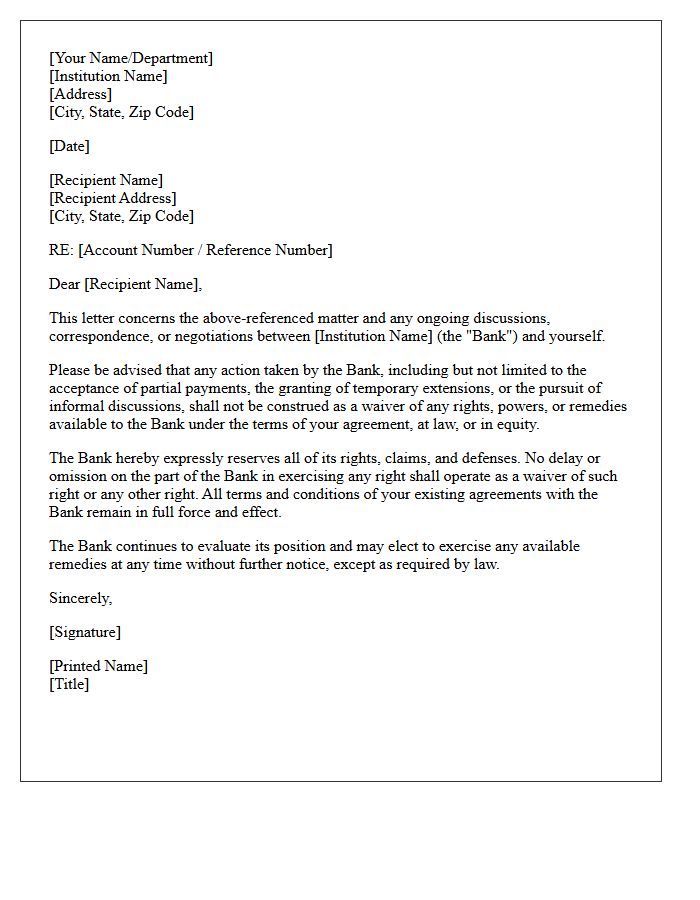
The Reservation of Rights is a critical legal provision allowing a banking institution to enforce its contractual policies at any time. By invoking this clause, the bank ensures that any delay or failure to exercise a specific right does not constitute a waiver of future enforcement. This protection preserves the bank's ability to demand full compliance with terms, pursue legal remedies, or adjust service conditions without losing its original legal standing. Understanding this safeguards your awareness of the bank's persistent authority over the financial agreement.
Contact Information for the Bank Relationship Manager
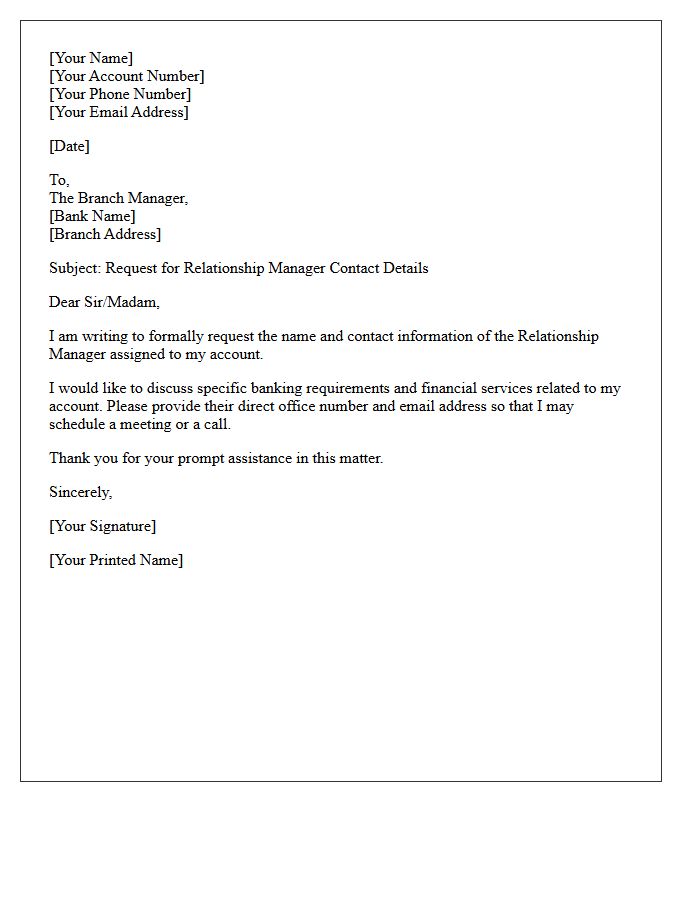
Maintaining accurate Contact Information for your bank relationship manager is essential for seamless financial management. This direct link ensures priority assistance for complex transactions, personalized credit solutions, and rapid resolution of account issues. To optimize communication, always verify their direct office line and professional email address through secure banking portals. Keeping these details updated allows for proactive strategic planning and ensures you receive timely updates on market shifts or new banking products tailored to your specific business or personal investment goals.
Authorized Banking Officer Signature Block
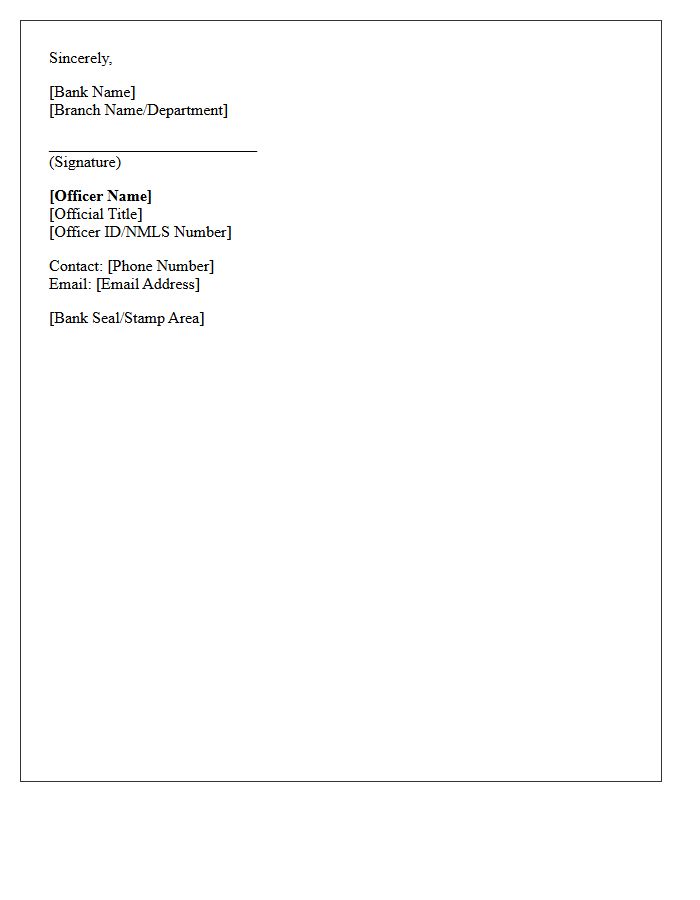
An Authorized Banking Officer Signature Block is a crucial legal element used to validate financial instruments and corporate documents. It ensures that the person signing possesses the delegated authority to bind the institution to a contract. This block typically includes the officer's legal name, official title, and the bank's name. Verifying this signature is essential for security and compliance, as it prevents unauthorized transactions. In international finance, these signatures are often backed by a Certificate of Incumbency or a power of attorney to confirm the signer's identity and rank.
What is a Demand for Cure of Covenant Breach?
A Demand for Cure of Covenant Breach is a formal legal notice sent to a party in violation of a contract terms, requiring them to rectify the specific default within a designated timeframe to avoid legal action or contract termination.
What should be included in a formal Demand for Cure notice?
The notice must clearly identify the breached contract provision, provide a detailed factual description of the violation, specify the required corrective actions, and state the exact deadline (the "cure period") by which the breach must be resolved.
How long is the typical cure period for a breach of covenant?
The duration of a cure period is generally dictated by the "Default" or "Remedies" section of the original contract, commonly ranging from 10 to 30 days depending on whether the breach is monetary or non-monetary.
What happens if a party fails to cure a covenant breach after receiving notice?
If the breaching party fails to remedy the issue within the specified period, the non-breaching party typically gains the right to pursue remedies such as terminating the agreement, seeking injunctive relief, or filing a lawsuit for damages.
Can a breach of covenant be cured if it is considered "irreparable"?
While most administrative or minor breaches are curable, some violations-such as a breach of confidentiality or a non-compete clause-may be deemed incurable, allowing the aggrieved party to proceed directly to legal remedies without providing a cure period.


Comments