
A Notice of Filing of Proof of Claim is a formal legal document submitted in bankruptcy proceedings to assert a creditor's right to receive payment. This essential filing details the amount owed and provides supporting evidence for the debt. Timely submission is critical to preserve your legal interests and ensure participation in asset distribution. To assist you, below are some ready to use template.
Image cover: Official Notice of Filing of Proof of Claim: Templates and Essential Samples
Letter Samples List
- Cover Letter for Notice of Filing of Proof of Claim in Corporate Bankruptcy
- Bank Notification Letter Regarding Notice of Filing of Proof of Claim
- Transmittal Letter for Notice of Filing of Proof of Claim on Unsecured Debt
- Creditor Bank Letter Accompanying Notice of Filing of Proof of Claim
- Mortgage Division Letter for Notice of Filing of Proof of Claim Submission
- Retail Banking Letter Issuing Notice of Filing of Proof of Claim
- Letter of Service for Notice of Filing of Proof of Claim to Debtor Counsel
- Financial Institution Letter Enclosing Notice of Filing of Proof of Claim
- Secured Asset Department Letter for Notice of Filing of Proof of Claim
- Syndicated Loan Letter for Notice of Filing of Proof of Claim Registration
- Trustee Notification Letter for Notice of Filing of Proof of Claim
- Legal Department Letter Executing Notice of Filing of Proof of Claim
Cover Letter for Notice of Filing of Proof of Claim in Corporate Bankruptcy
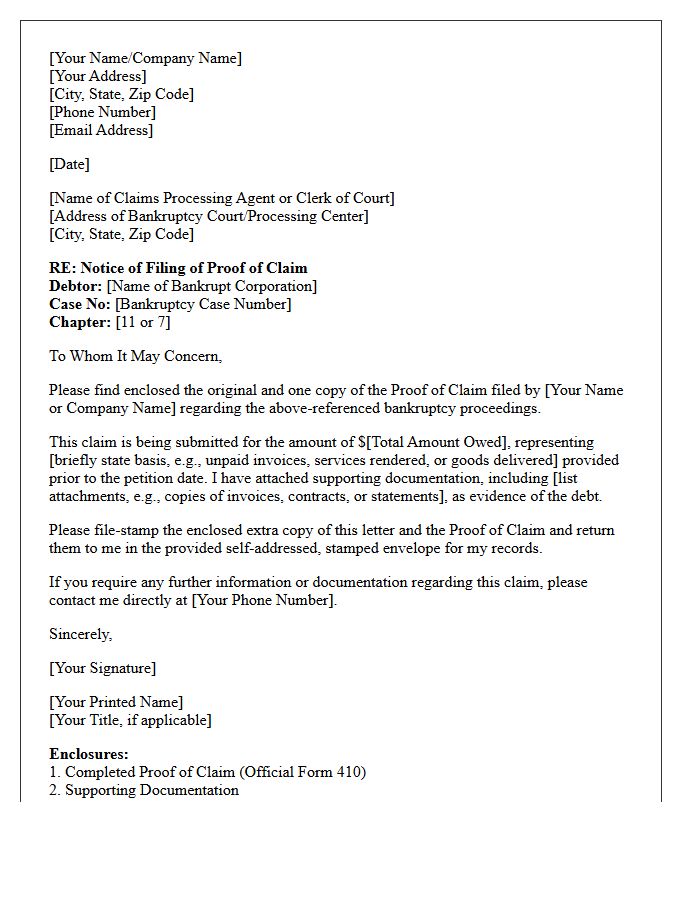
A cover letter for a Notice of Filing of Proof of Claim is a vital legal document used to formally assert a creditor's right to payment during a corporate bankruptcy. It serves as a professional transmittal to the bankruptcy court and the debtor's counsel, ensuring your claim is properly recorded in the claims register. You must include the specific case number, the total liquidated amount owed, and supporting evidence of the debt. Submitting this accurately before the bar date is essential to preserve your standing for potential asset distribution.
Bank Notification Letter Regarding Notice of Filing of Proof of Claim
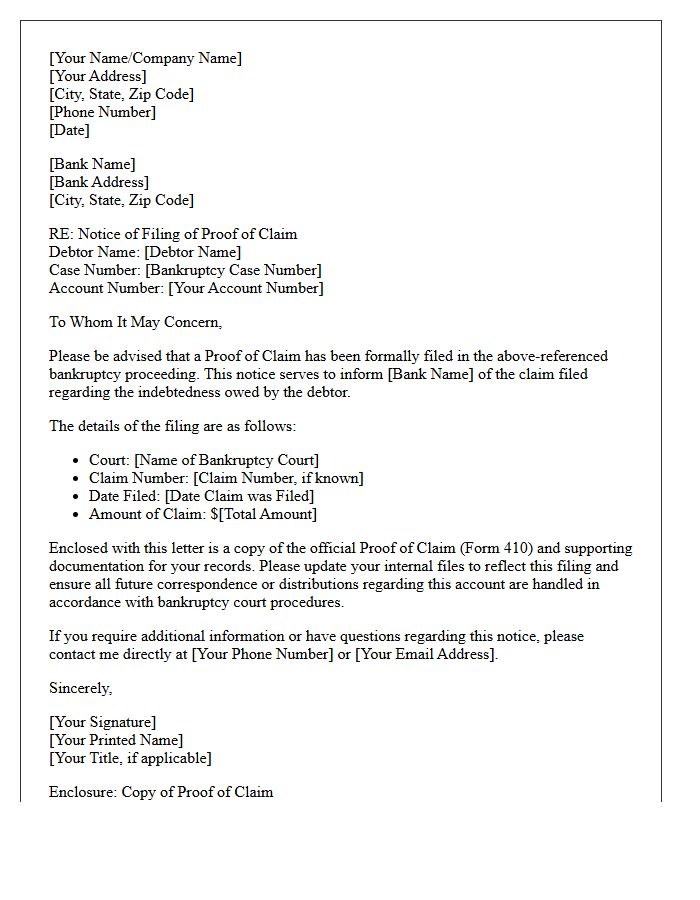
A Bank Notification Letter Regarding Notice of Filing of Proof of Claim informs you that a creditor has officially submitted a Proof of Claim in your bankruptcy case. This document confirms the specific amount you owe and provides legal evidence of the debt to the court. It is a critical step in the distribution of assets, ensuring the bank is recognized as a legitimate claimant. Always verify the accuracy of the listed balance to prevent overpayment and ensure your bankruptcy discharge accurately reflects your settled financial obligations.
Transmittal Letter for Notice of Filing of Proof of Claim on Unsecured Debt
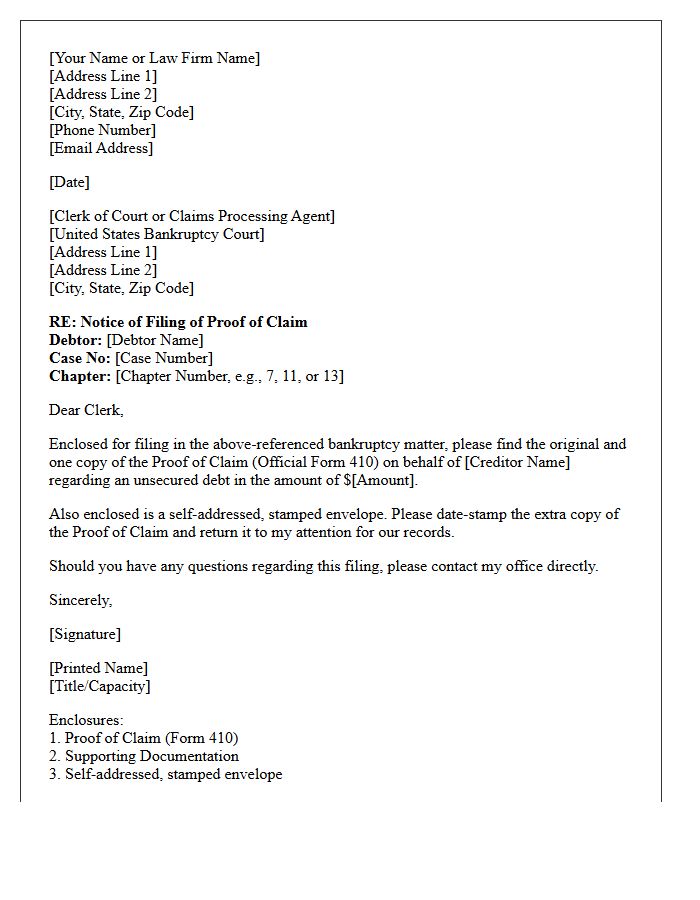
A transmittal letter for a Notice of Filing of Proof of Claim serves as formal correspondence to the court or trustee. It ensures your unsecured debt is officially recorded in the bankruptcy estate. This document acts as a cover letter, verifying that you have submitted the necessary evidence to participate in any potential asset distribution. It is crucial for maintaining a procedural paper trail, protecting your rights as a creditor, and confirming that the claim was delivered within the court-mandated deadline.
Creditor Bank Letter Accompanying Notice of Filing of Proof of Claim
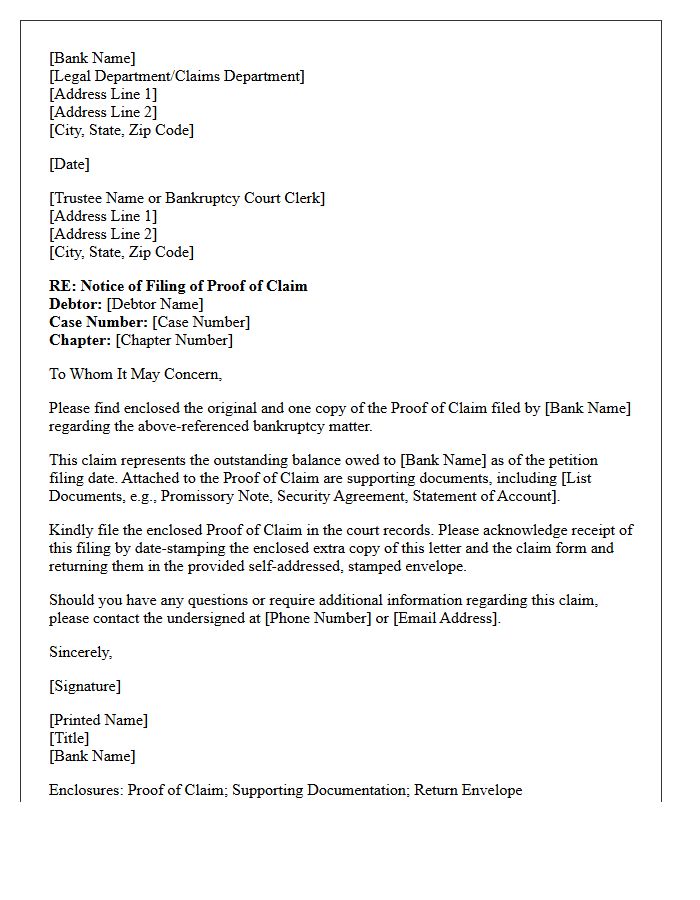
A creditor bank letter accompanying a notice of filing of proof of claim serves as formal documentation in a bankruptcy case. It confirms that the financial institution has officially submitted a Proof of Claim to the court, asserting its right to receive payments from the debtor's estate. This letter provides transparency regarding the outstanding debt balance, interest rates, and security interests held by the bank. For debtors and trustees, it is a critical instrument used to reconcile accounts and ensure the accuracy of claims during the legal distribution of assets.
Mortgage Division Letter for Notice of Filing of Proof of Claim Submission
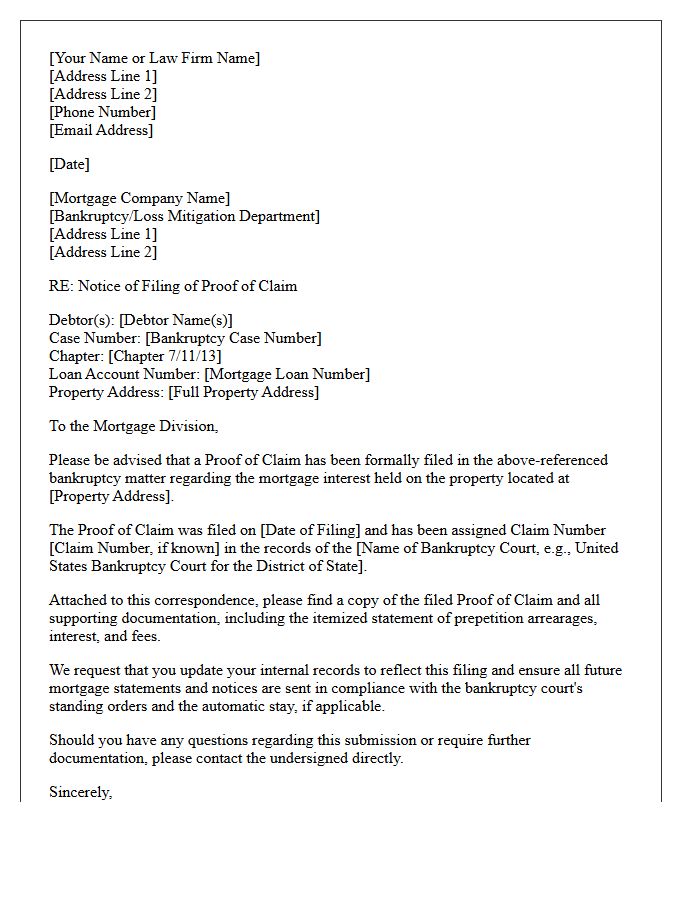
A Mortgage Division Letter serves as a formal notification that a creditor has submitted a Proof of Claim during a bankruptcy proceeding. This document is critical because it outlines the specific outstanding debt, including principal, interest, and fees owed to the lender. Debtors must review this filing accurately to ensure the claimed amounts match their personal financial records. If discrepancies exist, the debtor must file a timely objection to prevent overpayment or errors in the repayment plan. Monitoring these submissions is essential for protecting homeowner rights and ensuring a fair legal resolution.
Retail Banking Letter Issuing Notice of Filing of Proof of Claim
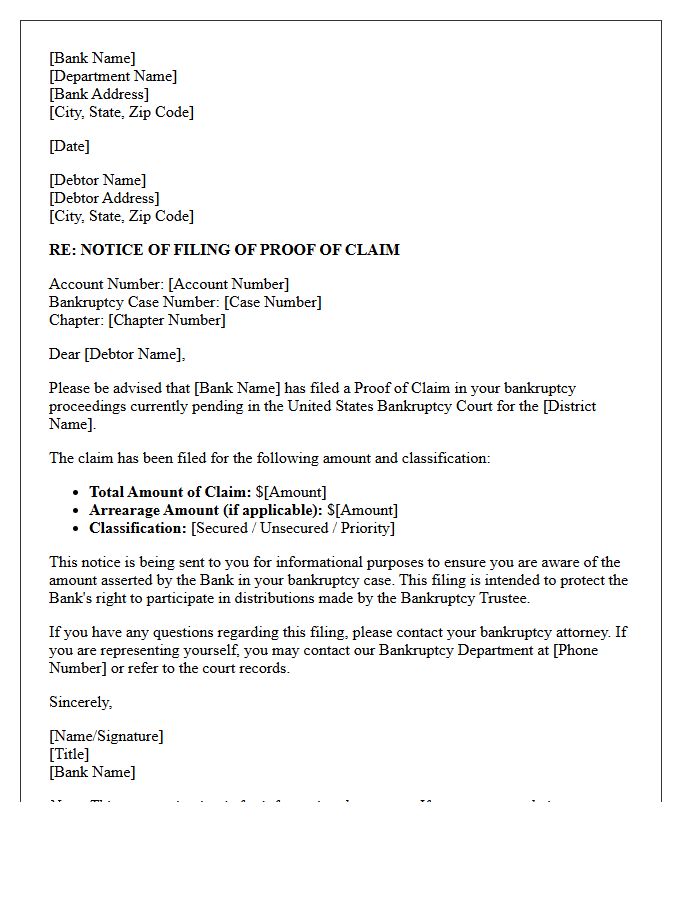
A Retail Banking Letter Issuing Notice of Filing of Proof of Claim is a formal legal document sent to a debtor during bankruptcy proceedings. It signifies that the bank has officially submitted a Proof of Claim to the court, detailing the total amount owed to the institution. This ensures the lender is eligible to receive potential distributions from the bankruptcy estate. Borrowers must review the filed amount for accuracy, as it directly impacts debt restructuring or repayment plans under court supervision.
Letter of Service for Notice of Filing of Proof of Claim to Debtor Counsel
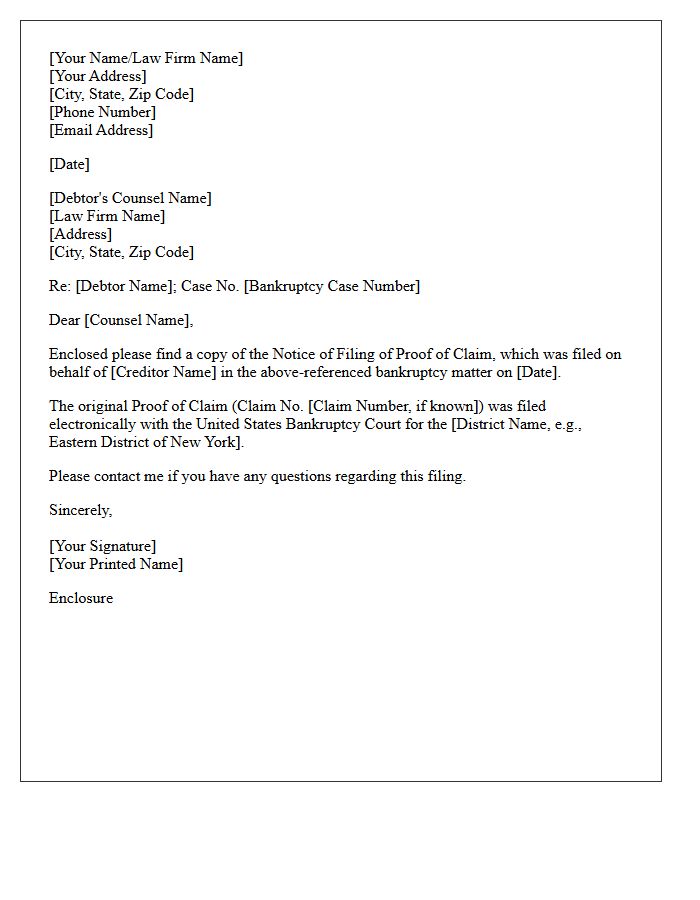
A Letter of Service provides legal confirmation that the debtor's counsel has been formally notified of a Proof of Claim filed in a bankruptcy case. This document ensures procedural transparency, verifying that the creditor's assertion of debt was properly delivered to the legal representative. It is a critical component of due process, preventing claims from being disallowed due to lack of notice. Properly serving this notice allows the debtor's attorney to review the claim's validity, ensuring the bankruptcy estate is distributed accurately according to established legal priorities.
Financial Institution Letter Enclosing Notice of Filing of Proof of Claim
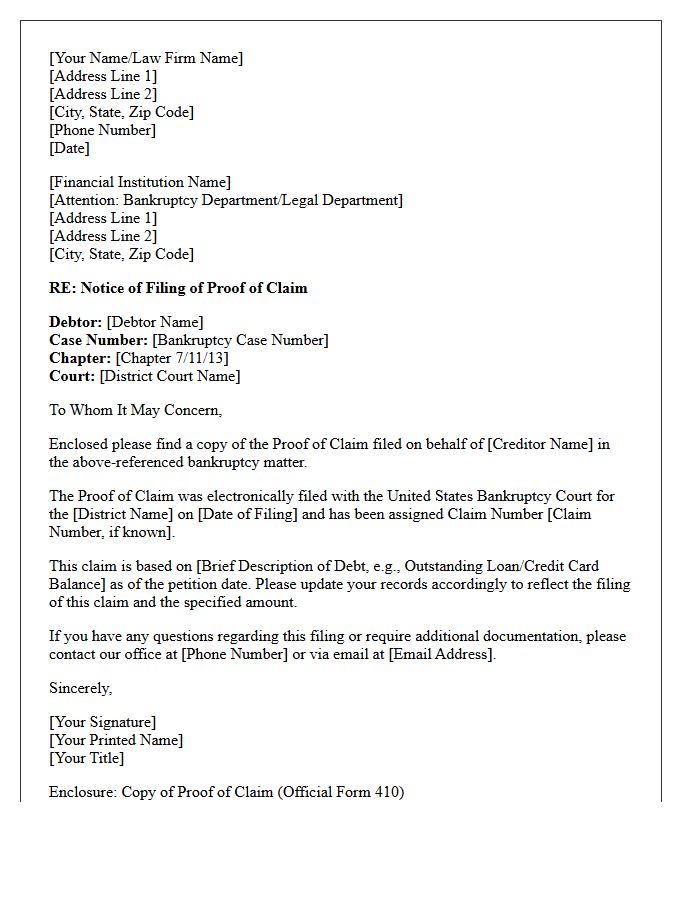
A Financial Institution Letter enclosing a Notice of Filing of Proof of Claim is a legal document used in bankruptcy proceedings. It serves as formal confirmation that a creditor has officially asserted their right to receive payment from the debtor's estate. This notice outlines the specific debt amount and supporting documentation filed with the court. Receivers must review these details promptly to ensure accuracy, as the Proof of Claim is critical for establishing priority and securing potential distributions during the liquidation or reorganization process.
Secured Asset Department Letter for Notice of Filing of Proof of Claim
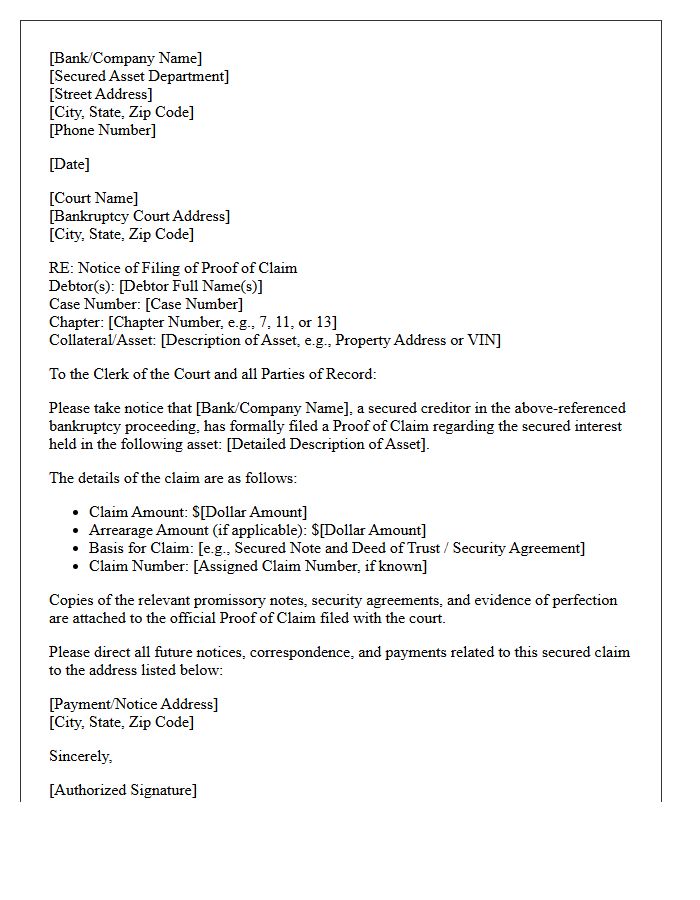
A Notice of Filing of Proof of Claim is a formal legal document submitted by a lender's Secured Asset Department during a bankruptcy case. This letter serves as official notification that the creditor has asserted its right to receive payments from the debtor's estate. It outlines the specific amount owed and the collateral securing the debt. It is crucial to verify the accuracy of the figures provided, as this claim determines how the lender is treated under the repayment plan and ensures their lien remains protected throughout the legal proceedings.
Syndicated Loan Letter for Notice of Filing of Proof of Claim Registration
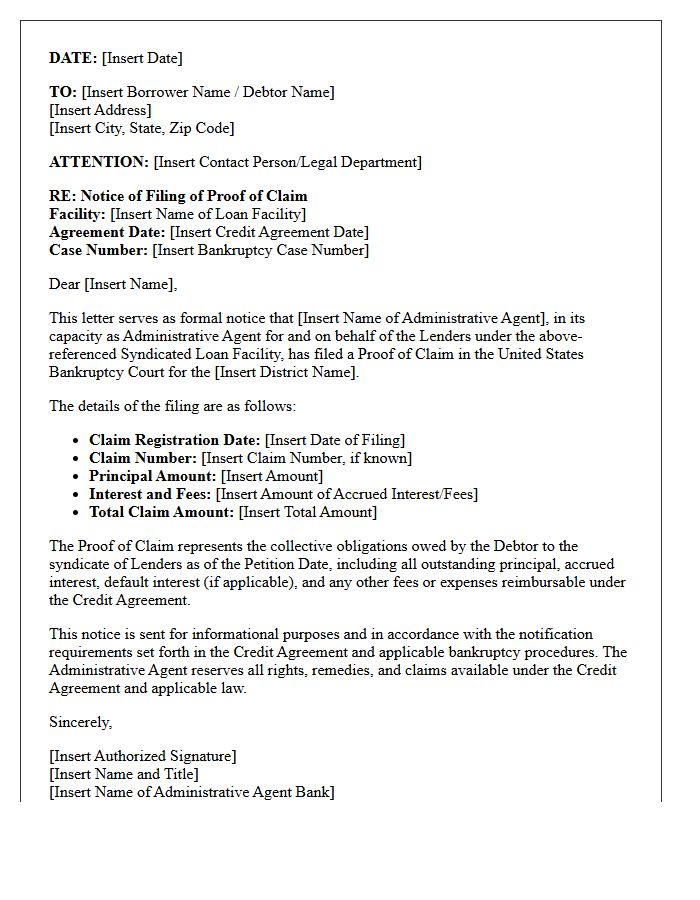
A Notice of Filing of Proof of Claim is a critical legal document in bankruptcy proceedings involving a syndicated loan. It serves as formal registration that a lender or administrative agent has officially submitted a claim to recover outstanding debts from a debtor's estate. For participants, this letter ensures their financial interests are documented within the court registry. Timely filing is essential to maintain creditor rights and secure potential distributions. Failure to monitor these notices can result in the loss of voting power or forfeiture of asset recovery during the restructuring process.
Trustee Notification Letter for Notice of Filing of Proof of Claim
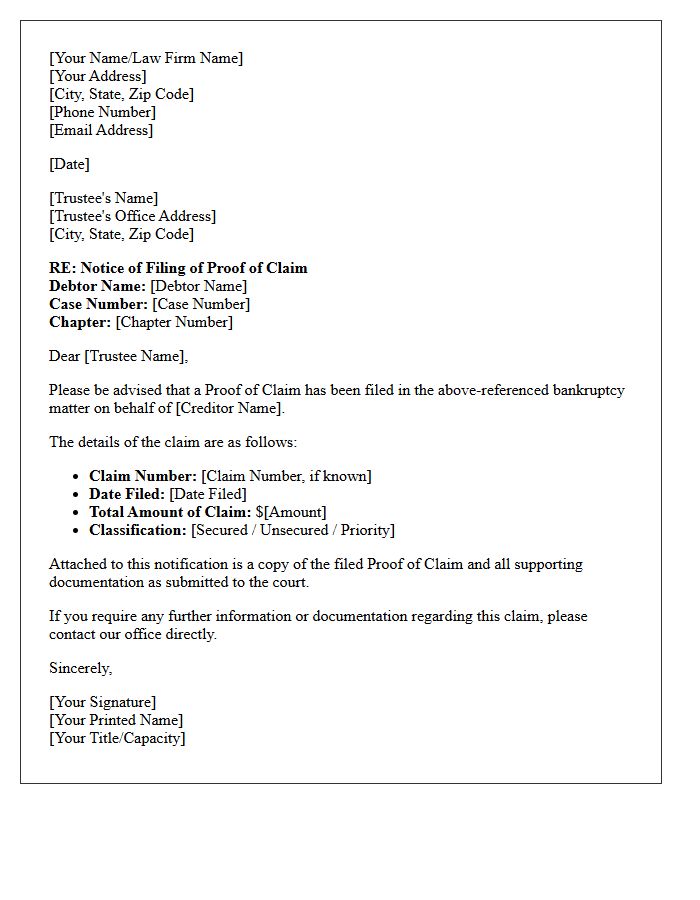
A Trustee Notification Letter regarding a Notice of Filing of Proof of Claim is a legal document confirming that a creditor has formally requested payment from a bankruptcy estate. This notice ensures the trustee and debtor are aware of the specific debt amount and priority status claimed. It is essential to review this filing for accuracy, as it determines how assets are distributed. If the claim is incorrect or fraudulent, a party must file a formal objection to prevent improper payments during the liquidation or reorganization process.
Legal Department Letter Executing Notice of Filing of Proof of Claim
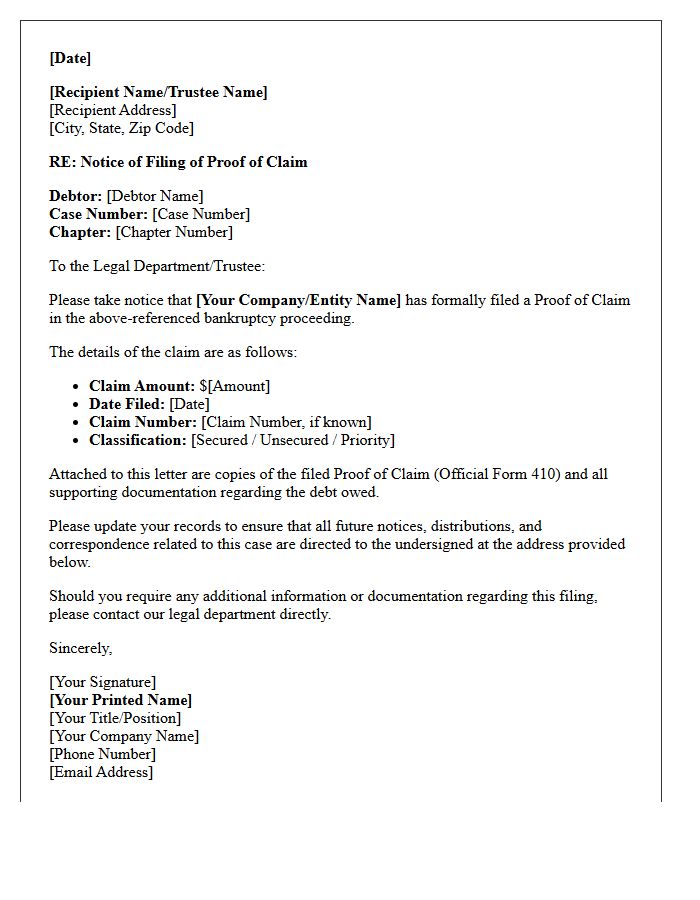
A Legal Department Letter executing a Notice of Filing of Proof of Claim is a formal notification sent during bankruptcy proceedings. It asserts a creditor's right to receive payments from the debtor's estate by documenting the specific amount owed. This document is time-sensitive, as it must be filed before the bar date to remain valid. It ensures the legal department has officially registered the claim within the court system, protecting the company's financial interests and establishing its status as a recognized creditor during the liquidation or reorganization process.
What is a Notice of Filing of Proof of Claim?
A Notice of Filing of Proof of Claim is an official legal document filed in a bankruptcy case notifying the court, the debtor, and the trustee that a creditor is asserting a right to receive payment from the bankruptcy estate.
When must a Proof of Claim be filed in a bankruptcy case?
A Proof of Claim must be filed before the "bar date" set by the court. For most creditors in Chapter 7 or Chapter 13 cases, this is typically 70 days after the bankruptcy petition is filed, though deadlines for government entities may differ.
What information is required on a Proof of Claim form?
The form must include the creditor's name and address, the total amount owed as of the petition date, the basis for the claim (such as a loan or services rendered), and documentation supporting the debt, such as invoices or contracts.
How does a debtor object to a Notice of Filing of Proof of Claim?
If a debtor disagrees with the validity or amount of a claim, they must file a written objection with the bankruptcy court and schedule a hearing. Common grounds for objection include incorrect balances, statute of limitations expiration, or lack of supporting evidence.
What is the difference between a secured and unsecured Proof of Claim?
A secured claim is backed by collateral, such as a mortgage or car loan, giving the creditor a right to the property if the debt is not paid. An unsecured claim is not backed by collateral and is paid from the remaining bankruptcy estate funds only after priority claims are satisfied.


Comments