
A Claim for Reimbursement is a critical formal demand submitted by a nominated bank to the issuing bank to recover funds paid under a Letter of Credit. Ensuring compliance with UCP 600 standards is essential to avoid payment delays or discrepancies. This guide explains the necessary documentation and procedural steps involved. To assist your process, below are some ready to use templates.
Image cover: Mastering the Letter of Credit Reimbursement Claim: Essential Templates and Professional Samples
Letter Samples List
- Letter Of Initial Claim For Reimbursement Under Letter Of Credit
- Letter Of Authorization For Reimbursement Under Letter Of Credit
- Letter Of Advice Of Reimbursement Settlement Under Letter Of Credit
- Letter Of Notice Of Discrepancy In Reimbursement Claim Under Letter Of Credit
- Letter Of Rejection For Reimbursement Claim Under Letter Of Credit
- Letter Of Reimbursement Undertaking Under Letter Of Credit
- Letter Of Amendment To Reimbursement Authorization Under Letter Of Credit
- Letter Of Final Reminder For Pending Reimbursement Under Letter Of Credit
- Letter Of Claim For Interest On Delayed Reimbursement Under Letter Of Credit
- Letter Of Cancellation Of Reimbursement Authorization Under Letter Of Credit
- Letter Of Tracer For Unpaid Reimbursement Claim Under Letter Of Credit
- Letter Of Request For Value Date Amendment In Reimbursement Under Letter Of Credit
Letter Of Initial Claim For Reimbursement Under Letter Of Credit
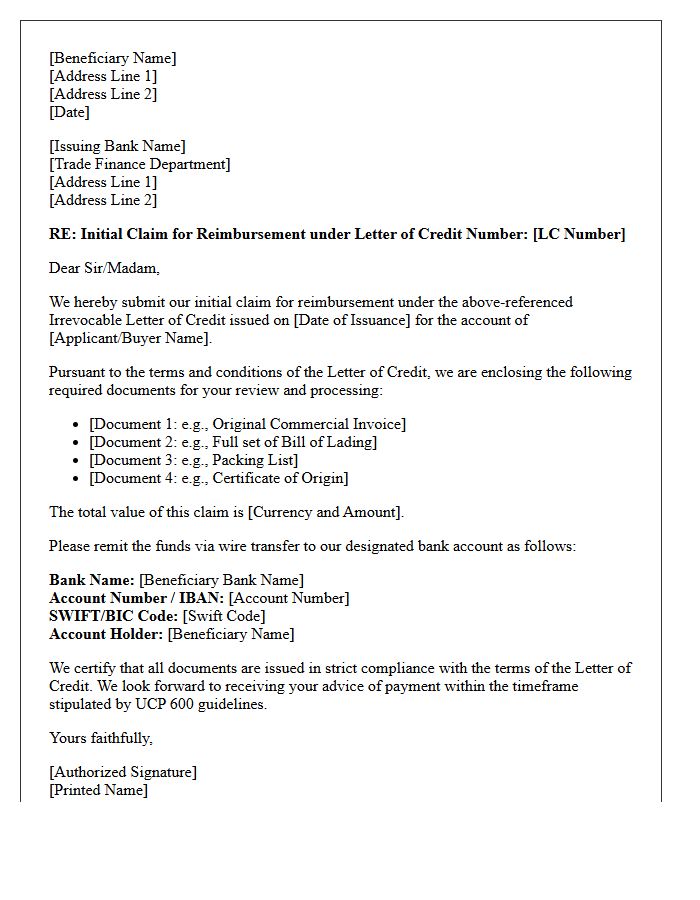
A Letter of Initial Claim for reimbursement is a formal demand sent by a negotiating bank to a reimbursing bank. This document asserts that the nominated bank has honored a complying presentation under a Letter of Credit. It must precisely follow the reimbursement authorization terms and UCP 600 or URR 725 guidelines. Accuracy in mentioning the unique credit reference, currency, and amount is vital to ensure prompt settlement and avoid discrepancies that could delay the interbank fund transfer process.
Letter Of Authorization For Reimbursement Under Letter Of Credit
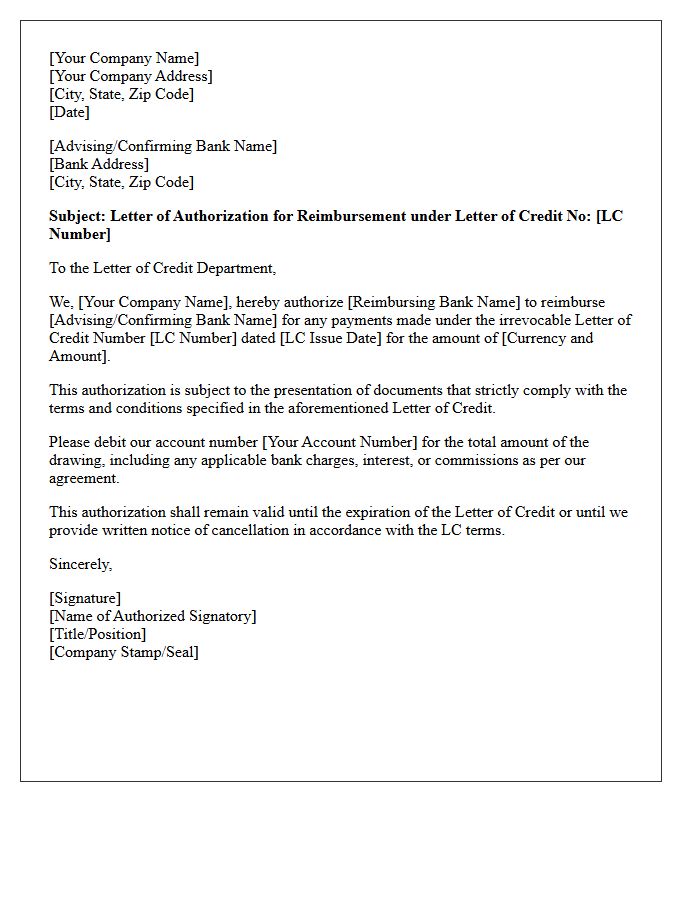
A Letter of Authorization for Reimbursement is a critical document used in international trade to facilitate payments. It acts as a formal instruction from the issuing bank to a reimbursing bank, granting them the legal power to honor claims made by the negotiating bank. This mechanism ensures that funds are settled efficiently under a Letter of Credit. It protects all parties by verifying that the reimbursement process follows specific UCP 600 guidelines, ensuring financial security and transactional transparency during the global exchange of goods and services.
Letter Of Advice Of Reimbursement Settlement Under Letter Of Credit
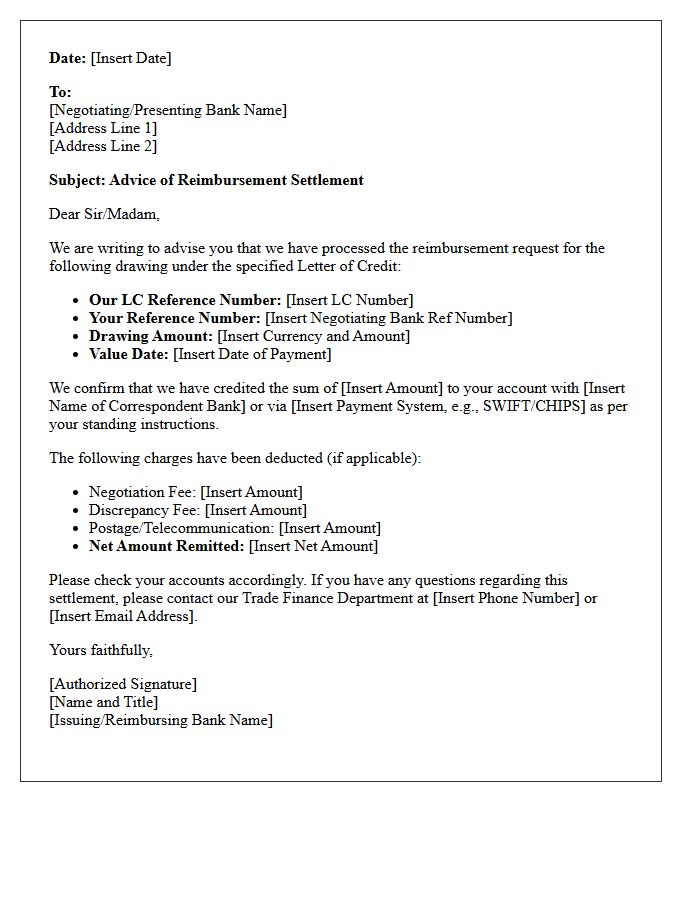
A Letter of Advice of Reimbursement Settlement is a critical notification sent by a reimbursing bank to confirm that payment has been executed under a documentary credit. This document verifies the settlement of funds between financial institutions, ensuring the negotiating bank receives its reimbursement. It serves as formal proof that the issuing bank's obligations are met, providing essential financial reconciliation data. Accuracy in these notices is vital for managing liquidity and ensuring smooth international trade finance operations under standard URR 725 or UCP 600 banking regulations.
Letter Of Notice Of Discrepancy In Reimbursement Claim Under Letter Of Credit
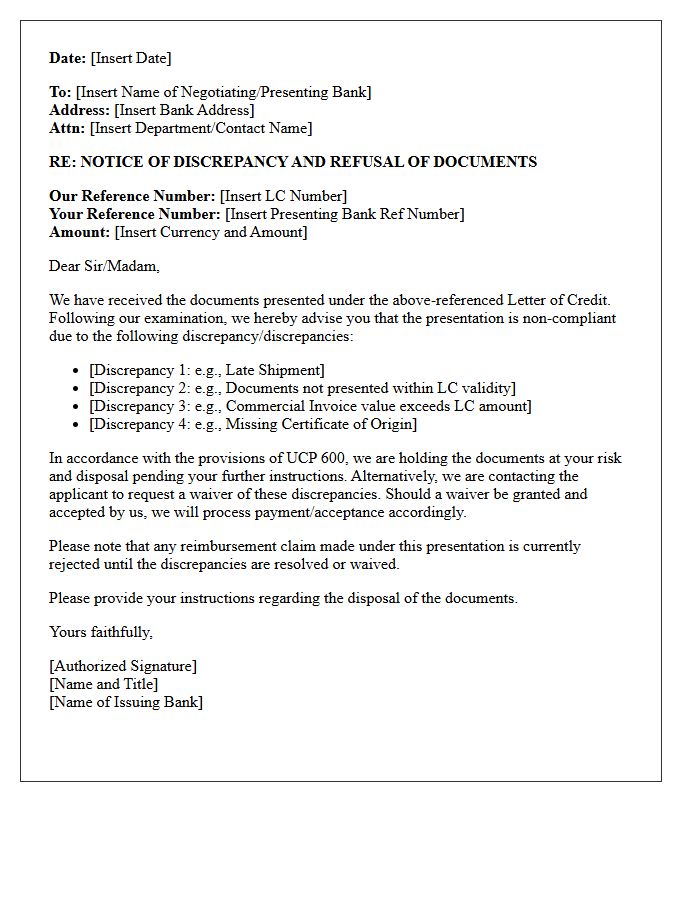
A Notice of Discrepancy is a critical document issued by a nominated or issuing bank when documents presented under a Letter of Credit fail to comply with its specific terms. This letter must clearly list each non-conformity found, stating whether the bank is refusing the documents or seeking a waiver from the applicant. To protect your right to payment, you must respond promptly to correct errors or obtain acceptance. Understanding these discrepancies is essential to ensure a smooth reimbursement claim and avoid costly delays in international trade settlements.
Letter Of Rejection For Reimbursement Claim Under Letter Of Credit
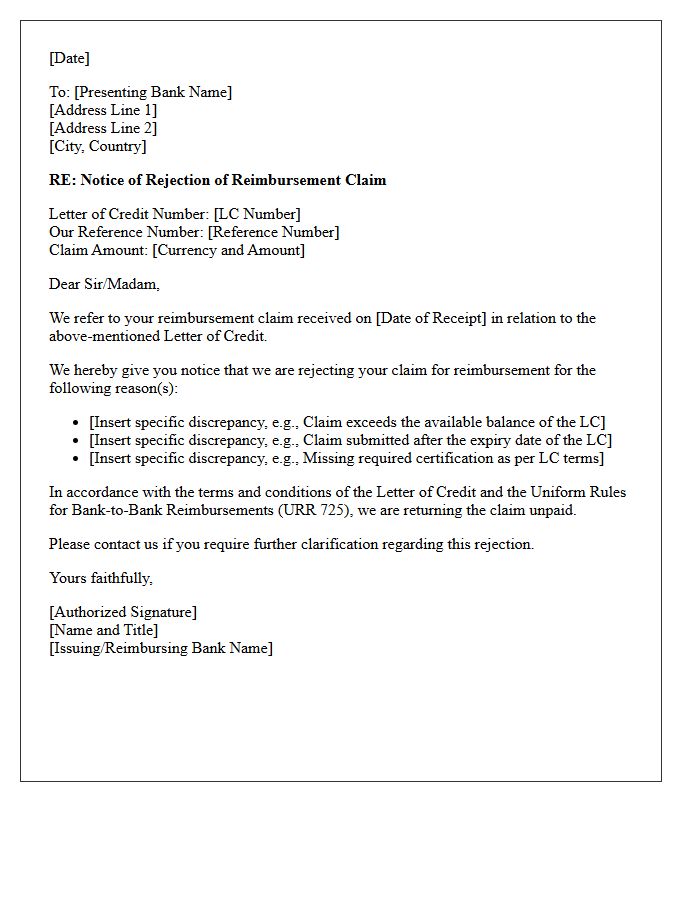
A Letter of Rejection for a reimbursement claim under a Letter of Credit is a formal notice issued when discrepancies are found in presented documents. The Reimbursing Bank must notify the claiming bank promptly, specifying each non-compliance issue according to UCP 600 standards. This rejection prevents payment until errors are rectified or a waiver is obtained from the issuing bank. Timely communication is critical to maintain international trade compliance and protect the financial interests of all parties involved in the transaction.
Letter Of Reimbursement Undertaking Under Letter Of Credit
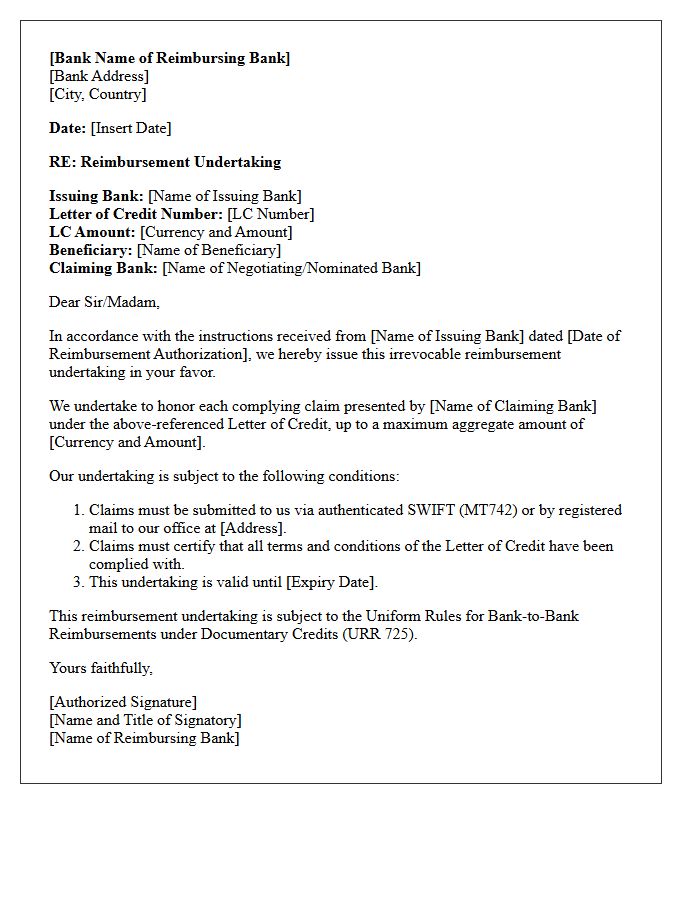
A Letter of Reimbursement Undertaking is a critical document where a reimbursing bank provides a formal commitment to honor payment claims from a negotiating bank. It functions as a secondary guarantee within a Letter of Credit framework. This undertaking ensures that the nominated bank receives funds promptly after fulfilling compliance requirements. For exporters and banks, it mitigates settlement risk by securing a direct payment channel, separate from the issuing bank's immediate liquidity, thereby facilitating smoother international trade finance transactions and enhancing global liquidity management.
Letter Of Amendment To Reimbursement Authorization Under Letter Of Credit
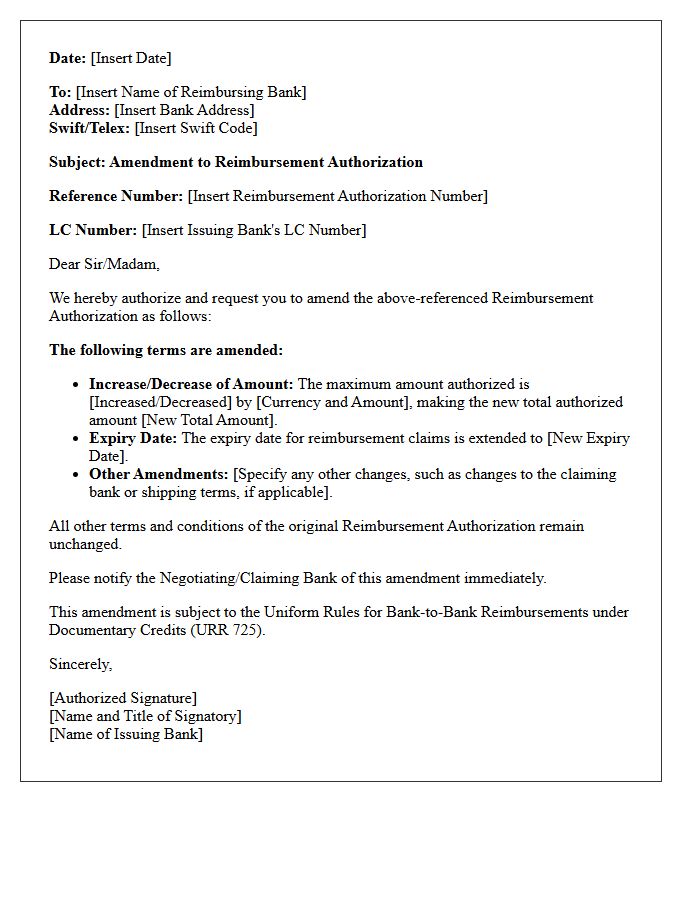
A Letter of Amendment to Reimbursement Authorization is a formal document used to modify the terms of an existing repayment agreement between banks. Under a Letter of Credit, the issuing bank uses this amendment to update instructions, change expiry dates, or adjust the authorized amounts sent to the reimbursing bank. It ensures that the financial obligations and settlement conditions remain synchronized with the underlying credit. Accurate processing of this document is vital to prevent payment discrepancies and ensure seamless international trade settlements between all participating financial institutions.
Letter Of Final Reminder For Pending Reimbursement Under Letter Of Credit
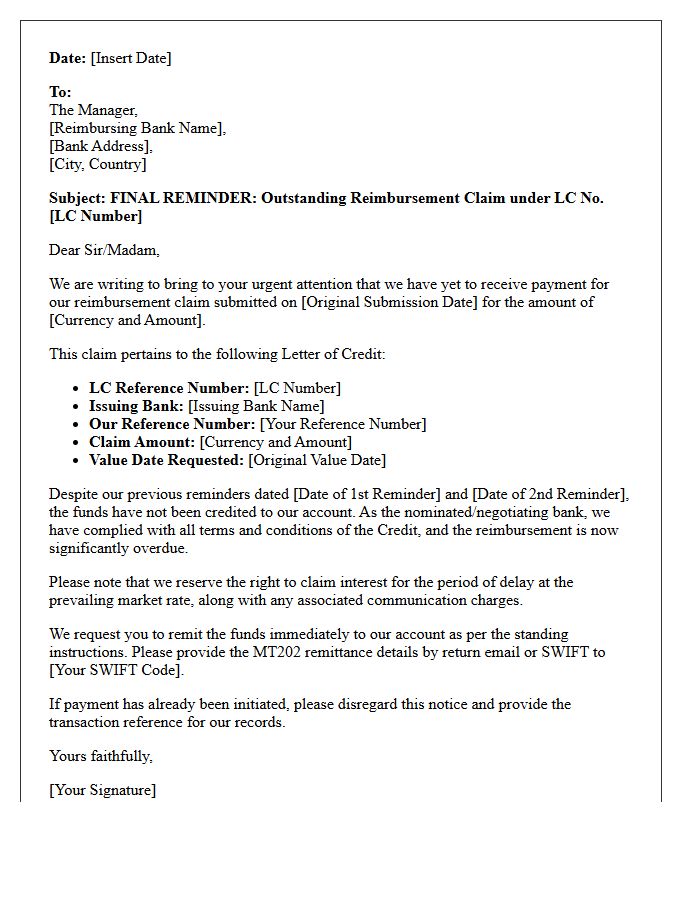
A Letter of Final Reminder for pending reimbursement under a Letter of Credit is a formal demand for immediate payment. It serves as the last notification before the beneficiary or negotiating bank initiates legal action or formal dispute resolution. This document must clearly state the outstanding amount, original LC reference numbers, and the final deadline for settlement. Sending this letter is essential to protect financial rights and establish a documented trail of non-payment by the issuing bank, ensuring compliance with international trade regulations like UCP 600.
Letter Of Claim For Interest On Delayed Reimbursement Under Letter Of Credit
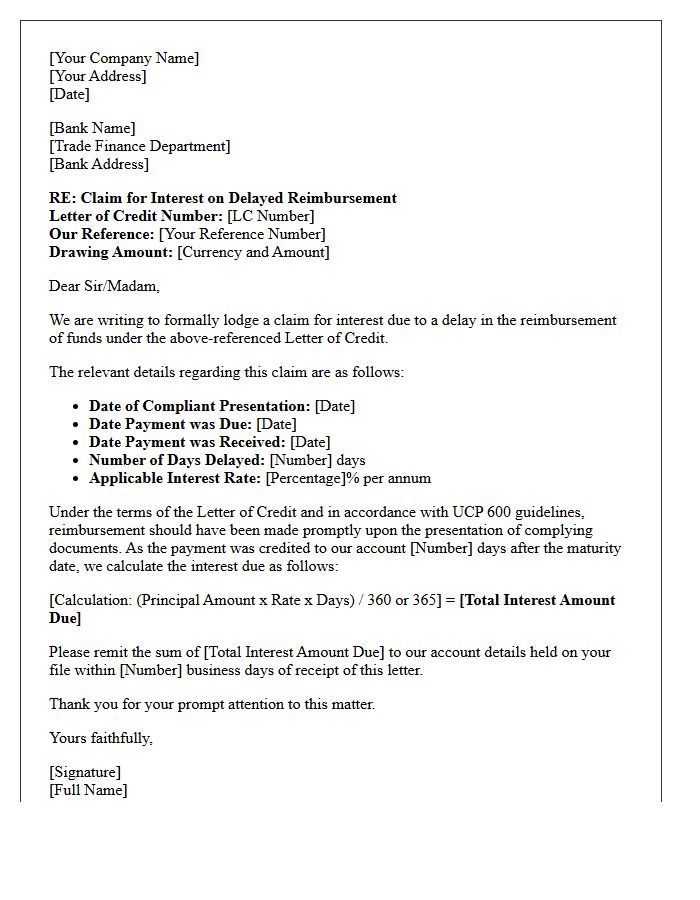
A Letter of Claim for interest is a formal demand issued when a bank fails to provide a reimbursement on the specified value date under a Letter of Credit. Governed by UCP 600 or URR 725, this document ensures the beneficiary or negotiating bank is compensated for the time value of delayed funds. It must clearly state the interest rate, the exact duration of the delay, and the calculated amount due to recover financial losses incurred during the period of non-payment.
Letter Of Cancellation Of Reimbursement Authorization Under Letter Of Credit
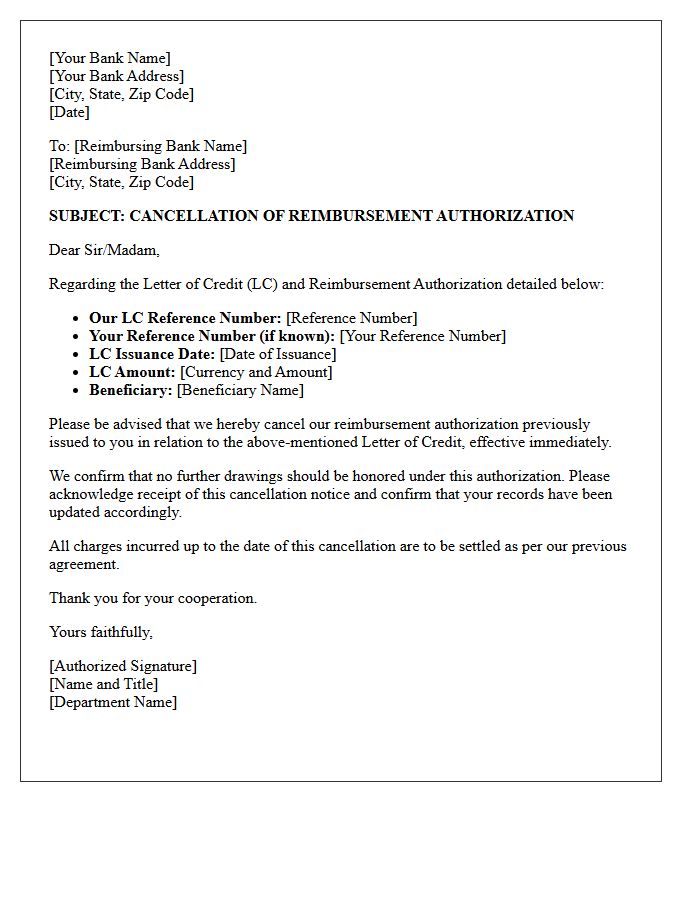
A Letter of Cancellation of Reimbursement Authorization is a critical formal notice sent by an issuing bank to a reimbursing bank. It officially revokes the authority to honor payment claims under a specific Letter of Credit. This action is typically necessary when the credit is expired, cancelled, or amended. Timely notification is essential to prevent unauthorized payments and ensure accurate financial accounting between financial institutions, effectively terminating the reimbursement mandate and protecting the applicant's funds from erroneous processing after the underlying obligation has ceased.
Letter Of Tracer For Unpaid Reimbursement Claim Under Letter Of Credit
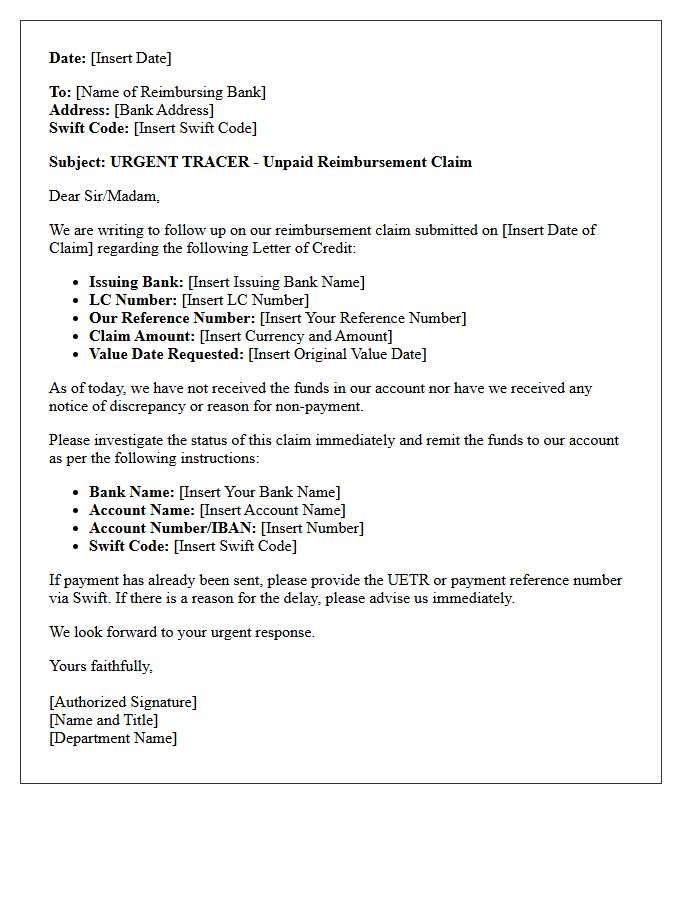
A Letter of Tracer serves as a formal follow-up to demand payment for an unpaid reimbursement claim under a Letter of Credit. It is essential when a nominating or negotiating bank has not received funds from the reimbursing bank within the specified timeframe. This document references the unique LC number, shipment details, and the date of the original claim to ensure payment tracking. Sending a tracer maintains a clear paper trail, helps resolve processing delays, and ensures compliance with UCP 600 or URR 725 international banking standards.
Letter Of Request For Value Date Amendment In Reimbursement Under Letter Of Credit
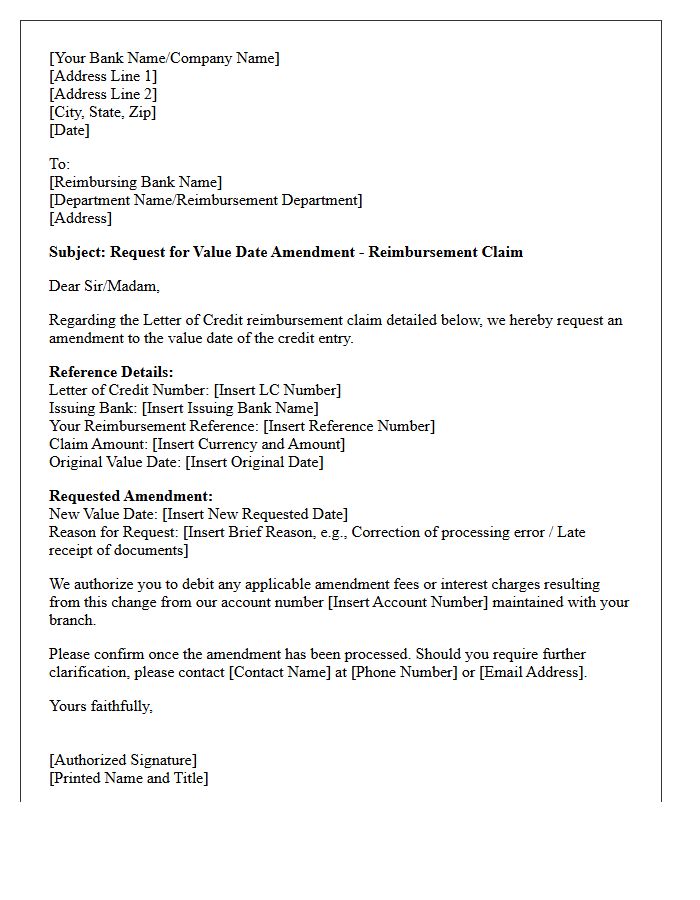
A letter of request for a value date amendment is a formal instruction to the issuing bank to change the specific date funds are credited or debited. This is crucial for reimbursement claims under a Letter of Credit to ensure cash flow alignment and avoid penalty interest. The request must clearly state the original date, the revised date, and the LC reference number. Precise timing ensures the reimbursing bank honors the settlement instructions without discrepancies, maintaining the financial integrity of the international trade transaction between all parties involved.
What documents are required to file a claim for reimbursement under a Letter of Credit?
To initiate a claim, the claimant must typically present a signed reimbursement claim, a copy of the original Letter of Credit (LC), and evidence of compliance with the LC terms, such as transport documents, commercial invoices, and any specific certificates mandated by the issuing bank.
What is the standard timeframe for processing a reimbursement claim under UCP 600?
Under UCP 600 guidelines, the reimbursing bank has a maximum of five banking days following the day of receipt of the claim to determine if the reimbursement request is compliant and to process the payment accordingly.
Can a reimbursement claim be rejected if the documents contain minor discrepancies?
Yes, a reimbursement claim can be rejected if the presented documents do not strictly conform to the terms and conditions specified in the Letter of Credit. The reimbursing bank must provide a notice of refusal stating each discrepancy relied upon to justify the rejection.
What is the difference between a 'Claiming Bank' and a 'Reimbursing Bank' in this process?
The Claiming Bank is the institution that has paid, incurred a deferred payment undertaking, accepted a draft, or negotiated under the LC and seeks repayment. The Reimbursing Bank is the institution authorized by the Issuing Bank to honor the reimbursement claim.
Are interest charges applicable if a reimbursement claim is delayed?
If a reimbursement is not provided on first demand or within the specified timeframe, the claiming bank may be entitled to interest for the period of delay, provided such terms were stipulated in the reimbursement authorization or the credit agreement.

Comments