
A Letter of Indemnity (LOI) is a critical legal document used in international trade to facilitate cargo release when original transport documents are lost or delayed. It protects carriers against potential liabilities while ensuring supply chain continuity. Understanding its risks and proper execution is essential for shippers and consignees. Below are some ready to use templates.
Image cover: Indemnity Agreement Guide: Samples and Templates for Lost Transport Documents
Letter Samples List
- Letter of Indemnity for Missing Original Bill of Lading
- Bankers Letter of Indemnity for Missing Shipping Documents
- Letter of Indemnity for Missing Air Waybill
- Letter of Indemnity for Release of Cargo Without Original Transport Documents
- Master Letter of Indemnity for Missing Transport Documents
- Countersigned Letter of Indemnity for Missing Transport Documents
- Letter of Indemnity for Non-Surrender of Transport Documents Under Letter of Credit
- Letter of Indemnity for Missing Multimodal Transport Document
- Trade Finance Letter of Indemnity for Missing Transport Documents
- Letter of Indemnity for Missing Railway Receipt Document
- Corporate Letter of Indemnity for Missing Transport Documents Under Bank Guarantee
- Irrevocable Letter of Indemnity for Missing Transport Documents
Letter of Indemnity for Missing Original Bill of Lading
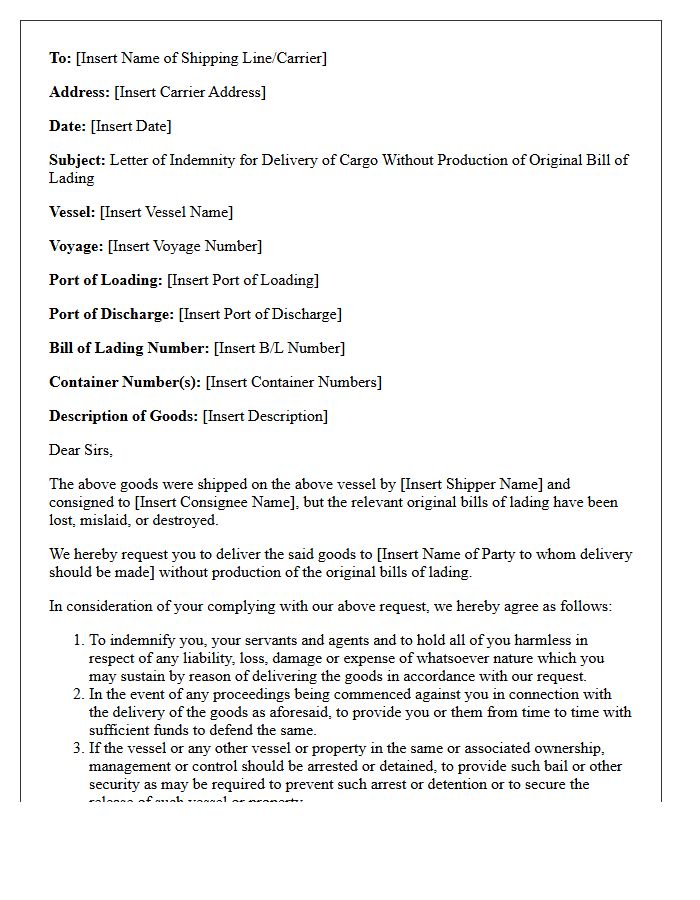
A Letter of Indemnity (LOI) is a critical legal document used in maritime trade when the original Bill of Lading is lost or unavailable. It allows the carrier to release cargo to the receiver without presenting the title document. By signing an LOI, the requester agrees to indemnify the shipping line against all potential risks, legal liabilities, or financial losses arising from wrongful delivery. Because it bypasses standard security protocols, banks often require a bankers counter-signature to guarantee the indemnity's financial validity and protect all parties involved in the transaction.
Bankers Letter of Indemnity for Missing Shipping Documents
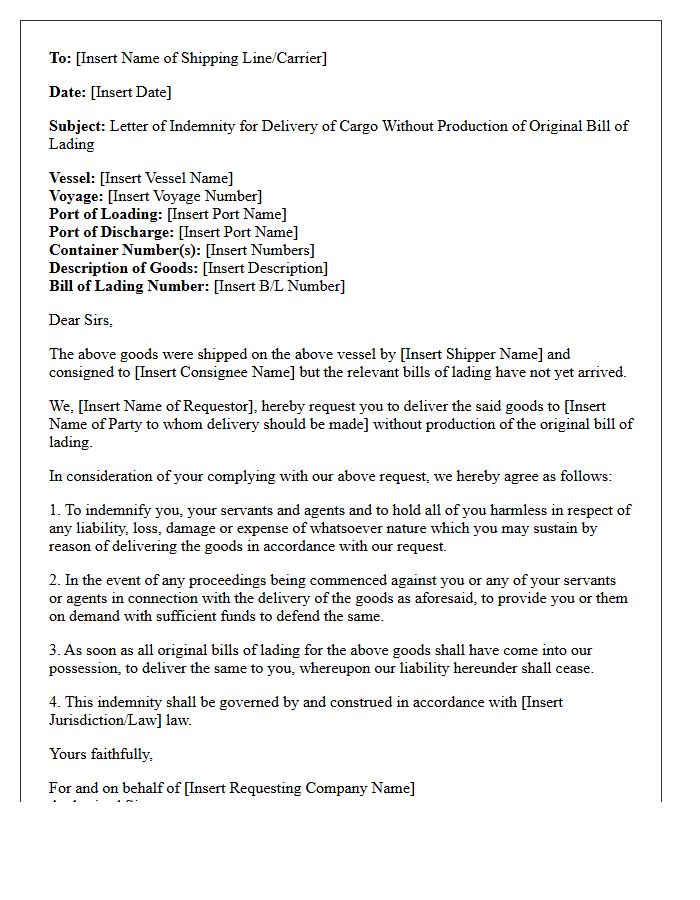
A Bankers Letter of Indemnity (LOI) is a critical financial guarantee used in international trade when original bills of lading are lost or delayed. It allows a carrier to release cargo to the receiver without presenting the title documents. By issuing this letter, the bank compensates the carrier against potential legal liability or financial losses resulting from misdelivery. This instrument ensures supply chain continuity, preventing costly port storage fees while providing the carrier security against competing claims for the goods. It essentially replaces the missing paperwork with a bank-backed indemnity.
Letter of Indemnity for Missing Air Waybill
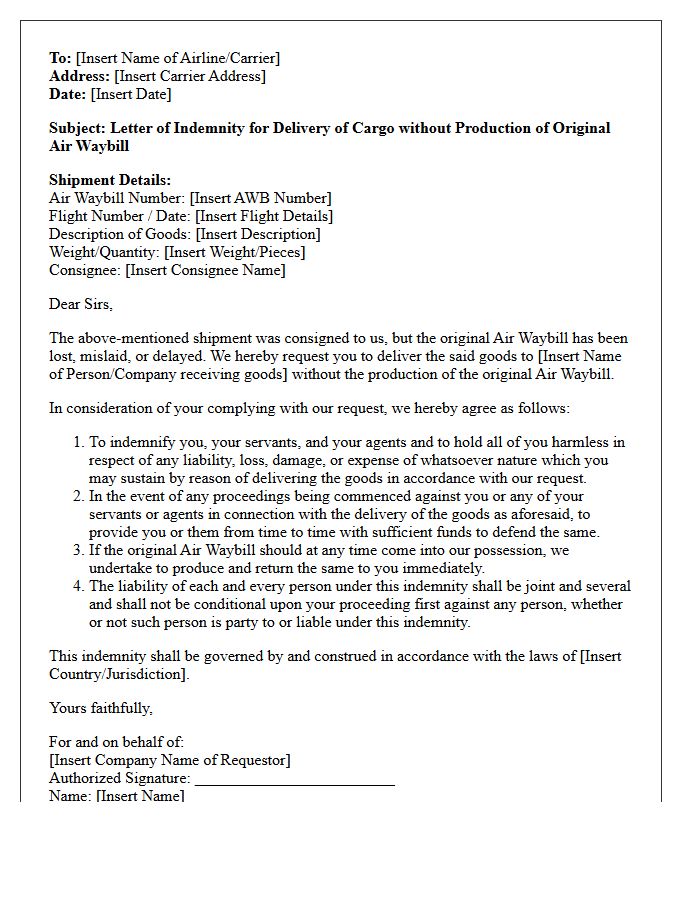
A Letter of Indemnity (LOI) for a missing air waybill is a legal document used to facilitate cargo release when the original transport papers are lost. It serves as a guarantee to the carrier, protecting them against potential financial losses or legal claims arising from delivering goods without proper documentation. By signing this contractual agreement, the consignee assumes full liability, ensuring the airline is held harmless. Providing an LOI prevents costly storage delays and ensures the security of the global supply chain during transit discrepancies.
Letter of Indemnity for Release of Cargo Without Original Transport Documents
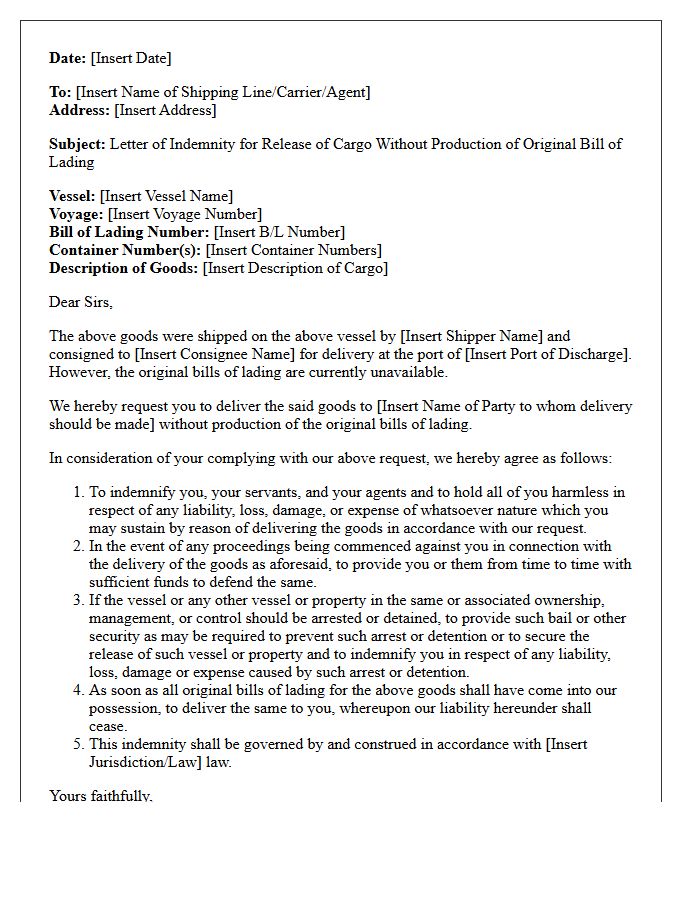
A Letter of Indemnity (LOI) is a critical legal document used in shipping to facilitate the release of cargo when original bills of lading are unavailable. By signing this agreement, the receiver indemnifies the carrier against potential risks, such as third-party claims or financial losses resulting from misdelivery. While it speeds up logistics and prevents port congestion, an LOI typically voids standard P&I insurance cover. It represents a contractual guarantee where the requestor assumes full liability for delivering goods without presenting the original transport documents.
Master Letter of Indemnity for Missing Transport Documents
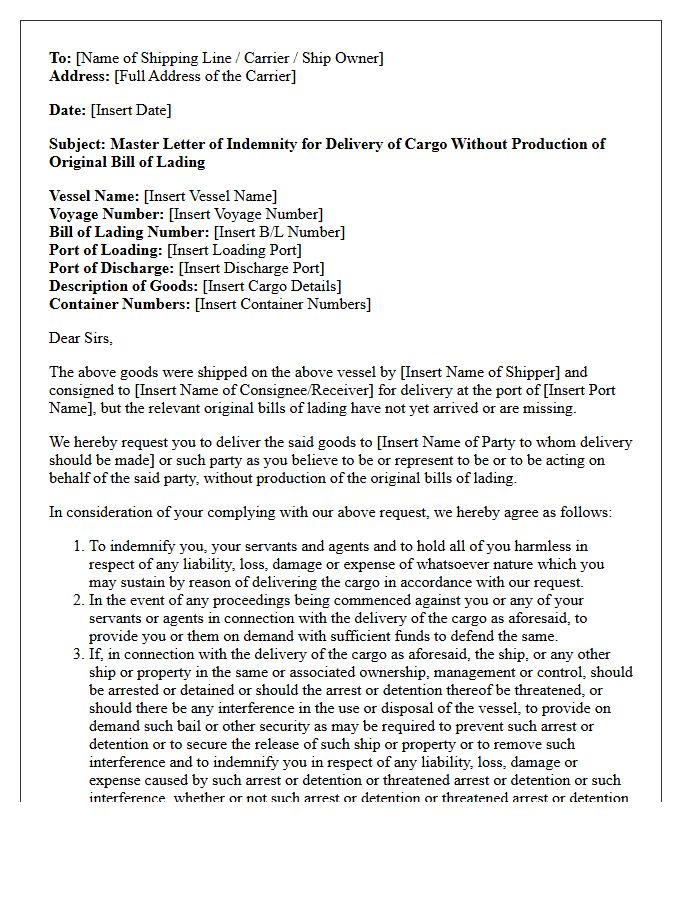
A Master Letter of Indemnity (LOI) is a critical legal contract used in maritime trade to facilitate cargo delivery when original bills of lading are unavailable. It provides a standing guarantee from the charterer to the shipowner, indemnifying them against potential liabilities or third-party claims arising from delivering goods without documentation. This ongoing agreement streamlines operations by avoiding the need for individual letters for every voyage. However, it carries significant risk, as it may void P&I insurance coverage, making the financial strength of the indemnifying party essential for security.
Countersigned Letter of Indemnity for Missing Transport Documents
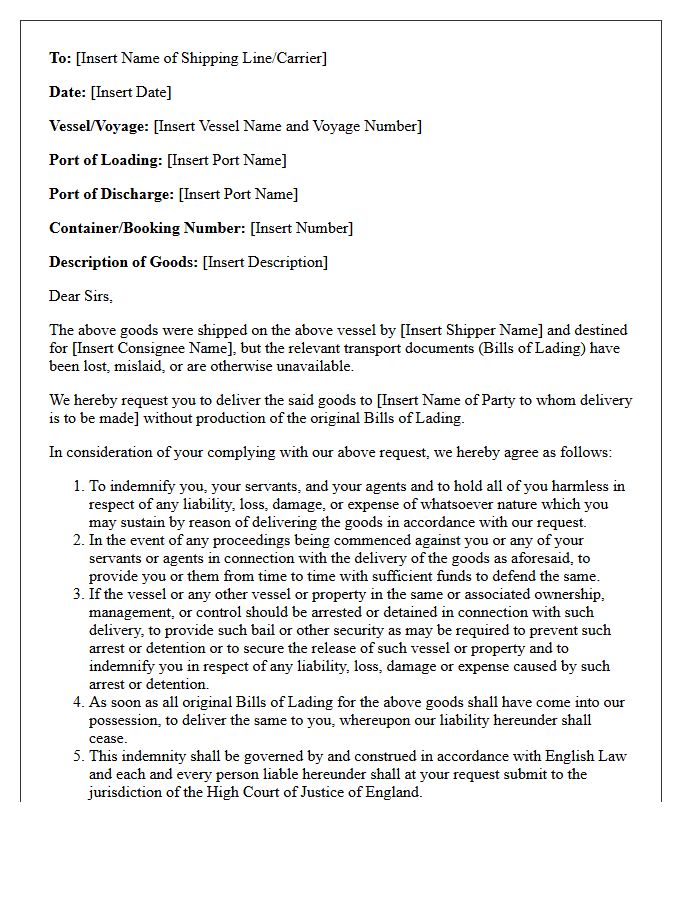
A Countersigned Letter of Indemnity (LOI) is a critical legal guarantee used when original bills of lading are missing. It allows a carrier to release cargo to a receiver without presenting physical titles. To be valid, the document must be bank-guaranteed, meaning a financial institution co-signs the letter to assume liability. This process protects the shipping line against potential third-party claims. It facilitates trade flow but requires strict adherence to wording to ensure the indemnification covers all financial risks, legal costs, and potential damages arising from the delivery.
Letter of Indemnity for Non-Surrender of Transport Documents Under Letter of Credit
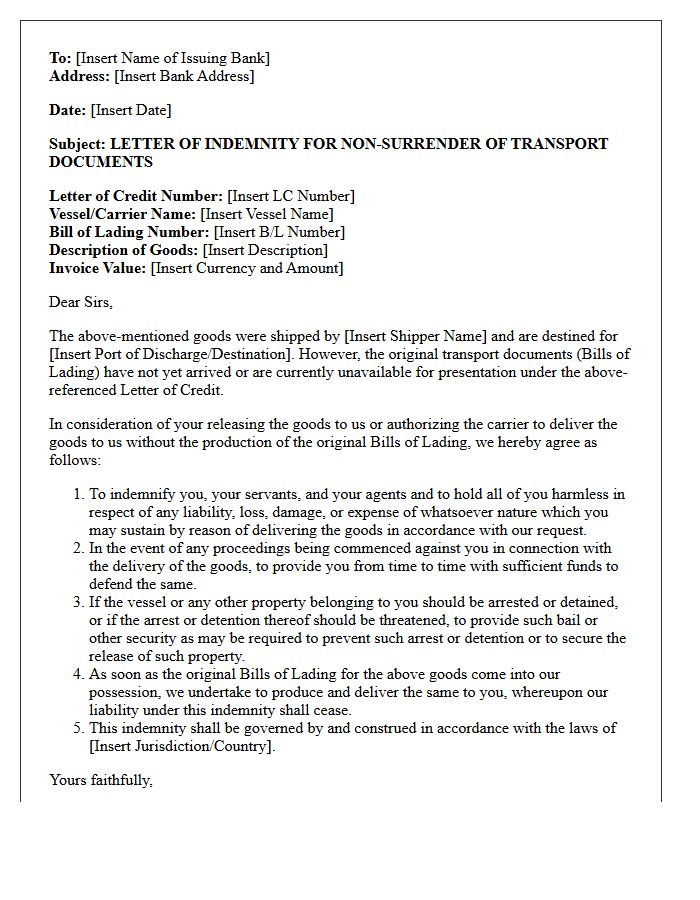
A Letter of Indemnity (LOI) is a critical legal guarantee used when goods arrive before the original bills of lading. Under a Letter of Credit, it allows the buyer to take delivery without surrendering transport documents, protecting the carrier against potential third-party claims. This document effectively replaces the physical title temporarily, ensuring smooth logistics while minimizing demurrage costs. However, it requires a bank countersignature to validate the indemnity, as it shifts significant financial risk to the issuer and their supporting financial institution until the original documents are finally presented.
Letter of Indemnity for Missing Multimodal Transport Document
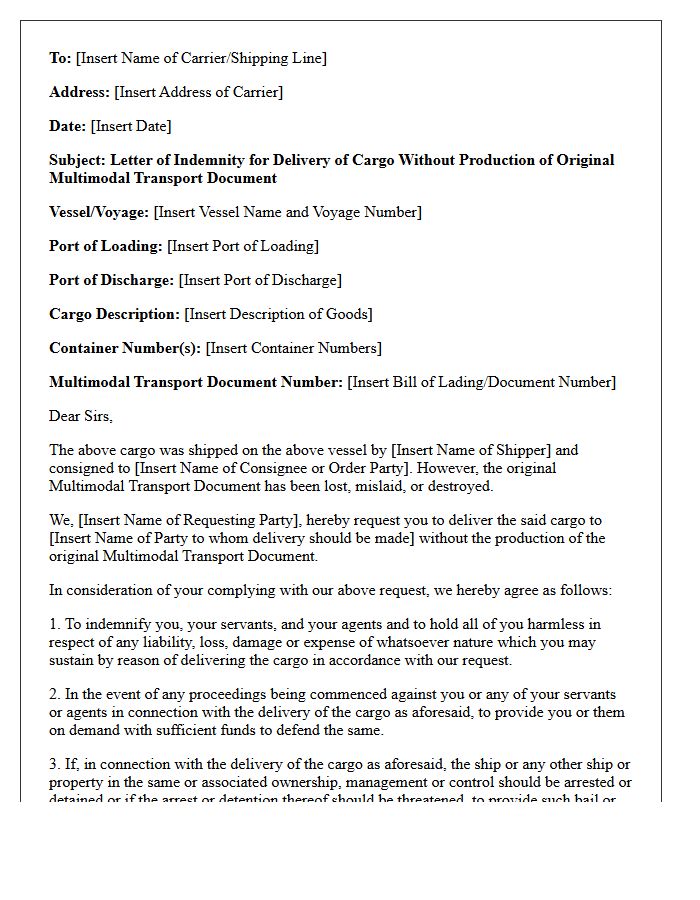
A Letter of Indemnity (LOI) is a critical legal guarantee used when a Multimodal Transport Document is lost or missing. It allows the carrier to release cargo to the consignee without presenting the original bill of lading. By signing this document, the requester agrees to indemnify the carrier against any future legal claims or financial losses resulting from the delivery. This process ensures global supply chain continuity but requires bank countersignatures to mitigate the high financial risks involved for the shipping line and the receiver.
Trade Finance Letter of Indemnity for Missing Transport Documents
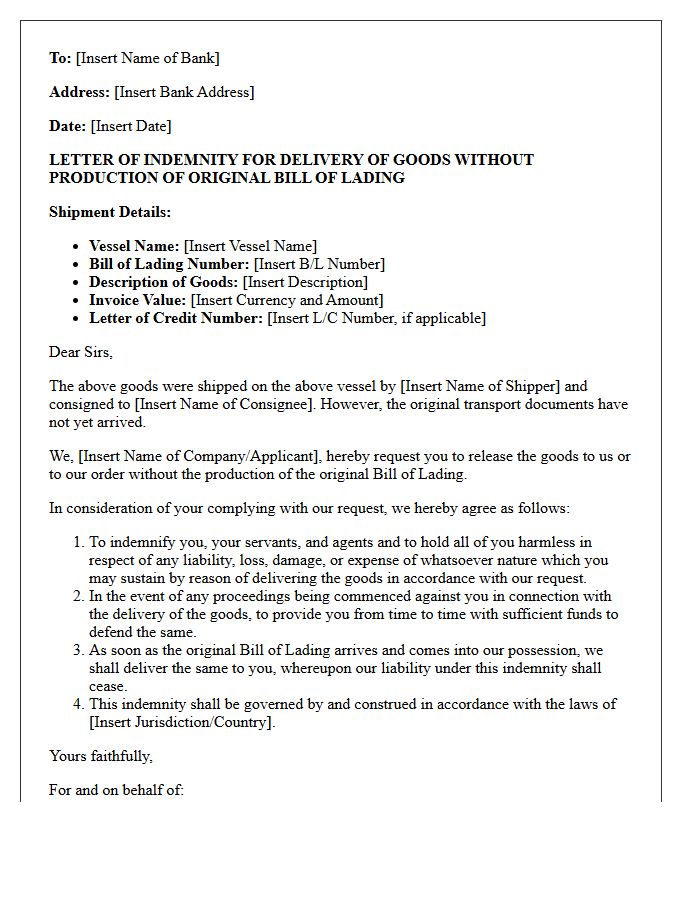
A Letter of Indemnity (LOI) is a critical contractual guarantee used when original bills of lading are unavailable at the port of discharge. It allows the release of cargo to a specified party without presenting the physical title documents, preventing costly port delays. By issuing an LOI, the requester agrees to indemnify the carrier against any potential legal risks or financial claims arising from misdelivery. In trade finance, banks often countersign these documents to provide security, ensuring the smooth flow of international commerce despite missing transport documents.
Letter of Indemnity for Missing Railway Receipt Document
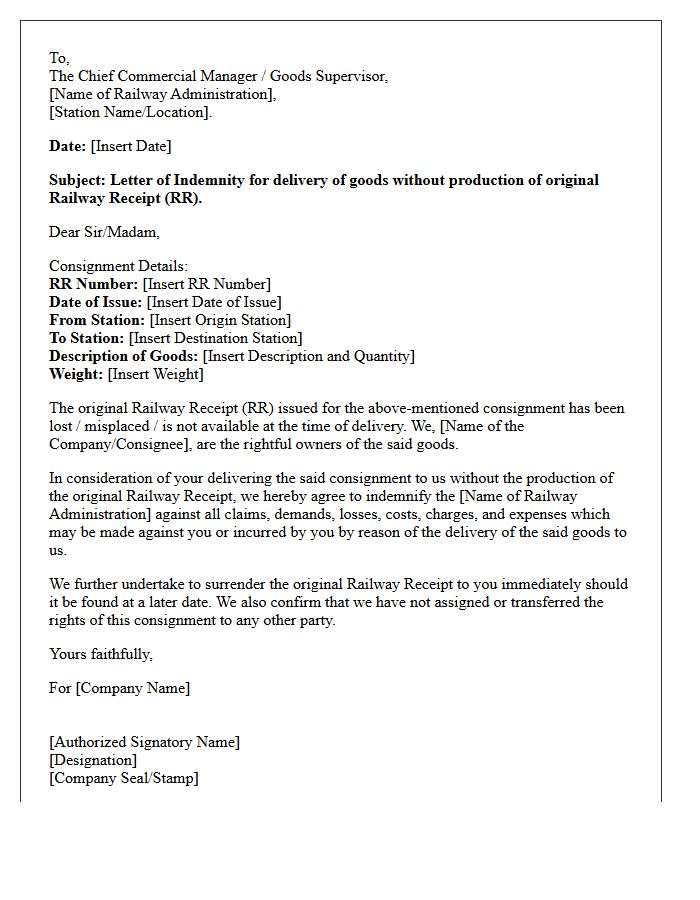
A Letter of Indemnity (LOI) is a crucial legal undertaking used when an original railway receipt is lost or unavailable. It allows the consignee to claim goods from the carrier by guaranteeing protection against potential future claims or financial losses. By signing this document, the receiver accepts full liability, ensuring the railway authority is indemnified for releasing cargo without standard documentation. This process prevents delivery delays while maintaining legal security for the transport provider during transit disputes or administrative errors.
Corporate Letter of Indemnity for Missing Transport Documents Under Bank Guarantee
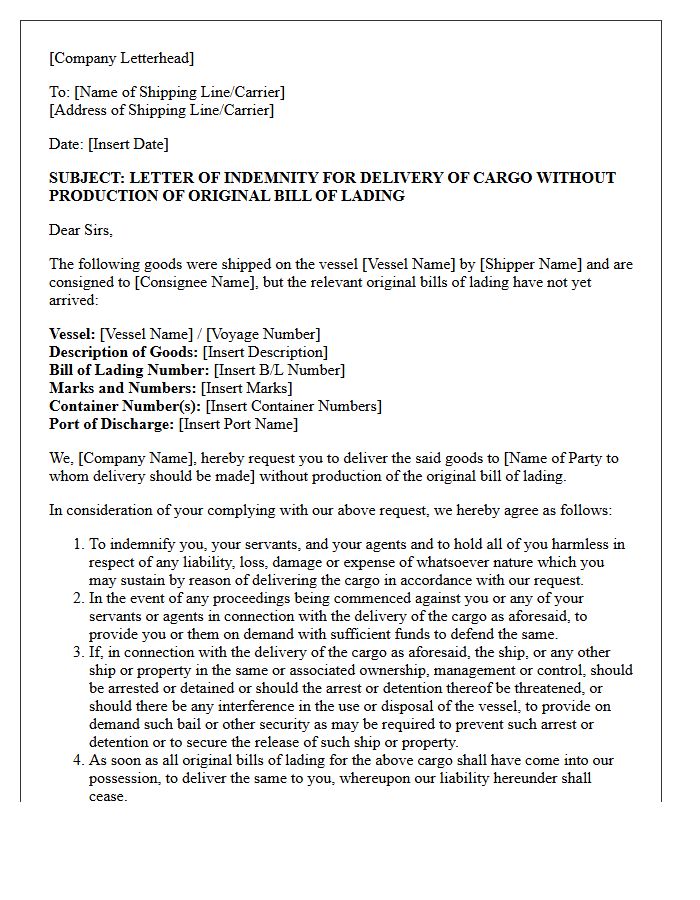
A Corporate Letter of Indemnity (LOI) is a vital contractual guarantee used in international trade to facilitate cargo release when original bills of lading are unavailable. Supported by a bank guarantee, this document protects the carrier against potential liabilities or competing claims. It ensures uninterrupted logistics by allowing the consignee to take possession of goods immediately. However, the indemnifying party remains legally responsible for all financial losses, legal costs, or damages arising from the delivery, making accurate documentation and bank countersignatures essential for risk mitigation.
Irrevocable Letter of Indemnity for Missing Transport Documents
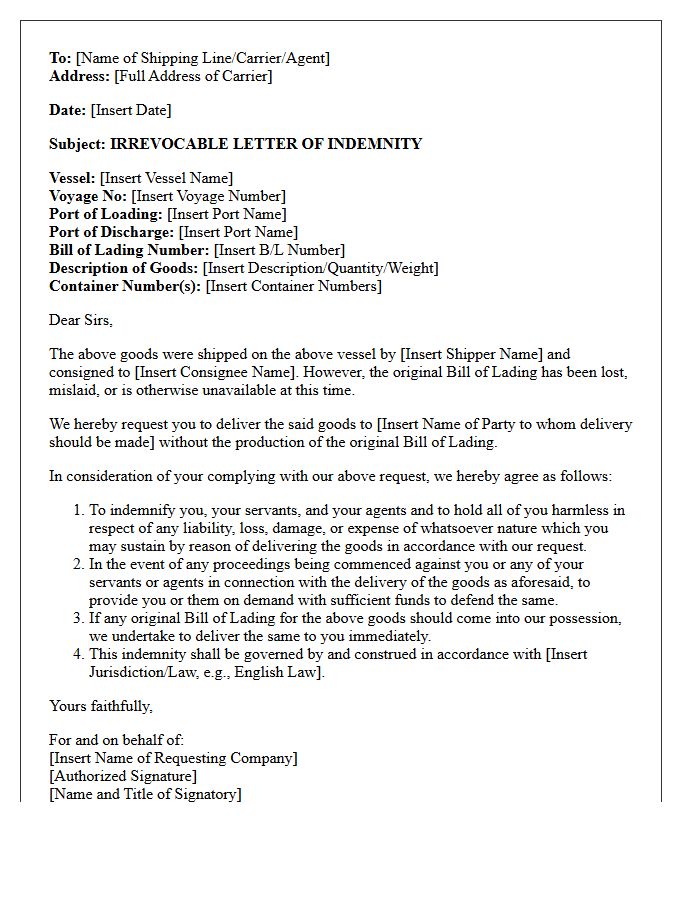
An Irrevocable Letter of Indemnity (LOI) is a legally binding contract used to facilitate cargo delivery when original bills of lading are lost or delayed. By issuing this document, the requester guarantees to compensate the carrier for any potential financial losses or legal claims arising from delivering goods without proper documentation. It acts as a contractual guarantee, shifting risk from the shipowner to the party receiving the cargo. Because it is irrevocable, the commitment cannot be cancelled, ensuring the carrier remains protected against third-party ownership disputes throughout the shipping process.
What is a Letter of Indemnity (LOI) for missing transport documents?
A Letter of Indemnity (LOI) is a legal document used in international trade that allows a carrier to release cargo to a receiver without the presentation of the original Bill of Lading. It acts as a contractual guarantee where the requestor agrees to indemnify the carrier against any potential liability or financial loss arising from delivering the goods without the original title documents.
When is a Letter of Indemnity required in shipping?
An LOI is required when the original transport documents, such as the Bill of Lading, are lost, delayed in the post, or have not reached the destination port before the vessel arrives. Using an LOI prevents costly demurrage and storage charges by allowing the immediate discharge and delivery of goods to the authorized party.
Who are the parties involved in an LOI for missing documents?
The primary parties involved are the "Indemnifier" (typically the charterer or the receiver), the "Beneficiary" (the shipowner or carrier), and often a first-class bank. Most carriers require the LOI to be countersigned by a bank to ensure financial security if a third party later presents the original Bill of Lading and claims ownership of the cargo.
What risks are associated with issuing a Letter of Indemnity?
The main risk is the "double claim" scenario, where a holder of the original Bill of Lading demands the cargo after it has already been released. Additionally, issuing an LOI for delivery without original documents can prejudice a shipowner's Protection and Indemnity (P&I) insurance coverage, meaning the owner may have to rely solely on the indemnity provided by the requestor.
What key information should be included in a Letter of Indemnity?
A standard LOI should include the vessel name, description of the cargo, port of loading and discharge, container numbers, and a clear undertaking to indemnify the carrier for all liabilities, losses, and legal costs. It must also include a clause stating that the indemnity will expire once the original Bills of Lading are surrendered to the carrier.

Comments