
To maintain security, banks and financial institutions often issue a Notification of Blocked Foreign Transaction when suspicious international activity is detected. This alert protects your account from potential fraud or unauthorized access across borders. Understanding these protocols helps you resolve payment issues quickly and secure your funds. Below are some ready to use templates for your communication needs.
Image cover: Your Account Security: Foreign Transaction Notification Templates and Samples
Letter Samples List
- Letter Regarding Blocked Foreign Transaction Due to Suspected Fraudulent Activity
- Notification Letter of Blocked International Wire Transfer for Sanctions Compliance
- Letter of Suspended Foreign Remittance Pending Anti-Money Laundering Review
- Official Letter of Blocked Cross-Border Transaction Awaiting Additional Beneficiary Information
- Letter Explaining Blocked Foreign Debit Transaction Due to Disabled International Card Usage
- Notification Letter of Blocked Foreign Payment Addressed to Restricted Jurisdictions
- Letter of Temporary Security Hold on Unrecognized Foreign Merchant Transaction
- Bank Notification Letter of Blocked Foreign Transaction Exceeding Daily Currency Limits
- Letter of Declined Foreign Exchange Transaction Due to Insufficient Settlement Funds
- Required Documentation Letter for Blocked Foreign Corporate Trade Transaction
- Letter of Blocked Foreign Credit Card Transaction at Unverified Overseas Merchant
- Compliance Verification Letter for Blocked Outbound Foreign Currency Transfer
Letter Regarding Blocked Foreign Transaction Due to Suspected Fraudulent Activity
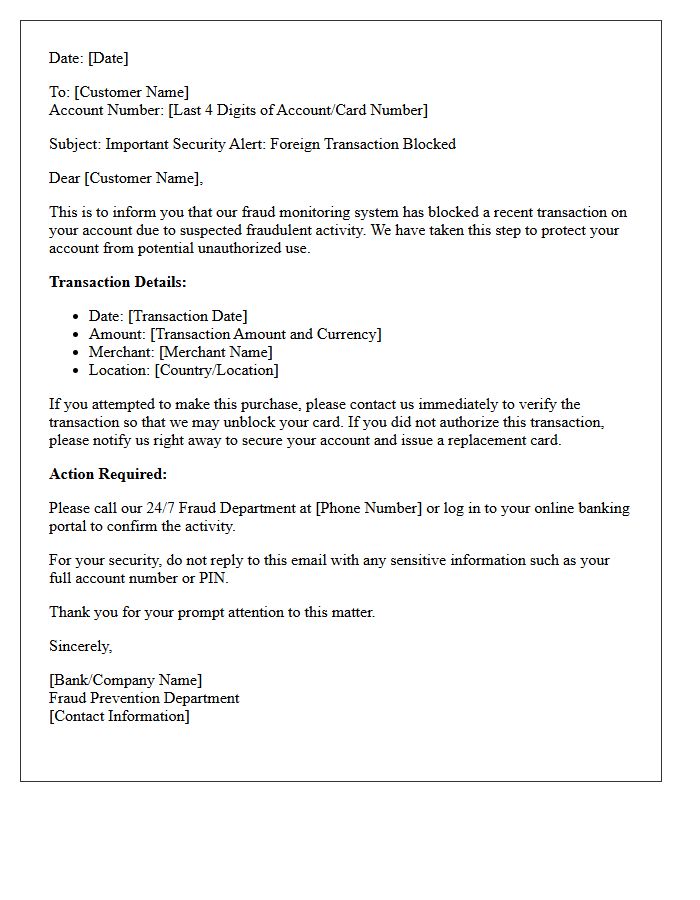
Receiving a letter regarding a blocked foreign transaction indicates your bank detected suspected fraudulent activity on your account. To protect your funds, the financial institution halted the payment until you confirm its legitimacy. You must immediately contact the bank's official fraud department to verify whether you authorized the international charge. Failure to respond may lead to a temporary account freeze or card cancellation. Always ensure the notification is authentic by checking your official banking app or calling the number on the back of your physical card to prevent phishing scams.
Notification Letter of Blocked International Wire Transfer for Sanctions Compliance
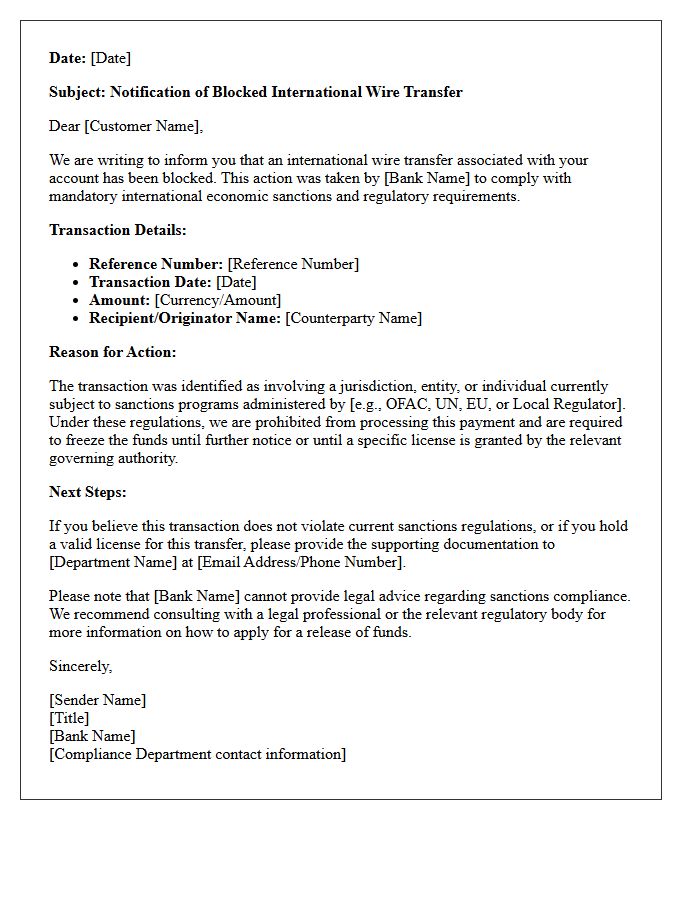
Receiving a Notification Letter of Blocked International Wire Transfer indicates that your transaction was intercepted by a financial institution to ensure Sanctions Compliance. This typically occurs if the payment involves entities, individuals, or jurisdictions flagged by regulatory bodies like OFAC. The funds are held in a restricted account and cannot be released or returned without specific government authorization. It is essential to review the provided Reference Number and seek legal guidance to file a license application for the release of the blocked assets from the designated authority.
Letter of Suspended Foreign Remittance Pending Anti-Money Laundering Review
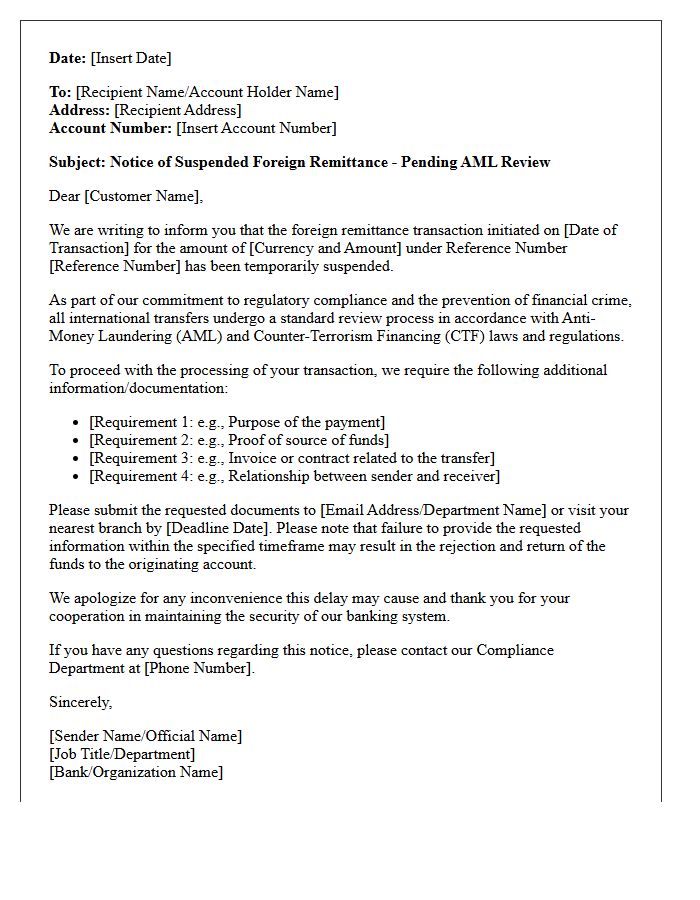
A Letter of Suspended Foreign Remittance indicates that your international transfer is temporarily held by a financial institution. This occurs during a mandatory Anti-Money Laundering (AML) review to verify the source of funds and ensure compliance with global financial regulations. To resolve the hold, you must promptly provide requested documentation, such as invoices or proof of income, to satisfy due diligence requirements. Failure to respond may lead to the transaction being rejected or the funds being permanently frozen by regulatory authorities to prevent illicit financial activity.
Official Letter of Blocked Cross-Border Transaction Awaiting Additional Beneficiary Information
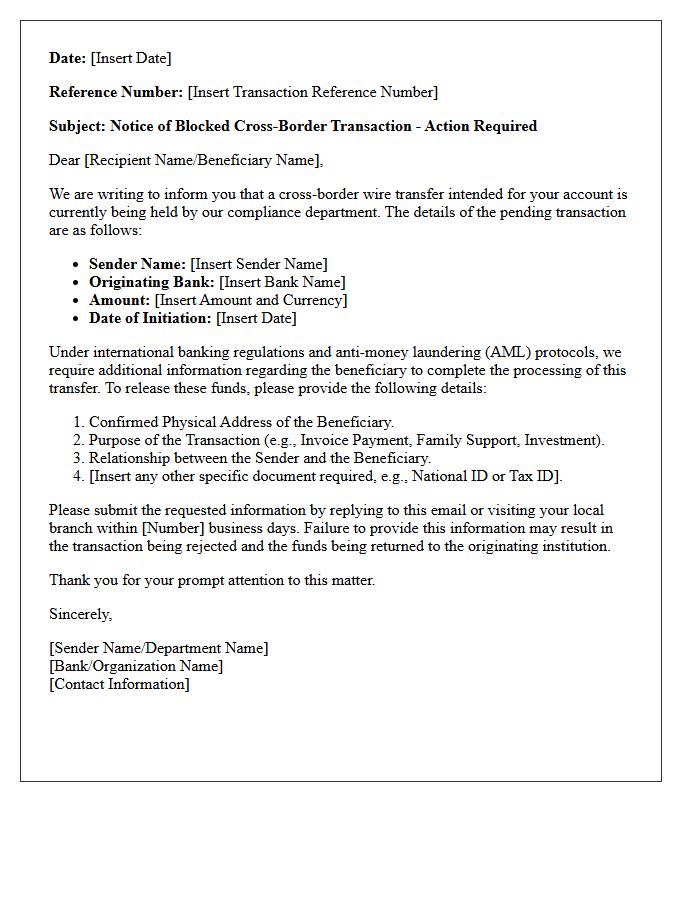
Receiving an Official Letter of Blocked Cross-Border Transaction indicates that a global payment is being held by a financial institution. This hold usually occurs due to missing Additional Beneficiary Information required for regulatory compliance or anti-money laundering checks. To resolve the delay, you must promptly provide the requested details, such as the recipient's full address, purpose of payment, or legal identification. Failure to respond may result in the permanent rejection or return of funds. Always verify the request through your official banking portal to ensure the communication is legitimate.
Letter Explaining Blocked Foreign Debit Transaction Due to Disabled International Card Usage
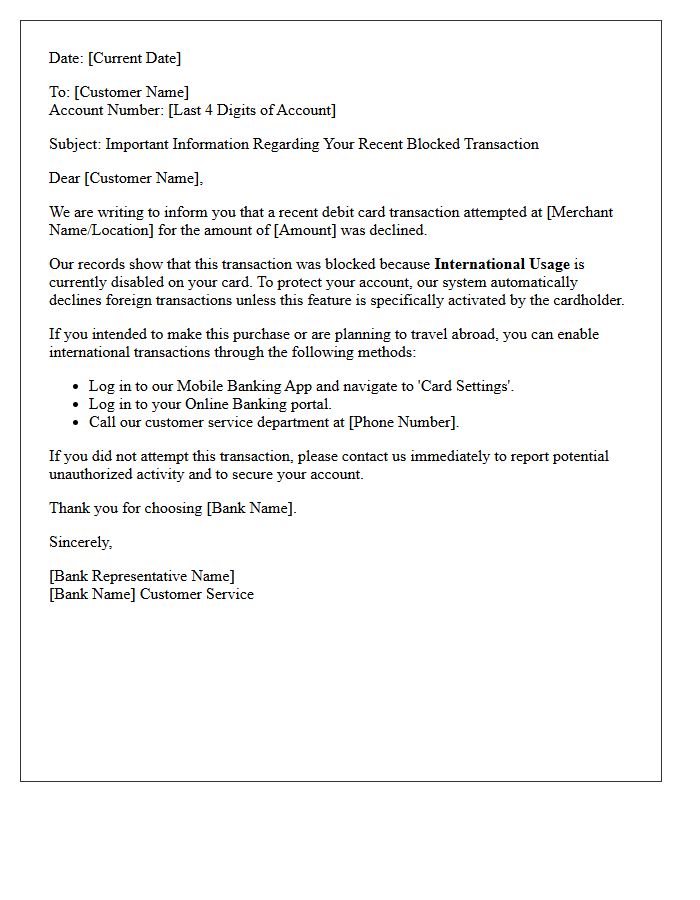
If you receive a notification regarding a blocked foreign debit transaction, it typically indicates that your bank's security settings have disabled international card usage. This automated measure prevents unauthorized cross-border charges. To resolve this, you must access your online banking portal or mobile app to manually toggle the international transactions setting to "on." Always ensure your travel notifications are updated before departure to avoid service interruptions. Enabling this feature allows for seamless global payments while maintaining control over your account security and preventing potential fraudulent activity abroad.
Notification Letter of Blocked Foreign Payment Addressed to Restricted Jurisdictions
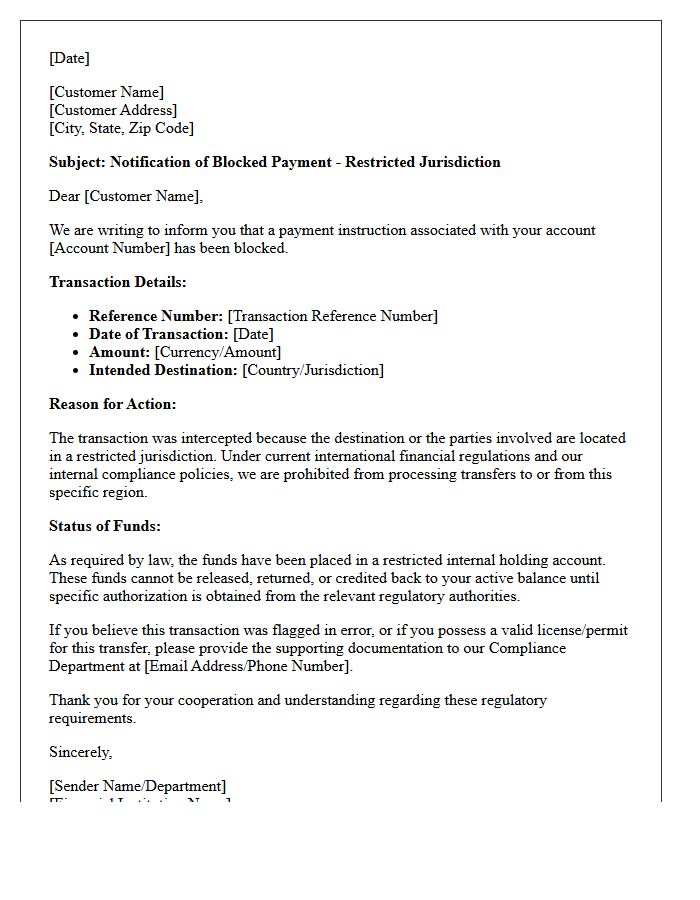
A notification letter regarding a blocked foreign payment informs parties that a transaction was intercepted due to sanctions compliance. Financial institutions issue these notices when funds involve restricted jurisdictions subject to international trade embargoes. To maintain regulatory adherence, banks freeze assets that conflict with OFAC or similar governmental policies. Receiving this letter indicates that the transfer cannot proceed until a specific license or legal clearance is obtained from relevant authorities. Failure to address these restrictions can lead to severe penalties for both the sender and the intermediary bank involved.
Letter of Temporary Security Hold on Unrecognized Foreign Merchant Transaction
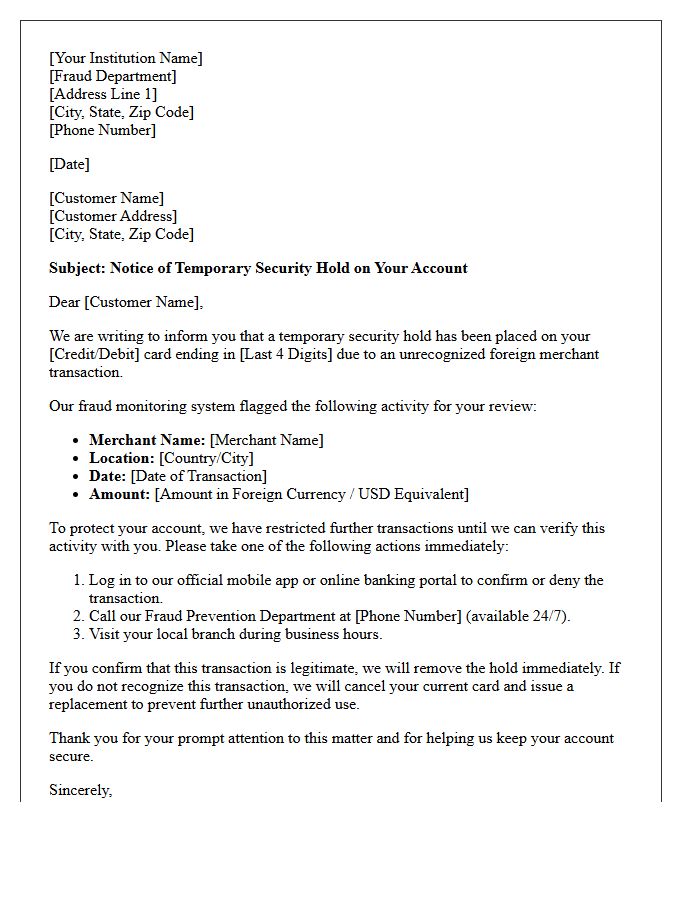
A Letter of Temporary Security Hold on Unrecognized Foreign Merchant Transaction notifies you that your bank has paused a suspicious international charge to prevent potential fraud. This security measure protects your funds while verifying the payment's legitimacy. You must contact your financial institution immediately to confirm or dispute the activity. If ignored, your card may remain restricted, or unauthorized access could continue. Reviewing these alerts promptly ensures your account remains secure and prevents identity theft involving foreign entities.
Bank Notification Letter of Blocked Foreign Transaction Exceeding Daily Currency Limits
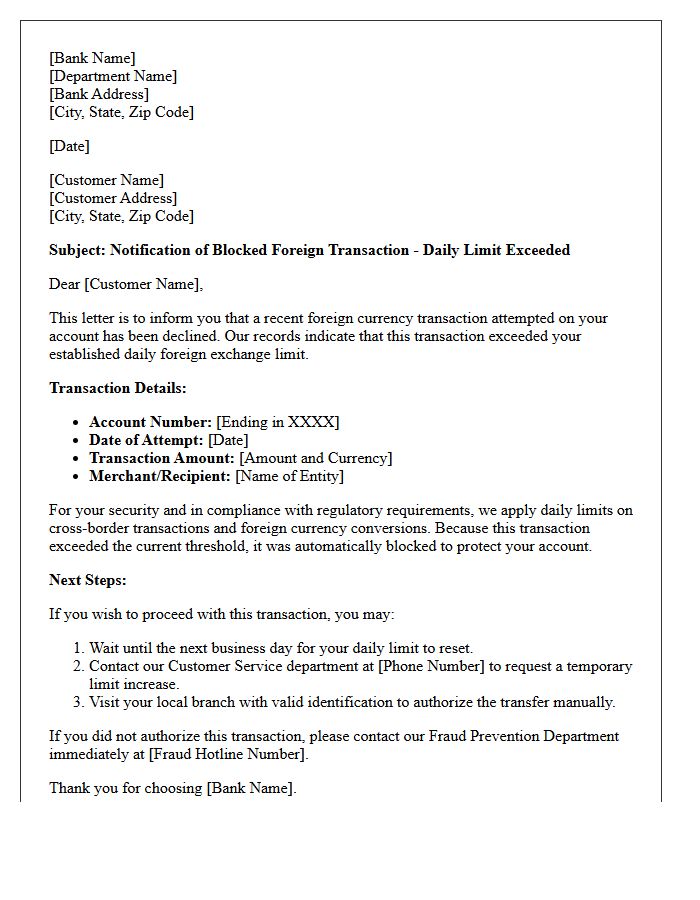
A bank notification letter regarding a blocked foreign transaction informs you that an international payment failed because it exceeded your daily currency limit. This security measure prevents unauthorized high-value transfers and ensures regulatory compliance. To resolve this, you must contact your bank's fraud department to verify your identity and confirm the transaction's legitimacy. You may request a temporary limit increase or provide additional documentation to authorize the release of funds. Always ensure the letter is authentic by checking your official banking app before sharing sensitive personal details.
Letter of Declined Foreign Exchange Transaction Due to Insufficient Settlement Funds
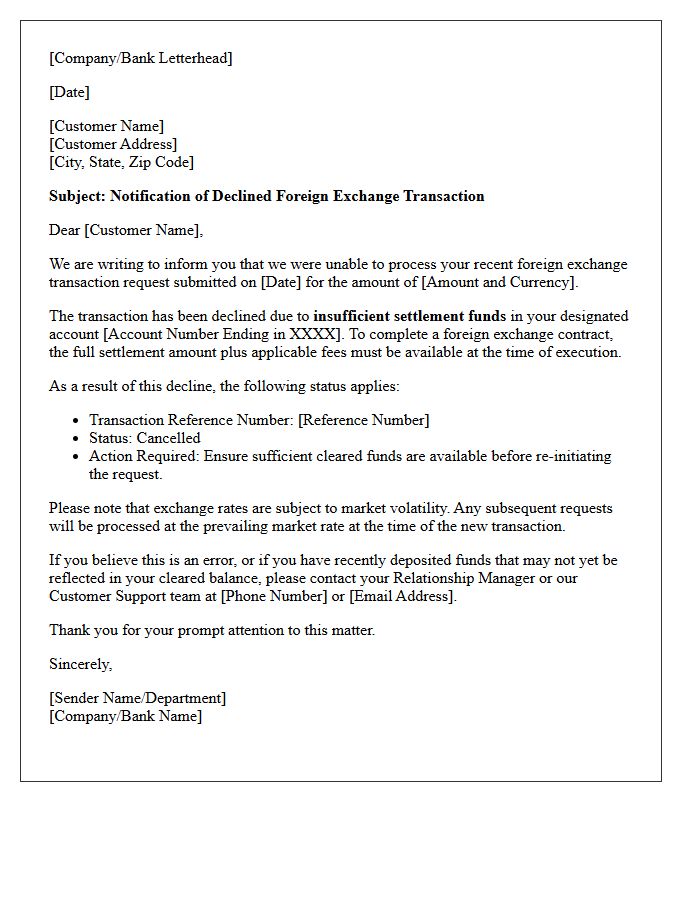
A letter regarding a declined foreign exchange transaction informs clients that their request failed because the available balance in their account was inadequate to cover the trade and associated fees. This notice highlights a settlement funds shortage at the time of execution. To resolve this, ensure your account is sufficiently funded before resubmitting the order. Monitoring real-time exchange rate fluctuations is essential, as volatile market movements can increase the total cost, leading to unexpected transaction rejections during the processing phase.
Required Documentation Letter for Blocked Foreign Corporate Trade Transaction
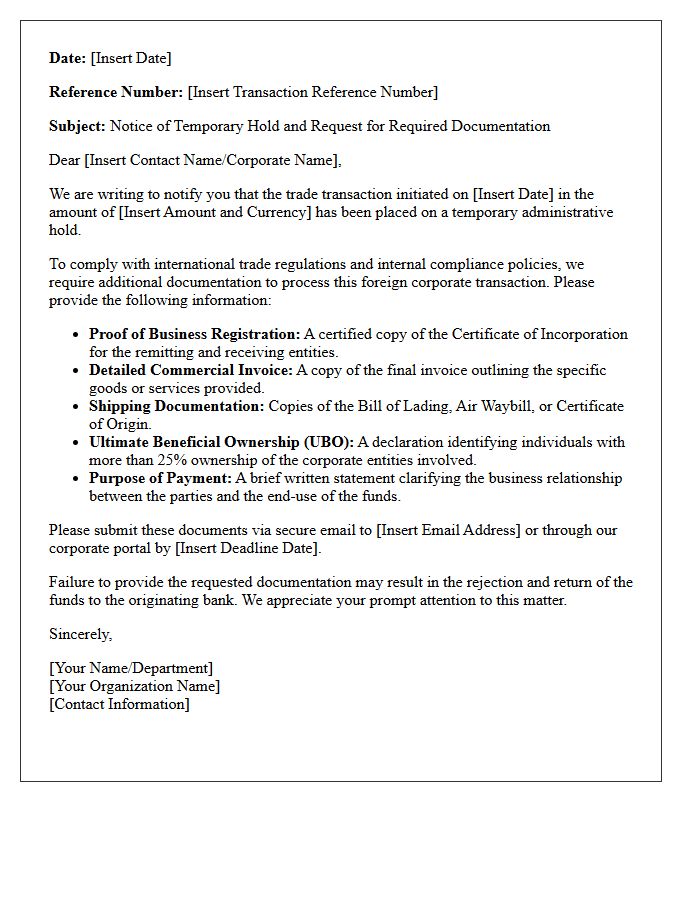
When handling a blocked foreign corporate trade transaction, the Office of Foreign Assets Control (OFAC) requires a specific voluntary self-disclosure or license application letter. This documentation must detail the underlying commercial invoice, bill of lading, and the full identities of all parties involved. Providing a clear narrative of the transaction and evidence of regulatory compliance is essential to resolve holds. Accurate records help authorities verify that the trade does not violate international sanctions, facilitating the legal release of frozen funds through official banking channels.
Letter of Blocked Foreign Credit Card Transaction at Unverified Overseas Merchant
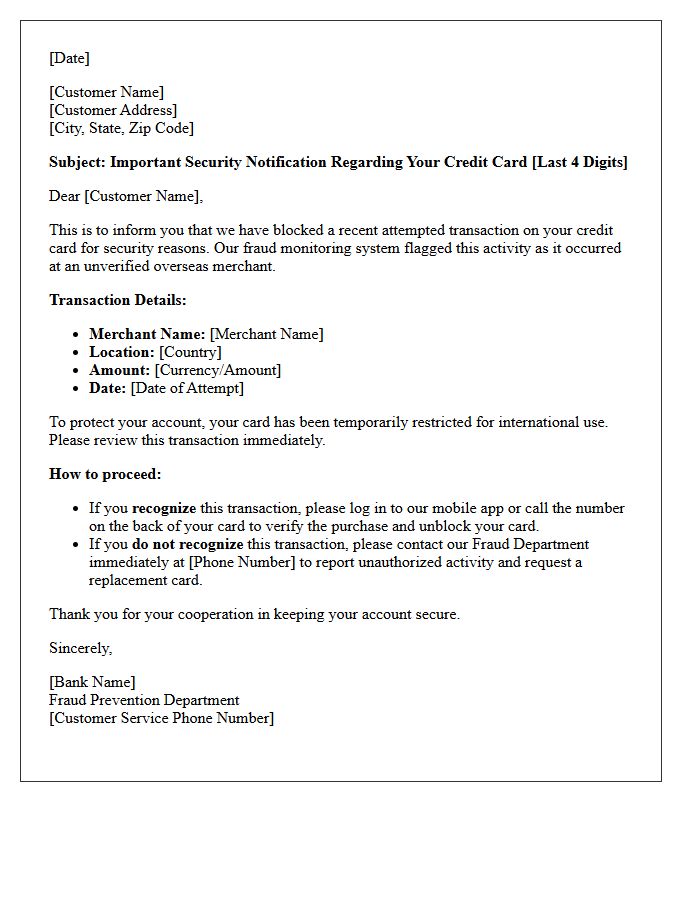
Receiving a letter regarding a blocked foreign credit card transaction typically indicates that your bank's security system flagged an unverified overseas merchant as a high-risk threat. This protective measure prevents potential identity theft and unauthorized charges. To resolve the issue, you must contact your bank immediately to confirm the transaction's legitimacy. If you did not initiate the charge, you should cancel the card and request a replacement. Always notify your issuer of travel plans in advance to minimize future payment disruptions while abroad.
Compliance Verification Letter for Blocked Outbound Foreign Currency Transfer
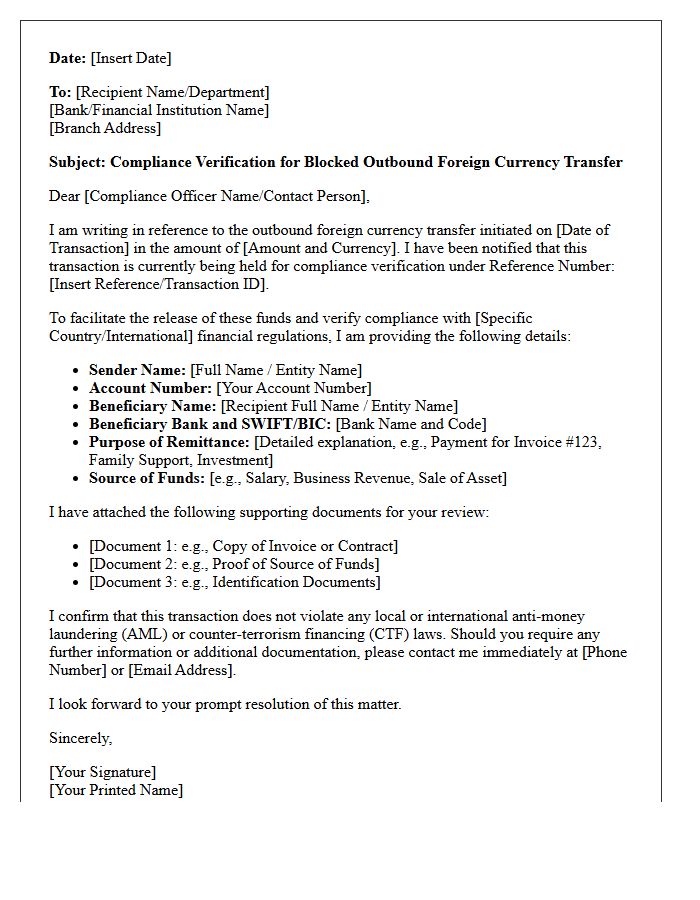
A Compliance Verification Letter is an essential document issued by financial institutions to explain why an outbound foreign currency transfer has been restricted. It serves as a formal request for additional information to ensure the transaction adheres to anti-money laundering (AML) and regulatory standards. To resolve the block, the remitter must provide proof of funds, the purpose of the payment, and tax clearance documentation. Promptly submitting these verified details is the only way to satisfy due diligence requirements and successfully release the funds to the international recipient.
Why was my foreign transaction blocked?
To protect your account from potential fraud, our security systems automatically block international transactions that deviate from your typical spending patterns or originate from high-risk locations.
How do I unblock my card for international use?
You can instantly manage your international transaction settings through our mobile banking app under 'Card Controls' or by logging into your online banking portal to toggle global usage on.
Do I need to submit a travel notice before using my card abroad?
While our advanced fraud monitoring reduced the need for travel notices, submitting your destination and travel dates via our app helps ensure seamless card acceptance during your trip.
What should I do if a legitimate international payment is declined?
If your transaction is declined, check for a real-time SMS or email notification from our fraud department; replying 'YES' to the verification prompt will typically unblock your card for immediate retry.
Are there specific countries where my card will not work?
Due to international sanctions and high fraud volatility, certain regions may be subject to permanent blocks. Please contact our customer support team to verify if your destination is on the restricted list.

Comments