
A Final Overdraft Demand Letter is the last formal notice sent to a customer before legal action or debt collection begins. It serves as a critical warning to settle outstanding negative balances immediately to avoid credit score damage. Clear communication at this stage is essential for debt recovery. To help you draft a professional notice, below are some ready to use templates.

Image cover: Final Overdraft Demand Letter: Templates and Strategic Communication Guide
Letter Samples List
- Retail Banking Final Overdraft Demand Letter
- Commercial Account Final Overdraft Demand Letter
- Small Business Final Overdraft Demand Letter
- Corporate Entity Final Overdraft Demand Letter
- Joint Account Final Overdraft Demand Letter
- Trust Account Final Overdraft Demand Letter
- Pre-Collection Final Overdraft Demand Letter
- Legal Action Warning Final Overdraft Demand Letter
- Account Closure Final Overdraft Demand Letter
- Credit Bureau Reporting Final Overdraft Demand Letter
- Debt Recovery Agency Final Overdraft Demand Letter
- Settlement Arrangement Final Overdraft Demand Letter
Retail Banking Final Overdraft Demand Letter
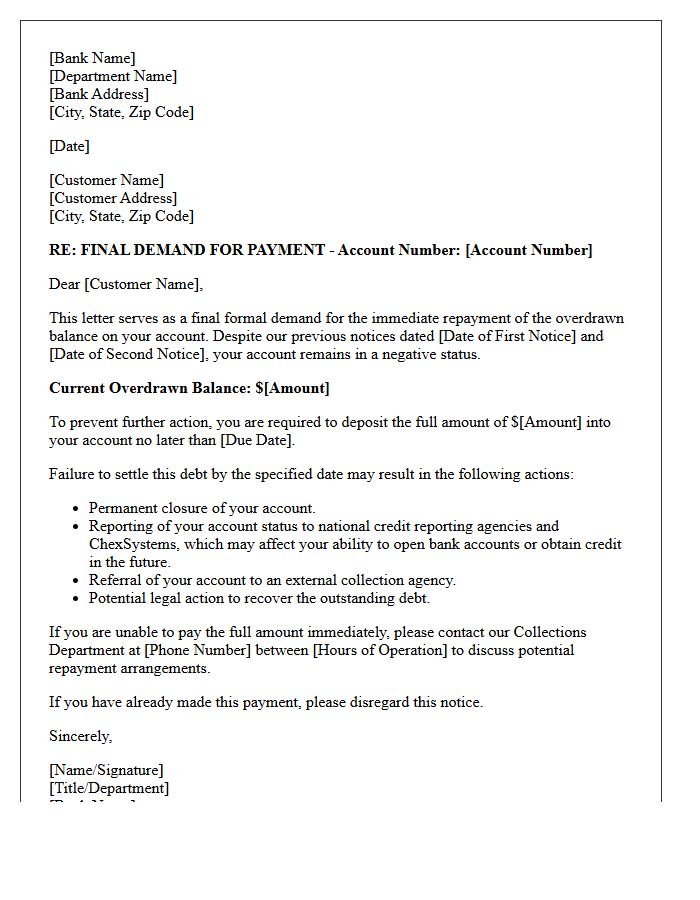
A Retail Banking Final Overdraft Demand Letter is a legal notice issued when an account remains overdrawn despite previous warnings. It serves as a formal ultimatum, requiring immediate repayment of the negative balance plus accrued fees. Ignoring this document often leads to account closure and the reporting of your delinquency to ChexSystems or credit bureaus. To avoid aggressive debt collection actions or legal proceedings, recipients should contact their bank instantly to settle the debt or establish a structured repayment plan to protect their financial reputation.
Commercial Account Final Overdraft Demand Letter
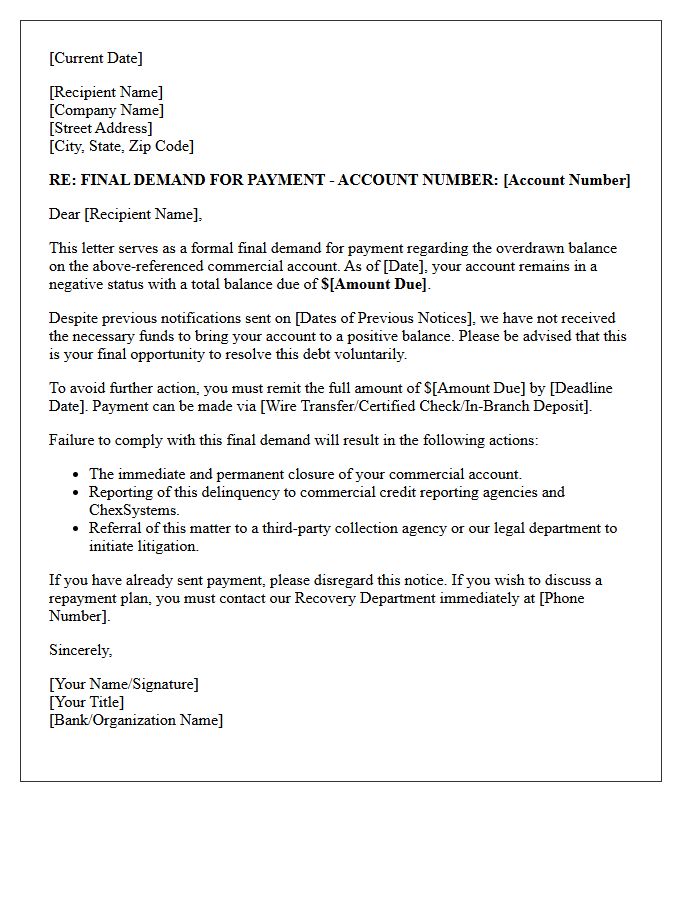
A Commercial Account Final Overdraft Demand Letter is a legal notice issued by a financial institution requiring immediate repayment of a negative balance. It serves as a final warning before the bank initiates debt collection or legal proceedings against a business. This document typically outlines the outstanding debt, accrued interest, and a strict deadline for payment. Ignoring this demand can lead to account closure, damaged credit ratings, and potential litigation. Business owners should prioritize reconciling these funds promptly to maintain corporate banking privileges and avoid further financial penalties.
Small Business Final Overdraft Demand Letter
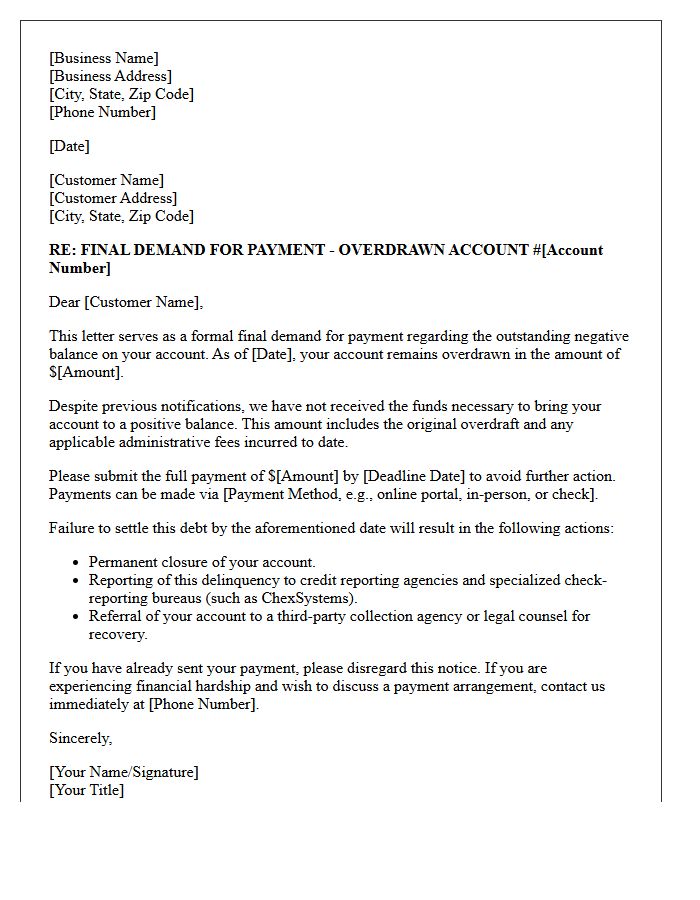
A Small Business Final Overdraft Demand Letter is a legal notice issued by a financial institution before initiating formal recovery actions. This document serves as a final warning for a business to settle outstanding negative balances immediately. It typically outlines the total debt, applicable fees, and a strict deadline for payment. Ignoring this demand can lead to account closure, damaged credit scores, and potential litigation. To resolve the issue, business owners should prioritize repayment or negotiate a settlement plan to avoid further professional and financial consequences.
Corporate Entity Final Overdraft Demand Letter
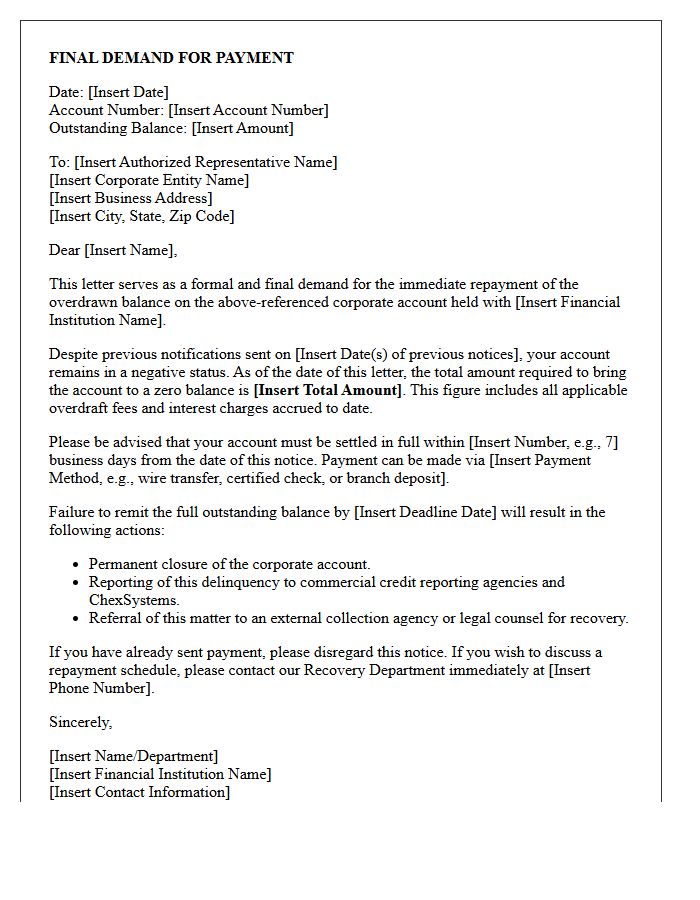
A Corporate Entity Final Overdraft Demand Letter is a formal legal notice issued by a financial institution to a business. It serves as the last warning regarding a negative account balance that must be rectified immediately. This document outlines the total debt, including accrued interest and penalties, while specifying a strict deadline for payment. Failure to settle the amount often results in legal action, account closure, or reporting to credit agencies. It is critical for companies to respond promptly to avoid severe damage to their corporate credit rating and future borrowing capacity.
Joint Account Final Overdraft Demand Letter
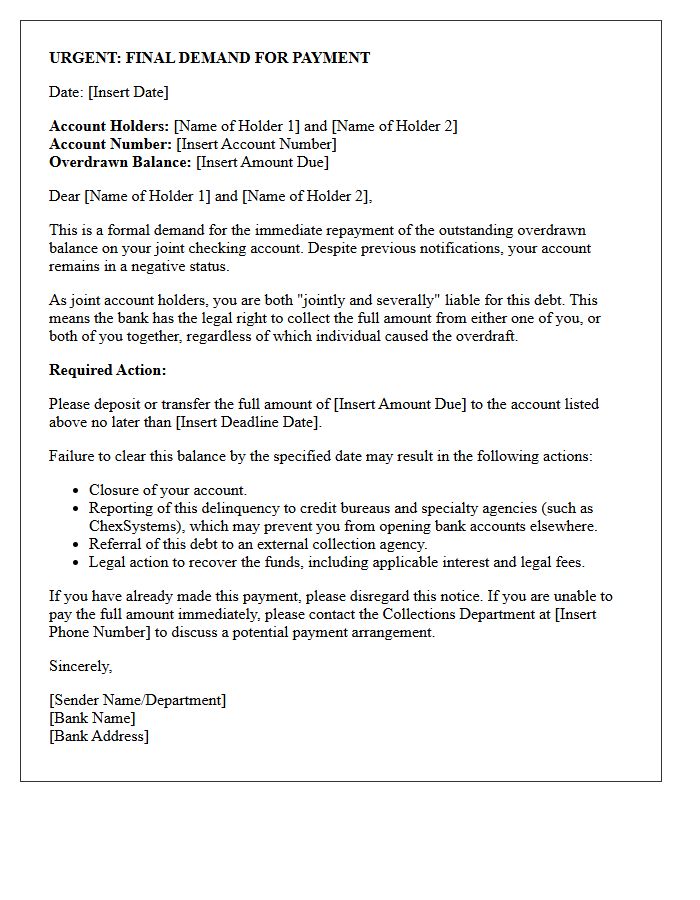
A Joint Account Final Overdraft Demand Letter is a formal notice issued by banks when a shared account remains overdrawn despite previous warnings. It is crucial to understand that joint and several liability applies, meaning each account holder is individually responsible for the entire debt, regardless of who spent the funds. Failure to settle the balance immediately can lead to account closure, damaged credit scores, and potential legal action or referral to debt collection agencies. Prompt communication with the financial institution is essential to negotiate repayment terms and avoid further penalties.
Trust Account Final Overdraft Demand Letter
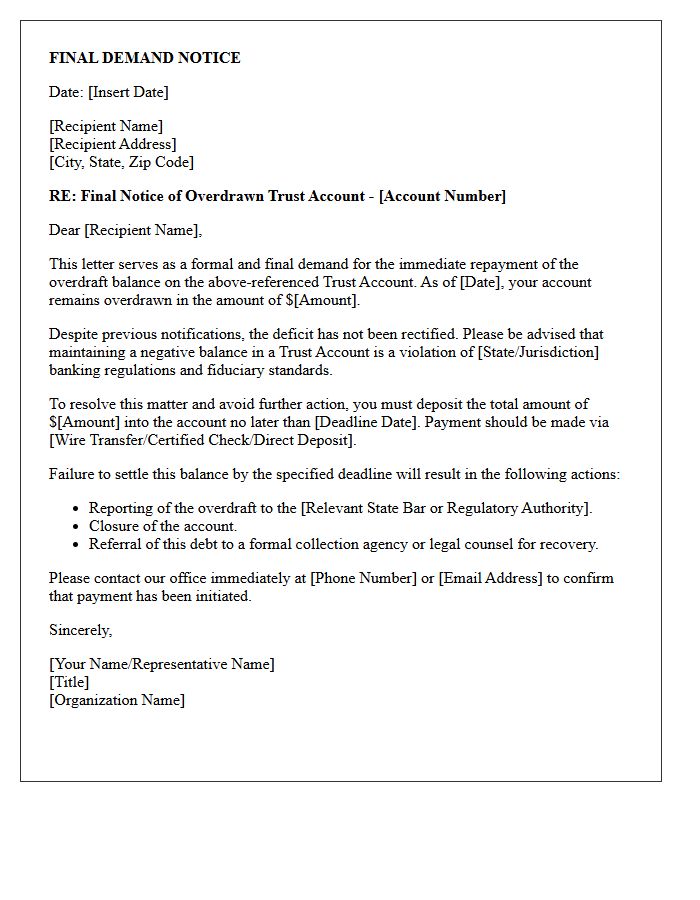
A Trust Account Final Overdraft Demand Letter is a formal legal notice issued when a fiduciary account remains in a negative balance. This document serves as a final warning before the financial institution initiates collections or reports the matter to regulatory authorities. It typically outlines the outstanding debt, specifies a strict repayment deadline, and warns of potential legal action or loss of professional licensing. Timely resolution is critical to maintain fiduciary compliance and avoid severe financial penalties or damage to your professional reputation.
Pre-Collection Final Overdraft Demand Letter
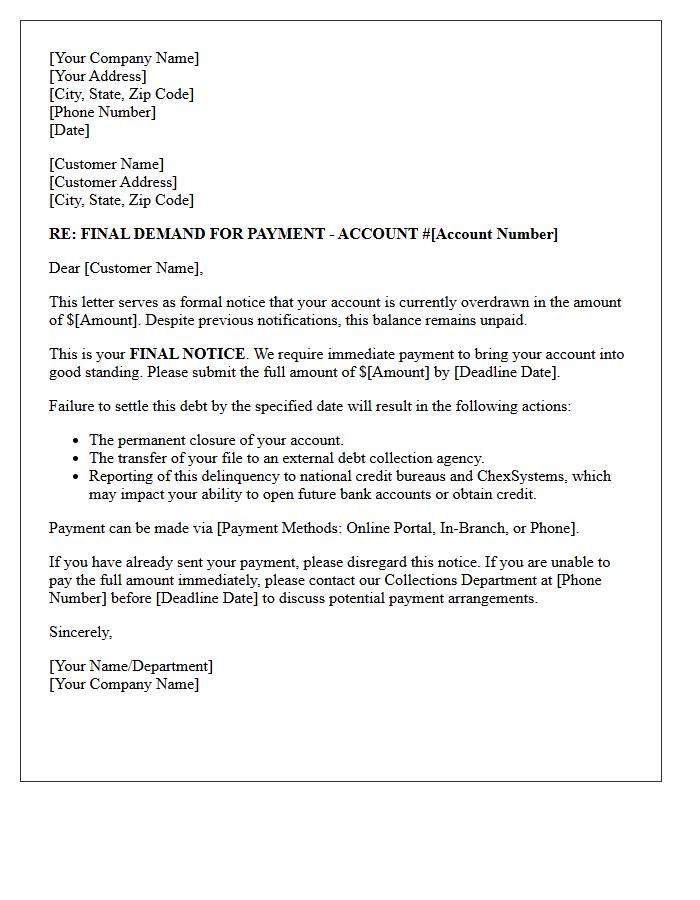
A Pre-Collection Final Overdraft Demand Letter is the last formal notice sent by a financial institution before escalating a negative balance to third-party collection agencies. This document serves as a critical warning, granting a specific deadline to repay the debt and avoid severe consequences. Failing to settle the account promptly can lead to permanent bank account closure, significant damage to your credit score, and reported entries in consumer databases like ChexSystems, which may prevent you from opening future banking accounts. Immediate repayment is essential to protect your financial standing.
Legal Action Warning Final Overdraft Demand Letter
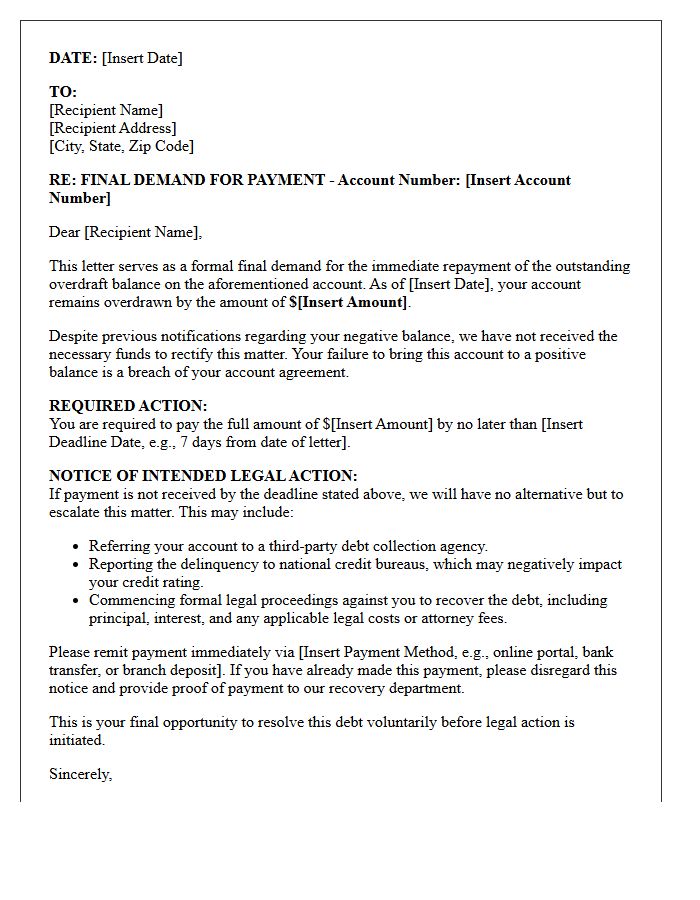
A Legal Action Warning Final Overdraft Demand Letter is a formal notice issued by financial institutions before initiating litigation. It serves as a final opportunity to settle an outstanding debt and avoid court proceedings. Receiving this document indicates that your account remains severely overdrawn despite prior requests. Ignoring this letter may lead to legal judgments, additional collection fees, and significant damage to your credit score. It is critical to contact the creditor immediately to negotiate a repayment plan or verify the debt's accuracy to prevent further escalation or asset garnishment.
Account Closure Final Overdraft Demand Letter
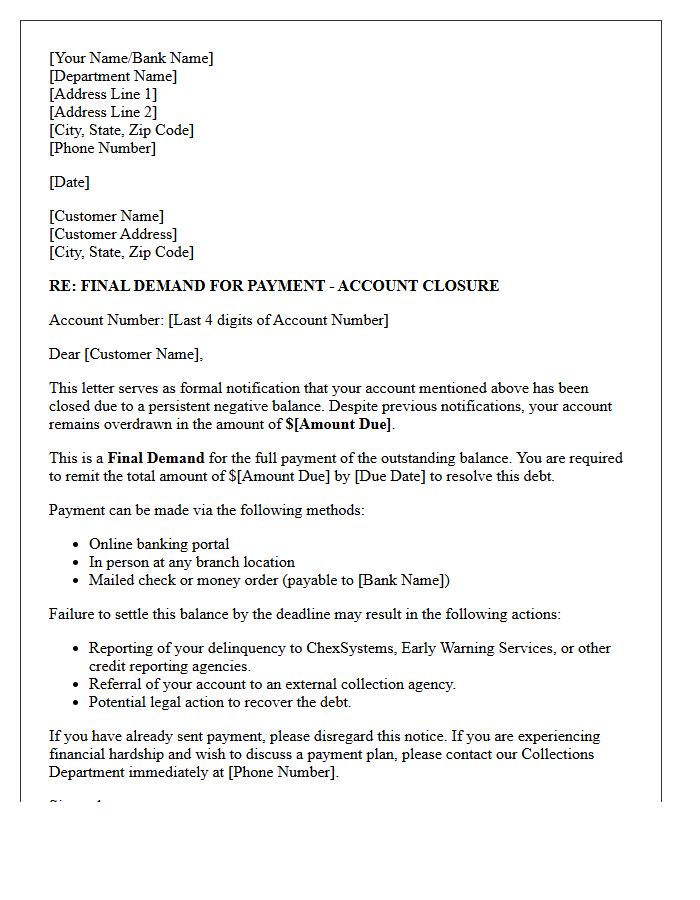
An Account Closure Final Overdraft Demand Letter is a formal legal notice sent by a bank when a checking account is closed with a negative balance. This document serves as a final warning to settle the outstanding debt before the file is transferred to a third-party collection agency. It typically includes the total amount owed, a specific payment deadline, and potential consequences, such as negative reports to ChexSystems. Failure to respond can severely damage your credit score and limit your ability to open future bank accounts.
Credit Bureau Reporting Final Overdraft Demand Letter
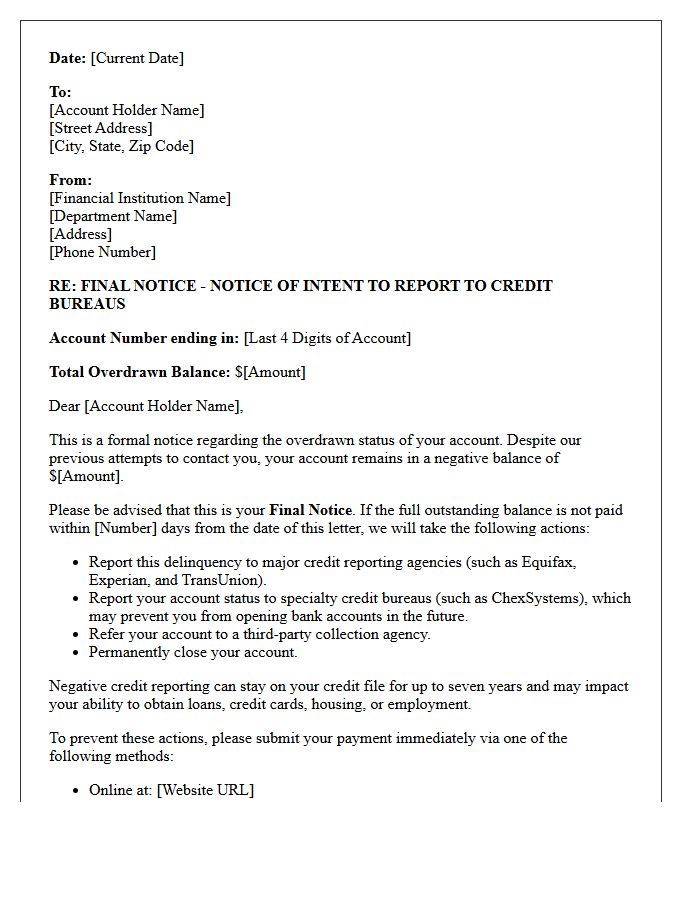
A Credit Bureau Reporting Final Overdraft Demand Letter is a critical notice sent by financial institutions before reporting negative account information. This document serves as a final warning that your unpaid overdrawn balance will be sent to agencies like Experian or TransUnion. Receiving this means you have a limited window to settle the debt to avoid a derogatory mark on your credit report. Such entries can lower your credit score and hinder future loan approvals. Promptly repaying the balance or disputing errors is essential to maintaining your financial reputation and preventing long-term credit damage.
Debt Recovery Agency Final Overdraft Demand Letter
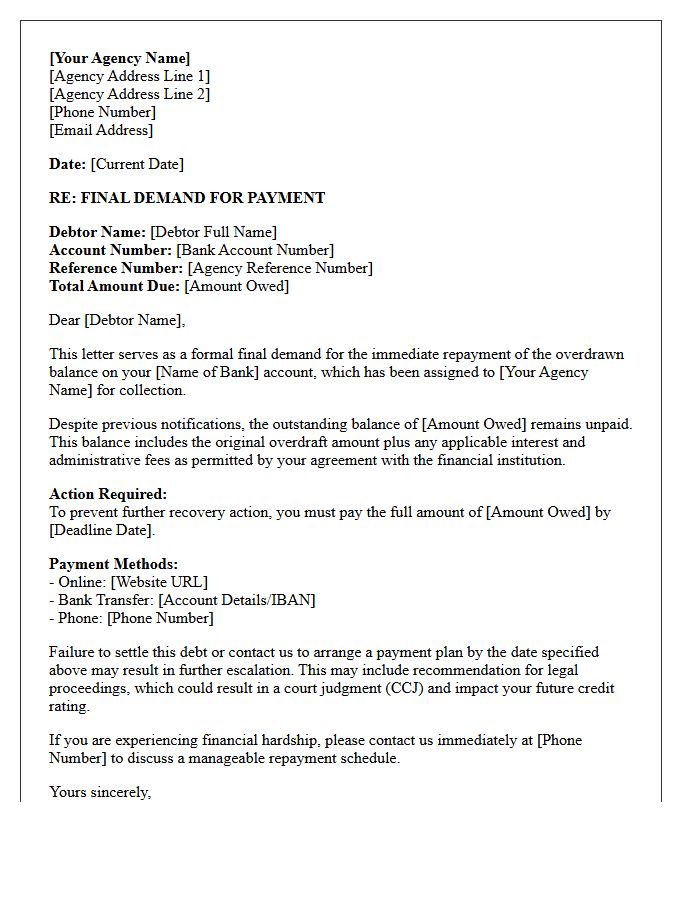
Receiving a Debt Recovery Agency Final Overdraft Demand Letter is a critical legal warning. This document signifies that your bank has transferred your delinquent account to a third-party collector for formal recovery. It serves as a final opportunity to settle the balance or arrange a payment plan before potential litigation or negative impacts on your credit score. Ignoring this notice can lead to court summons, additional interest, and persistent collection activity. It is essential to verify the debt's accuracy and respond immediately to avoid further legal escalation and financial penalties.
Settlement Arrangement Final Overdraft Demand Letter
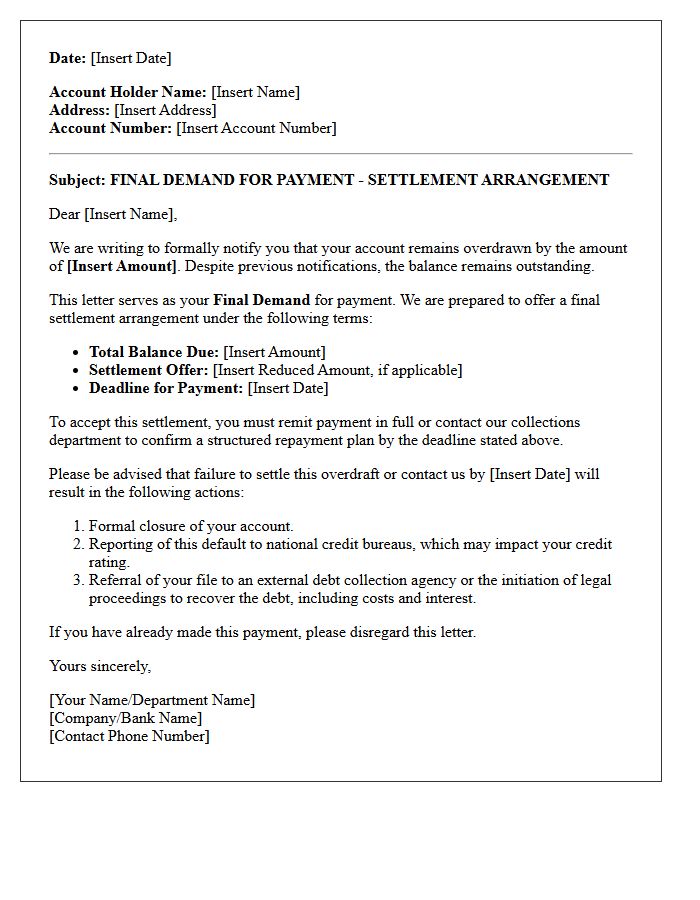
A Settlement Arrangement Final Overdraft Demand Letter is the legal notification issued by a financial institution to recover outstanding debts. It serves as a final warning before the bank initiates formal litigation or employs external collection agencies. This document details the exact overdrawn balance, accrued interest, and a strict deadline for repayment. Receiving this letter indicates that previous attempts to resolve the deficit have failed. It is crucial to respond immediately to negotiate a repayment plan and avoid severe damage to your credit score or potential court proceedings.
What is a Final Overdraft Demand Letter?
A Final Overdraft Demand Letter is a formal legal notice sent by a financial institution to an account holder demanding the immediate repayment of a negative balance. This document serves as the final warning before the bank initiates debt collection actions or legal proceedings.
How long do I have to respond to a Final Overdraft Demand Letter?
Most banks provide a specific deadline within the letter, typically ranging from 7 to 14 business days. Failure to settle the debt or establish a repayment plan within this window usually results in the account being closed and reported to credit bureaus like ChexSystems.
What happens if I ignore a final demand for an overdraft balance?
Ignoring the letter can lead to serious consequences, including the debt being sold to a third-party collection agency, a significant drop in your credit score, and potential legal action. Additionally, being reported to ChexSystems may prevent you from opening new bank accounts for up to five years.
Can I negotiate the fees mentioned in a Final Overdraft Demand Letter?
Yes, many banks are willing to negotiate. You can request a "settlement in full" for a lower amount or ask for a waiver of accumulated overdraft fees in exchange for immediate payment of the principal balance. Always obtain any settlement agreement in writing.
Will paying the demanded overdraft amount clear my banking record?
Once the payment is processed, the bank will update your account status to "Paid" or "Settled." While this stops further collection efforts, the history of the overdraft may remain on your consumer reports for a period of time. It is advisable to request a letter of clearance once the debt is resolved.


Comments