
An Overdraft Protection Line of Credit Exhaustion Letter notifies customers when their backup funding source is fully depleted. This crucial notice explains that future transactions may be declined or incur NSF fees until the balance is restored. Clear communication helps maintain financial health and transparency between banks and account holders. To simplify your workflow, below are some ready to use template.

Image cover: Essential Templates for Notifying Customers of Exhausted Overdraft Lines of Credit
Letter Samples List
- Overdraft Protection Line of Credit Exhaustion Letter
- Notice of Exhausted Overdraft Protection Credit Letter
- Depleted Overdraft Line of Credit Notification Letter
- Maximum Limit Reached on Overdraft Protection Letter
- Overdraft Credit Line Fully Utilized Advisory Letter
- Urgent Overdraft Protection Exhaustion Warning Letter
- Zero Available Balance Overdraft Protection Letter
- Overdraft Protection Limit Reached Alert Letter
- Insufficient Overdraft Line of Credit Funds Letter
- Overdraft Protection Account Maxed Out Notice Letter
- Exhausted Reserve Credit Line Status Letter
- Overdraft Facility Complete Utilization Warning Letter
- Required Action for Exhausted Overdraft Protection Letter
Overdraft Protection Line of Credit Exhaustion Letter
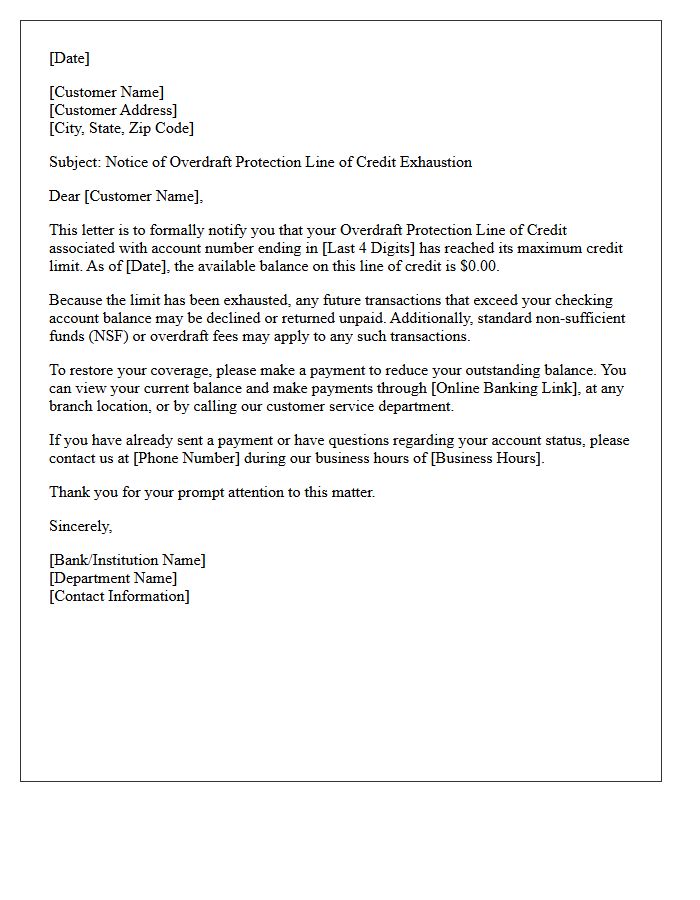
An Overdraft Protection Line of Credit Exhaustion Letter notifies you that your secondary funding source is depleted. This formal notice indicates you have reached your borrowing limit, meaning subsequent transactions may be declined or incur expensive nonsufficient funds fees. To maintain financial stability, you must immediately repay the balance or link an alternative account to restore your safety net. Monitoring these alerts is crucial to avoid credit score damage and ensure your primary checking account remains protected during unexpected shortages.
Notice of Exhausted Overdraft Protection Credit Letter
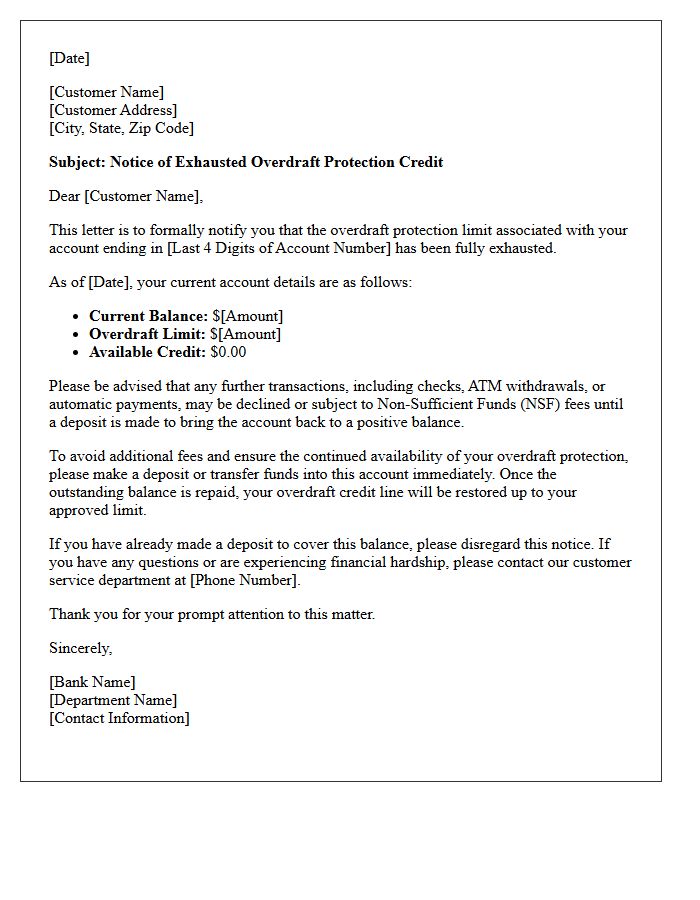
A Notice of Exhausted Overdraft Protection Credit Letter informs account holders that their safety net for covering transactions has been fully utilized. Once this limit is reached, any subsequent payments may be declined or incur substantial insufficient funds fees. It is a critical warning to immediately deposit funds to restore a positive balance. Ignoring this notice can lead to additional penalties, negative impacts on your credit report, or potential account closure. Monitoring your spending and available credit is essential to maintain financial stability and avoid unexpected banking costs.
Depleted Overdraft Line of Credit Notification Letter
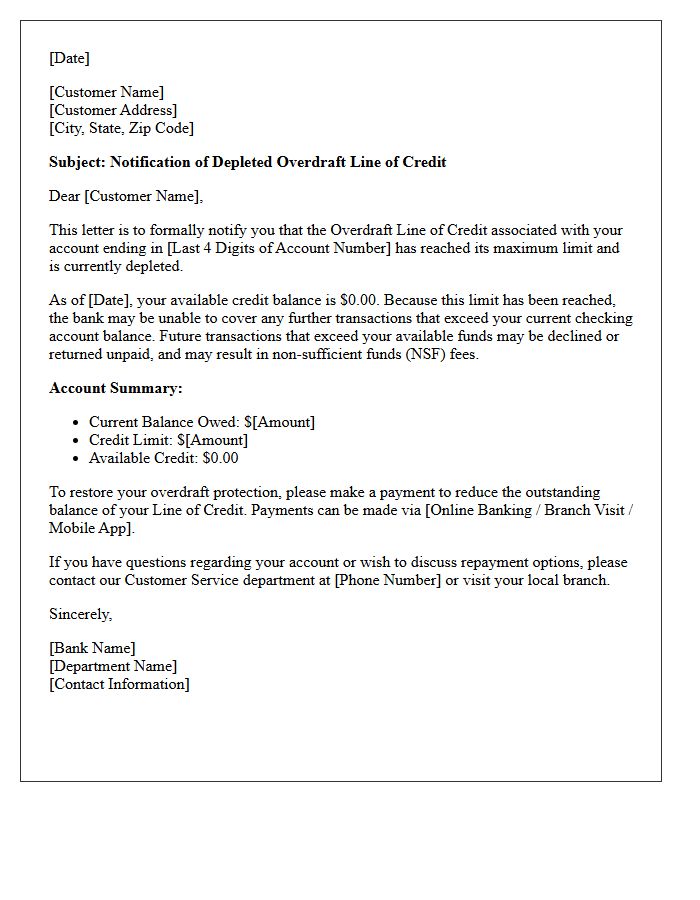
A Depleted Overdraft Line of Credit Notification Letter is a formal notice sent by financial institutions when your credit limit has been fully exhausted. This document serves as a critical warning that no additional funds are available to cover transaction shortfalls. Receiving this alert means subsequent payments may be declined or incur expensive overdraft fees. To maintain account standing, you must immediately repay the balance or contact your bank to discuss restructuring your credit terms and avoiding further financial penalties.
Maximum Limit Reached on Overdraft Protection Letter
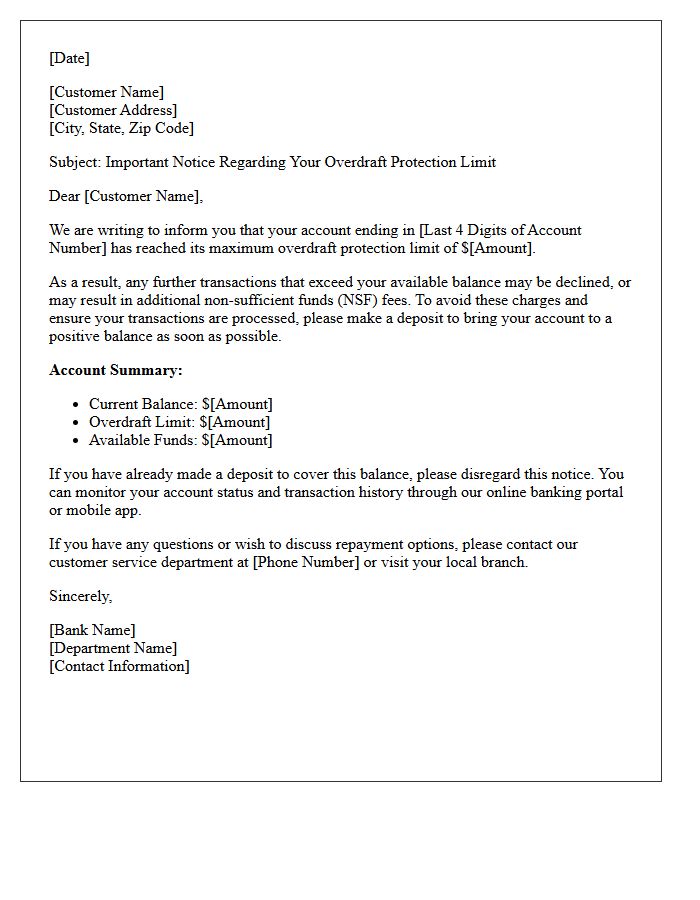
Receiving a Maximum Limit Reached notice means your account has hit its pre-approved overdraft protection ceiling. Once this cap is met, the bank may decline future transactions or charge significant non-sufficient funds (NSF) fees. To restore coverage, you must repay the outstanding balance and any accrued interest immediately. This letter serves as a critical warning to manage your cash flow and avoid financial penalties or negative impacts on your banking history. Monitor your statements closely to maintain a positive balance and ensure continued access to emergency credit lines.
Overdraft Credit Line Fully Utilized Advisory Letter
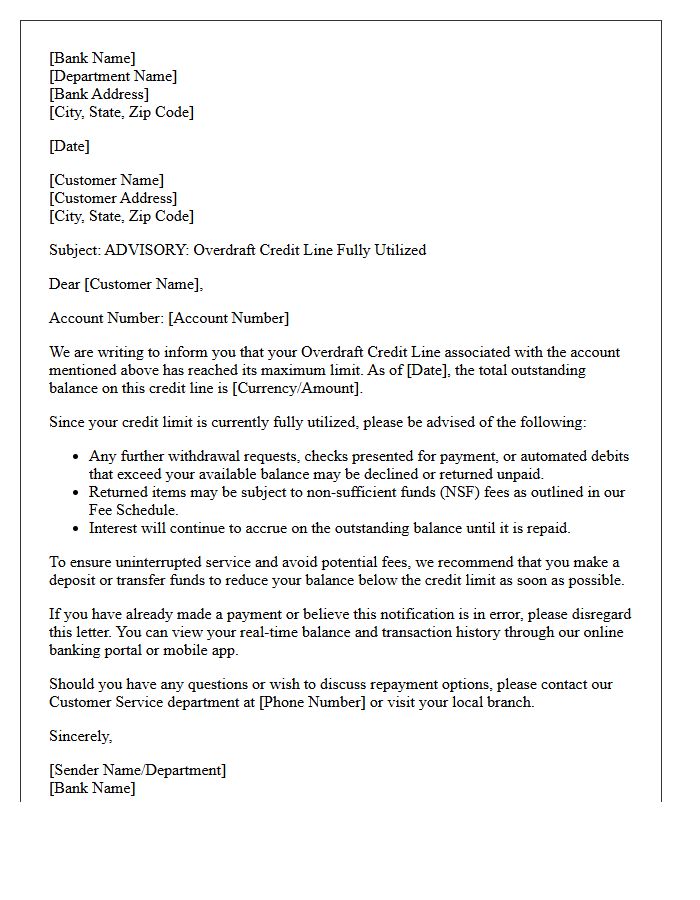
An Overdraft Credit Line Fully Utilized Advisory Letter is a formal notification sent by banks when a customer reaches their maximum borrowing limit. It serves as a critical warning that no further funds are available for withdrawal, potentially leading to declined transactions or returned items. To maintain financial stability, recipients should immediately review their account balance and make a repayment to restore available credit. Ignoring this alert can result in high interest charges, penalty fees, and a negative impact on your credit score or future lending eligibility.
Urgent Overdraft Protection Exhaustion Warning Letter
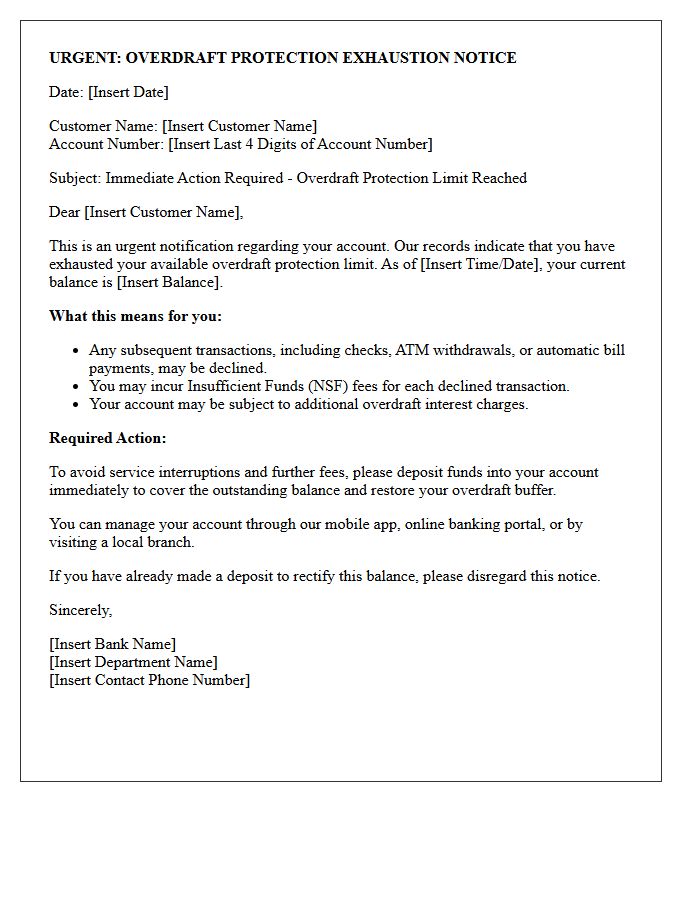
Receiving an Urgent Overdraft Protection Exhaustion Warning Letter indicates your linked savings or credit line can no longer cover pending transactions. This notification means your safety net is depleted, risking declined payments and expensive NSF fees. To avoid financial penalties, immediately deposit funds or reduce spending. Reviewing your account balance promptly is essential to maintain banking standing and prevent a negative balance. Understanding this alert helps you manage liquidity risks effectively and ensures continuous coverage for your automatic bills and essential daily purchases.
Zero Available Balance Overdraft Protection Letter
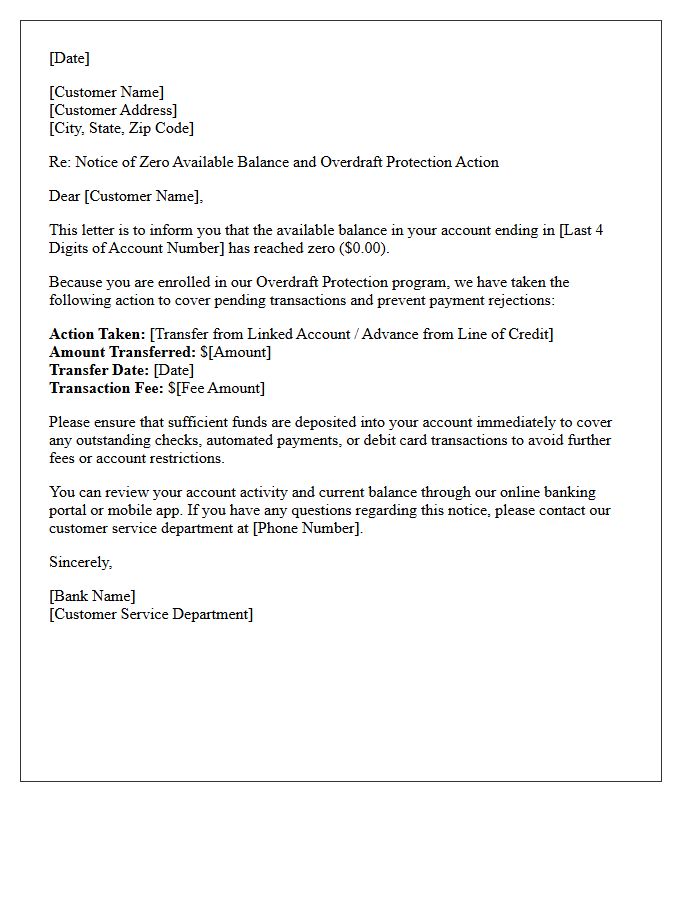
A Zero Available Balance Overdraft Protection Letter notifies customers that their account lacks sufficient funds to cover a transaction. This formal notice explains that the bank declined a payment or transferred funds from a linked account to prevent a negative balance. Understanding this letter is crucial for avoiding overdraft fees and maintaining a healthy credit standing. It serves as a vital alert to review your spending, deposit funds immediately, and adjust automated payments to ensure future transactions are processed successfully without incurring additional penalties or service interruptions.
Overdraft Protection Limit Reached Alert Letter
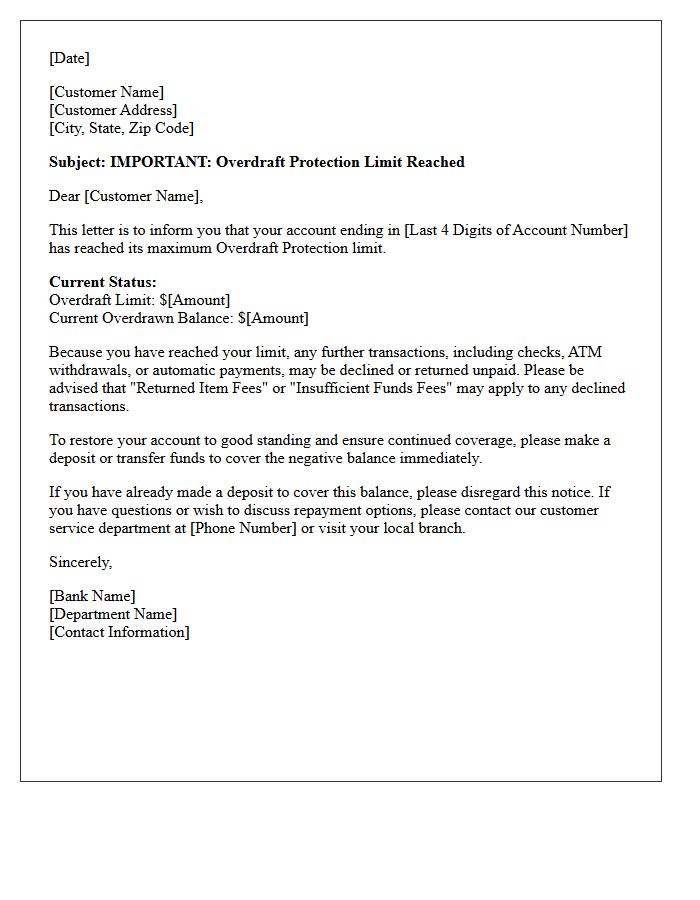
An Overdraft Protection Limit Reached Alert Letter is a formal notification from your bank stating you have exhausted your pre-approved credit line. This document serves as an urgent warning that subsequent transactions may be declined or incur substantial NSF fees. It is essential to review your account balance immediately and deposit funds to avoid further financial penalties. Understanding this alert helps you maintain financial stability and prevents unintended disruptions to your automated payments or debit card usage while protecting your overall credit standing with the financial institution.
Insufficient Overdraft Line of Credit Funds Letter
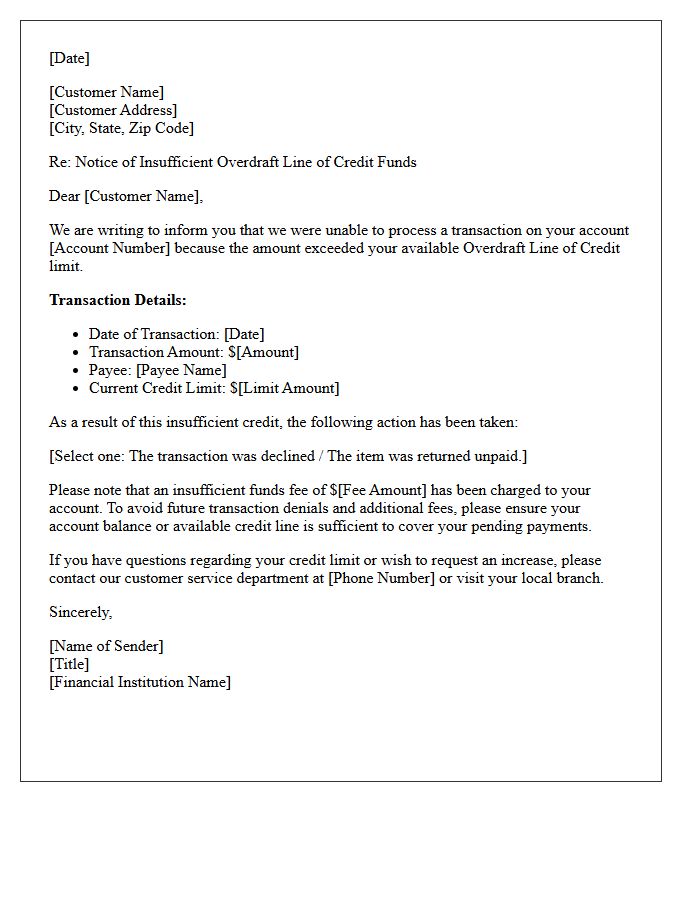
An Insufficient Overdraft Line of Credit Funds Letter is a formal notice issued by a financial institution when an account holder attempts a transaction exceeding their available credit limit. This document serves as a notification of declined coverage and potential overdraft fees. It is crucial to review these notices immediately to address negative balances, prevent further penalties, and maintain a healthy credit standing. Consistent occurrences may lead to the suspension of your credit line or additional banking restrictions. Always monitor your available balance to avoid such disruptions.
Overdraft Protection Account Maxed Out Notice Letter
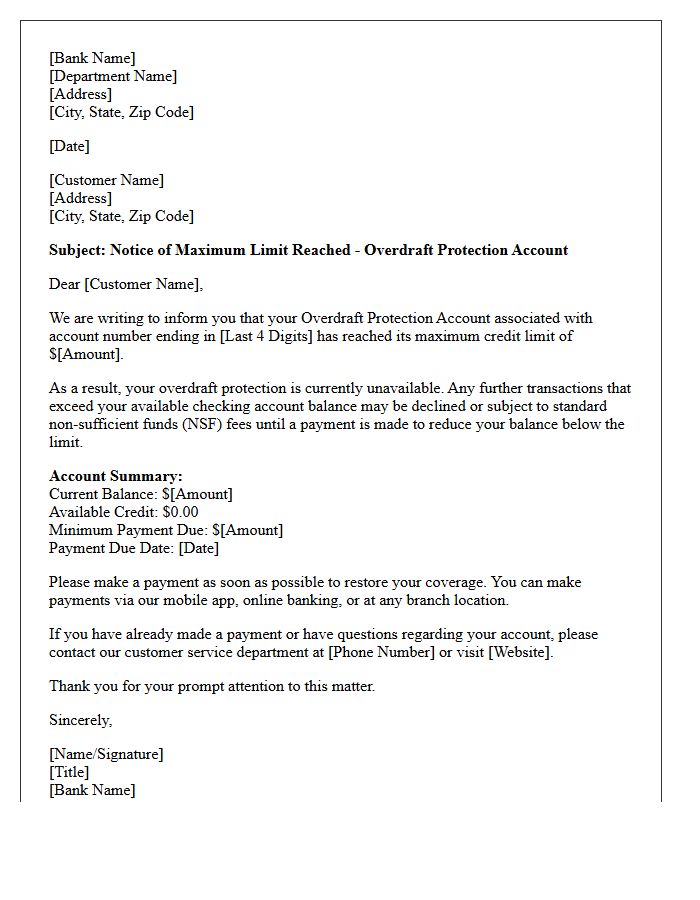
An Overdraft Protection Account Maxed Out Notice Letter informs customers that their safety net is exhausted. When your secondary funding source reaches its credit limit or balance threshold, the bank can no longer cover pending transactions. This formal notification serves as a critical warning to stop spending or deposit funds immediately. Failure to address this status often results in declined transactions and expensive non-sufficient funds (NSF) fees. To protect your credit score, review your account balance and repay any outstanding overdraft balances to restore your financial security buffer promptly.
Exhausted Reserve Credit Line Status Letter
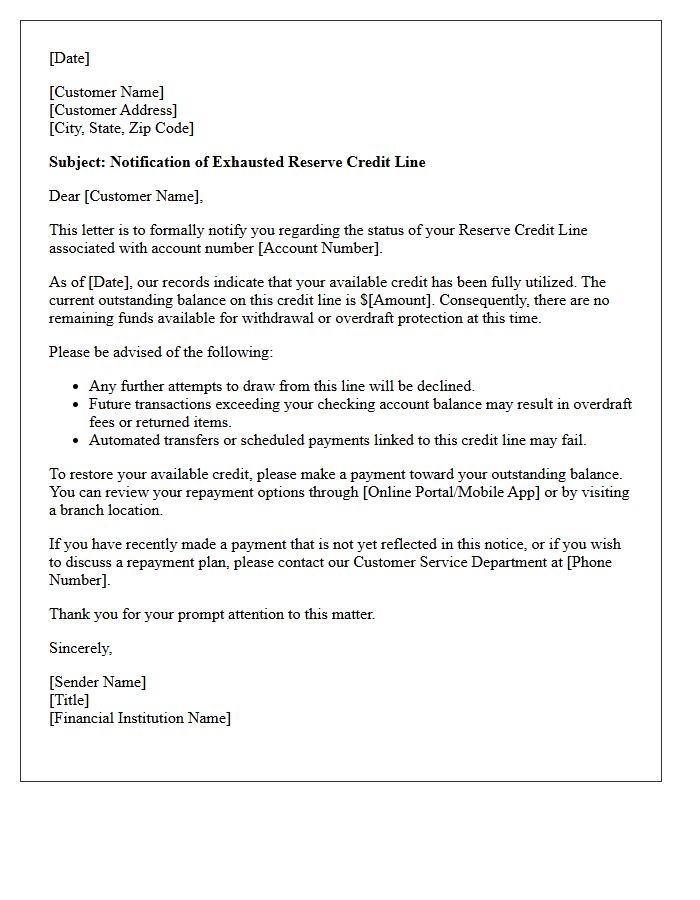
An Exhausted Reserve Credit Line Status Letter is a formal notification from a financial institution indicating that a borrower has utilized their entire available credit limit. This document confirms that no additional funds can be drawn until a repayment is made. It is crucial for financial record-keeping, as it reflects the current debt obligation and impacts liquidity management. Borrowers should review this status to understand their repayment responsibilities and prevent potential overdraft fees or service interruptions resulting from a zero-balance reserve.
Overdraft Facility Complete Utilization Warning Letter
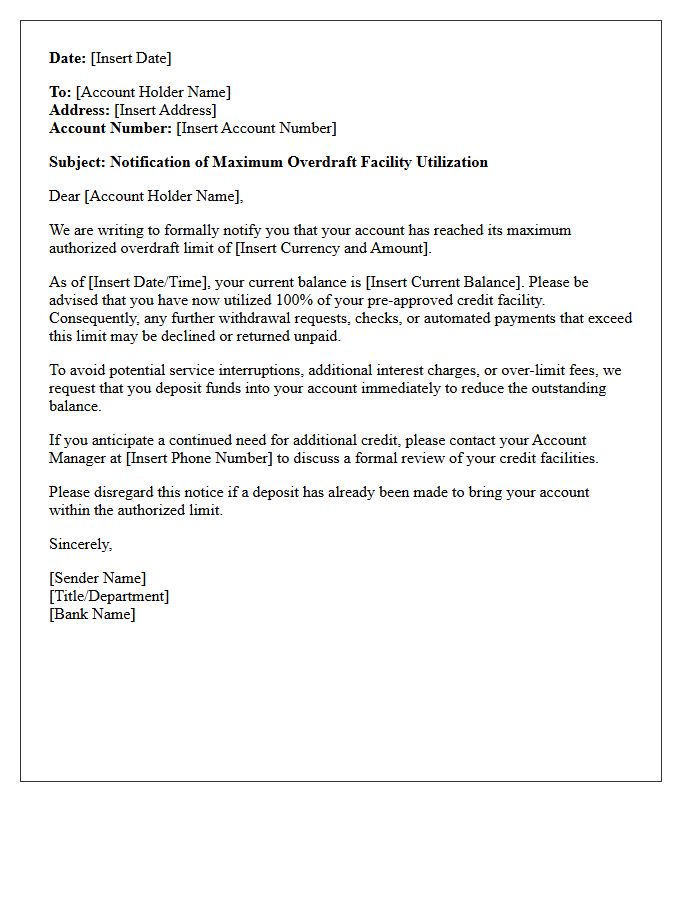
An Overdraft Facility Complete Utilization Warning Letter is a formal notice issued by a bank when a borrower reaches their maximum credit limit. It serves as a critical financial alert, notifying the account holder that no further funds are available and additional transactions may be declined. To avoid penalties, immediate repayment or a limit extension request is necessary. Ignoring this warning can lead to default status, increased interest rates, and negative impacts on your credit score. Maintaining a buffer below your total limit ensures better liquidity management and financial health.
Required Action for Exhausted Overdraft Protection Letter
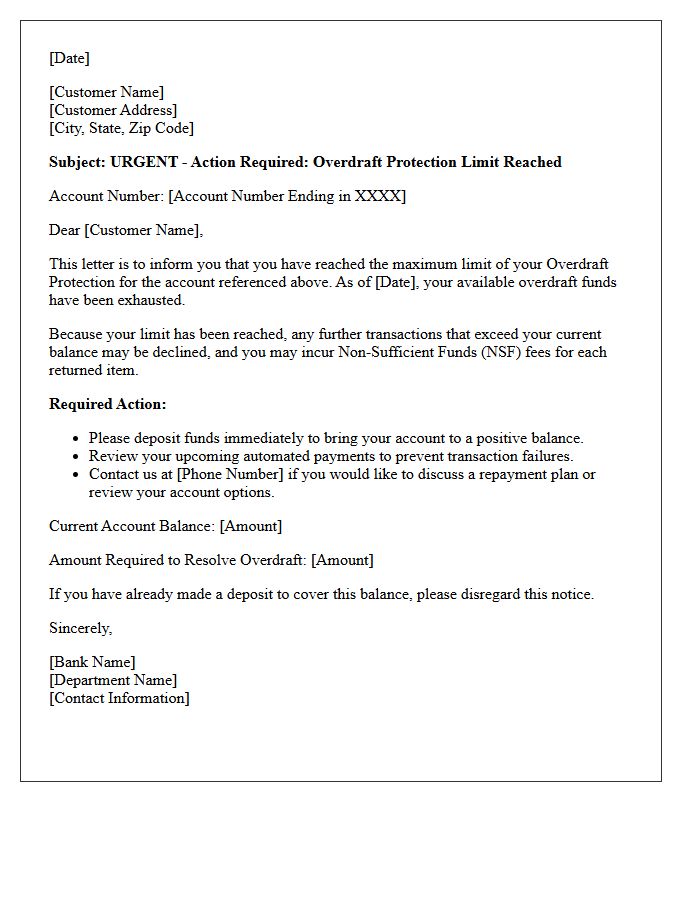
If you receive a Required Action for Exhausted Overdraft Protection Letter, you must immediately address your negative account balance. This notice indicates that your linked backup funds are depleted and cannot cover further transactions. To avoid returned item fees or account closure, you should deposit funds or transfer money to restore a positive balance. Reviewing your recent spending and overdraft settings is essential to prevent future financial penalties and maintain your banking standing. Promptly contact your financial institution if you cannot resolve the deficit quickly.
What is an Overdraft Protection Line of Credit Exhaustion Letter?
An Overdraft Protection Line of Credit Exhaustion Letter is an official notification sent by a financial institution to inform an account holder that their secondary line of credit has reached its maximum limit. This notice indicates that no additional funds are available to cover transactions that exceed the checking account balance.
Why did I receive a notice that my overdraft line of credit is exhausted?
You received this notice because recent transactions, interest charges, or fees have utilized the entire available balance of your overdraft protection. Until the outstanding balance is paid down, the bank will no longer automatically transfer funds to cover overdrawn amounts in your linked checking account.
What happens to my transactions if my overdraft line of credit is exhausted?
When your line of credit is exhausted, any subsequent transactions that exceed your available checking account balance may be declined or returned unpaid. Depending on your account settings, you may also incur Non-Sufficient Funds (NSF) fees or standard overdraft fees for each attempted transaction.
How can I restore my available overdraft protection limit?
To restore your available credit, you must make a payment toward the outstanding balance of your overdraft line of credit. Once the payment is processed and the balance is reduced below your credit limit, the remaining funds will become available again to cover future overdrafts.
Will an exhausted overdraft line of credit affect my credit score?
While reaching the limit itself may not directly impact your credit score, prolonged exhaustion or failure to make required minimum payments can be reported to credit bureaus. Consistently maintaining a maxed-out line of credit increases your credit utilization ratio, which may negatively influence your overall credit rating.


Comments