
Drafting a formal Community Reinvestment Act Performance Evaluation Response Letter is essential for banks to address regulatory findings and highlight their commitment to fair lending. This guide explains how to document community development impact and clarify performance context to regulators. To simplify your compliance reporting process, below are some ready to use template.
Image cover: Mastering Your CRA Performance Evaluation: Strategic Response Templates and Best Practices
Letter Samples List
- Outstanding Performance Evaluation Acknowledgment Letter
- Satisfactory Rating Acceptance and Future Strategy Letter
- Needs to Improve Rating Remediation Action Plan Letter
- Substantial Noncompliance Regulatory Response Letter
- Community Development Lending Highlight Response Letter
- Retail Banking Services Improvement Commitment Letter
- Assessment Area Delineation Clarification Letter
- Low- and Moderate-Income Branch Expansion Strategy Letter
- Fair Lending Finding Dispute and Contextualization Letter
- Qualified Community Investment Initiative Response Letter
- Strategic Plan Amendment Notification Letter
- Public Comment Rebuttal and Clarification Letter
- Technical Evaluation Finding Appeal Request Letter
- Peer Group Comparison Justification Letter
Outstanding Performance Evaluation Acknowledgment Letter
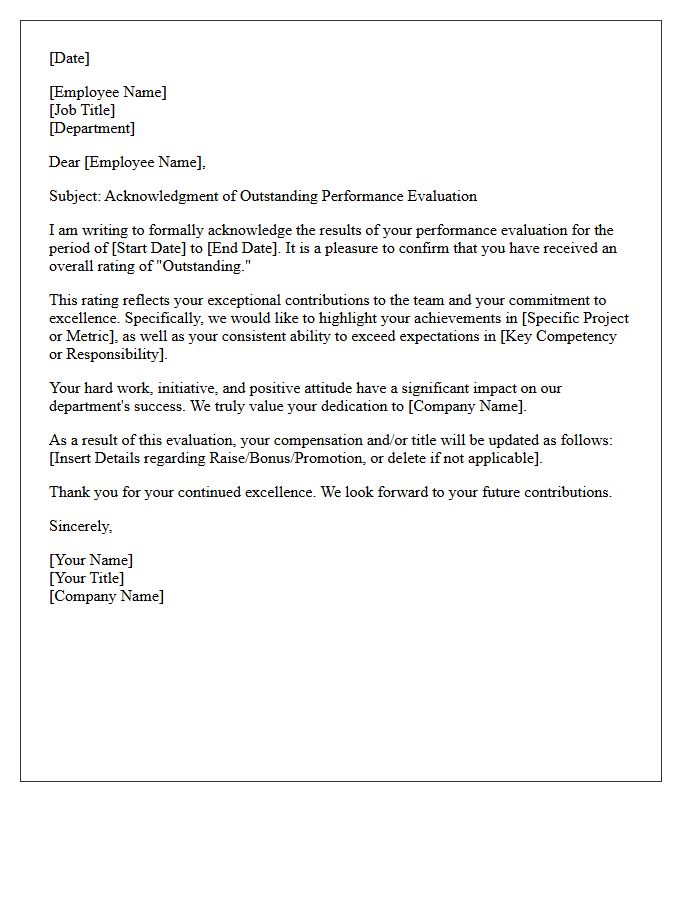
An Outstanding Performance Evaluation Acknowledgment Letter serves as a formal response to exceptional workplace reviews. It is crucial to professionally accept the feedback while expressing gratitude for the recognition. This document reinforces your commitment to the organization's goals and documents your achievements within your permanent personnel file. By acknowledging the evaluation, you maintain career momentum and foster positive communication with management. Always ensure the letter is concise, highlights your future development goals, and is submitted promptly to demonstrate professionalism and continued dedication to excellence.
Satisfactory Rating Acceptance and Future Strategy Letter
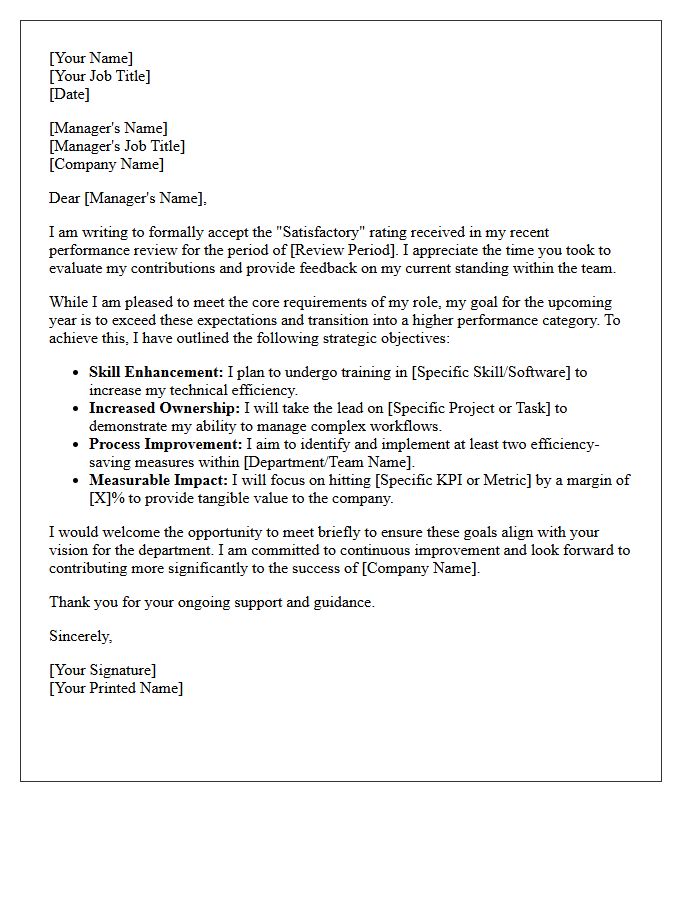
A Satisfactory Rating Acceptance and Future Strategy Letter formally acknowledges positive performance evaluations while outlining strategic growth objectives. This document serves as a professional bridge, confirming that the employee accepts current feedback and is committed to future development. It should clearly detail specific actionable goals and resource requirements needed to transition from satisfactory to exceptional performance. By documenting these strategic intentions, both the employee and management align on long-term expectations, ensuring a proactive approach to career advancement and organizational success within the next review cycle.
Needs to Improve Rating Remediation Action Plan Letter
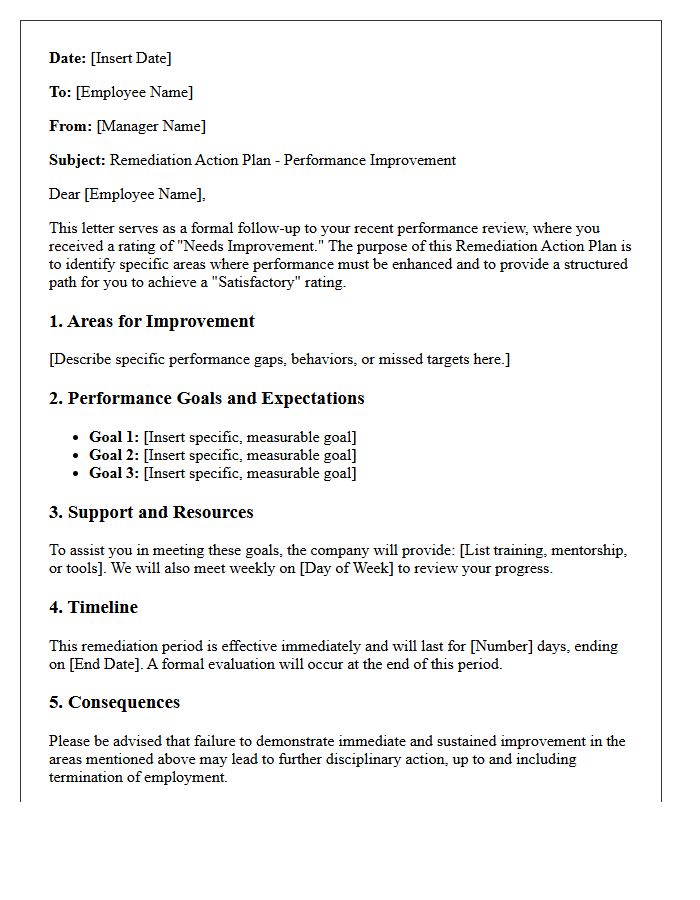
A Needs to Improve Rating Remediation Action Plan Letter is a formal document outlining specific steps an employee must take to address performance deficiencies. It serves as a structured roadmap for professional recovery, detailing clear objectives, measurable milestones, and necessary support resources. To ensure effectiveness, the letter must clearly state the consequences of failing to meet these performance standards within the designated timeframe. This corrective action process fosters accountability, provides a fair opportunity for growth, and maintains essential documentation for HR compliance and organizational excellence.
Substantial Noncompliance Regulatory Response Letter
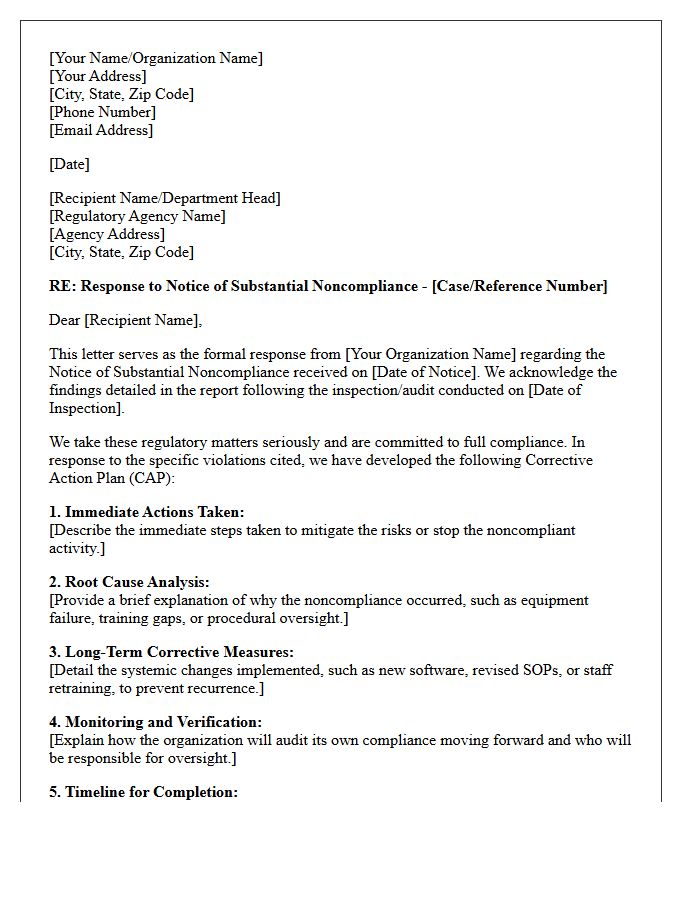
A Substantial Noncompliance Regulatory Response Letter is a formal notice issued when an entity fails to meet critical safety or legal standards. It outlines specific violations that require immediate remediation to avoid severe penalties or license revocation. Recipients must submit a comprehensive Corrective Action Plan within a strict timeframe to demonstrate future adherence to rules. This document serves as a final warning, emphasizing that continued violations will lead to legal enforcement actions, fines, or permanent closure of operations.
Community Development Lending Highlight Response Letter
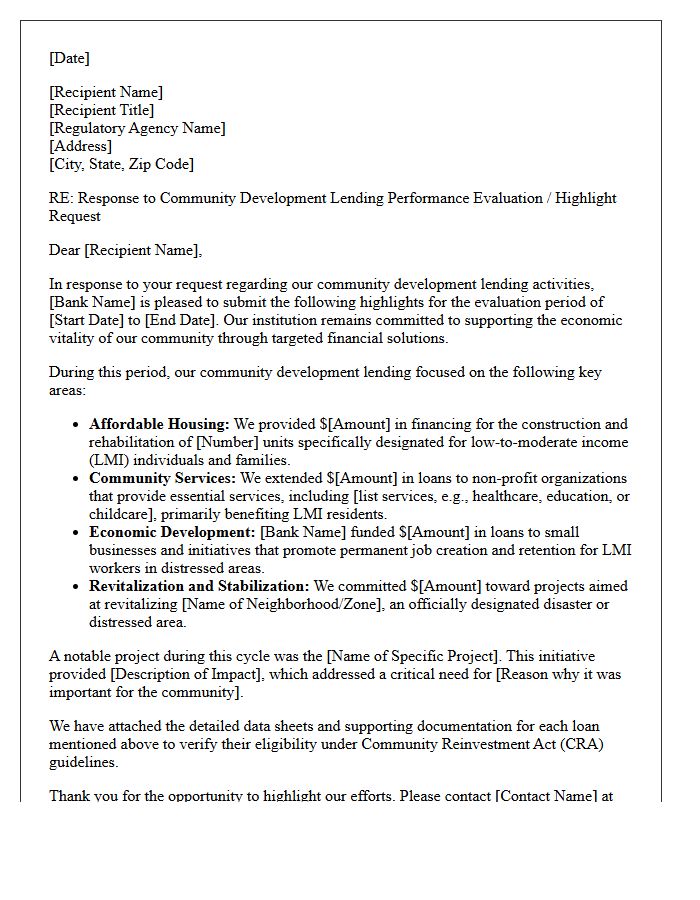
A Community Development Lending Highlight Response Letter is a formal document used by financial institutions to address CRA compliance inquiries. It provides a detailed narrative justifying how specific loans promote economic revitalization or support affordable housing. This letter ensures that qualified community development activities are properly documented for regulatory examiners. By emphasizing the geographic impact and the primary purpose of the financing, banks can secure essential credit for their community reinvestment performance ratings and demonstrate their commitment to serving low-to-moderate income populations effectively.
Retail Banking Services Improvement Commitment Letter
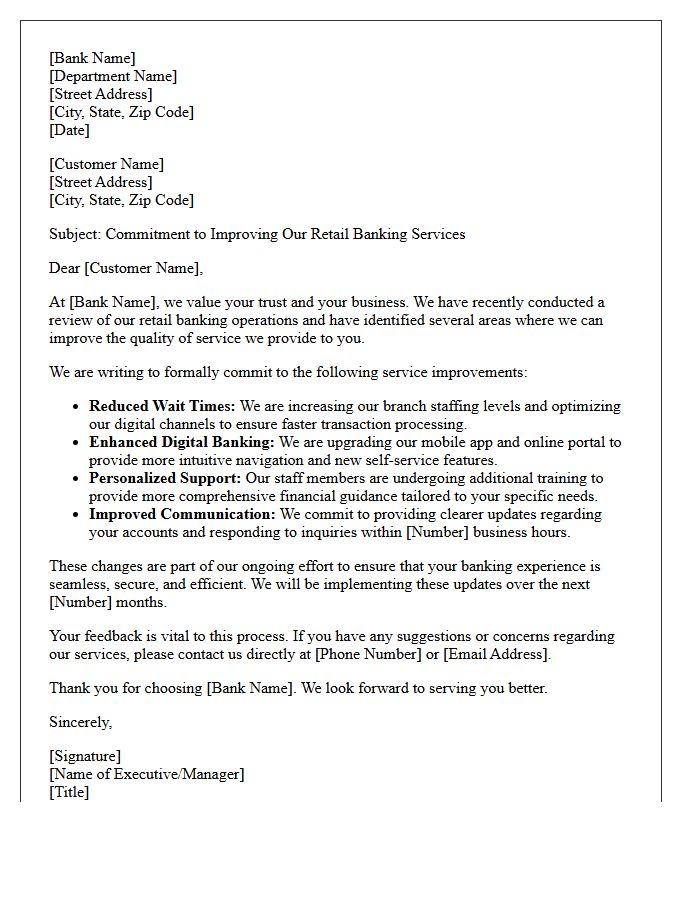
The Retail Banking Services Improvement Commitment Letter is a formal document where financial institutions pledge to enhance customer experience and operational standards. It outlines specific service level agreements, transparency in fee structures, and improved digital accessibility. By signing, banks commit to resolving complaints faster and ensuring fair treatment for all account holders. Understanding this letter is crucial for consumers to hold their banks accountable for promised quality benchmarks and regulatory compliance, ensuring a more reliable and customer-centric banking relationship.
Assessment Area Delineation Clarification Letter
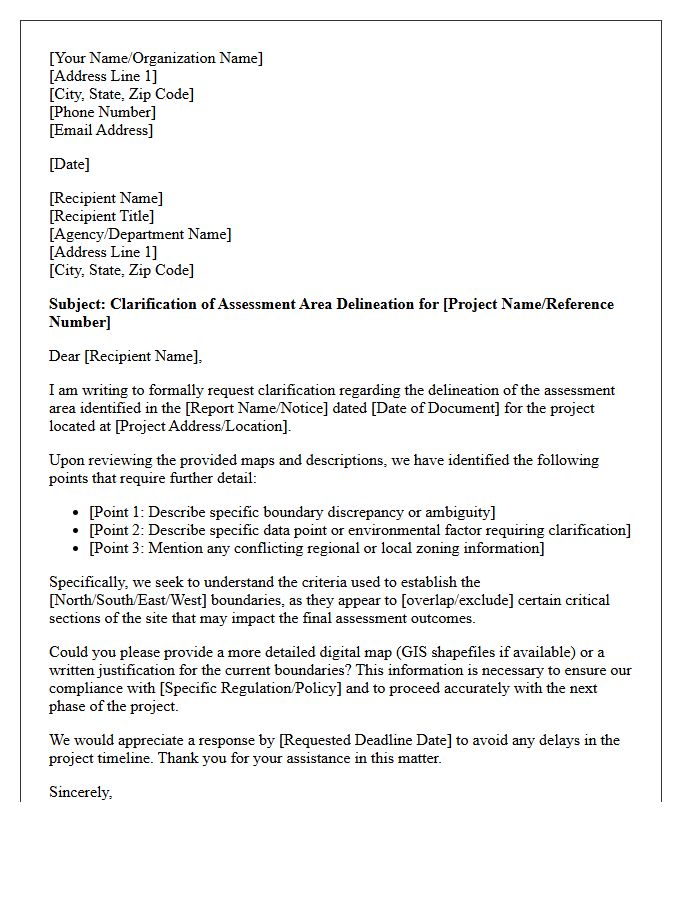
An Assessment Area Delineation Clarification Letter is a formal document used by financial institutions to justify their specific geographic service boundaries under the Community Reinvestment Act. This letter ensures that the bank's defined area does not reflect illegal redlining or arbitrarily exclude low-income neighborhoods. It provides a clear rationale for how the territory was selected based on physical branch locations and deposit-taking activities. Providing this clarification helps regulators verify that the institution is meeting its legal obligation to serve all members of its local community equitably.
Low- and Moderate-Income Branch Expansion Strategy Letter
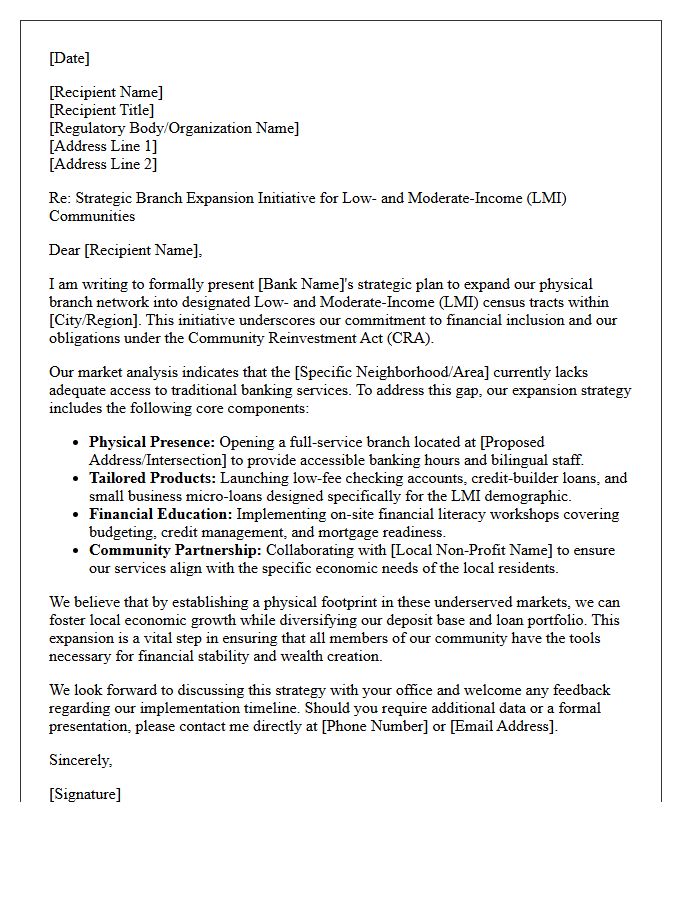
The Low- and Moderate-Income Branch Expansion Strategy Letter is a regulatory requirement under the Community Reinvestment Act. It outlines how financial institutions plan to increase banking access in underserved communities. This strategy must demonstrate a commitment to providing essential financial services to low-income populations. Key components include analyzing demographic data, identifying service gaps, and proposing sustainable branch locations. Regulators review these plans to ensure banks fulfill their fair lending obligations and promote economic inclusion while mitigating the impact of historical "banking deserts" through physical presence and community engagement.
Fair Lending Finding Dispute and Contextualization Letter
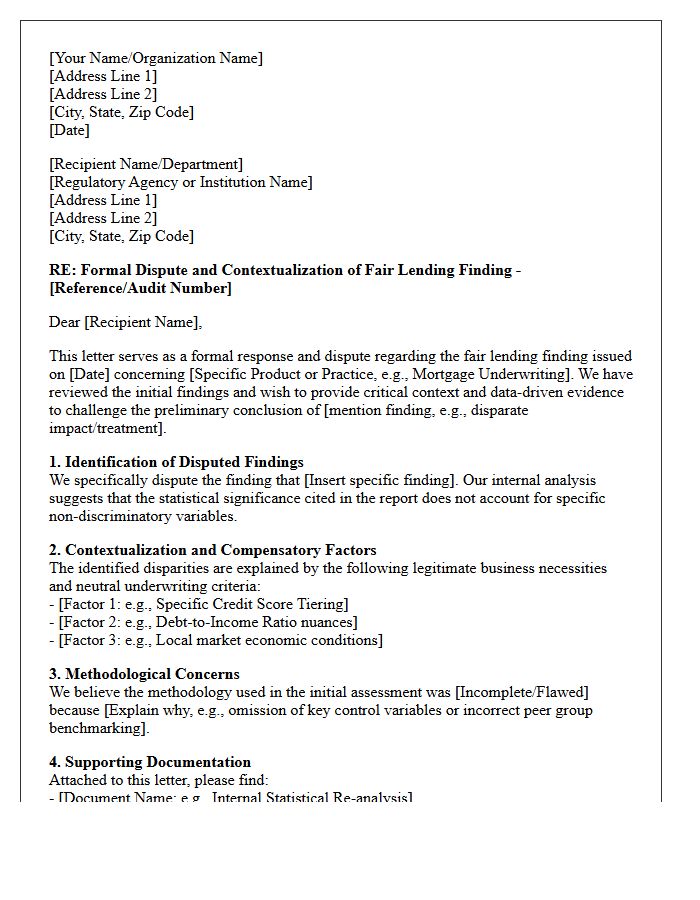
A Fair Lending Finding Dispute and Contextualization Letter is a formal response used by financial institutions to challenge or explain disparate impact or compliance redlining allegations. This document provides critical contextualization of data by highlighting nondiscriminatory variables, such as creditworthiness or localized market conditions, that automated models might overlook. Successfully drafting this letter is essential for mitigating regulatory risk, preventing severe penalties, and clarifying legitimate business justifications. It serves as a vital tool to bridge the gap between statistical disparities and actual lending practices during examinations.
Qualified Community Investment Initiative Response Letter
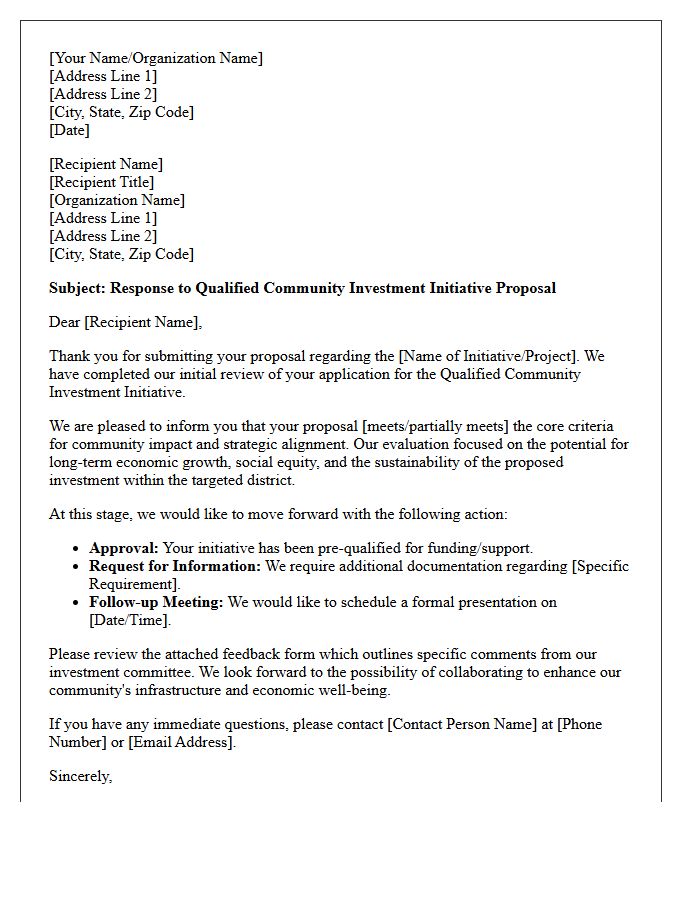
A Qualified Community Investment Initiative Response Letter is a formal document used to verify an organization's eligibility for specific economic development incentives. It serves as official evidence that a project aligns with local community improvement goals, such as job creation or infrastructure enhancement. Receiving this letter is a critical step in securing tax credits or grants. It confirms that the proposed investment meets the necessary regulatory standards to qualify for financial support, ensuring that both the investor and the municipality remain compliant with regional growth mandates.
Strategic Plan Amendment Notification Letter
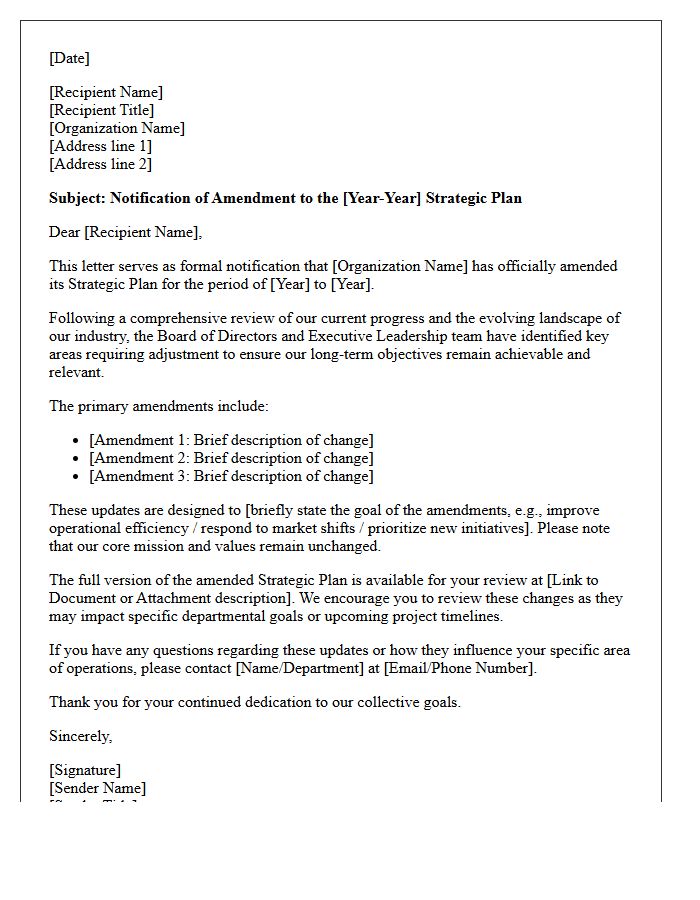
A Strategic Plan Amendment Notification Letter is a formal document issued to stakeholders to announce significant updates to an organization's long-term goals. This communication ensures transparency regarding policy shifts or resource reallocations that may impact operational direction. It typically outlines the specific reasons for modifications, provides a timeline for implementation, and invites feedback from affected parties. Timely notification is essential for maintaining compliance and ensuring organizational alignment during periods of strategic transition, allowing all partners to adjust their expectations and responsibilities accordingly.
Public Comment Rebuttal and Clarification Letter
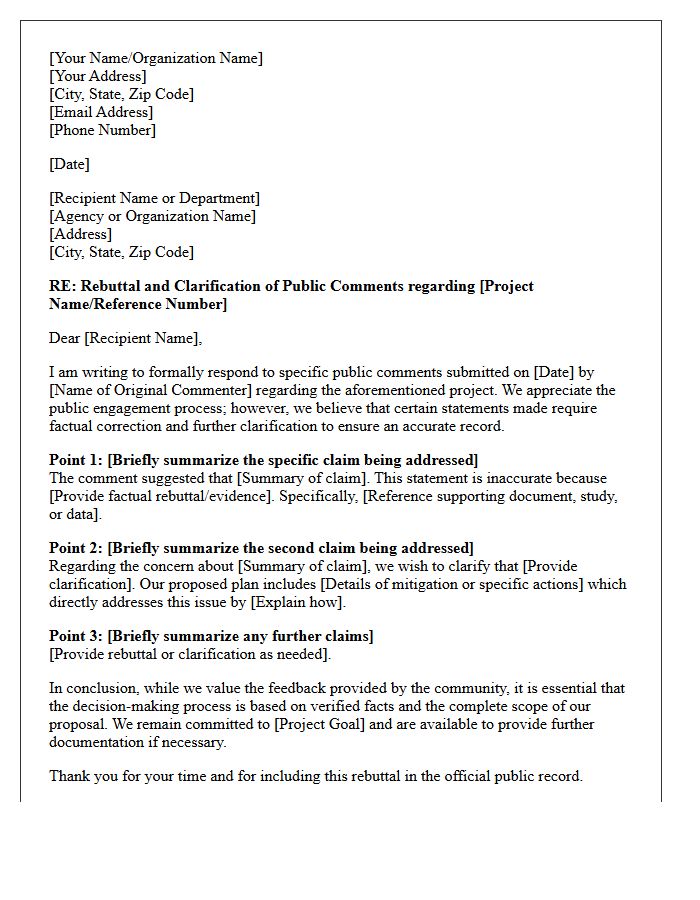
A Public Comment Rebuttal and Clarification Letter is a formal response used to address concerns or inaccuracies raised during a public review period. Its primary goal is to provide factual evidence that defends the technical or legal integrity of a proposed project. By systematically resolving objections, stakeholders can clarify project details, mitigate opposition, and ensure decision-makers have a balanced perspective. This document is essential for maintaining transparency and securing final approvals by demonstrating that all public feedback has been professionally evaluated and effectively resolved.
Technical Evaluation Finding Appeal Request Letter
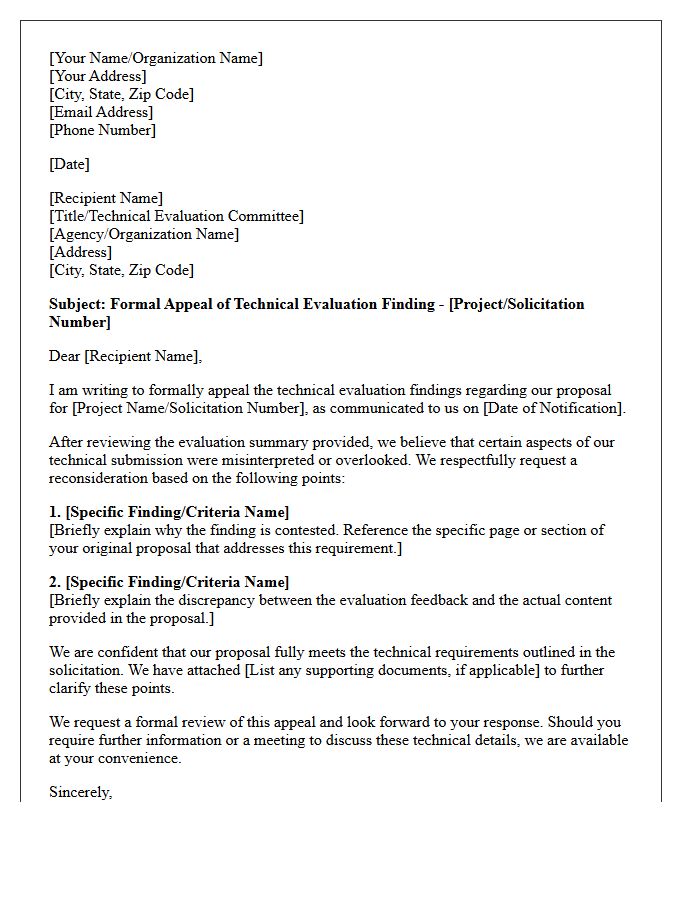
A Technical Evaluation Finding Appeal Request Letter is a formal document used to contest unfavorable procurement decisions. It must clearly outline specific errors in the evaluation process, such as factual inaccuracies or overlooked qualifications. To be effective, the letter should reference the original solicitation requirements and provide supporting evidence for each claim. Timeliness is critical, as most appeals have strict submission deadlines. This professional rebuttal ensures transparency and provides a fair opportunity for bidders to rectify unjust scoring or technical disqualifications during the competitive bidding phase.
Peer Group Comparison Justification Letter
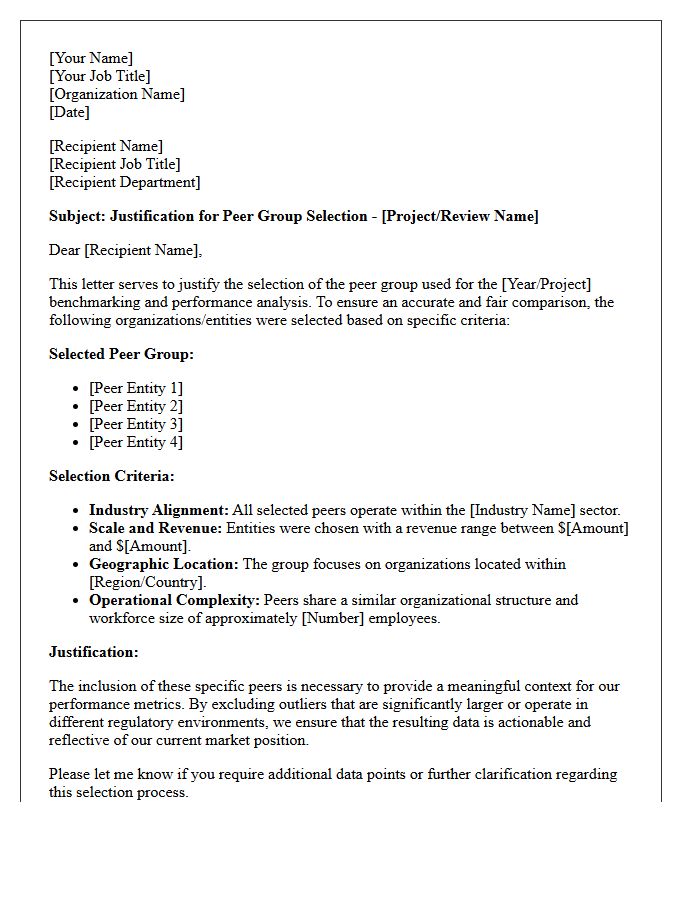
A Peer Group Comparison Justification Letter is a critical document used to rationalize executive compensation by benchmarking against similar organizations. It outlines specific selection criteria, such as industry sector, revenue size, and market capitalization, to ensure a fair market analysis. This letter justifies why certain competitors were chosen to validate pay transparency and alignment with shareholder interests. By providing a clear methodological framework, the document defends the competitive positioning of salaries and bonuses, ensuring that the organization's remuneration strategy remains defensible, equitable, and strategically aligned with industry standards.
What is a Community Reinvestment Act (CRA) Performance Evaluation Response Letter?
A CRA Performance Evaluation Response Letter is a formal document submitted by a financial institution to its primary regulator (such as the OCC, Federal Reserve, or FDIC) following an exam. It serves as an official reply to the findings, ratings, and recommendations detailed in the agency's assessment of the bank's community lending and investment activities.
When should a bank submit a formal response to its CRA evaluation?
Banks should submit a response letter during the post-exam "comment period" before the Performance Evaluation (PE) is finalized and made public. This allows the institution to correct factual inaccuracies, provide additional context for underperforming areas, or highlight specific community development impact data that may have been overlooked by examiners.
What key elements should be included in a CRA Performance Evaluation Response Letter?
A high-quality response should include a clear statement of agreement or respectful disagreement with the assigned rating, evidence-based rebuttals of negative findings, updated data on community development loans and services, and a detailed action plan addressing any identified "needs to improve" or "substantial noncompliance" issues.
Can a response letter influence a bank's final CRA rating?
While a response letter rarely changes a rating based on subjective opinion, it can successfully influence a final CRA rating if the institution provides documented proof of omitted qualified investments, data entry errors in the loan register, or unique "performance context" factors-such as economic downturns or intense competition-that justify the bank's performance levels.
Are CRA Performance Evaluation Response Letters available to the public?
Yes, under the Community Reinvestment Act requirements, the final Performance Evaluation-including the institution's formal written response-is placed in the bank's Public File. This ensures transparency for community stakeholders, advocacy groups, and customers regarding how the bank addresses its obligation to meet the credit needs of its entire community.

Comments