
Effectively managing your financial reputation requires precision when requesting a Credit Bureau Deletion and Account Closure. This guide explains how to formally ask reporting agencies to remove inaccurate information and finalize inactive accounts to protect your credit score. Following professional communication standards ensures faster processing and better results. To help you get started immediately, below are some ready to use template.
Image cover: Winning Strategies and Templates for Credit Bureau Deletions and Account Closures
Letter Samples List
- Pay For Delete Agreement Letter
- Paid In Full Bureau Deletion Letter
- Final Account Closure Confirmation Letter
- Goodwill Adjustment Deletion Letter
- Debt Settlement Deletion Request Letter
- Identity Theft Account Deletion Letter
- Inaccurate Information Dispute Deletion Letter
- Unverified Debt Account Closure Letter
- Statute Of Limitations Deletion Letter
- Validation Failure Account Closure Letter
- Unauthorized Account Bureau Deletion Letter
- Resolved Collection Account Deletion Letter
Pay For Delete Agreement Letter
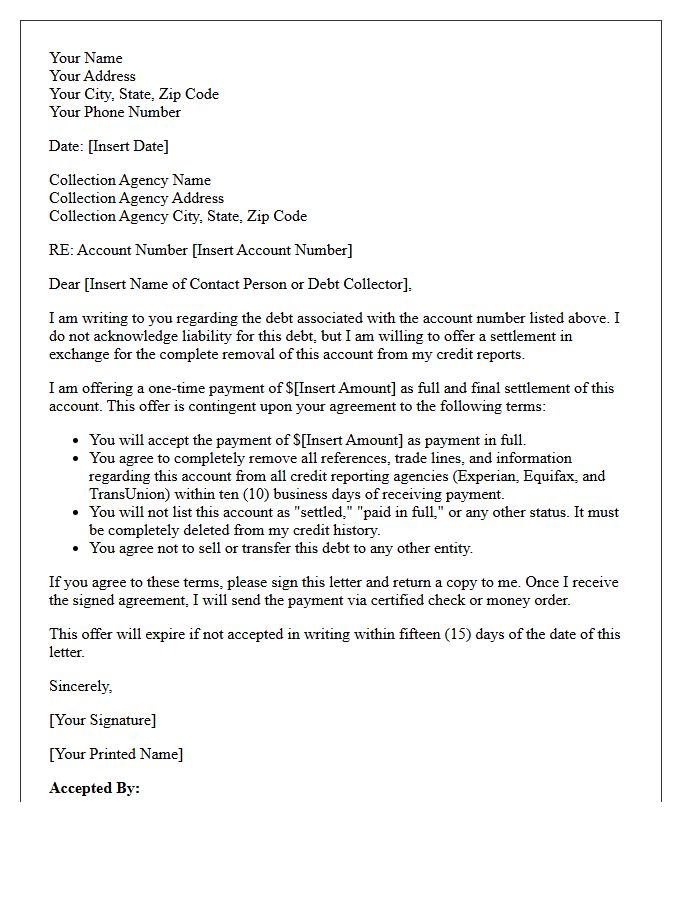
A Pay For Delete Agreement Letter is a strategic negotiation tool used to improve your credit score. This written contract proposes that a creditor or collection agency permanently remove negative marks from your credit report in exchange for full or partial payment. It is essential to secure this agreement in writing before sending any money, as verbal promises are not legally binding. Once the debt is settled and the derogatory entry is deleted, your creditworthiness can significantly increase, making it easier to secure future loans and favorable interest rates.
Paid In Full Bureau Deletion Letter
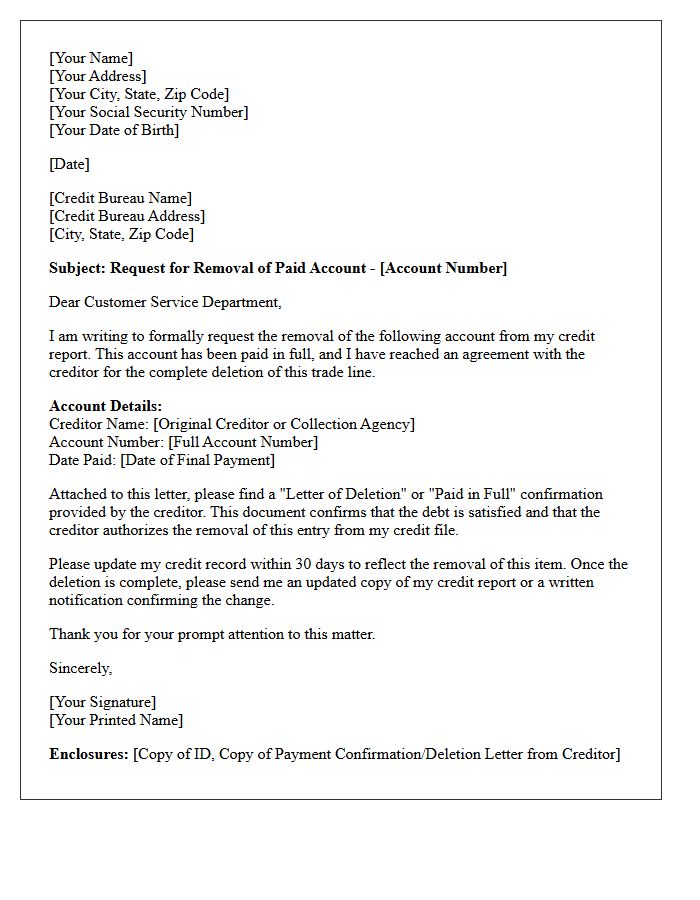
A Paid In Full Bureau Deletion Letter is a formal request sent to credit agencies to remove a negative mark after a debt is settled. It serves as written proof of a pay-for-delete agreement between a debtor and a collection agency. This document is crucial for credit repair, as it ensures the derogatory item is permanently erased from your report rather than just marked as "paid." Always maintain a copy of this correspondence to protect your financial profile and verify that credit bureaus successfully update your history to reflect the removal.
Final Account Closure Confirmation Letter
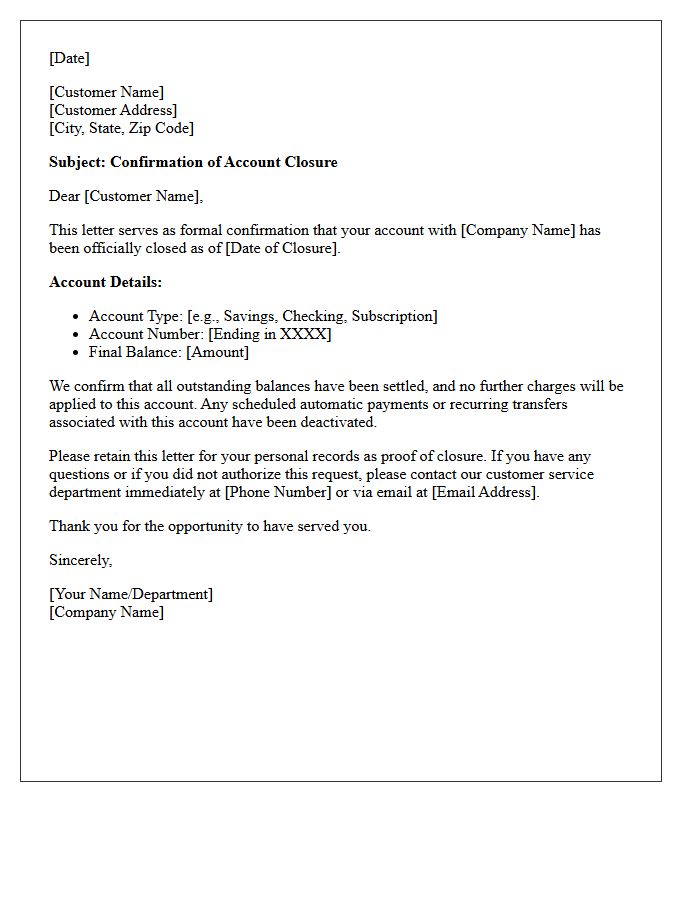
A Final Account Closure Confirmation Letter is a formal document issued by a financial institution to verify that an account has been officially terminated. This letter serves as critical legal proof that all outstanding balances are settled, recurring payments are cancelled, and no further obligations exist. It is essential for protecting your credit score and preventing future unauthorized charges. Always retain this record to resolve potential discrepancies with creditors or reporting agencies, ensuring your financial profile remains accurate and secure after ending a professional relationship with a bank or service provider.
Goodwill Adjustment Deletion Letter
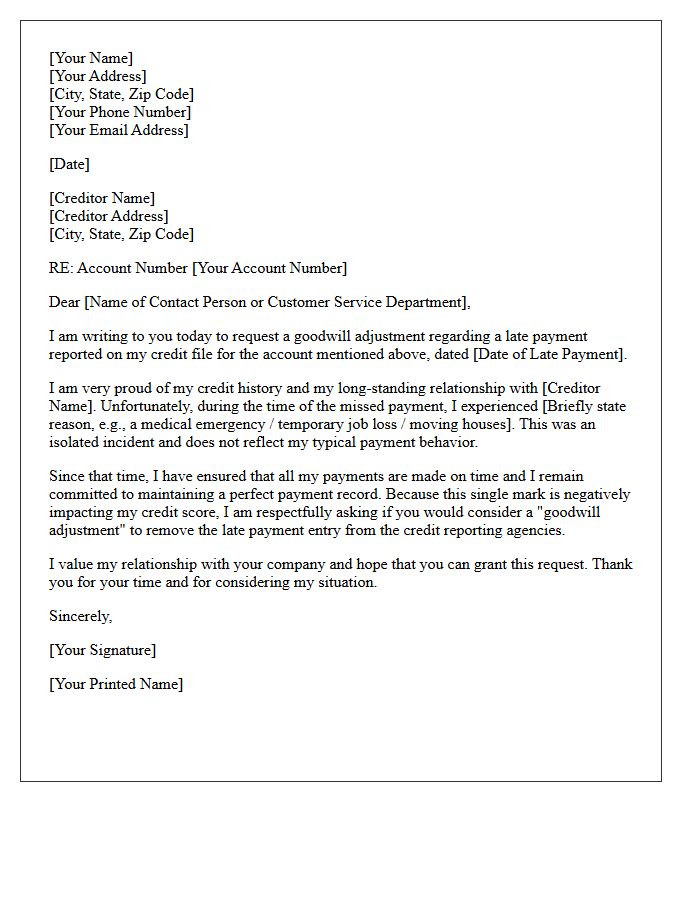
A Goodwill Adjustment Deletion Letter is a formal request sent to creditors asking them to remove a legitimate negative mark from your credit report. Unlike a standard dispute, you acknowledge the late payment occurred but highlight your overall positive payment history and commitment to financial responsibility. This strategy relies on the lender's discretion to forgive a one-time mistake as a gesture of goodwill. Successfully securing a deletion can significantly boost your credit score by eliminating derogatory information that would otherwise remain for seven years.
Debt Settlement Deletion Request Letter
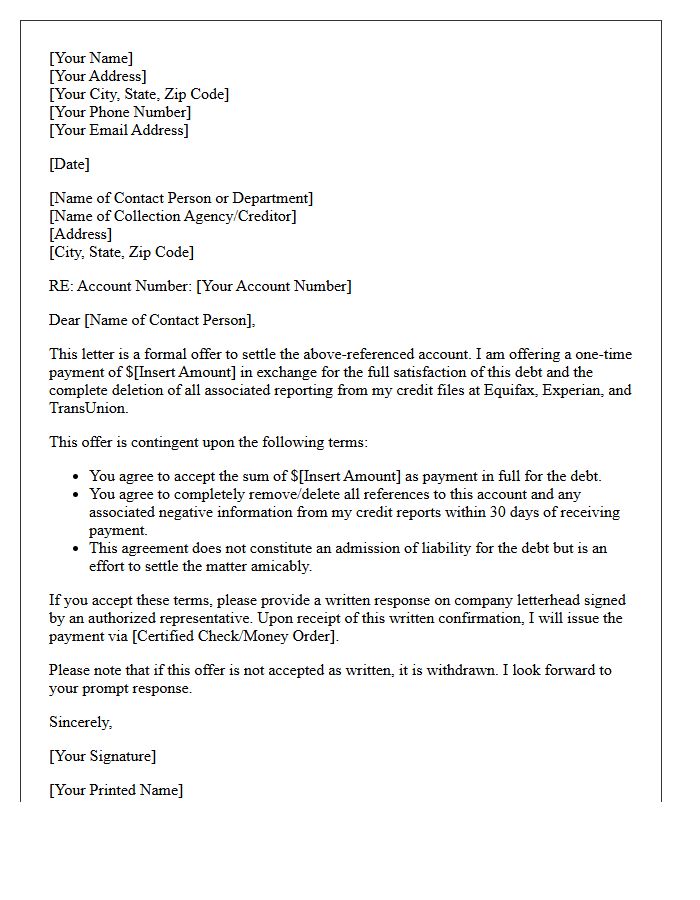
A Debt Settlement Deletion Request Letter is a formal proposal sent to creditors to negotiate a payoff in exchange for removing negative marks. The most critical element is the Pay for Delete agreement, which ensures the account is fully expunged from credit bureau reports rather than just marked as paid. This strategy helps improve your credit score by eliminating derogatory history. Always request written confirmation before making payments to ensure legal compliance and protect your consumer rights under the Fair Credit Reporting Act.
Identity Theft Account Deletion Letter
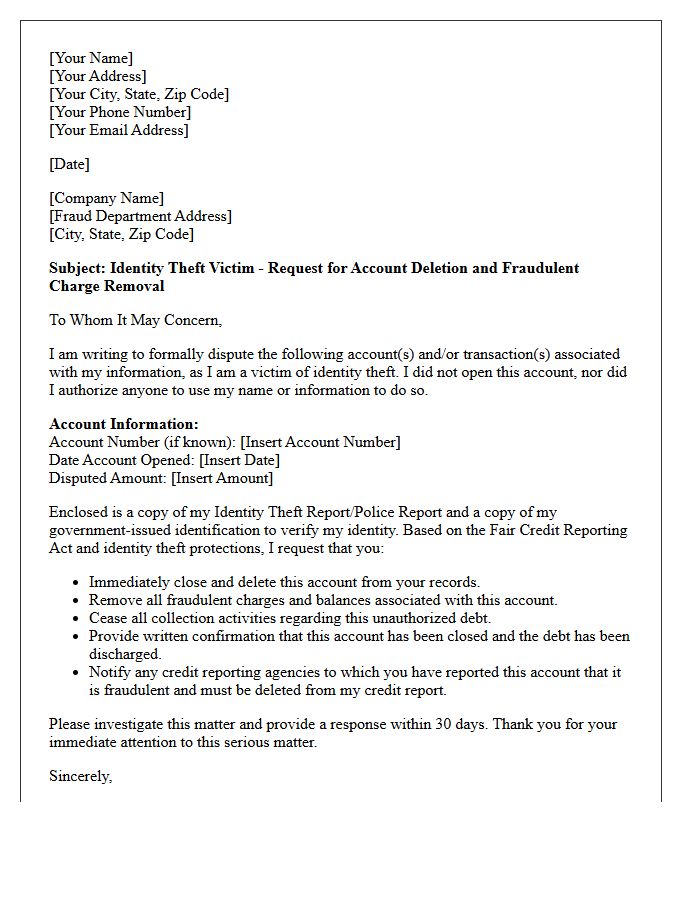
An Identity Theft Account Deletion Letter is a formal request sent to creditors to remove fraudulent accounts opened in your name. To be effective, you must include a copy of your Identity Theft Report from the FTC or police. Clearly state that the account resulted from identity theft and provide specific account numbers for disputed records. Under the Fair Credit Reporting Act, businesses must stop reporting this data once notified. Sending this letter via certified mail ensures a paper trail for your financial recovery and credit restoration process.
Inaccurate Information Dispute Deletion Letter
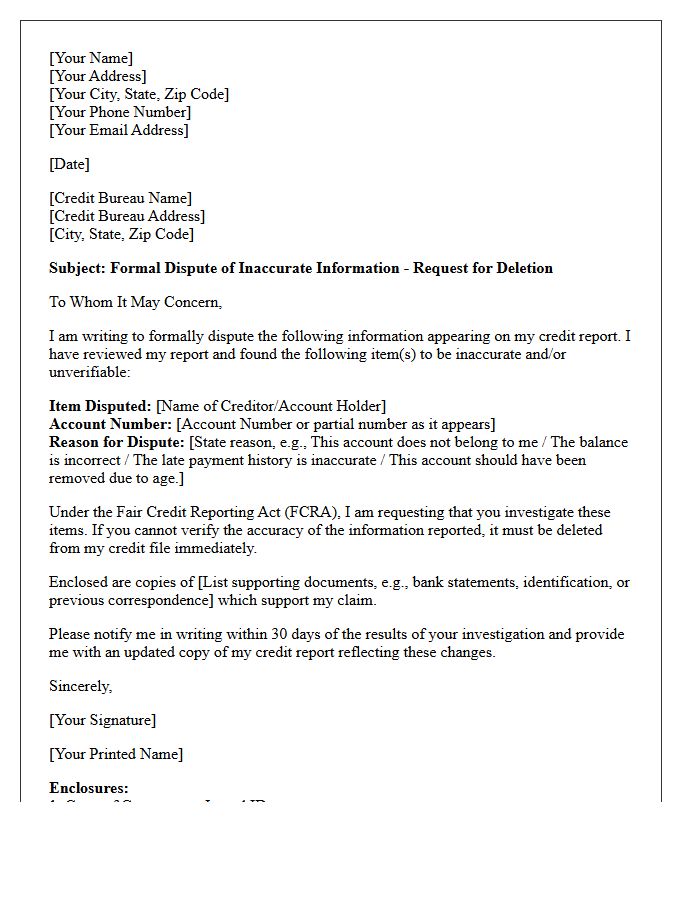
An Inaccurate Information Dispute Deletion Letter is a formal legal tool used to challenge errors on your credit report under the Fair Credit Reporting Act. To ensure success, you must clearly identify the specific inaccuracies and provide supporting documentation. Credit bureaus are legally obligated to investigate and remove unverified data within 30 days. Sending this letter via certified mail creates a paper trail, protecting your rights to a fair credit score and preventing financial harm caused by outdated or fraudulent account details.
Unverified Debt Account Closure Letter
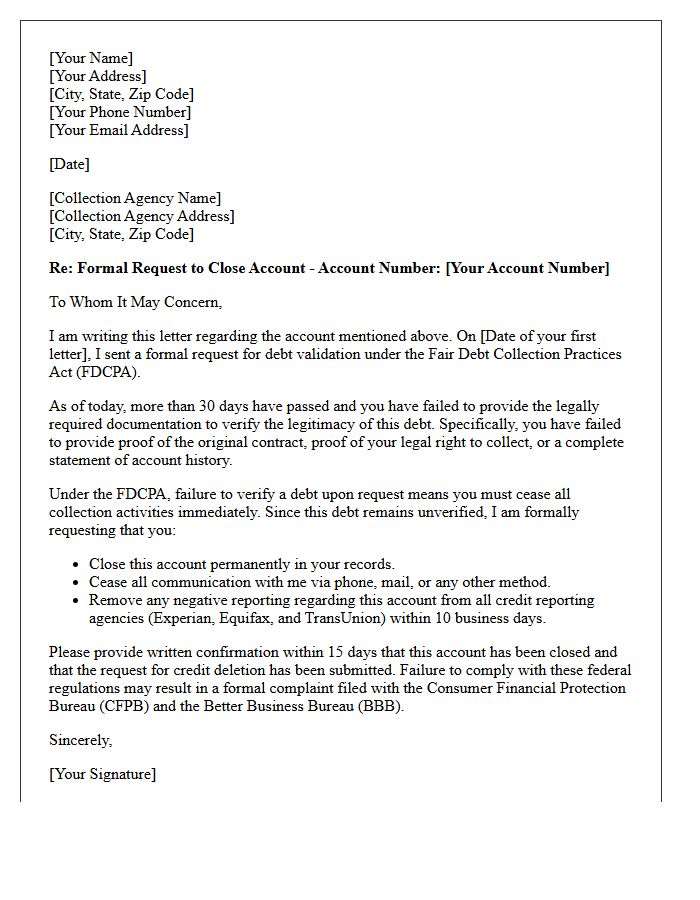
An Unverified Debt Account Closure Letter is a formal legal notice sent to credit bureaus or collectors when a debt remains unproven. Under the Fair Credit Reporting Act, agencies must remove inaccurate information if they cannot provide original documentation of the obligation. Sending this letter is the most effective way to challenge questionable entries on your credit report. It forces the creditor to cease collection activities until verification is provided, ultimately protecting your consumer rights and helping to restore your financial standing through documented dispute resolution.
Statute Of Limitations Deletion Letter
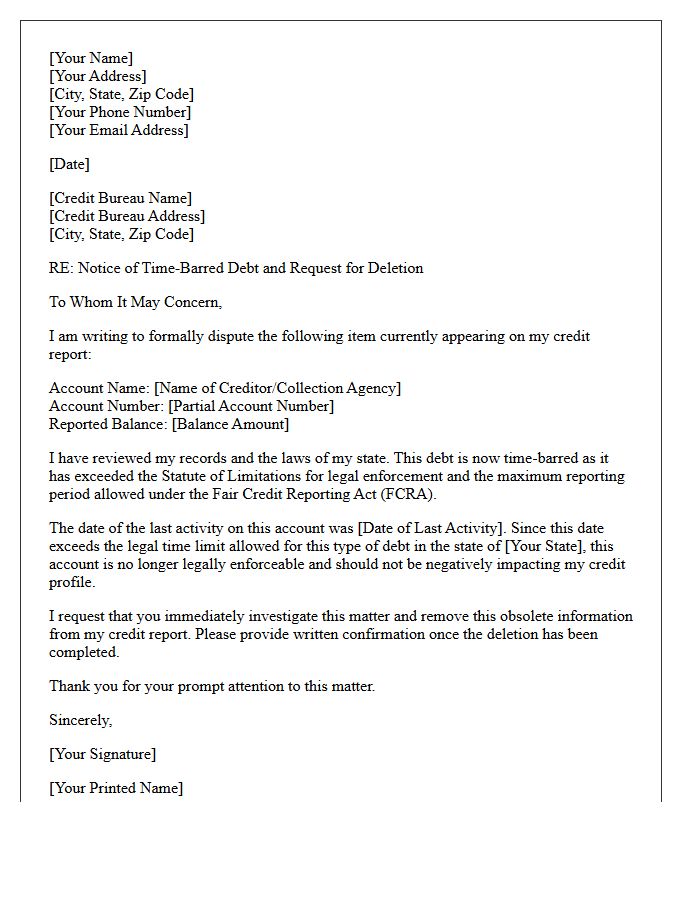
A Statute of Limitations Deletion Letter is a formal notice sent to credit bureaus to remove time-barred debt from your credit report. Legally, most negative information must be deleted after seven years. This letter asserts your consumer rights under the Fair Credit Reporting Act (FCRA) by notifying agencies that the reporting period has expired. Successfully disputing expired accounts can significantly improve your credit score by eliminating outdated derogatory marks that should no longer impact your financial standing or eligibility for new loans and credit lines.
Validation Failure Account Closure Letter
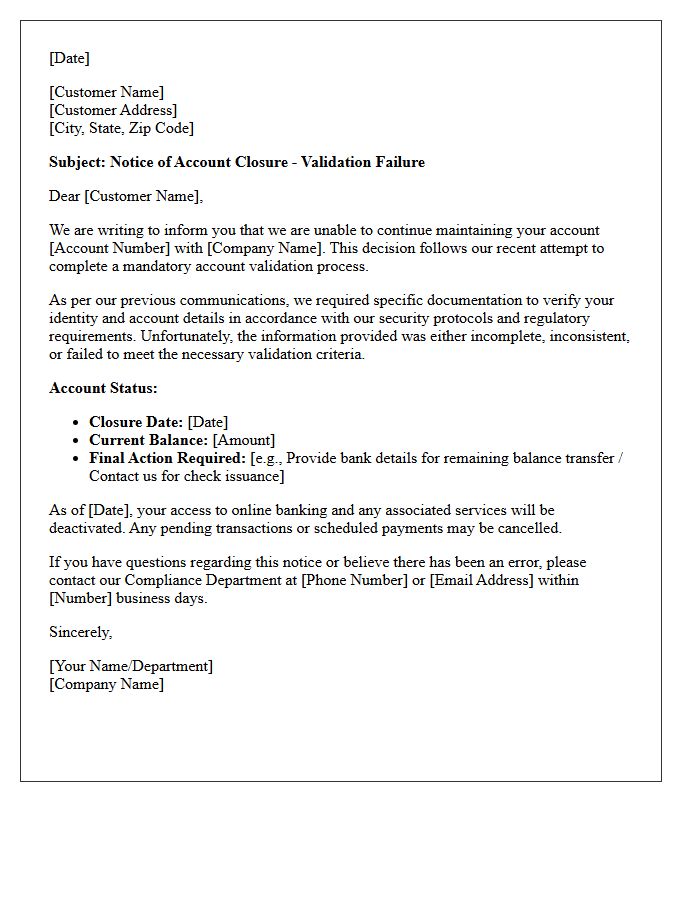
A Validation Failure Account Closure Letter notifies a customer that their account is being terminated due to unsuccessful identity or compliance verification. This formal notice typically occurs when Know Your Customer (KYC) or Anti-Money Laundering (AML) documentation fails to meet regulatory standards. The letter outlines the legal requirements for the closure, specifies the timeline for liquidating remaining balances, and provides instructions for potential appeals. Understanding this document is crucial for resolving regulatory discrepancies and protecting your financial standing when an institution can no longer verify your credentials or source of funds.
Unauthorized Account Bureau Deletion Letter
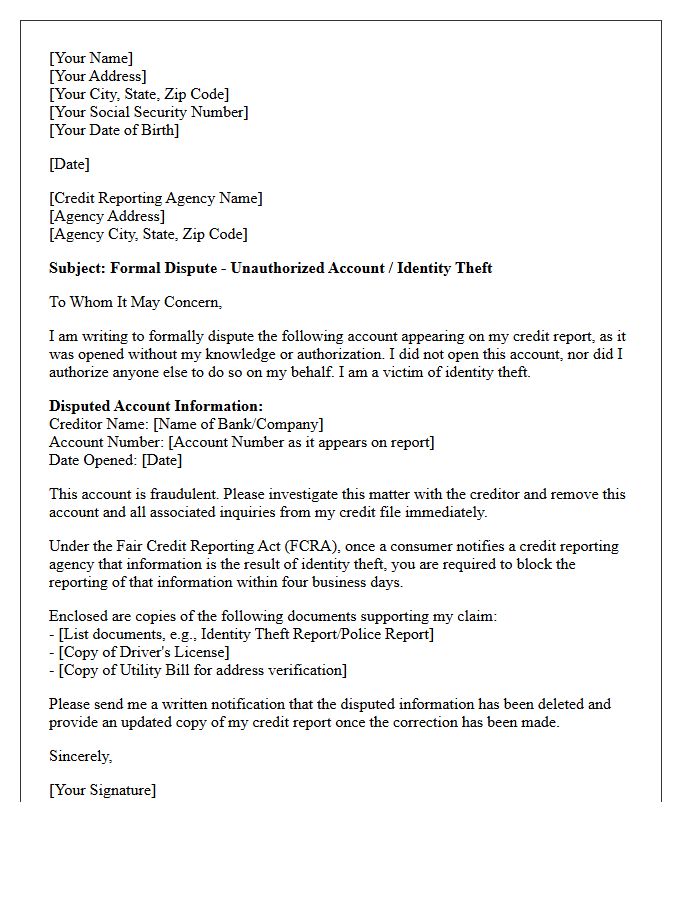
An Unauthorized Account Bureau Deletion Letter is a formal legal notice sent to credit reporting agencies to dispute fraudulent accounts. This document is essential for identity theft recovery, demanding the immediate removal of accounts opened without your consent. To be effective, it should include a copy of your FTC Identity Theft Report or police report as evidence. Under the Fair Credit Reporting Act, bureaus are legally required to investigate and block the reporting of such fraudulent information, helping you restore your credit score and protect your financial reputation from criminal activity.
Resolved Collection Account Deletion Letter
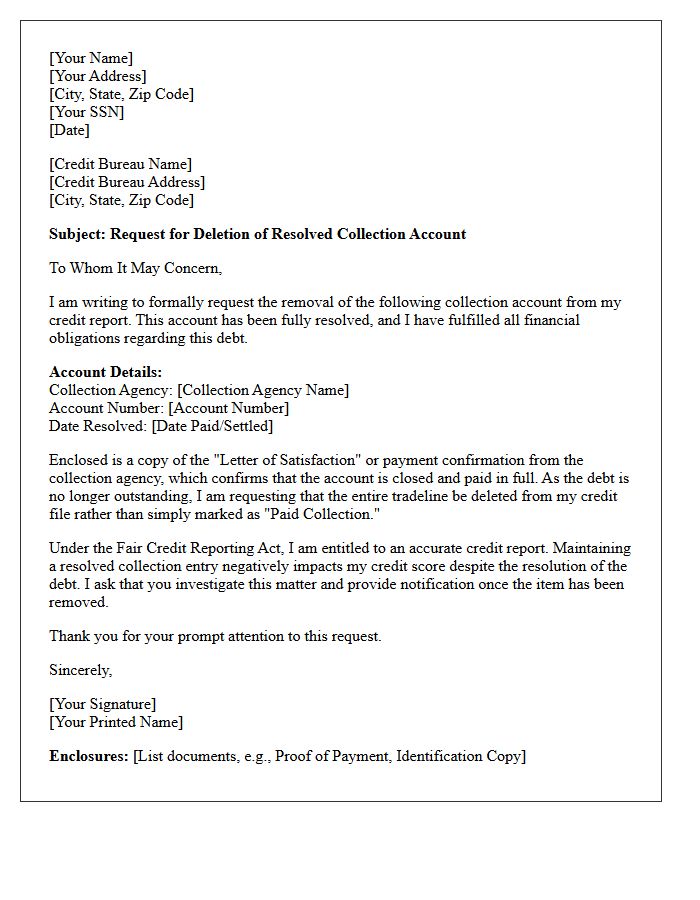
A Resolved Collection Account Deletion Letter is a formal request sent to credit bureaus to remove paid or settled debts from your credit report. While paying a debt fulfills the obligation, it does not automatically erase the negative history. Sending a goodwill deletion request or a formal dispute after payment can help improve your credit score by eliminating derogatory marks. Ensure you include proof of the settled balance and specific account details to verify that the information is no longer relevant or accurate for reporting purposes.
Does closing a credit account automatically delete it from my credit bureau report?
No, closing an account does not remove its history from your credit report. A closed account in good standing typically remains on your bureau file for up to 10 years, while accounts with negative history may remain for 7 years from the date of the original delinquency.
What is a Credit Bureau Deletion Letter?
A Credit Bureau Deletion Letter, often referred to as a "Pay for Delete" proposal, is a formal request sent to a creditor or collection agency offering to pay a debt in exchange for the complete removal of the negative tradeline from your credit reports.
Can I request a deletion for an account I am closing voluntarily?
While you can request a "goodwill deletion" for a closed account, creditors are generally required to report accurate information. Deletions are typically reserved for correcting errors or settling collections; a standard account closure will simply update the status to "Closed" rather than removing the entire history.
How do I format a letter to dispute and delete an inaccurate closed account?
Your letter should include your full legal name, social security number, account number, and a clear explanation of why the entry is inaccurate. Explicitly request that the credit bureau "delete" the entry if the creditor cannot verify the account's accuracy within the 30-day legal window.
Will a "Close and Delete" request improve my credit score?
If you successfully have a negative or derogatory account deleted, your credit score usually improves. However, deleting an old, positive account that you closed voluntarily may actually lower your score by reducing your average age of accounts and total available credit.

Comments