
Formalize your financial resolutions with a Debt Uncollectible Account Closure Letter. This essential document notifies creditors that a debt is legally unenforceable or the debtor lacks seizable assets, effectively halting collection efforts. Properly drafting this notice protects your rights and ensures clear communication during insolvency or hardship. To simplify the process, below are some ready to use template.
Image cover: Professional Debt Closure Letter Templates: Managing Uncollectible Accounts
Letter Samples List
- Uncollectible Debt Closure Letter
- Final Account Resolution Letter
- Cease and Desist Acknowledgment Letter
- Exhausted Collection Efforts Letter
- Return to Creditor Closure Letter
- Statute of Limitations Expiration Letter
- Bankrupt Debtor Account Closure Letter
- Deceased Debtor Uncollectible Account Letter
- Skip Tracing Failure Closure Letter
- Debt Forgiveness Closure Letter
- Unverifiable Debt Account Closure Letter
- Small Balance Write-Off Closure Letter
- Undeliverable Address Account Closure Letter
- Disputed Debt Resolution and Closure Letter
Uncollectible Debt Closure Letter
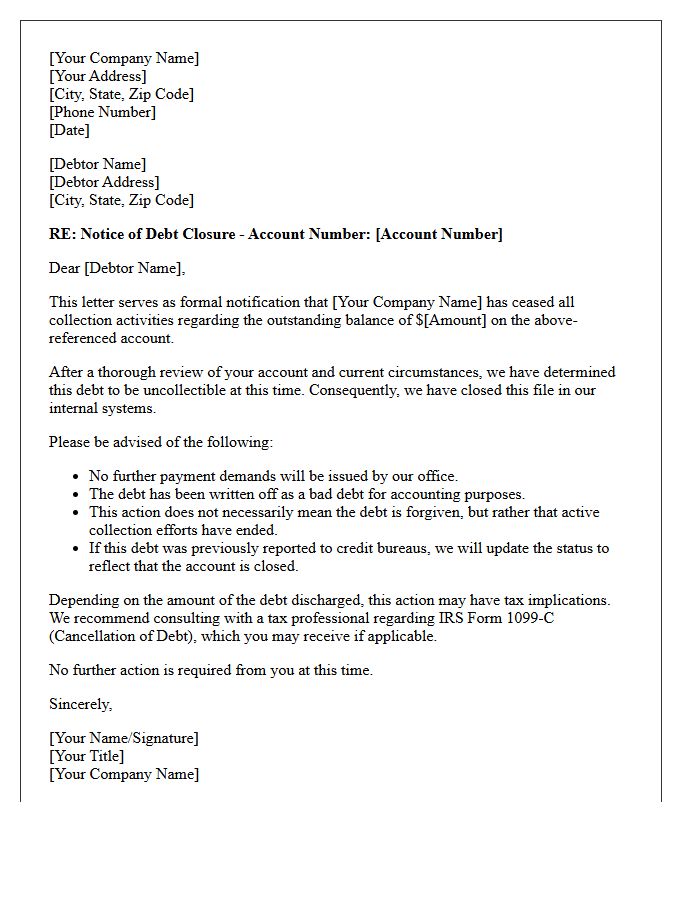
An Uncollectible Debt Closure Letter is a formal notice sent by a creditor or collection agency stating they have ceased collection efforts. This document is essential for financial record-keeping as it confirms the account is closed, though it may not mean the debt is forgiven. It serves as vital legal evidence if a debt is ever disputed or resold. Receiving this letter helps clarify your credit obligations and ensures you have documentation to protect against future collection attempts on the same outstanding balance.
Final Account Resolution Letter
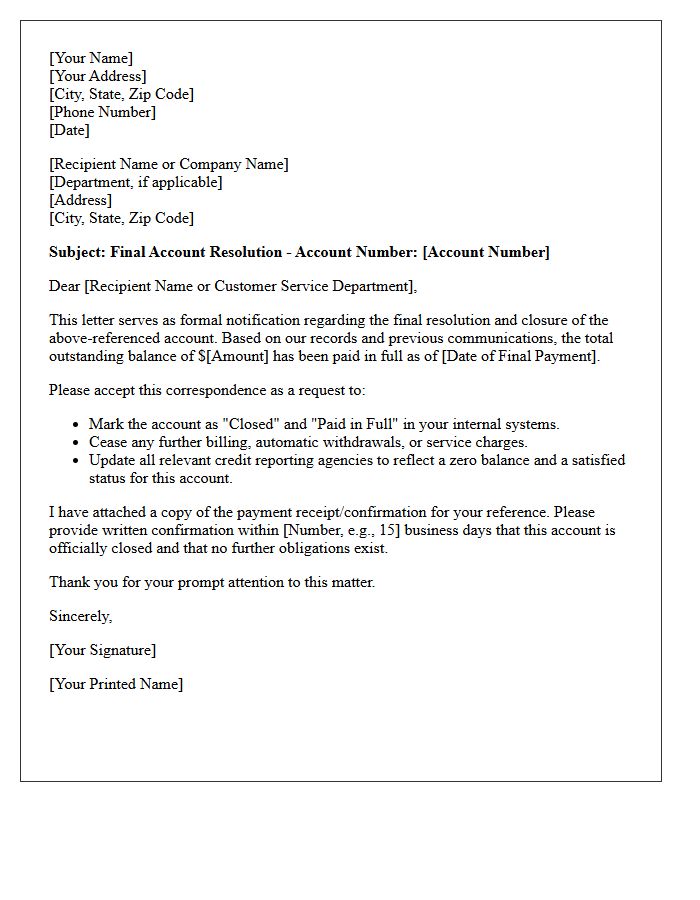
A Final Account Resolution Letter is a formal legal document confirming that a financial obligation is settled. It serves as official proof that a debt or account balance is closed, protecting consumers from future collection attempts on the same debt. This letter should clearly state the settlement amount, date of payment, and the creditor's agreement to update credit bureaus. Always retain a copy for your records to ensure long-term financial protection and to resolve any future discrepancies regarding your credit history or payment status.
Cease and Desist Acknowledgment Letter
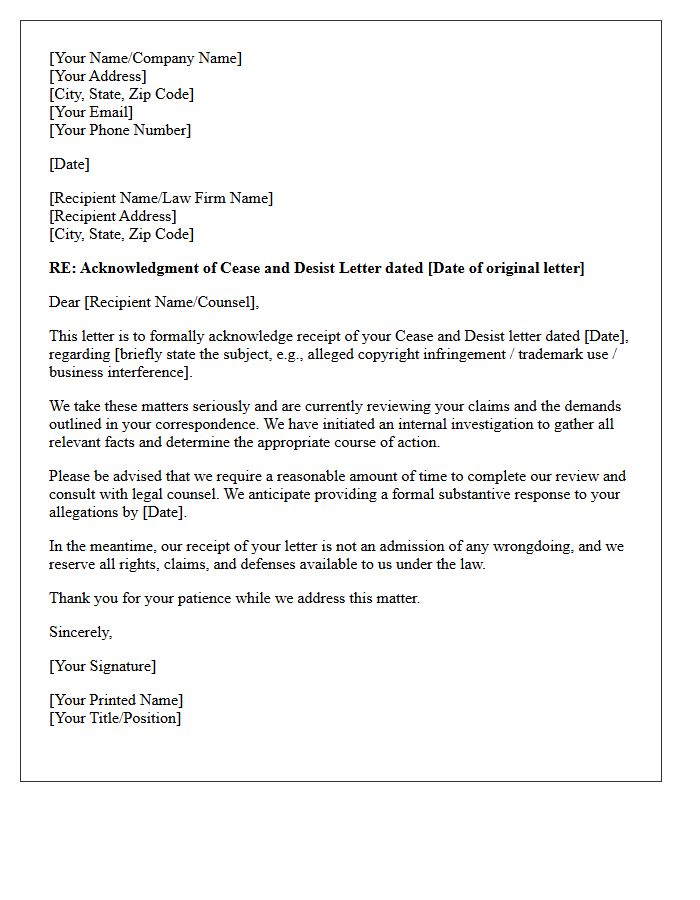
A Cease and Desist Acknowledgment Letter is a formal response confirming that you have received a demand to stop specific activities. Sending this document prevents claims of non-compliance by establishing a clear timeline of receipt. It is crucial to remain neutral and avoid admitting liability or guilt within the text. Instead, use the letter to request additional supporting evidence or to state that legal counsel is currently reviewing the allegations. This professional communication helps manage the dispute process and protects your legal rights during potential litigation or settlement negotiations.
Exhausted Collection Efforts Letter
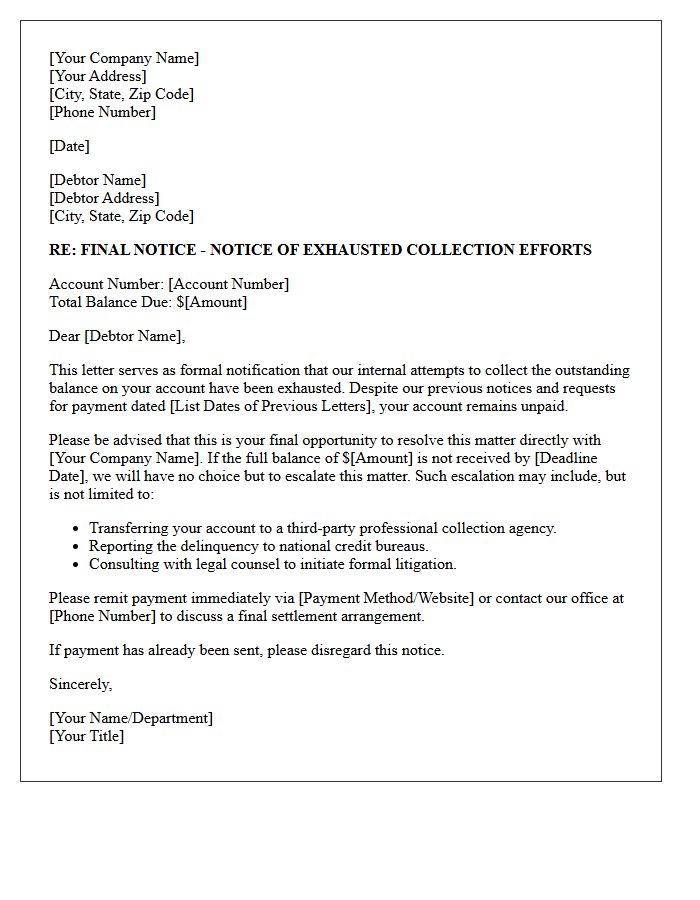
An Exhausted Collection Efforts Letter serves as a formal notification that a creditor or agency has ceased internal attempts to recover a debt. This document is crucial for legal compliance and financial record-keeping, often acting as a prerequisite for selling the debt to a third party or initiating a tax write-off. For debtors, receiving this letter signifies the end of standard communication but may precede a final legal summons or a significant impact on their credit score, marking a transition in the account's recovery status.
Return to Creditor Closure Letter
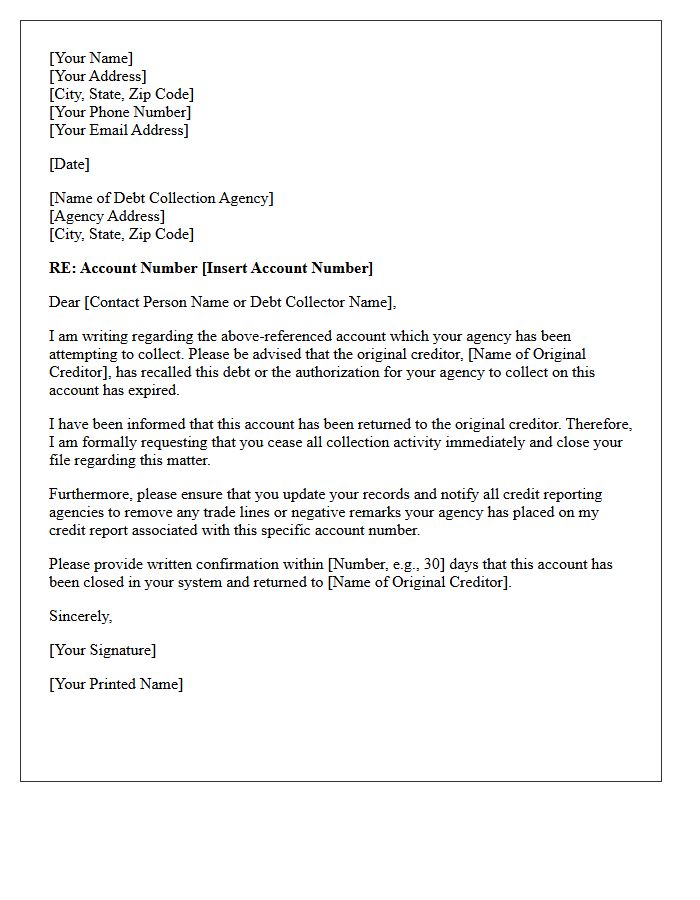
A Return to Creditor Closure Letter is a formal notice sent by a debt settlement agency to a creditor. It signifies that the agency is no longer managing the account and is returning legal authority to the original lender or collection agency. This document is crucial because it indicates that the consumer is now personally responsible for direct negotiations or payments. Receiving this letter often marks the end of a third-party management phase, requiring immediate action to prevent further interest accrual or potential legal escalation regarding the outstanding balance.
Statute of Limitations Expiration Letter
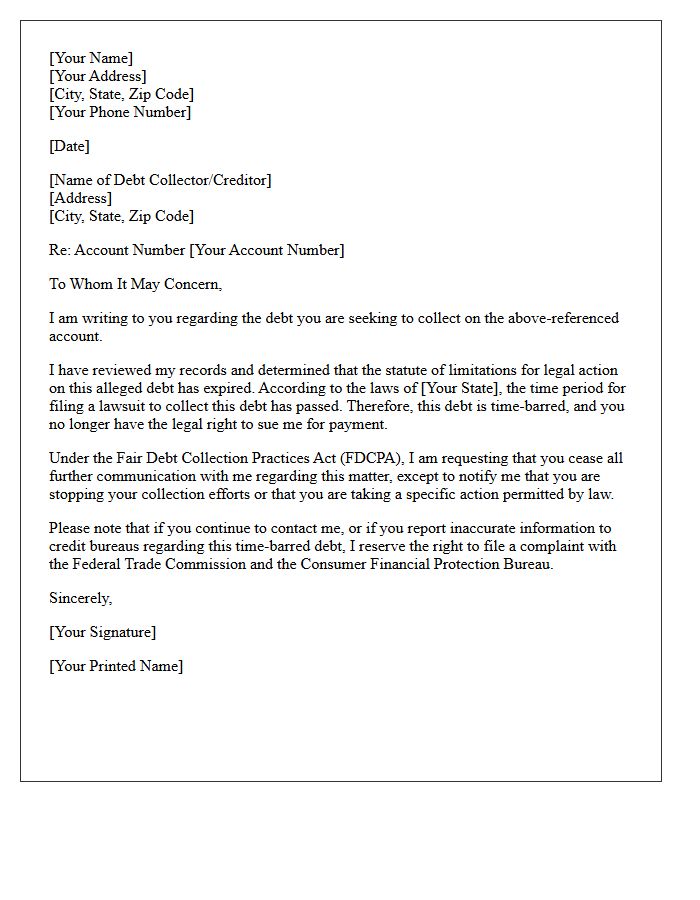
A Statute of Limitations Expiration Letter is a critical document notifying a debtor that the legal timeframe for a creditor to sue for a specific debt has lapsed. Once this period expires, the debt becomes time-barred, meaning you can no longer be legally compelled to pay through a lawsuit. Receiving this letter serves as a formal defense against aggressive collection tactics. It is essential to keep this record to prevent zombie debt collectors from attempting to restart the clock or harass you for unenforceable financial obligations.
Bankrupt Debtor Account Closure Letter
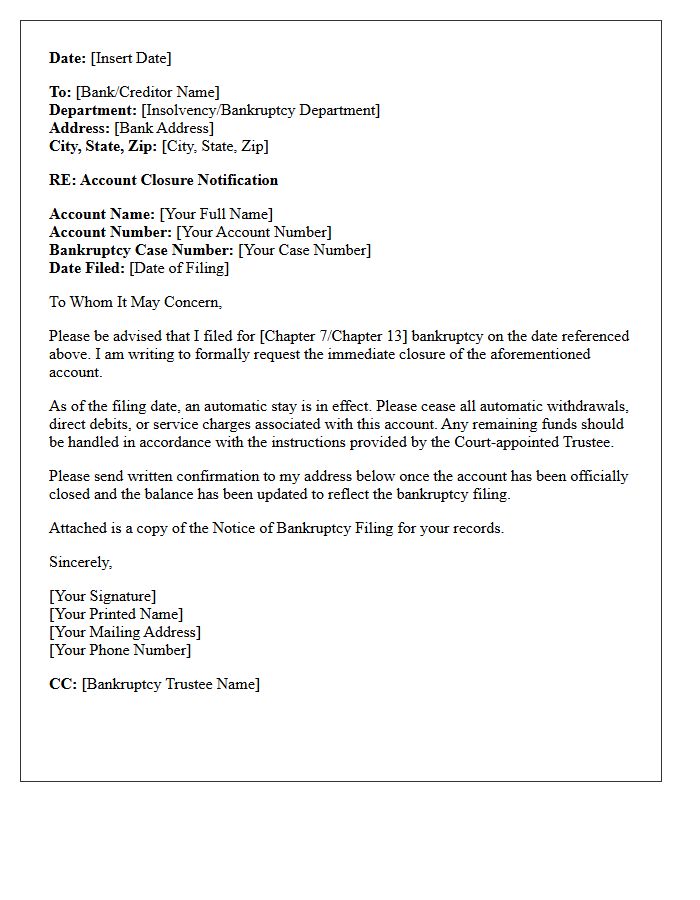
A Bankrupt Debtor Account Closure Letter is a formal notification sent to financial institutions to terminate existing accounts following a legal filing. It serves as essential documentation to prevent unauthorized transactions and ensures compliance with the automatic stay. By clearly stating the case number and filing date, the debtor protects their remaining assets from illegal set-offs or garnishments. Promptly issuing this letter is a critical step in managing post-petition finances and establishing a clean break from prior liabilities during the insolvency process.
Deceased Debtor Uncollectible Account Letter
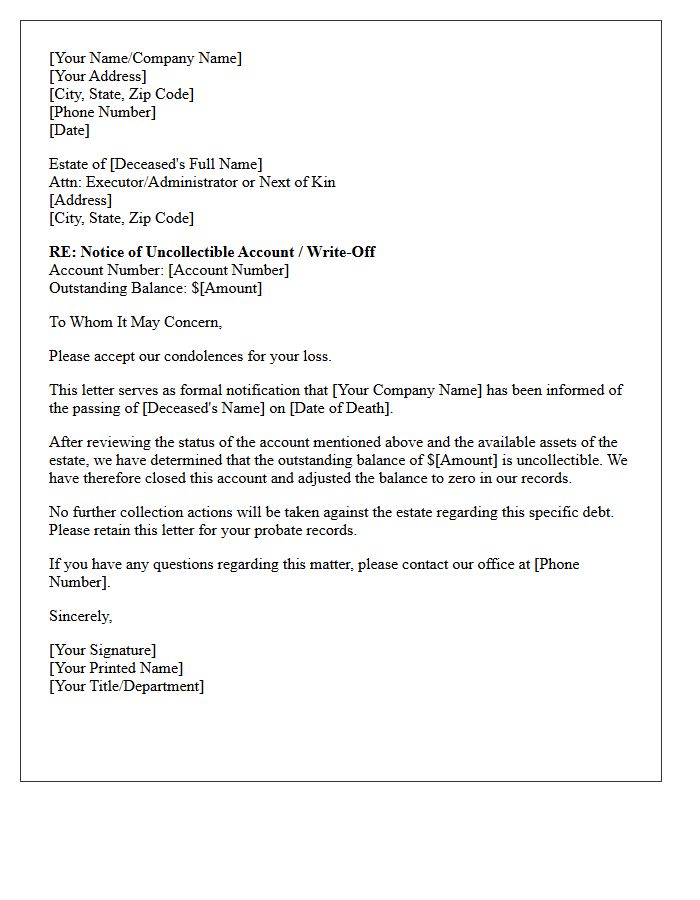
A Deceased Debtor Uncollectible Account Letter is a formal notice sent by creditors to inform heirs or executors that a debt is being closed. Since debts are generally legally owed by the estate rather than surviving family members, this document acknowledges that the account is uncollectible due to insufficient assets. It serves as essential legal documentation for tax reporting and prevents further collection actions. Receiving this letter provides closure, ensuring the deceased individual's remaining financial obligations are officially resolved and will no longer be pursued against survivors.
Skip Tracing Failure Closure Letter
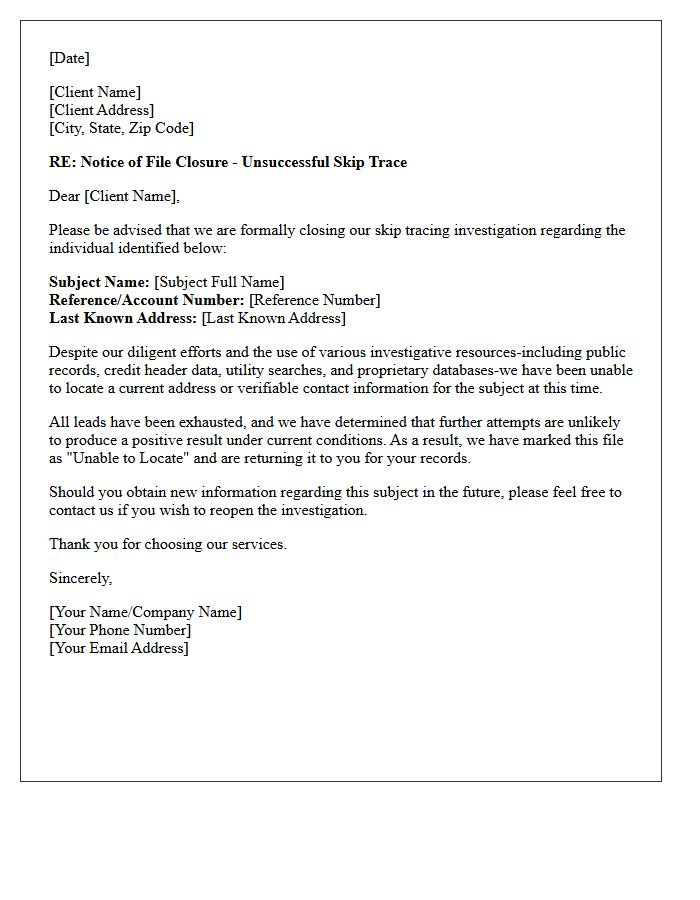
A Skip Tracing Failure Closure Letter is a formal notification issued when a debt collection or investigative effort ends because a subject cannot be located. This document serves as official documentation that all reasonable search methods, including database queries and field calls, have been exhausted. It is essential for compliance and auditing, as it justifies account closure or the decision to write off uncollectible debt. This letter protects agencies by proving due diligence was performed before ceasing recovery actions and helps maintain accurate financial records for tax or legal purposes.
Debt Forgiveness Closure Letter
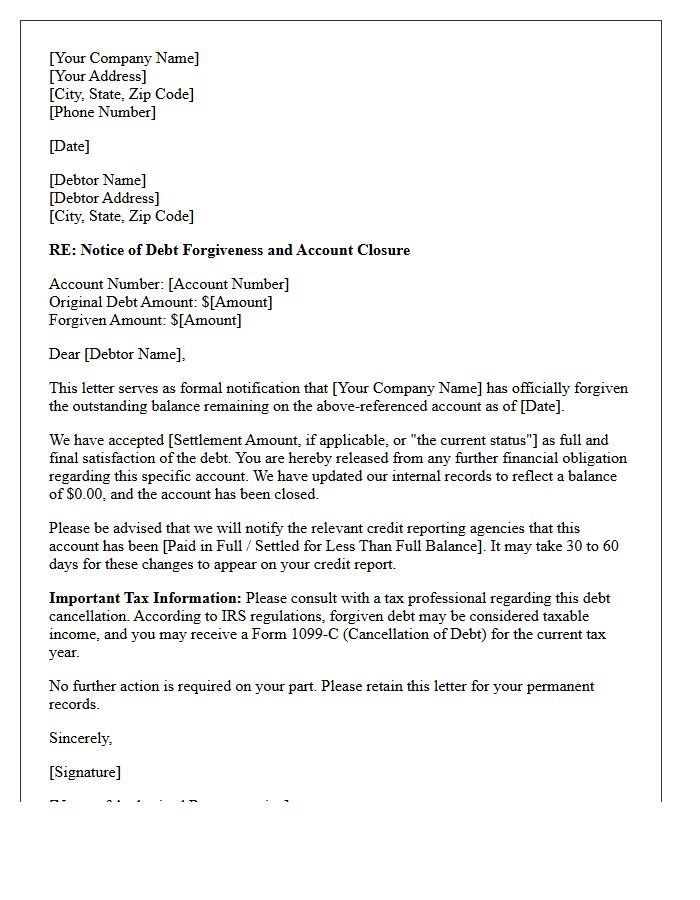
A Debt Forgiveness Closure Letter is a formal document issued by a creditor confirming that a specific debt is settled and the account is closed. It serves as legal proof of payment, ensuring you are no longer liable for the balance. Retaining this letter is crucial for your financial records, as it protects you against future collection attempts and allows you to verify that your credit report accurately reflects the zero balance. Always confirm the details match your settlement agreement to maintain long-term financial security and credit health.
Unverifiable Debt Account Closure Letter
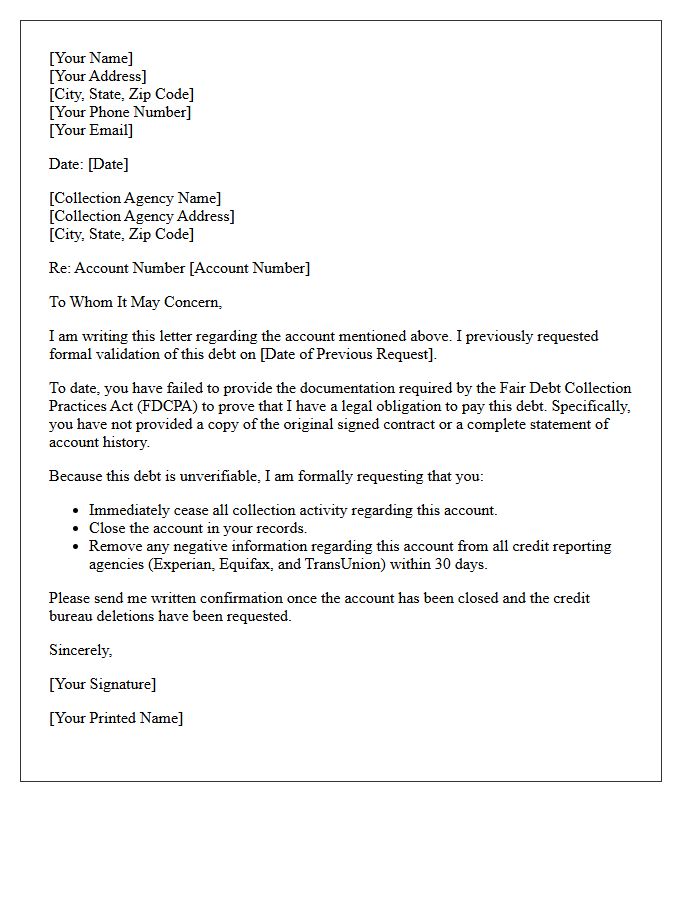
An Unverifiable Debt Account Closure Letter is a formal legal tool used to dispute inaccuracies on your credit report. If a collection agency fails to provide valid proof of a debt's origin or balance within thirty days of a request, they are legally required to stop collection efforts. Sending this document compels creditors to remove unverified entries from your history, effectively improving your credit score. It ensures that outdated or erroneous claims do not impact your financial reputation, protecting your rights under the Fair Debt Collection Practices Act.
Small Balance Write-Off Closure Letter
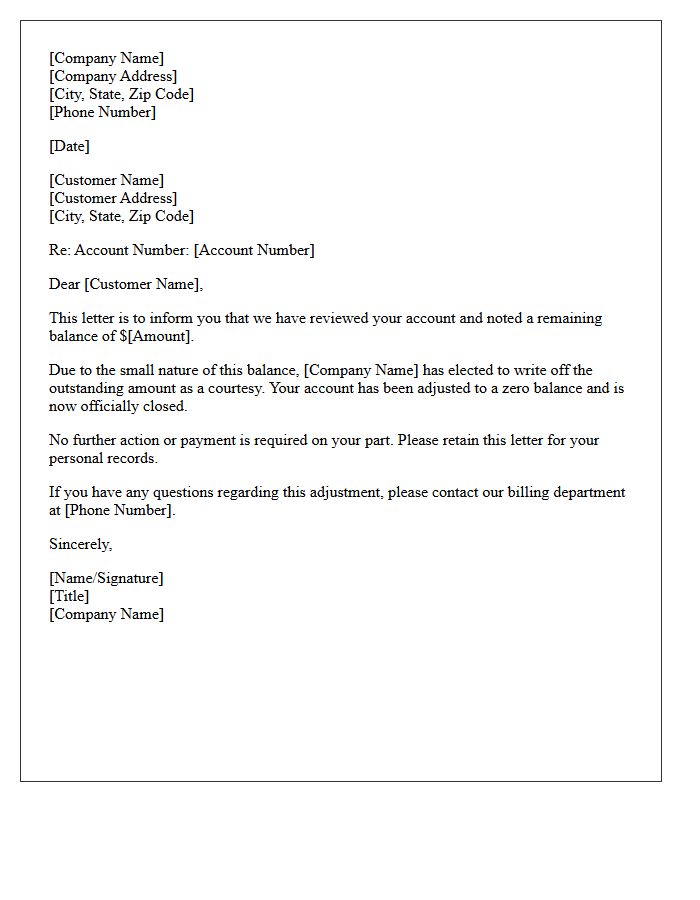
A Small Balance Write-Off Closure Letter is a formal notification sent to customers confirming that a minor outstanding debt has been cancelled. This happens when the remaining amount is uneconomical to collect compared to administrative costs. Receiving this letter means the account is officially closed with a zero balance, preventing further collection actions. It is an essential document for financial record-keeping, ensuring that the debtor is no longer liable for the small sum and that their credit status reflects the final account resolution.
Undeliverable Address Account Closure Letter
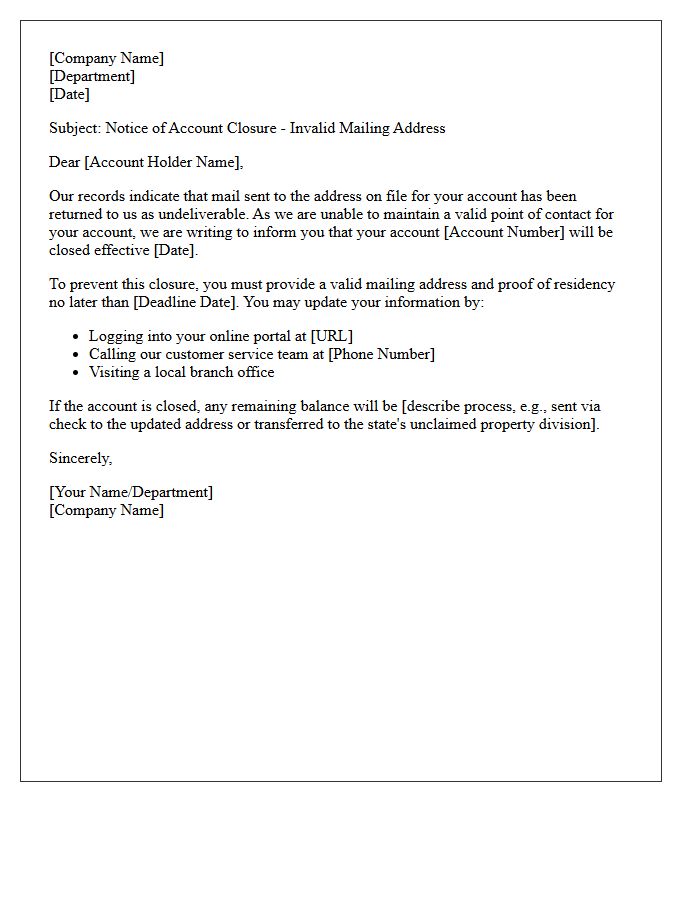
An Undeliverable Address Account Closure Letter notifies customers that their account will be terminated because the institution cannot verify a valid physical location. Financial regulations require accurate residency data to prevent fraud. If mail is returned as undeliverable, businesses must protect sensitive information by restricting access. To avoid permanent account closure, you must provide updated proof of address documentation immediately. Failure to respond typically results in the liquidation of assets or the escheatment of funds to state authorities. Always ensure your contact details remain current to maintain service continuity.
Disputed Debt Resolution and Closure Letter
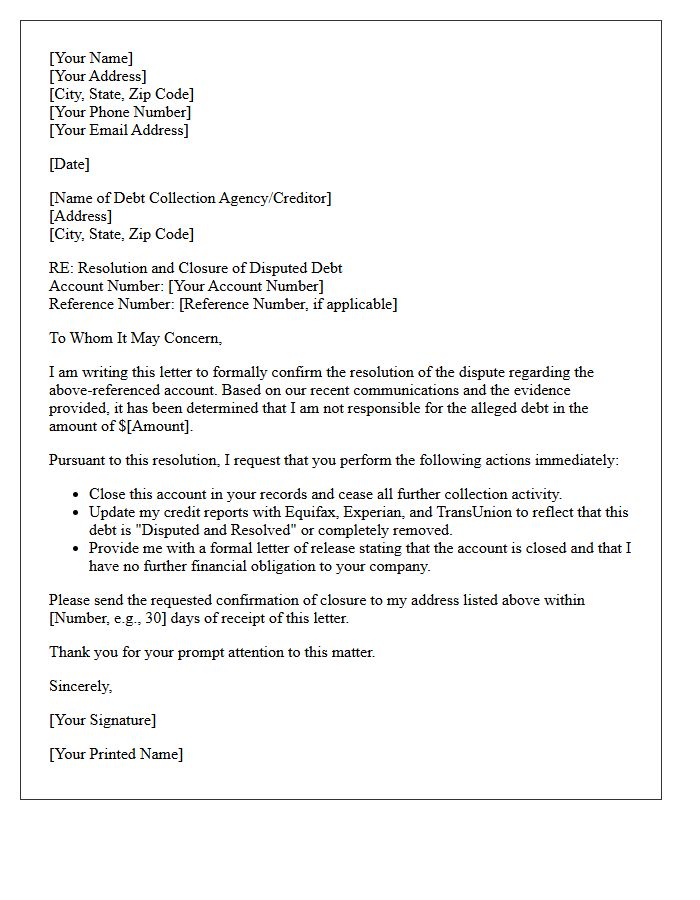
A Disputed Debt Resolution and Closure Letter serves as official documentation that a financial disagreement is finalized. It confirms that the creditor or collection agency has accepted a specific settlement or verified the debt is invalid. This letter is crucial for your records, as it prevents future collection attempts and provides legal evidence to update your credit report. Always ensure the document explicitly states the account is closed with a zero balance to protect your financial standing and prevent the debt from being sold to other collectors.
What is a Debt Uncollectible Account Closure Letter?
A Debt Uncollectible Account Closure Letter is a formal notification sent by a creditor or debt collector stating that a specific debt has been deemed uncollectible and the account is officially being closed within their internal systems.
Does a debt closure letter mean the debt is forgiven?
Not necessarily. While the letter confirms the account is closed and the current creditor has ceased collection efforts, the debt may still be reported as a "charge-off" or sold to a third-party debt buyer unless the letter explicitly states the debt is "canceled" or "forgiven."
How does an uncollectible account closure affect my credit score?
An account marked as uncollectible or charged-off typically has a negative impact on your credit score. However, receiving a closure letter is beneficial for your records as it provides proof that the original creditor is no longer actively pursuing the balance.
What should I do after receiving a debt closure letter?
You should save a copy of the letter for your permanent records, verify that the account balance is updated to zero on your credit report, and monitor your files to ensure no other collection agencies attempt to collect on the same closed account.
Can a creditor reopen an account after sending a closure letter?
Generally, once an account is officially closed as uncollectible, the original creditor will not reopen it. However, they may still issue a 1099-C form if the debt was canceled, which requires you to report the discharged amount as taxable income to the IRS.

Comments