
A Notice of Default on Settlement Agreement is a formal legal document issued when a party fails to fulfill their obligations under a signed resolution. It identifies specific breaches, demands immediate corrective action, and preserves your right to pursue further legal remedies or litigation. Understanding how to draft this notice is essential for enforcing compliance. Below are some ready to use templates.
Image cover: Official Notice of Default: Settlement Agreement Violation Templates
Letter Samples List
- First Notice of Default on Settlement Agreement Letter
- Final Warning Settlement Breach Letter
- Notice of Intent to Terminate Settlement Letter
- Demand for Immediate Payment on Defaulted Settlement Letter
- Reinstatement of Original Debt Balance Letter
- Notice of Opportunity to Cure Settlement Default Letter
- Notice of Acceleration Due to Settlement Default Letter
- Collection Agency Settlement Default Notification Letter
- Notice of Intent to Litigate Settlement Default Letter
- Notice of Judgment Enforcement Upon Settlement Default Letter
- Legal Counsel Settlement Breach Warning Letter
- Revocation of Debt Settlement Terms Letter
First Notice of Default on Settlement Agreement Letter
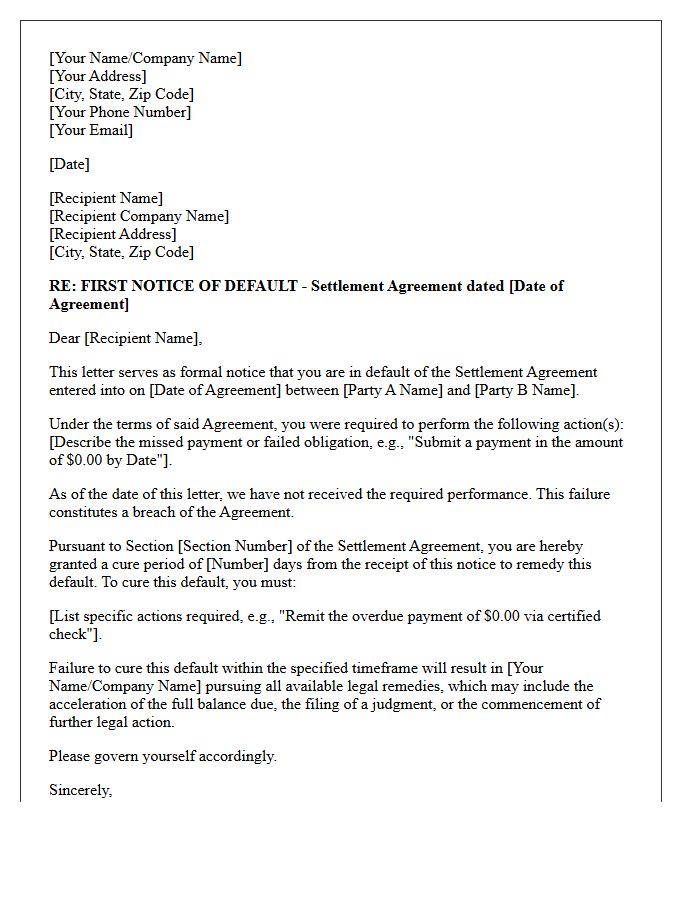
A First Notice of Default is a formal legal document issued when a party fails to fulfill specific obligations outlined in a settlement agreement. This letter serves as official notification that a breach has occurred, typically triggering a mandatory cure period to rectify the violation. Receiving or sending this notice is a critical step in legal enforcement, as it preserves your contractual rights and acts as a prerequisite before pursuing further litigation or seeking court-ordered remedies to resolve the outstanding dispute.
Final Warning Settlement Breach Letter
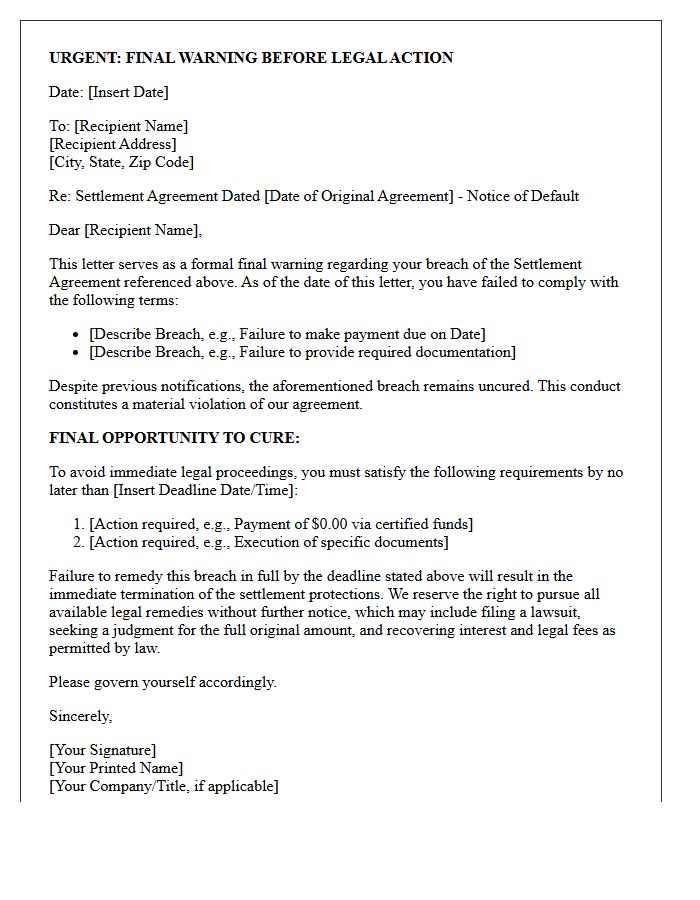
A Final Warning Settlement Breach Letter is a formal legal notice issued when a party fails to uphold terms defined in a settlement agreement. This document serves as a critical final opportunity to rectify the violation before the non-breaching party pursues litigation or enforcement of liquidated damages. It clearly outlines the specific clauses breached, the required corrective actions, and the impending deadline. Failure to comply after receiving this notice typically results in the immediate termination of the settlement and the commencement of legal proceedings to recover full losses.
Notice of Intent to Terminate Settlement Letter
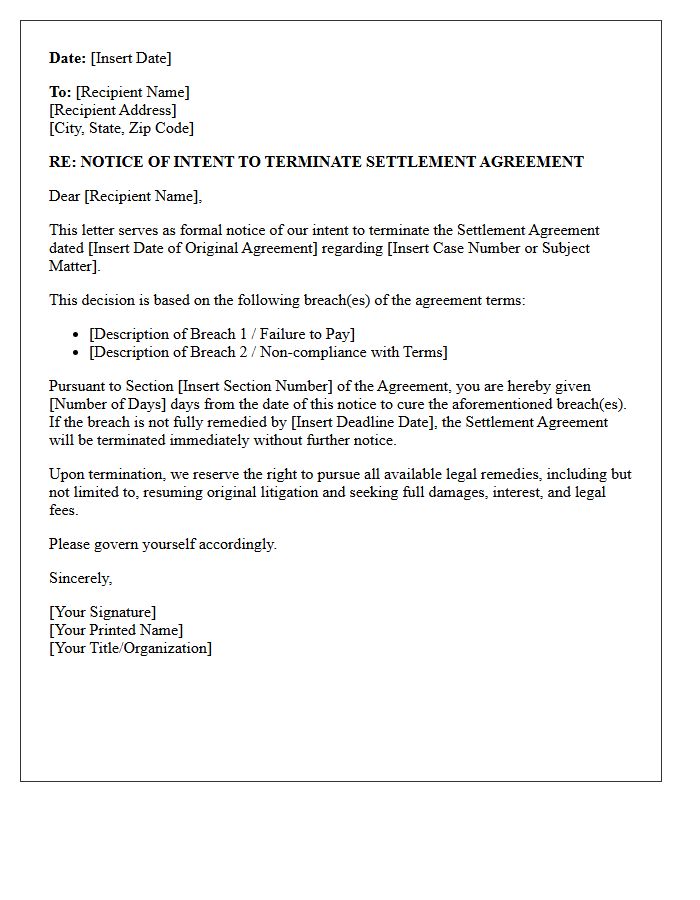
A Notice of Intent to Terminate Settlement Letter is a formal legal notification indicating that a party plans to end a structured settlement or legal agreement. This document typically arises due to a material breach of contract, such as missed payments or failure to meet specific obligations. It serves as a final warning, providing a grace period for the defaulting party to cure the violation before legal action or total termination occurs. Understanding the specific notice period and terms outlined in the original agreement is essential for protecting your legal rights.
Demand for Immediate Payment on Defaulted Settlement Letter
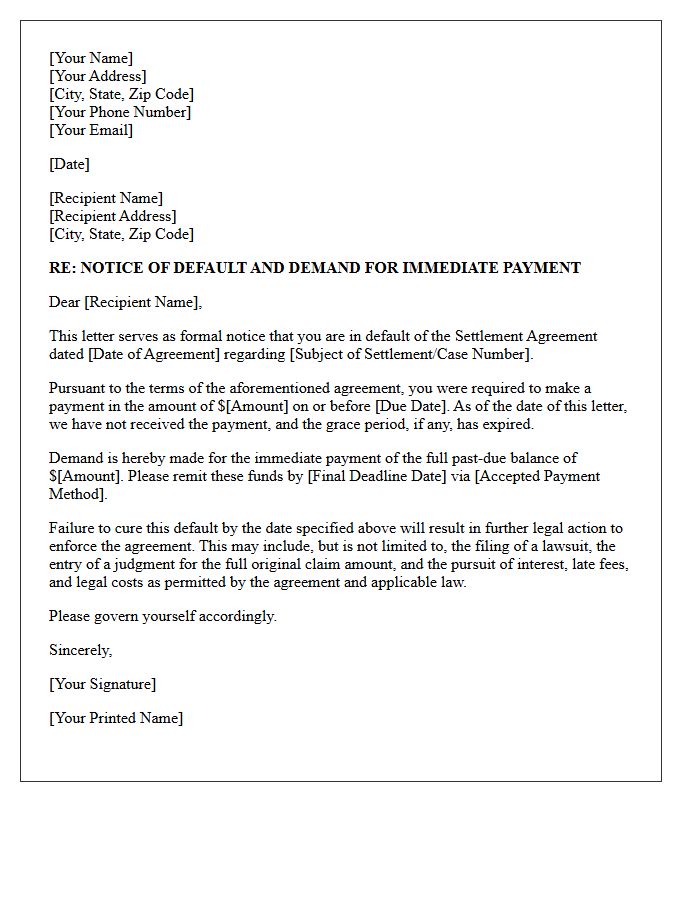
Receiving a Demand for Immediate Payment on a defaulted settlement letter means you have breached the agreed-upon payment terms. This legal notice accelerates the debt, making the entire outstanding balance due instantly rather than in installments. Failure to respond promptly often leads to litigation, wage garnishment, or asset seizure. It is critical to review the original agreement for a grace period and contact the creditor immediately to negotiate a reinstatement or avoid further legal action. Prompt communication is the best way to prevent aggressive collection efforts after a default.
Reinstatement of Original Debt Balance Letter
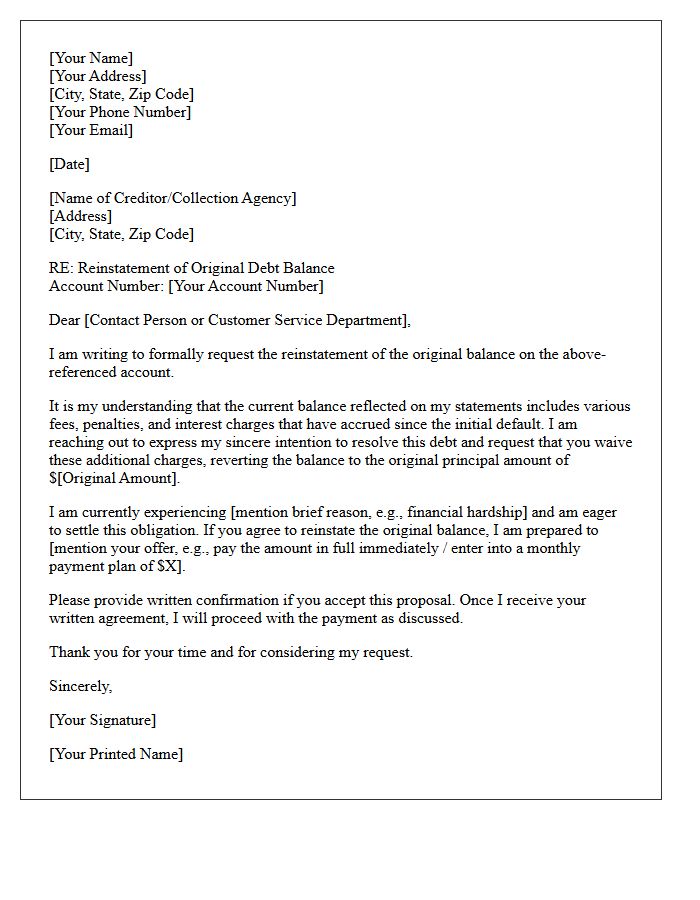
A Reinstatement of Original Debt Balance Letter is a formal notification issued when a settlement agreement is breached. It signifies that the creditor has revoked previous discounts due to missed payments, effectively restoring the total outstanding liability. This document is a critical warning that you are now responsible for the full original amount, including any accrued interest or late fees. Promptly addressing this default notice is essential to prevent aggressive collection actions or legal proceedings against your remaining balance.
Notice of Opportunity to Cure Settlement Default Letter
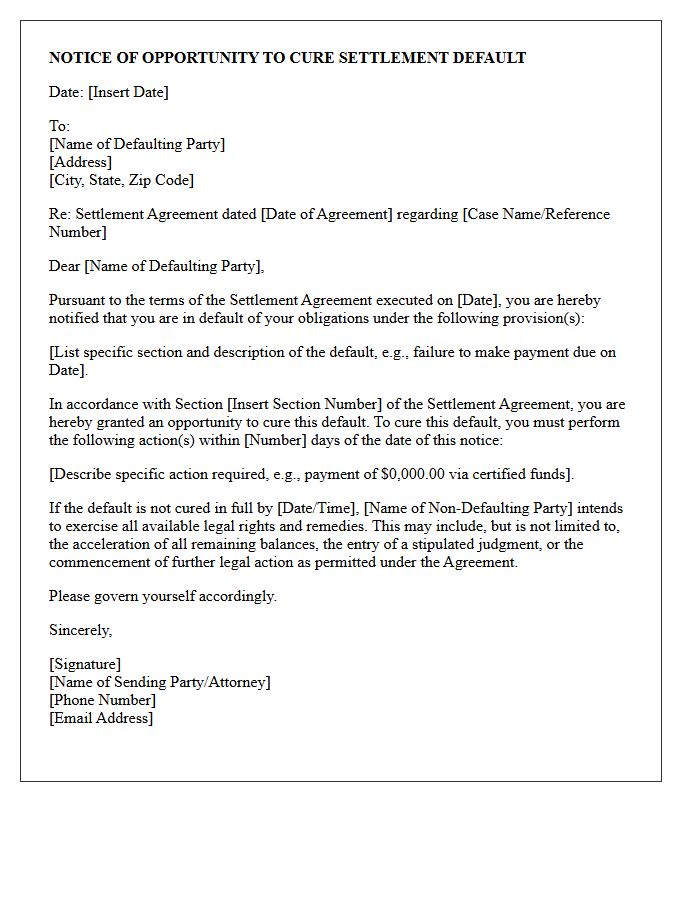
A Notice of Opportunity to Cure Settlement Default Letter is a formal legal warning issued when a party fails to meet settlement agreement obligations. This document serves as a mandatory grace period, allowing the defaulting party to rectify specific breaches, such as missed payments, before facing aggressive legal action or judgment enforcement. Understanding the strictly defined cure period is essential, as failing to resolve the issue within this timeframe typically triggers the acceleration of the full debt amount or the immediate reinstatement of a lawsuit.
Notice of Acceleration Due to Settlement Default Letter
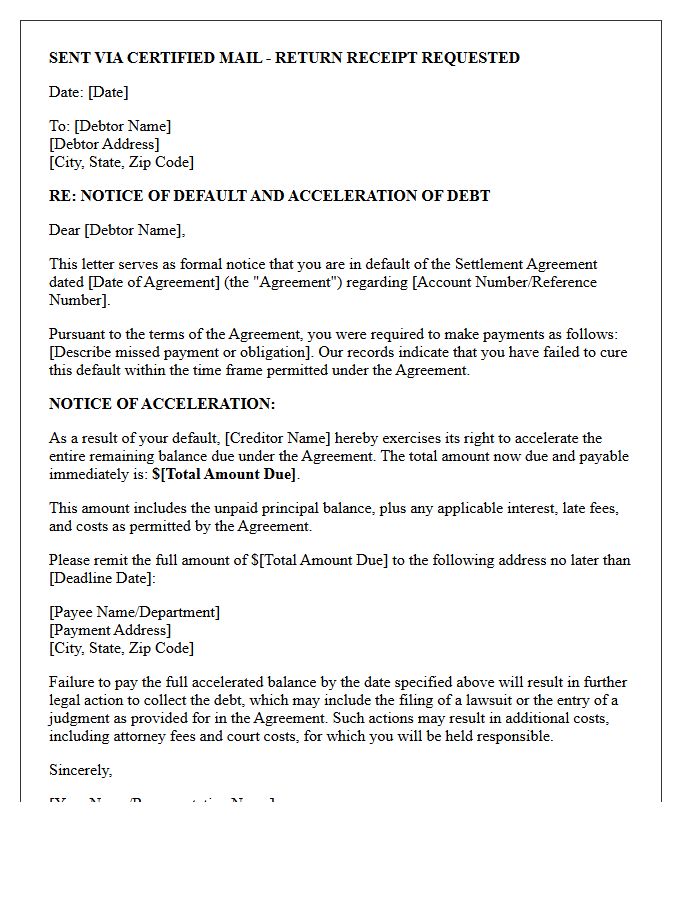
A Notice of Acceleration Due to Settlement Default is a formal legal document issued when a debtor fails to meet the specific terms of a repayment agreement. This letter signifies that the entire remaining balance is now due immediately, rather than in installments. It effectively cancels the settlement plan, making the total debt amount enforceable. Receiving this notice is a critical warning that the creditor may initiate litigation or foreclosure actions. To avoid severe financial consequences, debtors must respond promptly to cure the default or negotiate a new resolution before legal proceedings escalate.
Collection Agency Settlement Default Notification Letter
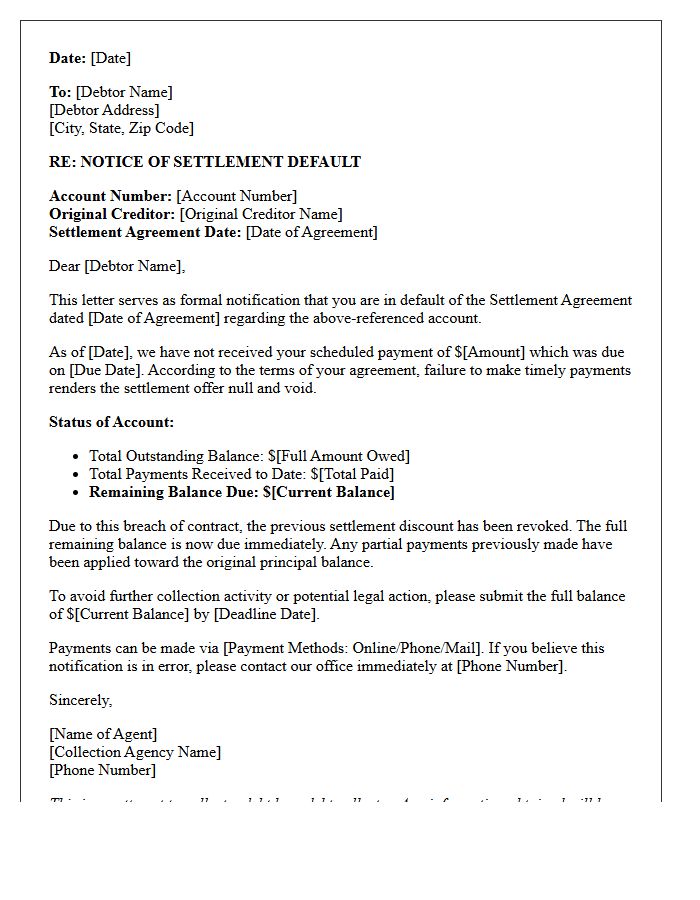
A Collection Agency Settlement Default Notification Letter is a formal legal notice sent when a debtor fails to uphold the terms of a negotiated payment agreement. This document serves as a final warning, officially voiding the previous settlement offer and reinstating the full original balance plus potential interest. Receiving this letter indicates that the creditor may now pursue aggressive collection tactics or legal action. It is crucial to respond immediately to negotiate a new reinstatement plan or provide proof of payment to avoid severe credit score damage and potential litigation.
Notice of Intent to Litigate Settlement Default Letter
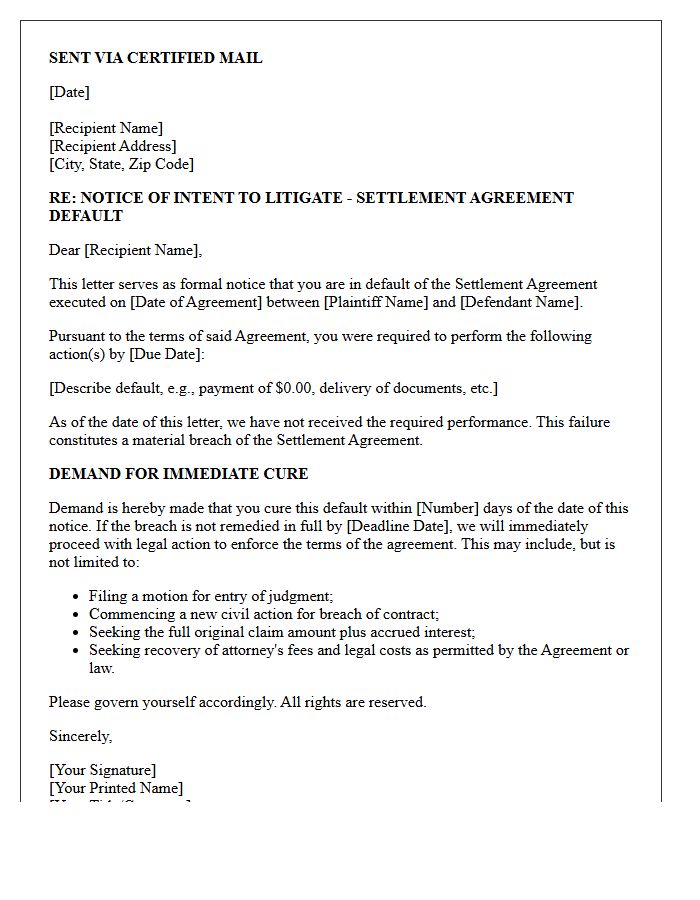
A Notice of Intent to Litigate Settlement Default Letter is a formal legal warning sent when a party fails to fulfill payment obligations or terms defined in a signed settlement agreement. This document serves as a final demand, notifying the defaulting party that legal action will be initiated to enforce the contract unless the breach is cured immediately. It is a critical step in preserving rights and demonstrating a good-faith effort to resolve the dispute before seeking a court judgment for the full amount owed plus potential legal fees.
Notice of Judgment Enforcement Upon Settlement Default Letter
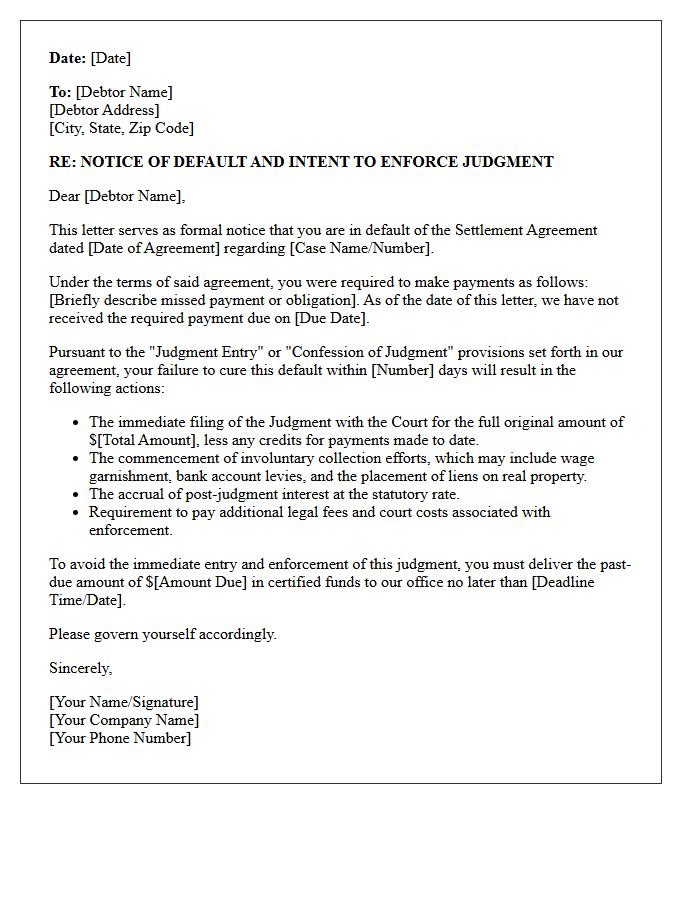
A Notice of Judgment Enforcement Upon Settlement Default is a legal document issued when a debtor fails to meet agreed payment terms. This formal notification signifies that the creditor is restoring legal action to collect the full debt amount. It serves as a final warning before aggressive measures like wage garnishment or bank levies are initiated. Recipients must act immediately to address the breach of contract to avoid severe financial consequences and permanent damage to their credit report through public records.
Legal Counsel Settlement Breach Warning Letter
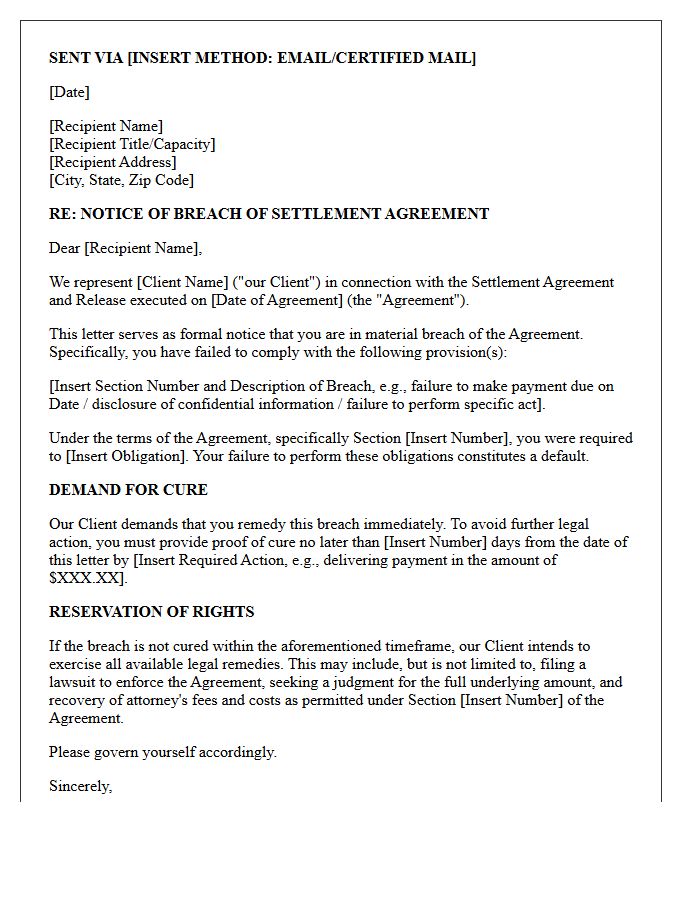
A Legal Counsel Settlement Breach Warning Letter serves as a formal notice that a party has failed to uphold terms defined in a settlement agreement. This legal document identifies specific violations, such as missed payments or confidentiality leaks, and demands immediate remediation. It functions as a critical prerequisite for litigation, providing a final opportunity to resolve the contractual default without further court intervention. Issuing this letter preserves your rights and establishes a clear evidentiary trail of the non-compliance for potential future enforcement actions or damage claims.
Revocation of Debt Settlement Terms Letter
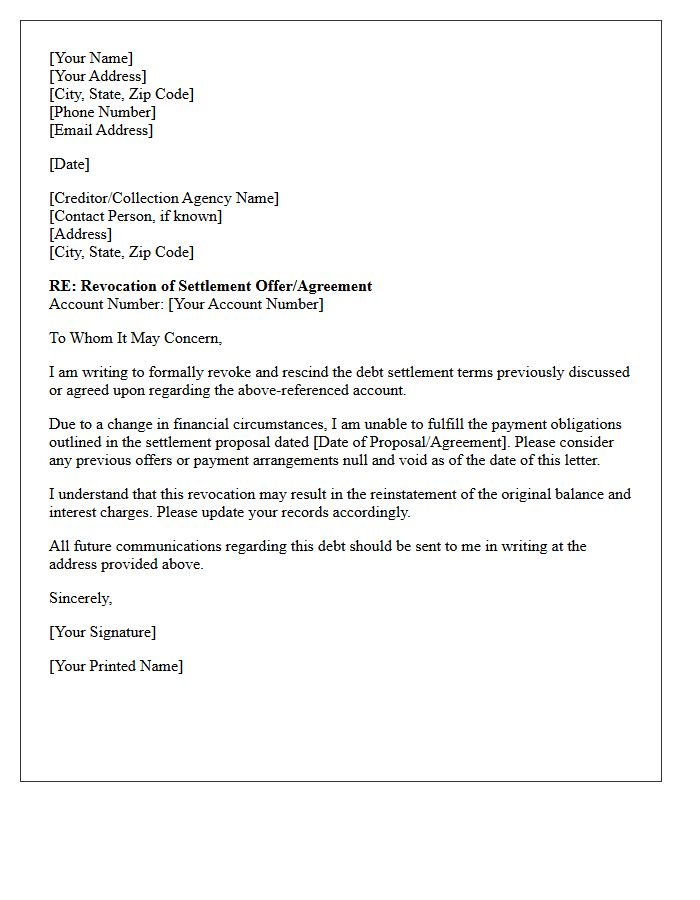
A Revocation of Debt Settlement Terms Letter is a formal legal notice used to officially cancel a previously negotiated agreement. It is essential to send this document when a creditor fails to honor agreed-upon terms or if the debtor can no longer fulfill the payment plan. Providing this written notification protects your rights and ensures that outdated contracts are no longer legally binding. Always include your account details and clear reasons for the termination to maintain accurate financial records and prevent future disputes regarding outstanding liabilities.
What is a Notice of Default on a Settlement Agreement?
A Notice of Default on a Settlement Agreement is a formal legal document sent to a party who has failed to fulfill their obligations as outlined in a signed settlement contract. It serves as an official warning that a breach of contract has occurred and outlines the specific terms that were violated, such as missed payments or failure to perform a required action.
What happens after a Notice of Default is served?
Once a Notice of Default is served, the defaulting party typically enters a "cure period" defined in the agreement. During this time, they must remedy the breach to avoid further legal consequences. If the default is not cured, the non-breaching party may move to enforce the agreement through a court judgment, file a new lawsuit, or trigger penalty clauses and interest acceleration.
Can a Settlement Agreement be enforced if a party defaults?
Yes, a settlement agreement is a legally binding contract. If a party defaults, the other party can file a motion to enforce the settlement in court. If the agreement included a "stipulation for entry of judgment," the court may quickly enter a judgment against the defaulting party for the full amount owed plus additional costs without requiring a full trial.
What should be included in a Notice of Default letter?
A Notice of Default should include the date of the original settlement agreement, the specific section or clause that was breached, a detailed description of the default (such as the amount of an unpaid installment), the deadline for curing the default, and the specific legal actions that will be taken if the breach is not corrected.
Is there a grace period after receiving a Notice of Default?
The existence of a grace period depends entirely on the specific language within the Settlement Agreement. Many agreements provide a 5 to 10-day window after a notice is sent for the party to "cure" the default. If the contract does not explicitly provide a cure period, the non-breaching party may be able to seek immediate legal remedies upon the occurrence of the breach.

Comments