
Receiving a Tax Refund Lump Sum Settlement Offer Letter from the IRS can provide a strategic path to resolve your outstanding debt for less than you owe. This formal proposal outlines terms to settle tax liabilities through a single payment. Understanding the requirements is essential for a successful negotiation. To help you draft your response, below are some ready to use template.
Image cover: IRS Tax Settlement Offer: Professional Templates and Refund Allocation Guides
Letter Samples List
- Initial Tax Refund Lump Sum Settlement Offer Letter
- Early Tax Season Debt Resolution Settlement Letter
- Time-Sensitive Tax Refund Lump Sum Offer Letter
- Exclusive Tax Season Discount Settlement Letter
- Urgent Tax Refund Lump Sum Settlement Offer Letter
- Maximum Discount Tax Refund Debt Settlement Letter
- Pre-Tax Season Lump Sum Settlement Offer Letter
- Account Resolution Tax Refund Settlement Letter
- Reduced Balance Tax Season Settlement Offer Letter
- Tax Refund Allocation Lump Sum Settlement Letter
- Post-Tax Refund Lump Sum Settlement Demand Letter
- Final Notice Tax Refund Settlement Offer Letter
Initial Tax Refund Lump Sum Settlement Offer Letter
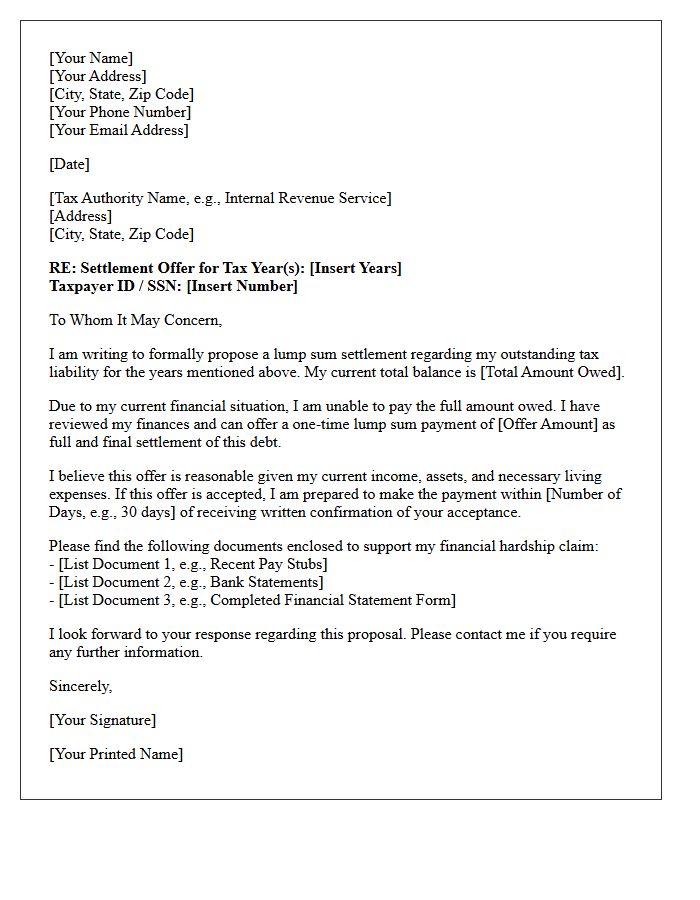
Receiving an Initial Tax Refund Lump Sum Settlement Offer Letter typically indicates that a tax authority or creditor is proposing a one-time discounted payment to resolve an outstanding debt. It is crucial to verify the authenticity of the notice to avoid potential scams. Evaluate the settlement terms carefully, as accepting the offer often requires immediate funding and may result in a formal waiver of your right to future appeals. Always compare the lump sum amount against your total liability and consider consulting a professional before signing any legal agreement.
Early Tax Season Debt Resolution Settlement Letter
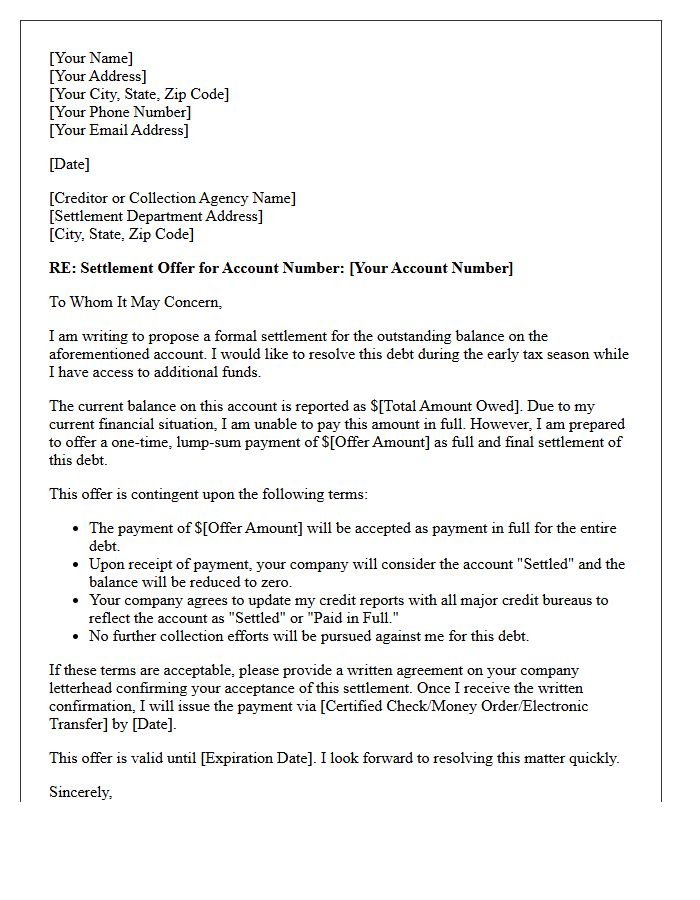
An Early Tax Season Debt Resolution Settlement Letter is a critical formal proposal sent to tax authorities to settle liabilities for less than the total amount owed. Utilizing this strategy during the Offer in Compromise process allows taxpayers to resolve financial burdens before peak filing deadlines. It must clearly outline your financial hardship, provide a specific settlement amount, and include supporting documentation. Timely submission is essential to prevent aggressive IRS collection actions, such as wage garnishments or bank levies, while securing a fresh financial start through professional negotiation.
Time-Sensitive Tax Refund Lump Sum Offer Letter
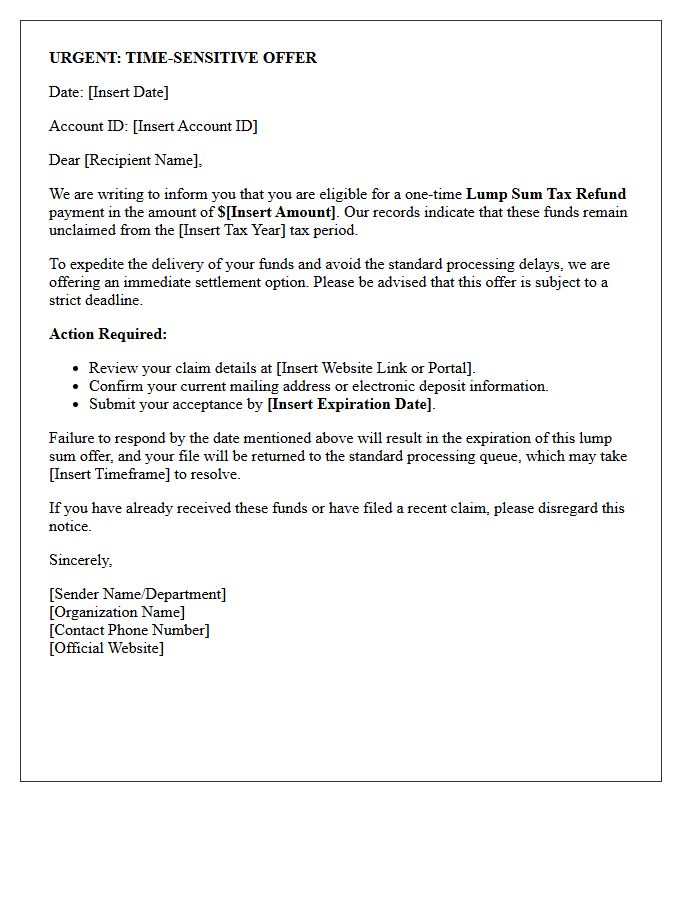
A time-sensitive tax refund lump sum offer letter typically outlines an advance payment or settlement regarding your expected tax returns. It is crucial to verify the sender's identity, as these offers often originate from private lenders or third-party firms rather than the IRS. Always scrutinize the interest rates and associated fees, which can significantly reduce your total refund. Before signing, confirm the legitimacy of the document to avoid potential phishing scams. Understanding the terms ensures you do not inadvertently sacrifice your long-term financial stability for immediate liquidity.
Exclusive Tax Season Discount Settlement Letter
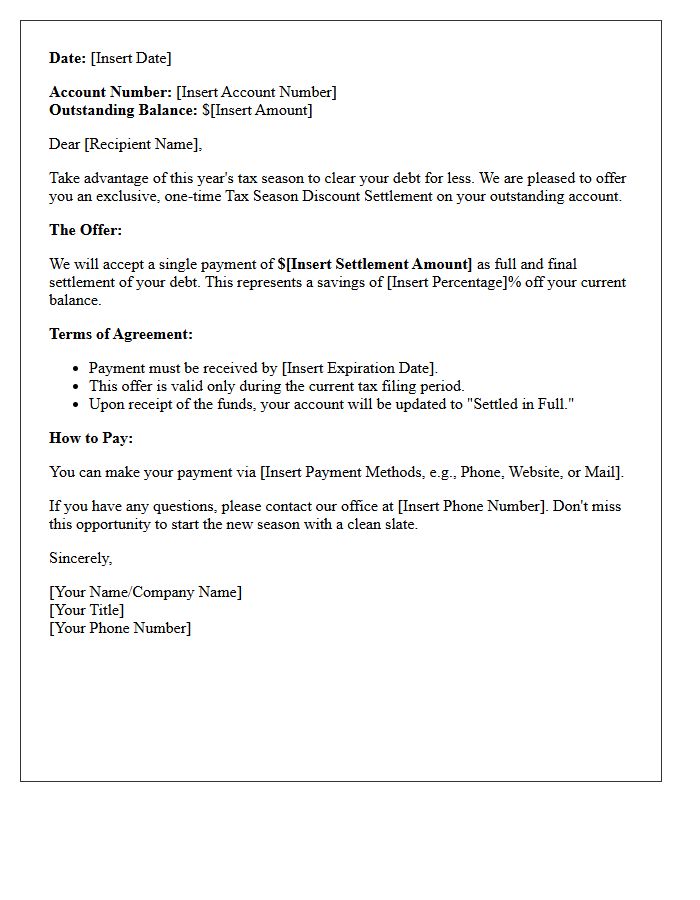
An Exclusive Tax Season Discount Settlement Letter is a formal offer from a creditor or debt collector to resolve outstanding balances for a reduced lump-sum payment. These time-sensitive offers typically coincide with tax refund periods, providing a legal framework to eliminate debt for less than the full amount owed. Receiving this letter allows individuals to achieve financial freedom and improve credit health by settling accounts permanently. It is crucial to verify the settlement terms in writing and confirm the updated account status once the payment is processed to ensure full compliance.
Urgent Tax Refund Lump Sum Settlement Offer Letter
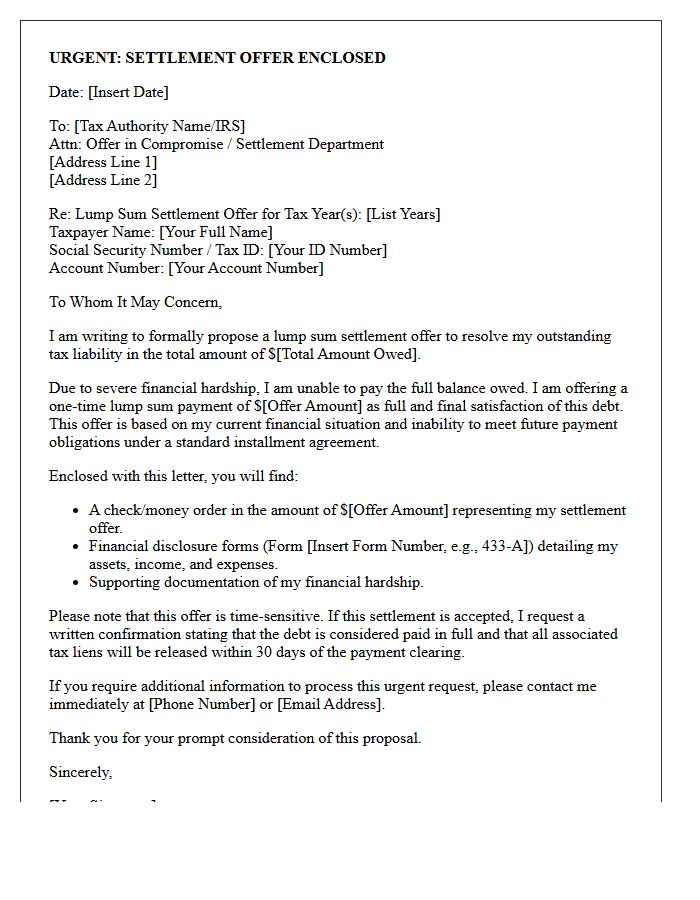
An Urgent Tax Refund Lump Sum Settlement Offer Letter is often a deceptive tactic used by scammers to steal personal information. Legitimate tax authorities rarely initiate contact regarding settlements via unsolicited mail or email with immediate deadlines. Always verify the authenticity of such documents by contacting the official government agency directly through their verified website. Do not share your bank details or social security number based on high-pressure language promising quick cash. Protecting your financial identity requires skepticism toward unexpected offers that seem too good to be true.
Maximum Discount Tax Refund Debt Settlement Letter
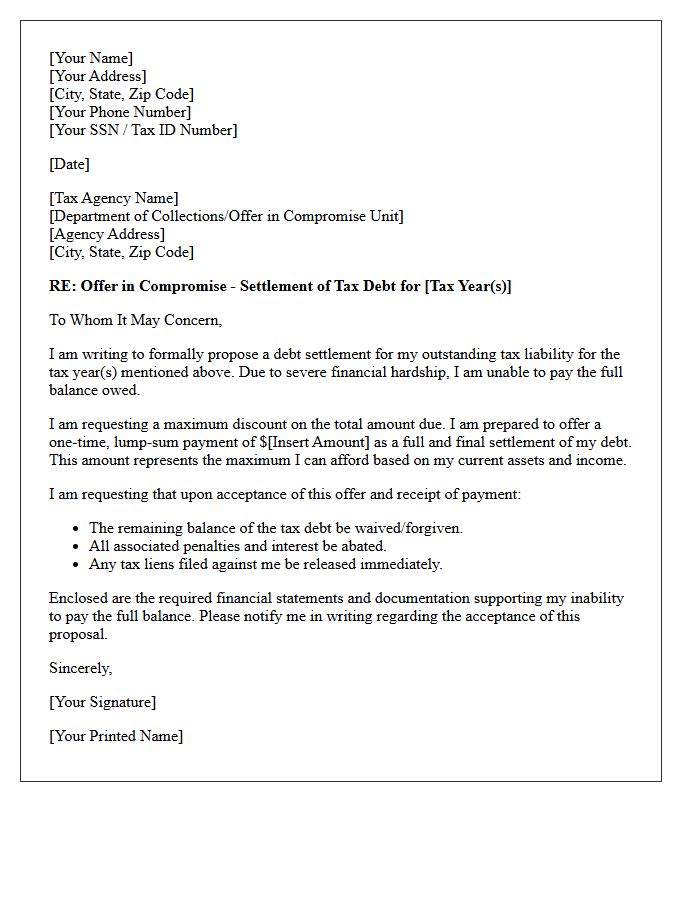
A Maximum Discount Tax Refund Debt Settlement Letter is a strategic proposal sent to tax authorities to resolve outstanding liabilities for a fraction of the total amount owed. This formal document requests an Offer in Compromise, aiming to settle debt using a lump-sum payment from a tax refund or personal savings. It is essential for individuals facing financial hardship to demonstrate an inability to pay the full balance. Utilizing this settlement letter can effectively reduce penalties and interest, providing a legal pathway to achieve a maximum tax discount and permanent debt relief.
Pre-Tax Season Lump Sum Settlement Offer Letter
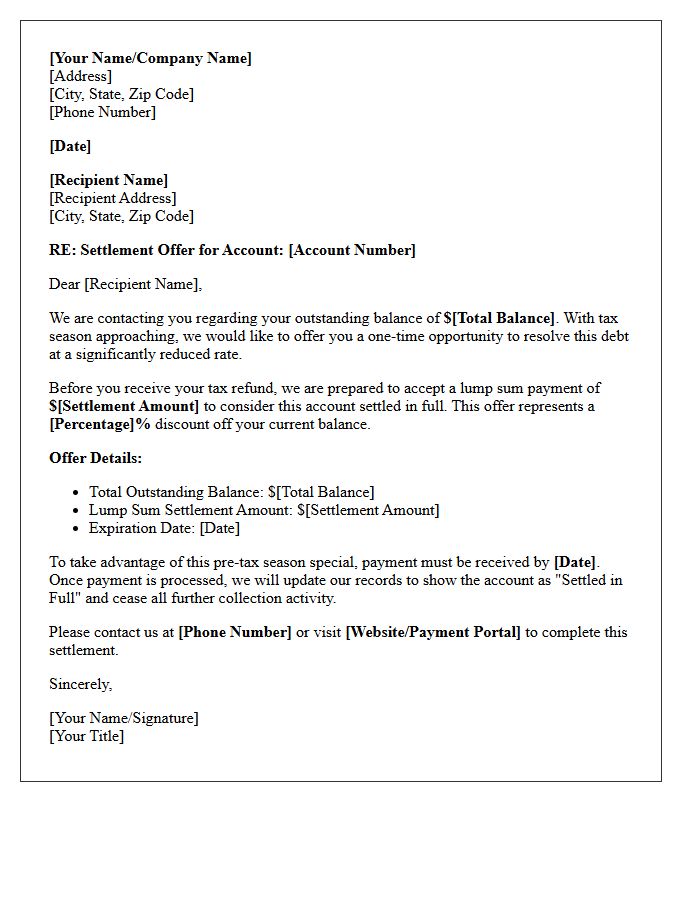
A Pre-Tax Season Lump Sum Settlement Offer Letter is a formal proposal sent by creditors or debt buyers before tax refunds arrive. These companies aim to capture your potential tax refund by offering a significant discount on outstanding balances. While these offers can resolve debt for less than the total amount owed, it is crucial to request written confirmation that the payment satisfies the account in full. Additionally, be aware that settled debts over $600 may have tax implications, as the forgiven amount is often considered taxable income by the IRS.
Account Resolution Tax Refund Settlement Letter
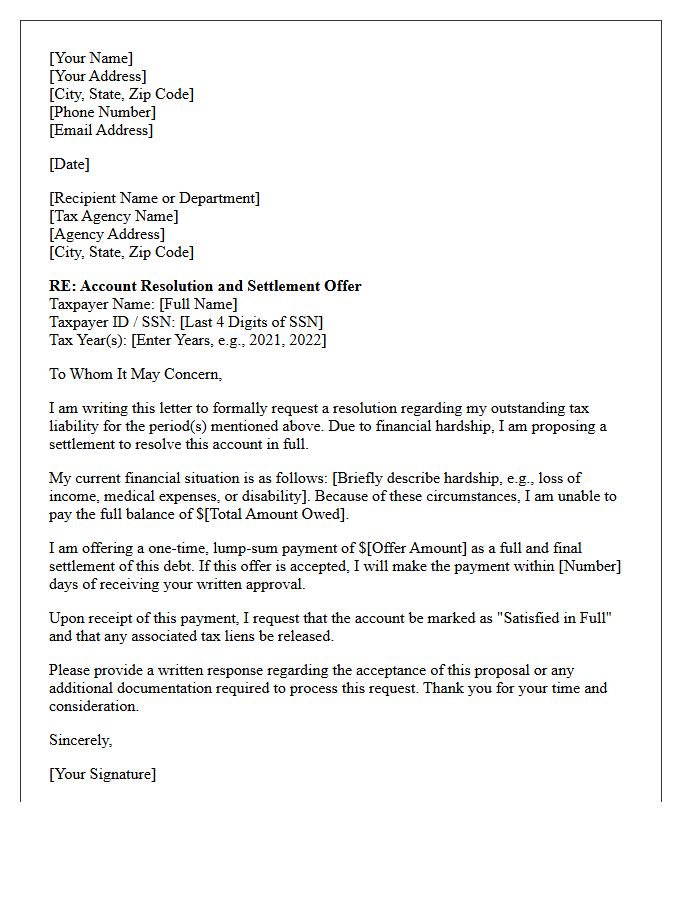
An Account Resolution Tax Refund Settlement Letter is a critical document confirming that the IRS or state authority has settled your tax debt for less than the full amount owed. It serves as official proof that your Offer in Compromise or resolution agreement is finalized. Always verify the letter's authenticity to avoid scams and ensure it explicitly states your account balance is satisfied. Retain this settlement confirmation permanently to protect against future collection actions and to provide evidence of your resolved tax liability during financial audits or loan applications.
Reduced Balance Tax Season Settlement Offer Letter
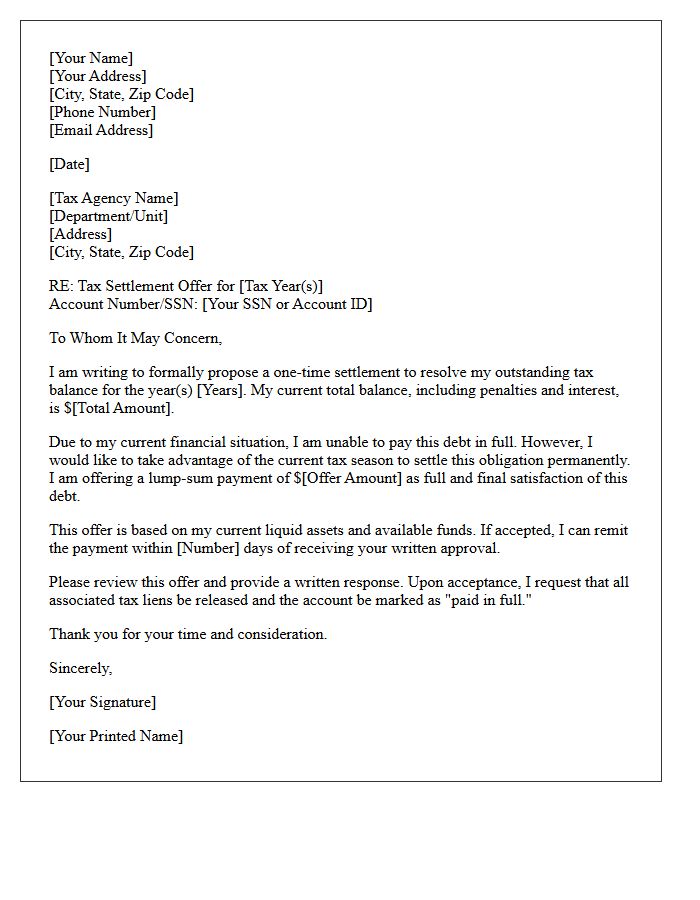
A Reduced Balance Tax Season Settlement Offer Letter is a formal proposal from tax authorities or collectors allowing you to resolve outstanding debt for less than the total amount owed. During tax season, agencies often provide these settlement incentives to increase liquid collection rates. To benefit, taxpayers must strictly adhere to the payment deadlines and specific terms outlined in the document. Failing to respond or meet the criteria can result in the offer being rescinded, leading to renewed enforcement actions like wage garnishments or tax liens on your assets.
Tax Refund Allocation Lump Sum Settlement Letter
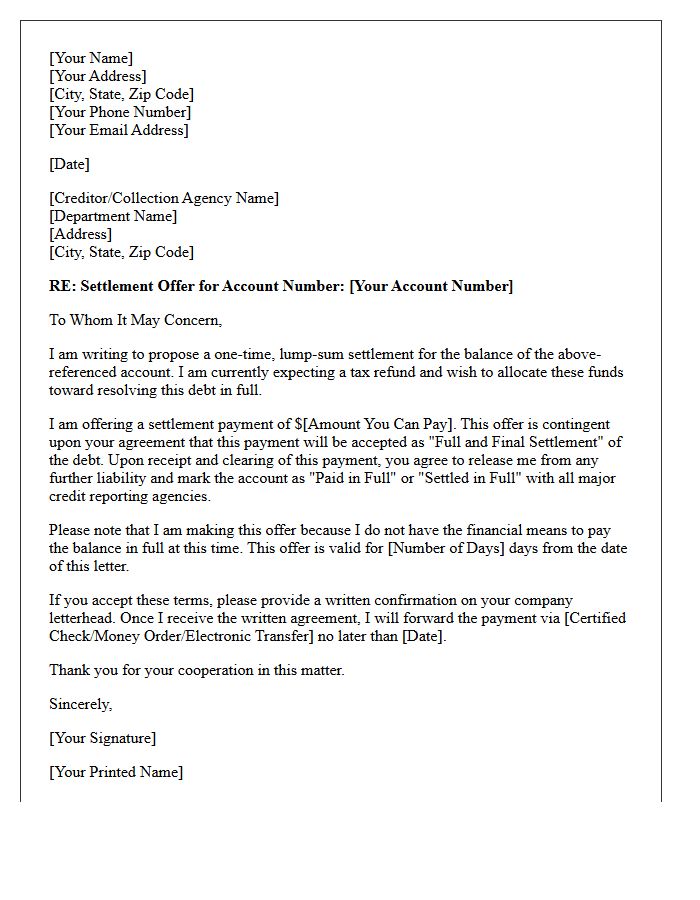
A Tax Refund Allocation Lump Sum Settlement Letter is a formal agreement used to resolve outstanding debts, often in divorce or debt restructuring cases. It specifies that a taxpayer will apply their annual tax refund toward a single, final payment to satisfy a liability. This document must clearly outline the payment amount, timeline, and account details to ensure legal compliance. Using a lump sum often allows for a reduced total settlement, but it requires precise documentation to confirm the debt discharge and protect both parties from future financial claims.
Post-Tax Refund Lump Sum Settlement Demand Letter
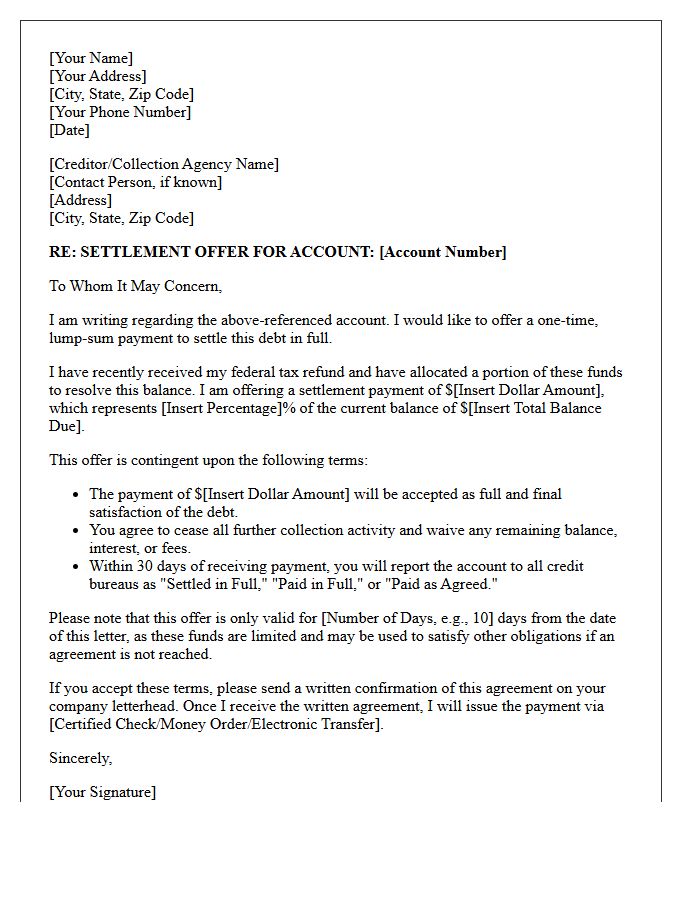
A Post-Tax Refund Lump Sum Settlement Demand Letter is a formal legal request sent to a debtor, typically after tax season, demanding a one-time payment to resolve a debt. Creditors use this timing because the recipient likely possesses liquid capital from their tax refund. This document serves as a final opportunity to settle for a reduced amount before pursuing litigation or wage garnishment. It clearly outlines the total balance, the discounted settlement offer, and a strict payment deadline to ensure the account is legally satisfied and closed.
Final Notice Tax Refund Settlement Offer Letter
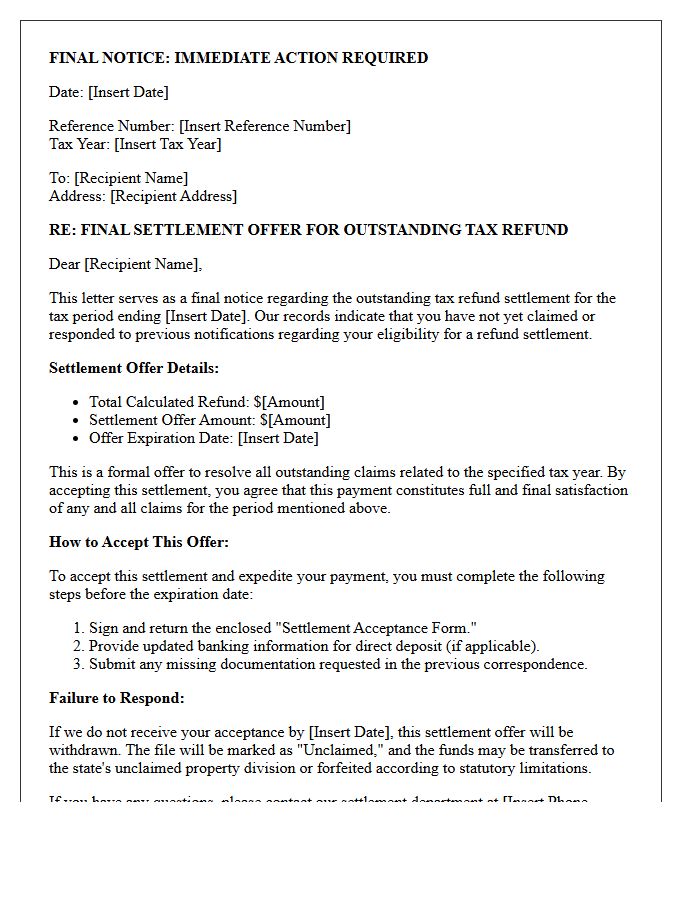
A Final Notice Tax Refund Settlement Offer Letter is a critical document indicating the Internal Revenue Service (IRS) or tax authority has reached a conclusive decision regarding your requested rebate. This formal correspondence outlines the final calculated settlement amount and provides specific instructions for acceptance. It is essential to verify the sender's authenticity to avoid phishing scams. Review the figures carefully, as this represents the last opportunity to resolve disputes before the case is officially closed. Failure to respond within the specified timeframe may result in the forfeiture of your refund rights.
What is a Tax Refund Lump Sum Settlement Offer Letter?
A Tax Refund Lump Sum Settlement Offer Letter is a formal proposal sent by a taxpayer to a tax authority (such as the IRS) offering to pay a single, discounted lump sum to satisfy a larger tax debt. This is often part of an "Offer in Compromise" program where the agency agrees to settle for less than the full amount owed based on the taxpayer's inability to pay.
How do I qualify for a lump sum settlement on my tax debt?
To qualify, you must generally demonstrate that your total assets and future income are insufficient to cover the full tax liability. The tax authority will evaluate your basic living expenses, equity in assets, and earning potential. You must also be current with all filing requirements and not be in an open bankruptcy proceeding.
What should be included in a tax settlement offer letter?
The letter should include your full legal name, tax identification number, the specific tax years involved, and a detailed explanation of your financial hardship. Most importantly, it must state the specific lump sum amount you are offering and a justification for why this is the maximum "reasonable collection potential" the government can expect to receive.
Can I use my current tax refund to fund a lump sum settlement offer?
Yes, taxpayers often use their current year's tax refund as part of the lump sum payment. However, be aware that tax authorities typically retain the right to keep any refunds due in the calendar year the settlement is accepted, in addition to the settlement amount offered in the letter.
What happens if my tax refund lump sum settlement offer is rejected?
If the offer is rejected, the tax authority will usually provide a reason, such as undervalued assets or excessive monthly expenses. You typically have 30 days to appeal the decision through the Office of Appeals, or you may submit a revised offer letter with updated financial documentation or a higher settlement amount.


Comments