
Secure the best market interest rate using a Rate Lock Float-Down Execution Letter. This essential document allows borrowers to lock in a current rate while maintaining the option to lower it if market conditions improve before closing. It provides financial flexibility and protection against volatility during the mortgage process. To help you draft yours, below are some ready to use template.
Image cover: Securing a Lower Mortgage Rate: Rate Lock Float-Down Request Templates and Execution Guide
Letter Samples List
- Standard Rate Lock Float-Down Execution Letter
- Mortgage Rate Lock Float-Down Approval Letter
- Conditional Rate Lock Float-Down Agreement Letter
- Float-Down Option Exercise Confirmation Letter
- Revised Interest Rate Float-Down Letter
- Mortgage Loan Rate Lock Amendment Letter
- Borrower Float-Down Request Acknowledgement Letter
- Final Rate Lock Float-Down Disclosure Letter
- Rate Lock Extension and Float-Down Letter
- Construction Loan Float-Down Execution Letter
- Float-Down Rate Adjustment Notification Letter
- Jumbo Loan Rate Lock Float-Down Letter
- Lock Desk Float-Down Execution Letter
Standard Rate Lock Float-Down Execution Letter
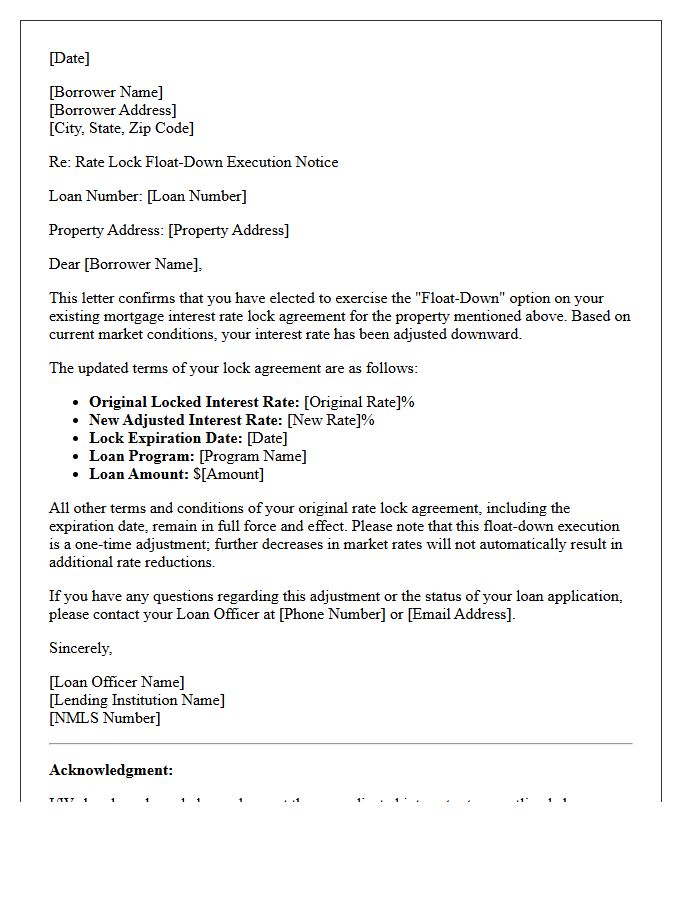
A Standard Rate Lock Float-Down Execution Letter is a formal agreement allowing borrowers to secure a lower interest rate if market conditions improve before closing. While the initial rate lock protects against increases, the float-down option provides a one-time opportunity to capture a decrease, typically requiring a specific market drop (such as 0.25%). This document outlines the execution criteria, timeframe, and potential fees associated with adjusting the original commitment. It ensures the lender and borrower are aligned on the final loan terms before the mortgage is finalized.
Mortgage Rate Lock Float-Down Approval Letter
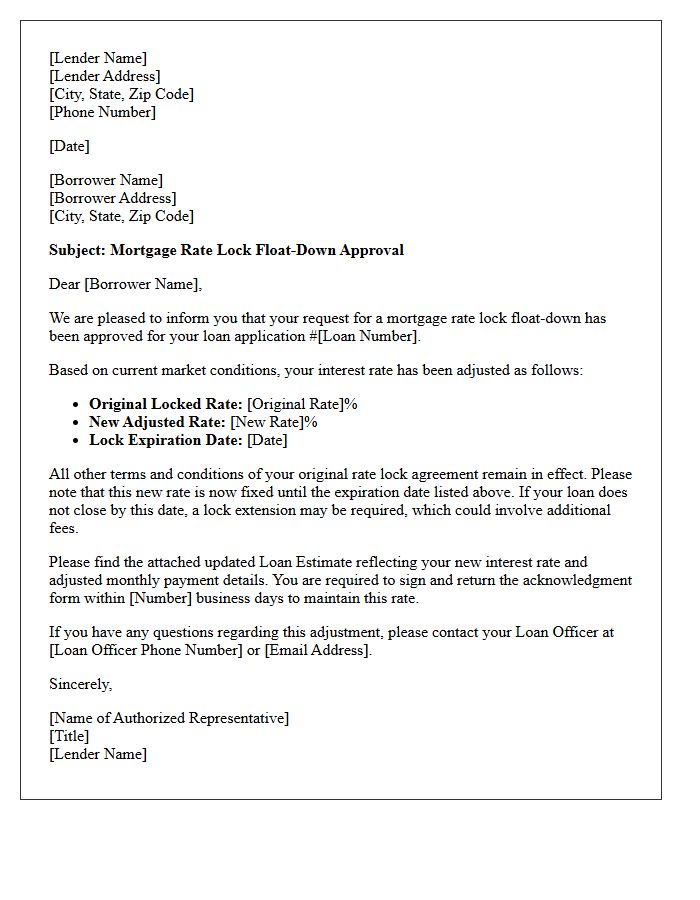
A Mortgage Rate Lock Float-Down Approval Letter is a critical document confirming your initial interest rate is secured while granting a one-time option to lower it if market rates drop before closing. To exercise this feature, the market rate typically must decrease by a specific percentage, such as 0.25%. This agreement provides financial protection against rising costs while offering the flexibility to benefit from favorable economic shifts. Always verify the specific expiration dates and potential fees associated with the float-down provision to ensure maximum savings on your home loan.
Conditional Rate Lock Float-Down Agreement Letter
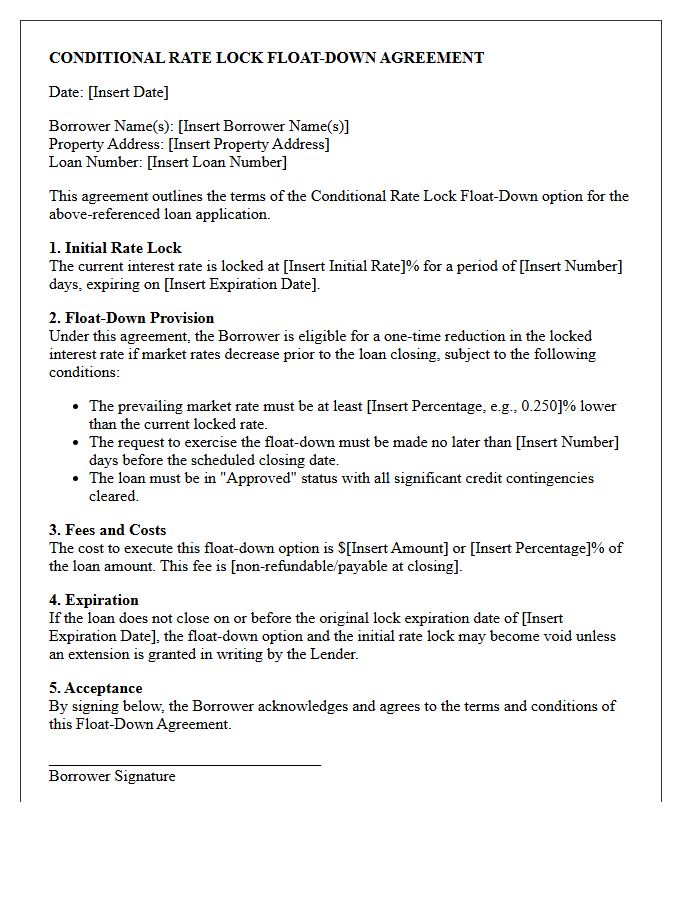
A Conditional Rate Lock Float-Down Agreement Letter allows borrowers to secure a prevailing interest rate while retaining the option to lower it if market conditions improve. To exercise this float-down option, the market rate must typically decrease by a specific percentage, often 0.25% or more, before closing. This agreement provides financial protection against rising rates while offering potential savings if rates drop. Borrowers should carefully review the expiration date and any associated fees to ensure the lock remains valid throughout the mortgage application process.
Float-Down Option Exercise Confirmation Letter
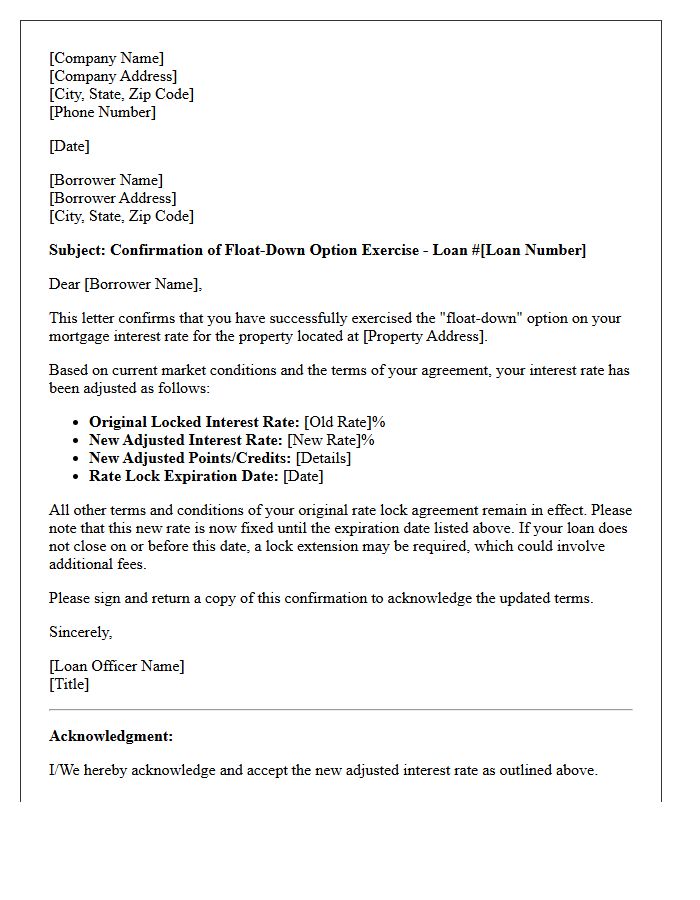
A Float-Down Option Exercise Confirmation Letter is a critical document that locks in a lower mortgage interest rate when market conditions improve. It serves as formal proof that the lender has processed your request to adjust your initial rate lock downward. This letter confirms the new, reduced rate, the associated expiration date, and any potential fees. Homebuyers must review this document immediately to ensure the terms align with the current market dip, securing financial savings throughout the life of the loan before the closing process begins.
Revised Interest Rate Float-Down Letter
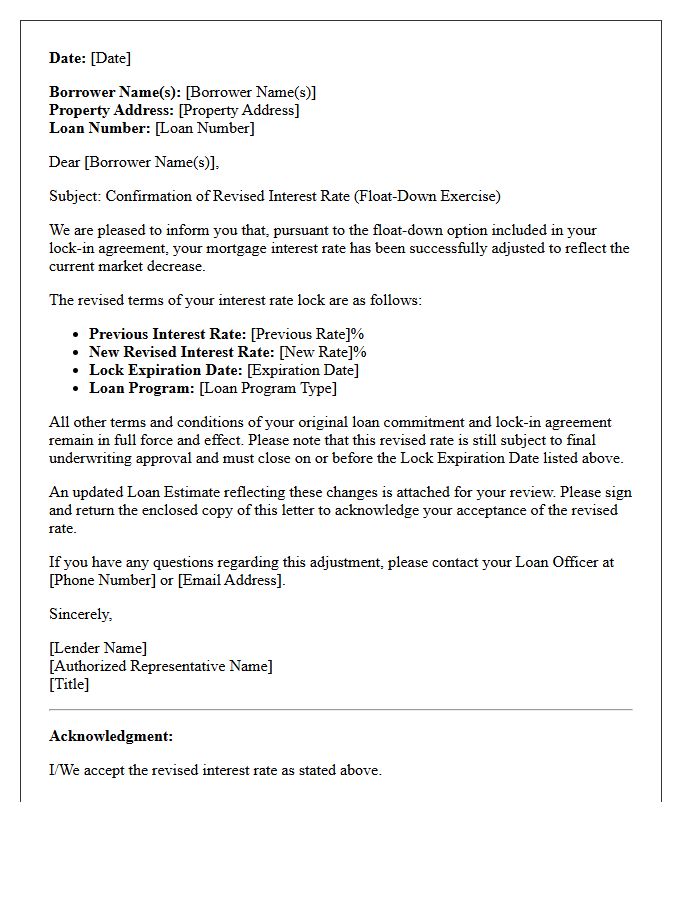
A Revised Interest Rate Float-Down Letter is a formal document issued when a borrower exercises a float-down option to secure a lower market interest rate after their initial lock. This agreement guarantees that if market rates decrease significantly before closing, the lender will adjust the locked rate downward, typically for a fee or specific percentage drop. It provides essential protection against market volatility, ensuring you benefit from lower monthly payments while maintaining the security of an established rate ceiling during the mortgage application process.
Mortgage Loan Rate Lock Amendment Letter
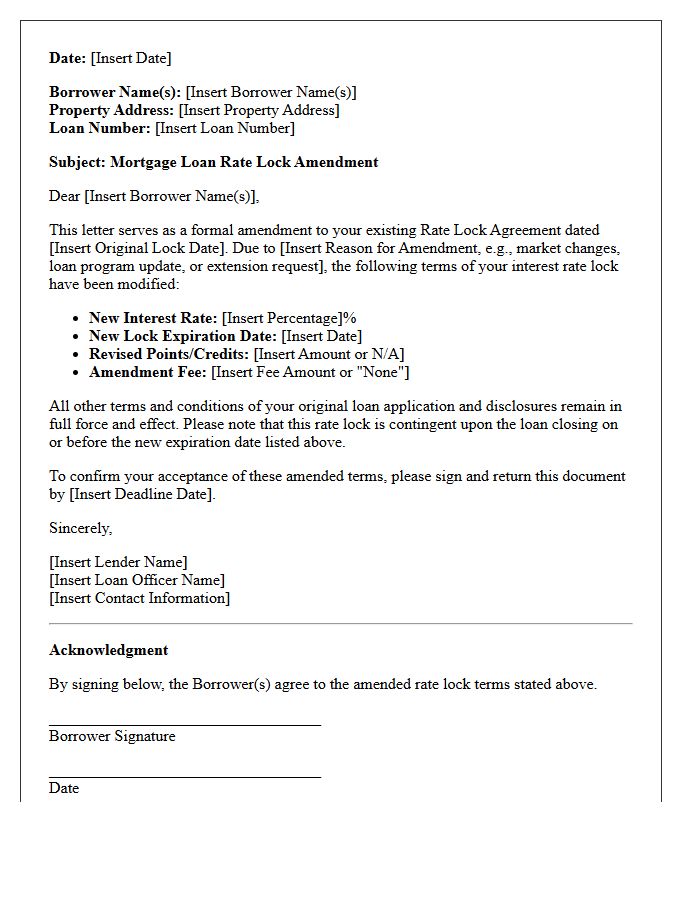
A Mortgage Loan Rate Lock Amendment Letter is a formal document that modifies the terms of an existing interest rate lock agreement. It is essential when a borrower needs to extend the expiration date or change specific loan parameters, such as the down payment amount or loan program, before closing. This letter legally confirms the updated rate and protection against market volatility. Both the lender and borrower must sign the amendment to ensure the guaranteed rate remains valid through the new settlement date, preventing unexpected increases in monthly mortgage payments.
Borrower Float-Down Request Acknowledgement Letter
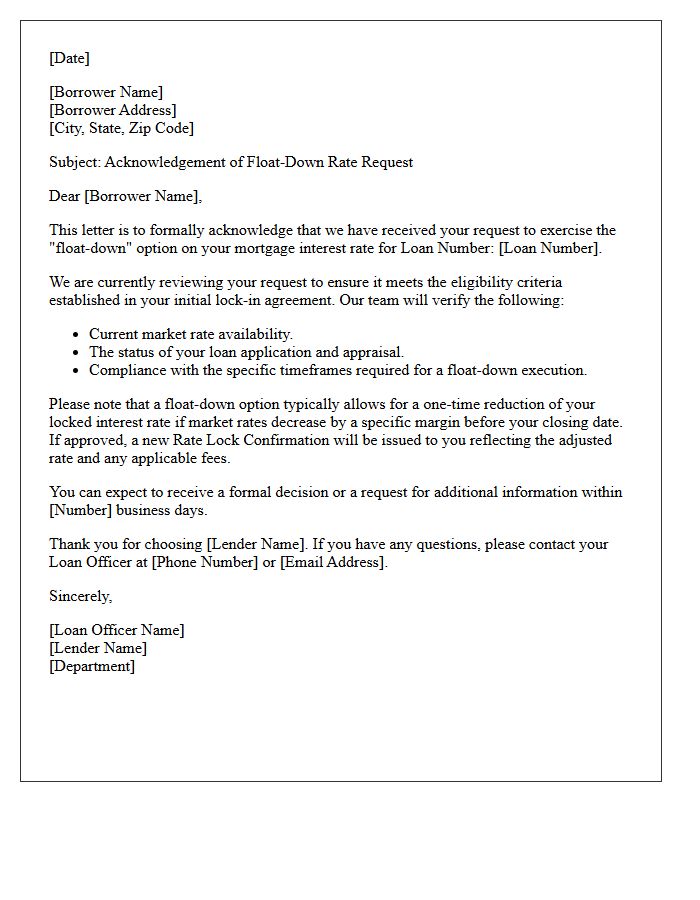
A Borrower Float-Down Request Acknowledgement Letter is a formal document confirming that a lender has received a request to reduce a mortgage interest rate. This occurs when market rates drop after the initial lock-in period. The letter outlines specific eligibility criteria, potential fees, and the new expiration date. It ensures both parties agree to the adjusted terms while maintaining the original loan commitment. Understanding this acknowledgement is vital for homeowners seeking to secure the lowest possible rate before their final loan closing is completed.
Final Rate Lock Float-Down Disclosure Letter
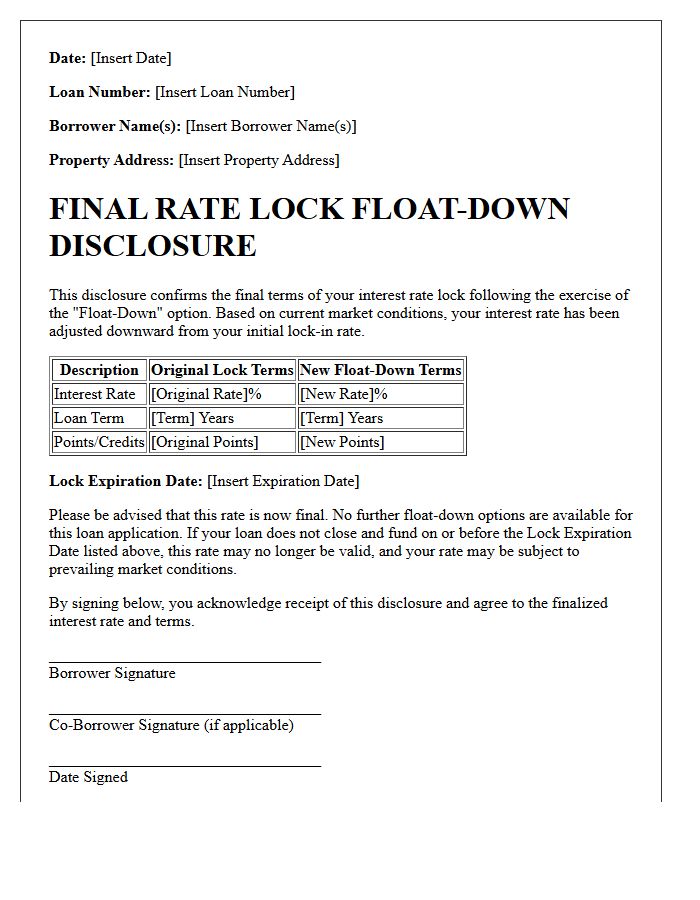
The Final Rate Lock Float-Down Disclosure Letter is a critical document that allows borrowers to lower their interest rate if market conditions improve before closing. While a standard lock secures a maximum rate, the float-down option provides a one-time opportunity to benefit from decreasing trends. It typically requires the market rate to drop by a specific percentage and may involve additional fees. Reviewing this disclosure ensures you understand the eligibility requirements and deadlines to exercise this feature, securing the most favorable financing terms for your mortgage.
Rate Lock Extension and Float-Down Letter
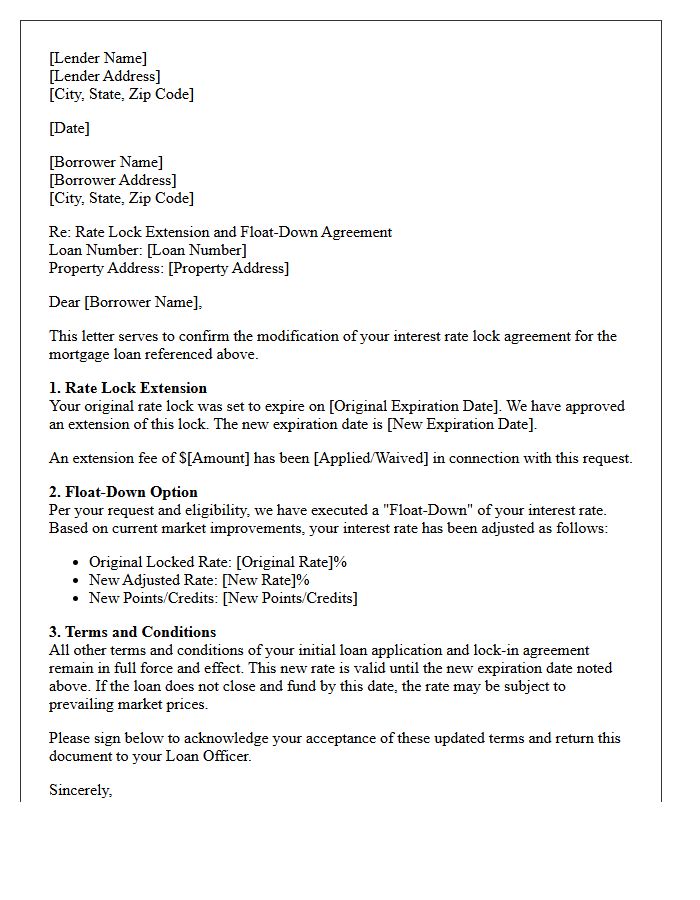
A Rate Lock Extension allows a borrower to maintain their current interest rate if the loan fails to close before the original expiration date, often requiring an additional fee. Conversely, a Float-Down Letter provides a one-time opportunity to lower the locked rate if market conditions improve before closing. Understanding these options is essential for financial protection against market volatility. Both agreements ensure stability during the mortgage process while offering flexibility should interest rates decrease, ultimately securing the most favorable terms for your home loan investment.
Construction Loan Float-Down Execution Letter
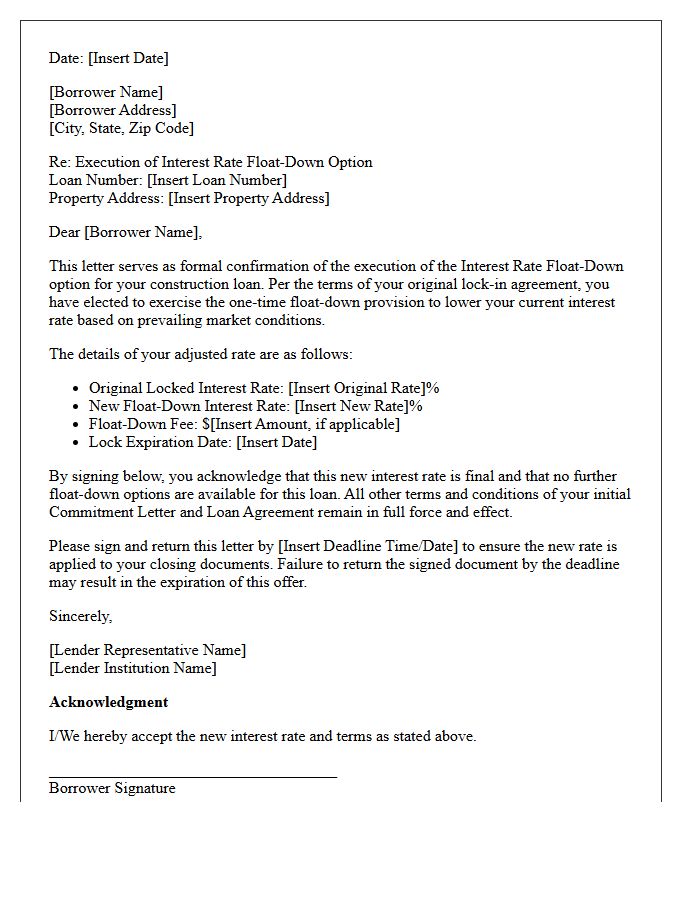
A Construction Loan Float-Down Execution Letter is a critical document that allows borrowers to lock in a lower interest rate if market conditions improve before the loan closes. Unlike a standard lock, this float-down option provides flexibility by securing a ceiling rate while permitting a one-time reduction if market benchmarks decrease. To execute this, the borrower must typically meet specific timelines and pay an associated fee. It ensures financial protection against rising rates while offering the potential for reduced long-term financing costs during the lengthy home building process.
Float-Down Rate Adjustment Notification Letter
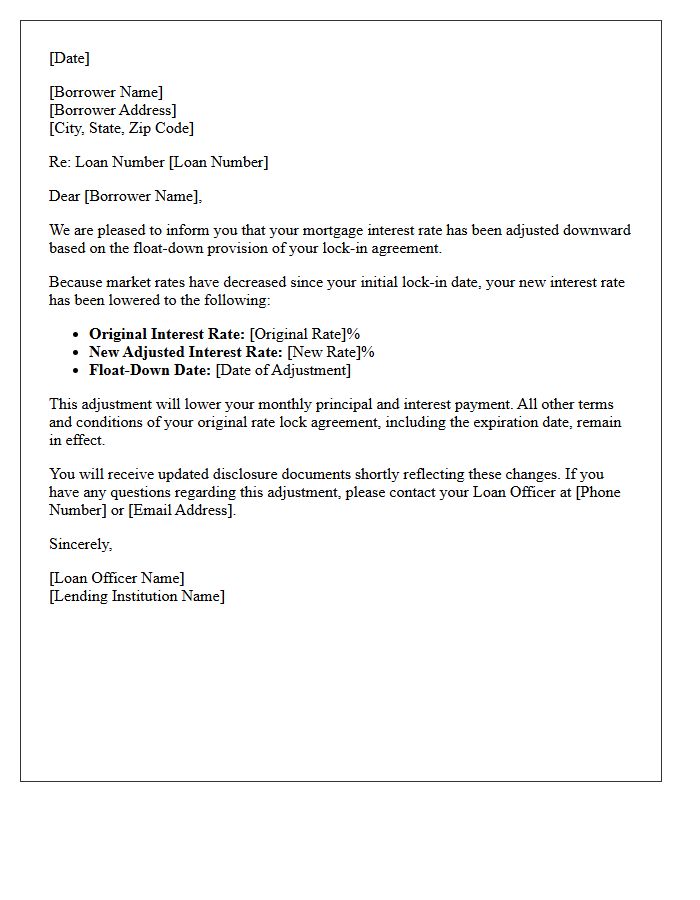
A Float-Down Rate Adjustment Notification Letter informs borrowers that their mortgage interest rate has decreased following a market drop. This document confirm that you have exercised a float-down option, allowing you to secure a lower rate than originally locked. It typically outlines the new monthly payment, updated loan terms, and any associated fees. Reviewing this letter is essential to ensure your loan estimate accurately reflects the savings before closing, providing a final opportunity to reduce long-term borrowing costs.
Jumbo Loan Rate Lock Float-Down Letter
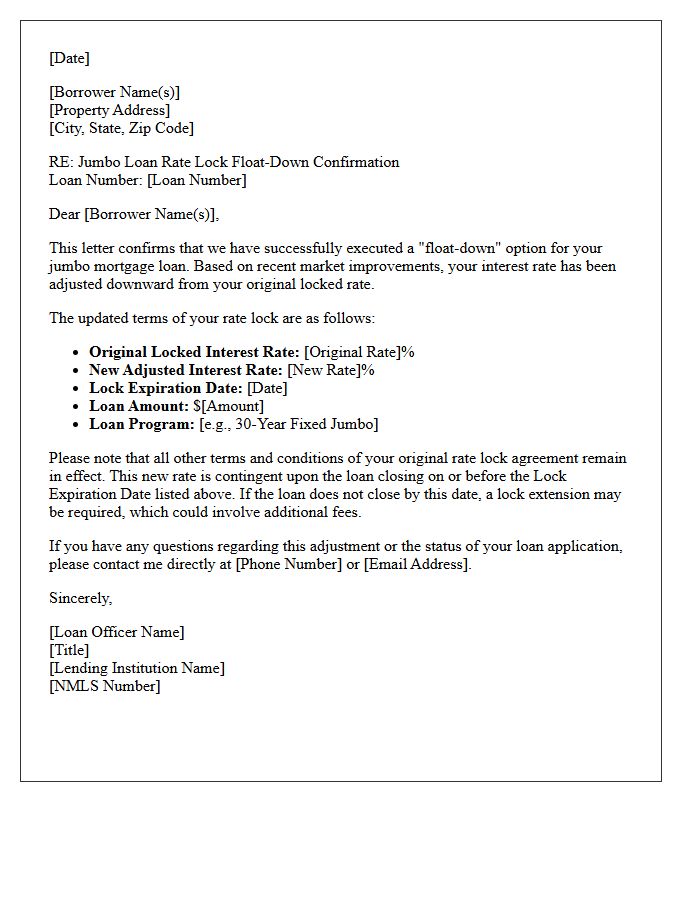
A Jumbo Loan Rate Lock Float-Down Letter is a formal agreement allowing borrowers to secure a low interest rate while retaining the option to reduce it if market conditions improve. If market rates decrease by a specific threshold before closing, the float-down provision enables a one-time adjustment to the lower rate. This document protects against rising costs while providing flexibility for potential savings. It is essential to review the expiration date and any associated fees, as these options often require an upfront cost or a slightly higher initial locked rate.
Lock Desk Float-Down Execution Letter
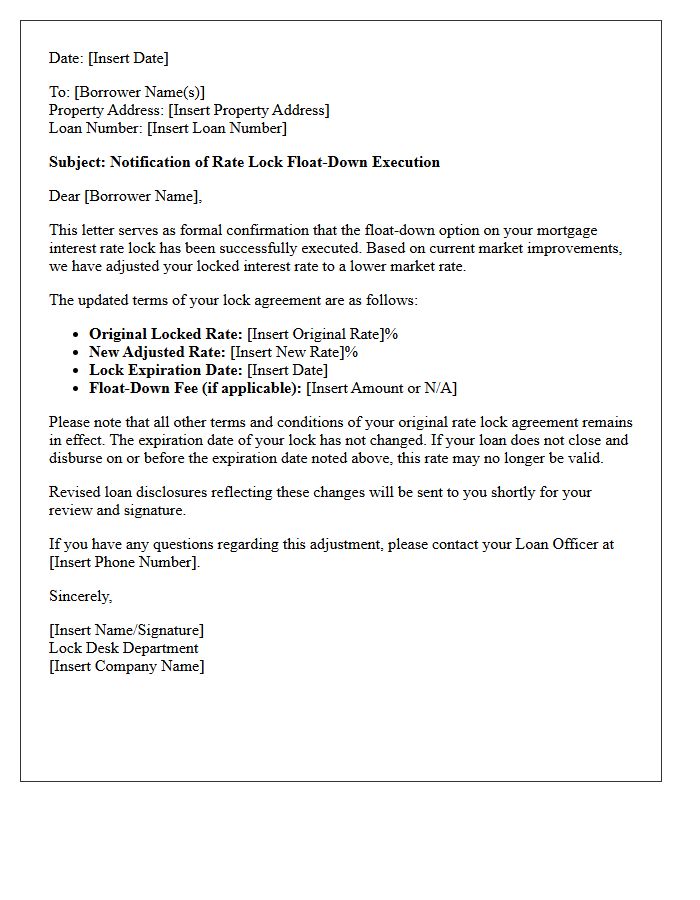
A Lock Desk Float-Down Execution Letter is a formal document that allows a borrower to lower their locked mortgage rate if market conditions improve. To trigger this option, the current market rate must typically drop below the original locked rate by a specific percentage. This execution letter outlines the float-down fee, the timeframe for the adjustment, and the expiration date. It ensures that both the lender and borrower agree to the revised terms, providing financial flexibility while maintaining the security of an existing rate commitment during the loan process.
What is a Rate Lock Float-Down Execution Letter?
A Rate Lock Float-Down Execution Letter is a formal agreement that allows a borrower to lower their locked interest rate if market conditions improve before the loan closing. This document executes a one-time adjustment clause typically found in specific mortgage lock-in agreements.
How do I qualify for a Rate Lock Float-Down?
To execute a float-down, the current market interest rate must typically drop by a specific margin (often 0.25% or more) below your original locked rate. Borrowers must usually have an active, non-expired rate lock and must submit the execution letter within a designated timeframe before the scheduled closing date.
Are there fees associated with a Float-Down Execution Letter?
While some lenders offer a "no-fee" float-down, many require a non-refundable fee or an adjustment to the loan's closing costs (points). The specific terms, including whether the float-down cost is a flat fee or a percentage of the loan amount, are outlined in the initial rate lock agreement.
When can I exercise the float-down option in the mortgage process?
The float-down option is usually exercised after a formal loan approval but before closing documents are drawn. Most lenders require the Rate Lock Float-Down Execution Letter to be signed and submitted at least 5 to 15 days prior to the settlement date.
What happens to my interest rate after signing the execution letter?
Once the Rate Lock Float-Down Execution Letter is processed, your interest rate is reset to the lower prevailing market rate. This new rate is then locked through the remainder of the closing period, protecting you from any subsequent market increases before the loan is funded.

Comments