
Managing the financial aftermath of a loss is challenging. A Release of Deceased Borrower Liability Letter is a formal request to lenders to discharge the estate or survivors from remaining loan obligations. This document ensures legal clarity and prevents collection actions against heirs. To help you navigate this process efficiently, below are some ready to use template.
Image cover: Debt Release Letter Templates: Handling Deceased Borrower Liability
Letter Samples List
- Release of Deceased Borrower Liability Letter
- Mortgage Liability Release Letter for Deceased Co-Borrower
- Deceased Borrower Mortgage Obligation Release Letter
- Surviving Spouse Liability Assumption and Release Letter
- Estate Mortgage Liability Discharge Letter
- Notification of Deceased Borrower Liability Release Letter
- Sole Borrower Posthumous Mortgage Liability Release Letter
- Successor in Interest Liability Release Letter
- Mortgage Promissory Note Deceased Borrower Release Letter
- Official Deceased Mortgagor Liability Waiver Letter
- Joint Tenancy Deceased Borrower Release Letter
- Mortgage Debt Forgiveness and Deceased Liability Release Letter
- Probate Estate Mortgage Liability Release Letter
Release of Deceased Borrower Liability Letter
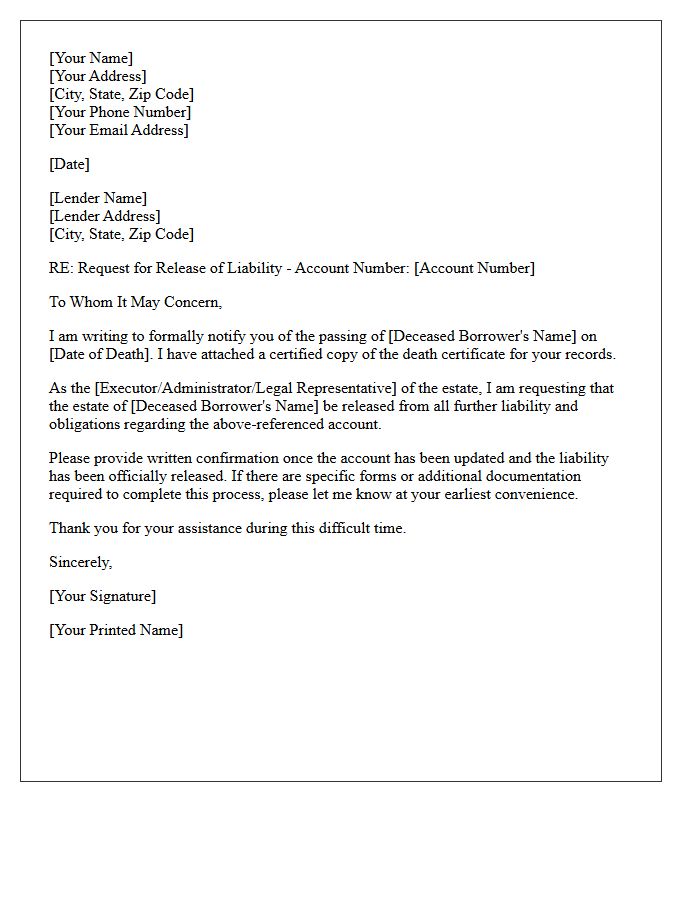
A Release of Deceased Borrower Liability Letter is a formal document issued by a lender to confirm that a decedent's estate or surviving heirs are no longer responsible for an outstanding debt. This process, often called debt forgiveness or discharge, typically requires a death certificate and probate documentation. It is the most important protection against creditor claims, preventing future collection actions. Once issued, it ensures that the financial obligation is legally terminated, providing peace of mind and allowing for the final distribution of assets without the burden of inherited liabilities.
Mortgage Liability Release Letter for Deceased Co-Borrower
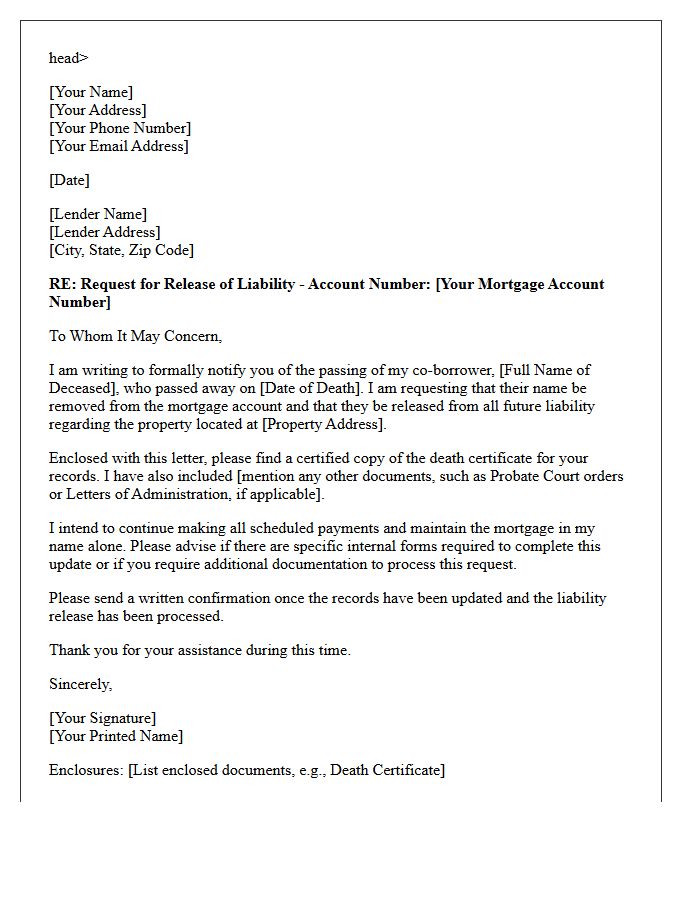
A mortgage liability release letter is a critical legal document that formally removes a deceased co-borrower from a home loan. To protect the surviving owner's credit and property rights, you must notify the lender and provide a death certificate. This process ensures that the estate is no longer responsible for future payments. It is essential to confirm whether the lender requires a formal loan assumption or a simple modification to update the title. Securing this release prevents potential foreclosure risks and clarifies legal ownership for the remaining party.
Deceased Borrower Mortgage Obligation Release Letter
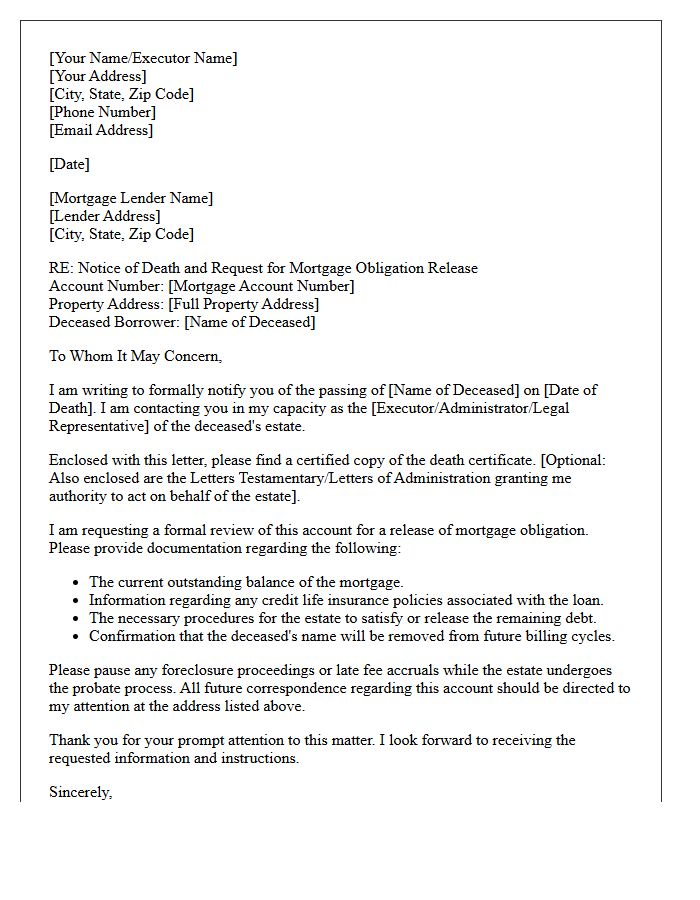
A Deceased Borrower Mortgage Obligation Release Letter is a critical document that extinguishes legal liability for a mortgage debt following a homeowner's death. It confirms that the estate or surviving heirs are no longer responsible for the remaining balance. Obtaining this release prevents lenders from pursuing deficiency judgments and clears the property title for transfer or sale. Heirs should ensure the letter is officially recorded to verify the loan is satisfied and to protect personal assets from creditor claims during the probate process.
Surviving Spouse Liability Assumption and Release Letter
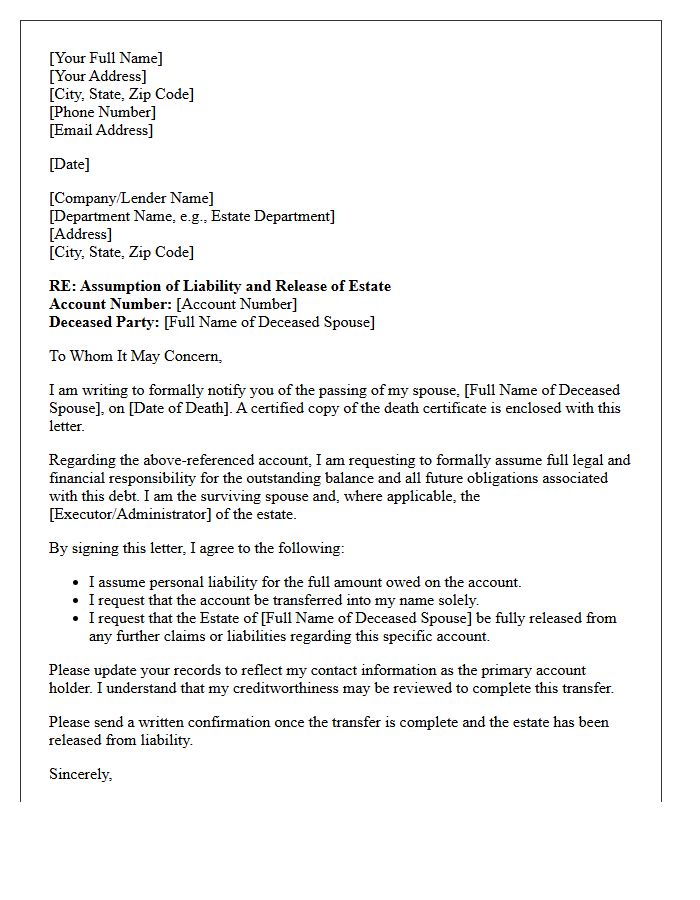
A Surviving Spouse Liability Assumption and Release Letter is a legal document used to transition mortgage responsibility after a partner's death. It allows the survivor to formally assume the existing debt obligations under federal Garn-St Germain Act protections. This process ensures the lender cannot trigger a "due-on-sale" clause, effectively securing the home title. Once processed, the estate is typically granted a liability release, ensuring the surviving spouse becomes the sole accountable party for future payments while maintaining original loan terms and interest rates.
Estate Mortgage Liability Discharge Letter
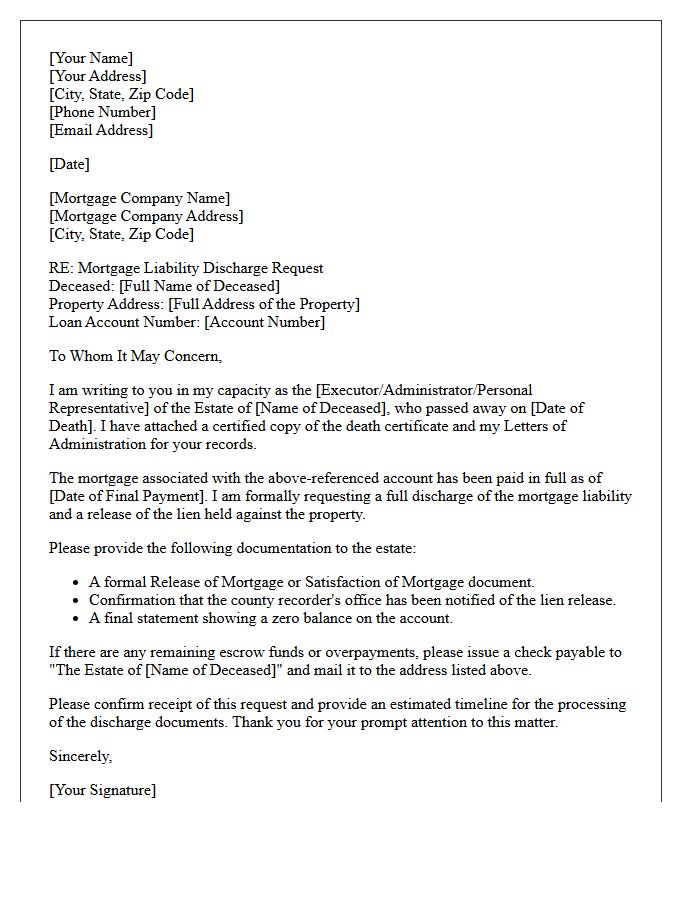
An Estate Mortgage Liability Discharge Letter is a critical legal document confirming that a mortgage debt has been fully satisfied following a homeowner's death. This formal notice, typically issued by the lender to the executor or administrator, signifies that the financial obligation is cleared and the property lien is released. Obtaining this letter is essential for the settlement of the estate, as it allows for the legal transfer of title to heirs or facilitates a property sale by proving the asset is debt-free and clear of encumbrances.
Notification of Deceased Borrower Liability Release Letter
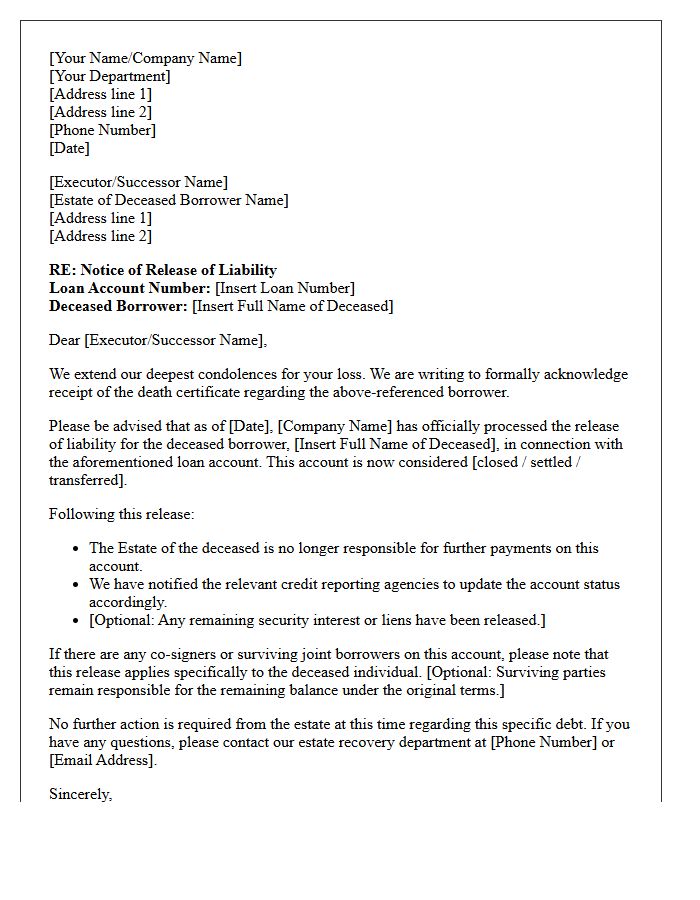
A Notification of Deceased Borrower Liability Release Letter is a formal document confirming that the estate and surviving heirs are no longer responsible for a debt. Upon the death of a borrower, providing a certified death certificate initiates this process. This letter serves as legal validation that the lender has written off the balance or closed the account. It is crucial for settling probate and protecting family members from creditor harassment or improper collections regarding the decedent's individual financial obligations.
Sole Borrower Posthumous Mortgage Liability Release Letter
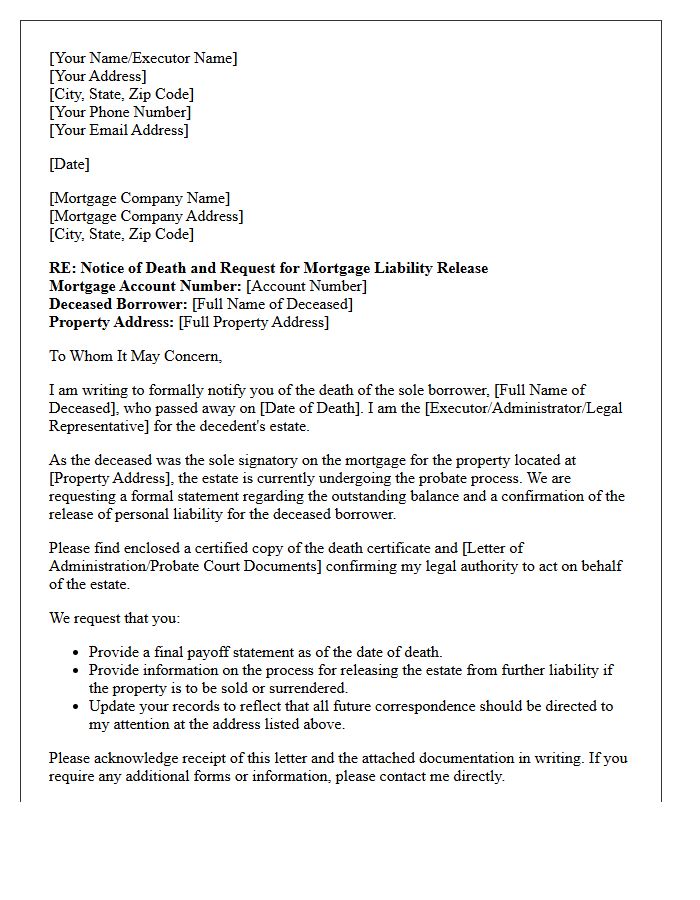
A Sole Borrower Posthumous Mortgage Liability Release Letter is a formal document issued by a lender to confirm that the estate or heirs are no longer responsible for an outstanding loan. Following the borrower's death, this letter acknowledges that the debt has been satisfied or legally forgiven. It is essential for clearing the property title and ensuring a smooth transfer of ownership. Obtaining this written confirmation prevents future creditor claims and provides finality for legal representatives managing the decedent's affairs during the probate process.
Successor in Interest Liability Release Letter
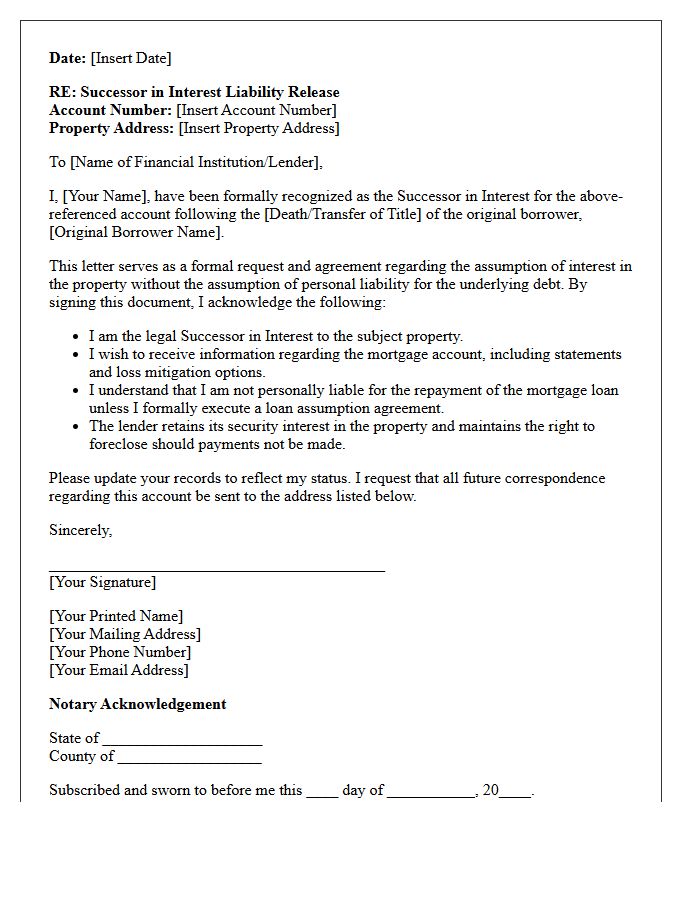
A Successor in Interest Liability Release Letter is a legal document confirming that an individual has inherited property rights following a borrower's death or transfer. Its primary purpose is to ensure the mortgage servicer acknowledges the new owner without triggering immediate loan acceleration. By signing, the successor gains access to account information and loss mitigation options. However, it often clarifies that the successor is not personally liable for the debt unless they formally assume the loan, protecting their personal credit and assets while maintaining the secured interest in the property.
Mortgage Promissory Note Deceased Borrower Release Letter
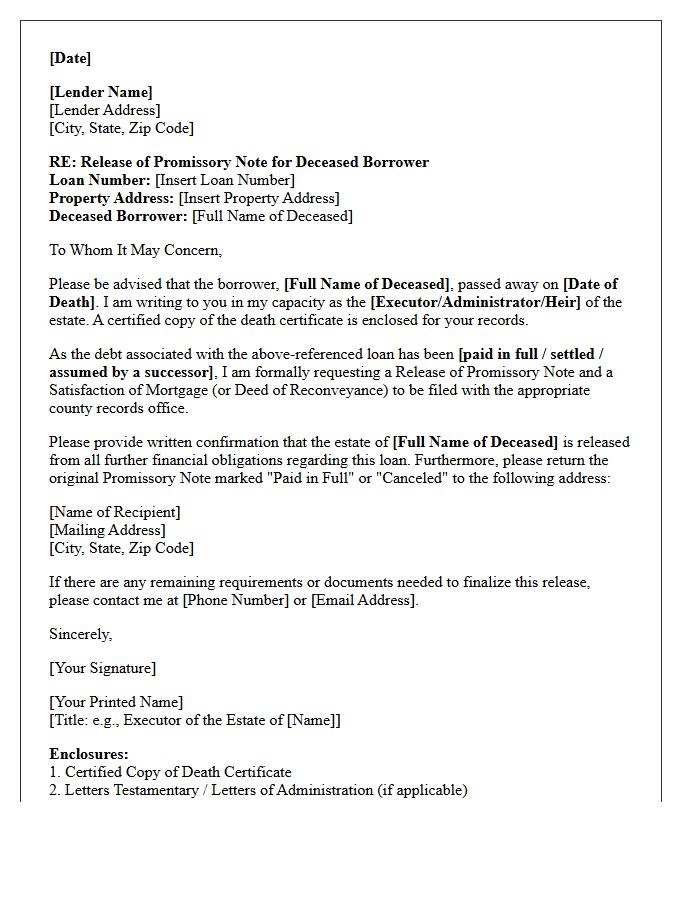
A mortgage promissory note deceased borrower release letter is a legal document confirming that a debt obligation has been satisfied or terminated following a homeowner's death. It serves as official notification from the lender that the estate or surviving heirs are no longer personally liable for the specific loan balance. This process often requires a death certificate and probate documentation to ensure a clear title transfer. Obtaining this release is essential for settling an estate and protecting successors from creditor claims regarding the original mortgage agreement.
Official Deceased Mortgagor Liability Waiver Letter
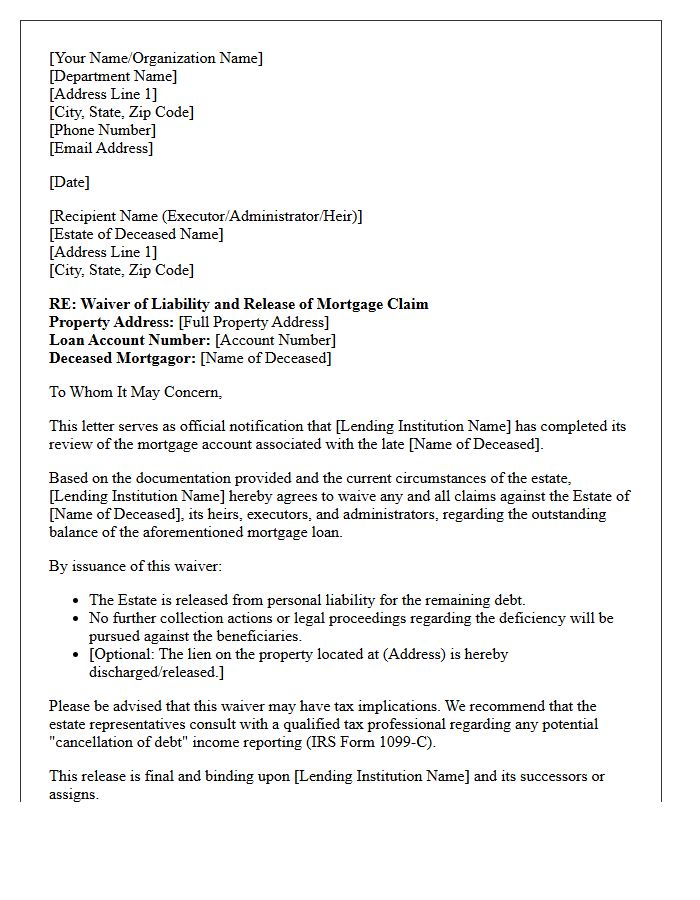
An Official Deceased Mortgagor Liability Waiver Letter is a formal legal document used to release a decedent's estate or heirs from remaining mortgage debt. This exoneration typically occurs when the property is surrendered through a deed in lieu or short sale. It is crucial for preventing deficiency judgments, ensuring creditors cannot pursue personal assets for unpaid balances. Obtaining this written waiver provides legal protection and financial closure during probate, confirming the lender has forgiven the debt and will not seek further repayment from the beneficiaries or the estate.
Joint Tenancy Deceased Borrower Release Letter
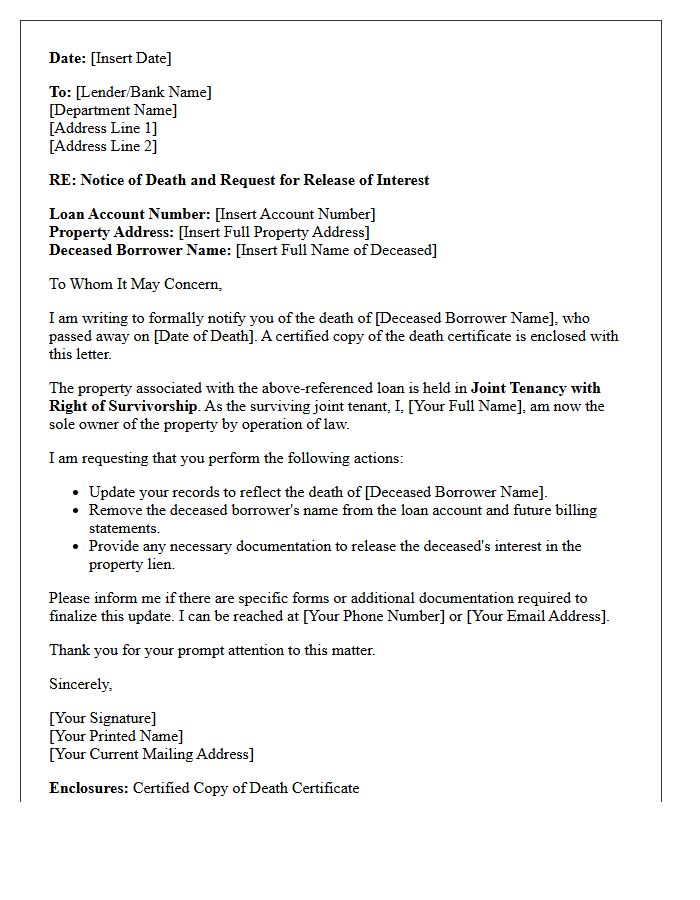
A Joint Tenancy Deceased Borrower Release Letter is a legal document used to notify a lender of a co-owner's death. This process invokes the Right of Survivorship, allowing the surviving tenant to assume full ownership and responsibility for the debt. To complete the release, you must typically provide a certified death certificate. This ensures the property title is updated and the deceased individual is formally removed from the financial obligation, preventing future legal or credit complications for the estate or the survivor.
Mortgage Debt Forgiveness and Deceased Liability Release Letter
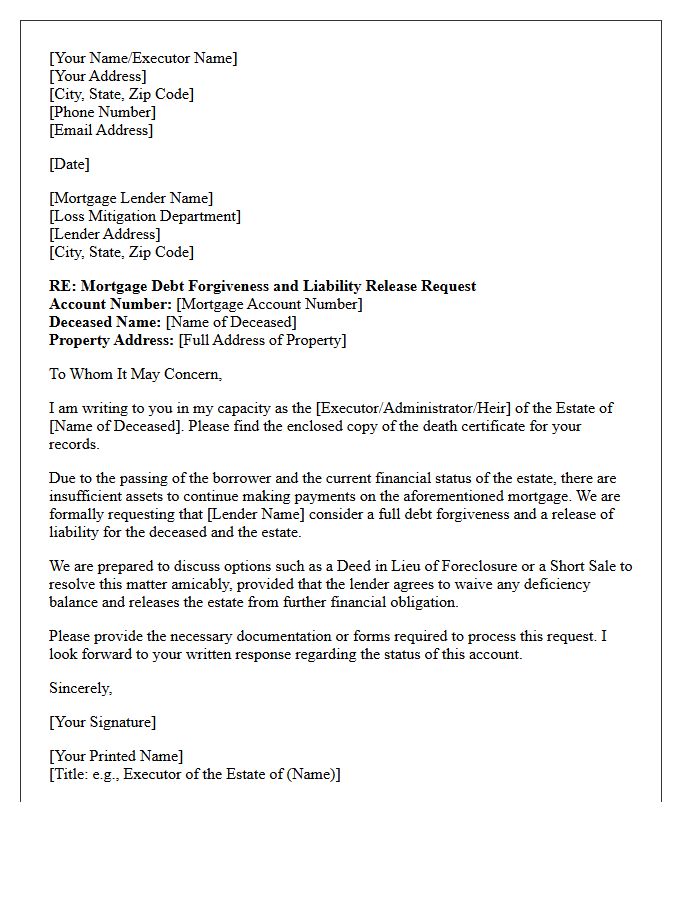
A Mortgage Debt Forgiveness and Deceased Liability Release Letter is a vital legal document used to settle an estate. It formally requests that a lender cancel remaining mortgage balances after a homeowner's death, preventing the debt from burdening heirs. This letter serves as evidence that the financial institution has agreed to release the estate from further liability. Understanding this process is essential for protecting inherited assets and ensuring the finality of property transfers without the risk of deficiency judgments or lingering creditor claims against the beneficiaries.
Probate Estate Mortgage Liability Release Letter
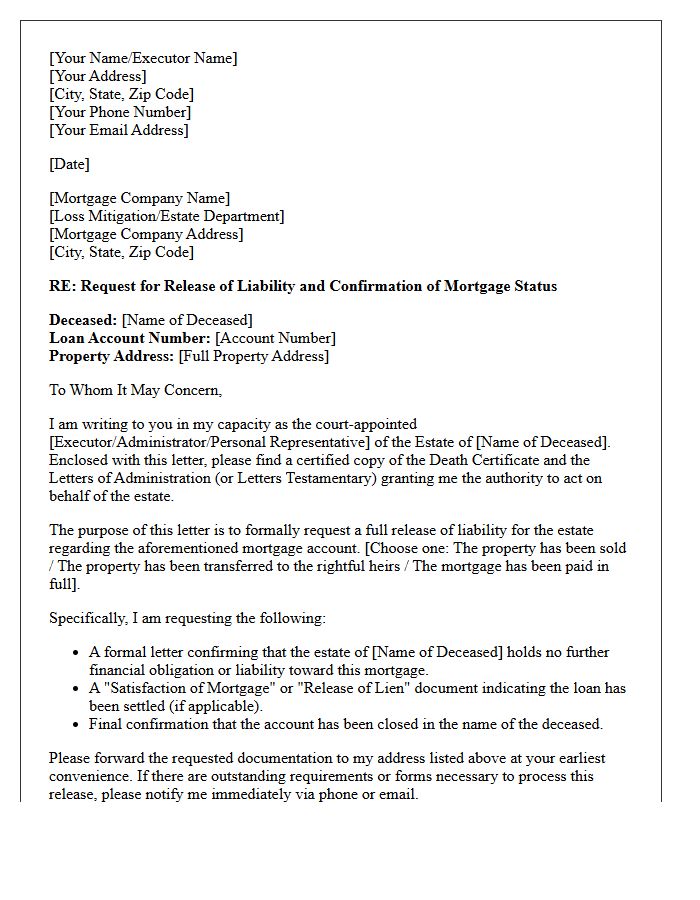
A Probate Estate Mortgage Liability Release Letter is a critical document issued by a lender to confirm that a deceased borrower's estate has fulfilled its financial obligations. This formal notice verifies that the mortgage debt is satisfied or that the legal responsibility has been transferred. It protects executors from personal liability and clears the property title for legal distribution to heirs. Obtaining this release ensures the estate can be closed formally without lingering claims from creditors, providing financial closure and peace of mind for all beneficiaries involved in the probate process.
What is a Release of Deceased Borrower Liability Letter?
A Release of Deceased Borrower Liability Letter is a formal legal document issued by a lender or financial institution confirming that the estate and surviving heirs are no longer responsible for the remaining debt of a deceased borrower.
How do I request a liability release for a deceased borrower?
To request a release, you must submit a formal written notice to the lender along with a certified copy of the death certificate, the account details, and letters of testamentary identifying the authorized executor of the estate.
Does a Release of Deceased Borrower Liability clear the debt entirely?
While the letter releases individuals from personal liability, the debt itself may still be settled through the liquidation of the deceased person's assets or the collateral attached to the loan, such as a foreclosed property.
What information should be included in a Release of Liability Letter?
The letter should include the full name of the deceased, the specific account or loan numbers, the date of death, a statement of intent to settle the estate, and a formal request for a written confirmation that no further claims will be made against the survivors.
Can a co-signer be released from liability after the primary borrower dies?
A co-signer is generally still liable for the debt; however, they can use a Release of Deceased Borrower Liability Letter to negotiate a settlement or verify if the loan agreement contained a "death discharge" clause that terminates the obligation upon the primary borrower's passing.


Comments