
Managing the financial affairs of a late loved one requires clear documentation. A Deceased Borrower Mortgage Satisfaction Notice to Estate officially confirms that the mortgage debt is fully paid and the property lien is released. This essential step ensures clear title transfer to heirs or beneficiaries. To simplify your legal correspondence, below are some ready to use template options.
Image cover: Formal Notification of Mortgage Satisfaction: Official Templates for Decedents' Estates
Letter Samples List
- Estate Notice of Mortgage Satisfaction Letter
- Deceased Borrower Mortgage Release Letter
- Mortgage Paid in Full Letter to Estate
- Estate Notice of Loan Satisfaction Letter
- Deceased Borrower Promissory Note Cancellation Letter
- Mortgage Satisfaction and Lien Release Letter
- Executor Notification of Mortgage Satisfaction Letter
- Deceased Borrower Final Mortgage Clearance Letter
- Estate Discharge of Mortgage Debt Letter
- Mortgage Settlement and Satisfaction Letter
- Deceased Borrower Mortgage Payoff Confirmation Letter
- Estate Mortgage Cancellation Notice Letter
- Mortgage Satisfaction Acknowledgment Letter to Estate
Estate Notice of Mortgage Satisfaction Letter
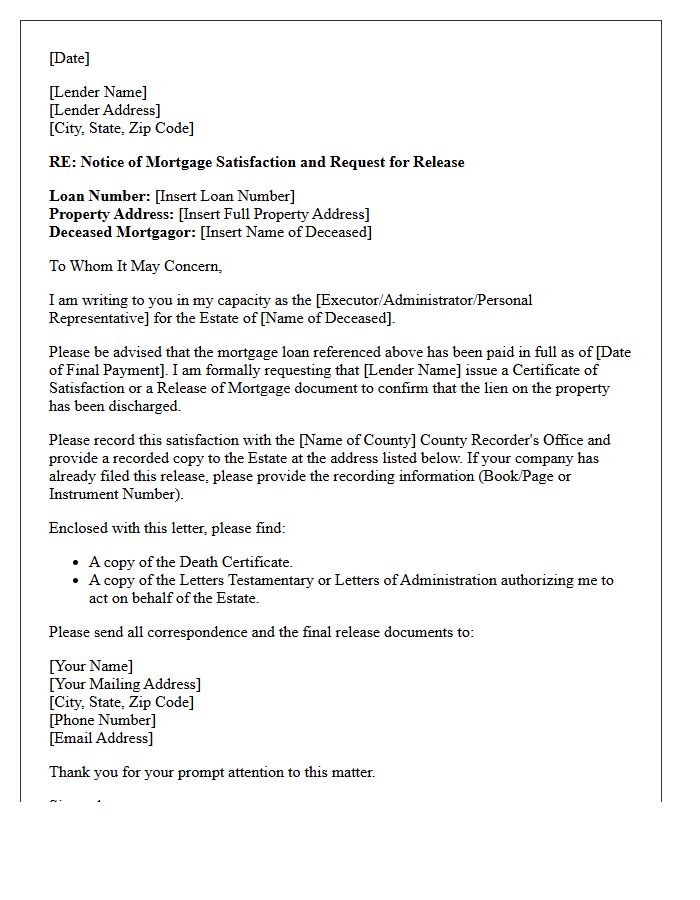
An Estate Notice of Mortgage Satisfaction is a legal document confirming that a deceased person's home loan is fully repaid. When an executor settles the estate's debts, the lender must issue this release of lien to clear the property title. It is crucial to ensure this document is officially recorded with the county recorder's office. This prevents future title disputes and allows the beneficiaries to sell or transfer the property legally. Always verify that the public records reflect this satisfaction to guarantee the estate is free from financial encumbrances.
Deceased Borrower Mortgage Release Letter
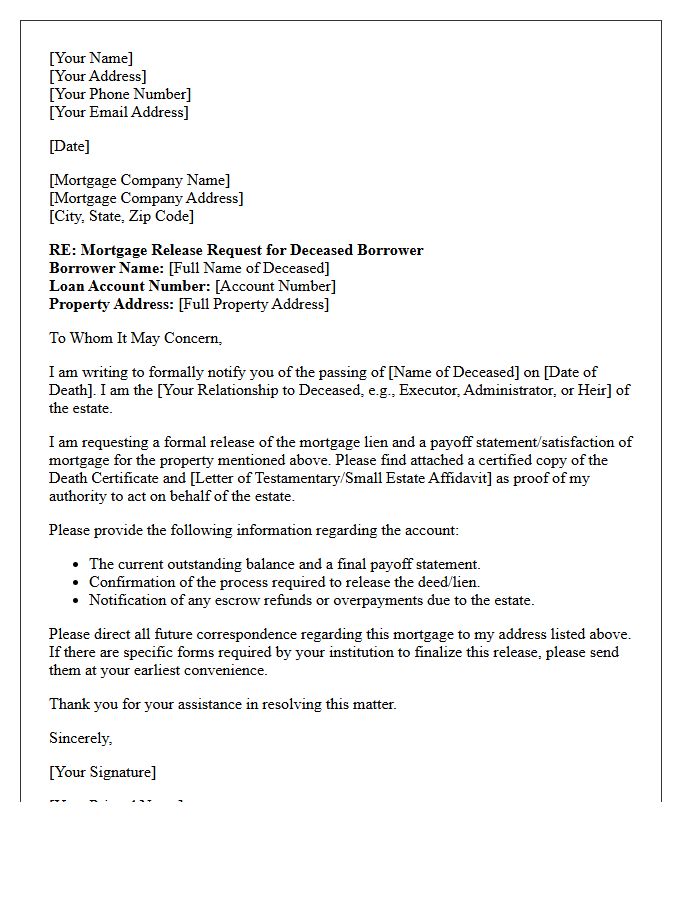
A Deceased Borrower Mortgage Release Letter is a legal document confirming that a mortgage lien has been fully satisfied and discharged following a homeowner's death. This official notification from the lender proves the debt is cleared, allowing the transfer of title to heirs or beneficiaries. It is crucial for settling an estate and ensuring the property can be sold or refinanced without encumbrances. Beneficiaries must ensure the release is recorded with the county clerk to formally update public land records and secure clear ownership of the asset.
Mortgage Paid in Full Letter to Estate
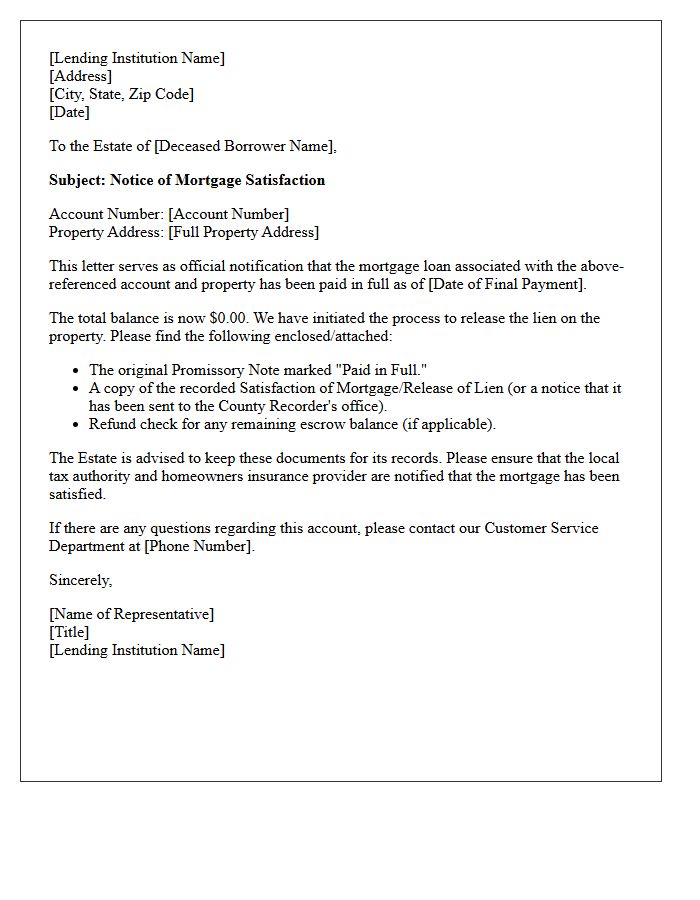
A Mortgage Paid in Full Letter sent to an estate confirms that the property debt is completely satisfied. It is critical for the executor to receive this document to clear the property title and ensure a smooth transfer of ownership to heirs. This letter, often accompanied by a release of lien or satisfaction of mortgage, proves the lender no longer has a legal claim. Always verify that the document is officially recorded with the county recorder's office to finalize the estate settlement and protect the value of the inheritance.
Estate Notice of Loan Satisfaction Letter
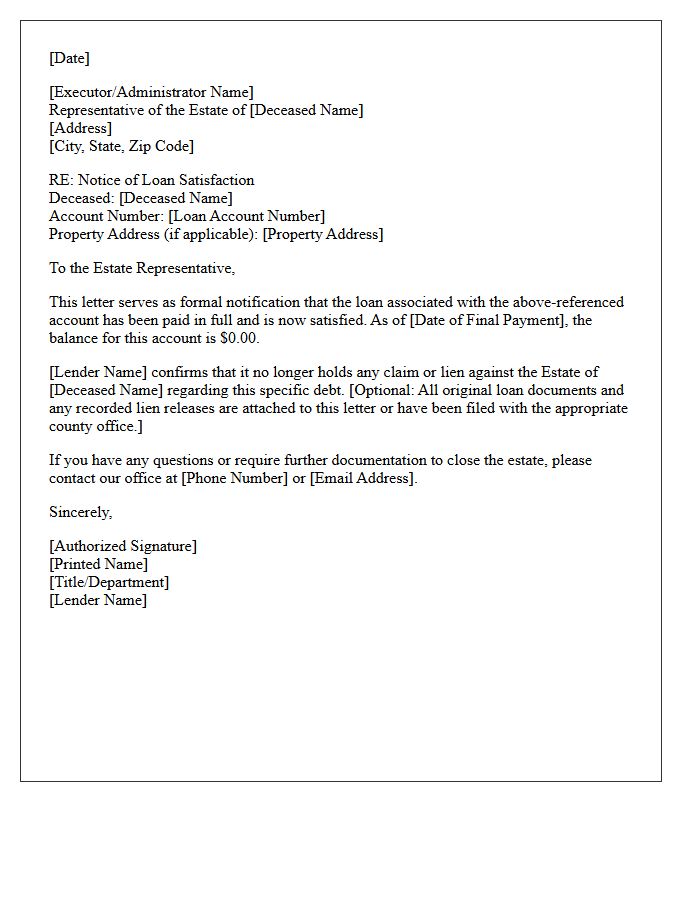
An Estate Notice of Loan Satisfaction Letter is a legal document confirming that a deceased person's debt has been fully repaid. When settling an estate, the executor must ensure that lenders issue this formal release to clear the title of assets, such as real estate. This letter serves as official proof that the creditor no longer holds a claim against the property. Retaining this document is essential for the legal transfer of ownership to heirs and prevents future title complications during the probate process.
Deceased Borrower Promissory Note Cancellation Letter
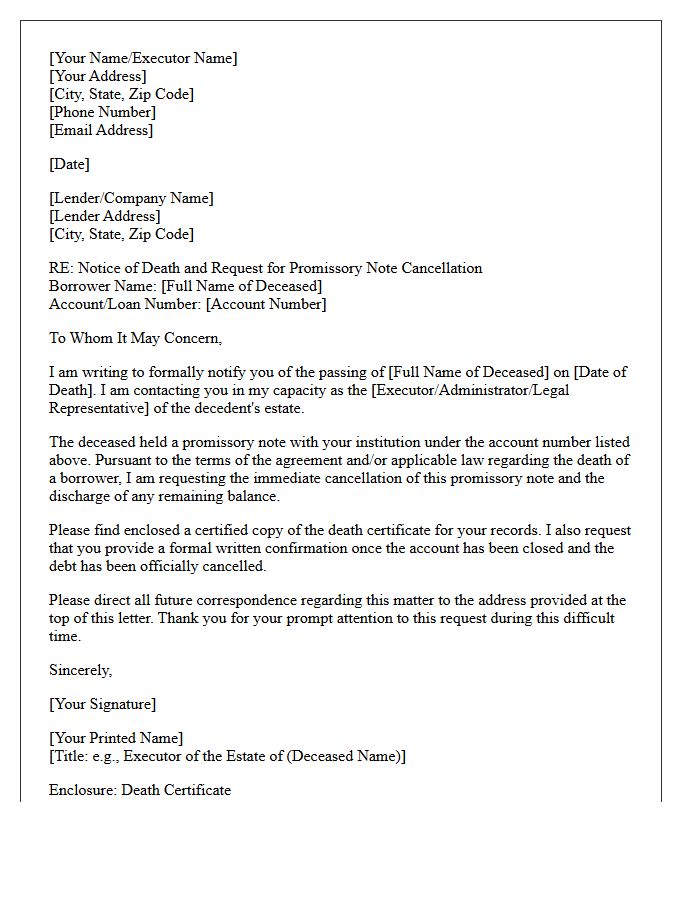
A Deceased Borrower Promissory Note Cancellation Letter is a formal notification sent to lenders to request the discharge of debt following a person's death. This document is essential for estate settlement, preventing further collections and interest accrual. It must include the deceased's account details, a certified death certificate, and the executor's contact information. Timely submission ensures that the probate process remains accurate and protects heirs from unlawful creditor claims. For federal student loans, this letter typically facilitates a full loan cancellation due to permanent disability or death.
Mortgage Satisfaction and Lien Release Letter
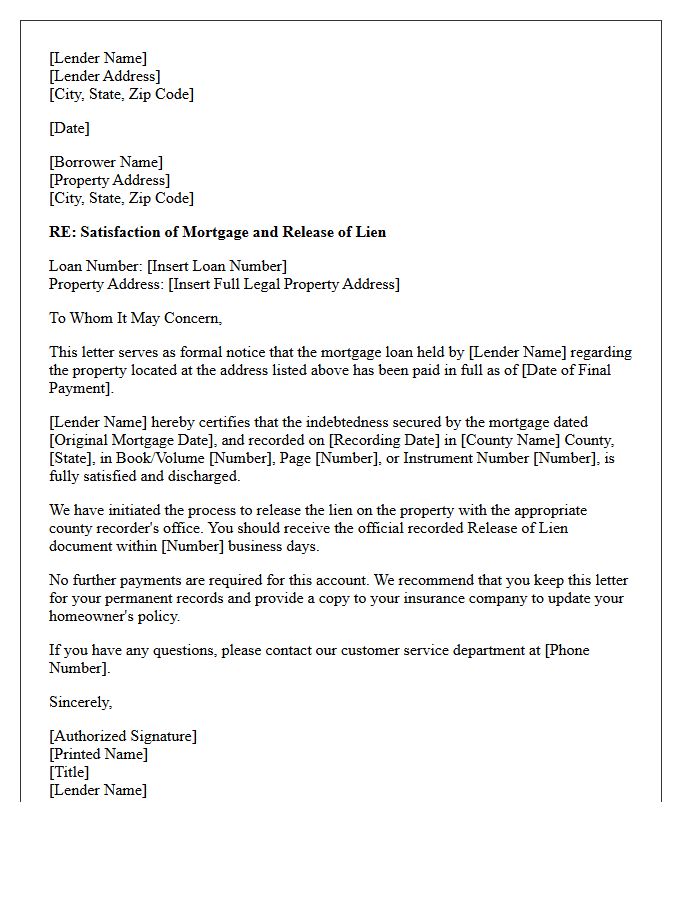
A Mortgage Satisfaction document serves as official evidence that your home loan is paid in full. Once the debt is settled, the lender must record a Lien Release with the local county clerk to clear the property title. This legal process ensures the bank no longer holds a financial claim on your home, allowing for a future sale or refinancing. Homeowners should always verify this filing and keep the original Satisfaction of Mortgage letter in their permanent records to prove unencumbered ownership of the real estate.
Executor Notification of Mortgage Satisfaction Letter
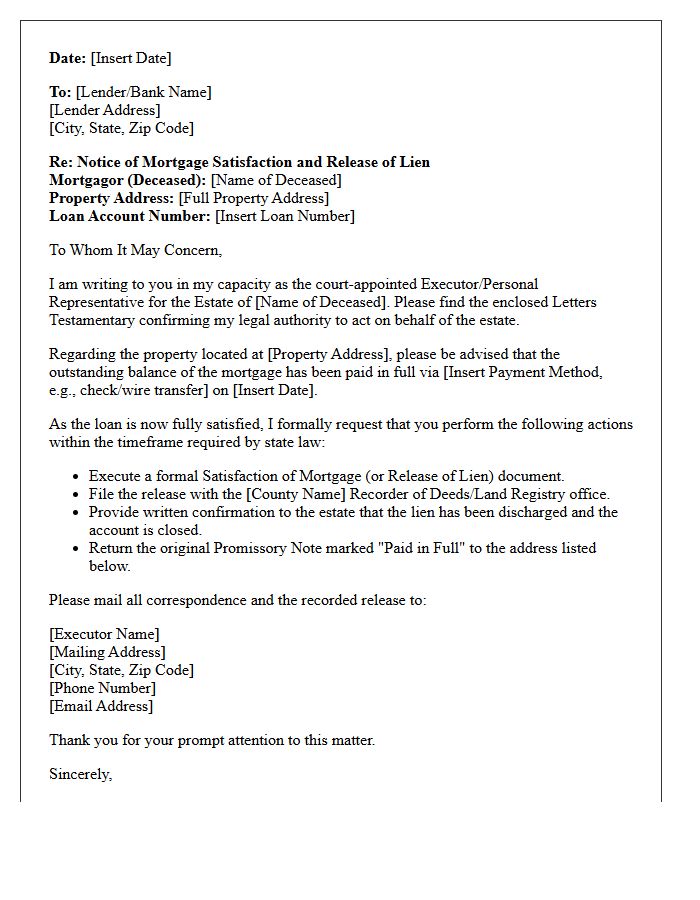
An Executor Notification of Mortgage Satisfaction Letter is a legal document confirming that a deceased person's home loan is fully repaid. The executor must ensure the lender issues this release to clear the property title from any liens. Filing this document with the local county recorder is essential for settling the estate and enabling the legal transfer or sale of the asset to beneficiaries. Without this formal lien release, the property remains encumbered, delaying the probate process and legal ownership verification.
Deceased Borrower Final Mortgage Clearance Letter
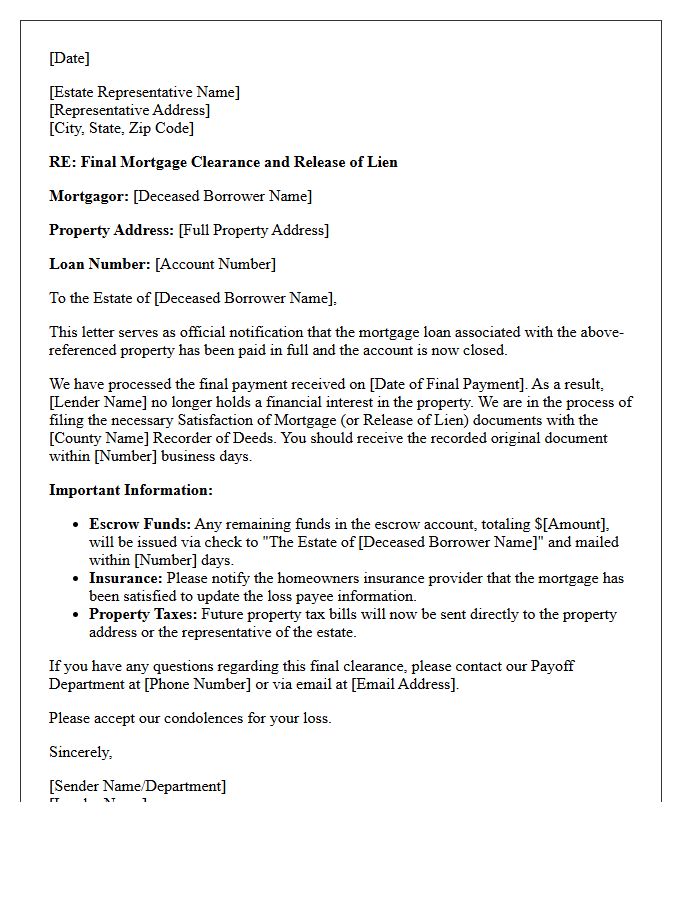
A Deceased Borrower Final Mortgage Clearance Letter is a critical document confirming that a mortgage debt has been fully satisfied following the homeowner's death. Issued by the lender, it verifies the lien is released and the account is closed. Heirs or executors must obtain this to facilitate the legal transfer of property title or complete a real estate sale. This letter provides essential proof that the estate is no longer liable for the loan, ensuring a clear chain of ownership and protecting beneficiaries from future financial claims against the property.
Estate Discharge of Mortgage Debt Letter
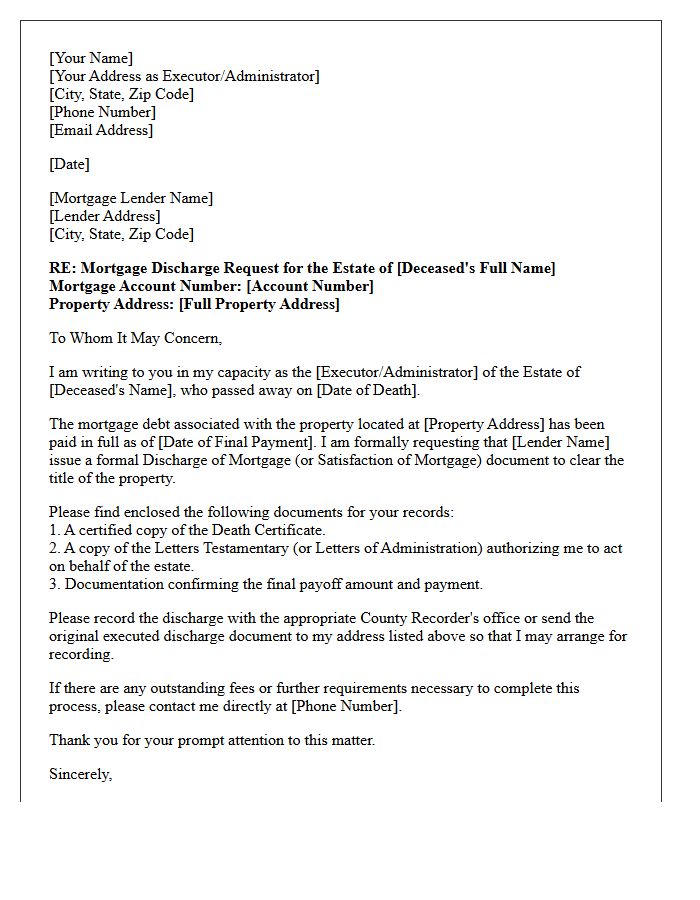
An Estate Discharge of Mortgage Debt Letter is a formal document notifying lenders of a homeowner's death to initiate the debt satisfaction process. This legal correspondence allows the executor to request a final payoff statement or verify that the lien has been cleared. It is essential for settling the decedent's liabilities and ensuring a clear property title before assets are distributed to heirs. Timely submission prevents foreclosure risks and facilitates the smooth transfer of real estate ownership through the probate court.
Mortgage Settlement and Satisfaction Letter
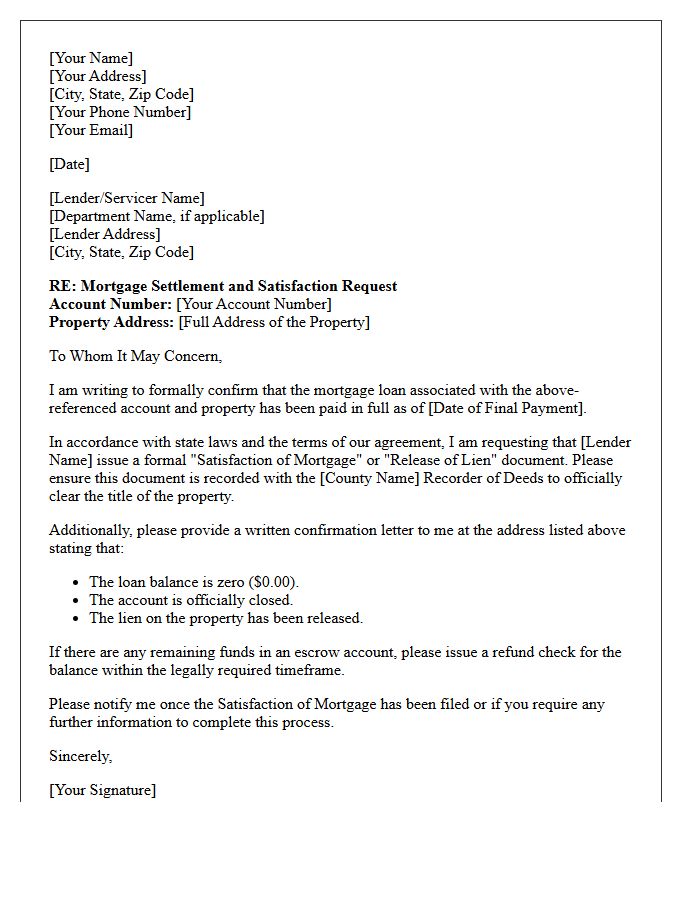
A mortgage settlement and satisfaction letter is a crucial legal document confirming you have fully repaid your home loan. Once the final payment is processed, your lender issues this notice to signify the debt is extinguished. It is vital to ensure this document is recorded with your local land registry or county recorder's office to clear the lien from your property title. Always verify the details to prevent future title disputes, ensuring you hold free and clear ownership of your real estate asset for future sales or refinancing.
Deceased Borrower Mortgage Payoff Confirmation Letter
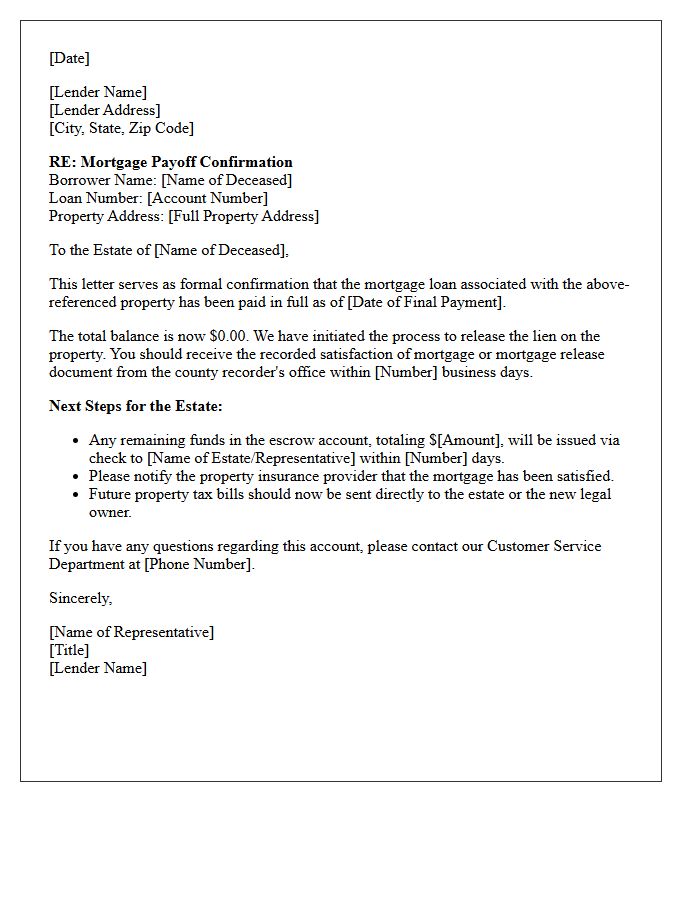
A Deceased Borrower Mortgage Payoff Confirmation Letter is a legal document verifying that a home loan has been fully settled after a homeowner's death. It confirms the loan balance is zero and the mortgage lien is released. This letter is essential for the settlement of the estate, allowing the executor or heirs to clear the property title for transfer or sale. Obtaining this confirmation prevents future creditor claims against the asset, ensuring a smooth probate process and providing official proof that all financial obligations to the lender have been formally satisfied.
Estate Mortgage Cancellation Notice Letter
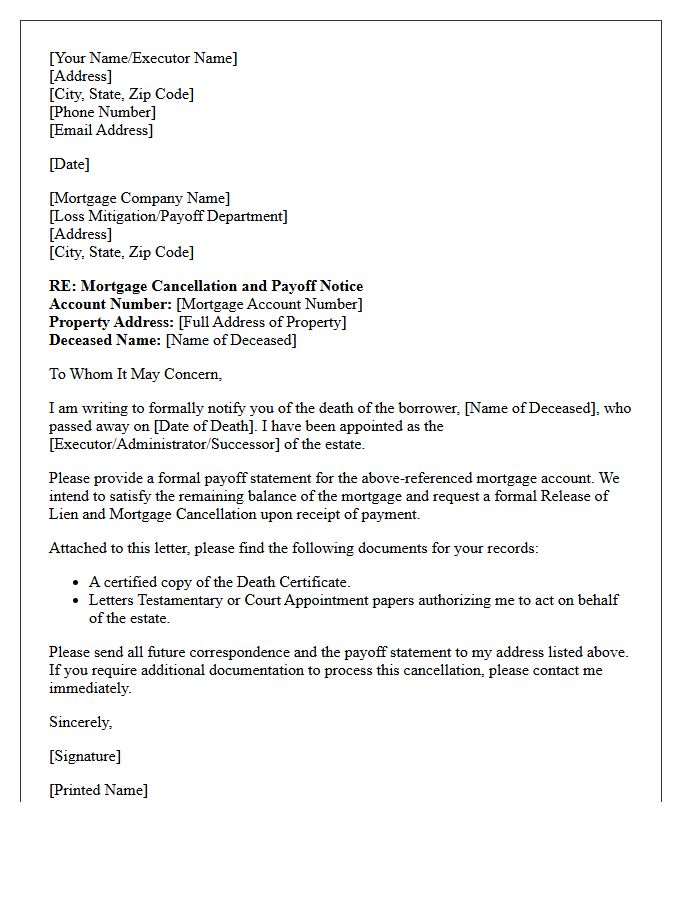
An Estate Mortgage Cancellation Notice Letter is a formal legal document used to notify lenders of a homeowner's death and request the termination of a mortgage agreement. It typically initiates the process of settling the debt through the estate or insurance. Providing an official death certificate is crucial for verification. Timely submission prevents additional interest and legal complications during probate. This notice ensures the lender ceases automatic payments and provides a final payoff statement, protecting the interests of heirs and executors during the property transfer process.
Mortgage Satisfaction Acknowledgment Letter to Estate
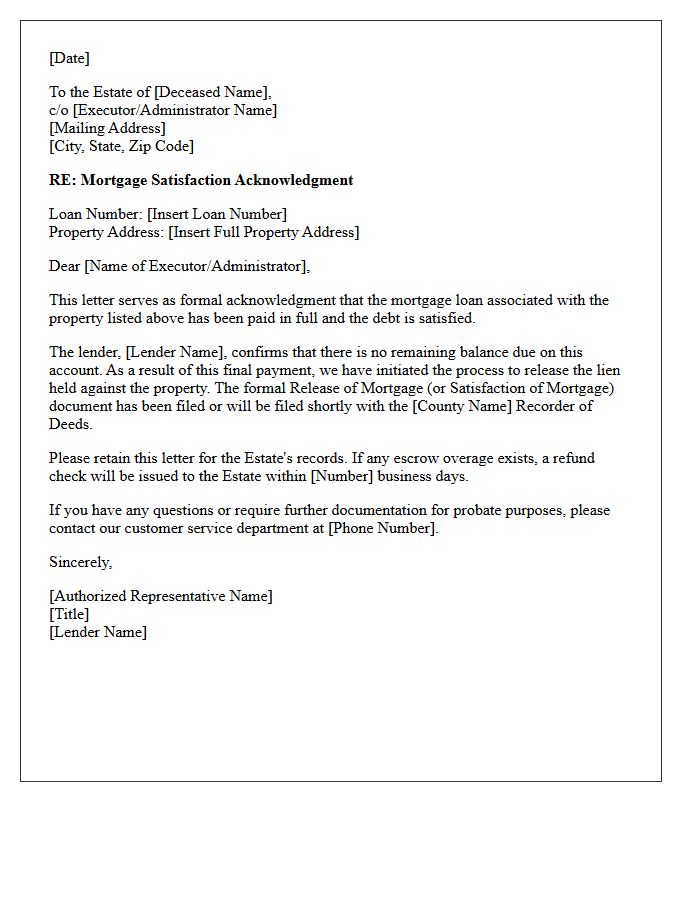
A mortgage satisfaction acknowledgment letter to an estate is a legal document confirming that a deceased borrower's loan has been paid in full. This release discharges the property lien, ensuring the title is clear for legal heirs or beneficiaries. It is essential for the executor to verify this filing with the county recorder to finalize the estate settlement process. Without this formal validation, the property cannot be legally sold or transferred, as the lender technically maintains a claim against the asset until the mortgage discharge is recorded.
What is a Mortgage Satisfaction Notice in the context of a deceased borrower?
A Mortgage Satisfaction Notice, also known as a Release of Mortgage, is a legal document issued by the lender confirming that the mortgage debt has been paid in full and the lien on the property has been officially discharged following the borrower's death.
Who receives the Mortgage Satisfaction Notice if the borrower is deceased?
The notice is typically sent to the court-appointed Executor or Administrator of the estate, or to the legal heirs if the property was transferred through a non-probate process such as a Transfer on Death Deed or joint tenancy.
How long does a lender have to issue a Satisfaction of Mortgage to the estate?
Timeline requirements vary by state law, but most lenders are required to record the satisfaction with the county recorder's office and notify the estate within 30 to 90 days after the final payoff balance is received.
Does a Mortgage Satisfaction Notice mean the estate no longer owes property taxes?
No, the notice only confirms that the loan debt is cleared. The estate or the new legal owners remain responsible for ongoing property taxes, homeowners insurance, and any applicable homeowners association (HOA) fees.
What should the Executor do after receiving a Mortgage Satisfaction Notice?
The Executor should verify that the satisfaction has been officially recorded with the County Recorder or Registrar of Deeds to ensure the title is clear, which is a necessary step before selling the property or transferring the title to beneficiaries.

Comments